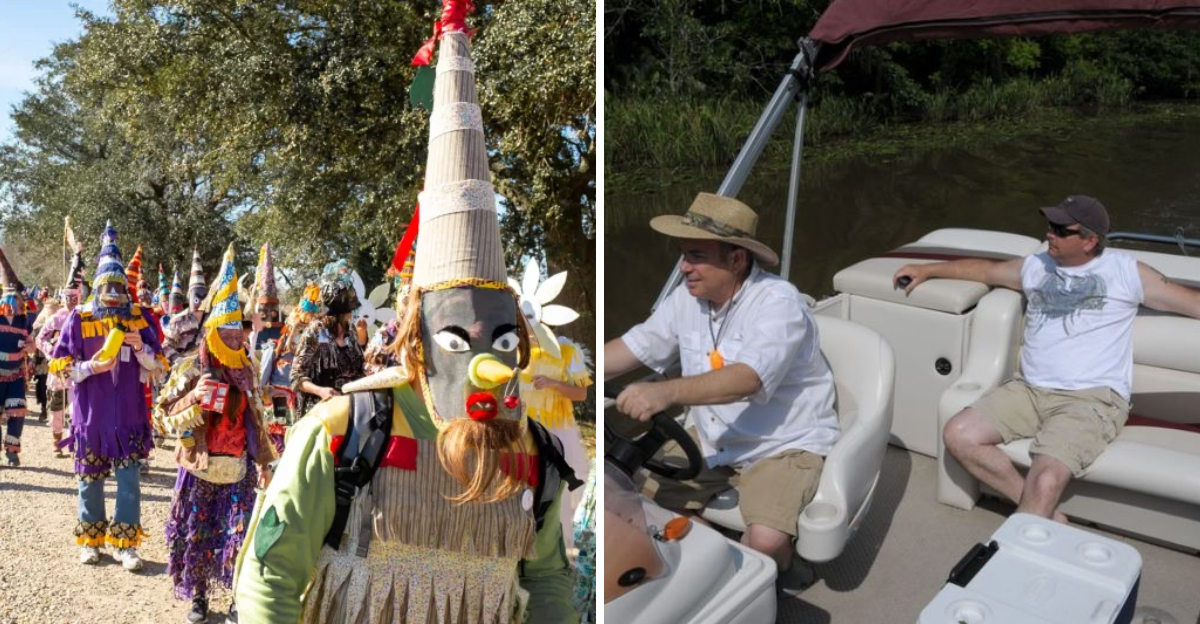
Louisiana does not hide its quirks, it celebrates them.
Travelers land expecting a postcard and quickly discover a living culture with rhythms that bend the clock and rewrite the rules.
Locals are patient, often amused, and always protective of traditions that make the state unlike anywhere else.
If you want a good laugh and a smarter trip, read on and learn the little slipups that signal you are new around here.
1. Zoom-lens Gator Chases at the Swamp Edge
Photographing every single alligator they see, regardless of distance or danger, tops the list. Tourists creep toward muddy banks near Honey Island Swamp or Manchac Pass, then lean far over railings for a better shot. Locals shake their heads, because wildlife tours clearly explain how to keep space and follow posted rules.
The comedy grows when boats drift toward restricted marshes while someone narrates the moment for social media. Louisiana guides often steer back gently, pointing to signage that marks sensitive habitat. It is not just about safety, it is about protecting nesting birds and the health of brackish waters.
Visitors can still get striking photos by booking permitted trips with outfitters that use quiet motors and trained captains. Camera bursts are fine from a safe distance with a long lens. Everyone goes home with a story, and the bayou remains calm for the next guest.
2. “Just a Coke” Confusion at the Counter
Ordering just a Coke without specifying what kind catches newcomers off guard. In parts of Louisiana, someone might ask what kind you want, meaning any soda, not only a single brand. The exchange sparks a brief pause, then a smile when the cultural nuance lands.
Servers in Baton Rouge or Lake Charles are used to clarifying with a friendly list. Guests who name the flavor up front save time and avoid the awkward ping-pong. It is a tiny interaction, yet it reveals how local language twists into daily life.
That same sense of play colors menus, neighborhood markets, and ballpark stands. Precision matters because choices are plentiful and preferences run deep. Learn the lingo, answer with a flavor, and you blend in faster than you think.
3. Off-Season Ghost Town Dinner Plans
Expecting quieter fall off season hours for lakeside or bayou restaurants often backfires. Once rain or cooler wind rolls in, many kitchens trim hours or pause certain services. Tourists cruise up after sunset and find dark patios, while locals timed lunch earlier.
Lake Martin, Cypremort Point, and False River each follow rhythms set by weather and wildlife. Staff availability and seasonal demand shape the schedule more than any calendar. Calling ahead or checking the venue’s latest post usually prevents disappointment.
Louisiana hospitality is real, yet it operates on local sense. Plan midday meals, confirm closing times, and treat posted hours as living guidance. You get a table with a view, and the crew gets a shift that fits the season.
4. Mardi Gras Everywhere, All the Time
Treating Mardi Gras decorations in rural towns as endless photo ops misses the point. Yard floats, porch flags, and homemade krewe signs can signal community rituals, not pop-up parties. Visitors sometimes pose on private lawns, then look puzzled when someone waves them off.
Louisiana parishes celebrate with church fairs, school krewes, and neighborhood parades that center families. Protocol varies, and not every bead or mask is an invitation. Asking a local or checking the town page clarifies what is public and what is personal.
Respectful curiosity opens doors that cameras alone will not. Stand back from ladders, leave throws where they land unless offered, and keep porches private. You come away with better photos, and the tradition stays intact for the next year.
5. Sticker Shock at the Produce Stand
Expecting tourist prices for basic roadside produce stands near Cajun farms sparks chuckles. Travelers assume souvenir markups, then whisper about bargaining for bundles. Locals know many stands serve neighbors first, with honest rates tied to the harvest.
Driving Highway 90 or backroads in Vermilion Parish, you will see coolers, chalkboards, and honor boxes. Pay what is posted, bring small bills, and leave the haggling behind. The value sits in freshness and the relationship with growers.
Louisiana’s food culture starts long before the kitchen. These stops keep seasonal rhythms visible to anyone who slows down. Treat them like community hubs, and you will be welcomed back with a nod.
6. Swamper Boats and School Runs
Asking if someone drives a swamper boat to school every day draws polite laughter. A camo hat at a gas station does not mean they commute by pirogue or airboat. Most residents rely on standard cars, with boats reserved for work, fishing, or specific terrain.
The image of kids gliding through cypress channels lives on screen more than in daily routines. Certain communities use boats for access during high water, but that is not the norm. Context matters, and locals balance modern roads with water savvy when needed.
Curiosity is welcome when phrased as a question, not a script. Ask about favorite launches or marsh safety if you want real tips. Louisiana pride includes practicality, and that wins over caricatures every time.
7. The Quest for Voodoo Kits and Delta Mix CDs
Expecting every town store to sell authentic voodoo kits or Mississippi Delta style crank music CDs leads to awkward conversations. Shops in New Orleans, Lafayette, or Natchitoches carry local crafts, not packaged mysteries. Discount bundles rarely appear because these traditions are not novelty packs.
Louisiana does include spiritual practices with African, Caribbean, and Catholic threads. Respectful shops explain context, literature, and history without theatrical props. Music stores champion zydeco, swamp pop, brass, and roots recordings instead of generic mixes.
Asking for guidance opens a richer path than asking for a deal. Staff can point you to cultural centers, museums, or live venues with classes. You leave with knowledge and something meaningful to keep.
8. Cemetery and Sanctuary Photo Surprises
Trying to take photos inside random churches or cemetery vaults without asking often ends in a gentle stop. Sacred spaces in Louisiana serve living communities, not only architecture fans. Caretakers protect privacy during services, cleanings, and family visits.
New Orleans above ground cemeteries, country chapels, and river parish churches may allow photography by permit or guided tour. Policies vary by parish, season, and time of day. A quick inquiry saves embarrassment and keeps the site peaceful.
Good etiquette is simple. Keep voices low, stick to paths, and wait for permission before entering fenced areas. The result is a respectful visit and clearer photos without stress.
9. Gumbo With Everything, Please
Insisting on gumbo with everything, then balking at extra charges, misses how the dish actually works. Gumbo styles differ by parish, season, and family, with seafood or poultry depending on availability. Okra, crawfish, and duck do not appear in every pot.
Restaurants list versions based on current sourcing and tradition. Ordering well means reading the description and asking what is in the roux today. Staff will explain regional touches, from filé powder to rice choice.
Louisiana cooks treat gumbo like a story, not a buffet. Approach with curiosity and you will taste something precise and proud. The bowl becomes a map of place and time, not a random mix.
Dear Reader: This page may contain affiliate links which may earn a commission if you click through and make a purchase. Our independent journalism is not influenced by any advertiser or commercial initiative unless it is clearly marked as sponsored content. As travel products change, please be sure to reconfirm all details and stay up to date with current events to ensure a safe and successful trip.
