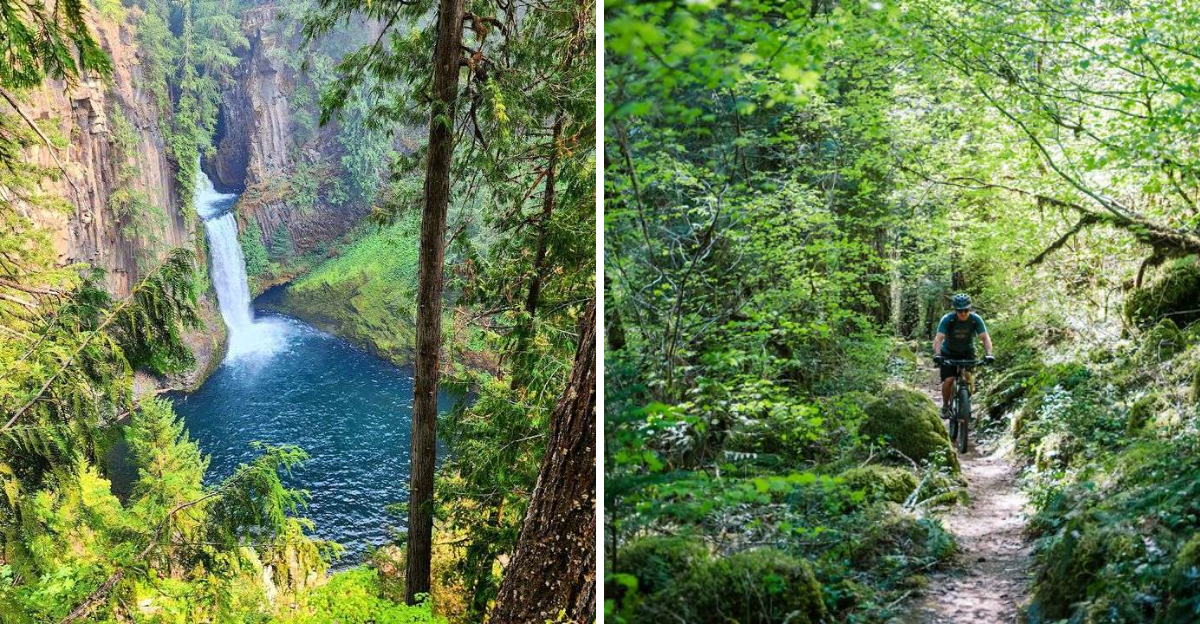
Oregon has a way of making even short hikes feel like epic adventures. Each trail on this list delivers something totally unexpected, from hidden waterfalls to jaw-dropping viewpoints.
I found myself stopping constantly, just to marvel at how wild and beautiful the state can be. Some hikes have quirky surprises, like twisted trees or secret mossy nooks, that make you feel like you’ve stumbled into a storybook.
Locals clearly know the best spots, but luckily, these gems are waiting for anyone willing to lace up their boots. Even a quick trek can leave you feeling like you’ve unlocked a new level of outdoor magic.
After wandering these trails, I couldn’t help but daydream about which one to explore next – Oregon really keeps you on your toes.
1. Trail of Ten Falls, Silver Falls State Park, Oregon
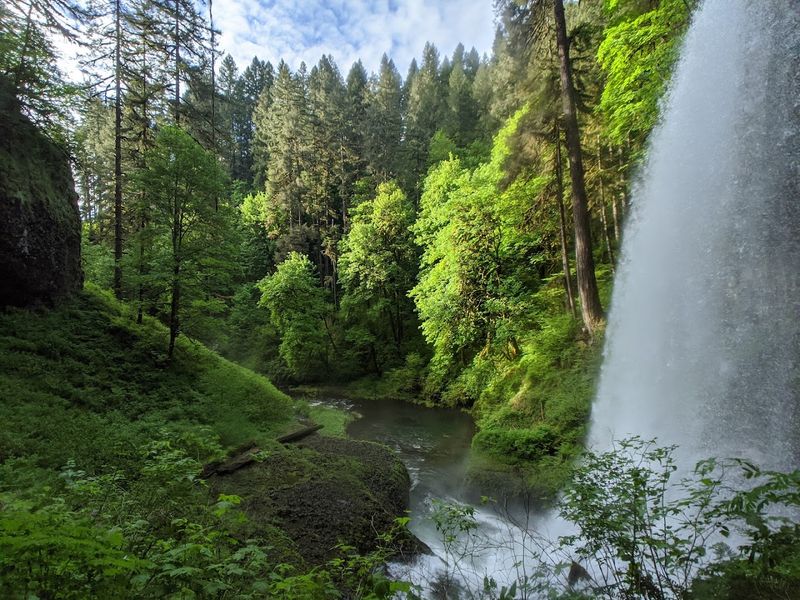
Walking behind a 177-foot waterfall is rare for most hikes. The Trail of Ten Falls offers that and nine more waterfalls besides.
The loop is 7.4 miles inside Silver Falls State Park in Oregon’s Willamette Valley. It is considered one of the most spectacular hikes in the Pacific Northwest.
The trail winds through old-growth forest and mossy canyon walls. At several points, it passes directly behind curtains of falling water, giving an almost unreal view.
South Falls is the showstopper at 177 feet tall. North Falls and Double Falls are equally jaw-dropping. The roar of water follows you almost the entire route.
Trail conditions are well-maintained. Most hikers with average fitness can handle it. Expect some elevation change, but nothing extreme.
Spring and early summer bring the heaviest water flow. Fall colors transform the trail into something magical.
Pack waterproof gear. Mist from the falls will reach you. Parking fills quickly on weekends, so arriving early pays off.
This trail rewards patience and curiosity at every bend.
2. Garfield Peak, Crater Lake National Park, Oregon
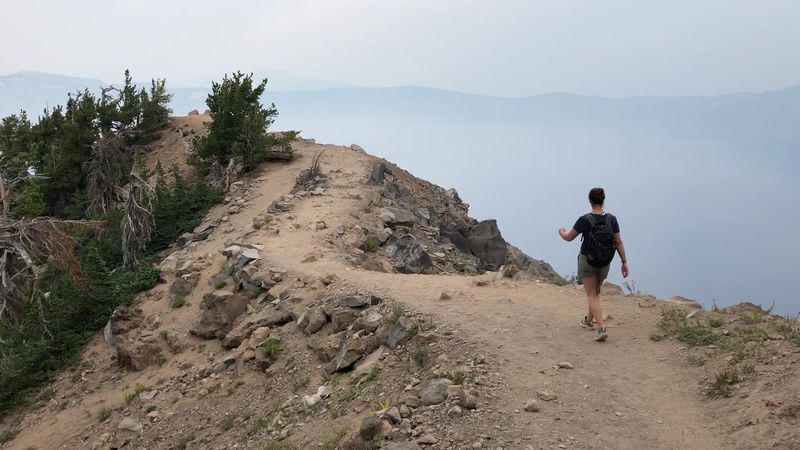
Few hikes in the U.S. end with a view as iconic as Garfield Peak in Crater Lake National Park.
This 3.5-mile out-and-back trail climbs over 1,000 feet above the caldera rim. Hikers are rewarded with sweeping views of the country’s deepest lake. Crater Lake sits at 6,178 feet and reaches nearly 1,943 feet deep.
The vivid blue water is hard to believe until you see it in person. Wizard Island, a volcanic cinder cone rising from the center, adds a surreal touch.
The trail starts near Crater Lake Lodge and climbs steadily through wildflower meadows and rocky ridgelines. Footing gets uneven near the top, so sturdy shoes are recommended.
Summer is the best time to visit. Park roads and trails can remain snow-covered well into June. Sunsets from the summit are especially memorable.
Wildlife is common along the upper sections. Pikas, golden-mantled ground squirrels, and ravens often appear.
Bring plenty of water and sunscreen. The high elevation means stronger UV exposure than you might expect.
Standing at the summit, looking down into that impossible blue, is a moment that stays with you for a long time.
3. Sweet Creek Falls, Siuslaw National Forest, Oregon
ome trails don’t need big elevation gains or dramatic summits to impress. Sweet Creek Falls proves that.
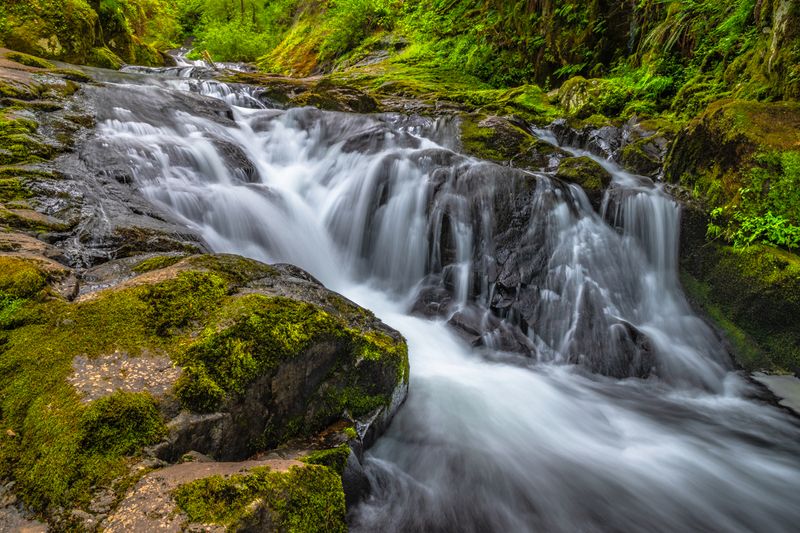
Located near Mapleton in the Siuslaw National Forest, this 2.2-mile round-trip trail is one of Oregon’s most enchanting easy hikes. The path follows Sweet Creek through a moss-draped canyon that feels otherworldly.
Small waterfalls appear throughout the route, framed by ferns and vibrant green moss. The creek is crystal clear, and the sound of rushing water follows you the whole walk.
This trail is ideal for families, casual hikers, or anyone wanting a peaceful morning in nature. The terrain is relatively flat with only minor elevation changes.
Spring is the prime season, when rainfall keeps the creek strong and vegetation at its greenest. The canyon stays lush even in drier months, maintaining a rainforest-like feel.
Wildflowers bloom from late March through early May, adding bright splashes of color.
Crowds are lighter than at more famous Oregon trails, making this a genuinely peaceful escape.
Sweet Creek quietly earns a permanent spot on your list of favorite Oregon hikes.
4. Toketee Falls, Umpqua National Forest, Oregon
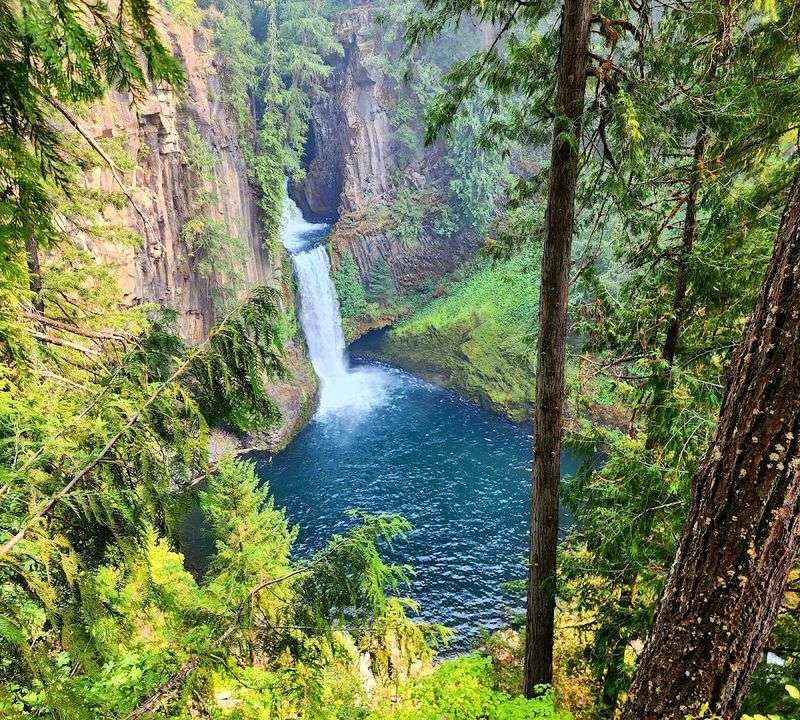
Photographers and hikers keep returning to Toketee Falls, and it’s easy to see why. The basalt columns make it unforgettable.
Located in Umpqua National Forest near Roseburg, Oregon, this 0.8-mile round-trip trail leads to one of the state’s most striking waterfalls. The falls drop in two tiers, plunging 120 feet into a glowing turquoise pool.
Toketee’s geological framing is unique. Symmetrical basalt columns surround the falls like a natural amphitheater, almost architecturally designed.
The trail is short but includes a wooden staircase with a fairly steep descent near the viewpoint. Visitors with mobility challenges should note this section.
Late spring through early fall offers the best access and stable conditions. The trail follows the North Umpqua River, adding scenic context to the drive.
The name Toketee comes from a Chinook word meaning graceful or pretty. That description is hard to argue with once you stand at the viewpoint.
Bring a camera with a zoom lens to capture the full scene. Short in distance but enormous in impact, this hike punches well above its weight.
5. Saddle Mountain Trail, Saddle Mountain State Natural Area, Oregon
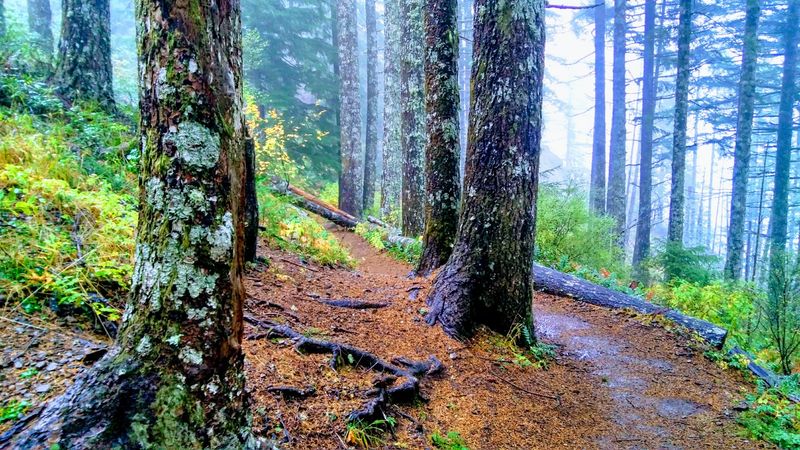
Saddle Mountain has a reputation for being a tough workout, and it’s well earned.
This 4.7-mile out-and-back trail is in Saddle Mountain State Natural Area in the northern Oregon Coast Range, about 65 miles from Portland. At 3,283 feet, it’s the highest peak in the area, with views reaching the Pacific Ocean on clear days.
The trail starts gently through a forested lower section. It gradually becomes steeper and rockier. The upper portion involves some exposed scrambling, so good footing is important.
Wildflowers bloom in late spring. The mountain hosts rare plant species found almost nowhere else in Oregon, attracting botanists and nature lovers.
The summit ridge offers a 360-degree panorama of the Columbia River valley, the Coast Range, and on clear days, Mount Rainier to the north. That payoff makes the climb worthwhile.
Morning hikes are recommended to avoid afternoon coastal clouds. Trailhead parking is limited, so weekdays are calmer than summer weekends.
6. Mirror Lake Loop Trail, Mount Hood National Forest, Oregon
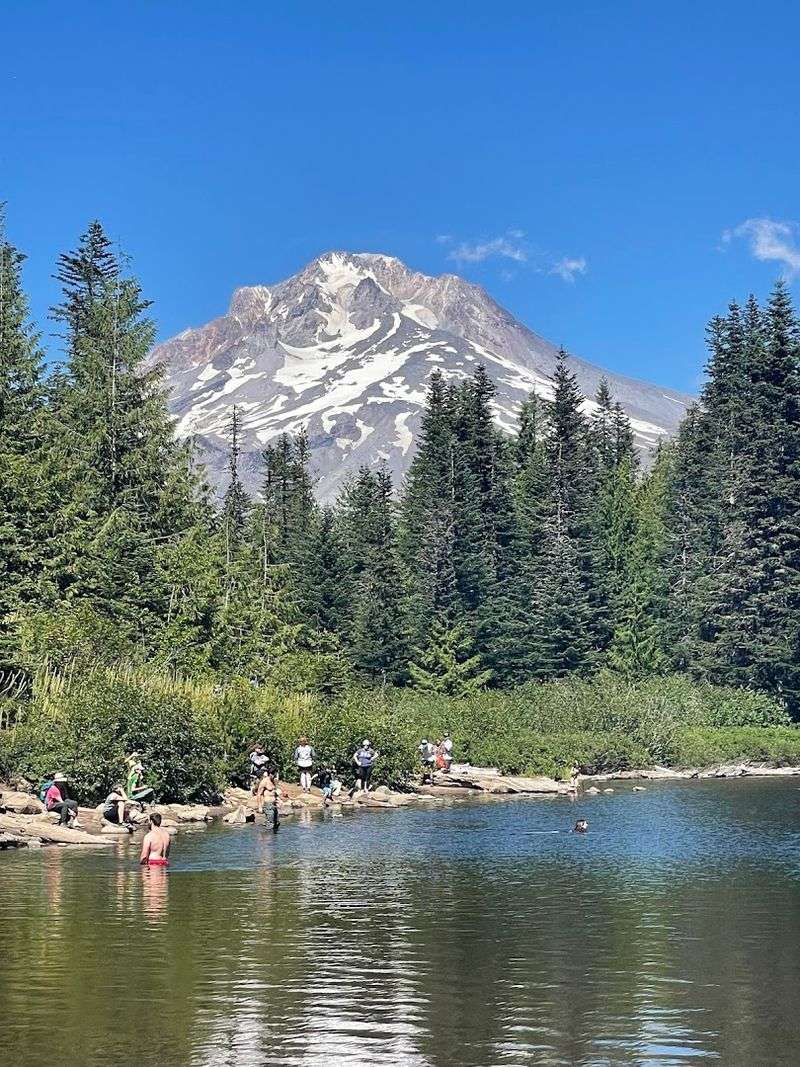
Mount Hood is already one of Oregon’s most recognized landmarks, but seeing its reflection shimmering in a perfectly still alpine lake takes the experience to another level entirely.
The Mirror Lake Loop Trail is a 4.1-mile route in Mount Hood National Forest, located near the town of Government Camp in northern Oregon. The trail climbs through dense Pacific Northwest forest before opening up to the lake, where the views of Mount Hood’s 11,249-foot volcanic peak are simply outstanding.
The reflection of the mountain in the lake on a calm morning is the kind of scene that makes people stop walking mid-stride. Photographers tend to linger here for a long time.
The loop continues uphill past the lake toward Tom Dick and Harry Mountain, where panoramic views of the Hood River Valley and surrounding peaks expand dramatically. This upper section adds real elevation gain for hikers looking for more challenge.
Wildflowers bloom along the trail from July through August, and fall brings rich golden and amber hues to the tree line. Snow can arrive as early as October, so timing matters.
A Northwest Forest Pass is required for parking at the trailhead, so plan ahead before driving out.
The trail is well-marked and regularly maintained, making it a reliable choice for first-time visitors to the Mount Hood area.
Mirror Lake has a way of making Mount Hood feel both massive and perfectly intimate at the same time.
7. Neahkahnie Mountain Trail, Oregon Coast, Oregon
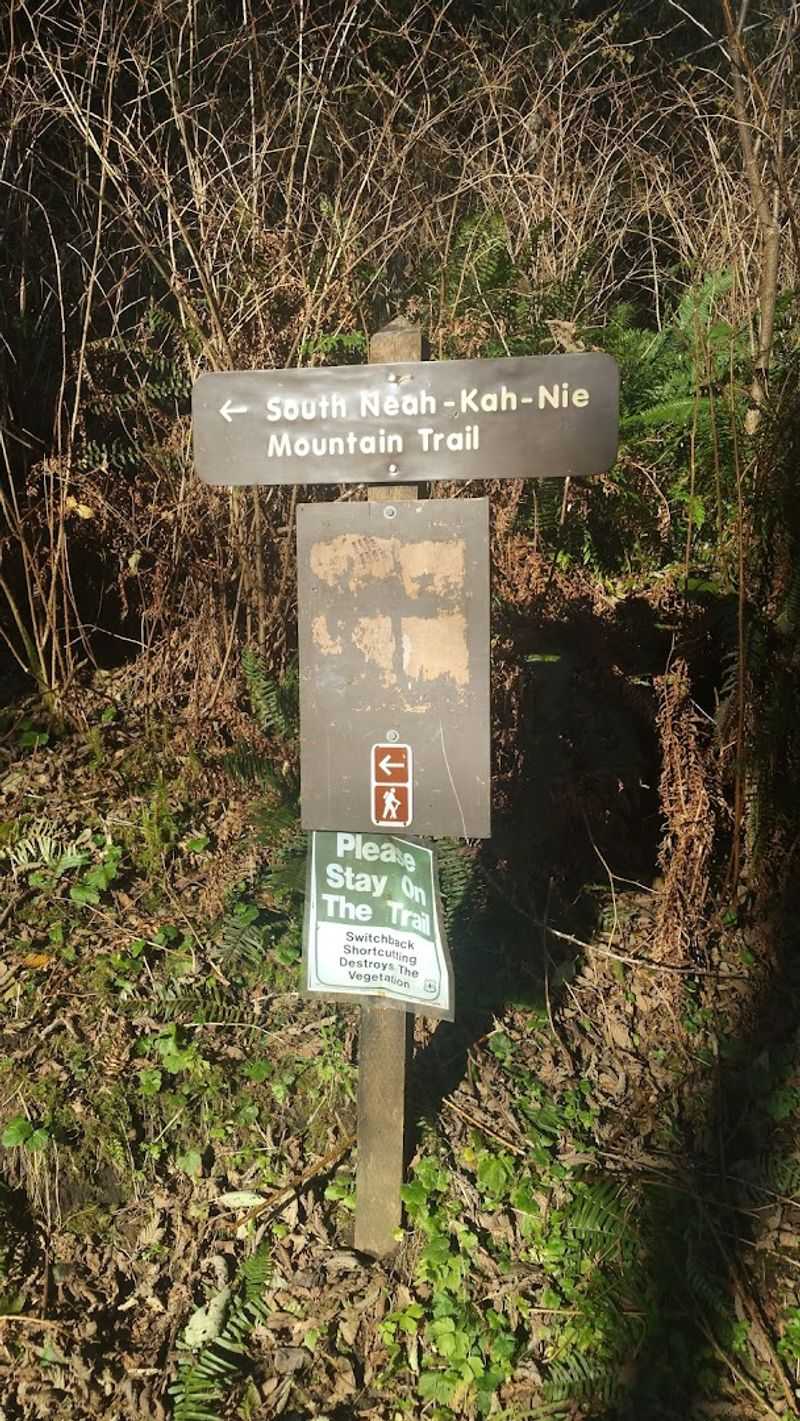
Standing on the open ridge of Neahkahnie Mountain with the Pacific Ocean spread out below you is one of those moments that makes the drive to the coast feel completely justified.
This moderate 2.5-mile out-and-back trail is located along the northern Oregon Coast near the town of Manzanita, just south of Cannon Beach. The summit sits at approximately 1,680 feet, offering some of the most dramatic coastal panoramas in the entire state.
The trail climbs through coastal forest and then breaks out onto open, windswept meadows as you near the top. The views from the ridge take in miles of Pacific coastline, rocky sea stacks, and the curving arc of Nehalem Bay to the south.
May and June are the best months to visit for wildflower displays. The open slopes come alive with color during these weeks, and the combination of blooms and ocean views is genuinely hard to beat.
Neahkahnie Mountain also carries a layer of local legend. Stories of buried Spanish treasure somewhere on its slopes have circulated for centuries, adding a quirky historical dimension to the hike.
The trailhead is accessible from Highway 101, making it easy to add this hike to a broader Oregon Coast road trip.
This trail delivers ocean views that rival any coastal hike on the West Coast.
8. Painted Hills Trail, John Day Fossil Beds National Monument, Oregon
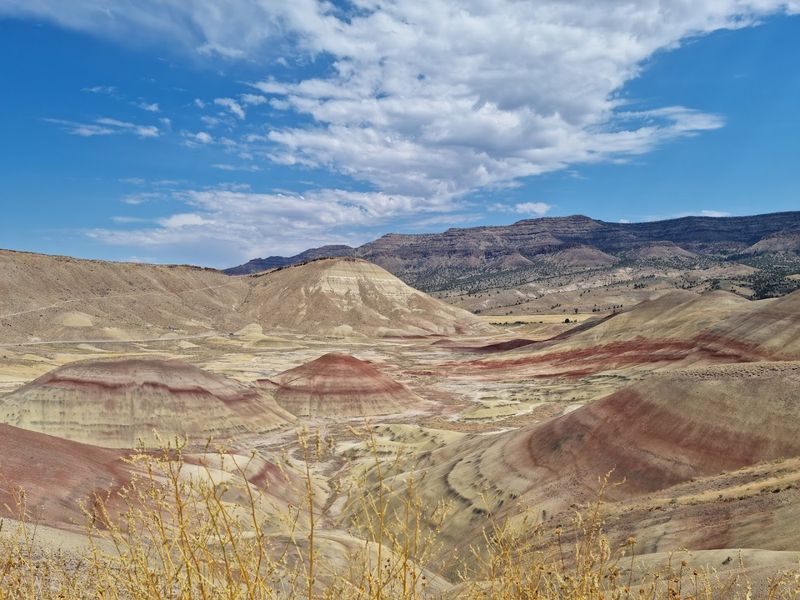
Oregon is full of green forests and blue water, which makes the Painted Hills feel like a visit to an entirely different planet.
Located in the John Day Fossil Beds National Monument in central Oregon near the town of Mitchell, this 1.6-mile loop trail showcases some of the most visually striking geological formations in the entire United States. Layers of red, gold, black, and tan clay hills roll across the landscape in bold, painterly stripes.
The colors actually shift depending on the light and moisture in the air. Early morning and late afternoon visits reveal the most vivid hues, making timing a real factor in how dramatic your experience will be.
These hills are composed of ancient volcanic ash and soil deposits that formed over 35 million years. Interpretive signs along the trail explain the geology in clear, accessible language that even younger visitors will find genuinely interesting.
The trail itself is flat and easy, making it one of the most accessible hikes in Oregon regardless of fitness level. Strollers and wheelchairs can manage most of the paved overlook sections.
Photography here is extraordinary at any skill level because the landscape does most of the work.
The Painted Hills are proof that Oregon’s most surprising landscapes often come without a single tree in sight.
9. Opal Creek Trail, Willamette National Forest, Oregon
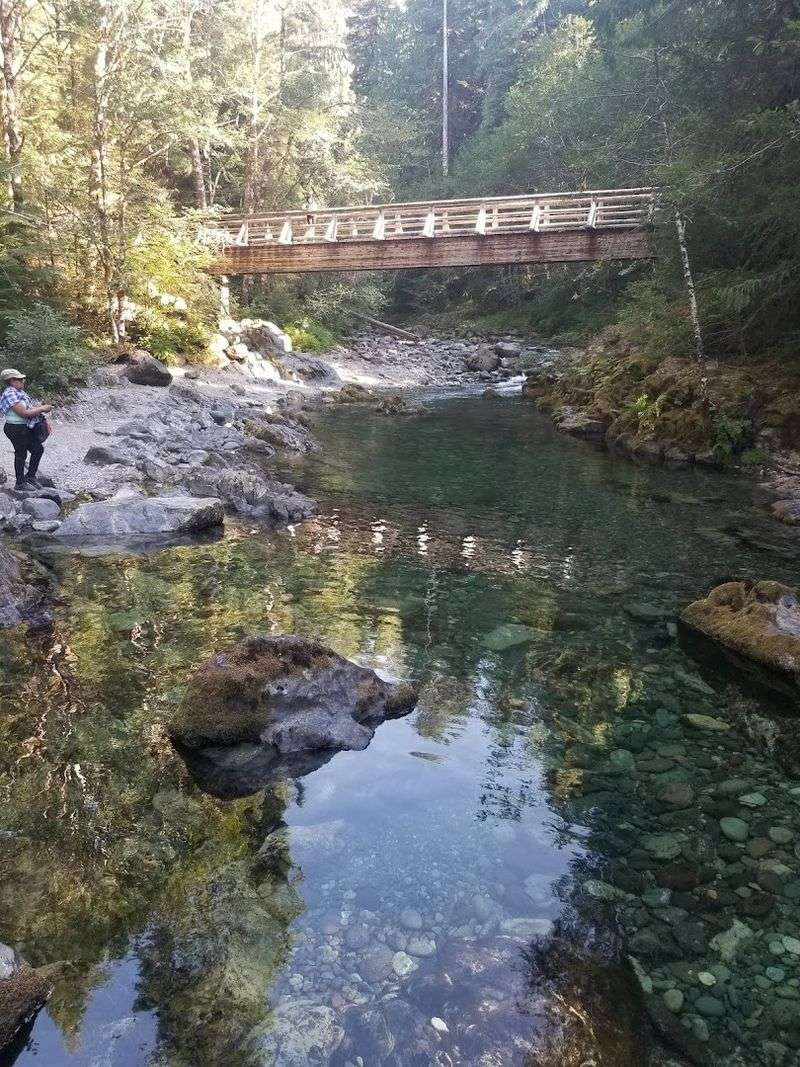
Ancient trees have a presence that younger forests simply cannot replicate, and Opal Creek Trail puts you directly in the middle of one of Oregon’s most treasured old-growth groves.
This 7.5-mile out-and-back trail runs through the Opal Creek Wilderness in the Willamette National Forest, located in the western Cascade Mountains of Oregon. The trailhead is accessible from the town of Mehama, roughly 60 miles southeast of Salem.
The route follows Opal Creek through a cathedral of ancient Douglas fir, western red cedar, and big-leaf maple trees. Many of these trees are hundreds of years old, and the forest floor is thick with ferns and mosses that give the whole area a primeval atmosphere.
The creek itself is stunningly clear with a distinctive turquoise tint caused by minerals in the water. Several swimming holes along the route are popular during summer months.
At the end of the trail sits Jawbone Flats, a preserved 1930s mining camp that adds a fascinating historical layer to the journey. Walking through those old buildings while surrounded by old-growth forest is a genuinely strange and memorable experience.
The trail has some moderate sections with roots and uneven terrain, so trail runners or hiking boots are recommended over casual footwear.
Fall is a particularly magical time here when the big-leaf maples turn brilliant yellow against the dark green conifers.
10. McKenzie River Trail, Willamette National Forest, Oregon
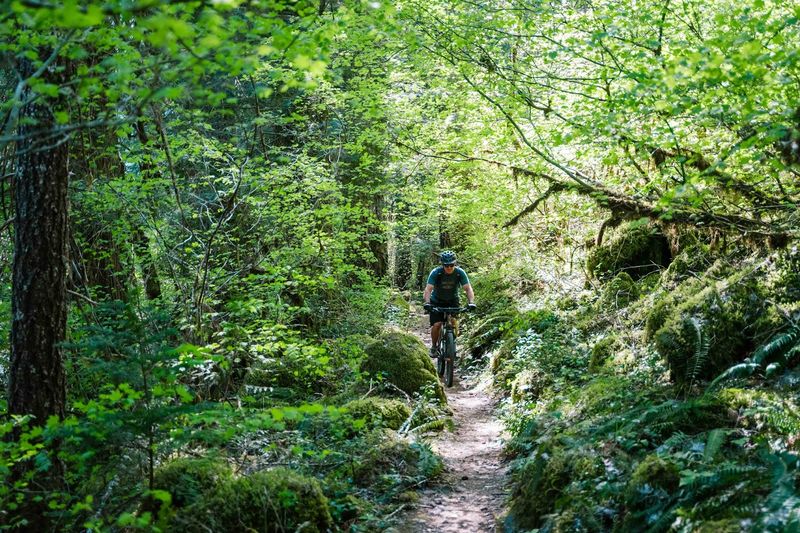
At 26.5 miles long, the McKenzie River Trail is not a casual afternoon stroll, but for hikers ready to commit, it delivers one of the most varied and immersive trail experiences in the Pacific Northwest.
Running through the Willamette National Forest in the central Oregon Cascades, the trail follows the McKenzie River from its origins near Clear Lake all the way down to the town of McKenzie Bridge. The river is glacier-fed, running a vivid blue-green that stays visually stunning throughout the entire route.
The trail passes through ancient lava flows left by volcanic activity thousands of years ago, where the river mysteriously disappears underground before reappearing downstream. This geological quirk alone makes the trail worth exploring.
Multiple waterfalls punctuate the route, including Sahalie Falls and Koosah Falls, both of which are among the most photographed in Oregon. Hot springs near the lower sections of the trail provide a welcome reward for tired legs.
The trail is point-to-point, so most hikers arrange a vehicle shuttle or use a bicycle to cover the full distance. Sections of the trail can also be hiked independently for shorter day trips.
Old-growth Douglas fir stands line much of the route, providing dense shade that keeps the trail comfortable even during warm summer days.
