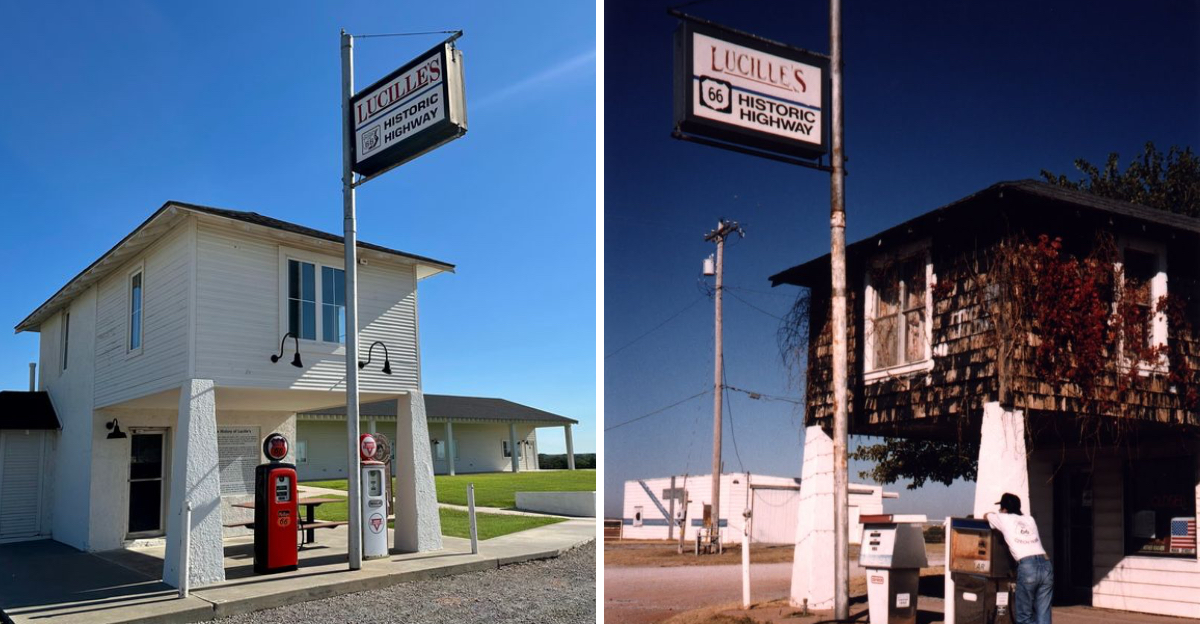
Want to know what separates real Route 66 enthusiasts from casual road trippers? Ask them about Lucille’s.
Some say it’s just another photo stop along the Mother Road, while others swear it’s the most authentic piece of highway history left standing in Oklahoma. Located in tiny Hydro, this 1941 service station isn’t trying to be a museum or a gift shop empire.
It’s simply preserved exactly as it was when Lucille Hamons served travelers for decades, offering cold refreshments, hot meals, and a helping hand during the hardest times. The debate rages on: Is this roadside relic overhyped, or is it the single most important stop between Tulsa and Amarillo?
Locals who grew up stopping here have strong opinions. Out-of-state visitors who detour off Interstate 40 often call it the highlight of their entire cross-country journey.
The building sits quiet now, but the stories painted on those weathered walls speak louder than any modern attraction ever could. So what’s your take?
Is preserving places like this essential to understanding American travel culture, or should we let the past fade naturally? One thing’s certain: Lucille’s keeps sparking conversations, just like it did when the lady herself stood behind that counter.
Come see what all the fuss is about and decide for yourself.
The Woman Behind the Legend
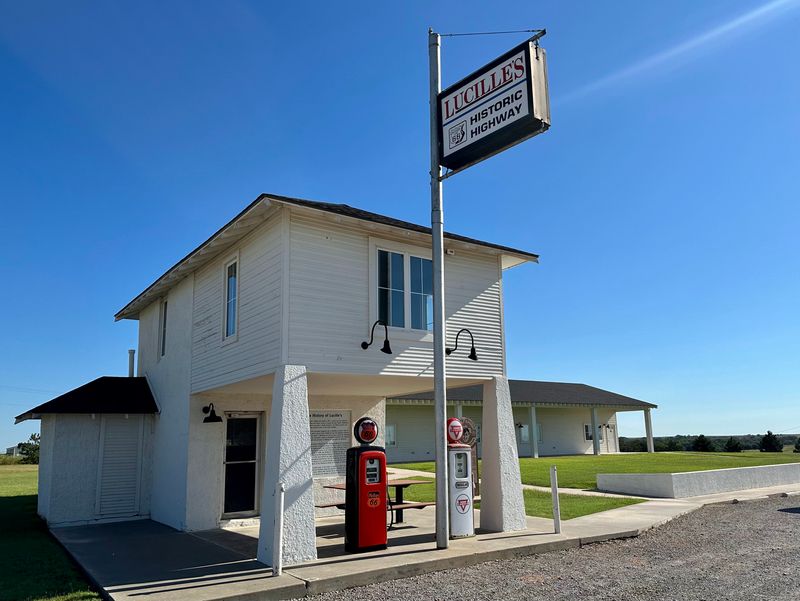
Lucille Hamons wasn’t born into the service station business, but she made it her life’s work for over five decades. Starting in 1941, she and her husband Carl opened this humble filling station along what would become America’s most famous highway.
Lucille quickly became known as the Mother of the Mother Road, a title she earned through genuine kindness rather than clever marketing.
Travelers passing through Hydro during the Great Depression and Dust Bowl era found more than gasoline here. Lucille fed hungry families who couldn’t pay, extended credit to struggling farmers, and kept her doors open when other businesses shuttered.
She understood that Route 66 wasn’t just pavement connecting Chicago to Los Angeles. It represented hope, opportunity, and the promise of something better waiting down the road.
Her reputation for stocking the coldest refreshments in Oklahoma became legendary among truckers and tourists alike. People would plan their trips specifically to stop at Lucille’s, knowing they’d receive a warm welcome alongside that icy beverage.
She collected stories from every visitor, turning her station into an unofficial archive of American road culture.
Even after the interstate system bypassed Route 66 in the 1970s, Lucille refused to close. She kept pumping gas and greeting travelers until her passing, proving that some things matter more than profit margins.
Her dedication ensured this spot remained a living connection to an era when cross-country travel meant adventure, not just convenience.
Architecture Frozen in Time
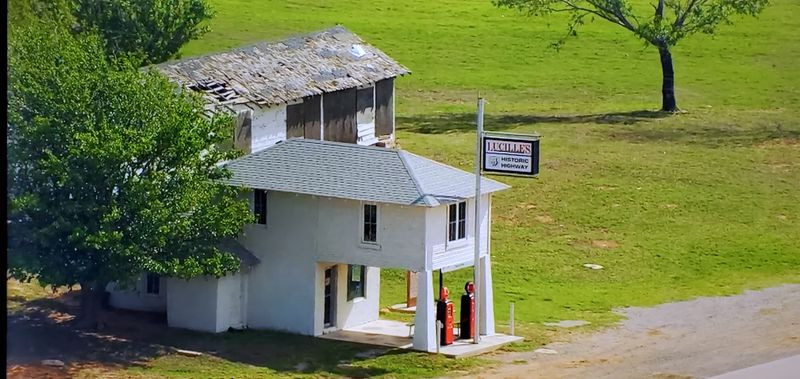
Walking up to Lucille’s feels like stepping onto a movie set, except everything here is authentically original. The building’s simple rectangular design reflects the practical architecture of roadside commerce during the 1940s.
White clapboard siding contrasts beautifully with red trim, colors chosen not for aesthetics but for visibility to drivers approaching from either direction on the two-lane highway.
Two vintage fuel pumps stand guard out front like silent sentries from another century. One displays the Conoco brand, the other Phillips 66, both restored to museum-quality condition.
These weren’t decorative pieces during Lucille’s operating years. They represented lifelines for travelers crossing the vast stretches between Oklahoma towns, where running out of gas could mean serious trouble.
The station’s compact footprint tells you everything about mid-century business efficiency. Every square foot served a purpose: selling fuel, providing basic automotive services, offering refreshments, and creating a social hub for the community.
Large windows allowed Lucille to monitor the pumps while serving customers inside, a design feature born from necessity rather than architectural trends.
Preservation efforts have maintained the structure’s integrity without sanitizing its character. Paint might look fresher than it did during working years, but the bones remain unchanged.
Visitors can still peek through windows to glimpse the interior layout, though access inside isn’t permitted. The building stands as proof that functional design often outlasts flashy innovation.
Route 66 Historical Marker
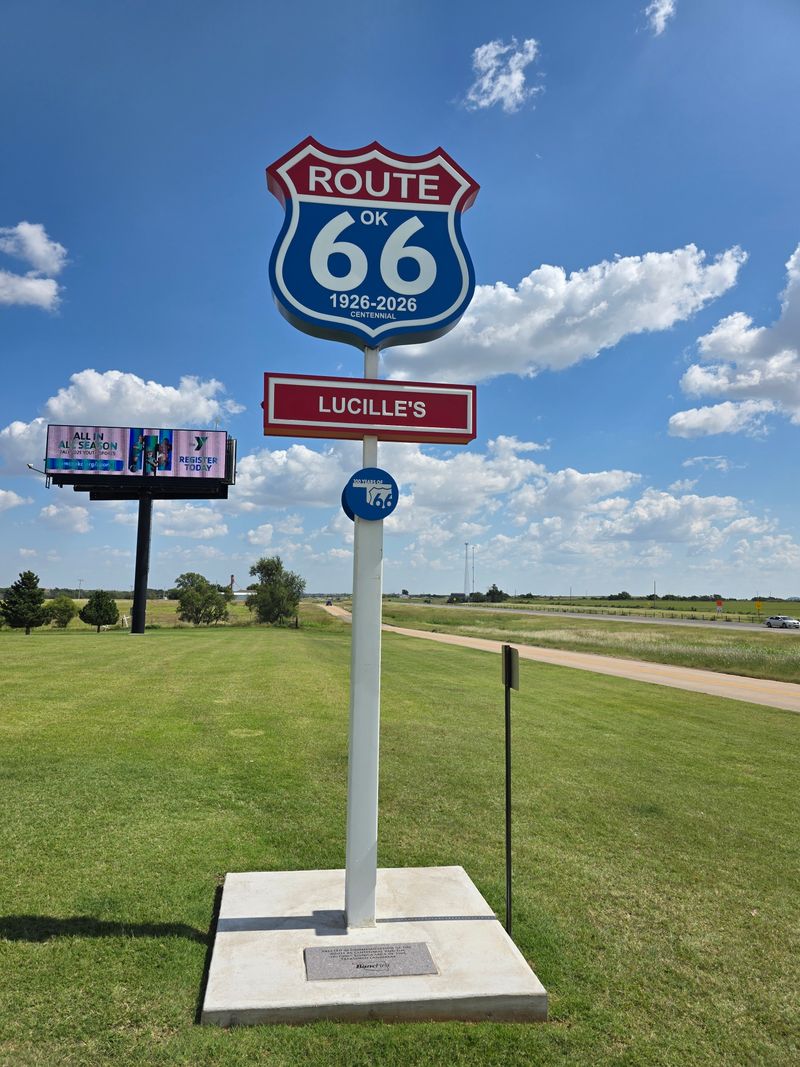
A detailed interpretive sign greets visitors before they even reach the building itself. This marker does more than recite dates and names.
It captures the essence of why this particular gas station matters in the broader story of American westward migration and automobile culture. Reading these weathered words connects you directly to the thousands who stopped here seeking assistance, direction, or simply human connection during long journeys.
The sign explains how Lucille’s station served as an oasis during Route 66’s golden age, when the highway functioned as the primary corridor for families relocating to California during economic hardship.
It mentions her generous spirit, documented by countless travelers who remembered her kindness decades after their visits.
These weren’t just commercial transactions happening here. They were moments of grace during difficult times.
Recently updated to commemorate Route 66’s upcoming centennial anniversary, the marker includes a special pole celebrating this milestone. The addition shows that Lucille’s legacy continues growing rather than fading into obscurity.
New generations discover her story through this signage, ensuring that lessons about community service and human decency remain relevant.
Photographers love positioning the historical marker in shots with the station behind it, creating layered images that tell multiple stories simultaneously.
The sign’s placement encourages visitors to pause and reflect before snapping pictures, transforming what could be a quick roadside stop into a meaningful educational experience.
Information presented here enriches every subsequent moment spent exploring the property.
The Vintage Chevy Pickup
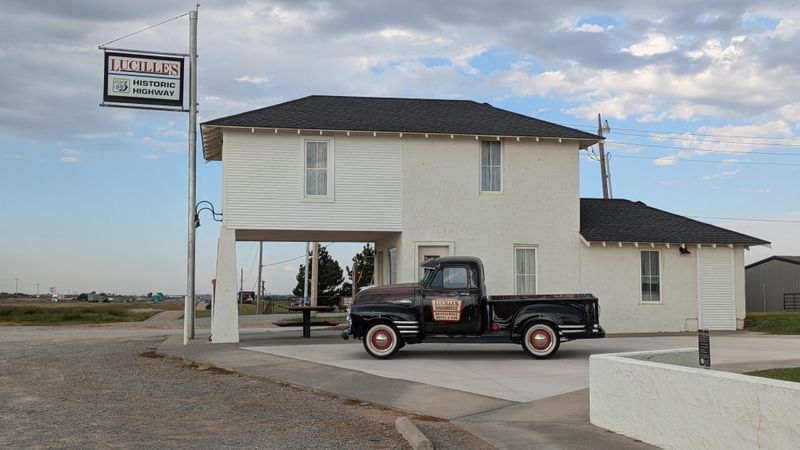
Parked permanently beside the station sits a beautifully aged Chevrolet pickup that looks like it rolled straight out of the 1950s. This truck isn’t a restored showpiece with gleaming chrome and perfect paint.
Instead, it wears its decades proudly, displaying the honest patina that only genuine age can create. The vehicle serves as a three-dimensional time capsule, helping visitors visualize the types of transportation that regularly stopped here for fuel and service.
Trucks like this one were workhorses of rural Oklahoma, hauling crops, livestock, and families across distances that seemed vast before interstate highways compressed geography. Farmers and ranchers relied on vehicles built tough enough to handle unpaved roads and heavy loads.
Seeing one parked at Lucille’s reminds us that Route 66 wasn’t just a tourist route. It was a working highway serving agricultural communities throughout the heartland.
The Chevy’s presence adds tremendous authenticity to photographs taken here. Instead of an empty lot surrounding a solitary building, visitors capture scenes that feel inhabited and real.
The truck suggests that someone might return any moment to finish repairs or head home after a long day’s work. This sense of suspended animation makes the entire property more emotionally resonant.
Children especially love this element, often climbing onto the running boards for pictures despite parents’ warnings about respecting historical artifacts. The truck’s accessibility makes history tangible for young visitors who might otherwise find old buildings boring.
Connecting past and present through objects they can almost touch transforms abstract history lessons into memorable experiences.
Perfect Photo Opportunity
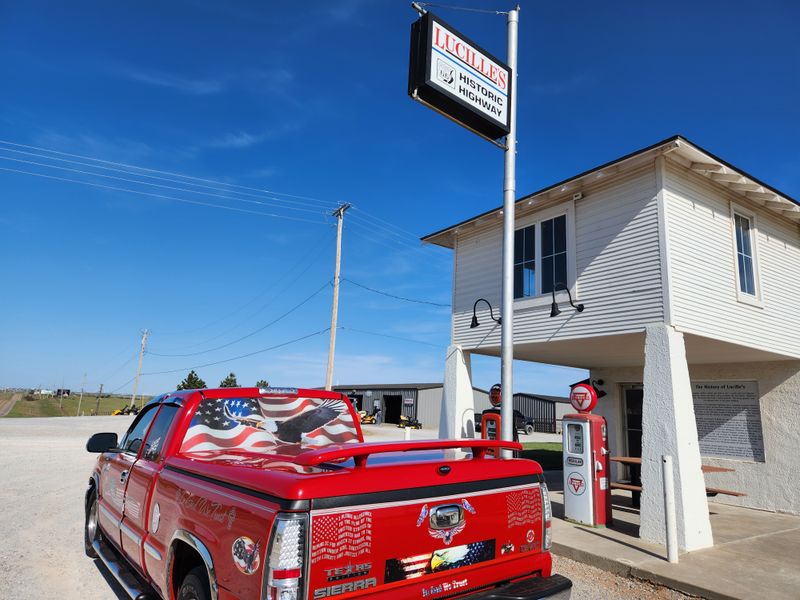
Social media has transformed Lucille’s into one of Route 66’s most photographed locations, and for good reason. The composition practically arranges itself: white building, colorful pumps, vintage truck, and that endless Oklahoma sky stretching overhead.
Photographers arrive during golden hour to capture warm light washing across the facade, creating images that glow with nostalgic beauty. Even smartphone snapshots taken here look professional thanks to the location’s inherent visual appeal.
The property’s layout provides ample space for creative angles without crowding. Visitors can shoot wide to capture the entire scene or zoom tight on architectural details like weathered wood siding and antique signage.
Each perspective tells a slightly different story, which explains why people often spend thirty minutes or more working through various compositions. Nobody rushes here.
The atmosphere encourages lingering.
Unlike some tourist attractions where photography feels intrusive or commercialized, taking pictures at Lucille’s feels like documenting something important. You’re not just collecting vacation snapshots.
You’re preserving evidence that places like this still exist, that communities care enough to maintain connections to their past. Every shared image potentially inspires another traveler to detour off the interstate and experience this slice of Americana firsthand.
The lack of entrance fees or restricted areas means photographers can explore freely, experimenting with compositions until they capture exactly what they envisioned. This accessibility has helped Lucille’s maintain relevance in an era when many roadside attractions struggle.
The station succeeds by simply being itself, requiring no gimmicks or manufactured experiences to attract attention.
Pristine Preservation Efforts
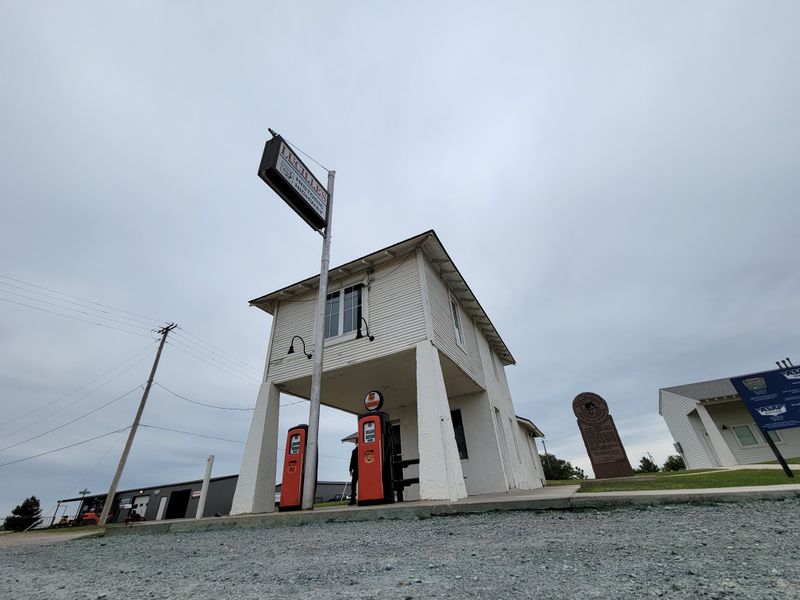
Maintaining a structure approaching its ninth decade requires constant attention and resources. Current caretakers have struck a delicate balance between preservation and restoration, keeping the building stable without erasing the character that makes it special.
Fresh coats of paint protect wood from Oklahoma’s extreme weather while maintaining historically accurate colors. This careful stewardship ensures future generations can experience Lucille’s much as travelers did seventy years ago.
The grounds surrounding the station receive equally meticulous care. Grass stays trimmed, trash never accumulates, and seasonal plantings add color without overwhelming the historical elements.
This attention to detail demonstrates respect for both the property and the visitors who travel significant distances to see it. Clean, well-maintained sites invite people to linger and explore rather than snap a quick picture and leave.
Interestingly, preservationists chose not to restore the interior to operating condition. Peering through windows reveals a space frozen mid-century, with original fixtures and layout intact but showing their age.
This decision honors authenticity over artificial perfection. The slight decay visible inside reminds visitors that this was a working business, not a theme park attraction built yesterday to look old.
Funding preservation through a combination of private donations and tourism-related revenue keeps Lucille’s independent and authentic. There’s no corporate sponsor demanding logo placement or gift shop expansion.
The site remains true to its origins: a simple service station that happened to be run by an extraordinary woman who understood that helping others mattered more than maximizing profits.
Easy Access from Interstate 40
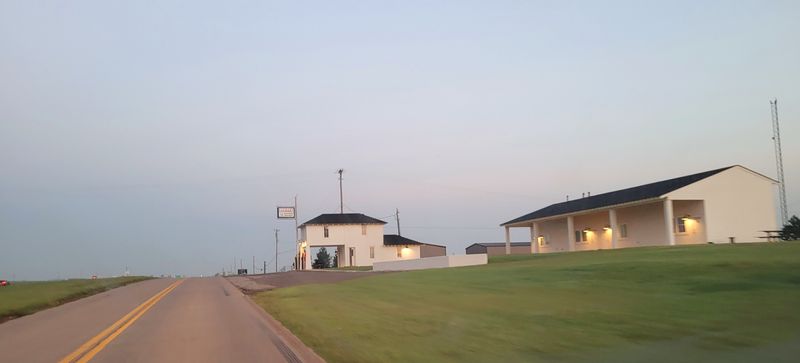
Finding Lucille’s requires minimal navigation skills despite its rural location. The station sits just off Interstate 40 near Hydro, visible from the highway for travelers who know to look.
Taking Exit 89 puts you on the old Route 66 alignment, where a short drive delivers you straight to the property. This convenient accessibility means visiting doesn’t require extensive backroad exploration or risking getting lost on unmarked rural routes.
Ironically, the interstate that once threatened to erase Route 66’s relevance now delivers curious visitors directly to landmarks like Lucille’s.
Modern travelers can enjoy highway speeds for most of their journey, then drop down to experience authentic slices of the Mother Road without committing to driving its entire length.
This hybrid approach has actually increased visitation to preserved sites rather than diminishing it.
Ample parking accommodates everything from motorcycles to full-size RVs, with level ground making access easy for visitors of all mobility levels. The thoughtful layout ensures that arriving doesn’t feel chaotic even when multiple vehicles stop simultaneously.
Space exists for everyone to explore comfortably, take photographs without photobombing others, and read historical information at their own pace.
The location’s proximity to other Route 66 attractions creates natural touring loops for road trippers. Many visitors combine Lucille’s with stops at nearby landmarks, building fuller itineraries that showcase Oklahoma’s Mother Road heritage.
This clustering effect benefits the entire region economically while providing travelers with richer, more varied experiences than isolated attractions could offer alone.
Connection to Hydro Community
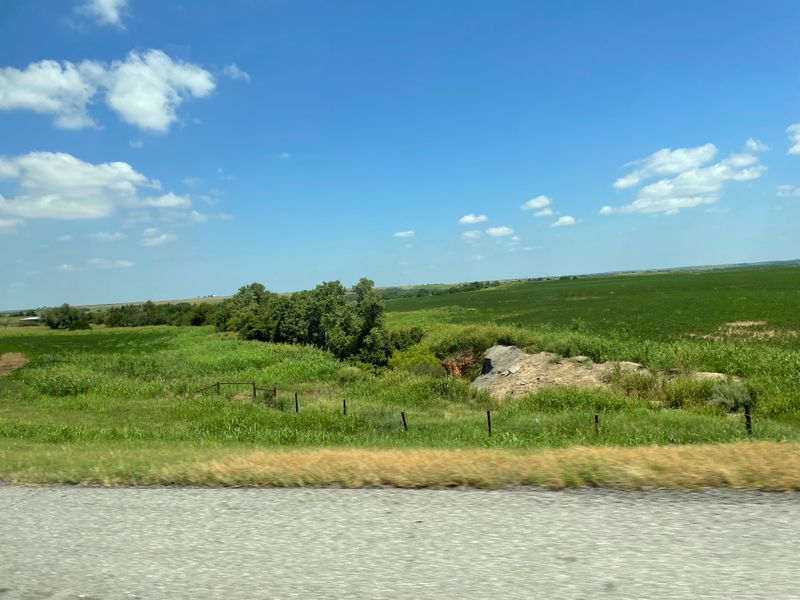
Lucille’s station never existed in isolation. It served as a vital community hub where locals gathered to exchange news, purchase necessities, and connect with neighbors.
Hydro residents remember Lucille personally, sharing stories about her generosity and no-nonsense business sense with visitors who ask. These living memories transform the preserved building from a static monument into something that still breathes with human connection.
The town itself, though small, takes pride in its Route 66 heritage. Residents understand that Lucille’s draws visitors who might otherwise bypass Hydro entirely, bringing economic activity and cultural exchange to a community that could easily feel forgotten.
This mutual relationship between historic site and modern town creates sustainability that benefits everyone involved. Tourism dollars support local businesses while preserving important history.
Walking through Hydro after visiting the station provides context for understanding Lucille’s impact. You see the scale of the community she served, the distances between services, and why her willingness to extend credit or feed hungry families mattered so profoundly.
Rural Oklahoma life during the mid-twentieth century presented real hardships that urban visitors might not immediately grasp. The town itself tells that story.
Several longtime residents make themselves available to share memories with interested visitors, creating informal oral history opportunities. These conversations add depth that no interpretive sign can match.
Hearing someone describe stopping at Lucille’s as a child, or explain how she helped their grandparents during tough times, personalizes history in ways that statistics and dates never could.
Legacy That Transcends Tourism
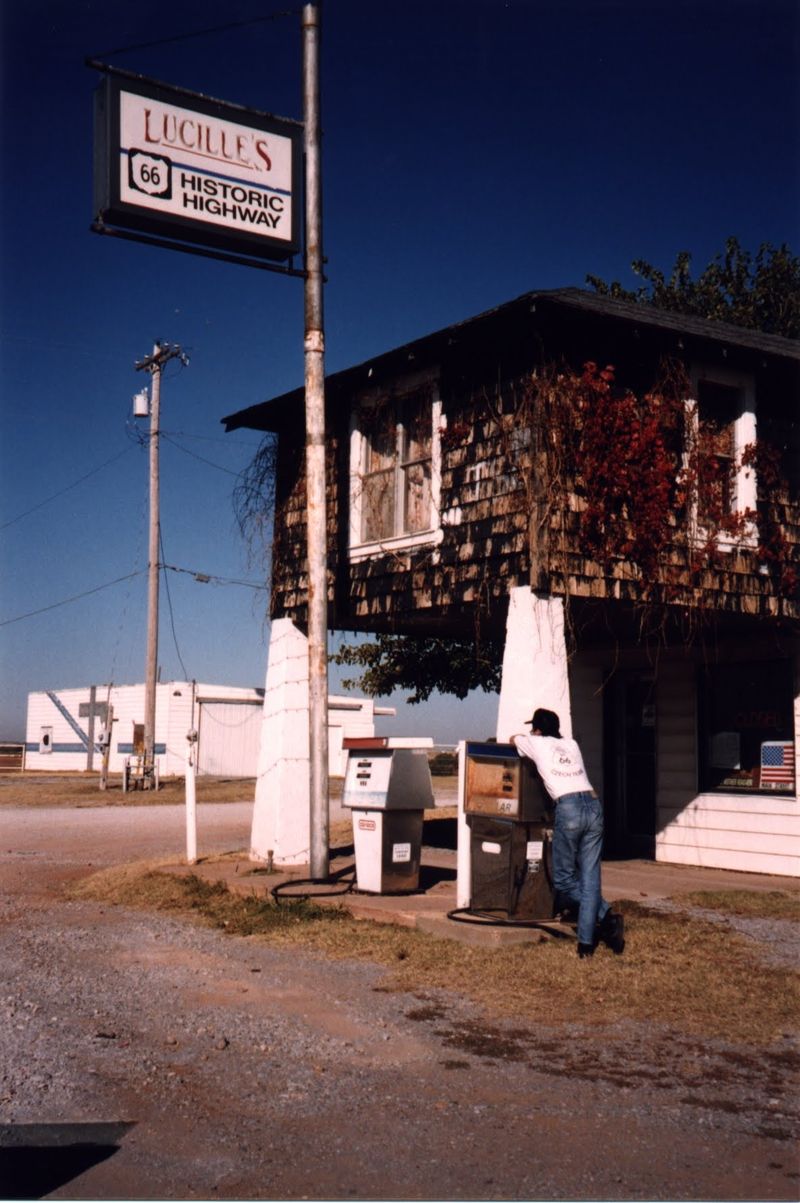
Lucille Hamons passed away in 2000, but her influence extends far beyond the preserved building that bears her name. She embodied values that resonate across generations: hard work, compassion, community service, and resilience during adversity.
Visitors from around the world stop here not just to photograph a cute building, but to honor a woman who represented the best of American character during challenging times.
Many travelers leave small tributes: coins placed on window ledges, flowers near the historical marker, or handwritten notes expressing gratitude for her example. These spontaneous memorials demonstrate that Lucille’s story touches people emotionally in ways that typical tourist attractions rarely achieve.
She’s become a symbol of ordinary people doing extraordinary things through simple acts of consistent kindness.
Educational groups increasingly include Lucille’s in curricula about Route 66, women entrepreneurs, and Depression-era history. Students learning about westward migration and American economic struggles gain deeper understanding by connecting abstract concepts to this specific person and place.
Lucille’s life provides a human face for historical forces that might otherwise seem distant and impersonal.
The station’s preservation ensures that conversations about values, community, and service continue long after the original participants have gone. Each visitor who stops, reads her story, and carries it forward becomes part of Lucille’s extended legacy.
In this way, a simple gas station in rural Oklahoma continues teaching lessons about what matters most in life, proving that some impacts truly are timeless.
Address: U.S. Route 66, Hydro, Oklahoma
Dear Reader: This page may contain affiliate links which may earn a commission if you click through and make a purchase. Our independent journalism is not influenced by any advertiser or commercial initiative unless it is clearly marked as sponsored content. As travel products change, please be sure to reconfirm all details and stay up to date with current events to ensure a safe and successful trip.
