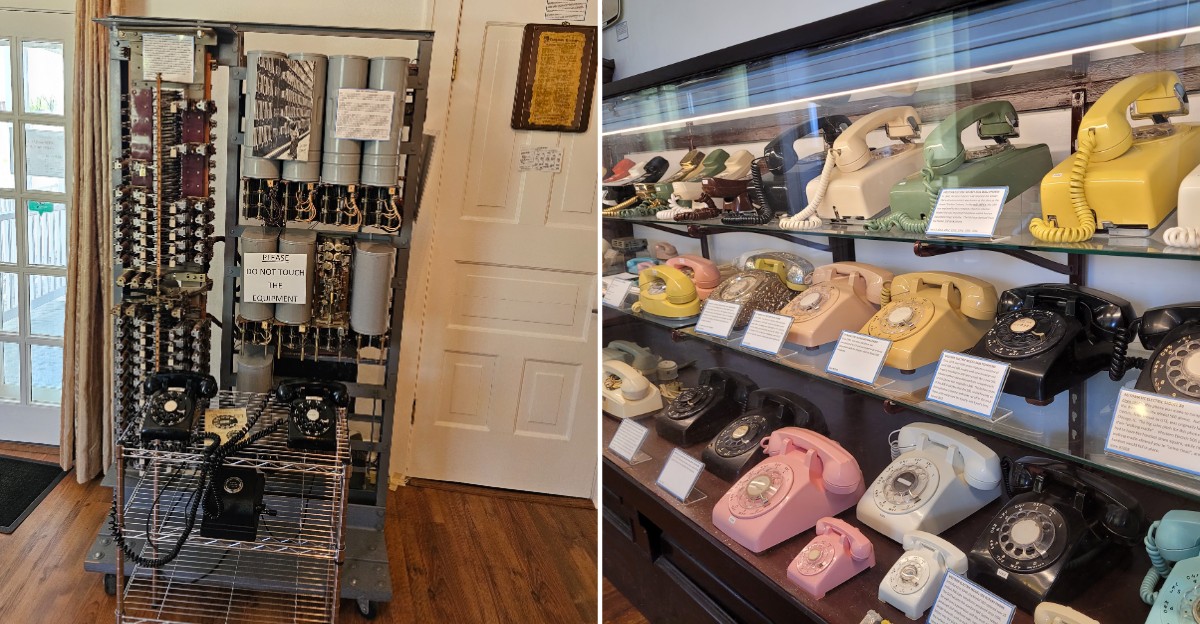
A group of retired phone company workers gave more than 66,500 volunteer hours to fix up one old house. That’s not a weekend project.
That’s a second career.
The building dates to 1896, and Army officers and their families once lived inside. Today it holds telephones from the late 1800s through the 2010s.
Some of them still work, and you can actually use them.
The part I find surprising is the working switch. Dial a rotary phone, and machinery clicks and clanks to find your call.
I’d be curious to hear that for myself.
This little corner of Missouri packs a lot of history into one floor. Let’s see what a museum built by the people who once ran the phone lines actually looks like?
Army Officers Once Watched Drills From These Very Windows
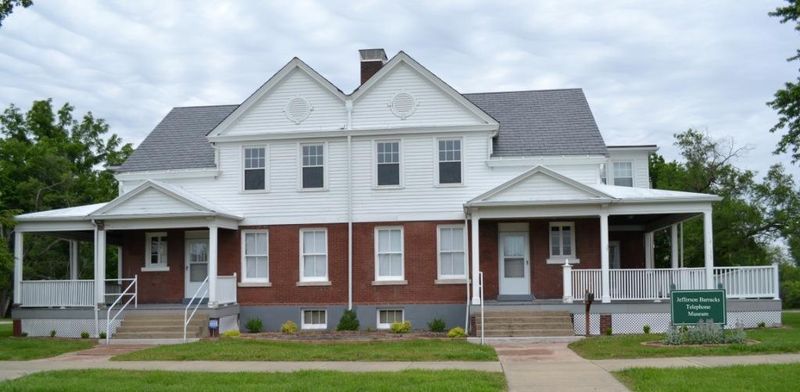
Before the phones moved in, soldiers’ families did. The building started life in 1896 as a two-story duplex on Officers’ Row at Jefferson Barracks.
Builders followed a standard Army design called Quartermaster Plan 115. Army officers lived here with their families.
From their homes, they could look out over military drills.
That’s a pretty great commute. Step outside, and work is right there on the field.
Jefferson Barracks shut down as an active post in 1946. Control passed to St. Louis County in 1950.
Many old buildings then waited for new purposes.
This one found a fitting second act. The structure is listed on the National Register of Historic Places.
That label protects its story for future visitors.
I can’t help picturing the change. Officers once planned their days in these rooms.
Now visitors learn how a voice travels down a wire.
The house keeps its historic character while doing a modern job. It shows that old buildings don’t need to sit empty.
With enough care, they can teach a whole new generation something useful.
Not bad for a house that’s well past 125 years old.
Dial A Rotary Phone And Listen To The Machinery Go Wild
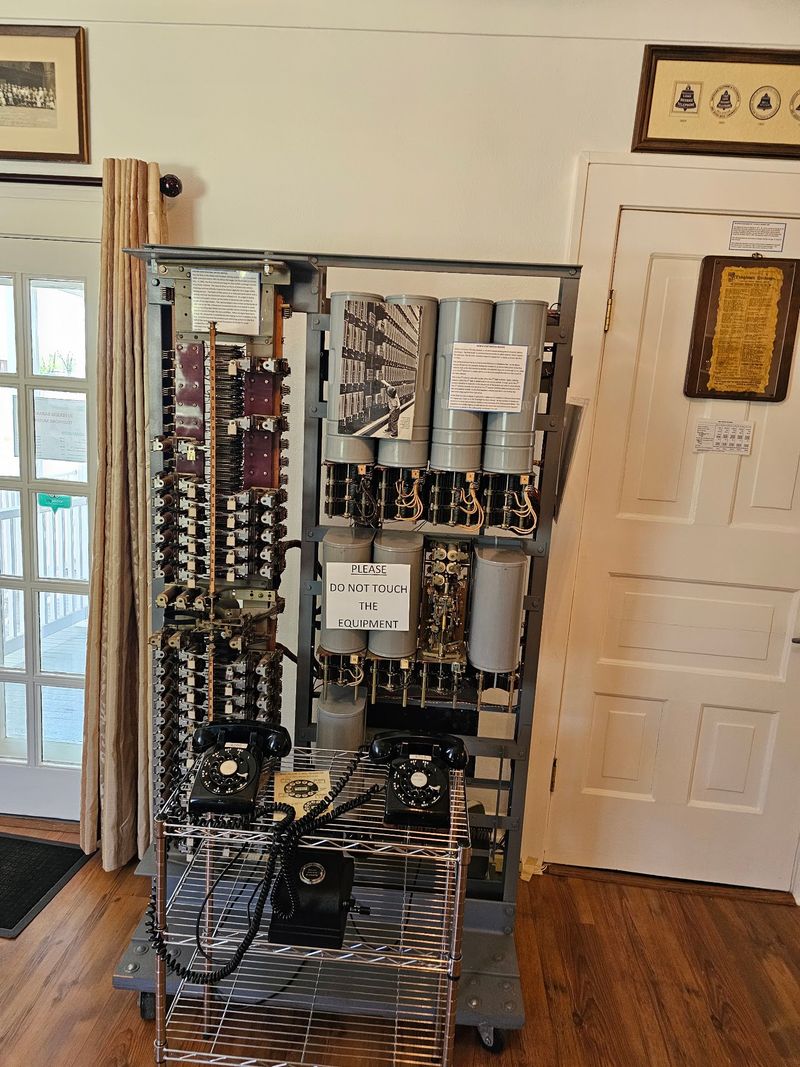
Click, clank, whirr. That noisy chorus comes from a working Central Office Step Switch, one of the stars of the museum.
Here’s how it works. Someone dials a number on a rotary phone.
The switch then moves step by step, hunting for the right connection.
You actually hear the call being built. Modern phones hide all that work inside a silent chip.
This machine shows its effort out loud.
Kids especially tend to stare at it. Honestly, adults do too.
It’s hard to look away from a machine thinking in clicks.
The museum also has working rotary phones wired together. Visitors can make dialed calls between them.
For anyone who grew up with touchscreens, that finger-in-the-hole dial feels like a puzzle.
Fair warning: you may catch yourself dialing again just to hear the switch respond. Nobody will blame you.
I get why this exhibit stands out. Static displays tell you how something worked.
A live switch proves it right in front of you.
It’s engineering made simple. Watch the parts move, follow the sound, and suddenly the whole old phone system makes sense.
Hello, Operator? Three Switchboards Show Who Really Connected Your Calls
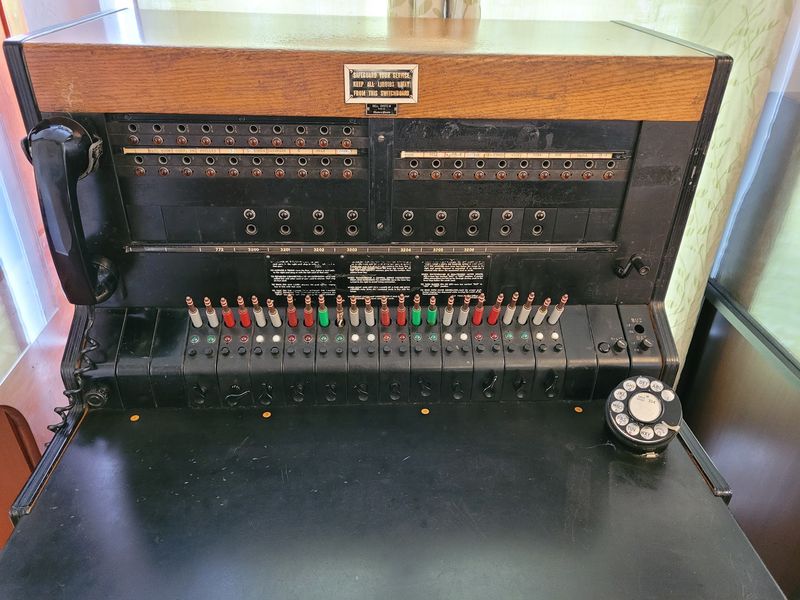
Long before speed dial, a real person sat between you and your grandma. Operators plugged cords into jacks to connect every call by hand.
The museum shows switchboards from the 1920s, 1940s, and 1960s. Seeing all three helps you spot the changes across four decades.
Each board tells a small story. Wires, lights, and plugs filled the operator’s workday.
It took sharp focus and quick hands to keep a town talking.
Docents can demonstrate how the boards were used. Many have more than 30 years of telecommunications experience.
Some likely knew operators personally, or worked near them for years.
That’s something I didn’t know until digging in. So much of early calling depended on human skill, not machines.
Compare that to today. You tap a name, and a call connects in seconds with no one in the middle.
The switchboards make that leap feel real. They put faces back into a technology we now take for granted.
It’s a small detail, but it stuck with me. Every old phone call once needed a helper.
Those helpers deserve a spot in history, and here they get one.
Kermit, R2-D2, And Big Bird Are Waiting By The Phone
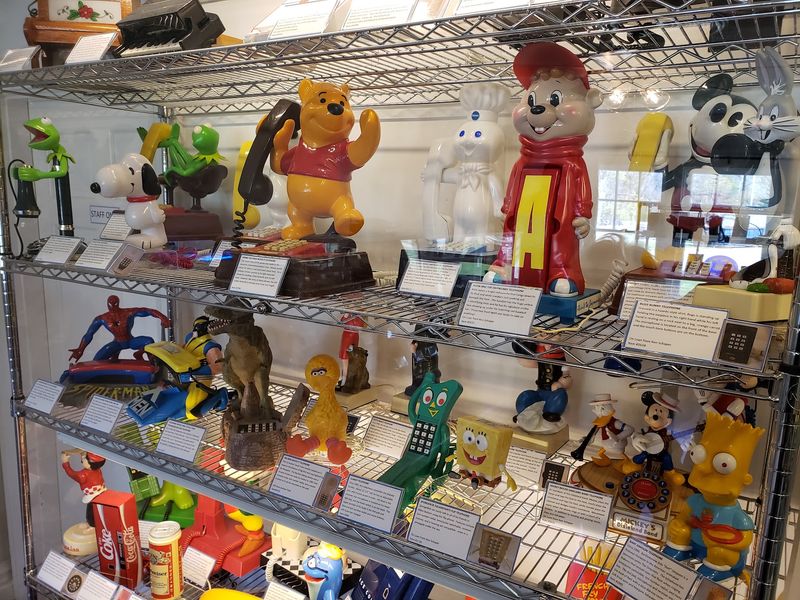
Not every phone here is serious business. Some look like they wandered in from a Saturday morning cartoon.
The museum shows a big lineup of novelty telephones. Winnie-the-Pooh is here.
So are R2-D2, Big Bird, and Kermit the Frog.
Yep, people really talked into a frog. And apparently loved it.
The fun goes beyond looks. Interactive tablets let visitors hear the special ringtones from these character phones.
Some unique phones come with sounds too, like sirens and bells.
This collection adds a playful break to the tour. After learning about switches and wiring, a goofy phone feels like dessert.
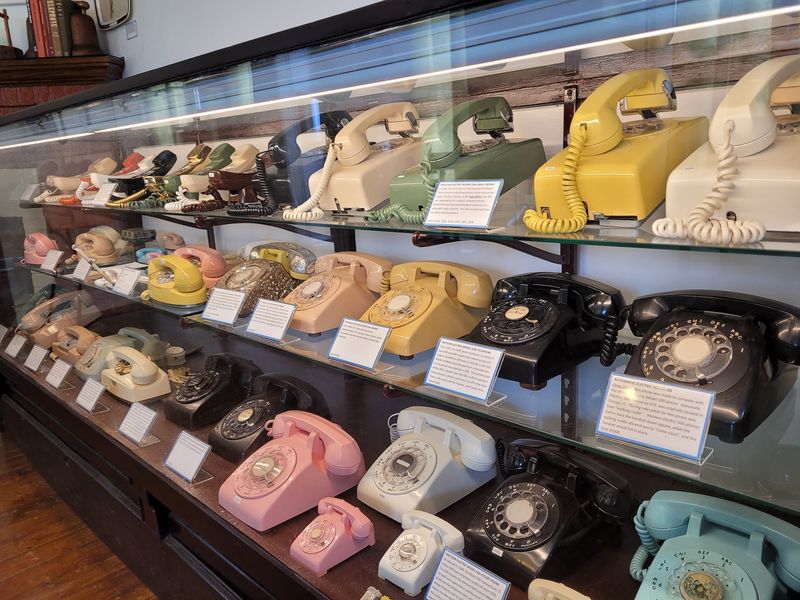
There’s also a clever lesson tucked inside. Phone companies once used colors and add-on cases to sell more phones.
Sound familiar? Cell phone cases do the same thing today.
I like how this section connects the past and present. Style always mattered, even in the rotary days.
Families with younger kids may find this corner the most exciting. It’s bright, familiar, and silly in the best way.
Just try not to grin when a cartoon character rings.
Soldiers Needed Tough Phones, And These Prove It
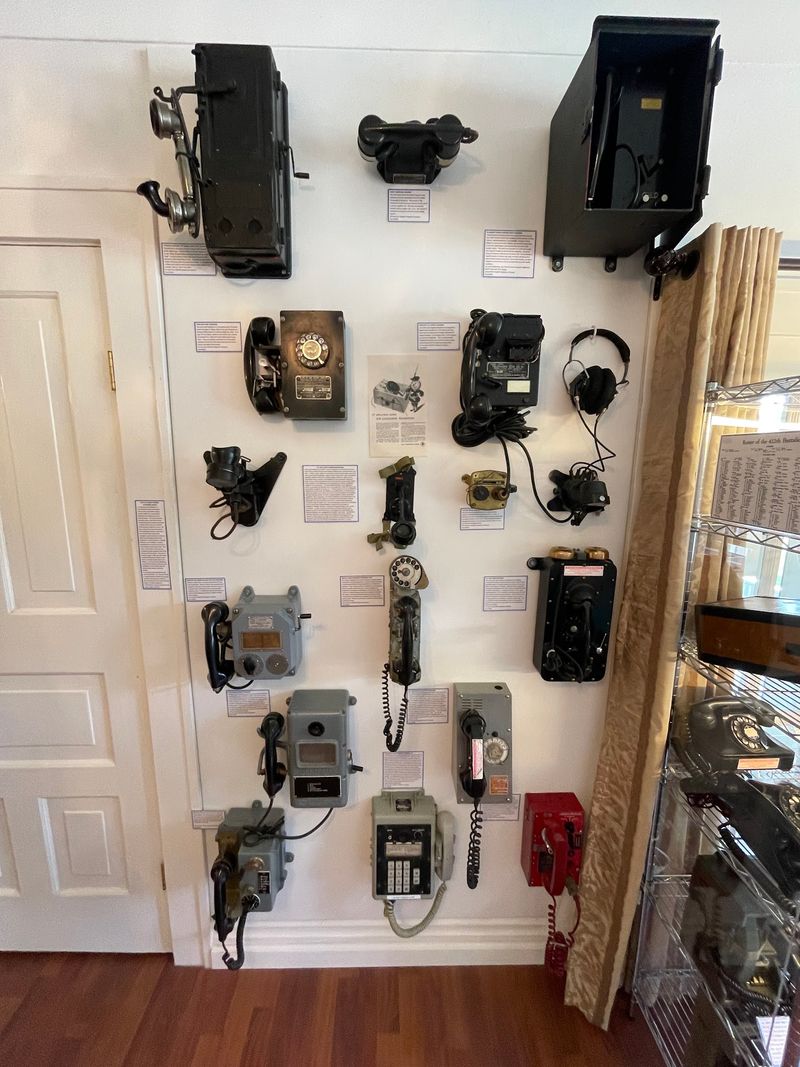
A phone on a desk lives an easy life. A phone in the field has to handle mud, weather, and rough travel.
The museum has a strong display of military telephones. They span from World War I through the Gulf War era.
These pieces look different from home models. They’re built to be sturdy and practical.
Every design choice served a job.
Seeing them side by side shows how communication kept improving. Clear contact always mattered for organized operations.
The setting makes this exhibit even more fitting. Jefferson Barracks spent many years as an active Army post.
The museum also shares history about how the post handled its own phone system.
So these phones feel right at home. They sit on ground with deep military roots.
I’d give this section some real attention. It’s easy to rush past rugged gray boxes.
Yet each one carried important messages when they counted most.
History fans will enjoy the details. Gadget lovers will notice clever engineering.
Either way, this exhibit adds weight and depth to the bigger telephone story.
From Mr. Bell’s First Phone To The Bag Phone In Your Uncle’s Car
Alexander Graham Bell gets a place of honor here. A statue of the inventor stands inside the museum.
Nearby sit replicas of his 1876 Liquid Transmitter and the 1877 First Commercial Telephone. These show where the whole story started.
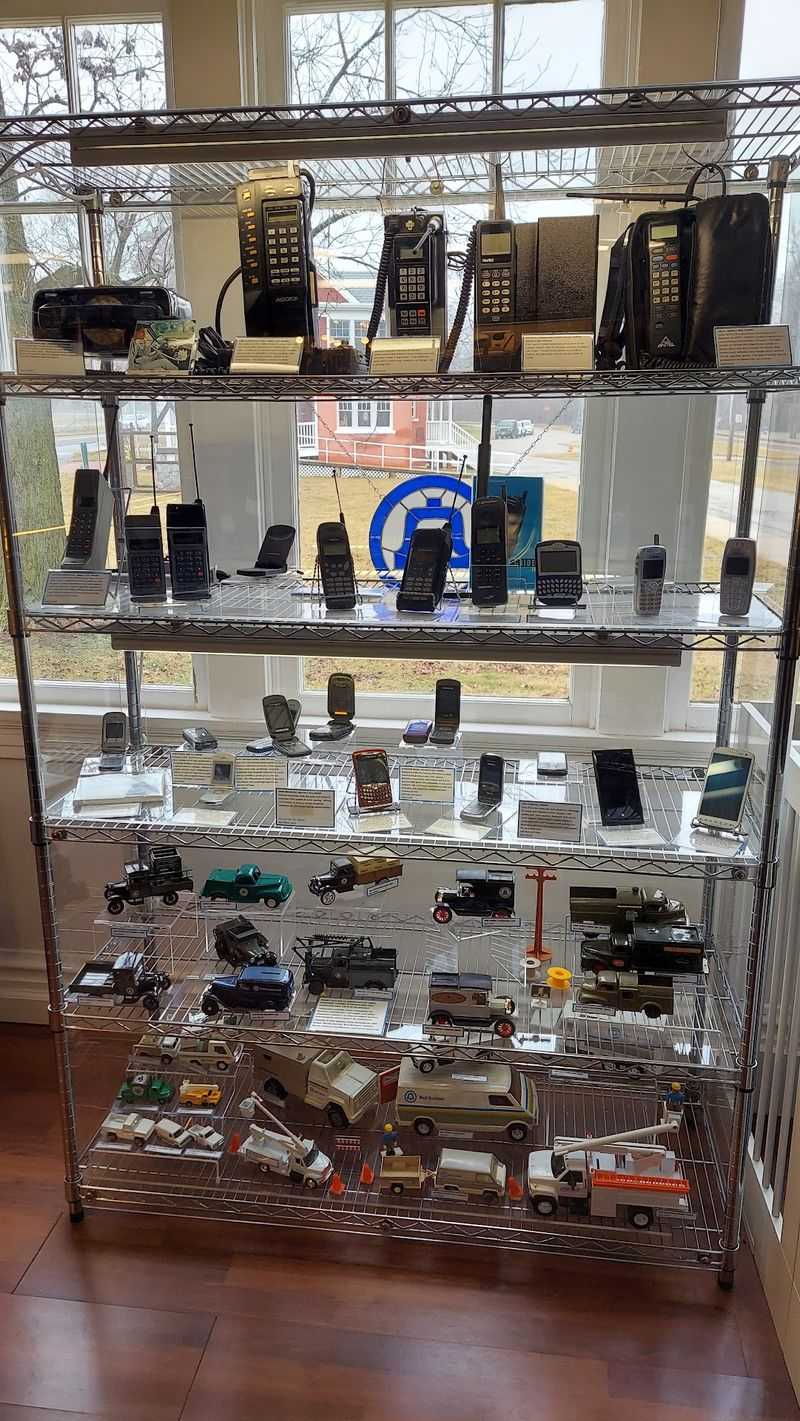
Then the timeline races forward. Candlestick phones, box phones, pay phones, and rotary models fill the space.
Early car phones show up too.
The cellular display might spark the biggest laughs. It tracks early radiotelephones and chunky bag phones.
Eventually, it reaches the slim smartphones in our pockets.
Seriously, those bag phones needed their own luggage. Today’s devices weigh almost nothing by comparison.
Every artifact has a description card. Each one lists the item’s name, dates of use, and its job in the industry.
That makes self-guided browsing easy.
The museum also keeps updating its exhibits. Return visits can bring something new to discover.
That puts things in perspective. About 140 years separate Bell’s transmitter from modern phones.
Walking that whole path in one afternoon feels like time travel with handy labels.
Look Up Outside, Because A Full Telephone Pole Is Part Of The Tour
Some exhibits don’t fit indoors. A complete telephone pole stands outside, fully equipped with climbing gear.
It’s a reminder of the hard physical work behind every call. Line workers climbed poles like this in all kinds of weather.
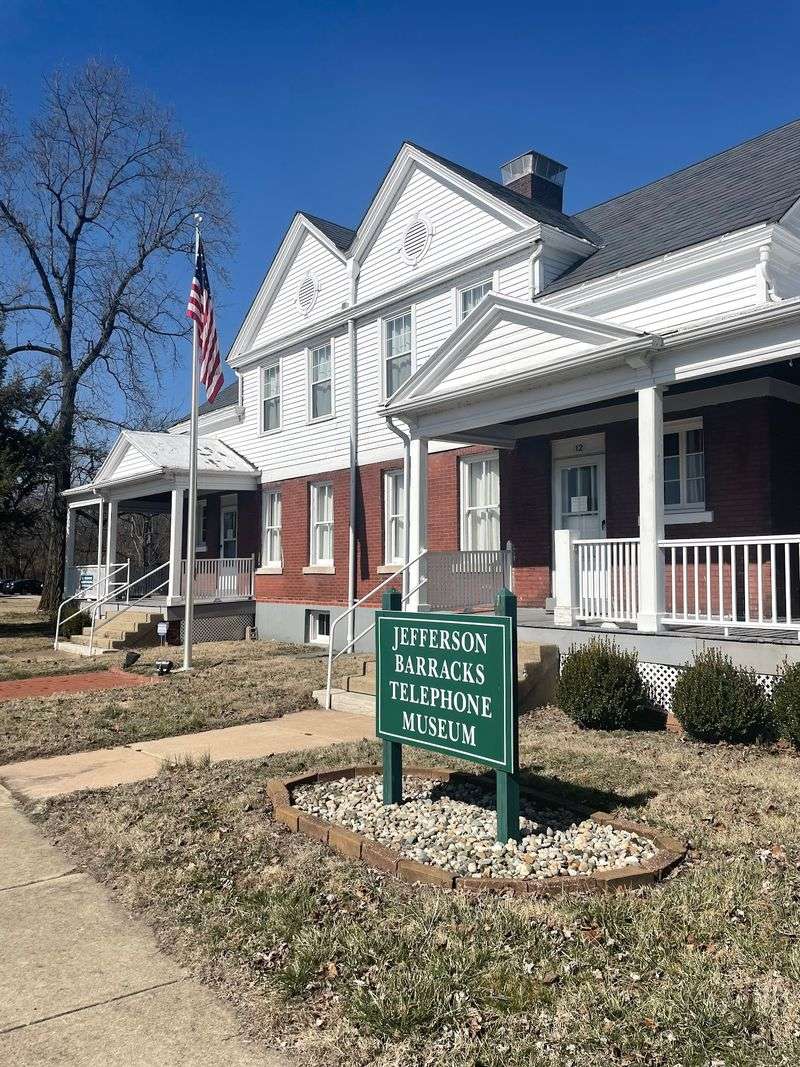
The museum sits inside Jefferson Barracks Historic Park, a 426-acre landmark in Missouri. The post was established in 1826.
It’s one of the oldest military installations west of the Mississippi River.
The official address is 12 Hancock Avenue, St. Louis, MO 63125. Free parking sits right behind the museum.
There’s room for cars, vans, buses, motor coaches, and RVs.
Road trippers, take note. The museum is easy to reach from Missouri’s historic Route 66.
Other museums and historic sites in the park make it easy to fill a full day. You can pair phone history with plenty of military history nearby.
I like how the setting adds context. The pole, the old officers’ homes, and the park grounds all work together.
Before heading inside, give that pole a good look. Then imagine climbing it with tools on your belt.
Plan Around These Hours Or You Will Miss The Ringing
Timing matters here. The Jefferson Barracks Telephone Museum opens Wednesday through Sunday, from 9 a.m. to 2 p.m.
It’s closed Mondays and Tuesdays. It also closes for Easter, Thanksgiving, and Christmas.
Admission is affordable, with lower rates for seniors and kids. Children four and under get in free.
Active military members with ID are free too.
Self-guided visits work well thanks to those helpful description cards. Groups of ten or more can book a guided tour.
Just call at least two weeks ahead.
Guided group tours run about an hour. Experienced docents can shape them to fit your group’s interests.
The museum sits on one floor inside. A wheelchair entrance and ramp are on the east side of the building.
Accessible parking and restrooms are available, plus chairs for resting throughout.
Don’t skip the gift shop on the way out. It carries telephone-themed items for a fun souvenir.
I believe this place rewards curious people of every age. Bring questions for the volunteer docents.
After all, the folks who saved this building would love to talk phones with you.
