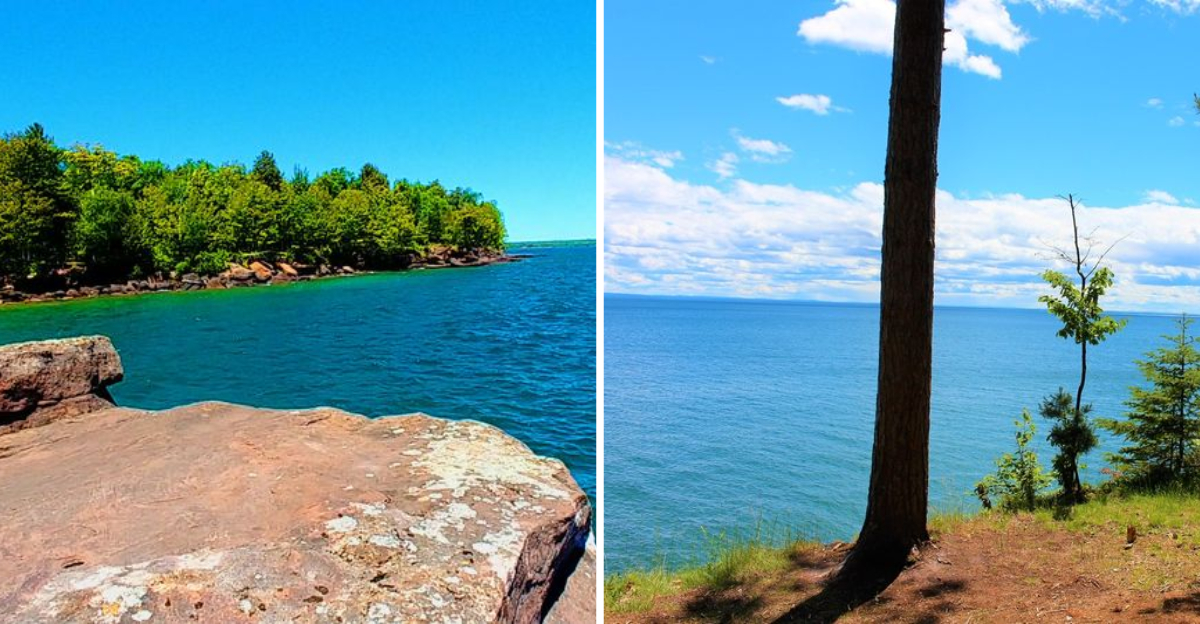
The ferry ride takes about twenty minutes. Then you are on an island in Lake Superior, standing at the edge of ancient red cliffs that drop straight into water so clear it looks like glass. This Wisconsin state park has miles of shoreline, quiet forests, and a beach that feels like it belongs up north. The cliffs are the main event.
Rust colored sandstone, carved by wind and waves, glowing in the late afternoon light. I came for a few hours and stayed all day.
Some places just grab you. This is one of them.
The Ferry Ride That Sets the Mood
Before you even set foot in the park, the journey itself becomes part of the experience. The Madeline Island Ferry Line runs from Bayfield, Wisconsin, and the crossing takes about 20 to 25 minutes each way.
That might not sound like much, but out on Lake Superior, even a short stretch of open water feels significant.
The lake has a personality all its own. On calm mornings, the surface looks almost silver, and you can already spot the dark tree line of Madeline Island growing larger as the boat moves.
On windier days, the chop picks up and the whole ride feels like a small adventure before the real one begins.
The ferry takes passengers, bicycles, and vehicles, so you have options for how you want to explore once you arrive. No reservations are needed for most crossings, which keeps things relaxed and spontaneous.
Leashed pets are welcome on board, so you do not have to leave anyone behind at the dock.
Pulling into La Pointe and seeing the island for the first time is genuinely exciting. It sets a tone of discovery that carries through the entire visit to Big Bay State Park.
Red Sandstone Cliffs Along the Shoreline
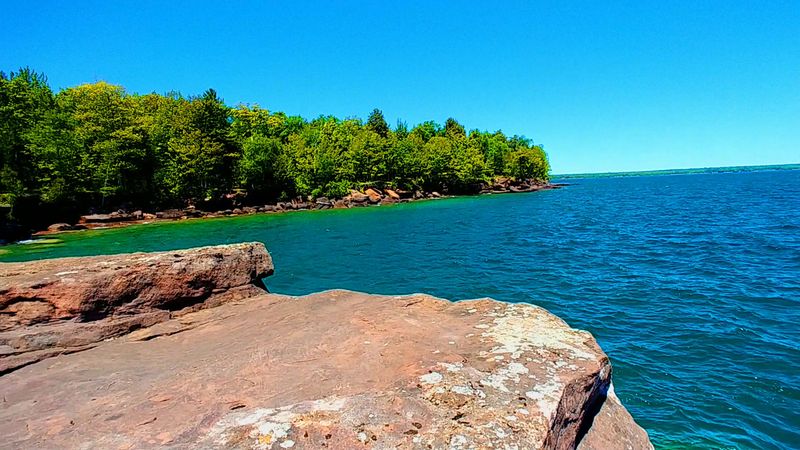
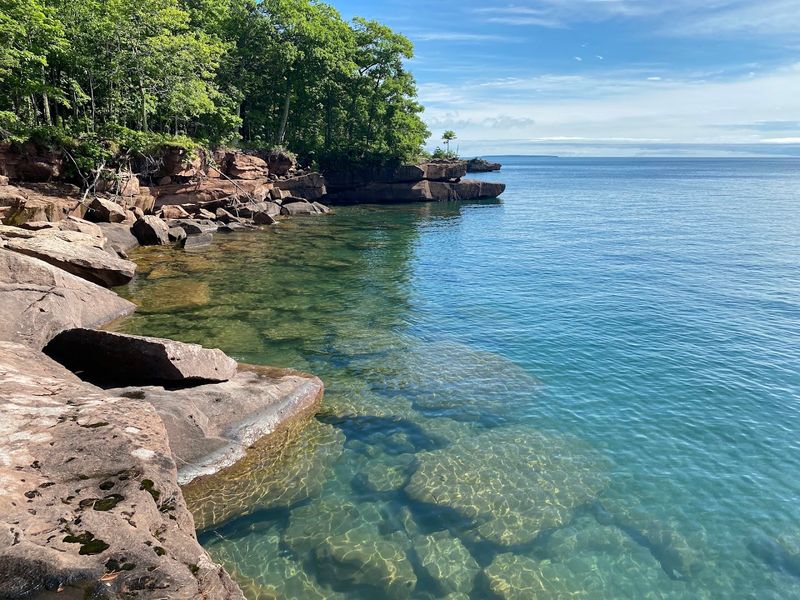
The cliffs at Big Bay State Park are the kind of thing you photograph a dozen times and still feel like you have not captured them properly. These sandstone formations are hundreds of millions of years old, shaped by ancient seas and glacial forces into jagged bluffs that glow red and orange in afternoon light.
Up close, the rock has texture and color that shifts depending on the time of day. Early morning light brings out deep rust tones, while midday sun turns the stone almost amber.
The contrast against Lake Superior’s blue water below is genuinely striking, and it is easy to understand why people drive hours just to see this stretch of shoreline.
The Bayview Trail runs along the coastline and offers some of the best vantage points for taking in the cliffs. There are turnout spots along the way where you can pause and look out over the water without any obstruction.
The other side of the trail is forested, which gives the whole walk a layered, immersive feel.
One reviewer described the coastal trails as breathtaking, and honestly, that word fits. This is not a subtle landscape.
A Sandy Beach That Earns Its Reputation
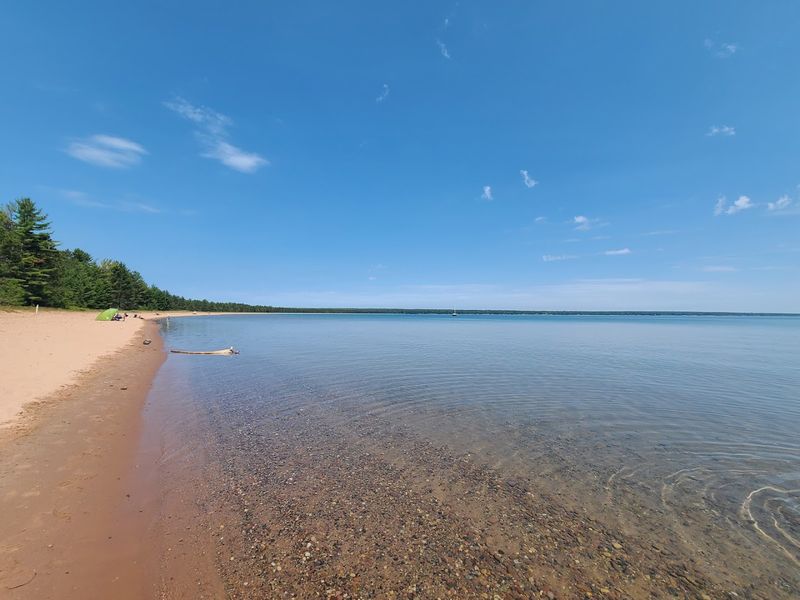
Not every Great Lakes beach delivers on its promise, but the 1.5-mile stretch at Big Bay State Park genuinely does. The beach sits inside a natural bay, which keeps the water calmer than the open lake shoreline just a short walk away.
That calm makes it ideal for swimming, wading, or just sitting at the edge and letting the cold water run over your feet.
Lake Superior is famously cold, but on a warm summer afternoon, it is refreshing rather than punishing. The water clarity here is remarkable.
You can see the sandy bottom clearly even when you are standing waist-deep, which is not something most beaches can offer.
The beach is wide enough that even on busy weekends it does not feel cramped. Families spread out with towels and chairs, and there is still room to find a quieter patch if you want some space.
The accessible boardwalk connects the beach to other areas of the park, making it easy to move between the sand and the trails without backtracking.
One thing worth knowing is that dogs are not permitted on the beach, so plan accordingly if you are traveling with a pet.
Hiking Trails Through Forest, Bog, and Bluff
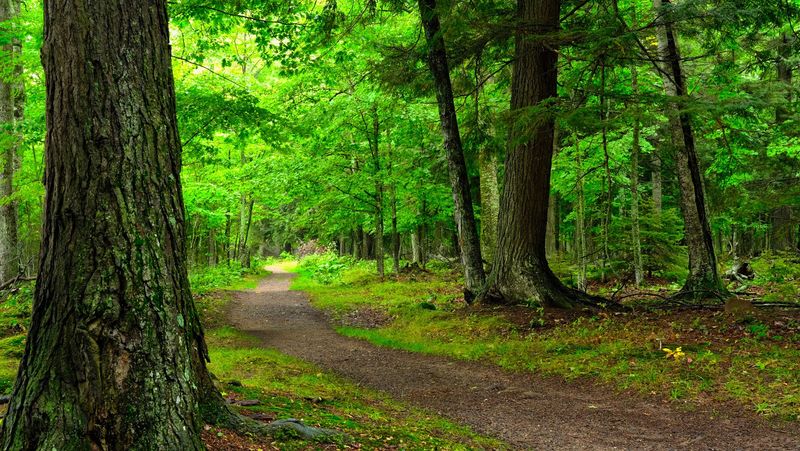
Big Bay State Park has over seven miles of hiking and nature trails, and they cover a surprising range of terrain for a single park. You can walk through old-growth forest, skirt the edge of a sphagnum bog, climb toward cliff overlooks, and return along the boardwalk by the shore, all in the same outing.
The Lagoon Ridge Trail is a favorite for people who want something with a bit more challenge and variety. It passes through several distinct ecosystems and gives you a real sense of how layered this landscape is.
The boardwalk trail along the shoreline is considerably easier and fully accessible, making it a good option for visitors of all mobility levels.
Fall is a particularly good time to hike here. The colors in the forest turn vivid, the trails are less crowded, and the light on the lake takes on a different quality that makes every overlook feel cinematic.
Wildflowers in June are another highlight, with visitors noting blooms that line the paths in impressive variety.
Trail conditions can vary after rain, so waterproof footwear is a smart call. A full hike of all trails adds up to about 13 miles for those who want to cover the whole park.
Big Bay Lagoon and the Natural Area Within the Park
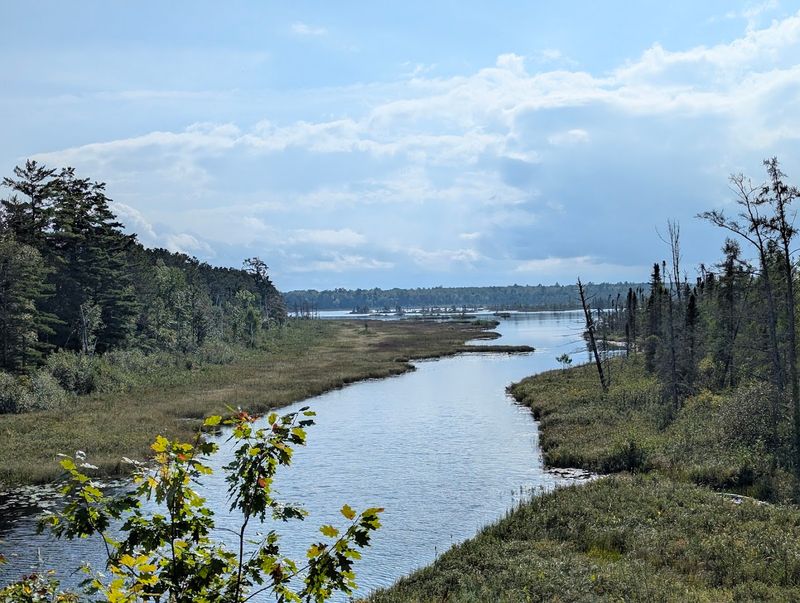
Tucked inside Big Bay State Park is something most visitors do not expect: a Wisconsin State Natural Area. Big Bay Lagoon is a protected ecosystem that includes lakeside dunes, sphagnum bogs, and patches of old-growth forest, all existing within a few miles of each other.
It is the kind of place that makes you slow down and pay attention to the small stuff.
The bog section of the lagoon area is especially interesting. Sphagnum moss creates a spongy, almost surreal ground cover, and the plant life around it is adapted to conditions that most vegetation cannot handle.
It is a completely different environment from the beach or the cliff trails, which makes the park feel like several destinations layered into one.
Birdwatching here is genuinely rewarding. The mix of habitats draws a wide variety of species, and the quieter corners of the lagoon area see less foot traffic than the main beach or the coastal trail.
Early mornings are the best time to visit if wildlife observation is your goal.
The lagoon also adds an educational dimension to the visit. Reading the interpretive signs along the trail gives real context to what you are seeing and makes the whole experience feel more meaningful.
Camping Under the Trees at the Park’s Campground
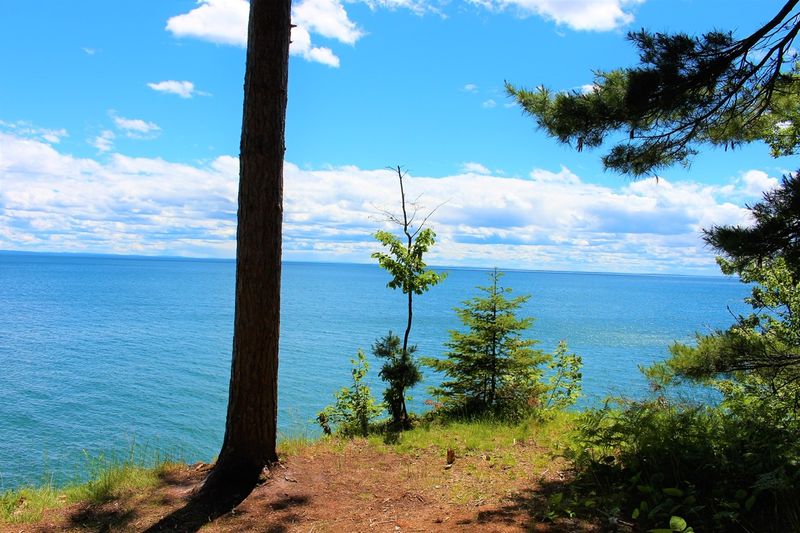
Spending a night or two at Big Bay State Park changes the experience completely. The campground has 60 sites, some with electric hookups, and the facilities include flush toilets and showers, which is a genuine luxury for a park this remote.
The sites are well-spaced, so you get a sense of privacy even when the campground is full.
Waking up on the island before the day-trippers arrive feels like having the whole place to yourself for a few hours. The morning light through the trees is soft, the trails are quiet, and the lake has that still, glassy quality it only gets in the early hours.
It is a hard thing to replicate with a same-day visit.
The park does have black bears in the area, and signage reminds campers to store food securely in vehicles. It is a standard precaution in northern Wisconsin, and it adds a small edge of wildness to the camping experience without being alarming.
Rangers patrol the area regularly.
Late May and early June can be cool at night, so packing warm layers is worth it. The campground has been described by long-time visitors as one of the most peaceful spots in the entire region, and that reputation holds up.
Practical Tips for Planning Your Visit
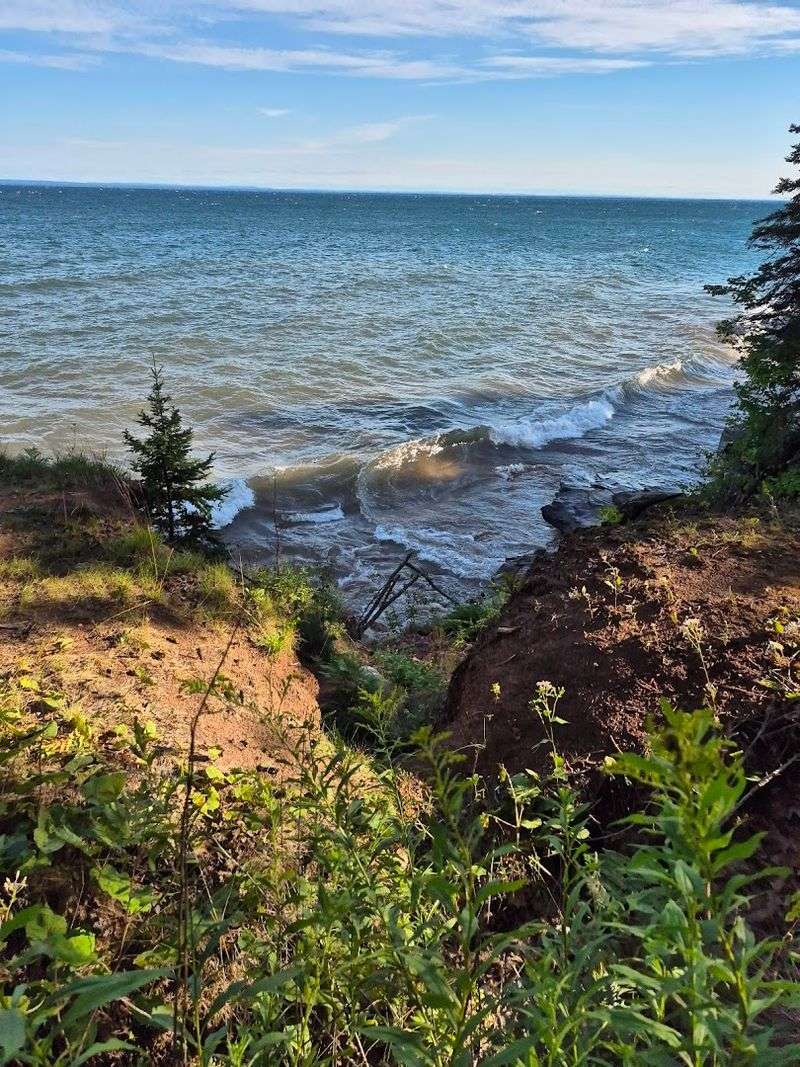
Getting the most out of Big Bay State Park starts with a little preparation. The park is open daily from 6 a.m. to 11 p.m. year-round, but ferry service from Bayfield typically runs from early spring through late fall, with frequency increasing during peak summer months.
Winter access depends on ice conditions on the lake.
A Wisconsin State Park vehicle admission sticker or day-use pass is required for entry. If you are also planning to stop at Copper Falls State Park or another state park on your way up, the annual pass makes solid financial sense.
The park phone number is 715-747-6425 if you need to check conditions or campsite availability before heading out.
Renting a moped or bicycle in La Pointe is a popular way to get around the island before or after visiting the park. The town itself is worth a short stroll, with a local museum and ice cream shop that visitors consistently recommend for a relaxed stop.
Bug spray is a practical essential, especially in late spring and early summer when flies can be active on the wooded trails. The beach tends to have better airflow and fewer insects.
Bringing water is also smart since the park does have water fill stations, but trail access to them is limited.
Address: 2402 Hagen Rd, La Pointe, Wisconsin
