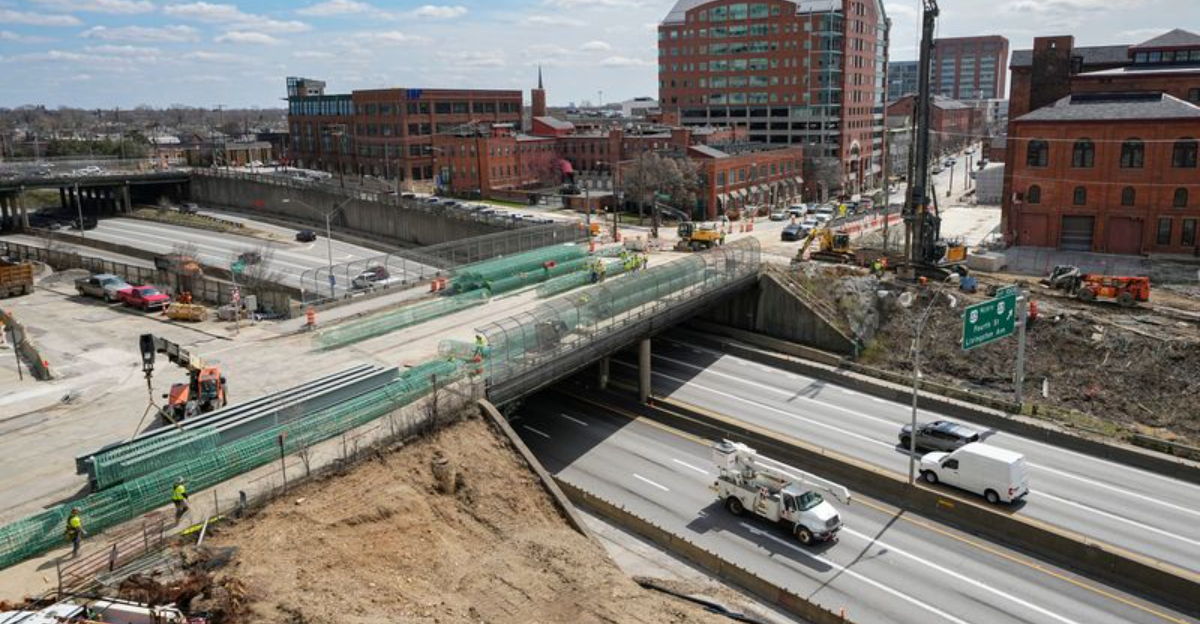
Planning a road trip through Ohio? You might want to check your route before hitting the highway. Recent construction projects, accidents, and weather events have caused several major road closures across the Buckeye State. Knowing which roads to avoid can save you hours of frustrating detours and help you reach your destination on time.
1. Flooding Closes Route 52 Along Ohio River
Recent heavy rainfall has caused the Ohio River to spill over its banks, submerging sections of Route 52 between Cincinnati and Portsmouth. Water levels remain dangerously high, making the scenic riverside route impassable in multiple locations.
Emergency management officials warn the closures could extend for weeks depending on weather conditions. Barricades and warning signs mark closed sections, but GPS systems might not reflect these temporary closures.
For east-west travel along southern Ohio, Interstate 32 offers a safer alternative though it takes you further inland from river views.
2. Major Sinkhole on Cleveland’s Euclid Avenue
A massive sinkhole suddenly appeared on Euclid Avenue in downtown Cleveland, swallowing part of the roadway and forcing an emergency closure. City engineers are investigating what caused this 15-foot-wide crater near Playhouse Square.
The closure affects five blocks of this major artery, disrupting both vehicle traffic and public transportation routes. Repairs are expected to take at least three weeks as crews must first determine if underground utilities were damaged.
Downtown visitors should use Superior Avenue or Chester Avenue as alternatives, and allow extra time when heading to theaters or restaurants in the area.
3. Toledo’s Anthony Wayne Bridge Maintenance Shutdown
The historic Anthony Wayne Bridge in Toledo has been completely closed for scheduled maintenance and structural repairs. This iconic suspension bridge, locally known as the High Level Bridge, typically carries thousands of vehicles daily across the Maumee River.
The closure is particularly challenging because it eliminates a key connection between East Toledo and downtown. Workers are replacing aging cables and repairing concrete supports that have deteriorated over decades of use.
Motorists must now use either the Craig Memorial Bridge or I-75 to cross the river, adding approximately 10-15 minutes to cross-river trips.
4. Landslide Blocks State Route 7 Near Steubenville
A significant landslide has completely blocked State Route 7 approximately five miles south of Steubenville. Heavy spring rains destabilized the hillside, sending rocks, trees, and mud cascading onto this major north-south corridor along the Ohio River.
ODOT engineers estimate clearance and hillside stabilization could take up to two months. The remote location makes cleanup particularly challenging, as heavy equipment must navigate narrow access roads.
Travelers heading to or from West Virginia should use alternate routes like State Route 43 or plan to cross at different points along the river where bridges remain open.
5. I-71 Bridge Reconstruction Near Columbus
Construction crews have completely shut down the northbound lanes of Interstate 71 just south of Columbus for a major bridge overhaul. The closure extends from Grove City to downtown and is expected to last until late September.
Traffic is being rerouted along I-270, creating significant congestion during rush hours. Local commuters report delays of 30-45 minutes, while travelers passing through might experience longer wait times.
If Columbus is your destination, consider using alternative routes like State Route 23 or planning your arrival outside peak travel times (7-9am and 4-6pm).
6. I-75 Construction Zone Near Dayton
A massive reconstruction project has reduced Interstate 75 to just one lane in each direction through Dayton’s northern suburbs. The narrowed roadway stretches for nearly seven miles between the Benchwood Road and Needmore Road exits.
Speed limits have been reduced to 45 mph, and concrete barriers leave no shoulder space for disabled vehicles. State Highway Patrol reports accident rates have tripled in this zone since construction began.
Consider using parallel routes like Old Troy Pike (SR 202) or Dixie Drive if your destination is within the affected area. Through travelers might benefit from taking I-675 to bypass Dayton entirely.
7. Emergency Repairs on Akron’s Central Interchange
Unexpected structural damage discovered during routine inspection has forced the closure of multiple ramps at Akron’s Central Interchange, where I-76, I-77, and Route 8 converge. Engineers found concerning cracks in supporting columns beneath the eastbound I-76 ramp.
The closure creates particularly complex detours since this interchange connects three major highways. Navigation apps often struggle to provide accurate alternatives due to the interchange’s complexity.
Local commuters recommend using Akron’s secondary street network when possible. Downtown-bound travelers should consider exiting highways earlier and using Market Street or Exchange Street to reach their destinations.
8. Railroad Crossing Replacement on US-23 in Delaware County
A complete railroad crossing replacement has shut down US-23 just north of Delaware. This busy north-south corridor typically carries substantial traffic between Columbus and Marion, making the closure particularly disruptive for commuters and freight.
The railroad company estimates the work will take approximately one week to complete as they replace deteriorated tracks and improve the crossing surface. Detour routes add significant mileage, especially for truck traffic that must use highways rated for heavy loads.
Local traffic can navigate around using county roads, but unfamiliar drivers should follow the official detour using US-42 and State Route 37.
9. Brent Spence Bridge Lane Restrictions Between Ohio and Kentucky
The infamous Brent Spence Bridge connecting Cincinnati to Kentucky has new lane restrictions that have created massive backups. Though not technically closed, the reduced capacity has turned the bridge into a bottleneck that affects interstate commerce across the Midwest.
Engineers discovered structural concerns requiring immediate weight redistribution across the aging span. Two lanes in each direction are now closed, leaving just two lanes to handle the 180,000 vehicles that cross daily.
Consider using alternative crossings like the Clay Wade Bailey Bridge or the Taylor Southgate Bridge for local trips. Interstate travelers might benefit from detouring via I-275’s eastern or western river crossings.
Dear Reader: This page may contain affiliate links which may earn a commission if you click through and make a purchase. Our independent journalism is not influenced by any advertiser or commercial initiative unless it is clearly marked as sponsored content. As travel products change, please be sure to reconfirm all details and stay up to date with current events to ensure a safe and successful trip.
