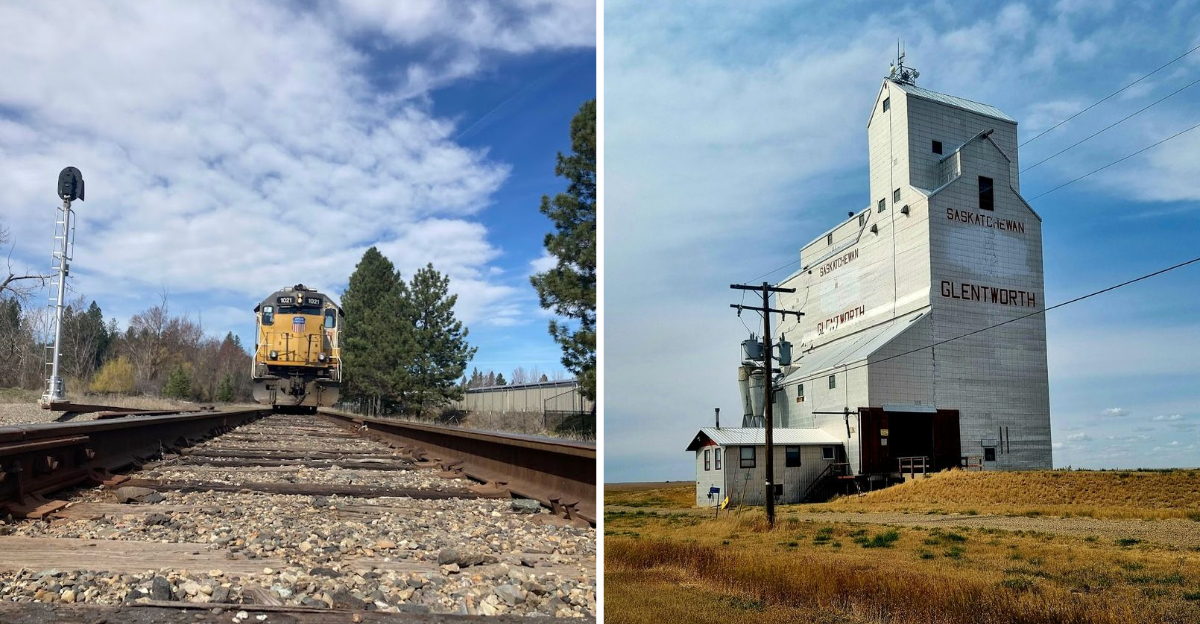
There is something quietly magnetic about a place where time feels paused mid-breath, as if the world simply forgot to press play again. Frederick, Kansas rests in the wide prairie like a forgotten chapter, where the horizon stretches endlessly and the wind carries a kind of stillness that feels almost intentional.
The moment the car slows and the dust settles, everything feels different, quieter in a way that is hard to explain but easy to feel. Once a lively railroad crossroads, the town rose quickly in the late 1800s, shaped by movement, trade, and the promise of growth.
Grain elevators still stand like skeletal reminders of that ambition, while weathered facades and a 19th-century steel jail hold onto fragments of lives that once filled these streets. Nothing here feels staged, yet everything feels like it belongs to another chapter entirely.
Over time, the crowds faded, the trains moved on, and modern routes simply passed it by without looking back. What remains is a place that feels suspended, where silence carries more weight than sound and empty roads feel almost storied.
Even now, with only a handful of residents, there is a sense that the town has not finished speaking, only learned to say less.
The Railroad Roots That Built Frederick From Nothing
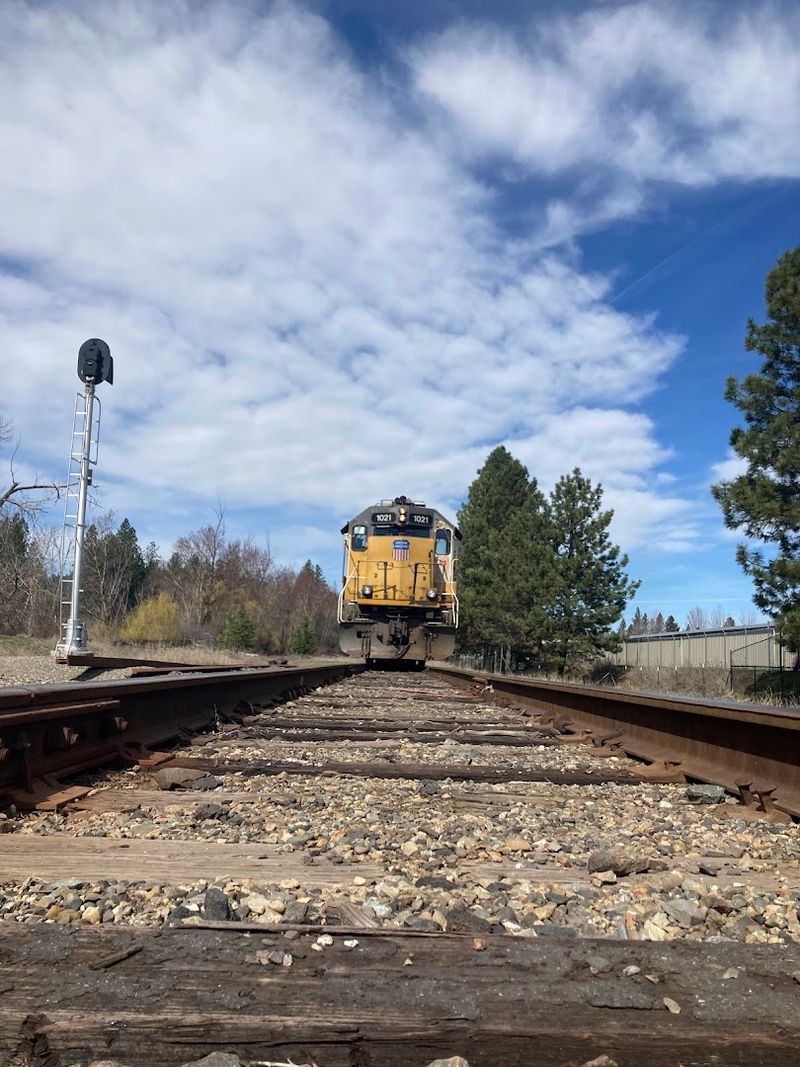
Before Frederick was a dot on any map, two railroads crossed paths here and changed everything. The Missouri Pacific and the St. Louis and San Francisco railroads intersected in 1878, and almost overnight, a town began to take shape around that junction.
It was the kind of origin story that felt both accidental and inevitable.
Farmers needed a place to ship grain. Merchants needed customers.
Families needed somewhere to plant roots. Frederick answered all of those needs at once, growing from raw prairie into a community with real momentum behind it.
Driving into town today, you can almost trace the old rail lines by the way the land sits. The flatness of the Kansas plains makes it easy to imagine long freight trains rolling through, loaded with wheat and purpose.
That railroad energy shaped the town’s grid, its economy, and its identity in ways that still echo in the layout of the streets. It is a good reminder that so many small American towns were born not from planning but from the simple fact that two lines crossed in the right place at the right time.
A Population That Dwindled to Just Eight Souls
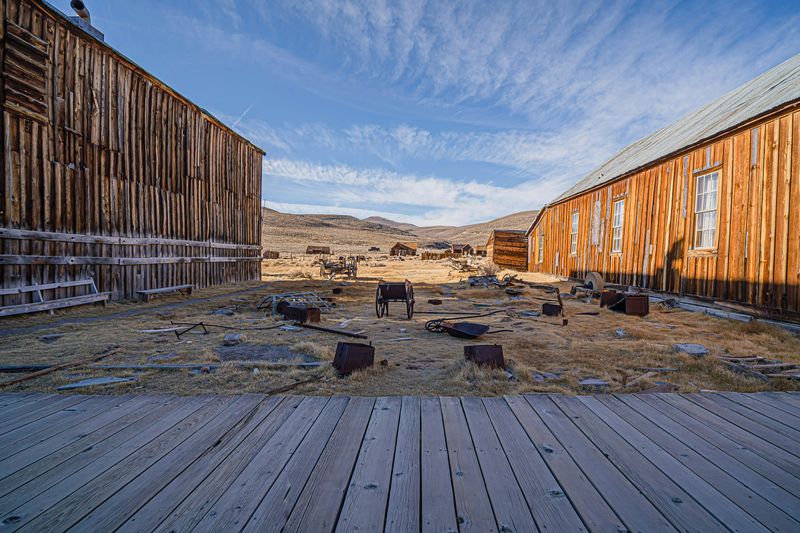
Frederick once held close to a thousand residents at its peak, which is hard to picture when you stand on its near-empty streets today. The post office shuttered in 1954, and that quiet closure set off a slow chain of departures that lasted decades.
Each decade brought fewer faces, fewer lights in windows, fewer reasons to stay.
By the 2020 census, only eight people remained. Eight.
That number is both staggering and oddly poetic when you think about it. Frederick is technically still an incorporated city, which makes it the smallest one in the entire state of Kansas.
There is something deeply human about those eight residents choosing to stay. It speaks to the kind of attachment people form with land and memory, the sort that does not dissolve just because the grocery store closed or the school went dark.
Visiting Frederick with that number in mind changes how you see it. Every structure still standing, every garden still tended, every flag still flying feels like a quiet act of defiance against forgetting.
The town is not dead. It is just running on a very small but very determined crew.
The Steel-Cage Jail That Still Stands Proud
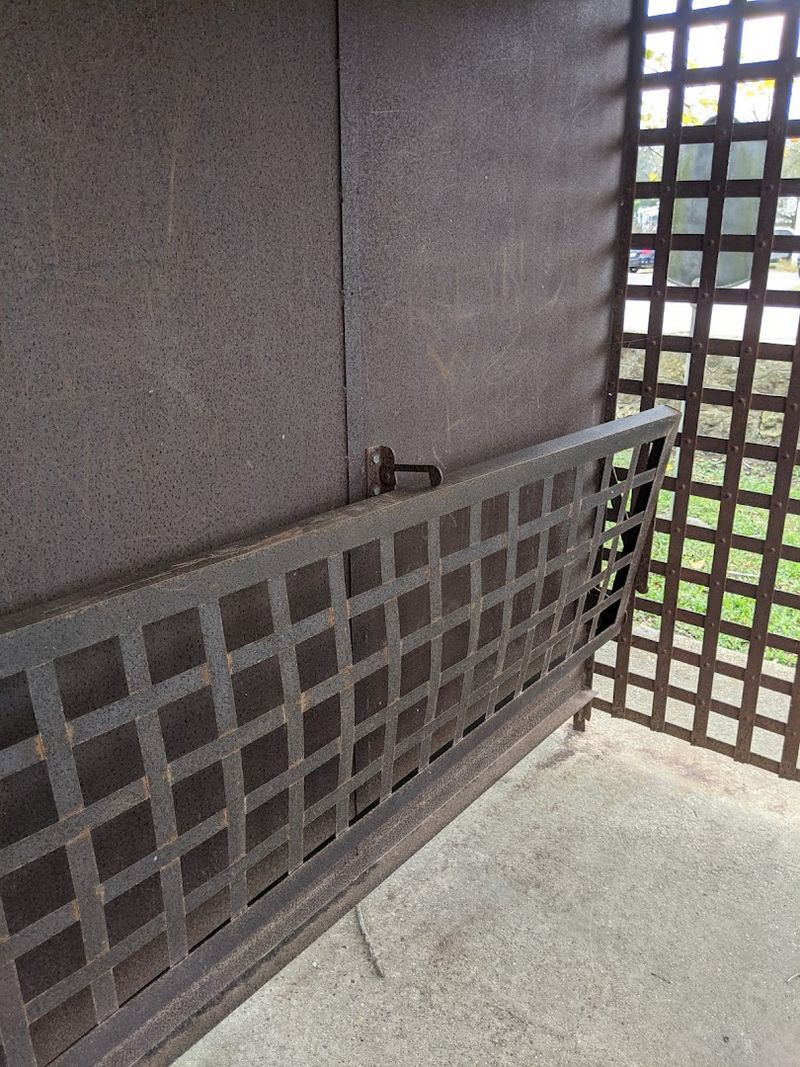
The steel-cage jail built in 1891 is one of the most talked-about survivors of Frederick’s past, and for good reason. Most small frontier towns relied on basic wooden lockups that rotted away within a generation.
Frederick went a different route and constructed something built to last, and last it did.
Seeing it in person is a genuinely odd experience. It is compact and blunt, the kind of structure that does not apologize for what it is.
The steel cage design was practical for its era, meant to hold people securely without requiring a large building or a large budget.
What makes it special now is not just its age but its survival. While so many pieces of Frederick’s story have crumbled or been reclaimed by the land, this jail has held its shape through more than a century of Kansas weather.
It is a tangible connection to a time when this town had enough going on to need a place to keep troublemakers. That detail alone says a lot about how alive Frederick once was.
History buffs and curious road-trippers consistently cite the jail as the single most memorable stop in town, and honestly, it earns that reputation.
Grain Elevators That Once Fed a Growing Nation
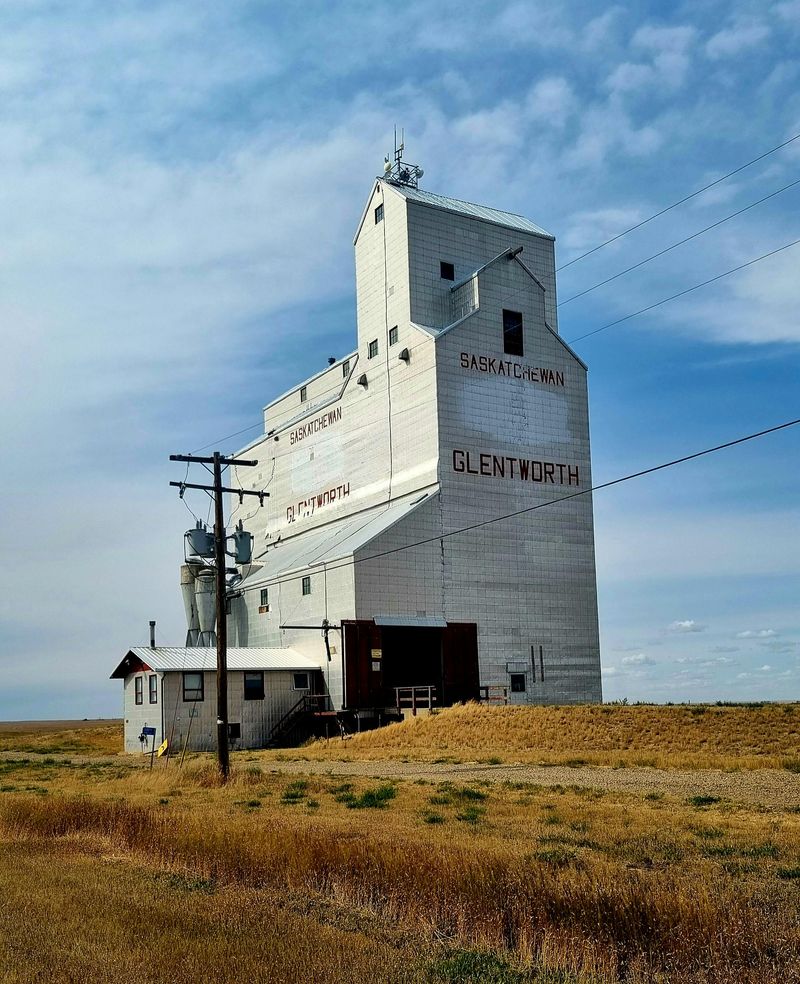
At its height, Frederick had three grain elevators operating at once, which tells you everything about how central agriculture was to this town’s identity. These were not decorative landmarks.
They were the beating heart of the local economy, the reason farmers drove their wagons in from miles around every harvest season.
Grain elevators have a particular presence on the Kansas plains. They rise above everything else, tall and utilitarian, visible from long distances across flat land.
Even partially deteriorated, they carry a kind of authority that newer buildings rarely achieve. Frederick’s elevators are the kind of structures that make you stop the car and just look for a minute.
