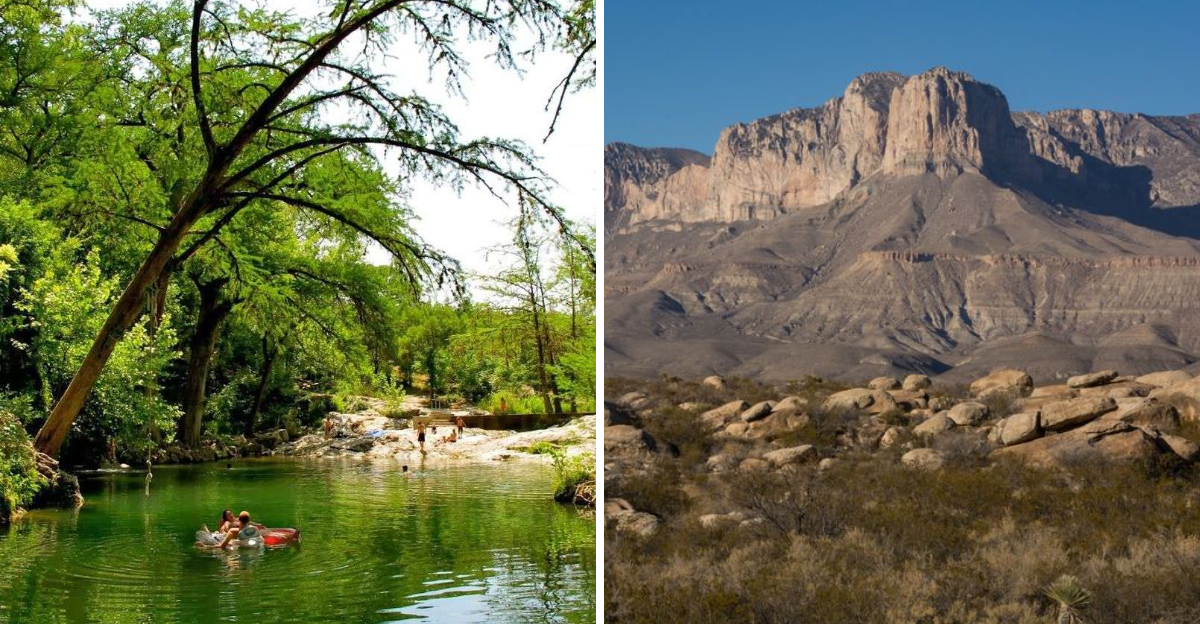
Texas has a way of getting under your skin, and I mean that in the best possible way. From towering granite domes to river-carved canyons and misty waterfalls tucked into limestone hills, this state holds more natural beauty than most people ever get to see.
I started chasing these places a few years back, and honestly, I have not stopped thinking about them since. Each spot has its own personality, its own rhythm, and its own reason to pull you back.
Whether you are planning your first Texas road trip or you have lived here your whole life, these destinations have a way of surprising you. Pack light, bring sunscreen, and get ready for the kind of scenery that sticks with you long after you have driven home.
1. Enchanted Rock State Natural Area
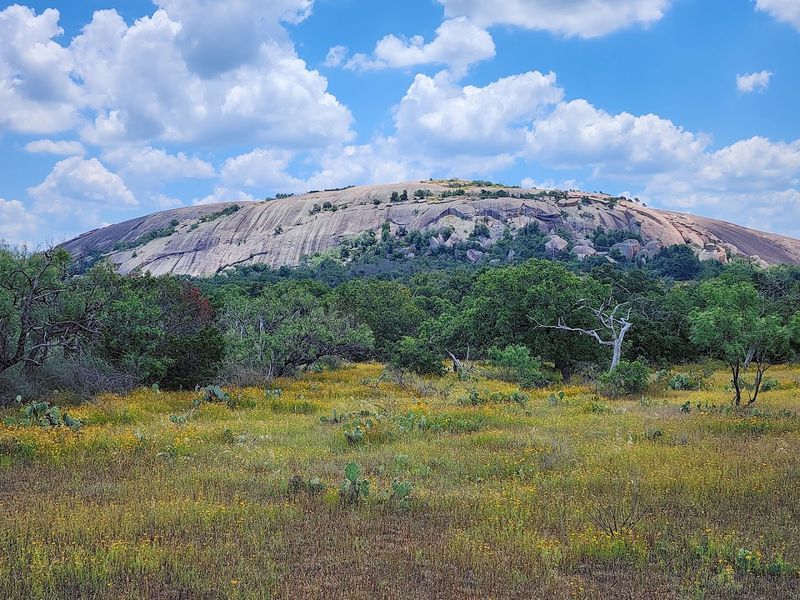
Standing at the base of Enchanted Rock feels almost surreal, like the land itself is trying to tell you something ancient.
This massive pink granite dome rises 425 feet above the surrounding Hill Country, and the hike to the top rewards you with views that stretch in every direction without a single building in sight.
The rock itself is estimated to be over one billion years old. Weathering and erosion have carved shallow pools and unusual formations across its surface, which creates a texture that feels alive under your hands as you climb.
Stargazing here is genuinely extraordinary. Because the area sits far from major city lights, the night sky fills up fast with stars that feel almost too close.
Bring a blanket and plan to stay after sunset if you can. The summit trail takes about an hour round trip for most hikers, but slower walks along the base trails are just as rewarding.
Spring wildflowers often bloom across the lower slopes, painting the ground in bursts of yellow and orange that make the whole landscape feel like a painting you stumbled into by accident.
Address: 16710 Ranch Road 965, Fredericksburg, Texas
2. Big Bend National Park
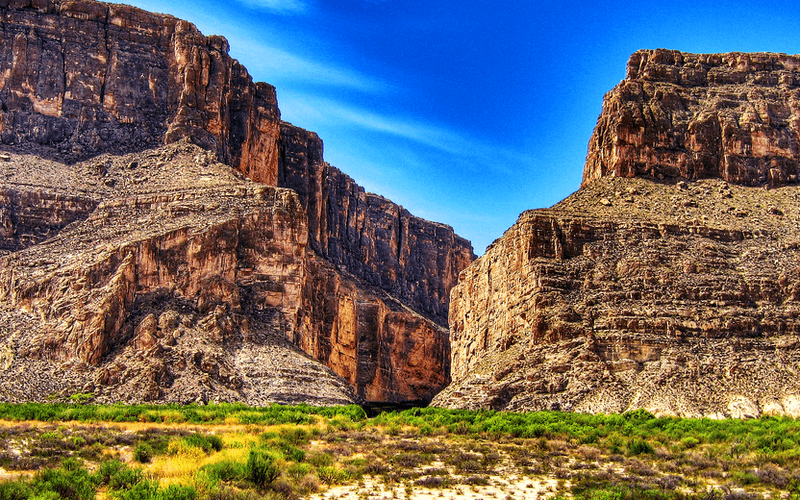
Few places in the country feel as genuinely remote as Big Bend. Sitting in the far southwest corner of Texas along the Rio Grande, this park covers nearly a million acres of desert, mountain, and river terrain that shifts dramatically depending on where you are standing.
The Chisos Mountains rise unexpectedly from the flat desert floor, offering cooler temperatures and shaded hiking trails that feel like a completely different world from the sun-scorched lowlands just a few miles away.
The famous Santa Elena Canyon is one of the most photographed spots in the park, where sheer limestone walls tower over 1,500 feet above a narrow stretch of river.
Wildlife sightings are common here. Roadrunners, black bears, and mule deer all share this landscape without much concern for visitors passing through.
Kayaking the Rio Grande through the canyons is an experience that is hard to describe to someone who has never done it. The silence is thick and the scale of the rock walls above you feels almost impossible.
Big Bend rewards slow travelers who are willing to stay more than a day or two and actually let the place sink in.
3. Davis Mountains State Park
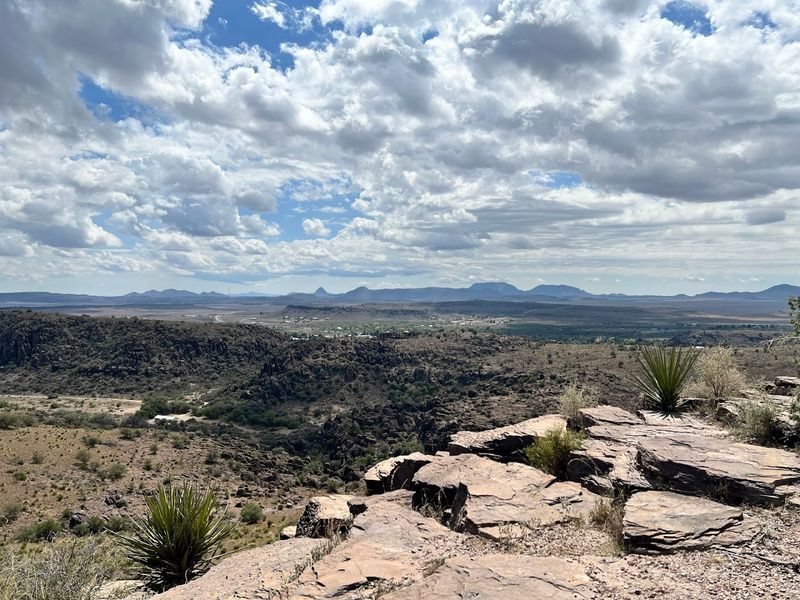
The Davis Mountains feel like West Texas’s best-kept secret, sitting quietly between Big Bend and El Paso without nearly as much fanfare as either.
Elevations here climb between 5,000 and 6,000 feet, which means temperatures stay noticeably cooler than the surrounding desert, making summer hikes far more comfortable than you might expect.
The park’s most iconic landmark is the Indian Lodge, a Pueblo Revival-style structure built in the 1930s that has been welcoming visitors ever since.
Staying overnight here feels genuinely special, with thick adobe walls and a quiet courtyard that makes it easy to forget how far you are from anything resembling a city.
Over six miles of hiking trails cross through the park, winding past rocky outcroppings, native grasses, and a surprising variety of bird species. The Davis Mountains are actually one of the top birding destinations in Texas, drawing enthusiasts from across the country during migration season.
The Skyline Drive Trail offers sweeping views of the surrounding range that feel earned once you reach the top. There is also a scenic drive through the park that gives a solid overview of the terrain without requiring any strenuous effort at all.
Address: TX-118, Fort Davis, Texas
4. Colorado Bend State Park
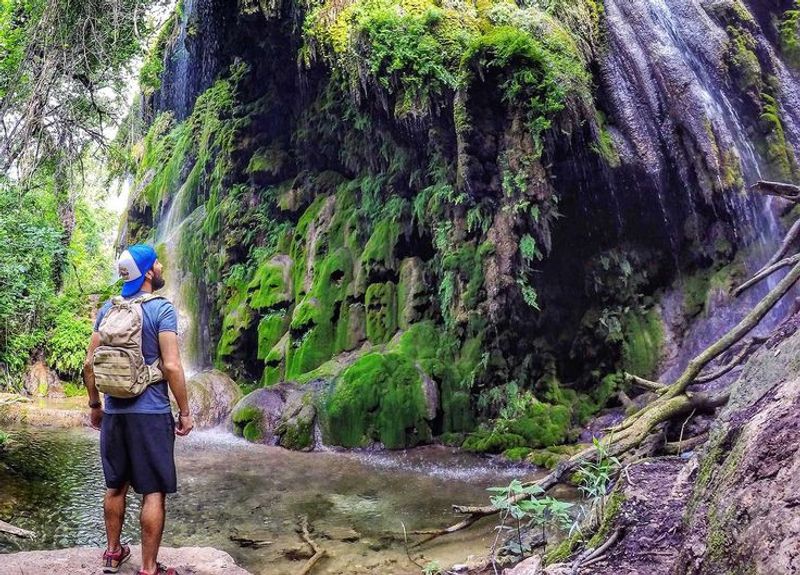
Gorman Falls alone is worth the drive to Colorado Bend State Park. This 65-foot waterfall spills over a moss-covered limestone face surrounded by ferns and dripping vegetation that feels completely out of place in the middle of central Texas.
It is one of those spots that stops you mid-step the first time you see it.
The park sits along the Colorado River, and the contrast between the open, sun-baked upland terrain and the lush, shaded canyon around the falls is genuinely striking. The hike to Gorman Falls is about three miles round trip and involves some uneven terrain, so good footwear makes a noticeable difference.
Beyond the waterfall, the park offers over 35 miles of hiking and mountain biking trails that wind through cedar and mesquite country with river views tucked in at unexpected moments. Fishing along the Colorado is popular, and the river itself is calm enough in most sections for casual paddling.
Spring is an especially beautiful time to visit when wildflowers push through the rocky soil and the whole park feels like it has just woken up from a long nap. Night skies here are also remarkably clear, giving stargazers another excellent reason to camp for a night or two.
Address: 2236 Park Hill Dr, Bend, Texas
5. Palo Duro Canyon State Park
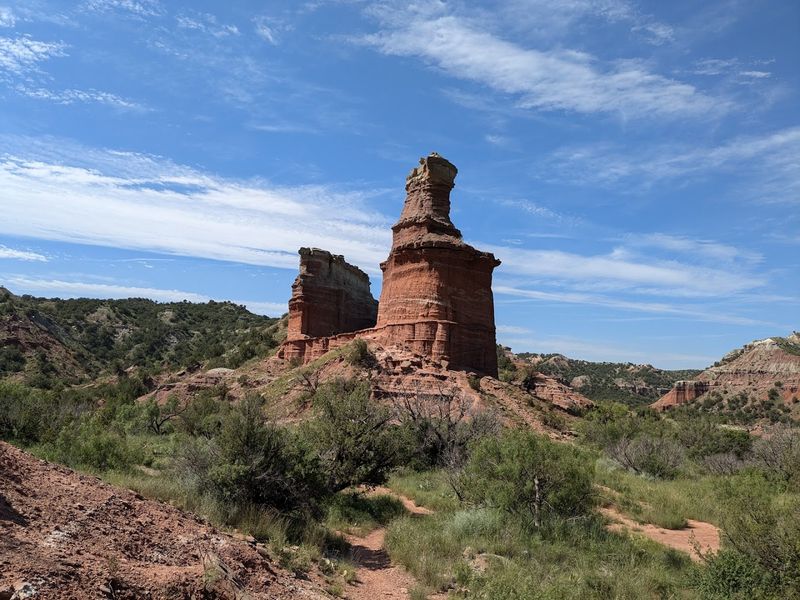
Most people picture flat plains when they think of the Texas Panhandle, and then Palo Duro Canyon appears and completely rewrites that image.
Known as the Grand Canyon of Texas, this canyon drops over 800 feet from the surrounding prairie and stretches roughly 120 miles in length, revealing layers of red, orange, and purple rock that took millions of years to form.
The park entrance road descends into the canyon in a series of switchbacks that give you a gradual, almost theatrical reveal of the landscape below. Once you are down on the canyon floor, the scale becomes even more impressive.
Towering rock formations like the Lighthouse Trail landmark rise dramatically from the canyon walls and make for one of the most photographed hikes in the state.
Horseback riding is a popular way to explore the canyon at a slower pace, letting you take in the surrounding geology without watching your footing on the trail. The park also hosts an outdoor musical theater production during summer evenings that uses the canyon walls as its backdrop.
Camping here means waking up inside the canyon itself, which is a perspective that feels genuinely rare and a little humbling every single morning you open the tent door.
6. Guadalupe Mountains National Park
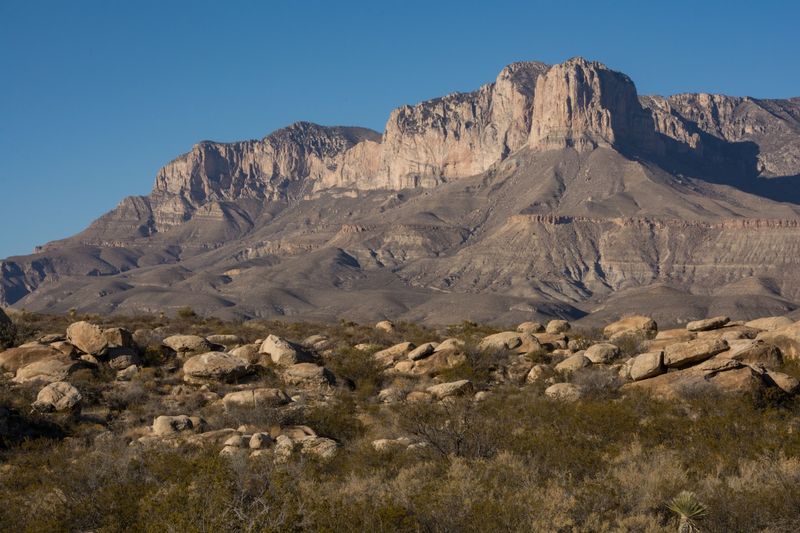
Guadalupe Peak is the highest point in Texas, and standing on its summit at 8,751 feet gives you a view that stretches across three states on a clear day.
The park surrounding it is one of the least visited national parks in the country, which means the trails feel quiet and the experience feels genuinely personal in a way that more crowded parks simply cannot offer.
The Guadalupe Mountains were once a massive ancient reef, and the exposed geology here tells that story in fascinating detail. Fossil formations are visible throughout the park, giving the landscape a prehistoric quality that makes every hike feel like a slow walk through deep time.
El Capitan, the dramatic limestone escarpment visible from the highway, is one of the most striking natural landmarks in Texas. The park has no food services and very limited cell coverage, which forces a kind of disconnection that ends up feeling like a gift once you settle into it.
The Devil’s Hall Trail follows a narrow canyon with polished limestone walls that funnel the wind in strange, musical ways. Camping under the stars here, away from any significant light pollution, produces a night sky so dense with stars that it feels almost disorienting in the best possible way.
7. Caddo Lake State Park
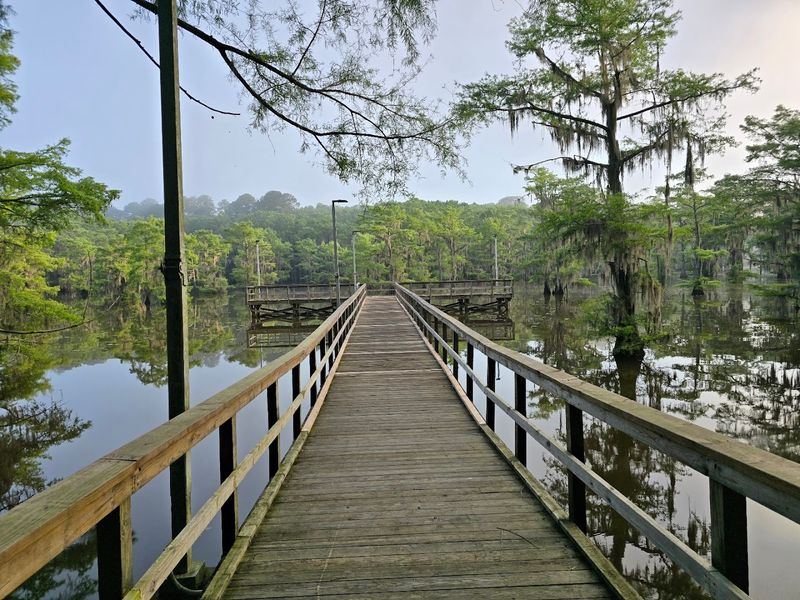
Caddo Lake has a mood unlike anywhere else in Texas. Ancient bald cypress trees rise from dark, mirror-still water draped in long curtains of Spanish moss, creating an atmosphere that feels more bayou than anything most people associate with this state.
Located on the Texas-Louisiana border in Harrison and Marion counties, Caddo Lake is one of the few natural lakes in Texas and one of the largest cypress forests in North America.
Paddling through the narrow channels between the trees is a quietly hypnotic experience, where the only sounds are water dripping from your paddle and the occasional call of a heron somewhere in the canopy above.
The lake is home to an extraordinary variety of wildlife including alligators, otters, wood ducks, and dozens of fish species that draw anglers from across the region.
Guided boat tours are available for those who want local knowledge about the waterways, which is genuinely helpful given how easy it is to get turned around in the maze of cypress-lined channels.
The state park offers camping, fishing piers, and canoe rentals that make it easy to spend a full weekend exploring without ever feeling like you have seen everything the lake has to offer.
Address: 245 Park Road 2, Karnack, Texas
8. Pedernales Falls State Park
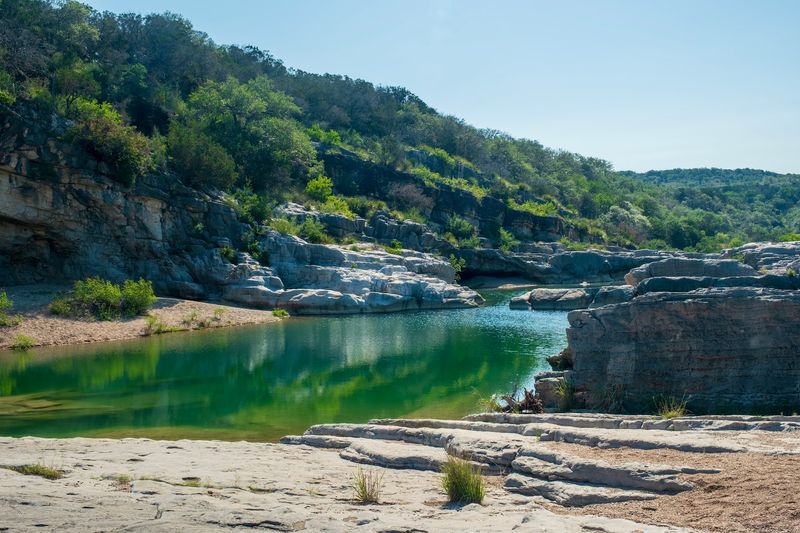
The Pedernales River does something unusual at this park: it spreads wide across massive, tilted limestone shelves before breaking into cascades that tumble downstream in a series of falls that shift dramatically with the seasons. After heavy rain, the whole scene roars.
During dry spells, the exposed rock formations become the main attraction.
The falls overlook is just a short walk from the parking area, making it one of the more accessible dramatic landscapes in the Hill Country. But the park has much more than the falls themselves.
Over 20 miles of trails wind through cedar and oak terrain, crossing creek beds and climbing ridgelines with views that open up unexpectedly as you move through the brush.
Swimming areas along the river are popular during summer, and the combination of cool water and warm limestone makes for a genuinely pleasant afternoon. Wildlife in the park includes white-tailed deer, wild turkeys, and a wide variety of songbirds that make early morning walks especially rewarding.
The park sits about 32 miles west of Austin, putting it within easy reach for a day trip or a quick overnight camping stay. Sunset from the falls overlook, when the low light catches the river and turns the limestone warm gold, is the kind of image that tends to end up as a phone wallpaper for months.
Address: 2585 Park Road 6026, Johnson City, Texas
9. Krause Springs
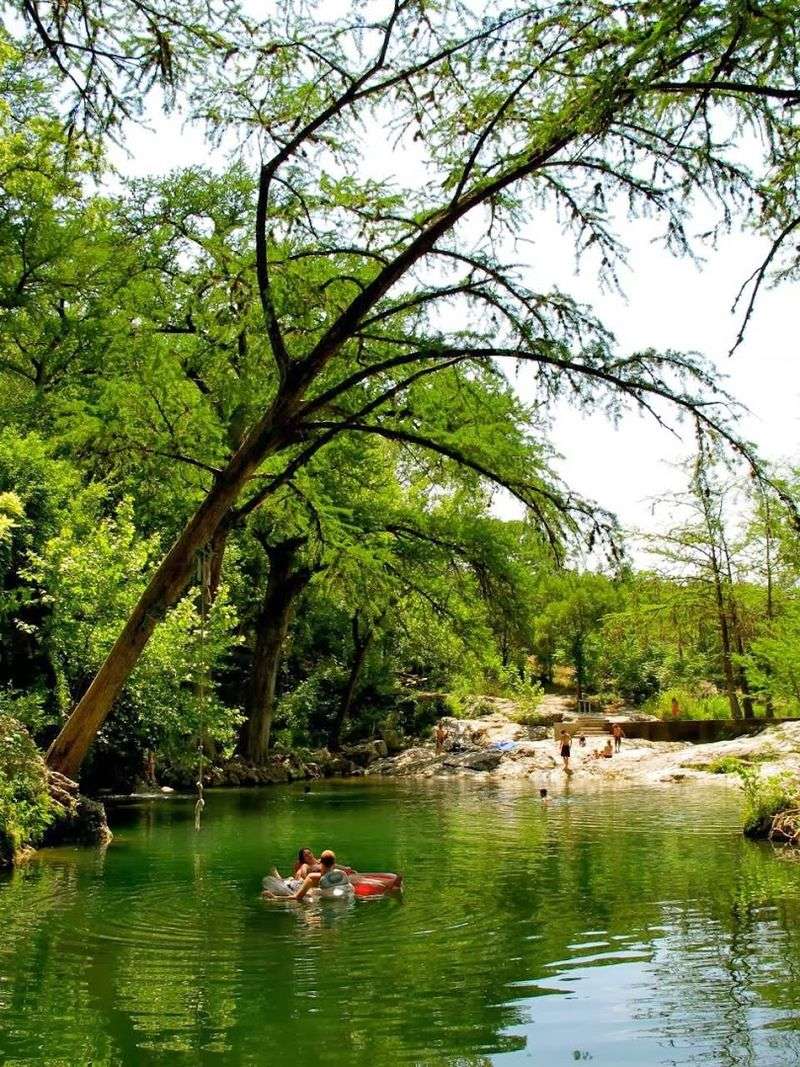
Krause Springs sits on privately owned land near Spicewood and has been welcoming visitors for generations, which gives it a character that feels warmly personal rather than polished and managed.
The main attraction is a spring-fed pool so clear and cold that it takes your breath away the moment you wade in, even when summer temperatures outside are pushing past 100 degrees.
Cypress trees grow right to the water’s edge, their roots forming natural ledges and benches along the banks. A small waterfall feeds into the upper pool, and the surrounding vegetation is lush and green in a way that feels almost tropical compared to the dry cedar hills just outside the property fence.
There are actually two swimming areas here: the upper spring pool and a lower natural pool that sits slightly warmer and calmer, which makes it popular with families who have younger kids.
Camping is available on the property, and spending a night under the cypress canopy with the sound of the spring running nearby is a genuinely peaceful experience that is hard to replicate anywhere else in the Hill Country.
The property has a relaxed, unhurried atmosphere that encourages you to slow down, spread out a towel on the limestone, and simply exist in a beautiful place for a few hours without any agenda at all.
Address: 424 Co Rd 404, Spicewood, Texas
10. Barton Creek Greenbelt
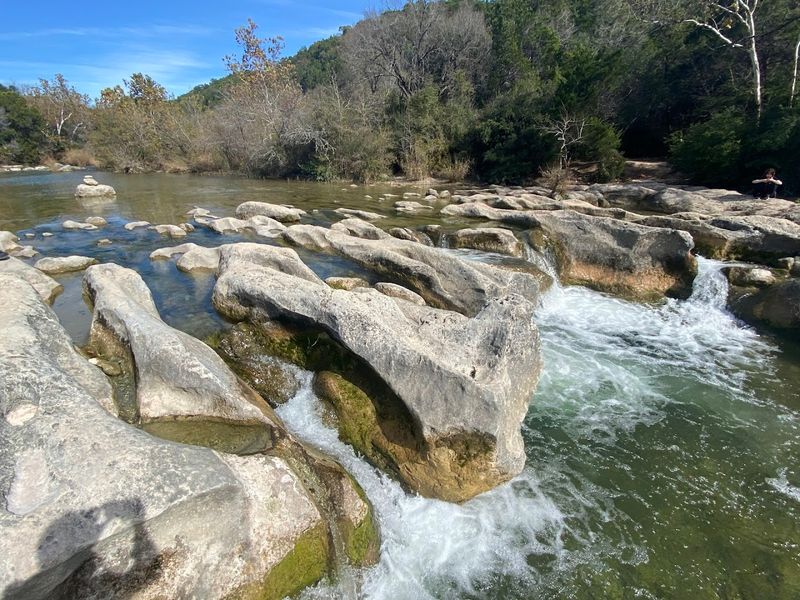
Austin has a lot going for it, but the Barton Creek Greenbelt might be its most genuinely beloved natural feature.
This seven-mile stretch of limestone creek cuts through the western edge of the city, offering swimming holes, cliff jumps, hiking trails, and rock climbing routes that feel surprisingly wild for a destination sitting inside a major urban area.
The creek fills with cold, clear water after rain events, transforming dry limestone beds into flowing pools that locals flock to within hours of a good storm.
During dry summers, some sections run low or stop completely, but the pools at Barton Springs and the upper greenbelt sections tend to hold water longer than most.
Rock climbers work the limestone bluffs along the creek corridor, and the trails above the water offer shaded walking through cedar and live oak that stays relatively cool even in July.
The greenbelt connects to Barton Springs Pool, a city-operated outdoor swimming facility fed by natural springs that maintains a consistent cool temperature year-round.
Trail runners, dog walkers, families with toddlers, and solo hikers with headphones all share this space in a way that somehow works without feeling crowded or chaotic. It is the kind of place that reminds you why people choose to live in Texas even during the hot months when everything else feels punishing.
Address: 3755 Capital of Texas Highway, Austin, Texas
Dear Reader: This page may contain affiliate links which may earn a commission if you click through and make a purchase. Our independent journalism is not influenced by any advertiser or commercial initiative unless it is clearly marked as sponsored content. As travel products change, please be sure to reconfirm all details and stay up to date with current events to ensure a safe and successful trip.
