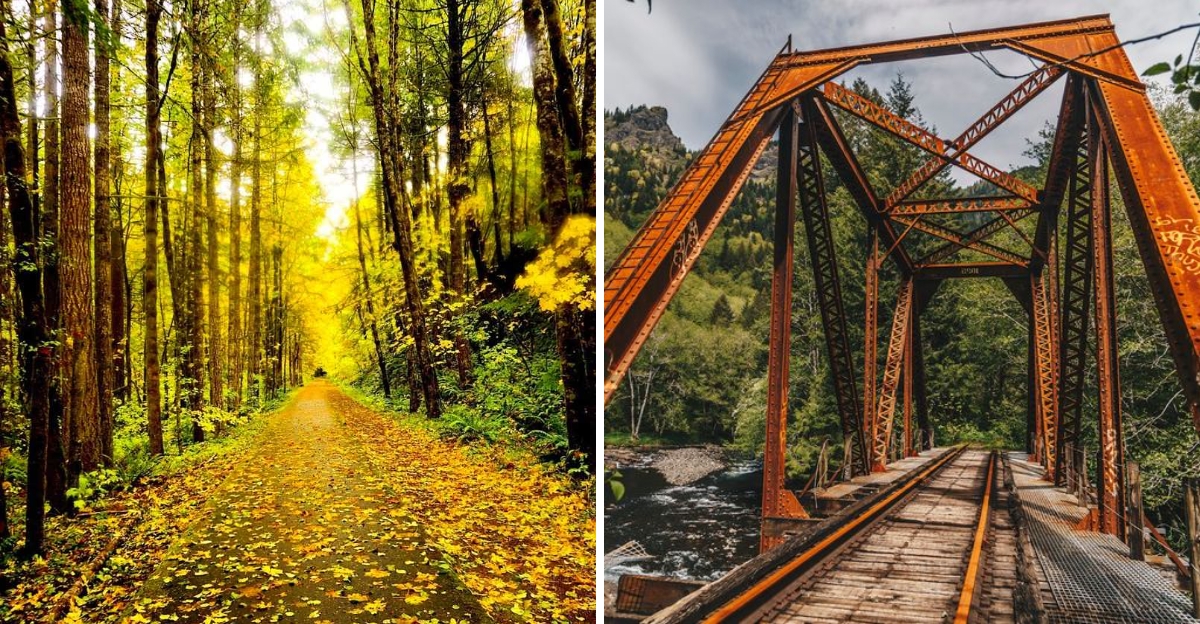
Oregon’s rail-trails are proof that the journey can be just as charming as the destination. Each path winds through picture-perfect small towns that make you want to stop every two minutes for a photo.
I found myself pedaling (or strolling) slower than usual, just to soak in the scenery and quirky storefronts.
Locals wave like it’s a parade, and somehow it feels completely normal to feel like a VIP on vacation.
Historic buildings, blooming gardens, and rivers that sparkle in the sunlight make each trail feel like a storybook come to life. Even short stretches turn into mini adventures you’ll remember long after the ride.
By the end, you realize it’s not just about the miles – it’s about discovering hidden gems around every bend.
1. Banks-Vernonia State Trail, Banks to Vernonia, Oregon
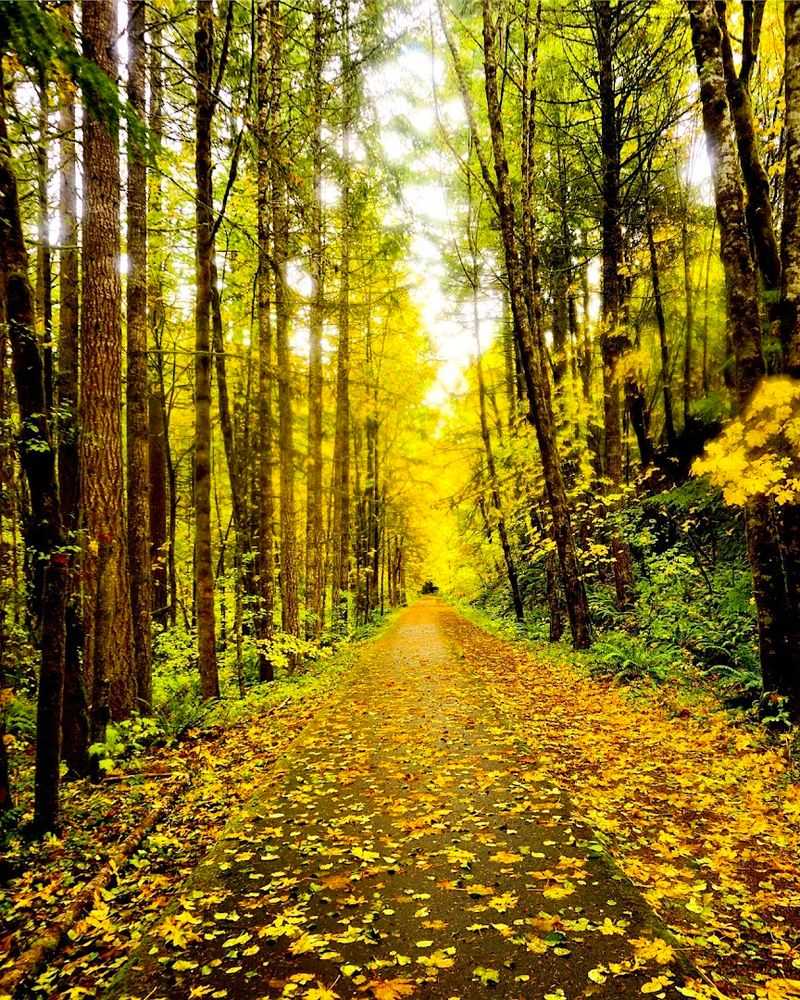
Oregon’s very first rail-to-trail conversion still holds up as one of its finest. The Banks-Vernonia State Trail runs 22 miles through the northern Coast Range foothills.
It connects the small farming town of Banks to the logging community of Vernonia.
The trail is fully paved and open to hikers, cyclists, and horseback riders. That mix of users gives it a lively, community feel on weekends.
Weekday mornings are quieter and perfect for a more peaceful ride.
One of the trail’s biggest highlights is the 735-foot Buxton Trestle. Standing on it gives you a bird’s-eye view of the forest canopy below.
It is genuinely one of the coolest moments on any Oregon trail.
The route crosses 13 historic bridges in total. Each one adds a layer of character to the journey.
You really start to appreciate the engineering that once kept trains moving through this rugged terrain.
Vernonia itself is a charming stop at the northern end. The town has a small-town warmth that feels genuine and unhurried.
Grab a bite, rest your legs, and soak in the quiet before heading back south.
2. Row River National Recreation Trail, Cottage Grove to Culp Creek, Oregon
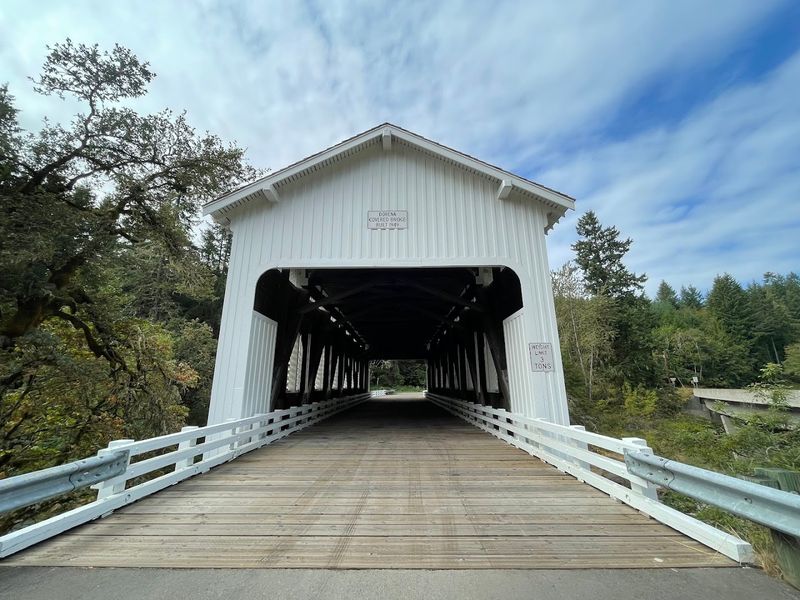
Historic covered bridges are not something you expect to stumble across three times on a single trail. The Row River National Recreation Trail gives you exactly that.
This 16.2-mile route runs between Cottage Grove and Culp Creek in Lane County.
The trail follows the Row River the entire way, keeping the sound of moving water as your constant companion. Dorena Lake shows up mid-route and adds a gorgeous open-water stretch to an already beautiful ride.
The reflections on calm mornings are worth the early wake-up.
Three covered bridges stand along this corridor. Mosby Creek Bridge dates to 1920, Currin Bridge to 1925, and Dorena Bridge to 1949.
Each one has its own personality and tells a piece of Oregon’s rural history.
The trail also connects to forest paths inside the Umpqua National Forest. That means day hikers can extend their adventure well beyond the rail corridor.
Birders especially love the transition zones between open water and dense woodland.
Cottage Grove is a welcoming starting point with food options and parking. It is a real working Oregon town, not a tourist-polished version of one.
The authenticity is part of what makes this trail feel so rewarding from start to finish.
3. OC&E Woods Line State Trail, Klamath Falls to Thompson Reservoir, Oregon
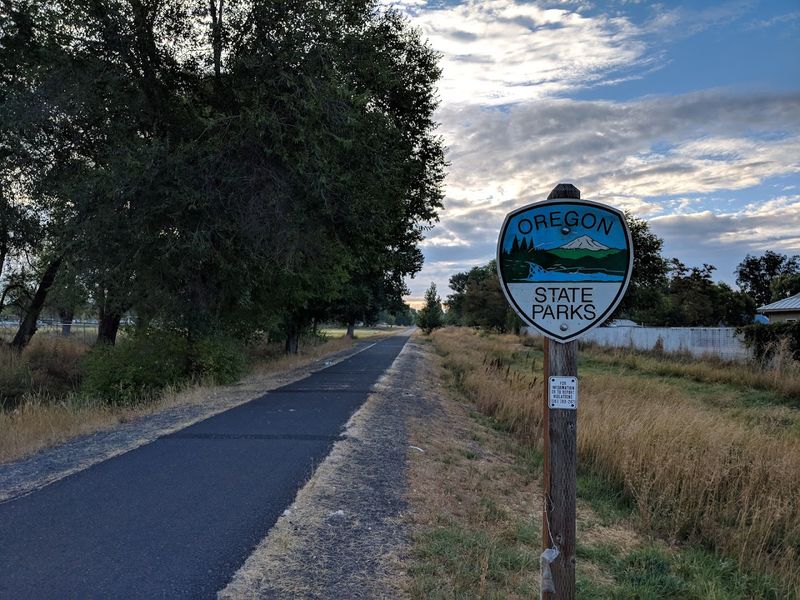
At 105 miles, the OC&E Woods Line State Trail is Oregon’s longest state park. That fact alone makes it worth talking about.
It stretches from Klamath Falls all the way to Thompson Reservoir in the remote high desert country of southern Oregon.
The first section from Klamath Falls to Olene is paved and accessible to most users. Beyond Olene, the trail shifts to a graded and compacted surface.
Mountain bikers, equestrians, and hikers all share this longer stretch.
Small communities dot the route, including Olene, Sprague River, Dairy, Beatty, and Bly. Each one has its own character shaped by ranching, farming, and timber traditions.
Stopping in these towns feels like stepping into a part of Oregon that rarely makes travel magazines.
Wildlife watching here is exceptional. Pronghorn antelope, mule deer, and dozens of bird species are common sightings.
The open landscape makes spotting animals much easier than on densely forested trails.
Fishing access along the Sprague River is another major draw. Anglers often combine a trail ride with a few hours on the water.
The combination of wide-open space and outdoor variety makes this trail a true multi-day adventure waiting to happen.
4. Salmonberry Trail, Oregon Coast Range, Oregon
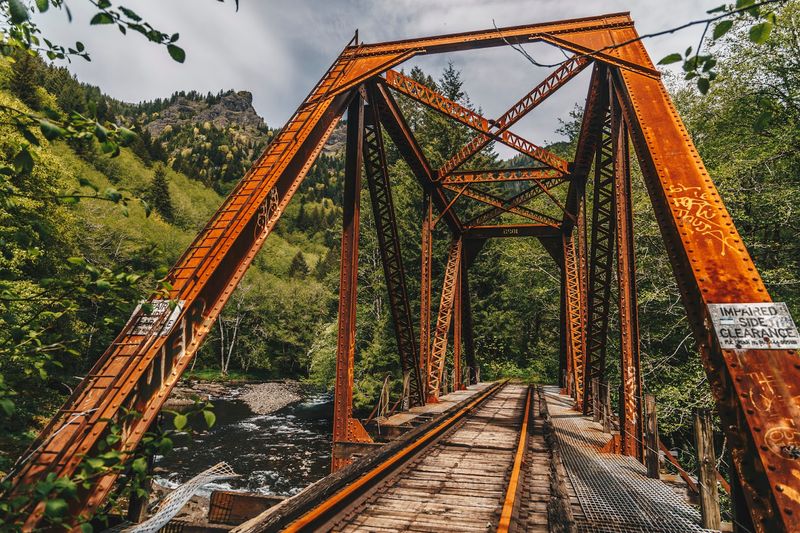
Some trails earn their reputation before they are even fully open. The Salmonberry Trail is exactly that kind of project.
Planned at 84 miles through the Oregon Coast Range, it follows the former Port of Tillamook Bay Railroad corridor.
The route traces the Salmonberry River through one of the most remote and visually striking valleys in the state. Towering canyon walls, mossy old-growth forest, and rushing river water define the scenery.
It is the kind of landscape that makes you want to put your phone away entirely.
As of now, the trail is not yet fully open to the public. However, a 0.6-mile section in Wheeler is set for groundbreaking in July 2025.
A 3.2-mile stretch in Washington County is planned for 2026.
Wheeler is a small coastal town worth knowing about. It sits near Nehalem Bay and has a laid-back creative energy that draws artists and outdoor enthusiasts alike.
When the trail connects here, it will become a genuine destination anchor.
Following the progress of the Salmonberry Trail feels exciting for anyone who loves Oregon. The vision behind it is ambitious and thoughtful.
When it is complete, it will rank among the most spectacular rail-trails in the entire Pacific Northwest.
5. Cazadero Trail, Boring to Cazadero, Oregon
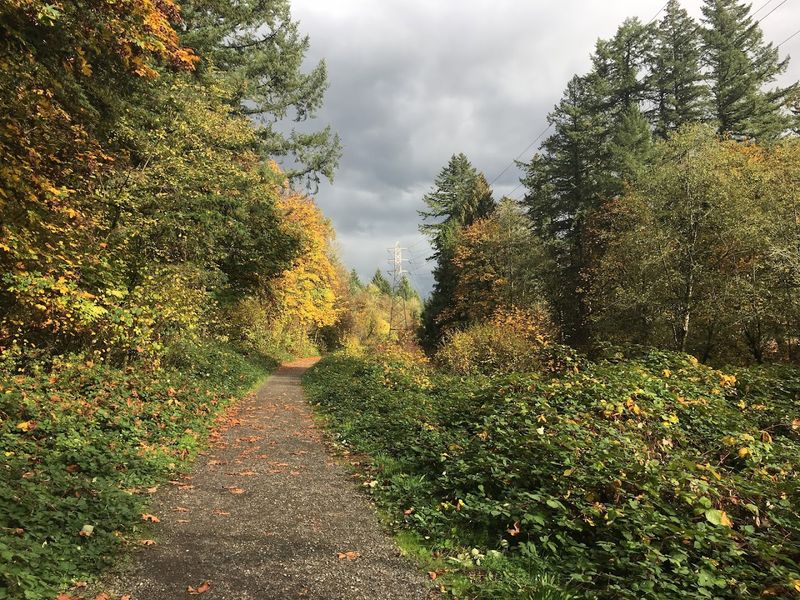
Yes, the town is actually called Boring. And no, this trail is anything but.
The Cazadero Trail runs 5.8 miles from Boring to the historic community of Cazadero, following a long-abandoned railroad line.
The trail traces the old Oregon Water Power and Railway Company route. That history adds a layer of industrial nostalgia to what is otherwise a deeply natural setting.
You are essentially walking through the ghost of a working railway system.
One of the most memorable sections passes through Deep Creek Canyon. The trail hugs the canyon walls above Deep Creek, giving you views that feel surprisingly dramatic for a trail this close to the Portland metro area.
Birdwatchers regularly spot woodpeckers, herons, and songbirds along this stretch.
The Cazadero Trail also connects to the Springwater Corridor, which links back to downtown Portland. That means you can string together a much longer urban-to-rural adventure if you have the energy and the time.
It is a genuinely satisfying way to leave the city behind gradually.
Cazadero itself is a quiet historic stop with roots in the early twentieth century. The area has a peaceful, slightly forgotten quality that feels refreshing.
Reaching it on foot or by bike makes the arrival feel earned.
6. Astoria Riverwalk Trail, Astoria, Oregon
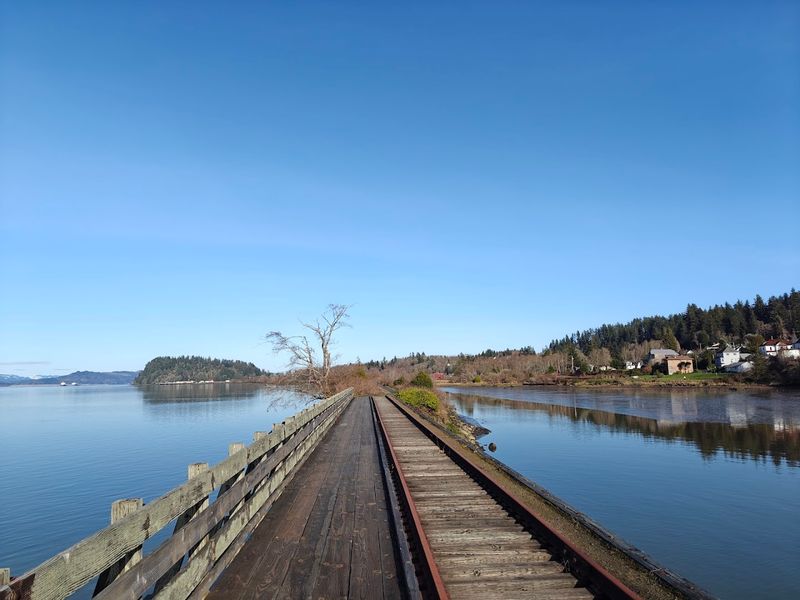
Astoria sits at the mouth of the Columbia River, and its riverwalk trail reflects that grand sense of place. The trail runs about 6.4 miles along the waterfront, following the old Astoria and Columbia River Railroad corridor.
It is one of the most visually rewarding urban rail-trails in the Pacific Northwest.
A vintage electric trolley still runs along part of the route during warmer months. Sharing the path with a century-old streetcar is a genuinely fun experience.
It brings the history of the corridor to life in a very tangible way.
The Columbia River views here are wide, dramatic, and constantly changing. You can watch cargo ships, fishing boats, and even sea lions from the trail.
The 4.1-mile-long Astoria-Megler Bridge is always visible and always impressive.
Astoria is one of Oregon’s most historically rich small cities. Its Victorian architecture, working waterfront, and film history make it a destination in its own right.
The trail connects you to museums, restaurants, and neighborhoods worth exploring on foot.
Sunset from the riverwalk is something special. The light hits the river in warm gold tones that photographers and casual walkers both stop for.
Ending a trail day with that view makes the whole trip feel like it was absolutely worth it.
7. Deschutes River Trail, Bend, Oregon
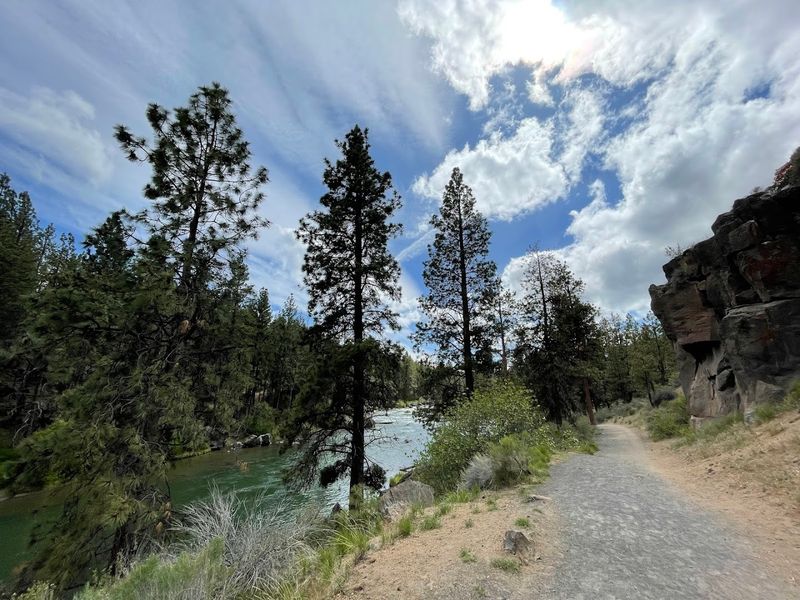
Bend has become one of Oregon’s most talked-about outdoor towns, and the Deschutes River Trail is a big reason why. The trail stretches for roughly 11 miles along the river through town and into the surrounding high desert landscape.
It is the kind of trail that locals use daily and visitors instantly fall in love with.
The terrain shifts noticeably as you move along the route. Near town, the path is paved and accessible.
Further out, it transitions to packed dirt and volcanic rock, which gives the trail a rugged and adventurous character.
Volcanic geology is everywhere along this corridor. Lava rock formations, basalt cliffs, and river rapids shaped by ancient eruptions make for dramatic scenery.
This is central Oregon’s landscape at its most honest and unfiltered.
The Deschutes River itself is a major attraction. Fly fishing, kayaking, and swimming are popular depending on the season.
The trail runs close enough to the water that you feel connected to it even if you never get in.
Bend’s downtown is within easy reach from the trail’s northern end. After a long morning on the path, the town’s coffee shops and restaurants feel like a well-earned reward.
Few trails in Oregon balance wilderness and walkable urban life quite this well.
8. Wallowa Lake Tramway and Rail Corridor, Joseph, Oregon
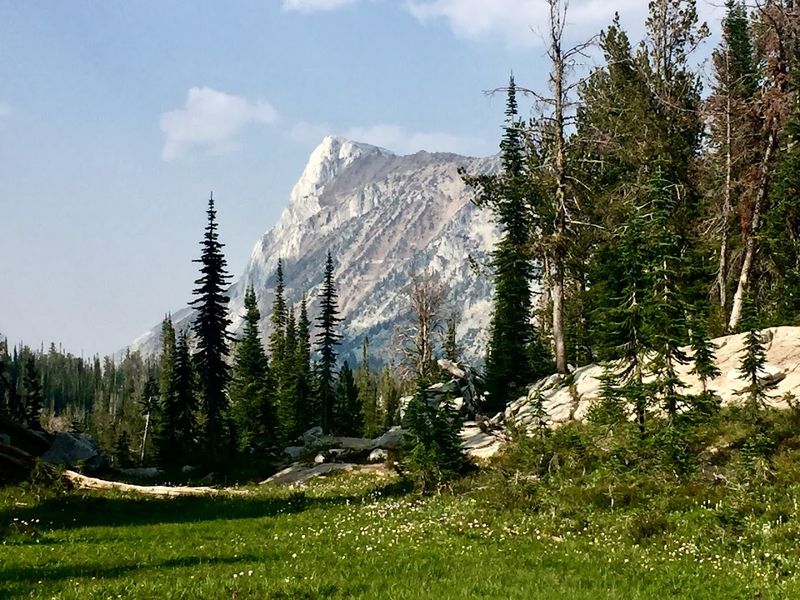
Eastern Oregon does not get enough credit, and the area around Joseph and Wallowa Lake is proof of that. The rail heritage here is tied to the Wallowa Valley Line, which once carried timber and passengers through this spectacular corner of the state.
The town of Joseph sits at the edge of the Eagle Cap Wilderness and Wallowa Lake, making it one of the most scenically positioned small towns in all of Oregon.
The Wallowa Lake Tramway lifts visitors nearly 3,700 feet up Mount Howard. The views from the top stretch across the Wallowa Mountains, the lake, and into Idaho.
It is a perspective that reframes how big and varied Oregon actually is.
Joseph itself has evolved into a hub for bronze sculpture and fine art. The town’s main street is lined with galleries and foundries.
Walking through it feels like a cultural detour you did not plan but are glad you took.
The rail corridor through the valley offers flat, easy walking along the river. Wildflowers bloom in abundance during late spring and early summer.
The combination of mountain drama and valley gentleness makes this area genuinely hard to leave.
Wallowa Lake at the trail’s end is glacially cold and brilliantly blue. Renting a paddleboat or simply sitting on the shore caps the experience perfectly.
9. Malheur Rail Trail, Vale to Brogan, Oregon
Not every great rail-trail is crowded or famous, and the Malheur Rail Trail proves that point. This remote route runs through the high desert of eastern Oregon between the small towns of Vale and Brogan.
It follows the old Malheur Valley Railroad grade through open sagebrush country that stretches as far as the eye can see.
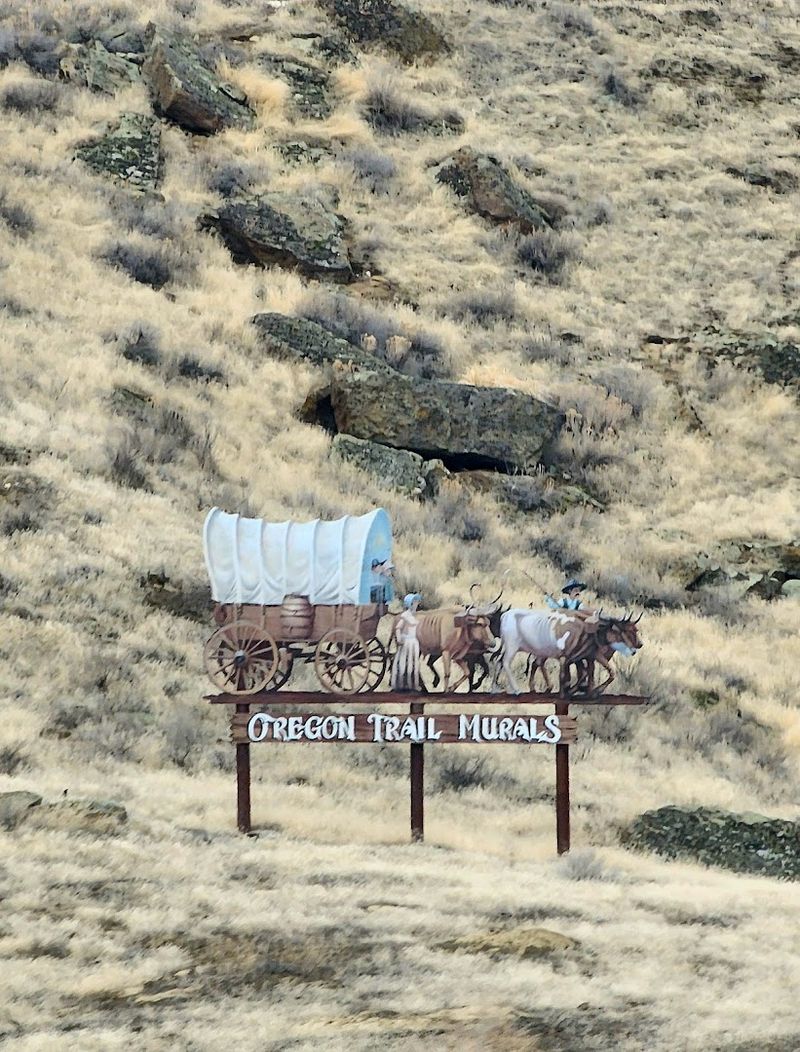
Vale is one of Oregon’s oldest communities. It sits along the historic Oregon Trail route and has a quiet, frontier-era character that feels genuine.
The murals painted on downtown buildings tell the story of wagon trains and early settlers in vivid detail.
The trail itself is flat and straightforward, which makes it ideal for beginner cyclists or families looking for an easy adventure. The scenery is not dramatic in a mountain-and-waterfall way.
Instead, it is vast, open, and surprisingly meditative.
Sunrises and sunsets in this part of Oregon are extraordinary. The unobstructed horizon means the sky puts on a full performance twice a day.
Timing a ride around either of those moments is a decision you will not regret.
Wildlife sightings here lean toward raptors, jackrabbits, and the occasional coyote. The quietness of the trail makes animal encounters more frequent and more meaningful.
Out here, you are the visitor in their world.
10. Tillamook Forest Trail and Wilson River Corridor, Tillamook, Oregon
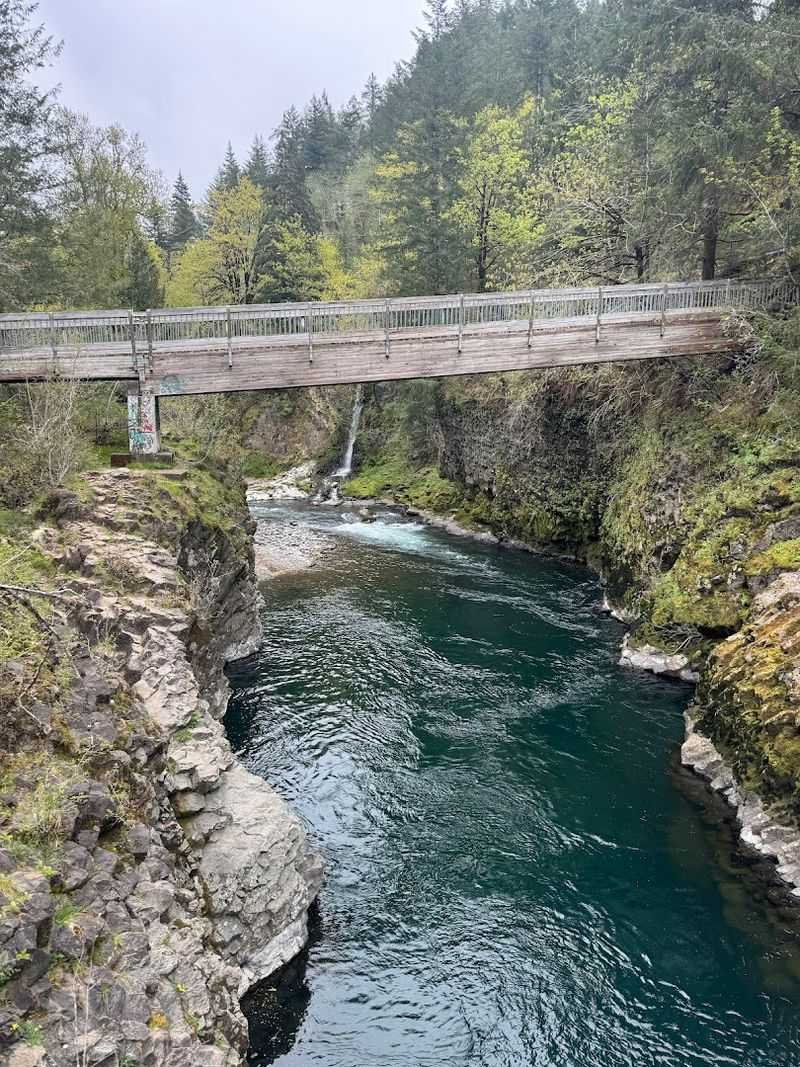
The Tillamook State Forest has a remarkable comeback story. After devastating fires in the 1930s and 1940s burned hundreds of thousands of acres, communities and the state replanted the entire forest by hand.
Today, the Wilson River corridor and its associated trail network run through that reborn landscape, and the result is genuinely beautiful.
The trail follows portions of the old railroad grades that once served the logging industry. Remnants of that era still appear along the route in the form of old rail ties and rusted equipment.
History and nature coexist in an honest, unpolished way here.
Tillamook is the town anchoring the western end of this experience. It is best known for its dairy and cheese production, and the famous creamery is worth a stop.
The contrast between a working agricultural town and a deep forest trail is part of what makes this area so interesting.
The Wilson River runs alongside much of the trail, offering excellent steelhead fishing in season. The sound of the river on a rainy October morning is the kind of thing that stays with you.
Fog hanging low over the water and the smell of wet fir needles create a sensory experience that no photo can fully capture.
This trail rewards patience and a slow pace more than speed or mileage goals.
Dear Reader: This page may contain affiliate links which may earn a commission if you click through and make a purchase. Our independent journalism is not influenced by any advertiser or commercial initiative unless it is clearly marked as sponsored content. As travel products change, please be sure to reconfirm all details and stay up to date with current events to ensure a safe and successful trip.
