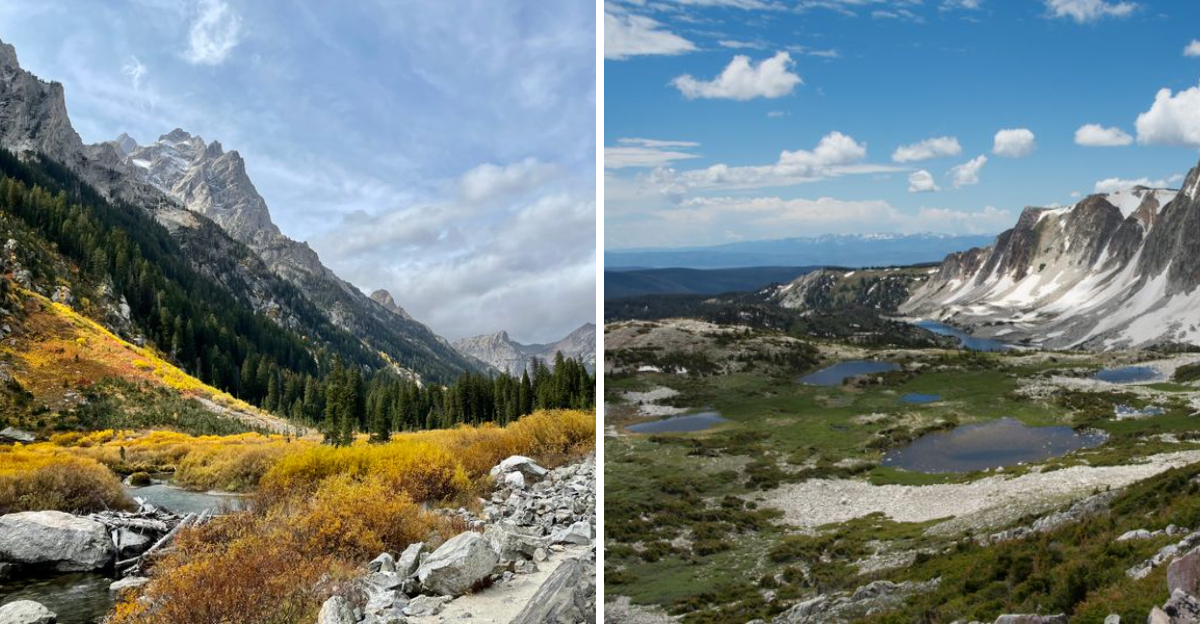
Wyoming holds some of the most breathtaking natural landscapes in the entire country.
From towering mountain peaks to sweeping valleys, this state offers outdoor enthusiasts countless opportunities to witness nature at its finest.
Whether you’re an experienced hiker or someone who simply loves a good view, Wyoming’s scenic overlooks and trails provide unforgettable experiences.
Exploring these natural wonders allows you to disconnect from daily routines and reconnect with the wild beauty that defines the American West.
Each location presents unique features, from alpine meadows filled with wildflowers to dramatic cliff edges overlooking vast wilderness.
The trails range from easy walks suitable for families to challenging climbs that reward adventurers with panoramic vistas.
Many of these spots are located within national parks and forests, ensuring well-maintained paths and visitor facilities.
Wildlife sightings add extra excitement to every journey, with opportunities to spot elk, moose, bighorn sheep, and numerous bird species.
The changing seasons transform these landscapes, offering different experiences whether you visit during summer’s warmth or autumn’s golden colors.
Preparing properly with appropriate gear, water, and awareness of weather conditions ensures safe and enjoyable adventures.
Wyoming’s scenic treasures await those ready to lace up their hiking boots and discover what makes this state truly special.
1. Grand Teton Peak via Lupine Meadows
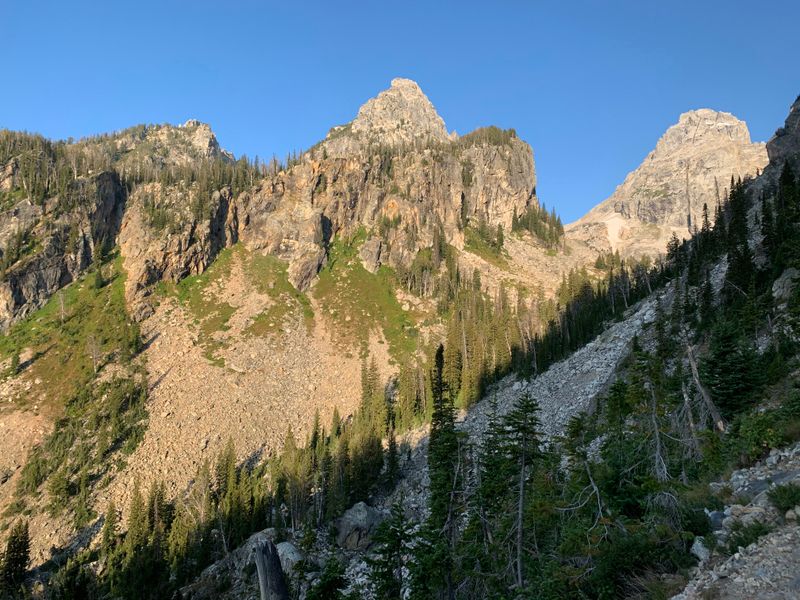
Standing before the Grand Teton inspires feelings that words struggle to capture.
This challenging trail through Lupine Meadows takes determined hikers on an unforgettable journey toward one of Wyoming’s most iconic summits.
The trailhead begins at an elevation that already feels closer to the sky than most people ever experience.
As you climb higher, the landscape transforms with every switchback.
Wildflowers carpet the meadows during summer months, creating colorful displays that contrast beautifully against gray granite peaks.
The scent of pine trees fills the air in lower sections before giving way to the crisp, thin atmosphere of alpine zones.
This isn’t a casual afternoon stroll; the route demands physical fitness, proper preparation, and respect for mountain conditions.
Hikers should start early to avoid afternoon thunderstorms that frequently develop over the peaks.
Bringing layers of clothing proves essential since temperatures drop significantly as elevation increases.
The views along the way reward every challenging step.
Looking back down the valley reveals Jackson Hole spread out like a detailed map below.
Glacial lakes appear as brilliant blue gems nestled in rocky bowls.
Reaching the summit requires technical climbing skills and equipment, but even hiking partway up provides spectacular perspectives.
Many adventurers find satisfaction stopping at various viewpoints along the route rather than attempting the full ascent.
The experience connects you with raw mountain wilderness in ways that leave lasting impressions.
Wildlife encounters add unexpected moments of wonder to the journey.
Marmots whistle warnings from rocky outcrops while pikas scurry among boulders gathering vegetation.
Occasionally, mountain goats appear on distant cliffs, perfectly adapted to this vertical world.
This trail represents Wyoming hiking at its most dramatic and memorable, combining natural beauty with physical challenge in equal measure.
2. Artist Point at Yellowstone Canyon
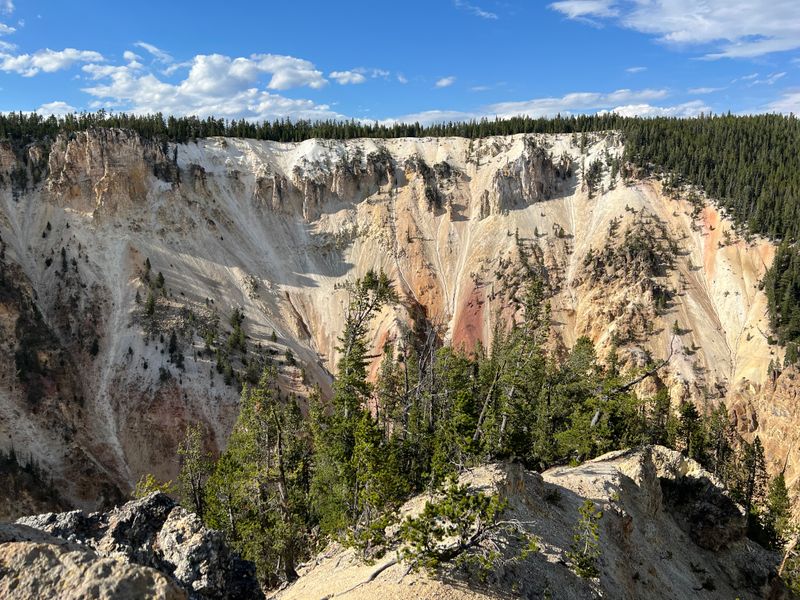
Few overlooks anywhere match the visual drama found at Artist Point.
Perched on the south rim of Yellowstone’s Grand Canyon, this accessible viewpoint delivers one of the park’s most photographed scenes.
The Lower Falls thunders down 308 feet, creating mist that catches sunlight in rainbow displays.
What makes this spot truly remarkable is the canyon’s vivid coloring.
Yellow, orange, pink, and red hues streak the canyon walls, created by hydrothermal activity that altered the volcanic rock over thousands of years.
These colors shift throughout the day as sunlight changes angles, offering different perspectives from morning through evening.
The walk from the parking area to the viewpoint is short and paved, making this natural wonder accessible to visitors of all mobility levels.
Families with young children, seniors, and those with physical limitations can all experience this breathtaking vista.
Interpretive signs along the path explain the geological forces that carved this magnificent canyon.
Photographers arrive at sunrise hoping to capture the falls illuminated by golden morning light.
The mist from the waterfall creates atmospheric conditions that add depth and drama to images.
Bringing a tripod allows for longer exposures that transform the rushing water into silky streams.
The Yellowstone River carved this canyon through volcanic rock following massive eruptions that shaped the region.
Understanding this geological history adds depth to the visual experience.
The power of water to shape landscapes becomes evident when viewing the canyon’s steep walls and the falls’ relentless flow.
Nearby trails offer additional perspectives, including Uncle Tom’s Trail with its steep descent toward the falls’ base.
However, Artist Point itself provides the classic view that has inspired painters, photographers, and nature lovers for generations.
Visiting during different seasons reveals the canyon in various moods, from summer’s lush greenery to winter’s ice-covered walls.
3. Devils Tower Summit Trail
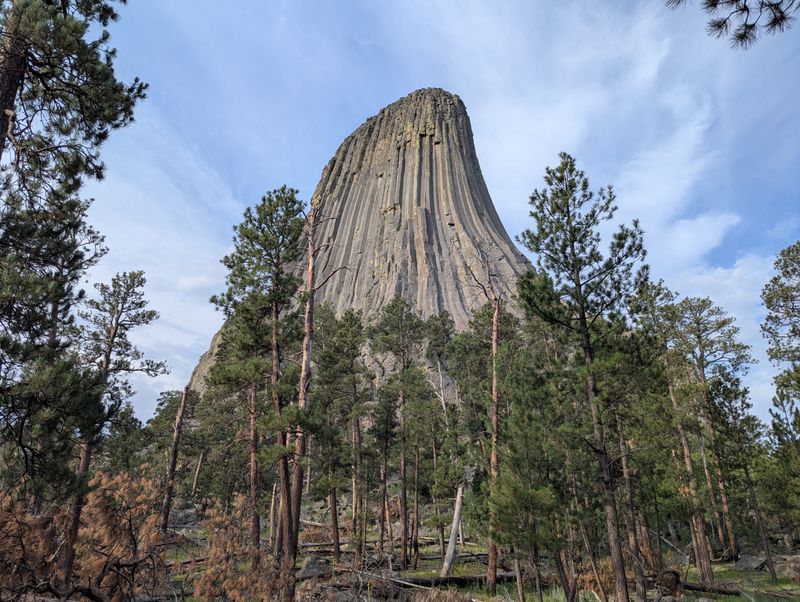
Rising abruptly from the surrounding prairie, Devils Tower commands attention like few other geological features.
This massive column of igneous rock stands 867 feet from base to summit, creating an unmistakable landmark visible for miles.
The Tower Trail circles its base, offering constantly changing perspectives on this natural wonder.
Walking the 1.3-mile paved loop takes roughly an hour at a leisurely pace.
The relatively flat path makes this hike suitable for most fitness levels, though the Wyoming sun can be intense during summer months.
Shade from ponderosa pines provides welcome relief during warmer parts of the day.
Up close, the tower’s vertical columns reveal fascinating details.
These hexagonal formations resulted from cooling magma that contracted and cracked in geometric patterns.
Running your hand along the rock connects you directly with geological processes that occurred millions of years ago.
Rock climbers often scale the tower’s faces, appearing as tiny figures against the massive stone.
Watching their slow progress upward gives perspective on the formation’s true scale.
Climbing is permitted but voluntary closures occur during June to respect Native American ceremonies for whom the tower holds sacred significance.
Prairie dog colonies inhabit the grasslands surrounding the monument.
These social animals create entertainment with their chirps and quick movements between burrows.
Keeping respectful distance protects both visitors and wildlife.
The trail also passes through boulder fields where massive rocks broke away from the main formation.
These fallen pieces, some as large as cars, demonstrate ongoing erosion processes.
Children enjoy exploring around these boulders, though staying on designated paths protects fragile vegetation.
Evening visits offer special rewards when setting sun paints the tower in warm golden and orange tones.
The rock seems to glow against darkening skies, creating memorable photo opportunities.
Devils Tower represents Wyoming’s geological diversity, standing as a solitary sentinel over the northeastern plains.
4. Cascade Canyon Trail in Grand Teton National Park
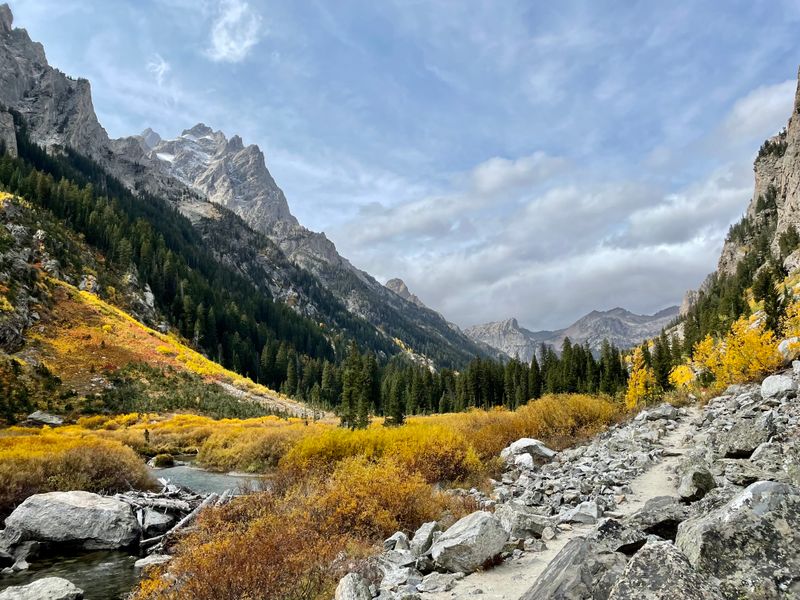
Have you ever walked between mountains so tall they seem to touch the clouds?
Cascade Canyon offers exactly that experience, taking hikers deep into the heart of the Teton Range.
The journey begins with a boat ride across Jenny Lake, adding an element of adventure before the hiking even starts.
Once on the western shore, the trail climbs gradually through forest and alongside Cascade Creek.
The sound of rushing water provides constant accompaniment as the path ascends.
Sunlight filters through the canopy, creating dappled patterns on the trail surface.
As the canyon opens up, the views become increasingly dramatic.
Towering peaks rise on both sides, their rocky faces showing the work of ancient glaciers.
The scale of these mountains makes hikers feel small in the best possible way; humbled by nature’s grandeur.
The trail continues for miles, allowing hikers to choose their turnaround point based on time and energy.
Many aim for the canyon’s fork where the trail splits toward Solitude Lake and Hurricane Pass.
Even reaching partway into the canyon delivers stunning scenery worth the effort.
Wildlife sightings happen frequently along this route.
Moose browse in willow thickets near the creek, their massive bodies moving with surprising grace.
Black bears occasionally appear, reminding hikers to carry bear spray and make noise while traveling.
The creek itself provides endless fascination.
Clear water rushes over smooth rocks, creating pools and small waterfalls.
On hot days, hikers cool their feet in the icy water, though swimming isn’t recommended due to strong currents and cold temperatures.
Photographers find infinite subjects here; from wide-angle canyon vistas to close-up shots of wildflowers and water features.
The changing light throughout the day transforms the canyon’s appearance.
Morning light illuminates the eastern walls while afternoon sun highlights the western peaks, each creating different moods and opportunities.
5. Medicine Bow Peak via Lewis Lake Trail
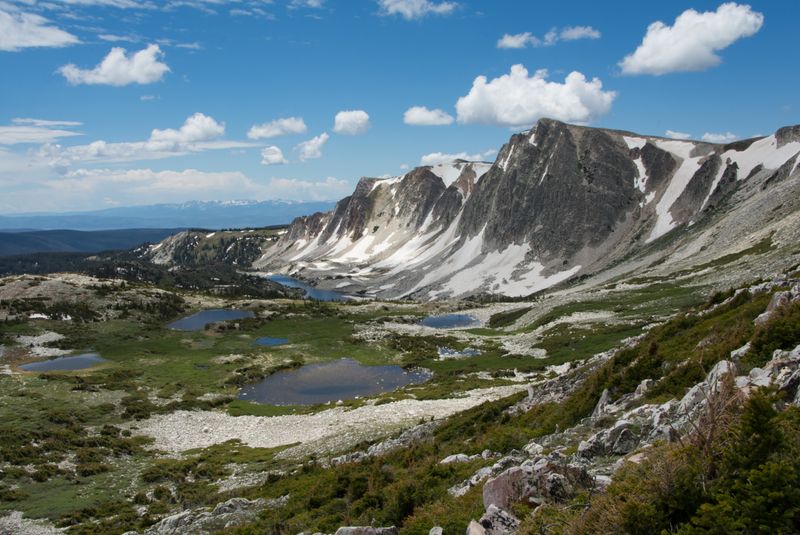
Something magical happens when you climb above the treeline into alpine tundra.
Medicine Bow Peak, the highest point in the Snowy Range, offers that transition from forest to sky in spectacular fashion.
The Lewis Lake Trail provides the most popular route to this 12,013-foot summit.
Starting from a high-elevation trailhead means the hike covers less vertical distance than many other mountain climbs.
However, the thin air at this altitude makes every step more challenging.
Pacing yourself and taking breaks allows your body to adjust while also providing excuses to turn around and admire expanding views.
The trail passes through zones of vegetation that change with elevation.
Sturdy subalpine fir trees give way to increasingly stunted growth until finally only low grasses, mosses, and tiny wildflowers survive.
These alpine plants bloom in brilliant colors despite their small size, creating unexpected beauty in harsh conditions.
Lewis Lake appears partway up the route, its surface reflecting surrounding peaks on calm days.
The lake’s clarity allows you to see rocks on the bottom even in deeper sections.
Some hikers pause here for snacks, enjoying the peaceful setting before continuing upward.
The final approach to the summit crosses rocky terrain that requires careful foot placement.
No technical climbing is necessary, but solid hiking boots and attention to the route prove important.
Cairns mark the way when the path becomes less obvious across boulder fields.
Reaching the summit delivers 360-degree views that stretch across southern Wyoming and into Colorado.
On clear days, the visibility seems endless, with mountain ranges layering into the distance.
A summit register allows hikers to sign in, joining thousands who have made this climb.
Weather changes rapidly at this elevation.
Afternoon thunderstorms develop frequently during summer, making early starts essential.
Carrying rain gear and warm layers protects against sudden temperature drops and precipitation that can appear even on days that start sunny.
6. Inspiration Point via Hidden Falls
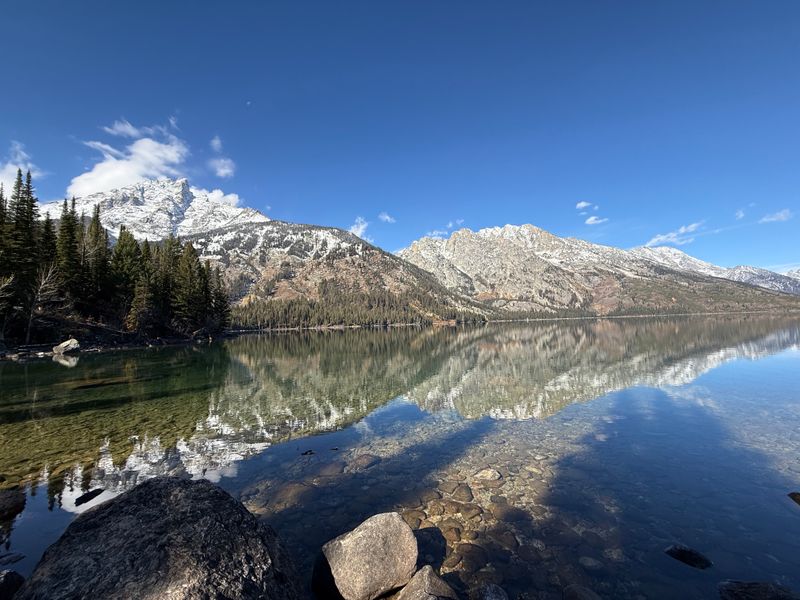
The name Inspiration Point promises much, and this overlook delivers on that promise completely.
Reaching it requires hiking past Hidden Falls, creating a two-for-one adventure that combines waterfall beauty with panoramic lake views.
Most visitors take the boat shuttle across Jenny Lake, cutting several miles off the round-trip distance.
The trail to Hidden Falls is well-maintained and moderately graded.
Families with older children handle this hike comfortably, making it one of the park’s most popular destinations.
The sound of falling water grows louder as you approach, building anticipation.
Hidden Falls drops approximately 200 feet down a rocky cliff face.
Viewing platforms allow safe observation while mist from the falls creates refreshing coolness on warm days.
The falls run strongest during early summer when snowmelt swells Cascade Creek.
Continuing beyond the falls, the trail steepens considerably.
Switchbacks climb roughly 500 feet in elevation over the next half mile.
This section challenges hikers but remains manageable with rest breaks and steady pacing.
Arriving at Inspiration Point makes every uphill step worthwhile.
Jenny Lake spreads out below, its blue water contrasting with the surrounding forest.
Across the lake, the eastern shore and Jackson Hole valley extend toward distant horizons.
The Teton peaks dominate the skyline, their jagged profiles creating one of America’s most recognizable mountain silhouettes.
Seeing these mountains from this elevation provides perspective on their massive scale.
Glaciers cling to north-facing slopes even in late summer.
Benches at the overlook invite lingering to fully absorb the scenery.
Many hikers eat lunch here, finding few better outdoor dining rooms anywhere.
The combination of lake, mountains, and forest creates a balanced composition that explains why photographers flock to this spot.
Descending back to the boat dock completes a satisfying half-day adventure.
The memories and photos from this hike remain vivid long after returning home.
7. Red Canyon Overlook in Flaming Gorge
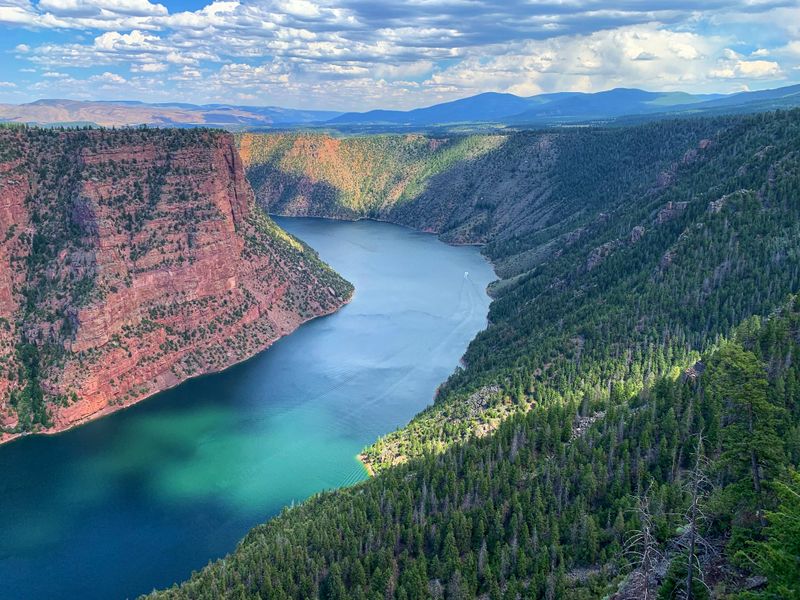
Not all of Wyoming’s spectacular scenery involves mountains and forests.
Red Canyon Overlook showcases the state’s desert beauty where colorful rock layers tell stories of ancient environments.
Flaming Gorge National Recreation Area straddles the Wyoming-Utah border, and this overlook ranks among its most impressive viewpoints.
A short paved path from the parking area leads to multiple viewing platforms.
The overlook sits perched on canyon rims that drop dramatically to the reservoir far below.
Guardrails provide safety while allowing unobstructed views of the geological wonderland.
The canyon walls display bands of red, orange, white, and brown sedimentary rock.
Each layer represents a different period in Earth’s history when this area was covered by ancient seas, rivers, or sand dunes.
Geology comes alive when you can see millions of years of deposition exposed in cross-section.
The Green River carved this canyon over countless centuries.
Now dammed to form Flaming Gorge Reservoir, the water appears brilliant turquoise against the red rocks.
The color contrast creates stunning visual impact, especially under the intense Wyoming sunlight.
Boats on the reservoir below look like tiny toys from this elevation.
Watching them move slowly across the water provides scale reference for the canyon’s depth.
The reservoir supports excellent fishing and water recreation, offering different ways to experience this landscape.
Interpretive signs explain the area’s geology, ecology, and human history.
Native peoples lived in this region for thousands of years, and later explorers including John Wesley Powell documented its features.
Understanding this history enriches the viewing experience.
Sunset transforms the overlook into a particularly magical place.
The low-angle light intensifies the rock colors, making reds glow even more vibrantly.
Shadows stretch across the canyon, adding depth and dimension to the landscape.
This overlook proves that Wyoming’s natural beauty extends beyond its famous mountain parks into lesser-known but equally impressive destinations.
Dear Reader: This page may contain affiliate links which may earn a commission if you click through and make a purchase. Our independent journalism is not influenced by any advertiser or commercial initiative unless it is clearly marked as sponsored content. As travel products change, please be sure to reconfirm all details and stay up to date with current events to ensure a safe and successful trip.
