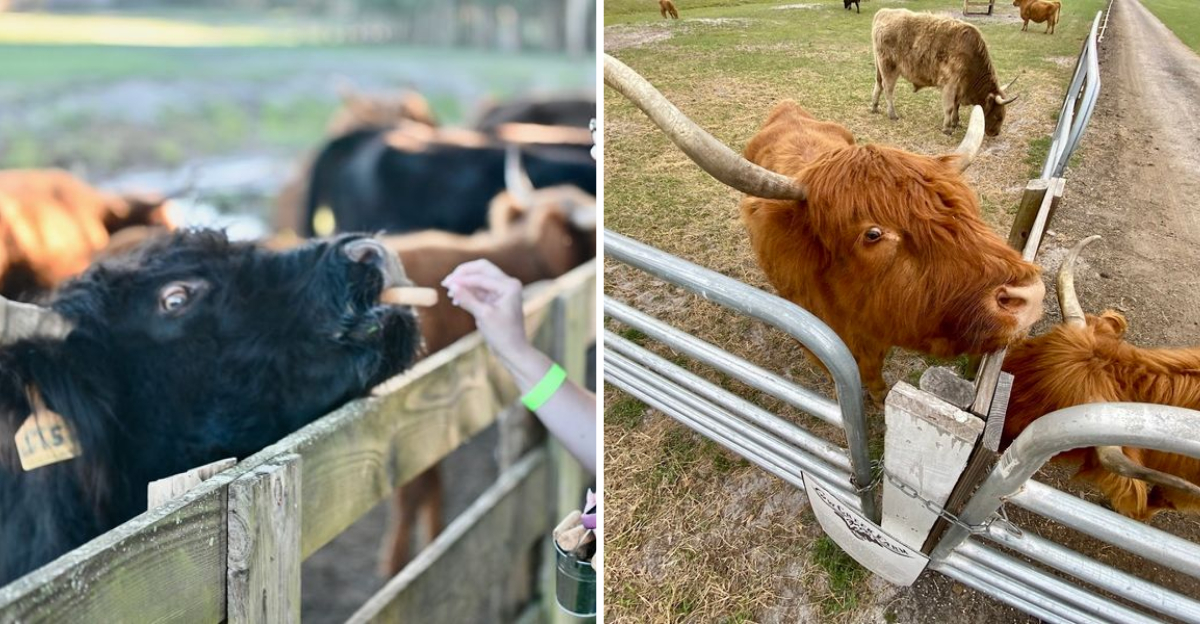
I pulled into the farm and immediately wondered if I had taken a wrong turn to Scotland. Or a cartoon.
Because the animals standing in the field did not look real. Long shaggy hair falling over their eyes.
Huge horns curving outward. Orange coats that look like plush teddy bears grew legs and started grazing. Scottish Highland cows are already ridiculous looking.
But something about seeing them in Florida heat makes it even funnier. They were brought here years ago and apparently love the warm weather.
Who knew. I stood at the fence for twenty minutes just watching them chew grass and flick their massive bangs.
The Fluffy Hair That Defies Florida’s Heat
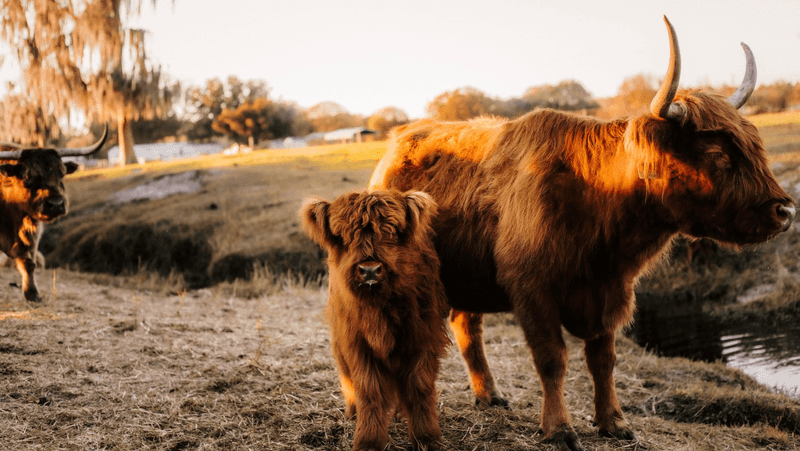
Their coats are the first thing that stops you in your tracks. Highland cows grow this incredibly thick, double-layered fur that hangs down in waves and swoops, creating that signature teddy bear look everyone talks about.
You’d think all that hair would be miserable in Florida’s climate, but these cows handle it surprisingly well. The outer layer sheds moisture and keeps them cool, while the softer undercoat insulates them from temperature swings.
Nature designed them for Scottish winters, but they’ve adapted beautifully to Plant City’s warmth.
The colors range from deep rusty red to golden blonde, black, and even dun shades. Each cow has its own unique shade and texture, making them easy to tell apart once you spend a few minutes observing.
Some have bangs that sweep across their eyes like a teenage rockstar from the 1980s.
What really gets me is how soft it looks from a distance. You want to reach out and touch it, run your fingers through those flowing locks.
The farm allows supervised interaction, so you actually can experience that plush texture firsthand. It feels coarser than you’d expect but still incredibly satisfying to touch.
Meeting The Herd Up Close
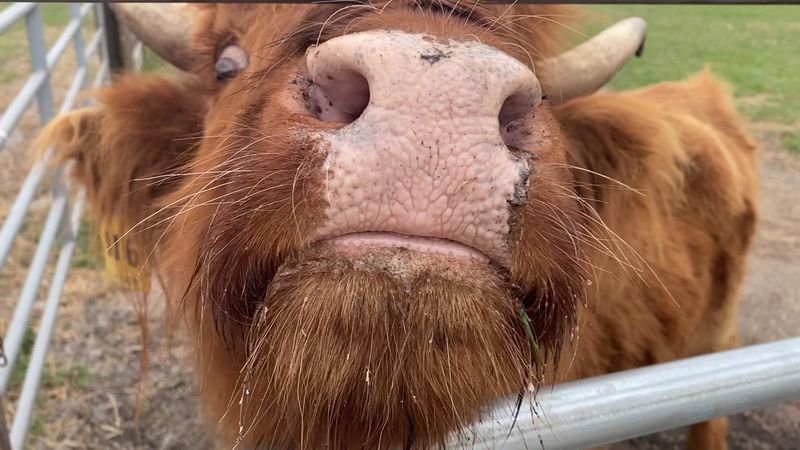
Cow Creek Farm keeps things intimate and personal. The herd isn’t massive, which means each cow gets attention and develops its own personality that visitors can actually observe and connect with.
During farm visits, you get to approach these animals at a comfortable distance. They’re curious but never pushy, often wandering over to investigate new faces.
Their big, soulful eyes peek through those shaggy bangs, and despite the impressive horns, there’s nothing intimidating about them. They move slowly and deliberately, radiating calm energy.
The farm staff knows each cow by name and can tell you about their quirks and preferences. One might be particularly food-motivated, while another enjoys scratches behind the ears.
These details transform the experience from looking at livestock to actually meeting individual animals with distinct characters.
I watched one cow investigate a visitor’s camera bag for a solid five minutes, gently nudging it with her nose. Another stood perfectly still while a child carefully brushed a small section of her coat.
The patience they show with people, especially kids, makes the visit feel safe and welcoming rather than nerve-wracking.
Photography opportunities abound because these cows don’t seem bothered by cameras or phones. They’ll pose unintentionally, creating perfect Instagram moments without any effort.
Those Iconic Long Horns
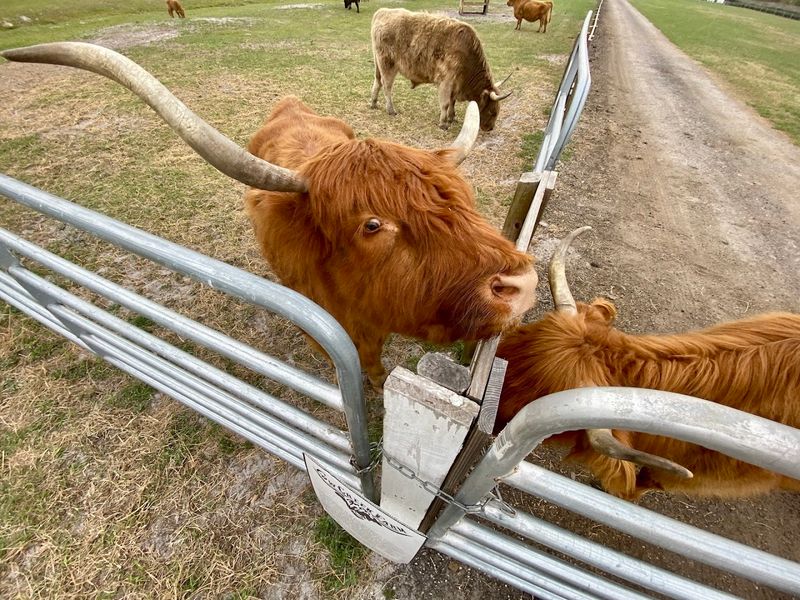
The horns command respect but don’t inspire fear when you’re standing near them. Both male and female Highland cows grow these impressive curved horns that sweep outward and sometimes slightly upward, creating a majestic profile.
Bulls develop thicker, more forward-facing horns compared to the cows’ more elegant, upward-sweeping curves. The difference becomes obvious once someone points it out.
The horns can span several feet from tip to tip, making for dramatic silhouettes against the Florida sky.
Despite their size, the cows use these horns carefully. They’re tools for scratching hard-to-reach spots, moving branches, and establishing gentle hierarchy within the herd.
I never saw aggressive behavior during my visit, just calm coexistence.
The contrast between the delicate, fluffy appearance of their faces and the powerful horns creates visual interest. These aren’t decorative features but functional parts of their anatomy that they’ve carried for centuries in the Scottish Highlands.
Seeing them on a sunny Florida farm adds to the surreal nature of the experience.
Farm visitors quickly learn that the horns don’t indicate temperament. These gentle souls just happen to be equipped with impressive headgear.
Watching them graze peacefully, horns swaying slightly with each movement, brings an unexpected sense of tranquility.
What Makes Highland Cows So Docile
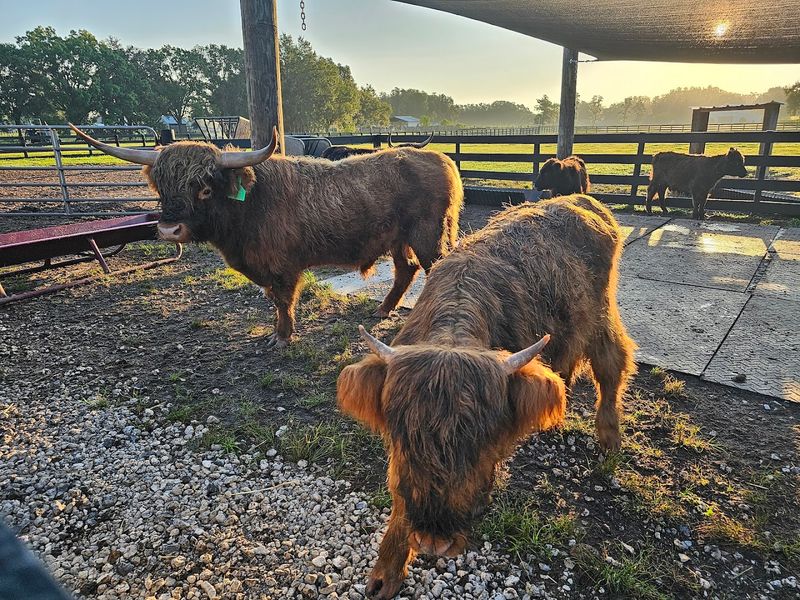
Highland cattle earned their reputation as one of the most easygoing breeds for good reasons rooted in their history. Centuries of living alongside Scottish crofters in harsh conditions created animals that developed cooperative, calm temperaments.
Their laid-back nature shows immediately. These cows don’t startle easily, don’t charge, and genuinely seem to enjoy human company when handled respectfully.
The breed was never selected for aggression or nervousness, unlike some cattle bred purely for production efficiency.
At Cow Creek Farm, this temperament makes the experience accessible to visitors of all ages. Children can approach without the farm staff getting tense or hovering anxiously.
The cows simply continue their day, occasionally accepting a gentle pat or scratch.
I noticed they communicate differently than other cattle I’ve encountered. They make soft sounds, almost like gentle lowing conversations with each other.
Their body language stays relaxed and open. Even when food arrives, there’s no pushing or shoving, just patient waiting.
This calmness isn’t laziness but contentment. They’re alert and aware, just not reactive or flighty.
The combination of their impressive appearance and gentle demeanor creates something truly special. You get the visual drama of those horns and flowing coats alongside the peaceful energy of animals completely at ease.
The Surprising Florida Connection
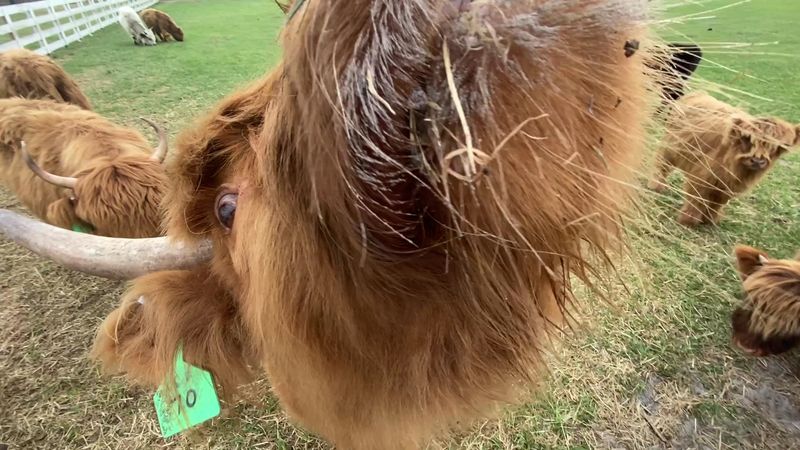
Finding Highland cows in Florida sounds like a joke setup, but the state actually hosts several small herds. The climate challenges you’d expect haven’t proven insurmountable for these adaptable animals.
Farmers discovered that with proper shade, water access, and pasture management, Highland cattle thrive in subtropical conditions. Their coats shed and thin somewhat during summer months, though they never lose that characteristic shaggy appearance.
The double-layer coat system that protects them from Scottish rain and cold also provides insulation against heat when managed correctly.
Cow Creek Farm represents a growing trend of Florida farms diversifying beyond traditional cattle breeds. These Highland cows attract visitors, create educational opportunities, and showcase agricultural diversity.
They’ve become ambassadors for their breed while living surprisingly comfortable lives in their adopted home.
The juxtaposition of seeing these ancient Scottish animals against Florida’s landscape adds novelty to the experience. Palm trees and Highland cows sharing space creates moments that feel almost dreamlike.
It’s a reminder that animals often adapt better than we expect.
This Florida connection also means accessibility. Instead of traveling to Scotland or searching for Highland herds in northern states, Floridians and visitors can experience these remarkable animals without leaving the region.
Plant City sits conveniently between Tampa and Orlando, making Cow Creek Farm an easy addition to vacation plans.
Photo Opportunities You Can’t Miss
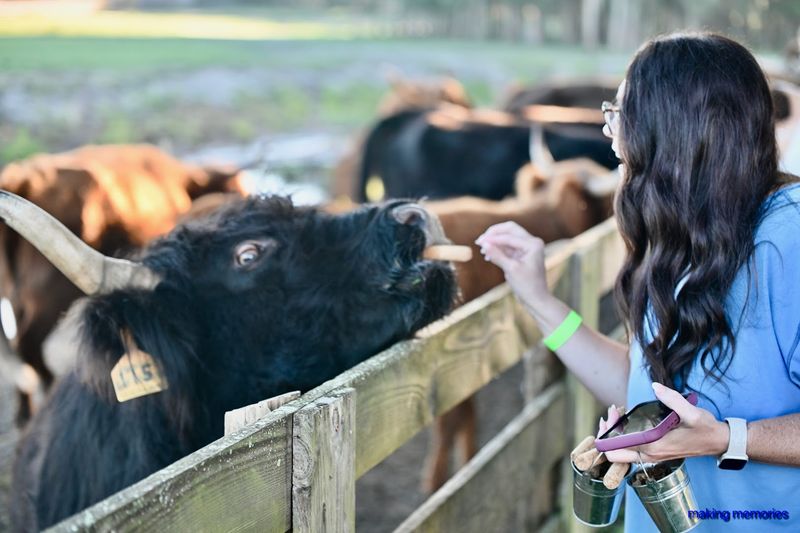
These cows photograph like professional models without trying. Their hair catches light beautifully, creating halos and highlights that make every shot look intentionally composed.
Golden hour visits produce especially stunning results. The low angle of morning or evening sun illuminates their coats from behind, making the individual hair strands glow.
Their horns create dramatic silhouettes, and those soulful eyes peer through their bangs with an expression that reads as pure personality.
The farm’s setting provides varied backgrounds. Green pastures, rustic fence lines, and open sky give you clean, uncluttered compositions.
I spent probably twenty minutes just capturing different angles of the same cow because each perspective revealed something new.
What makes photography here special is the cows’ cooperation. They don’t run from cameras or constantly move out of frame.
If anything, they seem mildly interested in the attention. You can set up shots, adjust your position, and wait for perfect lighting without your subject wandering off mid-shoot.
Family photos with these gentle giants create memorable keepsakes. The size contrast between a child and a full-grown Highland cow emphasizes the animal’s impressive stature while their calm demeanor keeps everyone comfortable.
These aren’t generic petting zoo snapshots but genuine portrait-quality images you’ll actually want to frame.
Planning Your Visit to Cow Creek Farm
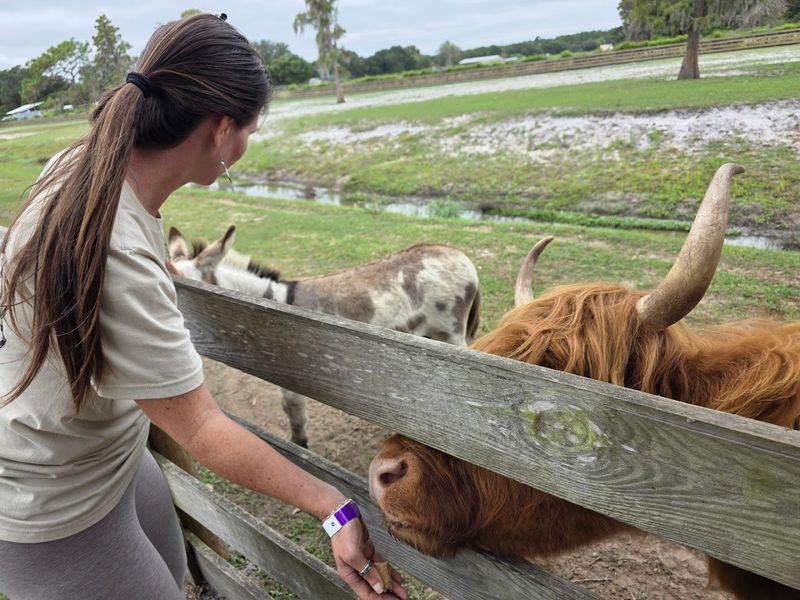
Cow Creek Farm operates by appointment, which keeps visits personal and prevents the cows from getting overwhelmed by constant crowds. This arrangement benefits everyone, creating a more intimate, relaxed atmosphere than traditional attractions.
Call ahead to schedule your visit and ask about any special requirements. The farm sometimes hosts educational sessions or special events that might align with your interests.
Weekday visits tend to be quieter, while weekends might offer more structured programming.
Wear closed-toe shoes and comfortable clothing you don’t mind getting a bit dusty. Florida farm visits mean sun exposure, so sunscreen and hats are essential.
Bring water, though the farm typically has some available. The terrain is mostly flat but uneven in spots, so mobility considerations matter.
The farm encourages questions and interaction. Staff members are knowledgeable about Highland cattle history, care requirements, and individual animal personalities.
Don’t rush through your visit. These encounters work best when you slow down and simply observe.
Plant City offers additional attractions if you’re making a day trip. Strawberry farms, local restaurants, and other agricultural operations cluster in the area.
The drive from either Tampa or Orlando takes under an hour, making this a feasible half-day excursion.
Address: 6802 Five Acre Rd., Plant City, FL
