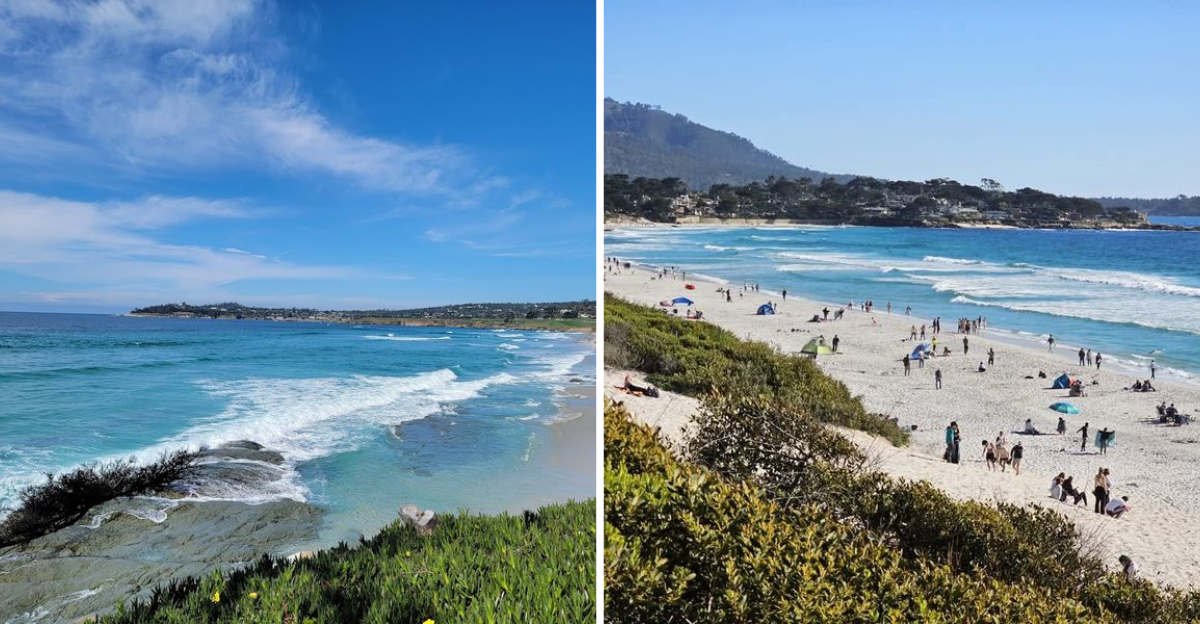
Powder white sand and water that shifts between deep blue and turquoise. Sea otters float lazily in the kelp beds offshore.
Harbor seals bask on rocky shores without a care. This California beach makes you slow down, look around, and feel genuinely lucky to be there. The sand is soft and cool under your feet.
The waves roll in with a steady rhythm that settles something in your chest. You sit on the shore and watch the otters drift past, completely unbothered by your presence. The whole scene feels like something out of a nature documentary, except it is real and you are right in the middle of it.
Places like this do not come along often.
The White Sand That Stops You in Your Tracks
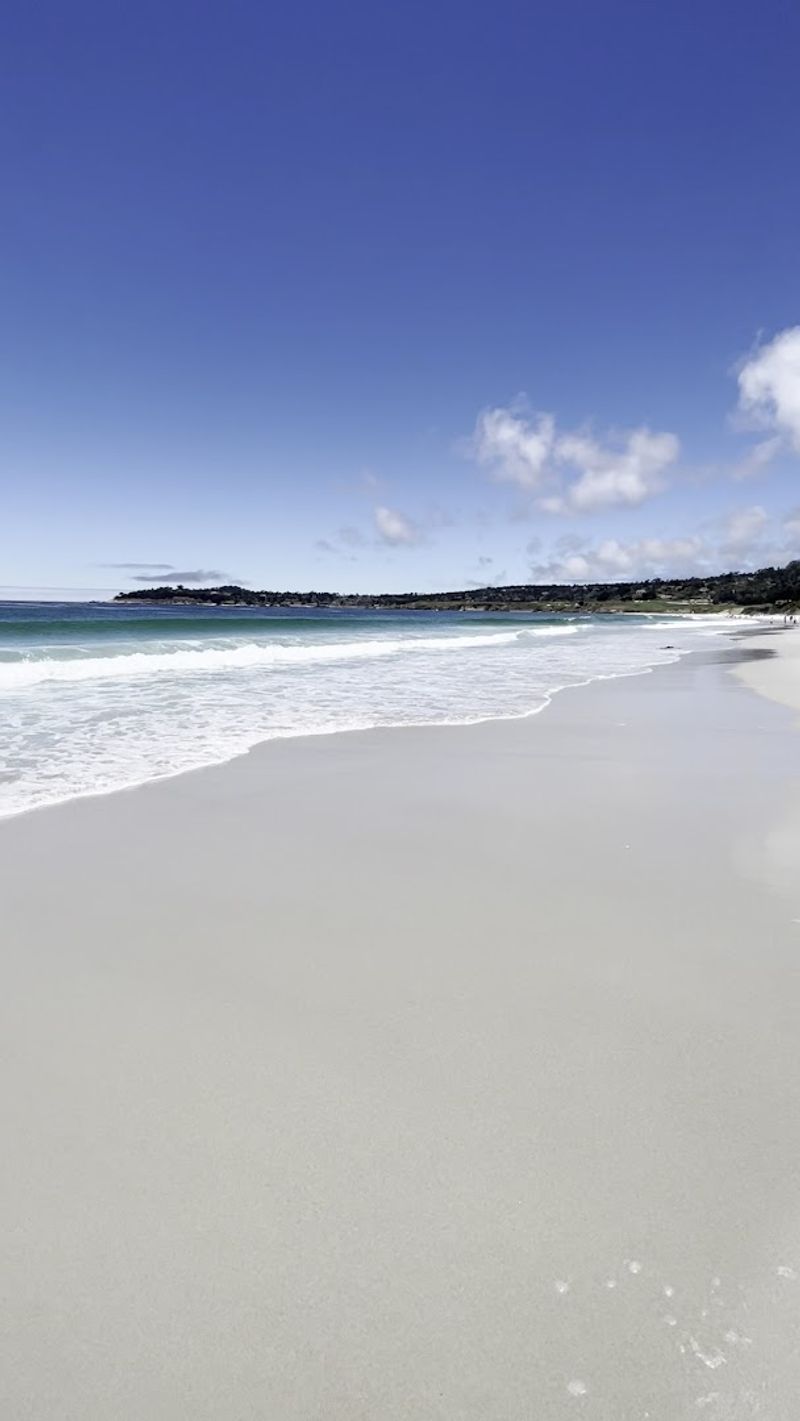
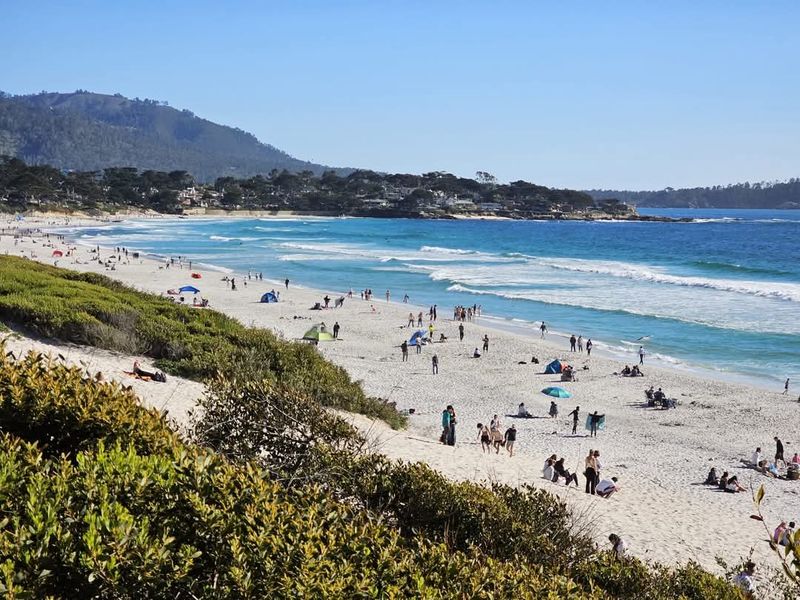
The first thing that hits you at Carmel Beach is the sand. It is not beige, not tan, not the typical California beach color.
It is genuinely white, almost luminous, and it squeaks softly underfoot as you walk across it. The reason for this is fascinating: the sand originates from the quartz-rich Santa Lucia granodiorite rock that underlies the coastline, giving it that unusual pale, almost crystalline appearance.
Running your fingers through it feels different from most beaches. The grains are fine and soft, and they stay surprisingly cool even on sunny days.
Families spread out blankets across wide stretches of it, dogs sprint through it with absolute joy, and surfers cross it barefoot without flinching.
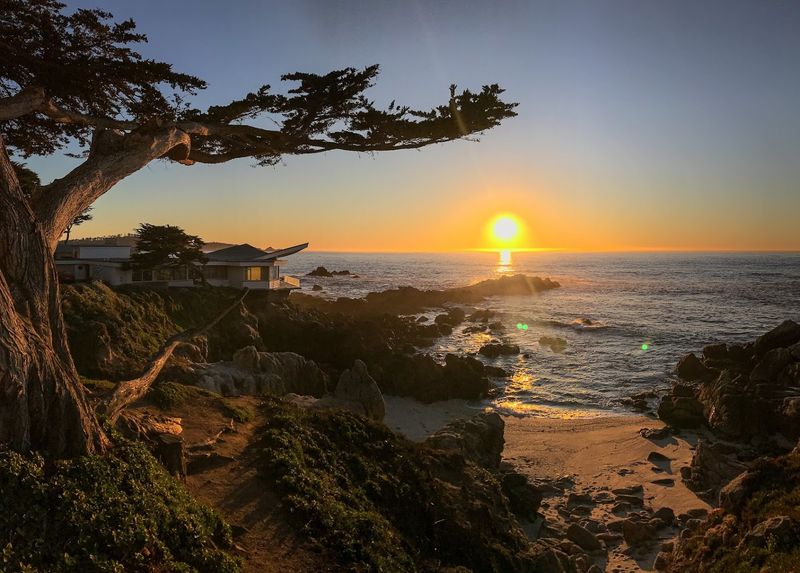
The beach curves in a gentle crescent shape, backed by a row of wind-sculpted Monterey cypress trees that frame the whole scene perfectly. Scenic Road runs along the bluff above, and a paved walking path follows it, offering elevated views of the sand and surf below.
Whether you sit right at the waterline or find a quiet spot near the trees, the setting feels almost cinematic. It is the kind of beach that makes you reach for your camera before you even take off your shoes.
Turquoise Water That Belongs in a Postcard
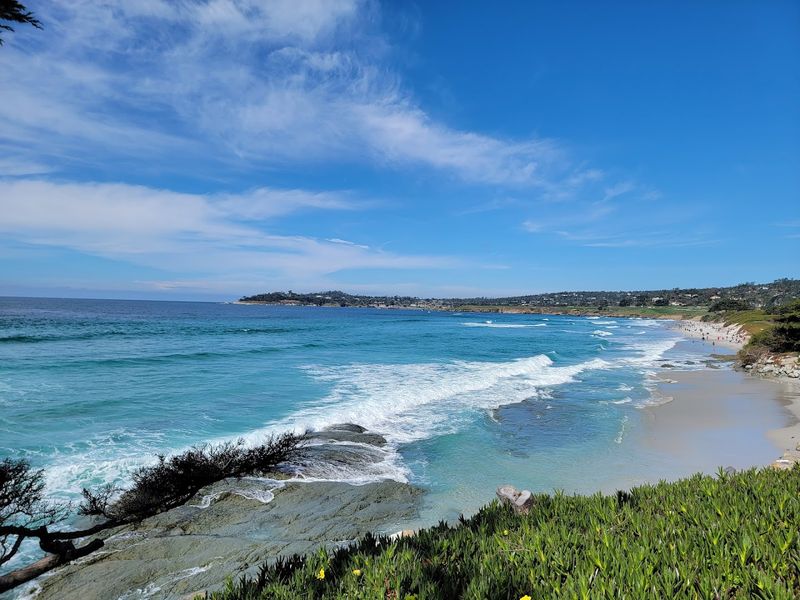
There is a moment, usually right when you crest the top of the path and catch your first full view of the ocean, when the color of the water genuinely surprises you. It is turquoise.
Not a gray-green Pacific typical of Northern California, but a vivid, almost tropical blue-green that catches the light and holds it. The clarity of the water near shore is part of what creates that effect, especially on calm, sunny mornings.
The waves here have real energy. Carmel Beach is a known surf spot, and on good days you can watch surfers reading the sets from the water, timing their paddles, and riding long, clean lines toward shore.
Even if you have no interest in surfing, watching it from the sand is its own kind of entertainment.
Swimming is possible, but the water runs cold even in summer, so most visitors wade in up to their knees and call it a win. The real appeal is simply being near it, hearing the rhythm of the waves, and watching the color change as clouds pass overhead.
On overcast days the water turns a moody blue-gray. On sunny afternoons it glows like sea glass.
Either way, it earns every bit of the admiration it gets.
Sea Otters Floating in the Kelp Just Offshore
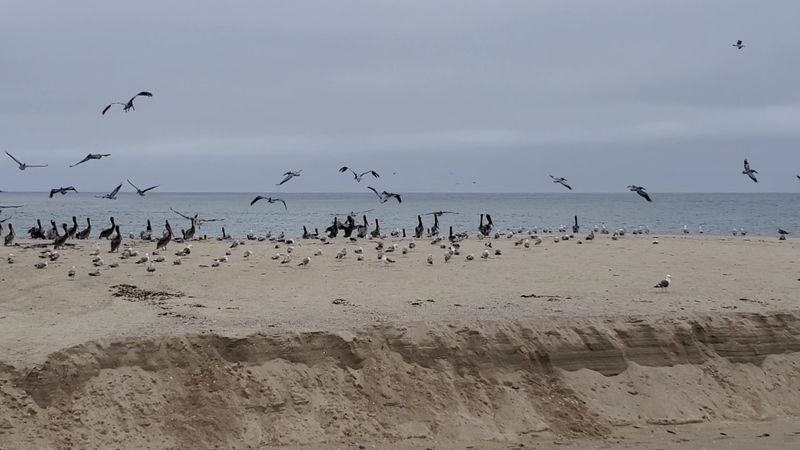
Spotting a sea otter for the first time in the wild is genuinely one of those experiences that makes you stop talking mid-sentence. Out in Carmel Bay, within the Carmel Bay State Marine Conservation Area, sea otters float on the ocean’s surface among the kelp canopies with an almost ridiculous level of calm.
They wrap themselves in kelp so they do not drift, fold their paws over their chests, and nap like they have absolutely nowhere to be.
Binoculars help a lot for getting a closer look from the beach. The otters tend to stay in the kelp beds rather than coming right to shore, so a little patience and a good vantage point go a long way.
Early mornings and quieter weekdays tend to offer calmer conditions for spotting them.
Just south of the beach, Point Lobos State Natural Reserve is one of the best places on the entire California coast to observe sea otters up close. Protected coves there shelter otters near rocky shores rich with mussels and clams, which make up a big part of their diet.
The Monterey Bay Aquarium, a short drive north, has also cared for rescued otter pups from beaches in this area. The whole coastline here functions as a living sanctuary for these remarkable animals.
Harbor Seals Basking on the Rocky Shore
Harbor seals have a way of looking completely unbothered by everything around them. Near Carmel Beach and throughout the Carmel Bay State Marine Conservation Area, these sleek, spotted animals haul themselves onto rocky outcroppings and simply exist.
They stretch out, shift occasionally, and bask in the coastal sun with an air of total confidence. Watching them from a respectful distance is oddly relaxing.
Point Lobos State Natural Reserve, located just south of Carmel-by-the-Sea, is a particularly important spot for harbor seals. It serves as an active birthing area, and from mid-April through the end of May, you can sometimes observe pups resting near their mothers along the protected shores.
China Cove within Point Lobos hosts a resident seal colony that has called that stretch of coastline home for many years.
Sea lions also appear in the area, though they tend to be louder and more active than their harbor seal neighbors. The difference in personality between the two is noticeable even from a distance.
Rangers and signage at Point Lobos help visitors understand how to observe wildlife without causing stress to the animals. Keeping your distance is not just a rule here, it genuinely makes the experience better.
There is something powerful about watching wild animals live their lives completely on their own terms.
Cypress Trees, Sunsets, and the Walk Along Scenic Road
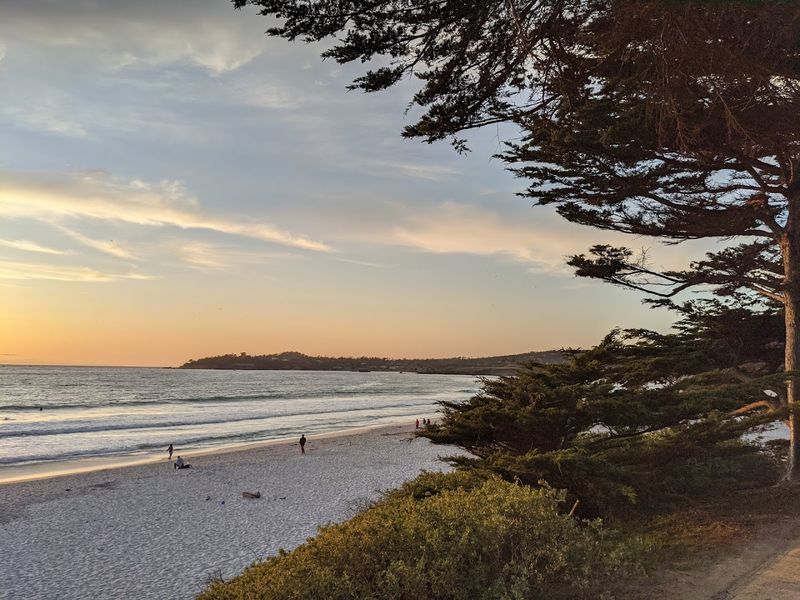
The paved path that runs along Scenic Road above Carmel Beach might be one of the most quietly spectacular walks on the California coast. Monterey cypress trees line the bluff, their branches twisted and sculpted by decades of ocean wind into shapes that look almost artistic.
Below the path, the white sand stretches out toward the water, and the sound of the waves carries up easily on the breeze.
Evenings here have their own kind of magic. Families, couples, solo walkers, and dogs of every size and temperament make their way along the path as the sun drops toward the horizon.
The light shifts through gold, orange, and deep pink before the sky goes dark, and the cypress silhouettes against that backdrop are genuinely hard to forget.
The walk itself is not long or strenuous. It is the kind of stroll where you stop often, lean on the railing, and just look out.
On clear evenings the setting sun reflects off the water in long, shimmering ribbons. On foggy evenings the mist rolls in slowly and the whole scene turns soft and mysterious.
Either version is worth showing up for. Locals seem to do this walk regularly, and it is easy to understand why.
Some places just reward returning to them.
Dogs, Families, and the Laid-Back Beach Culture
Carmel Beach has a reputation as one of the most dog-friendly beaches in California, and it absolutely earns it. Dogs are allowed off-leash here, and the result is pure, unfiltered joy.
Labs sprint into the surf, small dogs dig furiously in the soft sand, and retrievers play keep-away with tennis balls while their owners laugh from the waterline. The energy is contagious even if you did not bring a dog.
The people who come here tend to be easygoing and friendly. Conversations between strangers happen naturally, usually starting with someone admiring another person’s dog or pointing out a seal in the distance.
There is no pressure to perform or impress. The beach just encourages people to relax and be present.
Families with young kids find plenty to do here too. The sand is soft enough for building, the shallow edges of the surf are fun to splash around in, and the wide open space gives children room to run.
Parking can get tight on weekends and holidays, so arriving early or on a weekday makes the whole experience smoother. The town of Carmel-by-the-Sea sits just a short walk uphill from the beach, with coffee shops, bakeries, and restaurants waiting whenever hunger strikes.
The whole setup makes for an easy, satisfying day.
Exploring the Town of Carmel-by-the-Sea After the Beach
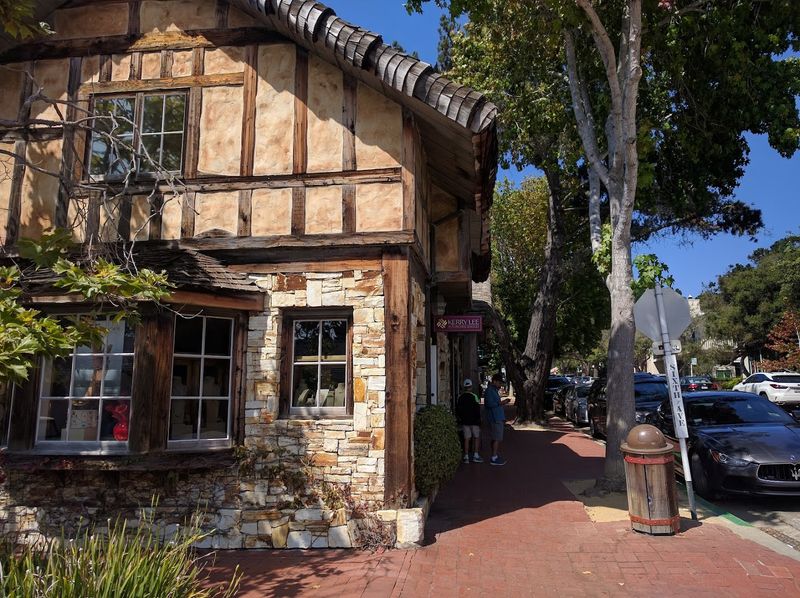
Carmel-by-the-Sea is the kind of town that feels like it was designed by someone who loved fairy tales. The streets have no traffic lights, most buildings look like oversized cottages, and art galleries outnumber chain stores by a wide margin.
After a morning at the beach, wandering into town feels like stepping into a completely different, slower rhythm.
Ocean Avenue is the main street, lined with small shops, cafes, and restaurants that spill their menus onto chalkboards outside. The architecture is genuinely charming, with stone pathways, courtyard gardens tucked between buildings, and flowering vines climbing old walls.
It rewards slow walking and looking up.
Coffee shops are easy to find, which is useful after a breezy morning on the sand. The town also has a strong arts community, with galleries showcasing painting, sculpture, and photography from both local and international artists.
History runs through the place too. Carmel was a creative colony in the early 20th century, attracting writers and painters who were drawn by the light and the landscape.
That spirit still lingers in a way that feels genuine rather than performed. A full day here, split between the beach and the town, covers a lot of ground without ever feeling rushed or overscheduled.
Address: Carmel-By-The-Sea, CA 93921
