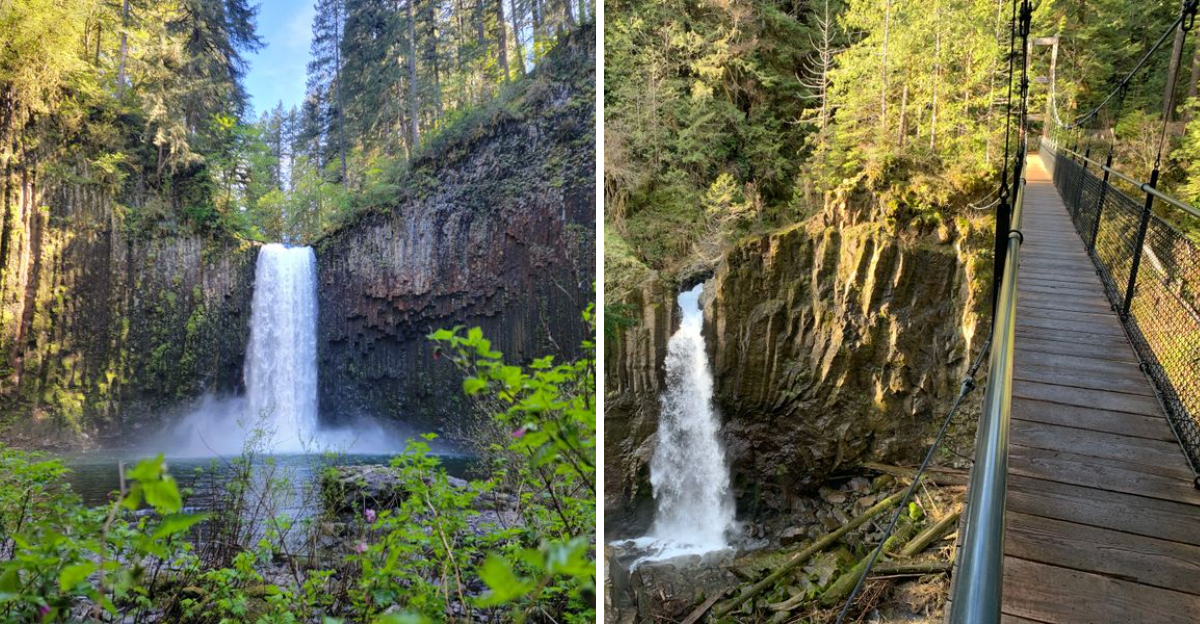
Oregon hides some of the most jaw-dropping trails you’ll ever stumble across, and most travelers drive right past them without even knowing they exist.
I’m talking about waterfalls that look so perfectly framed they could be stock photos, pools so vividly blue you double-check if they’re real, and forests so lush and green it feels like stepping into a fantasy world.
Some of these hidden gems have started to make waves on social media, but thankfully, they’re still far quieter than the big-name tourist traps, giving you space to actually breathe, explore, and soak it all in.
Each trail has its own personality – towering old-growth trees, secret mossy tunnels, or cliffside views that make your stomach flip in the best way.
Pack your hiking boots, your sense of adventure, and a camera that can handle the magic, because these secret trails will make you question if you’re even still on planet Earth. By the end, your feed – and your soul – will thank you.
1. Abiqua Falls, Scotts Mills
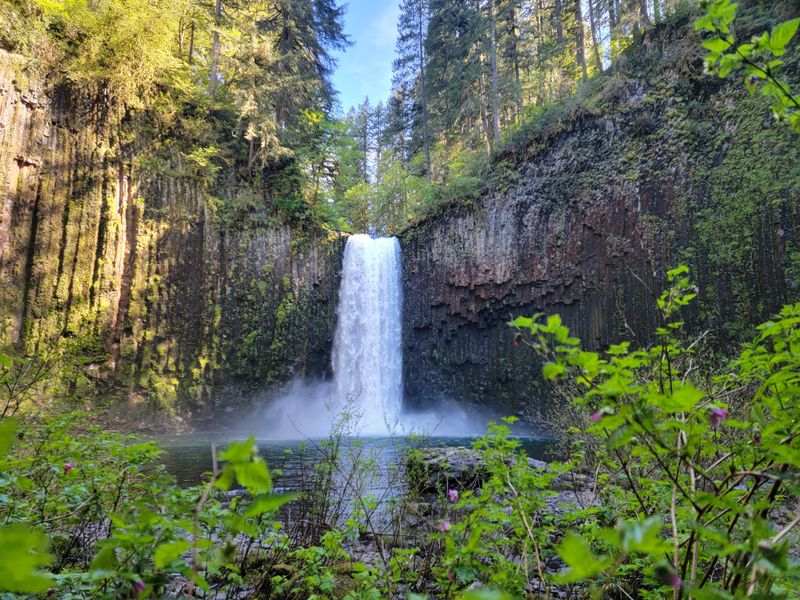
Picture a waterfall that looks like it belongs in a fantasy movie, complete with towering rock columns that frame the falling water like natural architecture. That’s exactly what you get at Abiqua Falls, located near the small town of Scotts Mills in Oregon’s Willamette Valley.
The hike itself is short but steep, dropping you down into a hidden amphitheater carved by centuries of flowing water. Basalt columns rise up around the falls like giant organ pipes, covered in emerald moss that practically glows in the filtered light.
The pool at the base is perfect for cooling off on hot summer days, though the water stays pretty chilly year-round.
Getting here requires navigating some logging roads, so a vehicle with decent clearance helps, and you’ll want to download offline maps since cell service is spotty. The trail down can get slippery, especially after rain, so good hiking boots are essential.
Most people visit between late spring and early fall when water levels are manageable and the weather cooperates.
Because this spot has gained popularity online, weekends can get surprisingly busy. Arriving early in the morning gives you the best chance of having this magical place mostly to yourself.
The combination of geological drama and lush Pacific Northwest greenery makes every step worth it.
2. Proxy Falls, Willamette National Forest
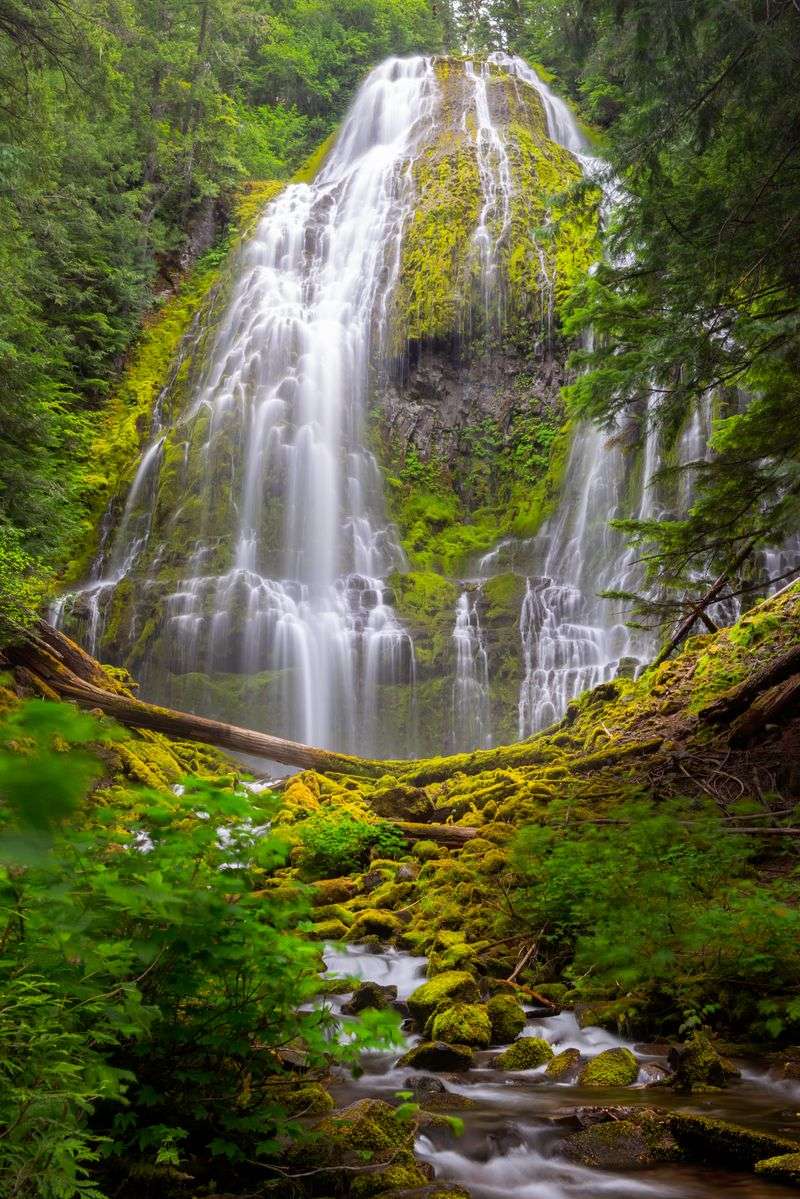
Water seems to materialize out of thin air at Proxy Falls, creating one of the most surreal waterfall experiences in Oregon. The main falls don’t flow from a visible stream above but instead appear to seep directly from the mossy cliff face itself, creating a curtain of mist that hangs in the air like magic.
Located along the McKenzie Pass Highway in Willamette National Forest, this easy loop trail takes you to both Upper and Lower Proxy Falls. The lower falls steal the show with their ethereal quality, especially when sunlight filters through the surrounding old-growth forest.
Everything here is draped in thick moss and ferns, giving the whole area an enchanted forest vibe.
The trail is relatively flat and well-maintained, making it accessible for most fitness levels. You’ll cross over ancient lava flows hidden beneath the forest floor, reminders of the volcanic forces that shaped this landscape thousands of years ago.
The falls are most impressive during spring and early summer when snowmelt keeps them flowing strong.
Because the highway closes in winter due to snow, this trail is strictly a warm-weather destination. Photographers love the soft, diffused light that makes everything look dreamy, and the short distance means you can easily combine this with other nearby attractions.
The otherworldly atmosphere here genuinely makes you feel like you’ve stepped into another dimension.
3. Tamolitch Blue Pool, McKenzie River
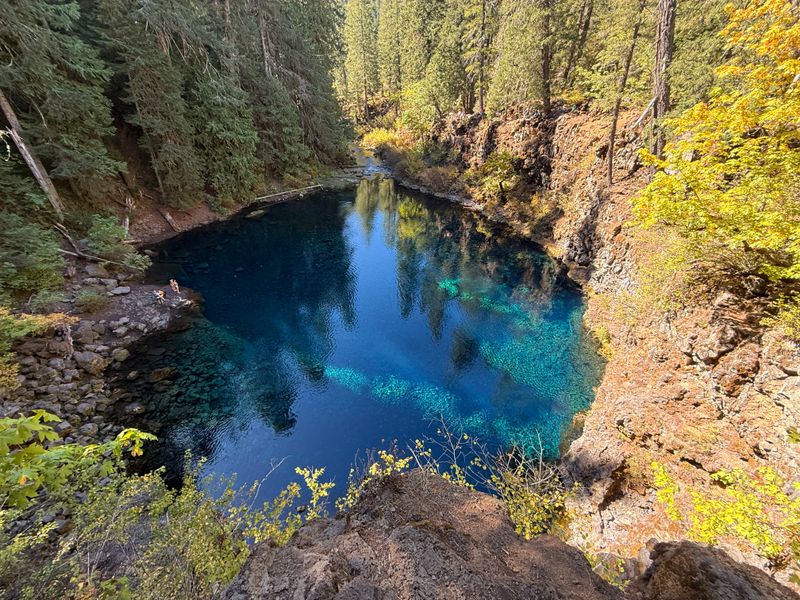
The color of this pool will make you do a double-take because water simply shouldn’t be that blue. Tamolitch Pool, also called the Blue Pool, sits along the McKenzie River Trail and features water so intensely turquoise it looks like someone dumped food coloring into it.
Here’s the wild part: no water flows into this pool from above. The McKenzie River actually disappears underground about three miles upstream, flowing through porous lava rock before erupting back to the surface as an ice-cold spring that fills this stunning basin.
The water stays around 37 degrees year-round, crystal clear and shockingly blue due to the way light refracts through the pure glacial melt.
The hike to reach it covers about four miles round trip through gorgeous old-growth forest, passing over sections of ancient lava flows. The trail is moderately easy with minimal elevation gain, making it doable for most hikers.
You’ll walk alongside the dry riverbed before suddenly coming upon this impossible pool of color.
Swimming is technically allowed, but the frigid temperature means most people just dip their toes or take photos. The surrounding forest provides plenty of shade and creates a peaceful atmosphere that feels miles away from civilization.
Weekends bring crowds, so weekday visits or early morning arrivals work best for experiencing the magic without sharing it with dozens of other people.
4. Ramona Falls, Mount Hood
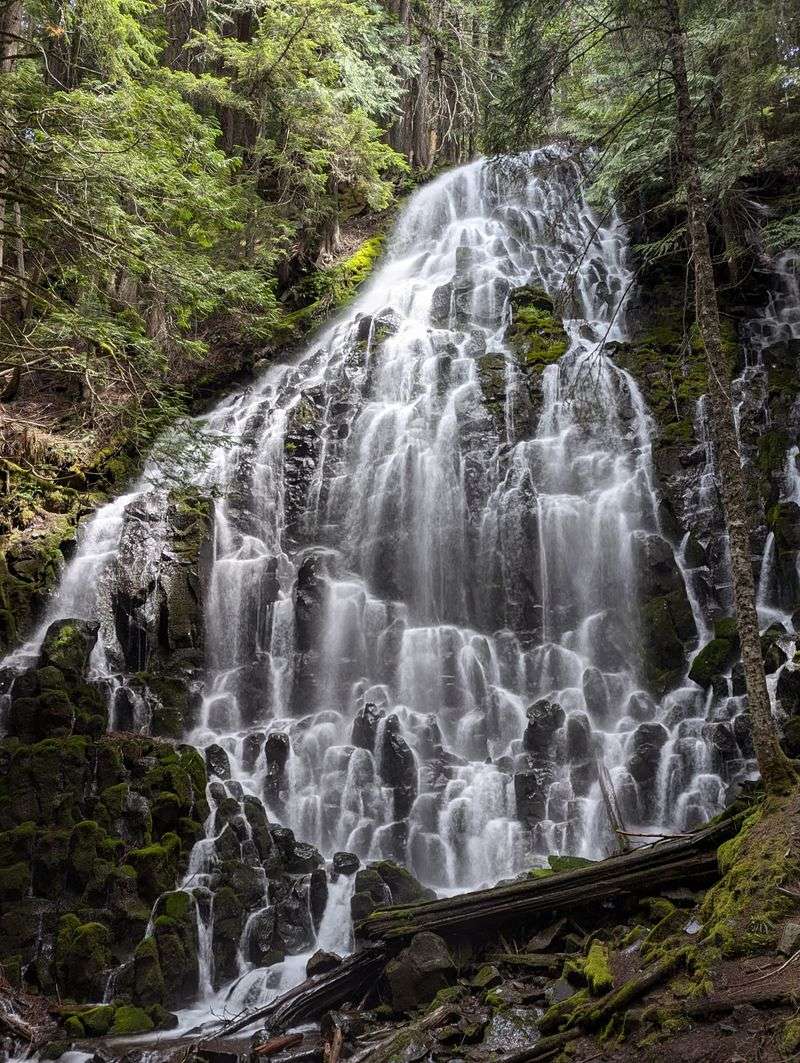
Few waterfalls can match the delicate beauty of Ramona Falls, where water spreads across a wall of columnar basalt in hundreds of tiny streams that look like liquid lace. This gem sits on the west side of Mount Hood, accessible via a trail that crosses the Sandy River on a substantial footbridge.
The hike covers about seven miles round trip through diverse forest ecosystems, from riverside cottonwoods to higher-elevation firs and hemlocks. The trail stays relatively gentle with moderate elevation gain, winding through quiet woods before opening up to reveal the falls cascading down their mossy rock face.
The way water fans out across the entire cliff creates a fan-shaped curtain that’s mesmerizing to watch.
Thick moss drapes over everything here, creating that quintessential Pacific Northwest aesthetic that photographers dream about. The falls are most impressive during spring runoff when snowmelt from Mount Hood keeps the flow strong.
By late summer, the volume decreases but the falls remain beautiful, just more subdued.
The loop trail option adds variety on your return trip, taking you through different forest scenery. You’ll need a Northwest Forest Pass to park at the trailhead, and the road access can be rough in spots, though most vehicles can handle it.
Mosquitoes can be fierce in early summer, so bug spray is basically mandatory unless you enjoy donating blood to the local insect population.
5. Wahclella Falls Trail, Columbia River Gorge
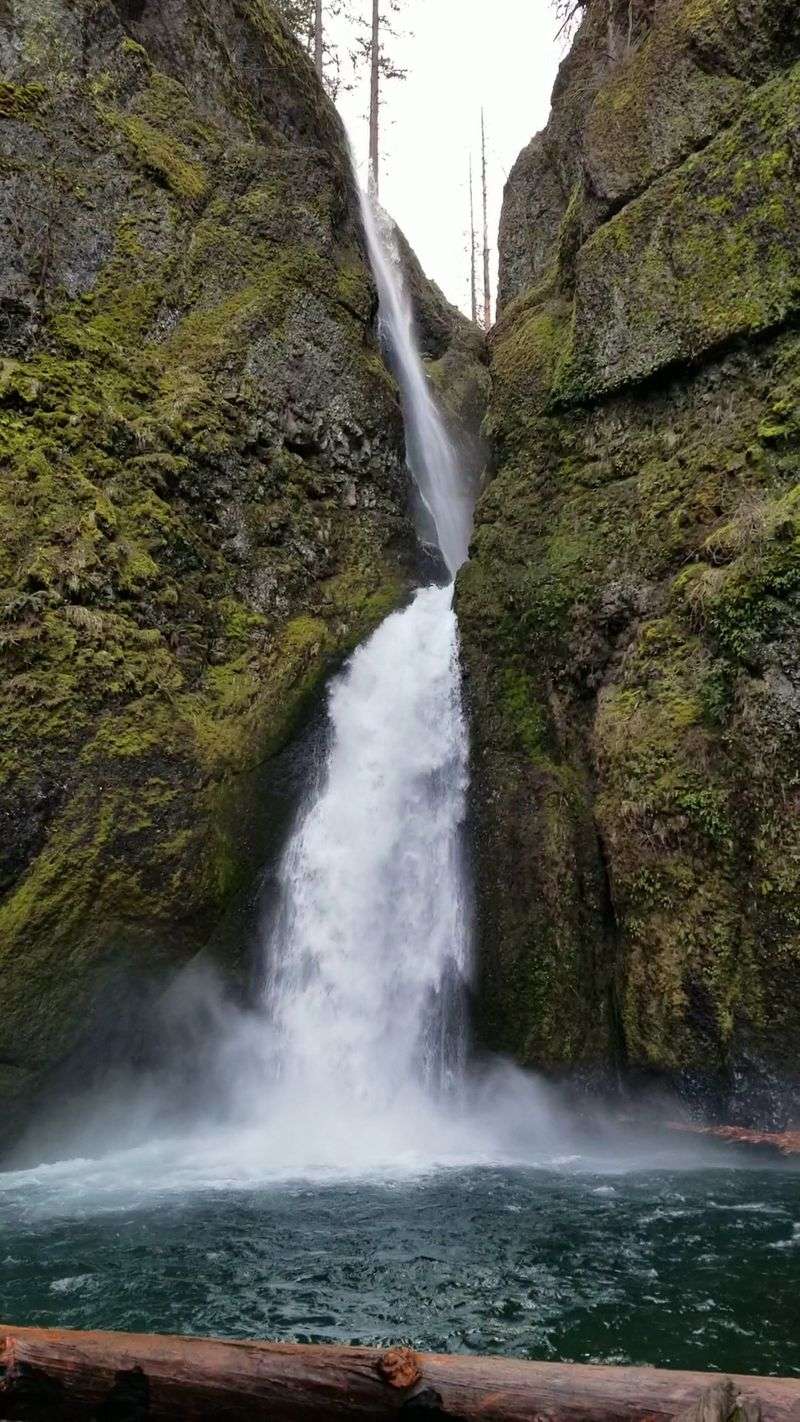
Sometimes the best things come in small packages, and this short trail in the Columbia River Gorge proves it. Wahclella Falls may only require a two-mile round trip hike, but the payoff is a thundering waterfall trapped between towering cliffs that amplify its power into something truly dramatic.
The trail follows Tanner Creek upstream through a narrow canyon that gets progressively more impressive with every step. Moss blankets every surface, ferns sprout from impossible crevices, and the sound of rushing water builds anticipation for the main event.
When you finally reach the falls, you’re standing in a natural amphitheater where the waterfall plunges down in stages, creating massive amounts of mist that coat everything in a fine spray.
The cliffs surrounding the falls rise hundreds of feet straight up, creating a sense of scale that makes you feel tiny. Water volume varies seasonally, with spring offering the most powerful display when snowmelt swells the creek.
Even in lower-flow months, the setting remains spectacular thanks to the dramatic geology and lush vegetation.
The trail sees heavy use because of its easy accessibility and short distance, making it perfect for families or anyone wanting maximum scenery with minimum effort. Parking can fill up quickly on nice weekends, so arriving early or visiting on weekdays helps avoid crowds.
The entire Columbia River Gorge is recovering from wildfire damage in some areas, but this trail has remained accessible and beautiful throughout.
6. Green Lakes Trail, Bend
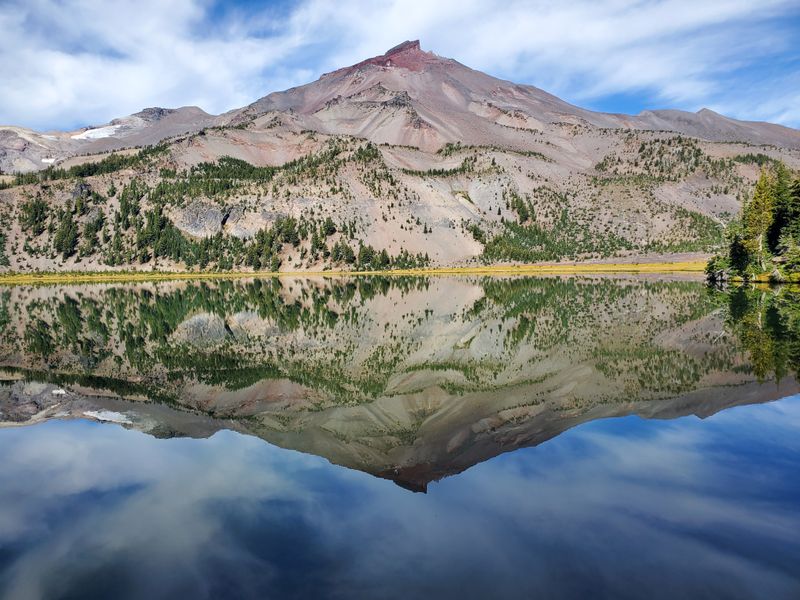
Central Oregon’s volcanic past creates some seriously dramatic landscapes, and the Green Lakes Trail showcases this better than almost anywhere else. This popular route near Bend takes you through miles of ancient lava fields before depositing you at a cluster of alpine lakes with the Three Sisters mountains looming so close you could almost touch them.
The hike covers about nine miles round trip with steady elevation gain that’ll get your heart pumping. You’ll start in pine forest before emerging onto massive lava flows that stretch in every direction like frozen black oceans.
The contrast between dark volcanic rock and bright green vegetation creates striking visual interest at every turn. When you finally reach the lakes, the payoff includes crystal-clear water reflecting the snow-capped peaks above.
These lakes sit at high elevation, meaning they’re typically only accessible from July through October when snow has melted from the trail. The exposed sections across lava fields offer zero shade, so sun protection and plenty of water are essential.
Despite the stark landscape, wildflowers somehow find purchase in cracks and crevices, adding unexpected pops of color.
This trail’s popularity means permits are required for overnight camping, and day-use parking fills up fast on summer weekends. The stunning mountain views and unique volcanic terrain make this worth planning ahead for, whether you’re day-hiking or backpacking deeper into the wilderness.
Watching sunrise paint the Three Sisters from the lakeshore ranks among Oregon’s most unforgettable experiences.
7. McNeil Point Trail, Mount Hood
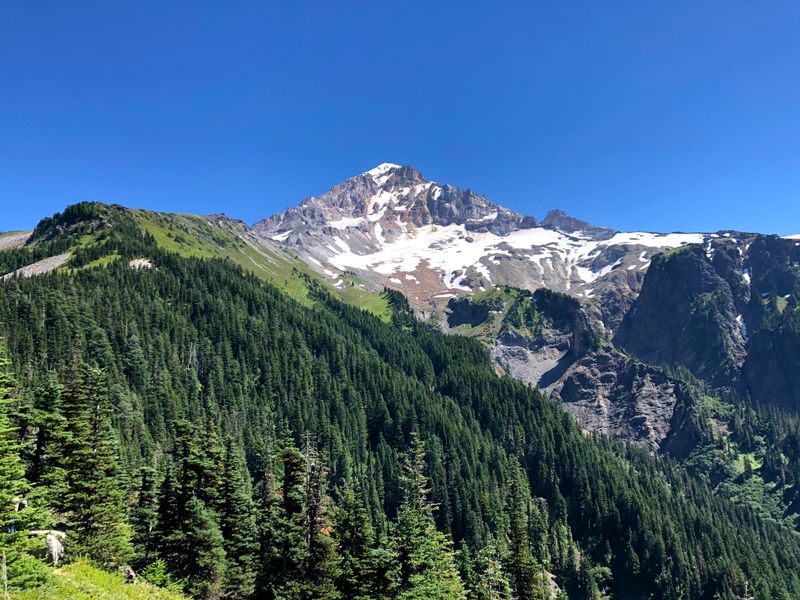
Mount Hood dominates the Oregon landscape from dozens of viewpoints, but McNeil Point offers something special that makes the mountain look almost fake. From this high alpine meadow, the peak rises so dramatically and perfectly that it resembles a painted backdrop rather than an actual mountain.
Reaching this viewpoint requires commitment with a roughly nine-mile round trip that climbs over 2,000 feet in elevation. The trail winds through forest before breaking into open meadows absolutely exploding with wildflowers during peak season in late July and early August.
The final approach to McNeil Point shelter brings you to a rocky knoll where Mount Hood fills your entire field of vision, close enough to see every glacier and ridge in stunning detail.
The perspective here creates an optical effect that makes the mountain appear impossibly large and steep, like something from a fantasy landscape painting. On clear days, you can see multiple Cascade peaks stretching into the distance, but Hood steals the show with its sheer proximity and dramatic profile.
The historic stone shelter at McNeil Point provides a windbreak for lunch and photo opportunities.
This trail typically remains snow-covered well into summer, so timing your visit matters for both safety and wildflower viewing. The exposed high-elevation terrain means weather can change rapidly, requiring proper layers and preparation.
Despite the effort required, watching sunset paint Mount Hood from this vantage point creates memories that last forever, making every uphill step worthwhile.
8. Drift Creek Falls Trail, Coastal Forest
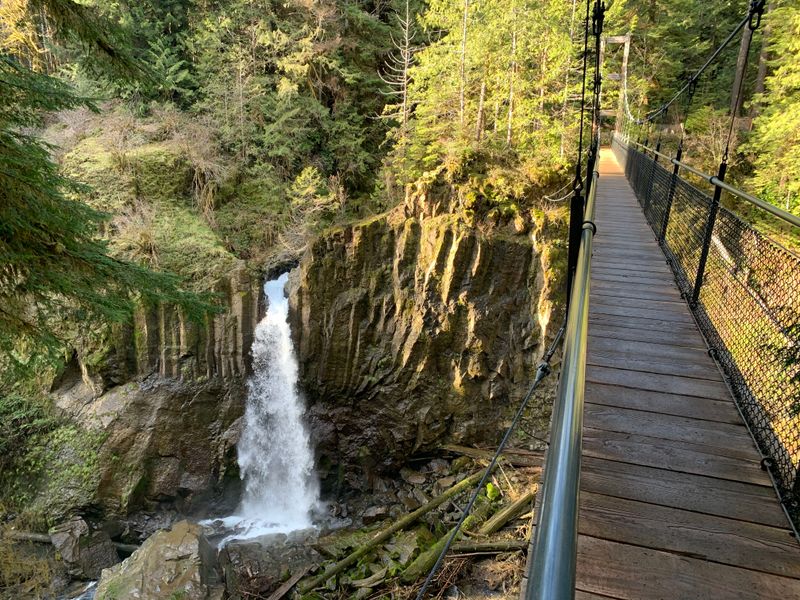
Walking across a 240-foot suspension bridge high above a forested canyon creates the kind of thrill that makes your palms sweat in the best way. The Drift Creek Falls Trail combines this engineering marvel with dense coastal rainforest and a beautiful waterfall hidden in a narrow gorge.
This relatively easy three-mile round trip trail winds through towering Sitka spruce and western hemlock draped in moss and ferns. The forest here feels primeval, with massive trees blocking out much of the sky and creating a green twilight even on sunny days.
The suspension bridge appears suddenly, spanning the canyon with impressive grace and offering views down to Drift Creek Falls plunging into the ravine below.
The bridge sways gently as you cross, adding just enough movement to make the experience memorable without being scary. From the middle, you get excellent views of the 75-foot waterfall and the surrounding canyon walls covered in vegetation.
The trail continues beyond the bridge to additional viewpoints closer to the falls, though most people find the bridge perspective hard to beat.
Located in the Coast Range west of Lincoln City, this trail stays accessible year-round thanks to the mild coastal climate. Rain is common, so waterproof gear helps, but the moisture keeps everything impossibly green and lush.
The relatively short distance makes this perfect for families or anyone wanting a taste of Oregon’s coastal forests without committing to an all-day adventure.
9. Trail of Ten Falls, Silver Falls State Park
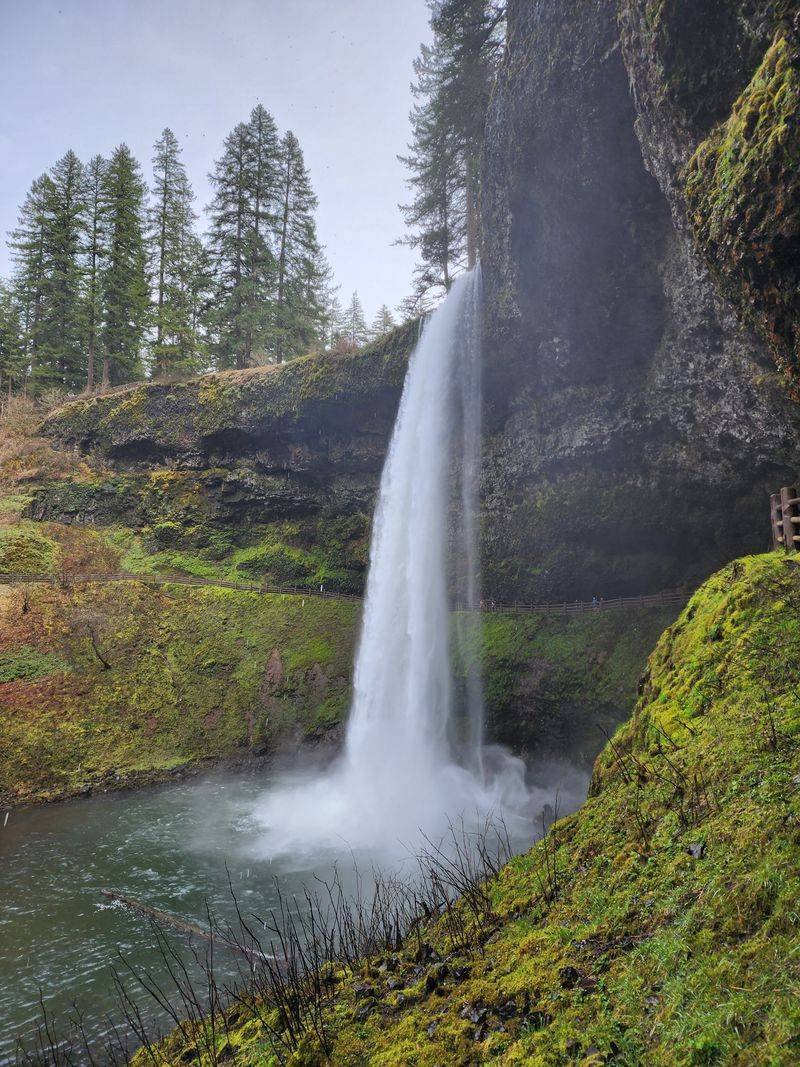
Most trails feature one waterfall as their main attraction, but the Trail of Ten Falls laughs at that modest approach by delivering ten separate waterfalls in a single loop hike. Even better, four of these falls create natural amphitheaters that let you walk directly behind the falling water, an experience that never gets old no matter how many times you do it.
This eight-mile loop in Silver Falls State Park near Silverton ranks as one of Oregon’s most spectacular hikes, period. The trail descends into a lush canyon where waterfalls appear around every bend, ranging from delicate 27-foot South Falls to the thundering 177-foot South Falls that serves as the park’s signature feature.
Walking behind these curtains of water while staying completely dry feels like discovering a secret passage in nature.
The canyon itself is gorgeous, with moss-covered basalt cliffs, old-growth forest, and multiple creek crossings adding variety to the scenery. Spring brings the highest water volume and most dramatic falls, though autumn offers stunning foliage colors as a trade-off for lower flows.
The trail stays well-maintained year-round, making it accessible in most weather conditions.
Because this is Oregon’s largest state park and one of its most popular hiking destinations, crowds are basically guaranteed on nice weekends. Starting early or visiting on weekdays helps, as does hiking the loop counter-clockwise to encounter fewer people at the most photogenic spots.
The sheer variety and number of waterfalls make this trail feel almost excessive in the best possible way.
Dear Reader: This page may contain affiliate links which may earn a commission if you click through and make a purchase. Our independent journalism is not influenced by any advertiser or commercial initiative unless it is clearly marked as sponsored content. As travel products change, please be sure to reconfirm all details and stay up to date with current events to ensure a safe and successful trip.
