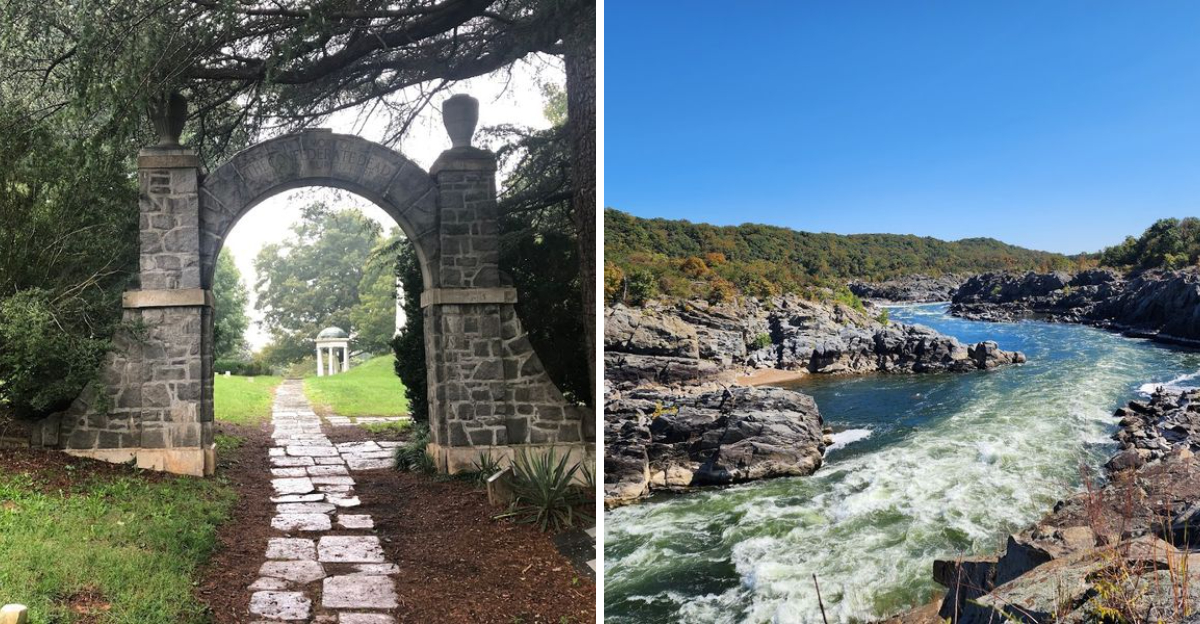
You know the drill at most historic sites. You park, pay an entrance fee, walk through a roped-off house, and end up in a gift shop full of magnet and postcards.
Not these Virginia places. The ten sites on this list are different.
They are shockingly intact, preserved not for tourists but because someone cared enough to leave them alone. No souvenir stands, no ice cream freezers, no plastic trinkets.
Just history, quiet and honest, waiting for you to show up and pay attention. I have visited each one, and I left every time feeling like I had actually learned something, not just checked a box.
Virginia has real history if you know where to look. Start here.
1. False Cape State Park, Virginia Beach
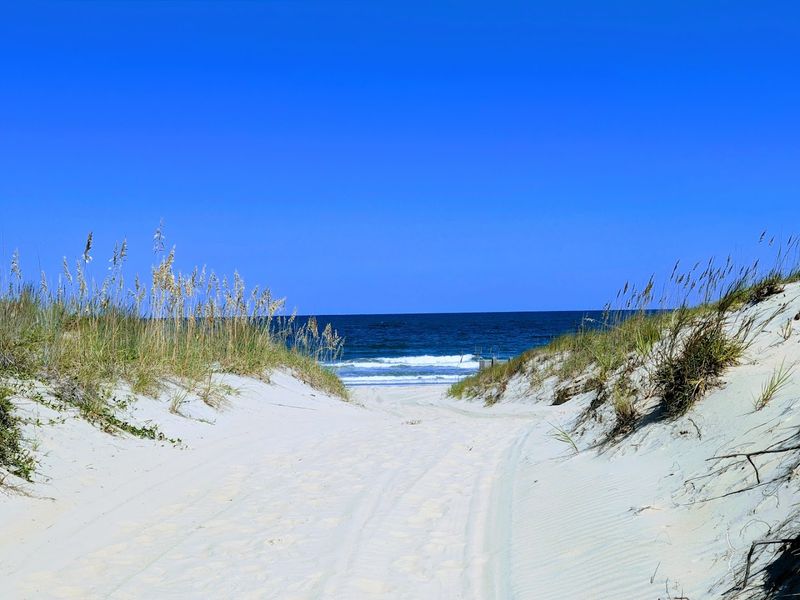
Getting to False Cape State Park requires actual effort, and that is precisely the point. There are no roads leading directly to this remote barrier spit tucked at the southern edge of Virginia Beach, which means the only way in is by foot, bike, or boat through the adjacent Back Bay National Wildlife Refuge.
That built-in filter keeps the crowds away and the atmosphere completely, gloriously undisturbed.
The maritime forest here feels ancient in the best possible sense. Twisted live oaks drape over sandy trails, and the sound of wind through the dunes replaces what would otherwise be background gift shop music.
Primitive camping is available, meaning your overnight experience is about as raw and real as Virginia wilderness gets.
There are no concession stands, no souvenir racks, and absolutely no commercialization of any kind. What exists instead is one of the most ecologically and historically intact barrier environments on the entire East Coast.
The land tells its own story without a single interpretive gift bag to help it along.
The site also carries genuine historical weight, with evidence of human habitation stretching back thousands of years. Archaeological finds in the area have revealed layers of coastal life that predate European contact entirely.
Standing on that beach, with nothing but open Atlantic horizon ahead and forest behind, the history feels genuinely present rather than packaged for consumption.
Address: False Cape State Park, Virginia Beach, VA 23457.
2. Graves Mill Historical Park, Madison County
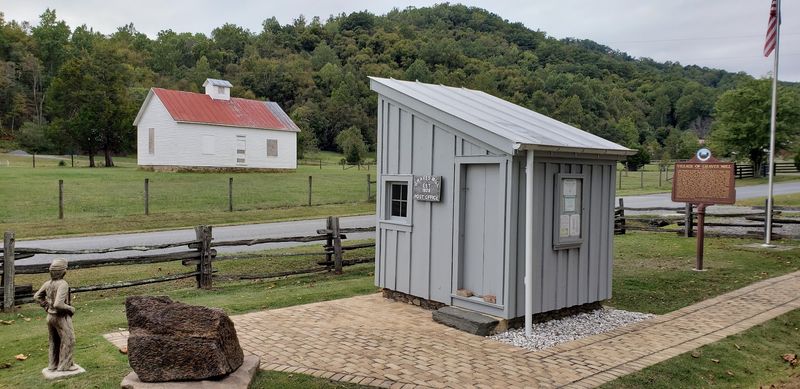
Graves Mill Historical Park sits quietly in Madison County, tucked into the foothills of the Blue Ridge Mountains where the Rapidan River curves through a narrow valley. The village it commemorates never grew into a town, which is exactly why it survived so completely.
Small communities that stayed small tend to keep their bones intact, and Graves Mill is a textbook example of that beautiful accident.
The park features a replica of the original 1900s post office filled with period-accurate furnishings that make the space feel genuinely lived-in rather than curated. An 1885 chapel still stands nearby, modest and unassuming, as does a 1906 schoolhouse that once educated the children of this tight-knit rural community.
An 18th-century grist mill rounds out the collection, giving visitors a full picture of what daily life looked like in this corner of Virginia.
What makes this place extraordinary is the absence of interpretation overload. There are no audio tours buzzing in your ear and no gift shop waiting to sell you a miniature mill replica.
The site simply exists as a preserved fragment of rural American life, presented with minimal interference.
The surrounding landscape adds to the experience in a way no exhibit ever could. Forested ridgelines, clear streams, and open meadows create a setting that feels genuinely continuous with the history being preserved.
You are not looking at history through glass here. You are standing inside it.
Address: Graves Mill Rd, Graves Mill, VA 22721.
3. Fort Christanna Historical Site, Lawrenceville
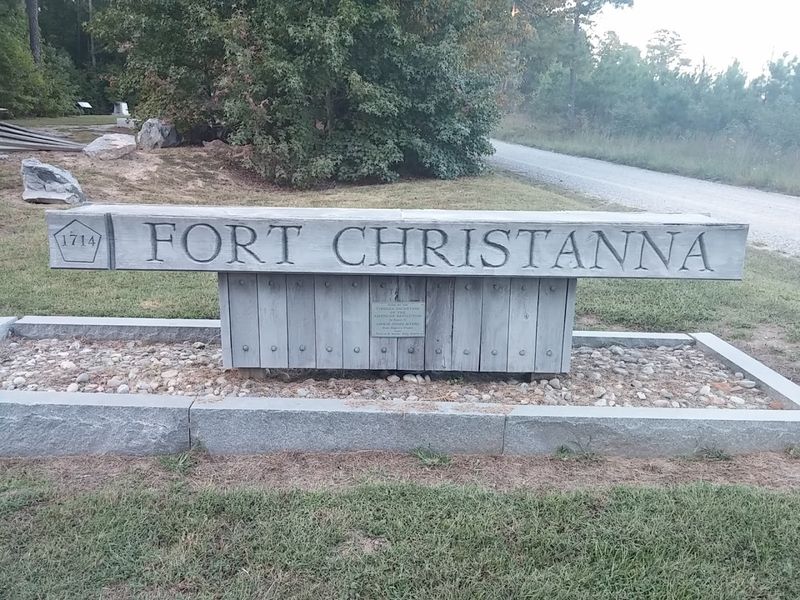
Fort Christanna does not announce itself with fanfare. There is no grand entrance gate, no staffed visitor center, and certainly no gift shop.
What greets you instead is a quiet stretch of Brunswick County countryside where colonial-era earthworks still rise from the ground in the shape of a five-pointed star, remarkably legible after more than three centuries of Virginia weather.
Colonial Governor Alexander Spotswood ordered the fort built in 1714 as a frontier outpost meant to serve both defensive and diplomatic purposes. It housed a school for Native American children and functioned as a trading post and buffer zone between English settlements and the interior.
The fort’s role in shaping early Virginia colonial policy was significant, yet the site wears that weight lightly, with no commercial layer between you and the actual ground where history happened.
Walking the earthworks feels almost conspiratorial, like discovering something the tourism industry forgot to claim. The star-shaped design is still clearly visible underfoot, and interpretive signs provide context without overwhelming the experience.
Local preservation groups have worked hard to maintain the site’s integrity without transforming it into an attraction.
The surrounding rural landscape of Lawrenceville completes the mood perfectly. There are no souvenir stands or ticket booths competing for your attention.
Just open sky, old earth, and the faint but unmistakable sense that something genuinely important once happened right where you are standing.
Address: Fort Christanna Rd, Lawrenceville, VA 23868.
4. Ball’s Bluff Battlefield Regional Park, Leesburg
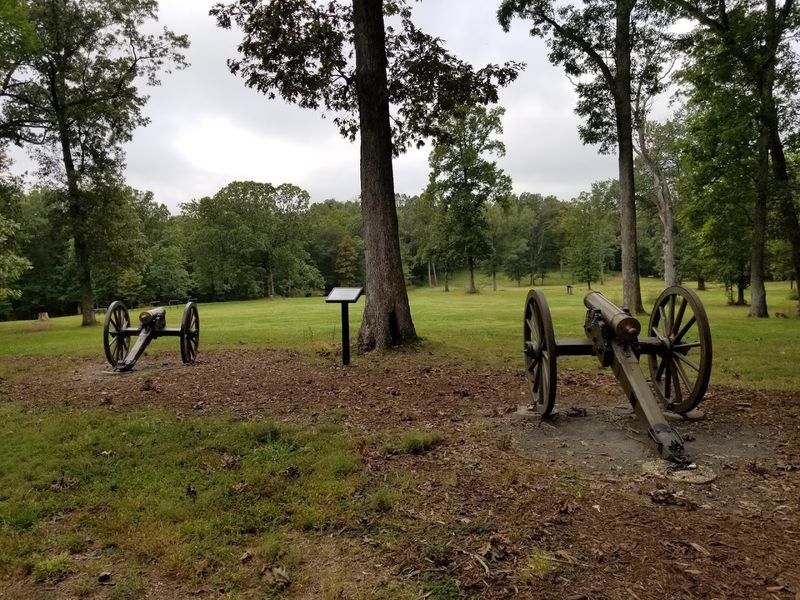
Ball’s Bluff Battlefield Regional Park in Leesburg holds the distinction of being home to one of the smallest national cemeteries in the entire country, and that intimate scale is exactly what makes it so affecting. The cemetery contains the remains of soldiers from an 1861 engagement that ended in a catastrophic Union defeat, and the whole site carries a quiet, almost private grief that no gift shop could ever package.
The battlefield itself is remarkably intact. Steep bluffs drop sharply toward the Potomac River, and the wooded terrain looks startlingly similar to period descriptions of the fight.
Walking the trails here is less like visiting a preserved site and more like accidentally stumbling into a moment that never fully resolved itself.
Managed by the Northern Virginia Regional Park Authority, the park maintains its raw, unmediated character with deliberate care. There are no concession stands, no souvenir kiosks, and no audio tour wristbands.
Trail markers provide historical context in clean, unobtrusive language that respects both the landscape and the visitor’s intelligence.
The park draws hikers, history enthusiasts, and the genuinely curious in roughly equal measure. Autumn is particularly striking here, when the hardwood canopy turns and the river glints through bare branches.
The combination of natural beauty and historical weight creates an atmosphere that feels earned rather than manufactured. Some places just carry their history honestly, and Ball’s Bluff is one of them.
Address: 100 Ball’s Bluff Rd NE, Leesburg, VA 20176.
5. Old City Cemetery, Lynchburg
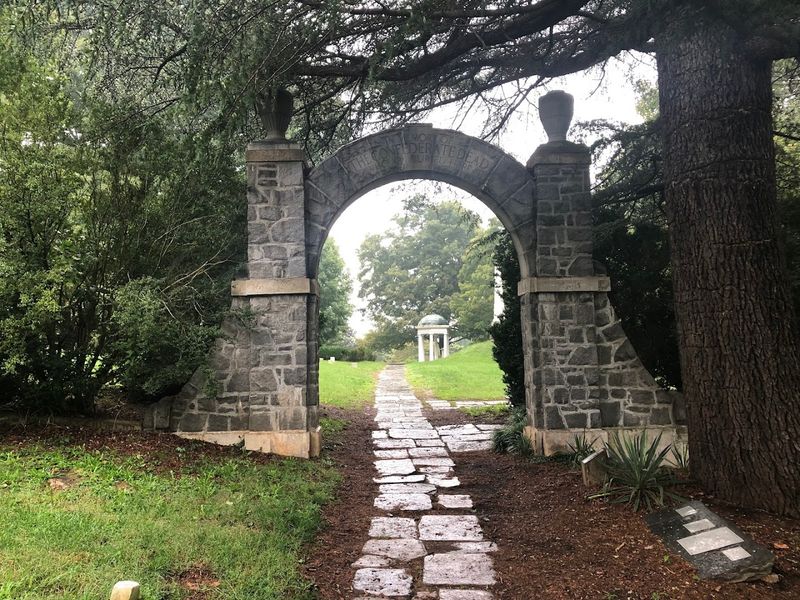
Old City Cemetery in Lynchburg is one of those places that sounds somber on paper and feels completely alive in person. Established in 1806, it covers 27 acres of gently rolling terrain and operates as a fully functioning outdoor museum, arboretum, and living history space, all without a single souvenir rack in sight.
The combination of horticultural depth and historical richness makes it unlike anything else in Virginia.
The cemetery is the final resting place for thousands of individuals whose stories span the full arc of American history, from the Revolutionary era through the Civil War and beyond. Period-appropriate plantings throughout the grounds are maintained with botanical precision, and the arboretum component means rare and heritage trees shade the pathways in ways that feel both intentional and ancient.
A restored 19th-century hearse house and several historic outbuildings add architectural texture to the experience.
What sets this place apart from typical historic cemeteries is the quality of interpretation. Guided tours are available, but the site also rewards independent exploration completely.
Educational programming runs throughout the year, connecting local schools and community groups to the stories embedded in the grounds. None of this requires a gift shop, because the place itself is the product.
The staff and volunteers here treat the space with genuine reverence, and that attitude is contagious. You leave feeling informed and strangely uplifted.
Lynchburg does not always make the top of Virginia travel lists, but this cemetery earns its place on any serious itinerary.
Address: 401 Taylor St, Lynchburg, VA 24501.
6. Aquia Episcopal Church, Stafford County
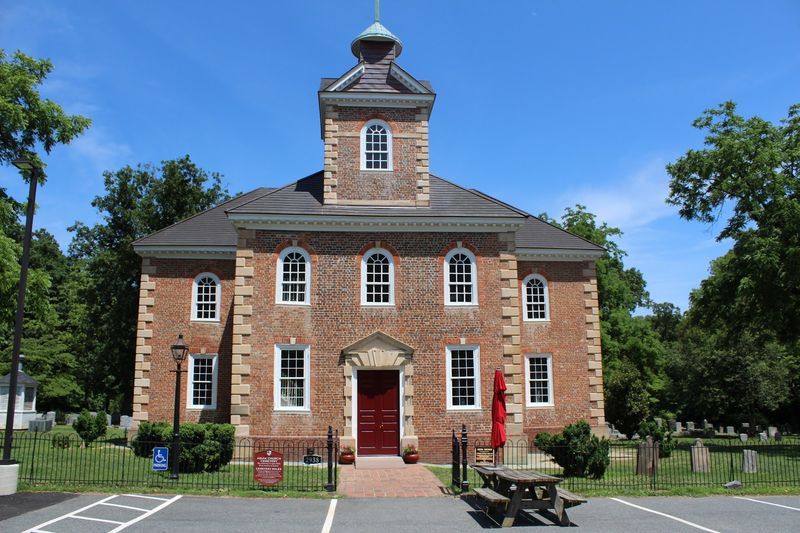
Aquia Episcopal Church in Stafford County is the kind of building that stops you mid-step. The exterior is built from Aquia sandstone quarried locally, giving it a warm, golden-grey texture that photographs beautifully but looks even better in person.
Construction was completed in the 1750s, and the building has been in continuous use for its original religious purpose ever since, which is a genuinely remarkable fact in a country that tends to convert its old buildings into boutique hotels.
The interior is equally intact. Original woodwork, historic pew arrangements, and period architectural details survive in a state of preservation that reflects generations of careful stewardship rather than museum-style intervention.
Visiting feels like stepping into a functioning piece of colonial Virginia rather than a reconstructed exhibit.
The surrounding churchyard contains headstones dating back centuries, many still legible, their inscriptions offering compressed biographies of people who shaped the early colonial Chesapeake region. The whole complex, church and yard together, tells a continuous story of community, faith, and time that no gift shop could amplify or improve.
Access is straightforward, and the church community welcomes respectful visitors during open hours. The absence of commercialization here is not an oversight but a reflection of the congregation’s values.
This is not a tourist attraction pretending to be a church. It is a church that happens to be historically extraordinary, and the distinction matters enormously.
Address: 2938 Richmond Hwy, Stafford, VA 22554.
7. Matildaville Ruins at Great Falls Park
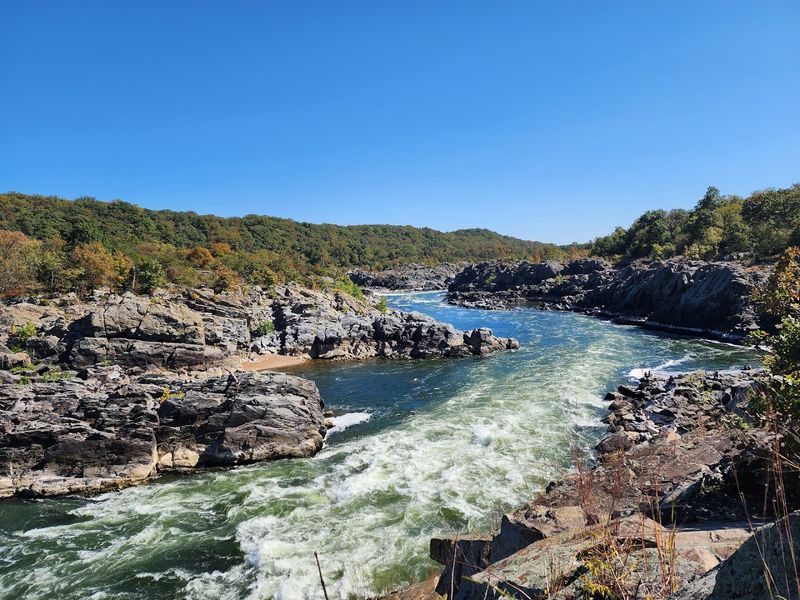
Matildaville is the kind of place that rewards people who wander off the main trail. Tucked within Great Falls Park on the Virginia side of the Potomac River, these stone ruins are all that remain of a town that George Washington himself helped plan in the 1790s as part of the Patowmack Canal project.
The canal was meant to open the interior of the continent to commerce. The town was meant to service it.
Neither quite worked out, and Matildaville was abandoned by the early 1800s.
What survived is genuinely haunting in the most architectural sense. Original stone chimneys rise from the forest floor, their mortar still largely intact, surrounded by foundation walls that trace the footprints of buildings long since reclaimed by Virginia woodland.
The contrast between the ambitious urban plan and the quiet ruin it became is a story told entirely in stone and silence.
Great Falls Park itself is managed by the National Park Service, and the Matildaville ruins sit within the park without any dedicated commercial infrastructure. There are no gift shops serving the ruins specifically, and the interpretive signage is minimal enough to leave room for genuine discovery.
Most visitors come for the waterfall overlooks and stumble onto this ghost town as a bonus.
That accidental quality is part of the charm. History here is not served up on a platter.
You find it yourself, which makes it feel like yours. Address: 9200 Old Dominion Dr, McLean, VA 22102.
8. Ferry Plantation House, Virginia Beach
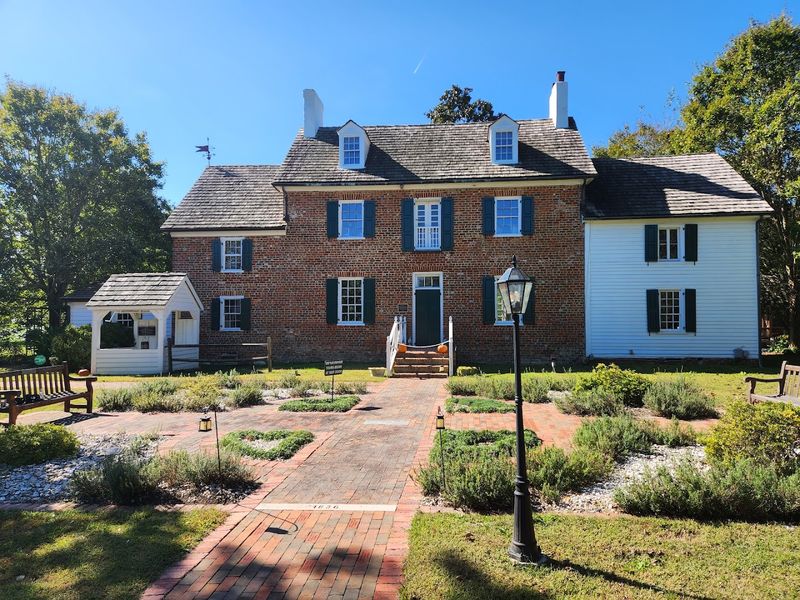
Ferry Plantation House in Virginia Beach carries more history per square foot than almost any building in the state. The brick structure standing today dates to the early 19th century, but the site itself has been continuously occupied since 1642, making it one of the oldest documented residential locations in all of Virginia.
It served as the site of the second ferry service in Hampton Roads, a courthouse, and a post office before becoming the private home it remained for generations.
What makes the place especially compelling in the current era is how it operates. The house is entirely volunteer-led, run by a dedicated community of history enthusiasts who prioritize authentic interpretation over commercial activity.
There is no gift shop, no entry fee system designed to maximize revenue, and no corporate sponsorship banner anywhere in sight. The focus is purely on the stories embedded in the walls and grounds.
The property also carries a reputation for paranormal history, with documented accounts stretching back centuries involving the site’s former inhabitants. Whether or not that dimension interests you, the sheer density of historical events associated with this single location makes it worth serious attention.
Visiting feels collaborative rather than transactional. The volunteers here are genuinely passionate, and that enthusiasm is infectious without being performative.
Virginia Beach tends to get reduced to its oceanfront, but Ferry Plantation House represents a completely different dimension of the city, one that predates the resort culture by several centuries.
Address: 4136 Cheswick Ln, Virginia Beach, VA 23455.
9. Tuckahoe Plantation, Richmond
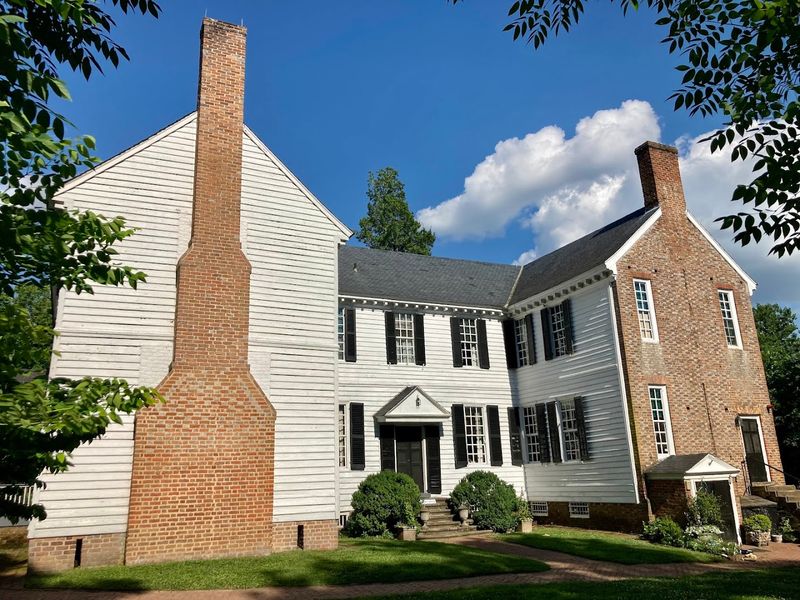
Tuckahoe Plantation sits on the north bank of the James River just west of Richmond, and its claim to historical significance is not subtle. Thomas Jefferson spent his earliest years here, and the property is considered one of the most complete and authentically preserved early 18th-century plantation complexes in North America.
That is a serious statement, and the site earns it entirely.
The main house and its cluster of original outbuildings survive in a state of remarkable integrity. The schoolhouse where Jefferson received his first formal education still stands on the grounds, small and wooden and utterly real in a way that no replica could match.
The formal gardens have been maintained with period-appropriate plantings, and the overall composition of the property feels continuous rather than restored.
Private ownership has actually worked in Tuckahoe’s favor here. Without the institutional pressure to generate visitor revenue, the estate has avoided the gift shop and souvenir apparatus that often clutters similarly significant sites.
Access is available through scheduled tours, and the experience is intimate and genuinely informative.
The James River setting adds a layer of atmosphere that amplifies the historical experience. Mist over the water on a cool morning, the smell of old wood and garden soil, the particular silence of a place that has been carefully tended rather than commercially developed.
These are the textures that make Tuckahoe feel like a genuine encounter with early Virginia life rather than a polished presentation of it.
Address: 12601 River Rd, Richmond, VA 23238.
10. North Bend Plantation, Charles City County
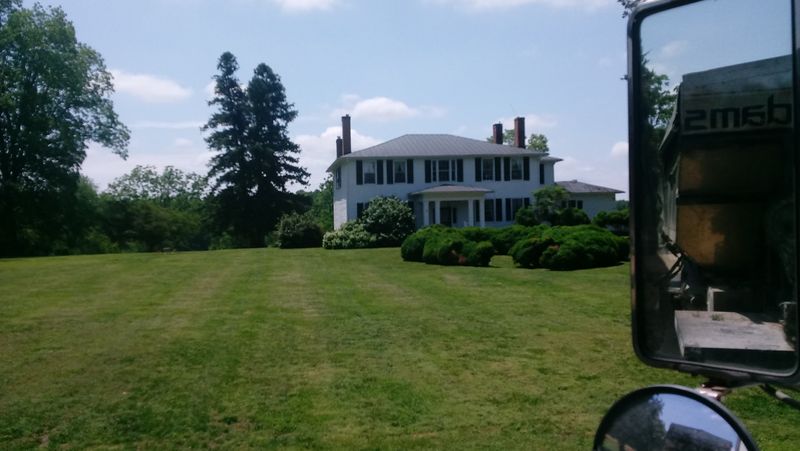
North Bend Plantation in Charles City County occupies a particular niche in Virginia history that most people have never heard of, which makes visiting it feel like a genuine discovery. The Greek Revival house served as the headquarters of Union Major General Philip Sheridan during the Civil War, and the property has remained in the same family lineage ever since, a continuity of ownership that has done more for its preservation than any institutional program could.
The house itself is architecturally striking in the way that confident, well-proportioned 19th-century domestic architecture tends to be. Wide porches, tall windows, and a setting of mature trees against open agricultural land create a composition that feels both grand and genuinely livable.
The interior retains original features and period furnishings that give the space weight and credibility.
Charles City County sits along the historic James River corridor and is home to a remarkable concentration of intact plantation properties, but North Bend stands out for its combination of Civil War significance and unbroken private stewardship. There is no gift shop here and no ticket booth dressed up as a historic structure.
The site simply presents itself honestly.
Overnight stays are available through a bed-and-breakfast arrangement, which means you can experience the property at the pace it deserves rather than squeezing it into a two-hour tour window. Waking up in a house where Sheridan once planned military campaigns is the kind of experience that no souvenir mug could ever replicate.
Address: 12200 Weyanoke Rd, Charles City, VA 23030.
