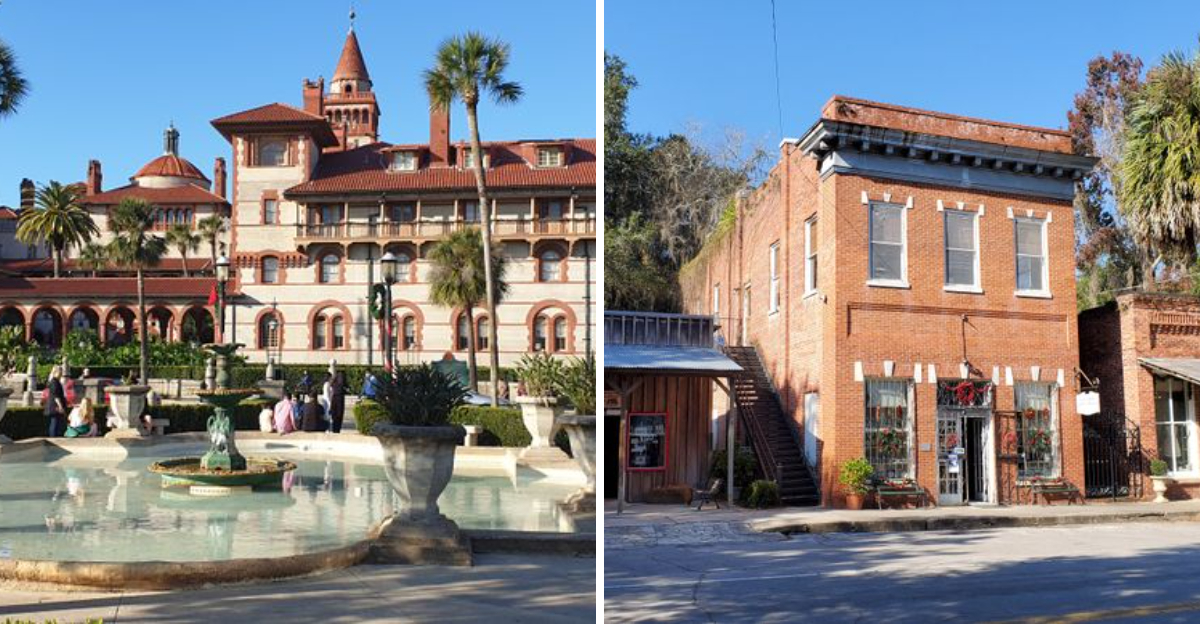
Florida hides small places where the past does not whisper, it speaks clearly from porches, plazas, and quiet waterways.
1. St. Augustine
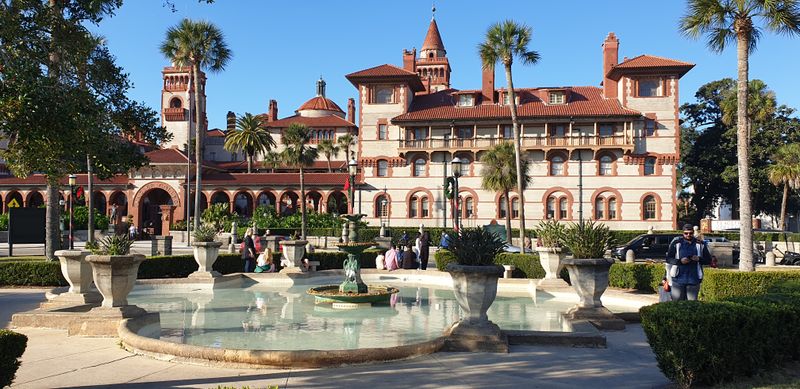
History fills the air the moment you walk past the coquina walls of the fort.
Castillo de San Marcos anchors the shoreline, and its bastions frame the Matanzas Bay like a living timeline.
Cobblestones underfoot guide you toward balconies, courtyards, and limestone facades that feel remarkably intact.
The historic district unfolds in small scenes, with shaded alleys, hand carved doors, and textured stucco that changes tone as the light shifts.
Interpretive signs are concise, yet the buildings themselves do most of the storytelling.
Quiet side streets lead to colonial era landmarks, and the city grid reveals layers from different flags and eras.
Morning hours bring soft color and open views, which helps when you want to notice ironwork and aged timbers.
Late afternoon gives the bayfront a warm glow, and the water reflects the ramparts in gentle ripples.
Museum houses display local artifacts, maps, and family histories that translate dates into daily life.
Courtyard gardens add calm, and their brick paths are a welcome pause from busier corridors.
The entire setting is compact, so you can link plazas, chapels, and lookouts without rushing.
Wayfinding is straightforward, and the tread of centuries feels present with every small detail.
Florida pride runs deep here, because the city preserves both Spanish and Native stories with care.
Street lamps are modest, and nighttime strolls create a different, quieter perspective.
Even brief visits reward curiosity, because the texture of coquina tells you how this place endured.
Address: 1 S Castillo Dr, St. Augustine, FL 32084.
2. Micanopy
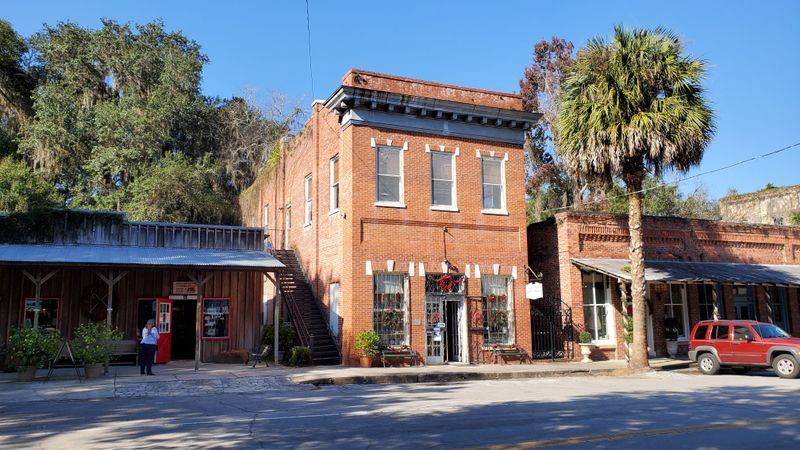
Micanopy greets you with a canopy of live oaks that frames a main street of wood fronted shops.
Old brick, tin roofs, and hand painted signs form a streetscape that feels carefully preserved.
Antique dealers open early, and windows display curios that hint at family stories and farm life.
Side yards hold garden chairs and small sheds, which create a lived in rhythm between buildings.
Porches stretch the length of facades, and rocking chairs offer patient spots to watch town life.
Film crews once captured this atmosphere, but the place still moves at its own gentle pace.
Historic plaques sit low and discreet, and they point out date ranges, builders, and former uses.
Moss sways above the street, softening the light and lifting the edges of each storefront.
Short walks connect churchyards, a tiny museum room, and a scatter of vernacular cottages.
Objects inside shops reflect Florida backcountry traditions, from tools to textiles and postcards.
Dirt lanes branch behind the main drag, where you find sheds and citrus remnants.
Birdsong replaces traffic noise, and you can hear footsteps on floorboards as doors open.
Local conversations linger on porches, and visitors are folded into the pace without ceremony.
The setting invites slow looking, so small carpentry details start to reveal themselves.
Every corner suggests a chapter from the town that time almost forgot, yet still tends.
Address: 204 SE 1st St, Micanopy, FL 32667.
3. Fernandina Beach (Amelia Island)
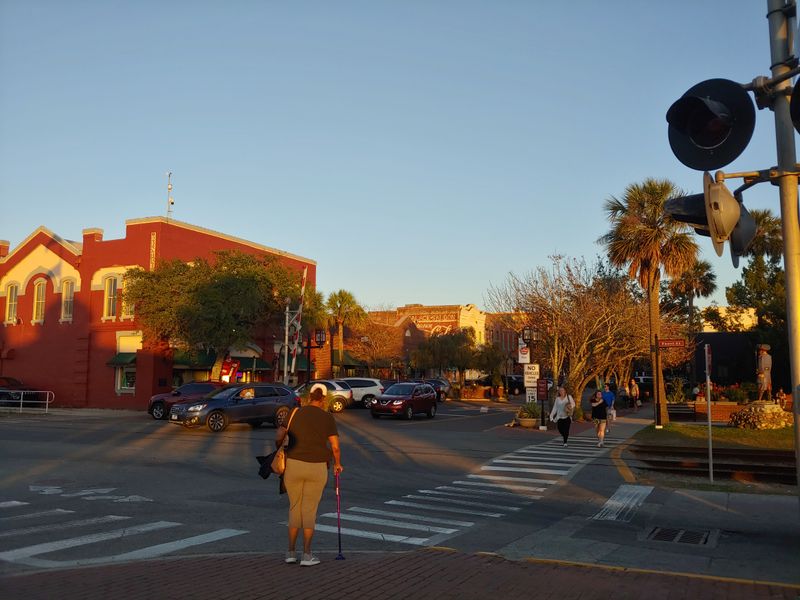
Fernandina Beach spreads a sweep of Victorian facades across a walkable grid near the water.
Ornate brackets and wraparound porches turn each block into a gallery of craftsmanship.
The marina glints at the end of streets, placing maritime heritage within easy sight.
Restored warehouses show how trade once shaped the shoreline and the town economy.
Window transoms and patterned shingles create a patchwork of textures under broad eaves.
Shrimping history appears in murals, placards, and the shape of wharves that still define the view.
Parks slide between buildings and docks, so you can rest in shade before the next block.
A small museum details local piracy lore, navigational tools, and merchant routes.
Side streets hold cottages with gingerbread details that glow at sunset.
Brick sidewalks add a steady rhythm to steps, balanced by palms and clipped hedges.
Many porches display swings, a reminder that time often lingers here.
The district encourages wandering, and each turn reveals new millwork and rooflines.
Florida coastal breezes move through alleys and carry the scent of saltwater.
Public art nods to boat building skills and community memory without crowding the view.
Even on a short visit, the range of eras feels seamless and approachable.
Address: 204 Ash St, Fernandina Beach, FL 32034.
4. Apalachicola
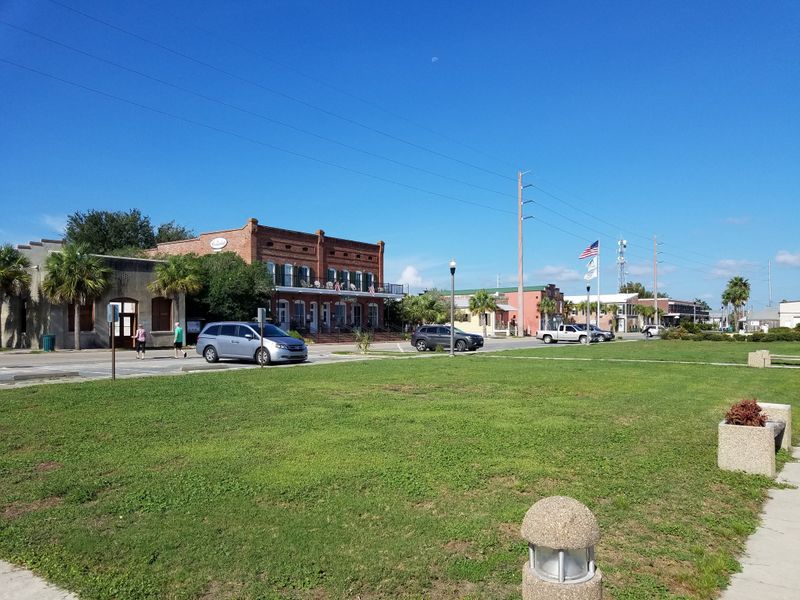
Apalachicola rests low along the bay with brick storefronts facing toward working docks.
Old cotton exchange buildings and warehouses stand as quiet anchors to a river trade past.
Boardwalks and pilings frame views where boats tie up and gulls circle over still water.
Wide windows reflect the sky and hint at high ceilings and timber beams inside.
Interpretive panels explain the routes, goods, and people who built this seaport.
Side streets reveal cottages with deep porches and louvered shutters for summer air.
Small galleries occupy former offices, and the wood floors hold a steady creak.
Historic hotels present pressed tin ceilings and staircase banisters rubbed smooth by time.
Walks along the bayfront shift with the tide, changing light on brick and clapboard.
Public greens provide benches and shade for watching the harbor without hurry.
The town makes history feel lived in, not roped off, with open doors and friendly nods.
Local museums cover maritime trades with models, tools, and maps that clarify the story.
Florida Panhandle character shows in practical architecture and work ready facades.
Every intersection seems to carry a remnant of the cotton era or a fishing lineage.
The result is a compact lesson in resilience that you can trace block by block.
Address: 1 Bay Ave, Apalachicola, FL 32320.
5. Cedar Key
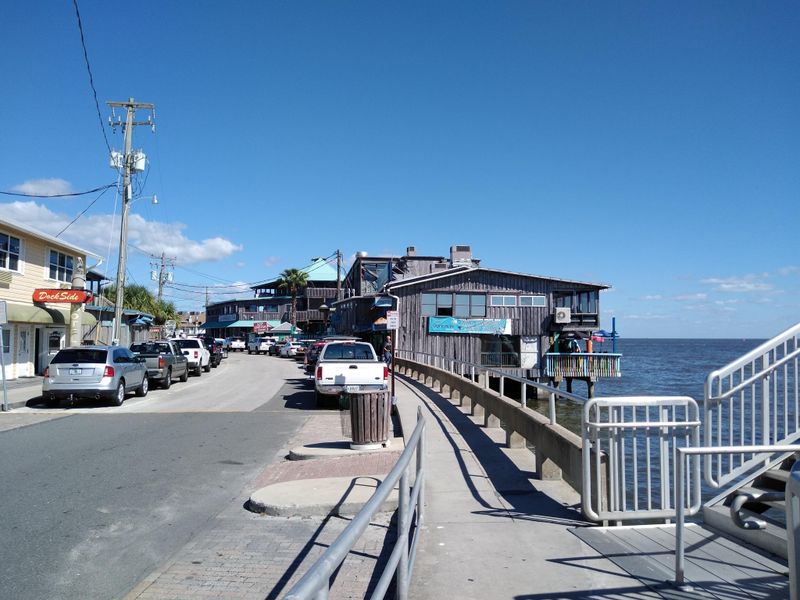
Cedar Key spreads across low islands with weathered buildings that open to the Gulf.
Boardwalks link porches and decks where chairs face long views over shallow water.
Reminders of the pencil industry appear in museum displays and well placed panels.
Fishing heritage shapes the look of docks, sheds, and skiffs tucked under pilings.
Main streets keep signage subdued, so wood textures and pastel paint do the talking.
Small parks sit at the ends of lanes, and they turn the horizon into a public room.
Rain showers pass quickly, and the air clears to show distant keys in sharp outline.
Artists sketch from benches, drawn by light that changes minute to minute.
Historic photos in storefronts tie families to businesses that still serve neighbors today.
Florida coastal simplicity gives the village a pace that fits the breezes.
The scale encourages walking, and subtle details reward patient eyes.
Even the utility sheds carry a handmade quality that feels honest.
Old pilings stand like landmarks, tracing where earlier wharves once ran.
Sunset covers clapboard in warm color, and evening cicadas take over the soundtrack.
The place keeps its voice quiet, which makes each corner feel personal.
Address: 107 Washington St, Cedar Key, FL 32625.
6. Monticello
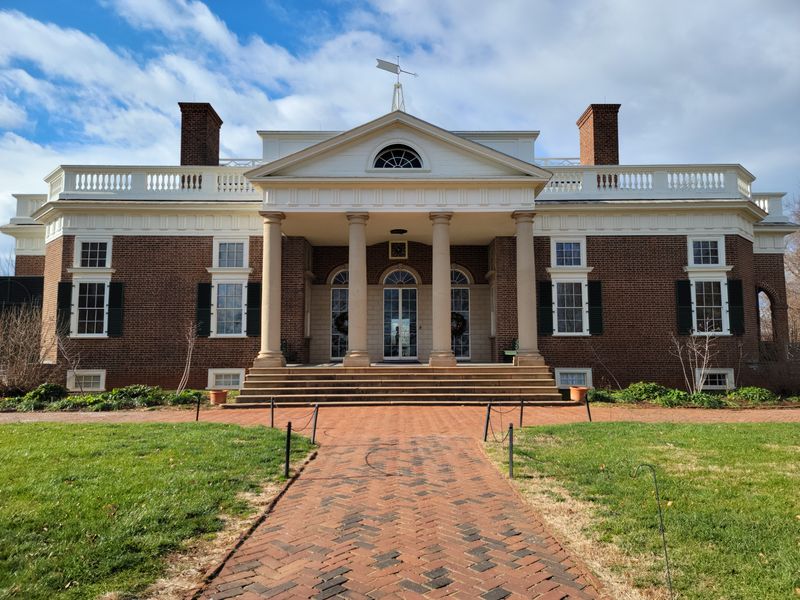
Monticello gathers around a courthouse square where brick storefronts frame a tidy lawn.
Porches and columns echo the agricultural history that shaped the region.
Live oaks form green arches, and crosswalks lead to blocks of intact facades.
Antique signs and restrained awnings keep the view grounded in small town scale.
Walking routes loop past civic buildings and houses with deep roof overhangs.
Windows reveal pressed tin ceilings, and floors show the patina of steady use.
Interpretive notes mark odd corners where a store changed hands or a trade shifted.
Side streets carry you to neighborhoods of frame cottages set back with broad steps.
Quiet storefronts host local services, which adds to the sense of continuity.
Benches face the square, and people watch from shaded spots under the oaks.
Florida heritage is visible in the way the town protects setbacks and tree canopy.
The rhythm of brick and glass keeps the streetscape consistent without feeling stiff.
Historic theaters and halls remain active, giving the center steady foot traffic.
Even brief walks reveal layered stories behind modest facades.
The overall impression is of steadiness, care, and roots that run deep.
Address: 210 S Jefferson St, Monticello, FL 32344.
7. Dunedin
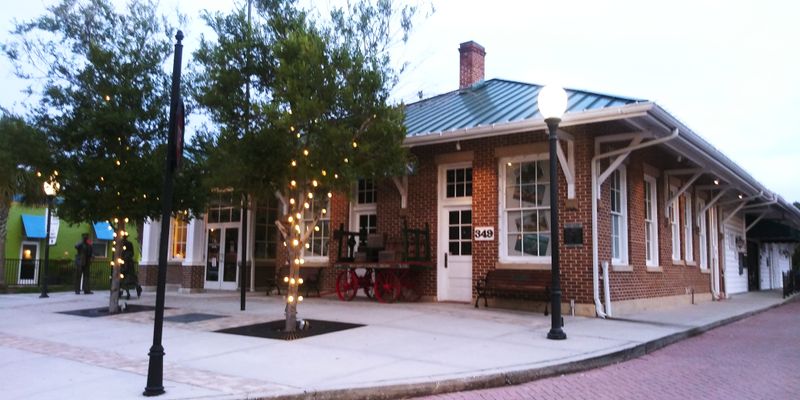
Dunedin pairs coastal air with a compact downtown that favors walking and bikes.
Brick sidewalks and tidy awnings shape blocks that feel friendly and well kept.
Scottish roots appear in subtle symbols and town events that animate the calendar.
Historic buildings mix masonry and wood, each restored with attention to detail.
Pocket plazas offer benches, planters, and wide sightlines down to the water.
Old photos in windows connect storefronts to early fishing and rail chapters.
A rail trail cuts through near the center and adds a steady flow of cyclists.
Galleries and studios occupy vintage spaces that let in generous natural light.
Side streets hide cottages with careful landscaping and porch seating.
Street trees cast patterned shade that shifts across brick through the day.
Florida Gulf vibes appear in colors, breezes, and small maritime motifs.
Public art helps link blocks without crowding the architecture.
The town feels open to visitors while holding on to a clear sense of self.
Wayfinding signs are direct, and landmarks are close enough to loop easily.
It is a place that rewards a slow circuit with plenty of pauses.
Address: 750 Main St, Dunedin, FL 34698.
8. Tarpon Springs
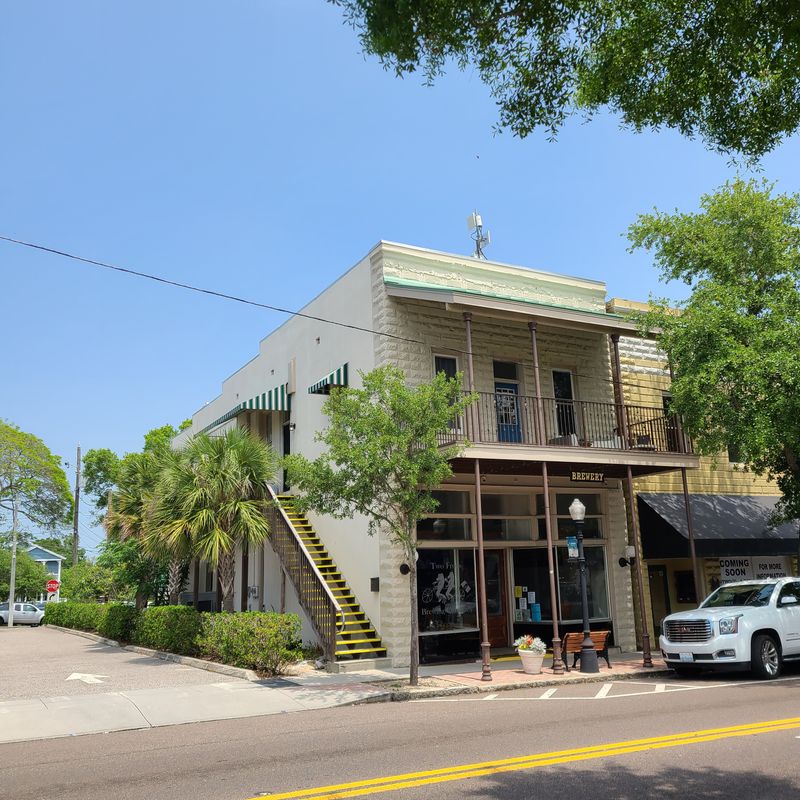
Tarpon Springs centers on a waterfront shaped by sponge diving and resilient families.
Warehouses line the water with clean profiles that speak to work and tradition.
Promenades offer views of boats, ropes, and pilings that define the docks.
Greek heritage appears in architecture, language on signs, and community gatherings.
Historic markers trace routes from the Mediterranean to this Florida bayou.
Sunlight angles across stucco and wood, sharpening the edges of painted trim.
Shops display maritime tools and photographs that make the trades feel close at hand.
Side streets extend inland toward churches and shaded residential blocks.
Industrial textures meet coastal calm, which gives the district its distinctive tone.
Benched areas provide places to pause and watch the harbor without rush.
Museums present artifacts from boats, docks, and early storefronts with clarity.
Even the streetlights feel measured, keeping focus on the water and wharves.
The rhythm of arrivals and departures sets the soundtrack for the day.
Every turn yields a new angle on slips, sheds, and tidy hulls.
The scene feels grounded, proud, and warmly welcoming to careful observers.
Address: 300 E Orange St, Tarpon Springs, FL 34689.
9. Roslyn Heights (Winter Garden)
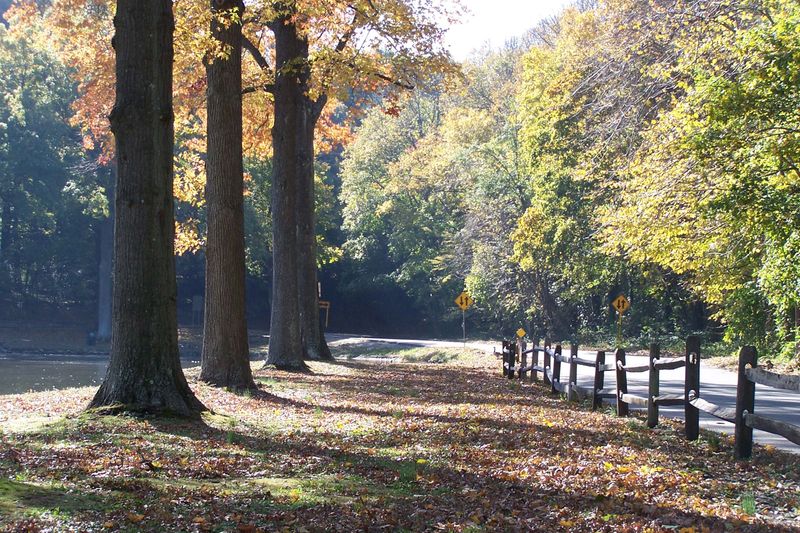
Winter Garden preserves a brick paved core where storefronts shine under leafy trees.
Roslyn Heights and nearby blocks hold frame houses that speak to the citrus era.
The restored theater and depot give the district a lively anchor.
Outdoor seating areas cluster along the sidewalk and face shade at mid morning.
Old rail lines now guide walkers and cyclists past careful plantings.
Shopfront glass reveals pressed tin ceilings and wood beams saved from earlier layouts.
Orange crates and tools in displays nod to packing houses and groves that built the town.
Side streets remain residential, with porches that sit close to pocket gardens.
Murals help map local history without crowding the buildings they adorn.
Florida sun warms the brick, and the color deepens as the day gets long.
Wayfinding is clear, so you can loop the theater, the fountain, and the depot with ease.
Public benches and pergolas create natural places to linger.
Restoration work favors original materials, and the results feel honest and sturdy.
Each corner provides a new angle on cornices, brick bonds, and storefront rhythm.
The downtown feels neighborly, steady, and full of memory.
Address: 101 W Plant St, Winter Garden, FL 34787.
10. St. Augustine Historic District Overview
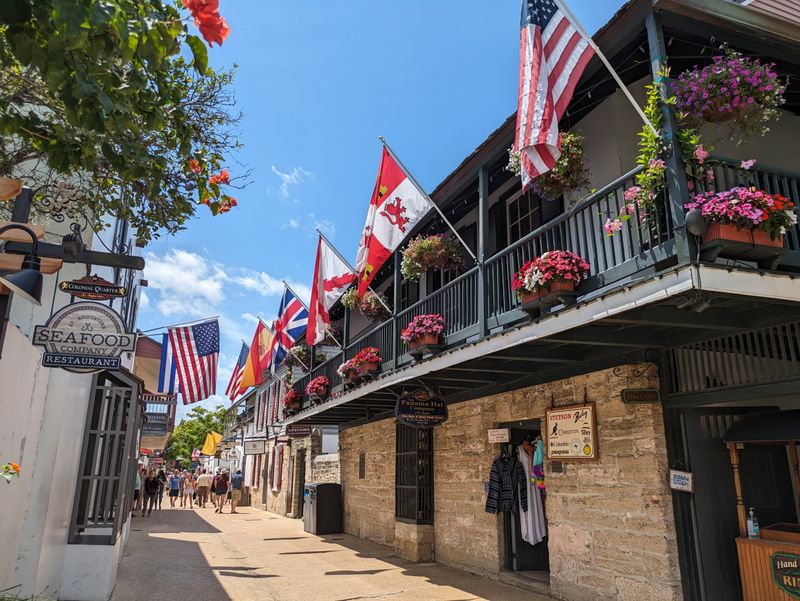
The wider historic district of St. Augustine links plazas, chapels, and narrow lanes in a tight weave.
Spanish colonial forms mix with later styles to create a layered streetscape.
Coquina masonry keeps the coastal story visible at nearly every turn.
Balconies lean over the street and cast patterned shade on stone and brick.
Courtyards open like small rooms, and many hide fountains or quiet benches.
Interpretive stops provide context that connects buildings across centuries.
Shops respect original fronts, keeping trim, doors, and window sizes consistent.
Street musicians and guides stay to main routes, leaving side alleys calm.
Water views appear suddenly, and the fort stands ready as a landmark.
Florida light brightens stucco and gives wooden lintels a warm tone.
Evening strolls reveal lantern style lighting and careful plantings.
Every block holds at least one facade that rewards a closer look.
The scale supports walking, so cars never dominate the experience.
It is a district that feels whole, rather than a collection of parts.
The sense of continuity makes quick visits feel surprisingly complete.
Address: 1 S Castillo Dr, St. Augustine, FL 32084.
Dear Reader: This page may contain affiliate links which may earn a commission if you click through and make a purchase. Our independent journalism is not influenced by any advertiser or commercial initiative unless it is clearly marked as sponsored content. As travel products change, please be sure to reconfirm all details and stay up to date with current events to ensure a safe and successful trip.
