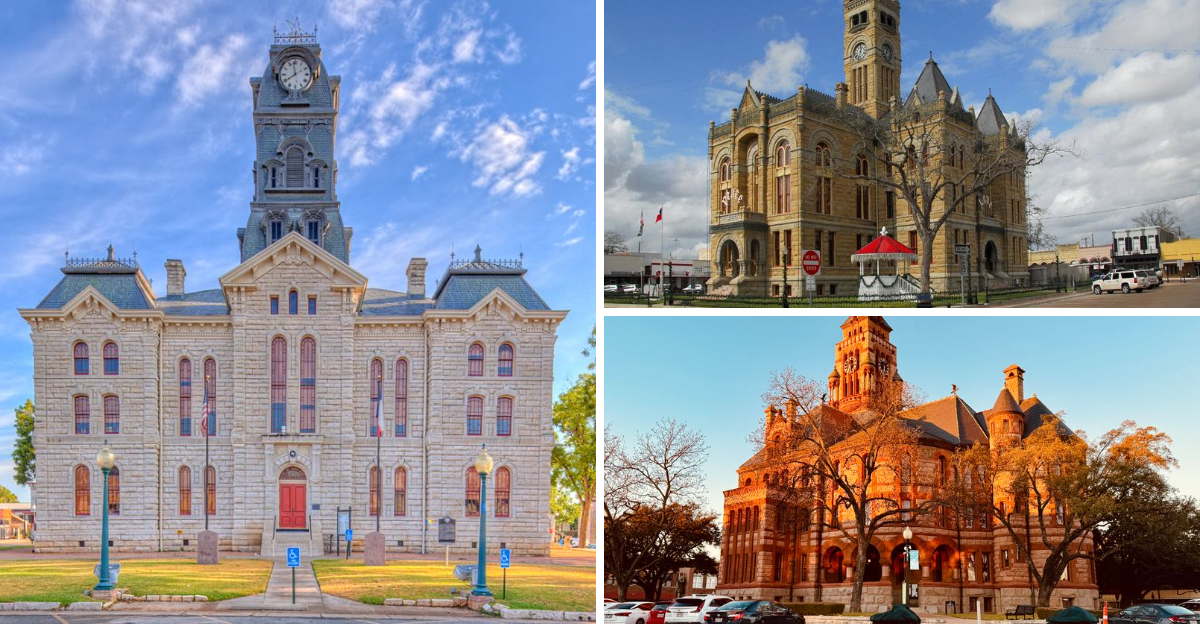
Texas is famous for its grand architecture and rich history, and nowhere is this more evident than in its county courthouses.
These impressive buildings stand tall in the center of small towns, serving as symbols of justice, community pride, and architectural beauty.
Many were built over a century ago with ornate designs that still capture the imagination today.
From Romanesque Revival towers to Mission Revival facades, each courthouse tells a unique story about the town it serves.
Walking through these historic downtown squares, you cannot help but notice how the courthouse commands attention.
It anchors the surrounding shops, restaurants, and gathering spaces, creating a sense of place that brings residents and visitors together.
Whether you are a history buff, an architecture enthusiast, or simply someone who loves exploring charming small towns, these courthouses offer something special.
Join us as we explore ten remarkable Texas courthouses that truly dominate their downtowns with style and presence.
1. Ellis County Courthouse
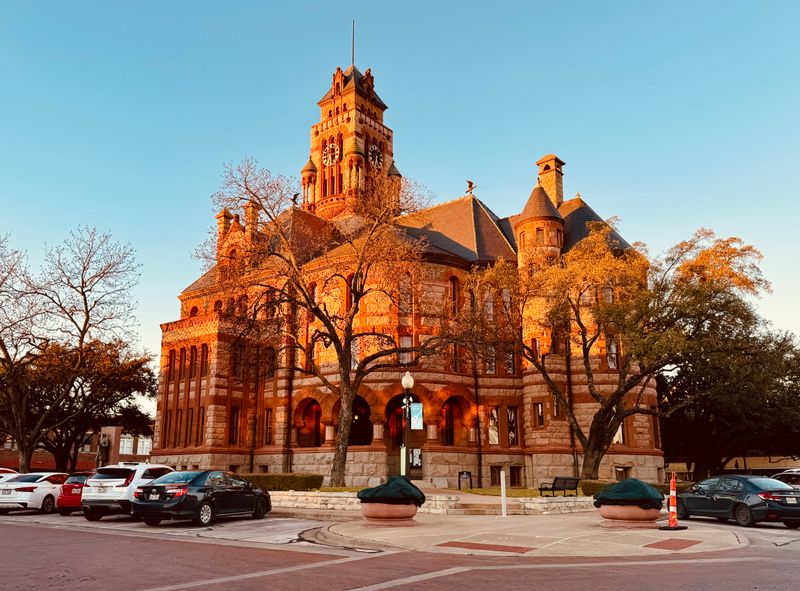
Standing proudly in Waxahachie, the Ellis County Courthouse represents one of the finest examples of Richardsonian Romanesque architecture in the entire state.
Its location at 139 West Main Street places it right at the heart of a bustling downtown square.
Visitors are immediately struck by the ornate stone carvings that decorate every corner of the building.
Gargoyles peer down from the roofline, adding a touch of medieval mystery to the structure.
The craftsmanship displayed in the stonework is truly extraordinary, with each detail telling a story of skilled artisans from generations past.
Walking around the courthouse, you will notice how it towers over the surrounding businesses and shops.
The building creates a focal point that draws your eye no matter where you stand in the downtown area.
Local residents take great pride in this architectural gem, and it frequently appears in photographs and postcards representing the region.
The courthouse grounds feature well-maintained landscaping that complements the historic structure beautifully.
Many consider this building among the most photographed courthouses in all of Texas.
Its imposing presence and intricate details make it a must-see destination for anyone interested in historic architecture or small-town charm.
2. Caldwell County District Court
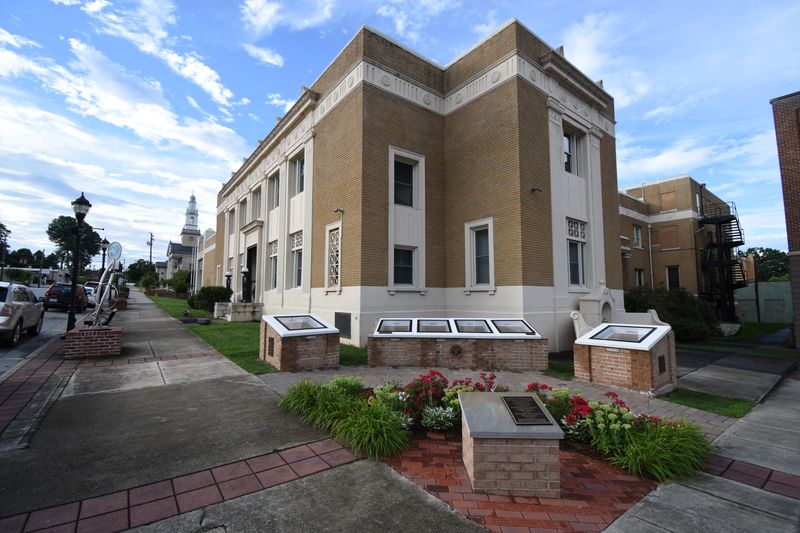
Lockhart proudly claims the title of BBQ Capital of Texas, but its courthouse at 201 East San Antonio Street deserves equal recognition.
This stunning Second Empire structure commands attention with its distinctive architectural style.
A central clock tower rises majestically above the roofline, visible from blocks away in every direction.
The building serves as the centerpiece of a remarkably well-preserved downtown district.
Victorian-era details adorn the facade, showcasing the craftsmanship that defined courthouse construction during that period.
Surrounding the courthouse, you will find historic storefronts that have been lovingly maintained over the decades.
The relationship between the courthouse and its downtown creates a cohesive historic district.
Visitors often spend hours exploring the area, moving between the impressive courthouse grounds and nearby establishments.
The clock tower functions as a landmark that helps orient both residents and tourists throughout the town.
Architectural enthusiasts appreciate how the building exemplifies Second Empire design principles.
Its mansard roof and decorative elements represent a style rarely seen in modern construction.
The courthouse stands as a testament to Lockhart’s commitment to preserving its heritage while embracing its culinary fame.
3. Hood County Courthouse
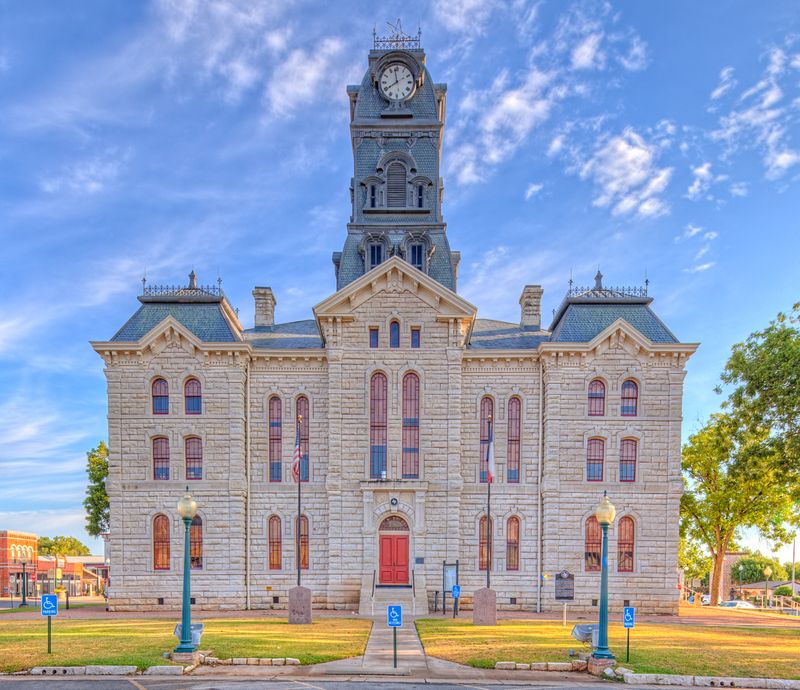
Granbury’s Hood County Courthouse at 100 East Pearl Street dominates the landscape in a way few buildings can match.
This massive Second Empire structure rises so high that it can be spotted from nearly every part of the city.
The grand clock tower serves as a beacon, drawing visitors toward the historic downtown square.
What makes this courthouse particularly special is its designation as part of a National Register-listed historic district.
The entire downtown area surrounding the courthouse has been carefully preserved to maintain its authentic character.
Stone and brick construction give the building a solid, permanent quality that speaks to its importance in the community.
As you approach the square, the courthouse grows larger and more impressive with each step.
Its architectural details become clearer, revealing the care taken in its original design and subsequent maintenance.
The building anchors a thriving downtown filled with shops, galleries, and gathering spaces.
Local events often center around the courthouse square, bringing the community together throughout the year.
The structure represents more than just government function; it embodies the spirit and identity of Granbury itself.
Photographers and history lovers find endless inspiration in its towering presence and timeless beauty.
4. Denton County Courthouse on the Square Museum
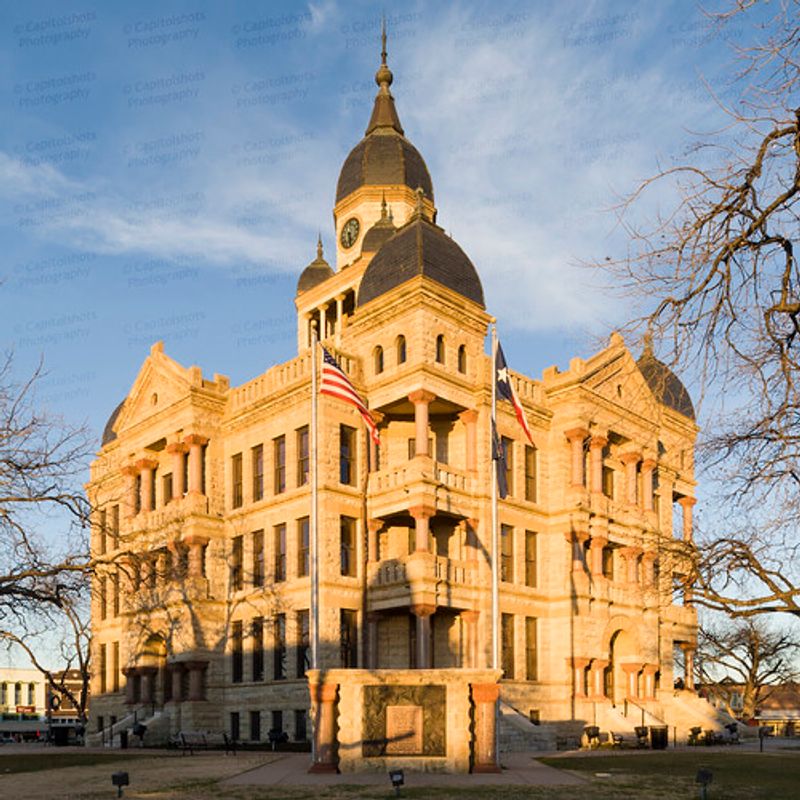
Denton’s historic courthouse at 110 West Hickory Street blends two impressive architectural styles into one cohesive structure.
Romanesque Revival elements combine with Second Empire features to create a truly unique visual experience.
Now serving as a museum, the building continues to anchor a thriving downtown area.
The surrounding square buzzes with activity from shops, restaurants, and community events throughout the year.
Red brick and limestone construction give the building a warm, inviting appearance that contrasts beautifully with the Texas sky.
Visitors can explore the interior to learn about local history while appreciating the preserved architectural details.
The courthouse square has become a gathering place where residents and visitors mingle freely.
Live music often fills the air during festivals and special occasions held on the grounds.
The building’s prominent position ensures it remains the visual focal point no matter which direction you approach from.
Its transformation into a museum demonstrates how historic structures can adapt to serve new purposes while maintaining their original character.
The downtown area benefits tremendously from having this architectural anchor at its center.
Students, tourists, and locals alike appreciate how the courthouse connects past and present in meaningful ways.
5. Williamson County Courthouse
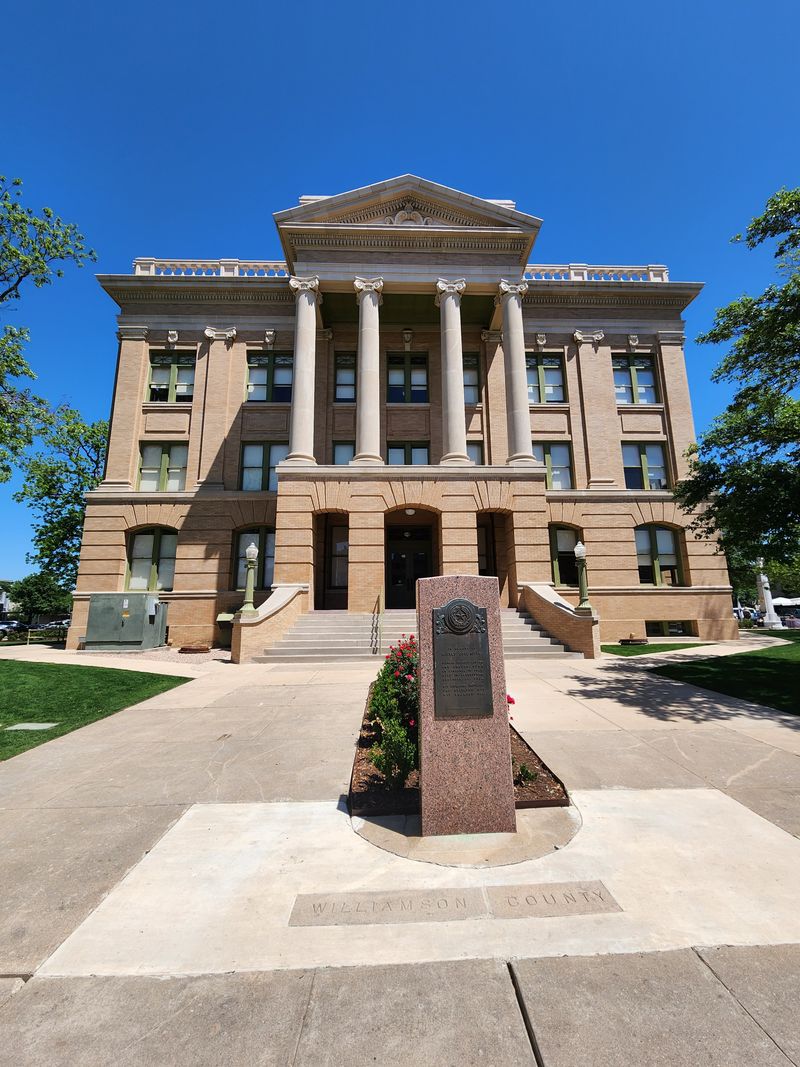
Georgetown’s Williamson County Courthouse at 710 South Main Street has achieved fame beyond its government function.
This Victorian-era masterpiece dominates a beautifully preserved town square known for its restored storefronts and vibrant atmosphere.
Filmmakers have recognized the courthouse’s photogenic qualities, using it as a backdrop for various productions.
The building’s limestone construction gives it a distinctive appearance that stands out against the Texas landscape.
Ornate Victorian details decorate the exterior, from decorative cornices to elegant window treatments.
The tall clock tower serves both practical and aesthetic purposes, marking time while adding vertical drama to the skyline.
Surrounding the courthouse, Georgetown’s downtown square features shops and eateries housed in carefully maintained historic buildings.
The synergy between the courthouse and its neighboring structures creates an authentic small-town atmosphere.
Visitors often spend entire afternoons exploring the area, moving between the courthouse grounds and nearby attractions.
The square hosts numerous events throughout the year, with the courthouse providing a stately backdrop.
Its appearance in films has brought additional attention to Georgetown, boosting tourism and local pride.
The courthouse exemplifies how historic architecture can continue serving communities while attracting new admirers from far and wide.
6. Lavaca County Courthouse
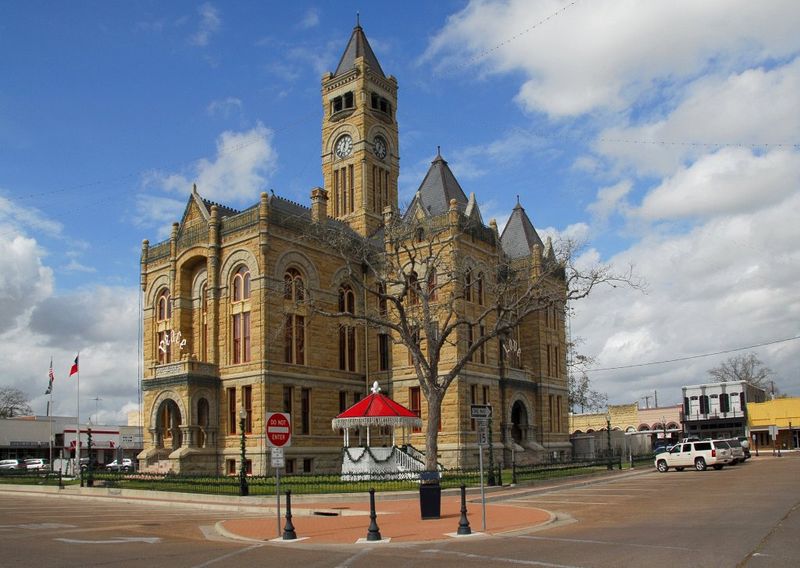
Hallettsville’s Lavaca County Courthouse at 109 North La Grange Street reaches an impressive height that commands immediate attention.
The tower stretches upward, creating a landmark visible from considerable distances around the town.
Constructed from brown sandstone and grey stone, the building showcases Richardsonian Romanesque style at its finest.
The contrasting stone colors create visual interest while emphasizing the structure’s massive scale.
Rounded arches and heavy stonework give the courthouse a fortress-like quality that speaks to permanence and stability.
The building’s imposing presence on the town square cannot be overstated; it truly dominates the surrounding landscape.
Walking around the courthouse, you gain appreciation for the engineering and craftsmanship required to construct such a monumental building.
The stone blocks fit together with precision, demonstrating the skill of the original builders.
Local residents have maintained the structure carefully, ensuring it remains a source of community pride.
The courthouse serves as a gathering point during community celebrations and a symbol of Hallettsville’s heritage.
Its architectural style connects the town to a broader tradition of grand public buildings across Texas.
Visitors interested in Romanesque architecture will find this courthouse particularly rewarding to study and photograph.
7. Cass County Courthouse
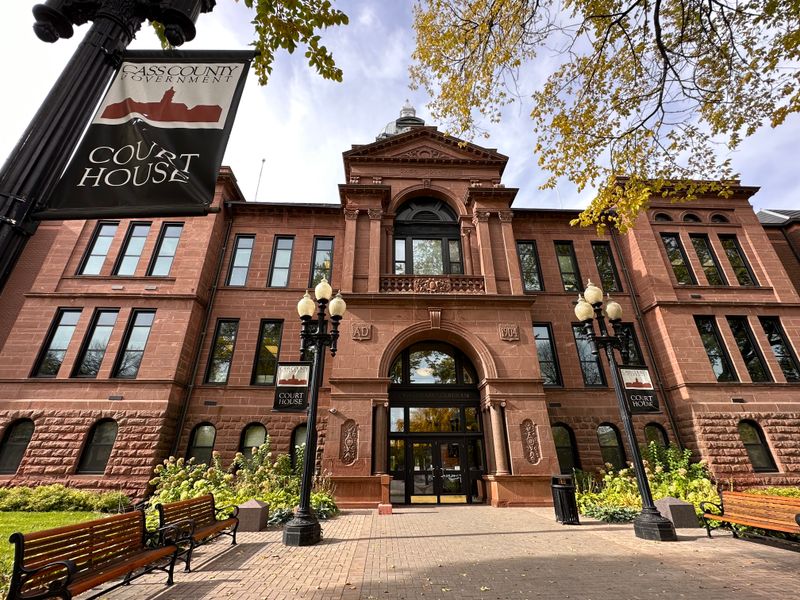
Linden’s Cass County Courthouse at 100 East Houston Street holds a distinction no other Texas courthouse can claim.
It stands as the only courthouse in the state to operate continuously since before the Civil War.
This remarkable history gives the building a significance that extends beyond its architectural merits.
The courthouse anchors the downtown square with a grand presence that reflects its long service to the community.
Classical Revival elements define its appearance, connecting it to architectural traditions that predate the war.
Walking through the downtown area, you feel the weight of history emanating from this venerable structure.
Generations of residents have passed through its doors seeking justice, conducting business, and participating in civic life.
The building has witnessed tremendous changes in technology, society, and governance while maintaining its essential function.
Its continuous operation represents stability and continuity in a world of constant change.
The surrounding downtown square retains much of its historic character, complementing the courthouse’s timeless presence.
Local historians and preservationists take special pride in this building’s unique status.
Visitors seeking to connect with authentic Texas history will find few places more meaningful than this enduring courthouse.
8. Atascosa County Courthouse
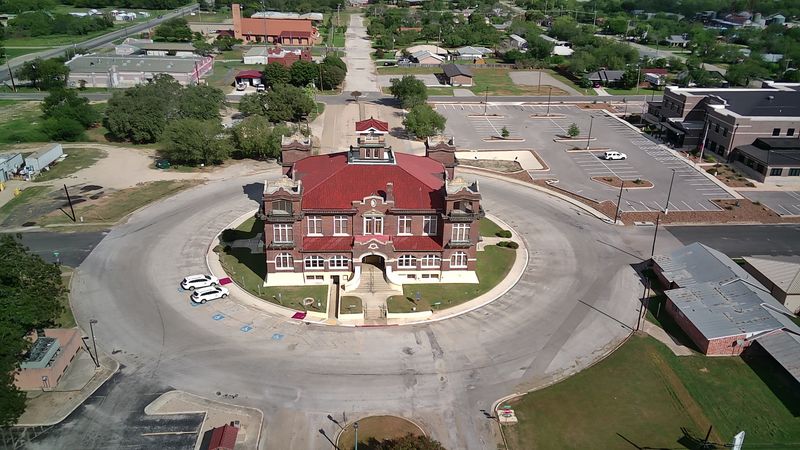
Jourdanton’s Atascosa County Courthouse at 1 Courthouse Circle Drive breaks the mold entirely.
As the only Mission Revival-style courthouse in Texas, it stands apart from the more common architectural styles found elsewhere.
The unique red-brown brick facade immediately catches the eye, distinguishing it from traditional stone courthouses.
Shaped parapets crown the roofline, echoing the Spanish colonial missions that inspired this architectural movement.
The courthouse sits on a central, circular lot that enhances its commanding presence.
This circular placement allows the building to be viewed from all angles, each perspective revealing different architectural details.
Mission Revival style brings a distinctly southwestern character to the courthouse that feels perfectly suited to the region.
The building’s design choices reflect local heritage and climate in ways that other architectural styles might not.
Arched openings and decorative tile work add authentic touches that reinforce the Mission Revival aesthetic.
Visitors often express surprise at finding this architectural style applied to a courthouse rather than a religious or residential building.
The courthouse serves as a bold statement of regional identity and architectural innovation.
Its uniqueness makes it a particularly interesting destination for those exploring diverse Texas courthouse architecture.
9. Llano County Courthouse
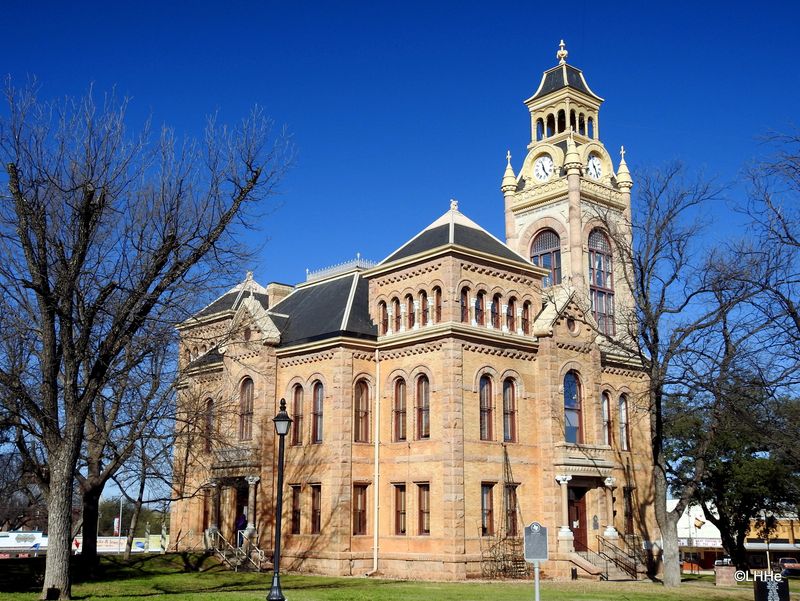
Llano’s courthouse at 801 Ford Street rises three stories high, constructed from local granite and sandstone.
The tall, ornate clock tower adds significant height, giving the building an almost cathedral-like appearance.
This vertical emphasis creates drama and draws the eye upward, emphasizing the structure’s importance.
The courthouse sits majestically in the middle of the town square, occupying a place of honor in the community.
Granite construction connects the building to the surrounding Hill Country landscape, where this stone occurs naturally.
Using local materials gave the courthouse a sense of place that imported materials could never achieve.
The sandstone accents provide color variation and decorative opportunities that complement the granite’s strength.
Architectural details throughout the building demonstrate careful planning and skilled execution.
The clock tower functions as a town landmark, helping residents and visitors navigate the downtown area.
Its dynamic appearance changes with the light throughout the day, offering new visual experiences from morning to evening.
The courthouse grounds provide gathering space for community events and casual recreation.
Llano residents cherish this building as a symbol of their town’s character and history, maintaining it with evident pride and care.
10. Harrison County Courthouse
Marshall’s Harrison County Courthouse shines as a premier example of Beaux-Arts architecture in East Texas.
The grand dome crowns the building with unmistakable elegance, creating a skyline feature visible throughout the city.
Elegant stonework covers the exterior, showcasing the refined aesthetic principles that define Beaux-Arts design.
Classical columns and balanced proportions give the courthouse a sense of harmony and sophistication.
This building has become the signature landmark of Marshall, representing the city in countless photographs and publications.
Travel literature frequently features this courthouse when discussing East Texas architecture and history.
The dome’s presence adds grandeur that elevates the entire downtown area.
Beaux-Arts style emphasizes formal beauty and classical references, both abundantly evident in this structure.
The courthouse anchors a downtown district that balances historic preservation with contemporary vitality.
Visitors appreciate how the building exemplifies early twentieth-century optimism and civic pride.
Marshall residents regard their courthouse with special affection, recognizing its role in defining their community’s identity.
The building continues serving its intended purpose while attracting architecture enthusiasts and tourists exploring the rich heritage of East Texas.
Dear Reader: This page may contain affiliate links which may earn a commission if you click through and make a purchase. Our independent journalism is not influenced by any advertiser or commercial initiative unless it is clearly marked as sponsored content. As travel products change, please be sure to reconfirm all details and stay up to date with current events to ensure a safe and successful trip.
