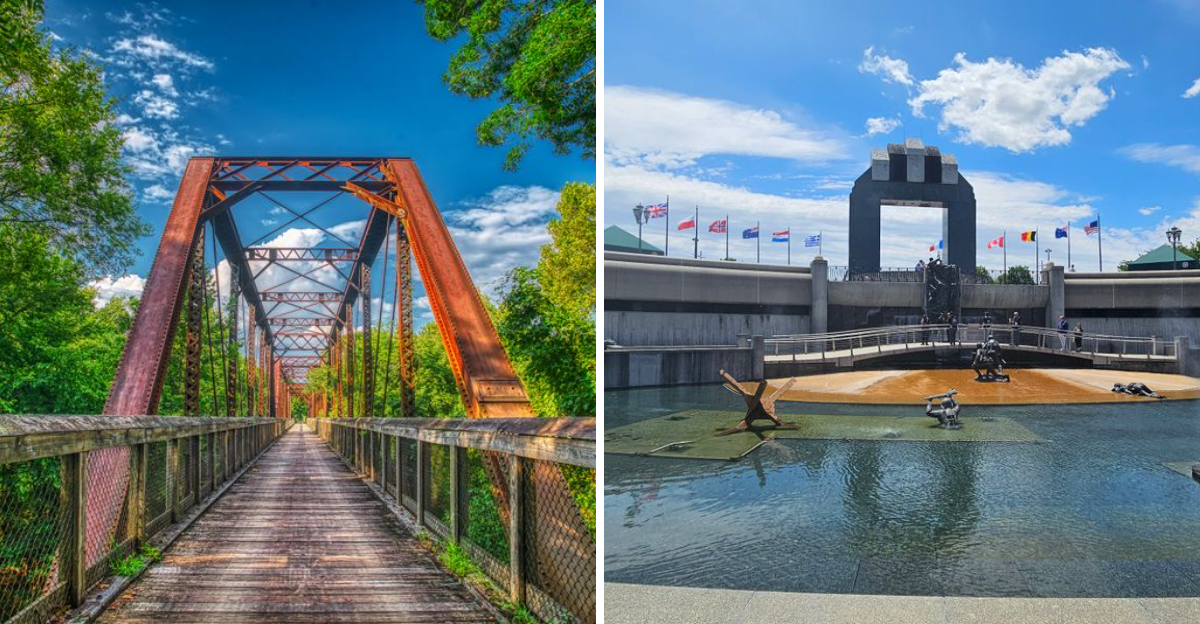
Virginia holds some of the most significant chapters in American history within its borders.
From revolutionary battles to the Civil War’s most defining moments, this state witnessed events that shaped the nation forever.
Small town memorial parks scattered across Virginia preserve these stories with quiet dignity, offering visitors a chance to walk the same ground where history unfolded.
These sacred spaces combine natural beauty with powerful narratives of sacrifice, courage, and reconciliation.
Each park tells a unique story, whether honoring soldiers who never returned home or marking the spots where battles changed the course of wars.
Exploring these memorials provides an intimate connection to the past that no textbook can replicate.
They stand as reminders of the cost of freedom and the resilience of communities that endured unimaginable loss.
1. National D-Day Memorial
Bedford suffered losses that echoed through every street and home on June 6, 1944.
This small Virginia community sent 35 soldiers to Normandy, and 19 never returned, creating the highest per capita D-Day loss in the nation.
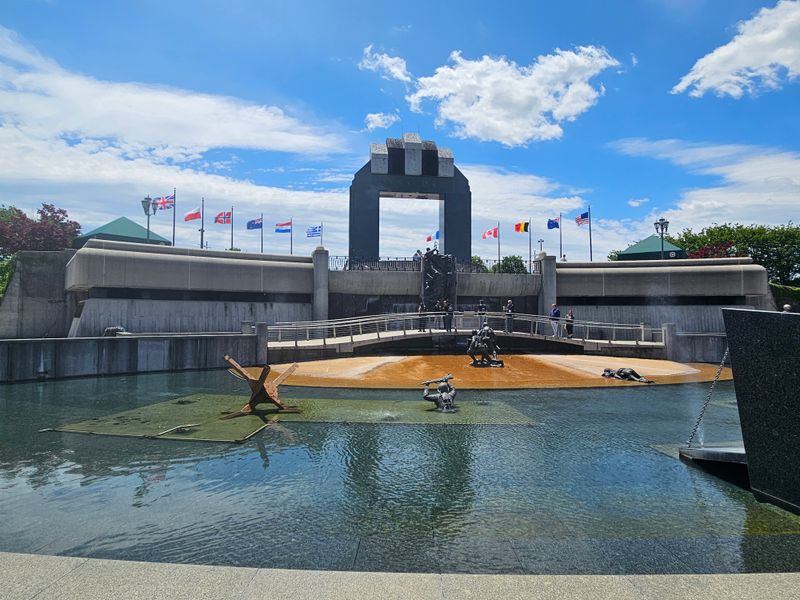
The memorial at 3 Overlord Circle stands as a powerful tribute to their sacrifice and all Allied forces who stormed the beaches.
Massive bronze sculptures depict soldiers wading through water toward almost certain death, capturing the raw terror and bravery of that morning.
A reflecting pool mirrors the sky above, offering a space for contemplation and remembrance.
Visitors walk through carefully designed sections representing the beach landings, the cliffs, and the final victory.
The detail in every statue and inscription brings the invasion’s reality into sharp focus.
Educational exhibits provide context about the planning, execution, and aftermath of Operation Overlord.
Bedford’s story reminds us that even the smallest towns bore immense burdens during World War II.
The memorial opened to ensure these heroes would never be forgotten, no matter how many years pass.
Standing here, you feel the weight of what was lost and the freedom that was preserved.
It remains one of Virginia’s most moving historical sites.
2. Appomattox Court House National Historical Park
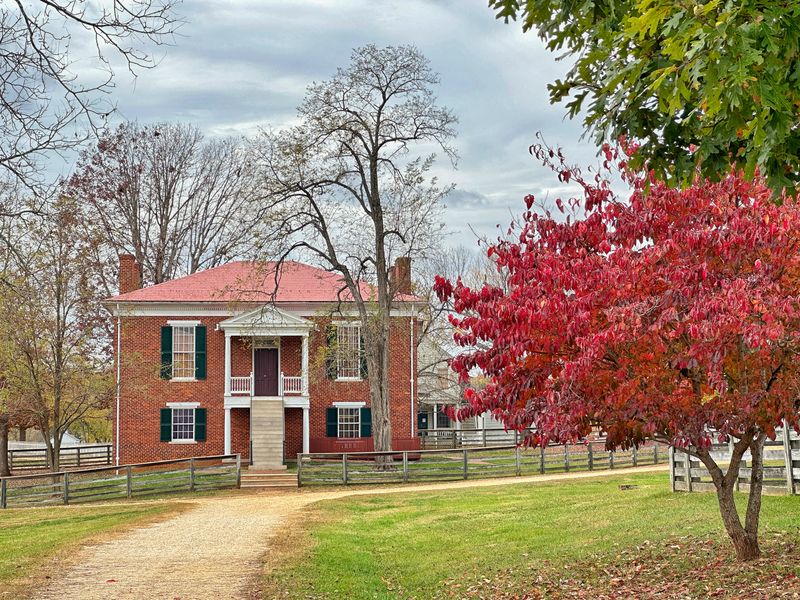
General Robert E. Lee’s surrender to Ulysses S. Grant happened in a modest parlor at 111 National Park Drive.
That April day in 1865 effectively ended four years of brutal civil conflict that had torn the nation apart.
Walking through the preserved village feels like stepping back through time to that pivotal moment.
The courthouse, homes, and outbuildings stand much as they did when Confederate soldiers stacked their weapons for the last time.
Rangers share stories of the surrender terms, which were surprisingly generous and aimed at healing rather than punishment.
Lee’s men were allowed to keep their horses for spring plowing, and officers retained their sidearms.
The park’s quiet fields witnessed both the war’s end and the beginning of reunification.
Interpretive trails wind through the landscape where exhausted armies finally laid down their arms.
Exhibits inside the visitor center display artifacts, documents, and personal items from those final days.
You can almost hear the relief and grief that must have filled the air as soldiers from both sides realized the fighting was finally over.
Appomattox represents not just surrender but the possibility of reconciliation after terrible division.
Virginia’s role in preserving this site ensures future generations understand how the nation came back together.
3. Fredericksburg and Spotsylvania National Military Park
Four major battles raged across this landscape at 1013 Lafayette Boulevard, leaving scars that history cannot erase.
Fredericksburg, Chancellorsville, Wilderness, and Spotsylvania saw some of the Civil War’s most ferocious and deadly combat.
Thousands of Union soldiers rest in cemeteries here, their graves stretching in solemn rows beneath ancient trees.
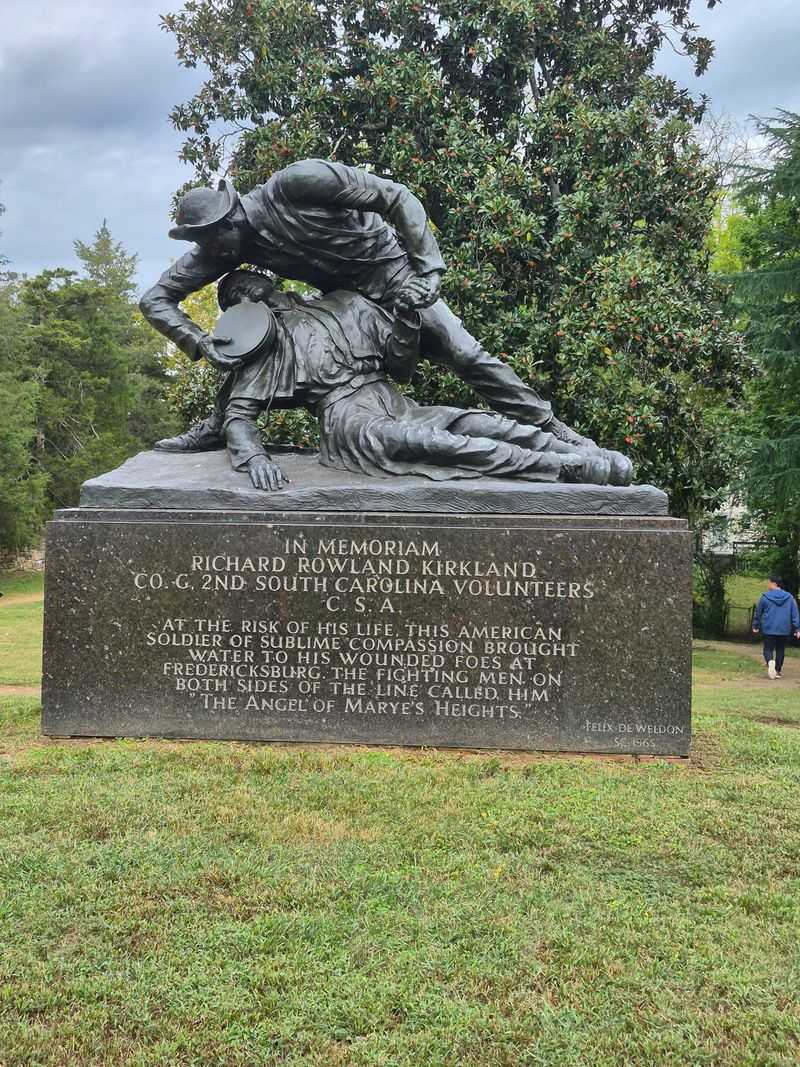
The Kirkland Monument tells a remarkable story of compassion amid carnage.
Sergeant Richard Kirkland risked his life to bring water to wounded enemy soldiers crying out in no man’s land.
His act of humanity during the Battle of Fredericksburg earned him the nickname Angel of Marye’s Heights.
Preserved earthworks and trenches show where men fought desperately for every inch of ground.
Historic buildings, including the Chancellor House and Ellwood Manor, served as hospitals and headquarters during the campaigns.
Walking these fields, you sense the chaos and confusion that defined Civil War battles.
Virginia witnessed more major engagements than any other state, and this park preserves four of the most significant.
The sheer scale of loss here is staggering, with casualties numbering in the tens of thousands across all four battles.
Educational programs help visitors understand the strategic importance and human cost of these campaigns.
4. Manassas National Battlefield Park
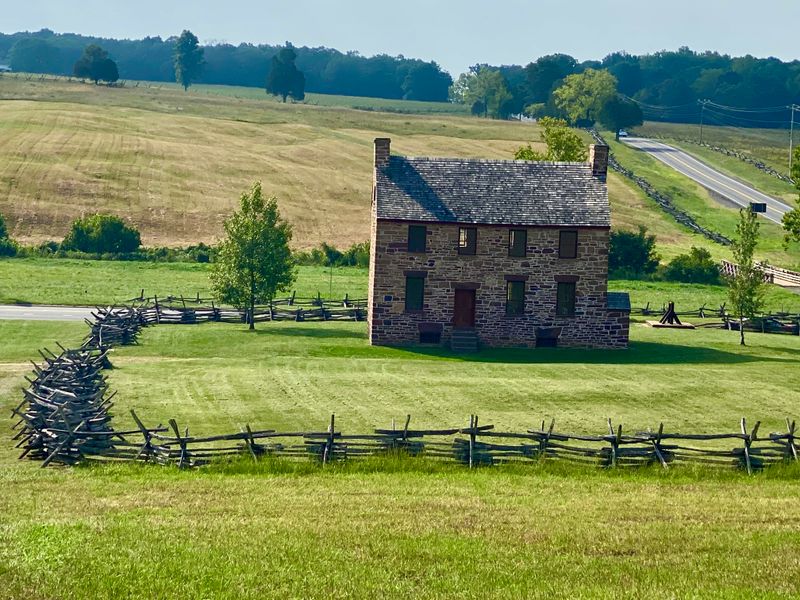
Both sides marched to Manassas at 6511 Sudley Road expecting a quick, decisive victory.
The First Battle of Bull Run shattered those illusions in the summer heat, proving the war would be long and bloody.
Civilians from Washington actually came to watch the fighting, expecting a picnic-like spectacle.
They fled in panic when the battle turned into a chaotic Union retreat.
More than 40 miles of trails now crisscross the preserved battlefield, each marked with interpretive signs explaining troop movements and key moments.
The Second Battle of Bull Run, fought on much of the same ground, resulted in another Confederate victory and even higher casualties.
Stone House, which served as a field hospital, still stands as a reminder of the medical horrors soldiers endured.
Henry Hill, where the fighting was fiercest during the first battle, offers panoramic views of the entire battlefield.
General Thomas Jackson earned his famous nickname Stonewall here by holding his position against repeated Union assaults.
Virginia’s landscape bore witness to these early tests of will that set the tone for years of conflict.
The park’s preservation efforts ensure that modern development doesn’t erase these crucial historical grounds.
Visiting Manassas helps you understand how the war’s reality exceeded everyone’s expectations.
5. Yorktown Battlefield
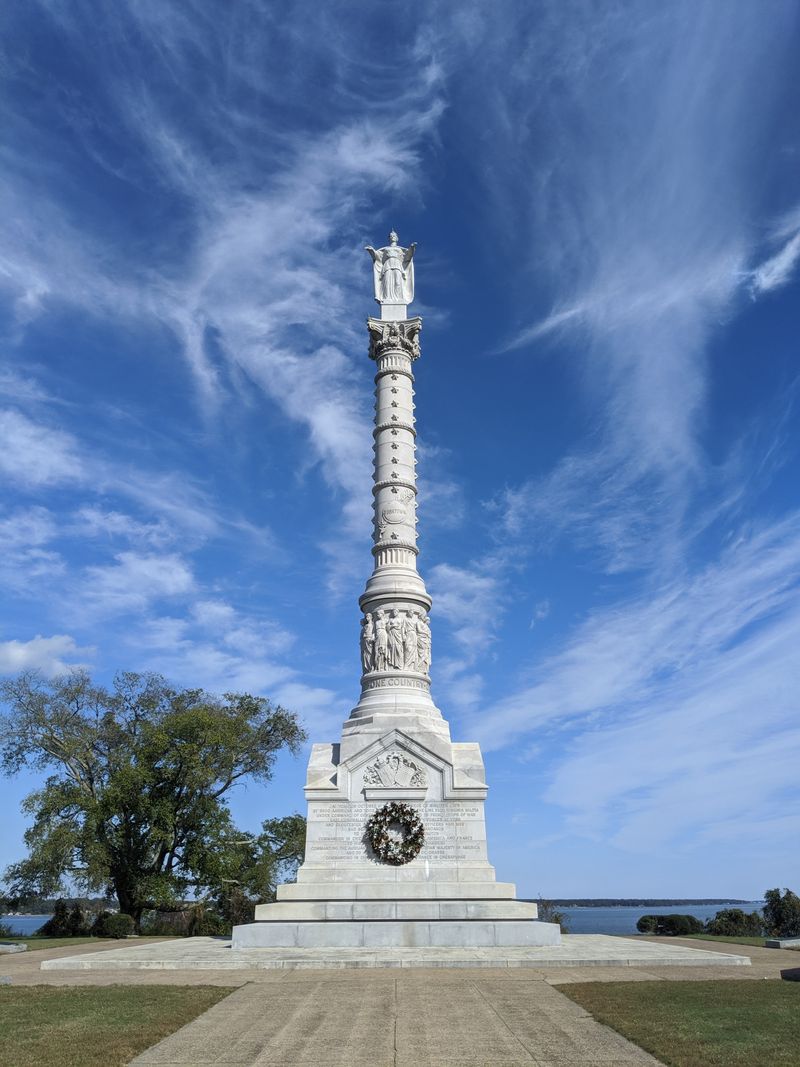
American independence was essentially won on these fields at 1000 Colonial National Historical Parkway.
General George Washington’s combined American and French forces surrounded British General Cornwallis in the autumn of 1781.
The siege lasted weeks, with constant bombardment wearing down the trapped British army.
Cornwallis finally surrendered, effectively ending major combat operations in the Revolutionary War.
Walking or driving the tour route, you follow the allied siege lines that slowly tightened around the British positions.
Reconstructed earthworks show where artillery batteries pounded the enemy day and night.
The French played a crucial role, with their fleet blocking any escape by sea while their troops fought alongside Americans on land.
Moore House, where surrender terms were negotiated, still stands and can be toured during certain seasons.
Virginia’s strategic location made it a focal point for both sides throughout the Revolutionary War.
The victory at Yorktown proved that the American cause could succeed against the world’s most powerful military.
Interpretive programs bring the siege to life, explaining tactics, daily life, and the diplomatic complexities of the Franco-American alliance.
Standing where independence was secured gives you a profound appreciation for the risks the founders took.
6. Staunton River Battlefield State Park
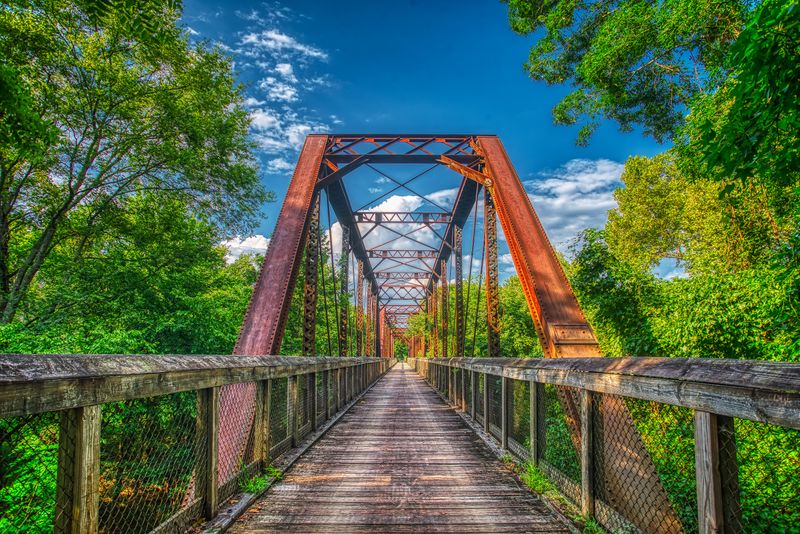
A critical railway bridge over the Staunton River at 1035 Fort Hill Trail became the target of a Union cavalry raid.
Confederate forces, including elderly reserves and teenage cadets, rushed to defend this vital supply line.
Against all odds, they repelled the Union attack and saved the bridge from destruction.
The battle demonstrated how important logistics and transportation networks were to both armies.
Trails through the park guide visitors to key defensive positions and down to the historic bridge site.
Interpretive markers explain the tactical situation and how the defenders used the terrain to their advantage.
The Staunton River itself winds peacefully through the landscape, giving no hint of the desperate fighting that once occurred here.
Educational programs focus on the often-overlooked aspects of Civil War strategy beyond major battles.
Virginia’s railroad system was a lifeline for the Confederacy, making bridges like this strategic prizes.
The park preserves not just battlefield ground but also the story of ordinary citizens who became soldiers when their home was threatened.
Visitors gain insight into how wars are won and lost through control of infrastructure and supply routes.
The successful defense here kept Confederate supply lines open for months longer than they might have been otherwise.
7. Ball’s Bluff Battlefield Regional Park
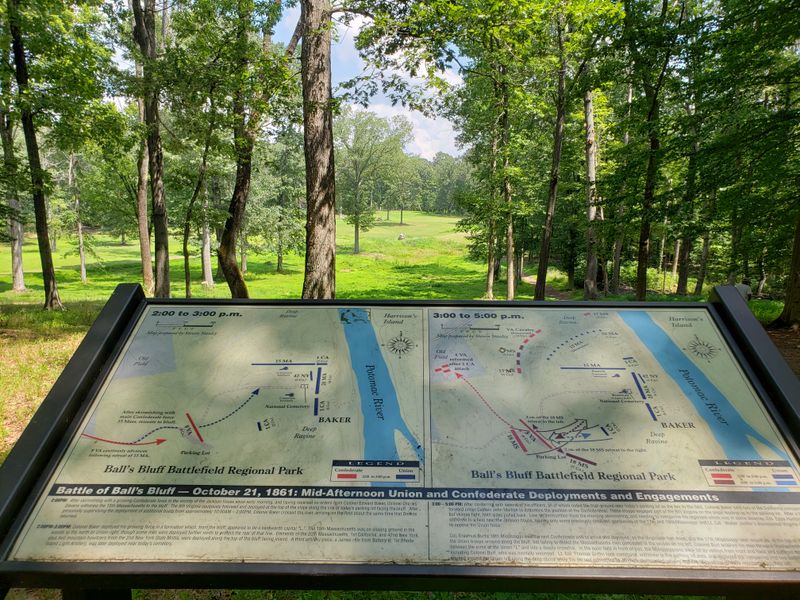
Steep bluffs overlooking the Potomac River at Balls Bluff Road NE became a death trap for Union soldiers.
In October 1861, a poorly planned reconnaissance turned into a disastrous battle as troops were pushed back to the river’s edge.
Many drowned trying to escape across the Potomac, while others fell to Confederate fire on the heights.
The defeat shocked the North and led to the creation of the Joint Committee on the Conduct of the War.
Today, a tiny national cemetery holds the remains of 54 Union soldiers, making it the third smallest national cemetery in the country.
Walking trails wind through the woods where the fighting took place, offering quiet spots for reflection along the river.
The bluffs provide beautiful views, though they carry the weight of the tragedy that unfolded here.
Interpretive signs explain how the battle developed and why the Union position became untenable.
Virginia’s landscape often determined battle outcomes, and the terrain at Ball’s Bluff heavily favored the defenders.
The park’s peaceful atmosphere contrasts sharply with the chaos and panic that reigned during the battle.
Preservation efforts ensure this lesser-known engagement isn’t forgotten among more famous conflicts.
Visiting here offers a more intimate historical experience than larger, more crowded battlefield parks.
8. Mt. Zion Historic Park
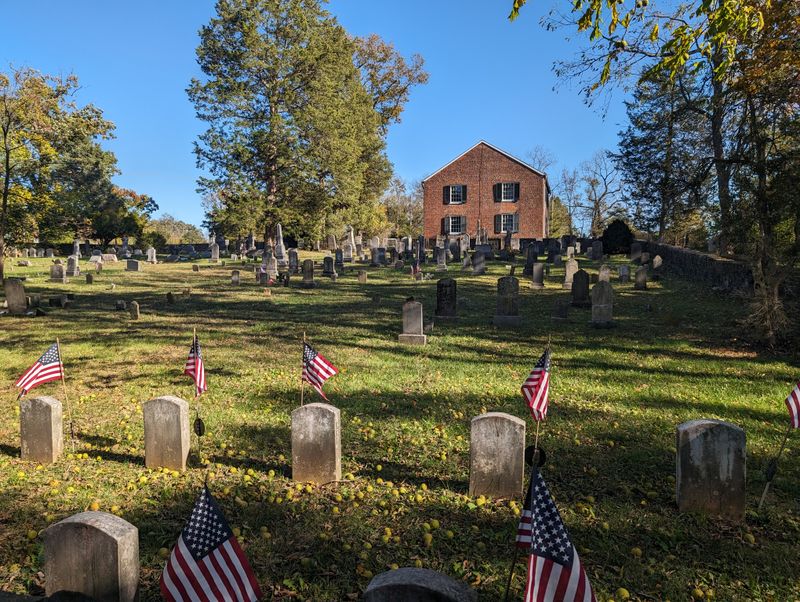
A simple church established in 1851 at 40309 Little River Turnpike became a hospital and prison during the Civil War.
Mt. Zion’s location made it strategically valuable, and both armies used the building at different times.
The surrounding area saw frequent skirmishes as Confederate partisan rangers, including the famous Mosby’s Rangers, operated in the region.
John Singleton Mosby’s guerrilla tactics frustrated Union forces and disrupted their supply lines throughout northern Virginia.
The park’s trails wind through woods and fields where these hit-and-run raids often occurred.
A small cemetery near the church holds graves of local residents who lived through the occupation and conflict.
Interpretive panels share stories of how the war affected ordinary families and communities, not just soldiers.
The church building itself bears witness to the multiple roles structures played during wartime.
Virginia’s proximity to Washington made areas like this constant zones of military activity and civilian hardship.
Mt. Zion represents the experience of countless small communities caught between larger armies.
The park preserves local history that might otherwise be lost amid the focus on major battles.
Visiting here provides perspective on how war touched every aspect of daily life in border regions.
9. Monument Terrace
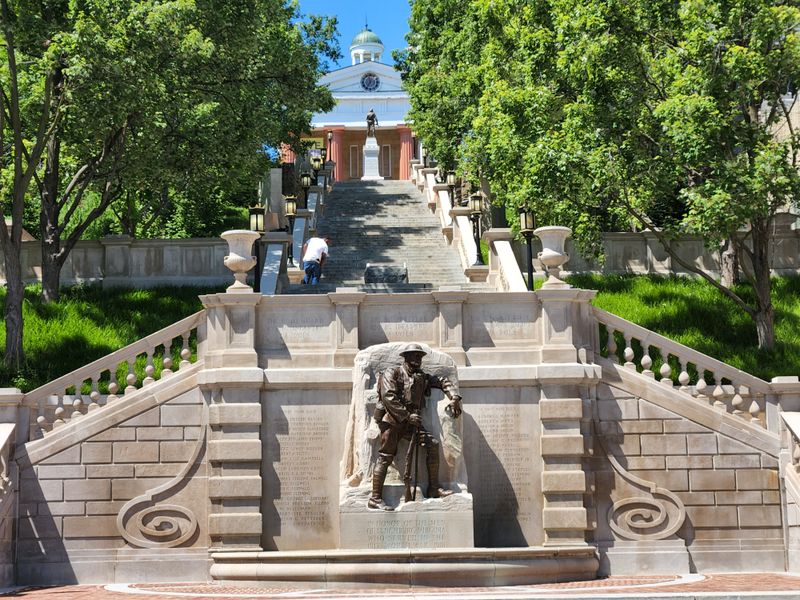
A massive staircase climbs through downtown Lynchburg at 313 9th Street, each step a tribute to local sacrifice.
Monument Terrace honors citizens who served and died in every American conflict from the Civil War through modern times.
The stairs themselves become a memorial, with plaques and statues marking different wars and units.
At the top, a statue of a Confederate soldier stands watch over the city, though the memorial has expanded to honor all veterans.
The terrace serves as a gathering place for Memorial Day, Veterans Day, and other commemorative events.
Climbing the steps, you pass through generations of American military history, each level representing different eras of service.
Lynchburg’s central location made it an important supply and hospital center during the Civil War.
The city successfully defended itself against a Union raid, preserving its vital warehouses and rail connections.
Monument Terrace reflects how Virginia communities maintained their connection to military service across centuries.
The urban setting makes it accessible to residents and visitors who might not travel to more remote battlefield parks.
Recent additions honor veterans of Iraq, Afghanistan, and other contemporary conflicts, keeping the memorial relevant.
It stands as proof that remembrance is an ongoing commitment, not just a historical exercise.
10. Veterans Memorial Walk of Honor
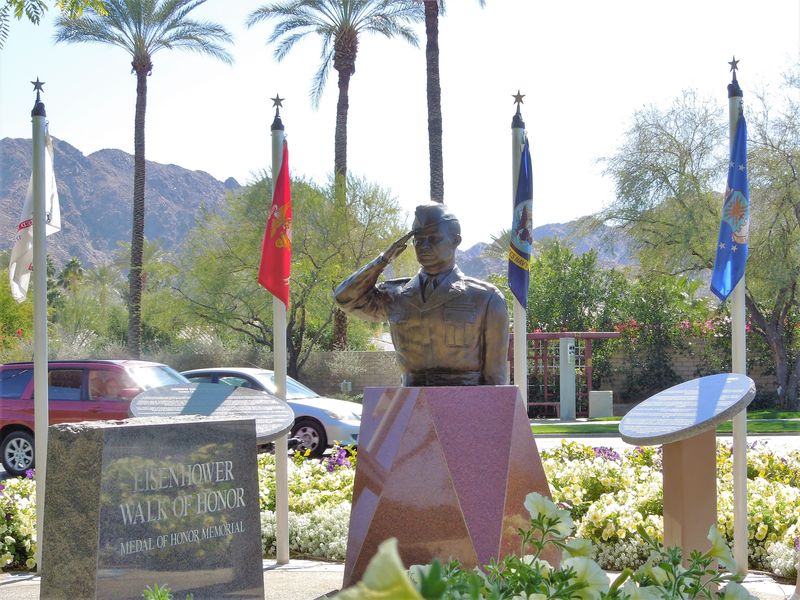
Overlooking the Russell Fork River at 331 Main Street in Haysi, this memorial gives voice to a small community’s gratitude.
Plaques line the walkway, each bearing the name of a local veteran who served the nation.
The scenic river view provides a peaceful backdrop for reflection on the cost of freedom.
Small towns like Haysi have always contributed disproportionately to military service, with many families sending multiple generations to war.
The memorial ensures these individuals are recognized by name, not just as statistics or distant historical figures.
Community members often visit to remember family members, friends, and neighbors who wore the uniform.
The walkway’s design encourages quiet contemplation while taking in the natural beauty of the Virginia mountains.
Haysi represents countless small communities across the state that honor their veterans with simple but heartfelt tributes.
The memorial’s location in the town center makes it a daily reminder of sacrifice and service.
Virginia’s rural areas have a strong military tradition, with service often passing from parent to child across generations.
The Walk of Honor captures this tradition in a tangible, personal way.
Visitors come away with a deeper appreciation for how military service touches every corner of the state, no matter how remote or small the community.
Dear Reader: This page may contain affiliate links which may earn a commission if you click through and make a purchase. Our independent journalism is not influenced by any advertiser or commercial initiative unless it is clearly marked as sponsored content. As travel products change, please be sure to reconfirm all details and stay up to date with current events to ensure a safe and successful trip.
