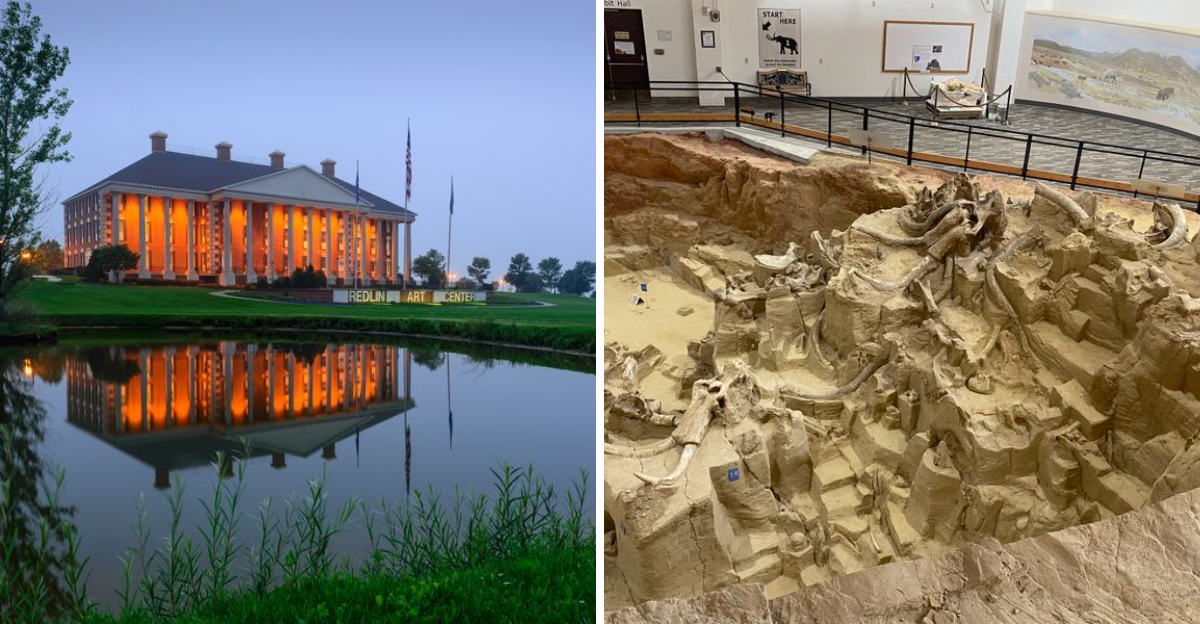
South Dakota holds a treasure trove of stories waiting to be discovered in its quieter corners.
Beyond the famous faces carved into Mount Rushmore, small towns across the state safeguard fascinating chapters of American history.
These museums offer windows into worlds you might never have imagined, from ancient mammoths trapped in sinkholes to Cold War missile silos hidden beneath the prairie.
Each institution tells a piece of the Great Plains narrative, whether through pioneer wagons, Indigenous artifacts, or the childhood home of a beloved author.
Visiting these places means stepping into authentic settings where history isn’t just displayed but preserved with care and respect.
You’ll find curators who are passionate storytellers, eager to share the unique heritage of their communities.
The experiences range from walking through actual paleontological digs to exploring restored Victorian homes where statehood was born.
These aren’t stuffy collections behind velvet ropes.
They’re living connections to the people who shaped this land, from the Lakota nations to gold rush prospectors to homesteading families.
Ready to explore the hidden gems that make South Dakota’s cultural landscape so rich and varied?
1. Minuteman Missile National Historic Site
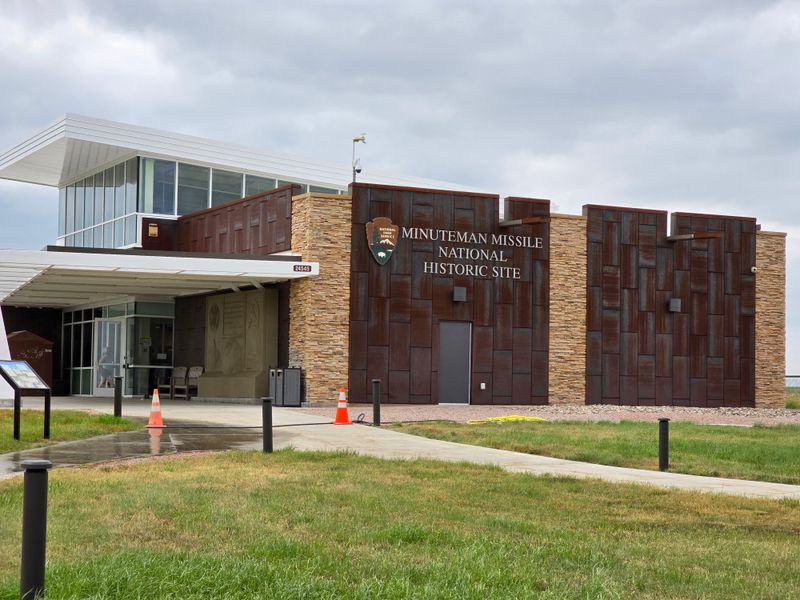
Few places capture the tension of the Cold War quite like this remote prairie installation near Philip.
Address: 21280 SD Highway 240, Philip, SD 57567.
The facility preserves an actual decommissioned launch control center where military personnel once stood ready to launch nuclear missiles at a moment’s notice.
Walking through the underground control room feels like stepping into a time capsule frozen during America’s most anxious decades.
The site includes a Delta-09 missile silo where visitors can peer down at a Minuteman II intercontinental ballistic missile still in place.
Rangers lead tours that explain the daily routines of the crews who lived with the weight of potential nuclear war on their shoulders.
You’ll learn about the complex systems designed to prevent accidental launches while ensuring rapid response capability.
The museum’s exhibits detail how South Dakota became home to hundreds of these hidden weapons during the arms race.
Standing on the windswept grasslands, it’s striking to realize how much destructive power lay concealed beneath such peaceful scenery.
This National Historic Site offers sobering lessons about the nuclear age that shaped modern geopolitics.
The experience connects visitors to a chapter of history that remains relevant as we navigate ongoing global tensions.
It’s a powerful reminder of how ordinary people carried extraordinary responsibilities during uncertain times.
2. The Mammoth Site
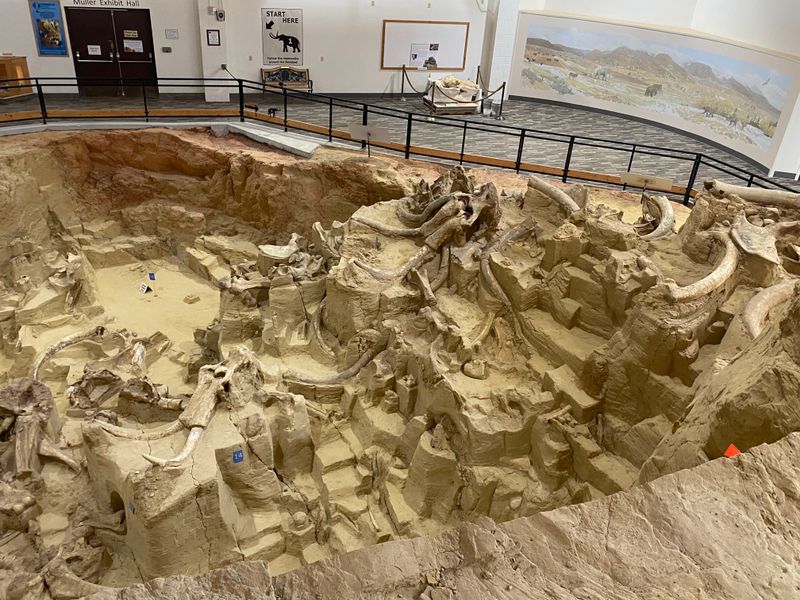
Imagine stumbling upon the world’s largest concentration of mammoth remains while planning a housing development.
Address: 1800 US Highway 18 Bypass, Hot Springs, SD 57747.
That’s exactly what happened in Hot Springs, leading to one of the most remarkable paleontological discoveries in North America.
The museum was constructed directly over the active excavation site, allowing visitors to watch scientists carefully uncover ancient bones.
A natural sinkhole trapped these massive creatures thousands of years ago, preserving their skeletons in remarkable detail.
Walkways circle the dig area so you can observe researchers at work using delicate tools and meticulous techniques.
The site has yielded remains from dozens of Columbian and woolly mammoths, along with other Ice Age animals.
Knowledgeable guides explain how these prehistoric giants became trapped and what their bones reveal about ancient climates.
Interactive exhibits help younger visitors understand geological time scales and extinction events.
You might even spot a newly exposed tusk or tooth during your visit as excavation continues year-round.
The facility combines serious scientific research with accessible public education in a truly unique way.
Standing above the bones of creatures that roamed during the last Ice Age creates an unforgettable connection to deep time.
It’s a place where paleontology comes alive before your eyes.
3. Akta Lakota Museum & Cultural Center
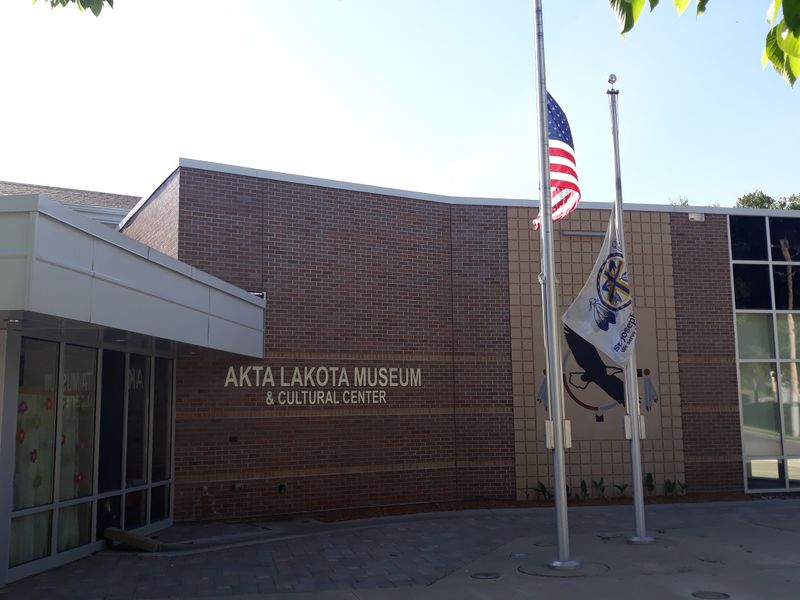
Perched along the Missouri River, this cultural institution offers an essential perspective often missing from mainstream historical narratives.
Address: 1301 North Main Street, Chamberlain, SD 57325.
The museum presents the rich heritage of the Northern Plains Indian peoples through carefully curated collections.
Traditional artifacts share space with contemporary Indigenous art, showing the living continuity of Lakota culture.
Beadwork, quillwork, and ceremonial objects demonstrate artistic traditions passed through generations.
The exhibits explain the spiritual significance behind many items, offering context that deepens understanding.
You’ll encounter stories of resilience, adaptation, and cultural preservation in the face of tremendous challenges.
The center emphasizes that Indigenous cultures aren’t relics of the past but vibrant communities with ongoing traditions.
Educational programs connect visitors to the philosophies and values central to Lakota life.
The gift shop features authentic works by Native artists, supporting contemporary creators directly.
Visiting here means engaging respectfully with perspectives that enrich our understanding of regional history.
The museum serves both as a bridge between cultures and as a place where Indigenous voices speak for themselves.
It’s an opportunity to learn from rather than simply about the first peoples of these lands.
The experience challenges visitors to reconsider familiar historical narratives from new angles.
4. Adams Museum
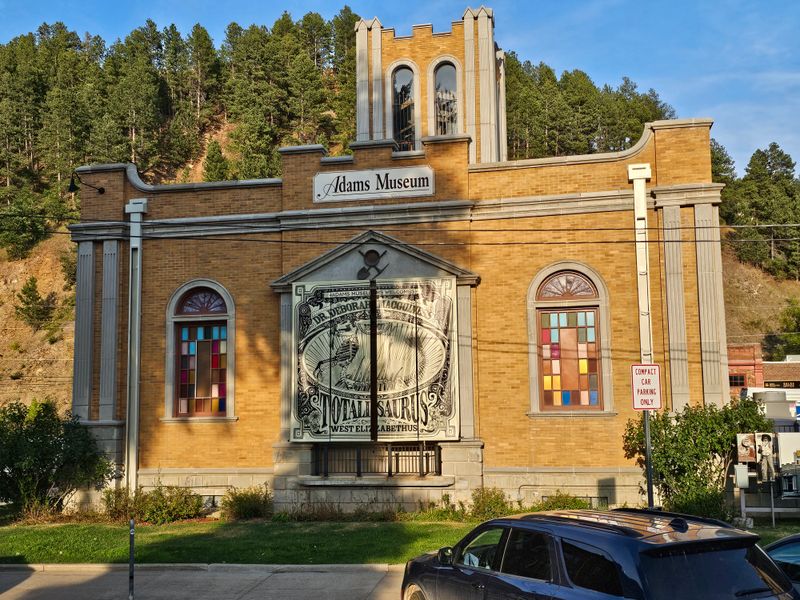
Deadwood’s oldest museum has been collecting Black Hills treasures since the town’s wild early days.
Address: 54 Sherman Street, Deadwood, SD 57732.
The collection includes the famous gold nugget discovered by Potato Creek Johnny, a prospector who became a local legend.
Artifacts connected to Wild Bill Hickok and Calamity Jane bring the frontier era’s colorful characters to life.
Glass cases display everything from mining equipment to Victorian-era clothing worn by the town’s residents.
The building itself reflects the architectural style popular when fortunes were being made and lost in the gulches.
You’ll find photographs documenting Deadwood’s transformation from rough mining camp to established community.
Personal belongings of early settlers provide intimate glimpses into daily life during the gold rush.
The museum doesn’t romanticize the era but presents the gritty reality alongside the legendary tales.
Exhibits explore the diverse populations who sought their fortunes here, including Chinese immigrants and African American pioneers.
Local historians have assembled these collections with care, preserving stories that might otherwise have been forgotten.
Walking through the rooms feels like browsing through the attic of the entire Black Hills region.
Each object represents a human story of hope, hardship, or triumph in this legendary corner of the American West.
The museum remains a vital keeper of authentic frontier history.
5. Days of ’76 Museum
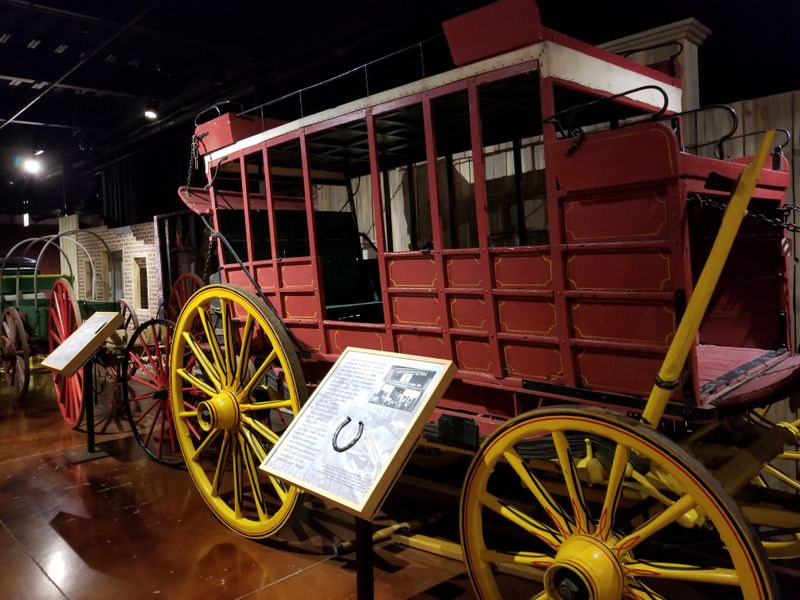
Stagecoaches and wagons fill this specialized facility dedicated to the vehicles that connected frontier settlements.
Address: 18 Seventy Six Drive, Deadwood, SD 57732.
The collection documents how people and goods moved across the rugged Black Hills terrain before modern roads existed.
You’ll see everything from elegant carriages used by wealthy mine owners to sturdy freight wagons that hauled supplies.
Each vehicle tells stories about the engineering challenges of frontier transportation.
The museum explains how stagecoach routes shaped settlement patterns and economic development throughout the region.
Restored examples show the craftsmanship required to build conveyances that could survive rough trails and harsh weather.
Interpretive materials describe the experiences of passengers enduring long, uncomfortable journeys between isolated towns.
The collection includes vehicles associated with famous routes and notable historical incidents.
Children especially enjoy imagining themselves as passengers bouncing along dusty roads or drivers managing teams of horses.
The facility also preserves the heritage of the annual rodeo that has celebrated frontier traditions for generations.
Costumes and equipment from these celebrations connect past and present community identity.
Visiting here means appreciating how challenging simple travel once was in this mountainous landscape.
The museum honors both the vehicles themselves and the people whose lives depended on them.
6. National Music Museum
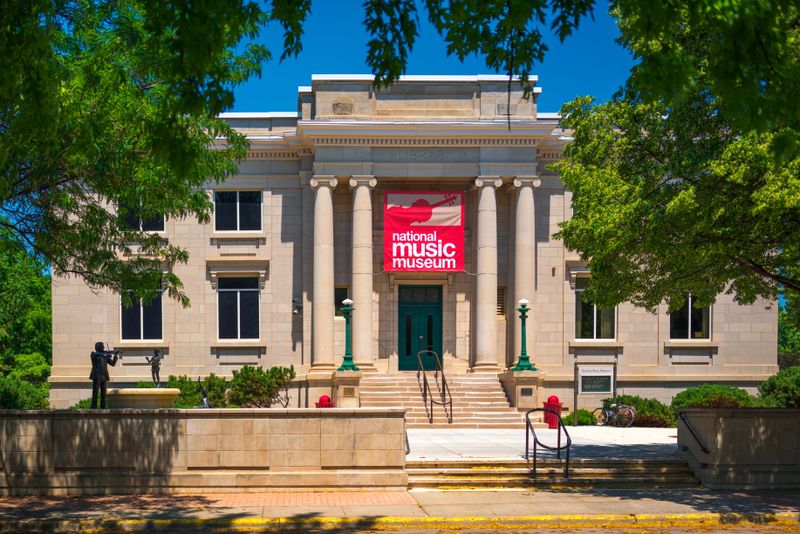
World-class collections sometimes appear in unexpected places, and this Vermillion institution proves that point spectacularly.
Address: 414 East Clark Street, Vermillion, SD 57069.
Located on the University of South Dakota campus, the museum houses an astonishing array of instruments from across centuries and continents.
Rare Stradivarius violins rest alongside historic American band instruments and traditional pieces from diverse cultures.
The collection spans human musical expression from ancient times through contemporary innovations.
Exhibits explain how instruments reflect the societies that created them and the technologies available to craftspeople.
You’ll discover connections between musical development and broader cultural movements throughout history.
The acoustically designed spaces allow for occasional performances on select historic instruments.
Curators have assembled one of the most comprehensive musical instrument collections anywhere in the world.
Interactive displays help visitors understand how different instruments produce sound and why design details matter.
The museum attracts scholars and musicians from around the globe who come to study these rare examples.
Yet the exhibits remain accessible to casual visitors curious about the universal human impulse to make music.
Finding such an internationally significant collection in a small South Dakota town delights and surprises most visitors.
It’s proof that cultural treasures can flourish anywhere there’s passion and dedication to preserve them.
7. Dakota Discovery Museum
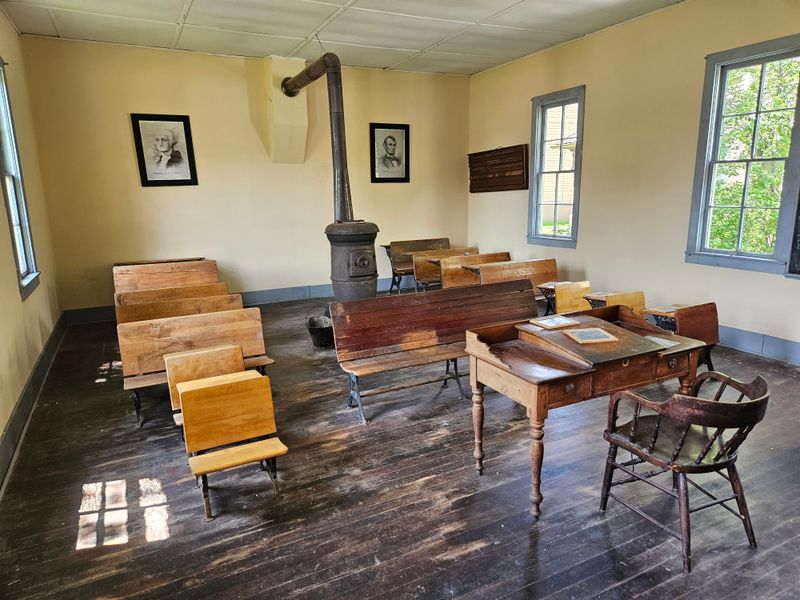
Mitchell’s heritage institution preserves northern Great Plains history through an entire collection of relocated historic structures.
Address: 1300 McGovern Avenue, Mitchell, SD 57301.
A schoolhouse from the early twentieth century stands alongside a train depot that once served as a community lifeline.
Walking through these authentic buildings transports visitors to the era when rural communities were taking shape across the prairie.
The schoolhouse still contains desks, textbooks, and teaching materials that show how education functioned in one-room settings.
You can almost hear children reciting lessons while a single teacher managed students of all ages simultaneously.
The train depot exhibits explain how railroads determined which towns thrived and which faded into obscurity.
Additional buildings showcase domestic life, agricultural practices, and small-town commerce from generations past.
The museum grounds create a village-like atmosphere where history feels tangible rather than abstract.
Seasonal programs sometimes feature costumed interpreters demonstrating period crafts and daily activities.
Collections inside the buildings include photographs, documents, and objects donated by local families.
These personal items create emotional connections to the real people who built communities on the challenging plains.
The museum serves as a community memory bank, preserving stories that might otherwise disappear with each passing generation.
It’s a place where regional identity is carefully maintained for future residents to understand their roots.
8. Redlin Art Center
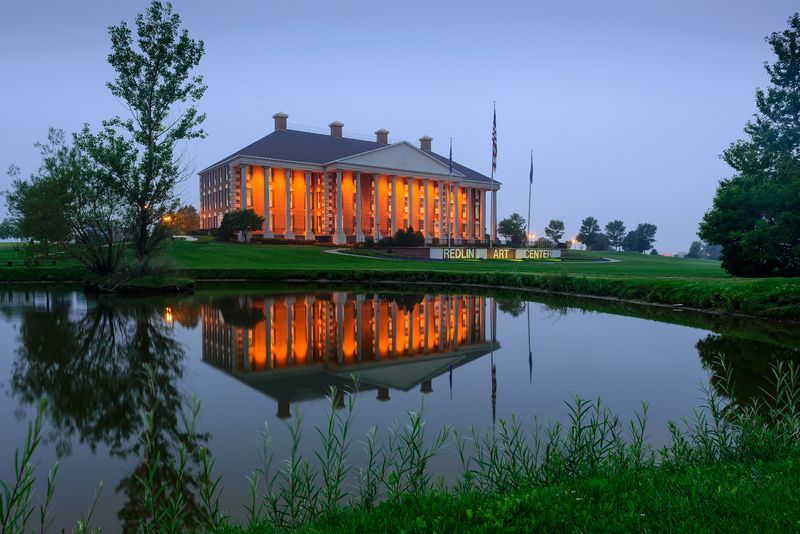
Terry Redlin’s paintings capture something essential about rural Midwestern life and the natural world of the prairies.
Address: 1200 Mickelson Drive, Watertown, SD 57201.
This dedicated gallery showcases the artist’s lifetime work exploring themes of wildlife, changing seasons, and disappearing rural landscapes.
Redlin grew up in South Dakota, and his intimate knowledge of the region infuses every brushstroke with authenticity.
His paintings often feature nostalgic scenes of small-town America, complete with country churches and family farms at twilight.
The artwork resonates particularly with visitors who remember when rural life looked much as Redlin depicted it.
Yet even younger viewers respond to the emotional warmth and careful detail in each composition.
The center’s architecture complements the artwork, creating peaceful spaces for contemplation.
Surrounding grounds feature walking paths and natural landscaping that echo the environments shown in the paintings.
Educational materials explain Redlin’s techniques and the conservation messages woven throughout his work.
The artist documented a way of life increasingly threatened by urbanization and industrial agriculture.
His paintings serve as both celebration and elegy for the Great Plains landscape and culture.
Visiting the center means experiencing regional identity expressed through visual art rather than artifacts or documents.
It’s a different kind of museum that preserves memory and meaning through creative interpretation.
9. Mellette House
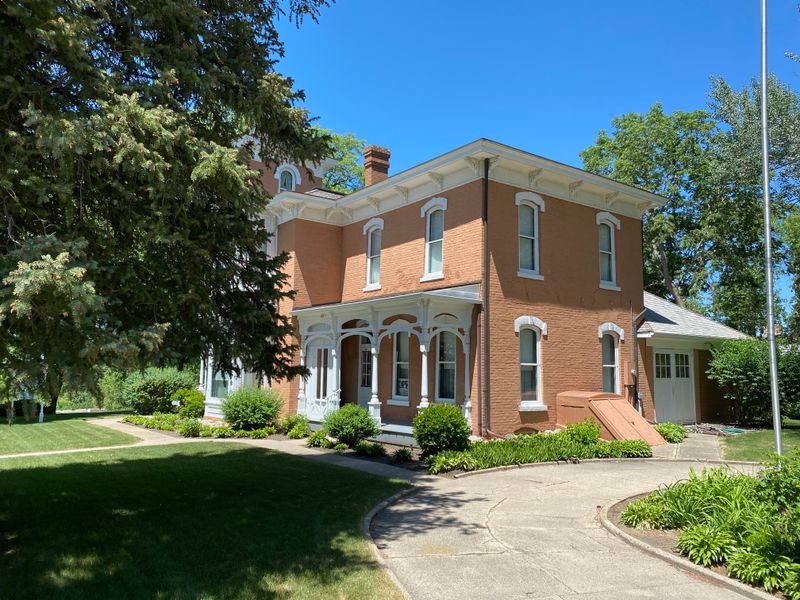
Arthur C. Mellette lived in this elegant home during South Dakota’s transition from territory to statehood.
Address: 421 Fifth Avenue NW, Watertown, SD 57201.
As the last territorial governor and first state governor, Mellette witnessed and shaped pivotal moments in regional history.
The restored residence reflects the lifestyle of a prominent political family during the late nineteenth century.
Period furnishings fill rooms where important decisions about the new state’s future were likely discussed.
Guided tours explain the political challenges of organizing territorial government and then establishing state institutions.
You’ll learn about the debates over the state constitution and the compromises required to achieve statehood.
The house itself demonstrates the architectural aspirations of successful families in growing prairie towns.
Victorian-era decorative details show how residents sought to bring cultural refinement to the frontier.
Personal items belonging to the Mellette family provide glimpses into their private lives beyond public service.
The site preserves stories about the practical challenges of governing sparsely populated territories with limited infrastructure.
Mellette’s later financial difficulties and personal struggles add human complexity to his public accomplishments.
The museum doesn’t present him as a flawless hero but as a real person navigating difficult circumstances.
Visiting means understanding statehood as a human achievement involving real people with strengths and weaknesses.
10. Ingalls Homestead
Generations of readers have loved Laura Ingalls Wilder’s books about pioneer childhood on the Great Plains.
Address: 20812 Homestead Road, De Smet, SD 57231.
This living history museum occupies the actual land where the Ingalls family established their claim and built their lives.
Visitors can explore reproduction buildings similar to those Laura described in her beloved Little House series.
The site brings literary memories to life while accurately representing the realities of homesteading.
Children especially enjoy hands-on activities like washing clothes with period equipment or helping with farm chores.
These interactive experiences reveal how much physical labor went into daily survival for pioneer families.
The prairie landscape surrounding the homestead looks much as it did when the Ingalls family arrived seeking opportunity.
Interpreters explain how the Homestead Act worked and why families like the Ingalls ventured into unsettled territories.
You’ll gain appreciation for the courage required to build new lives with minimal resources in an unfamiliar environment.
The museum connects literary heritage with authentic historical experience in a way few sites manage.
Fans of the books find visiting deeply moving, while others discover the stories for the first time.
The site honors both Laura’s literary legacy and the broader pioneer experience she documented so memorably.
It’s where imagination and history meet on the windswept South Dakota prairie.
Dear Reader: This page may contain affiliate links which may earn a commission if you click through and make a purchase. Our independent journalism is not influenced by any advertiser or commercial initiative unless it is clearly marked as sponsored content. As travel products change, please be sure to reconfirm all details and stay up to date with current events to ensure a safe and successful trip.
