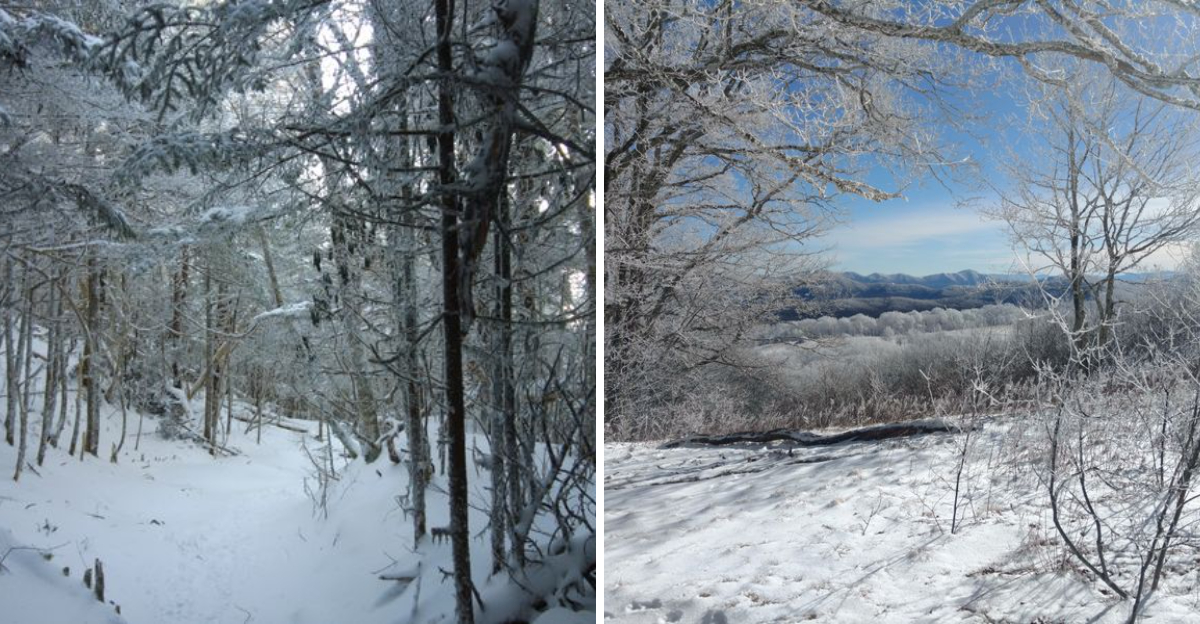
Snow softens North Carolina into a quiet canvas, and the best scenes often hide where few look.
You will find hush and space, not lift lines, and angles that turn simple paths into cinematic frames.
These spots favor patient eyes, steady footing, and a love for crisp air that tingles your cheeks.
Keep reading to map a winter route you will talk about long after the thaw.
1. Roan Mountain Balds, Appalachian Trail Access
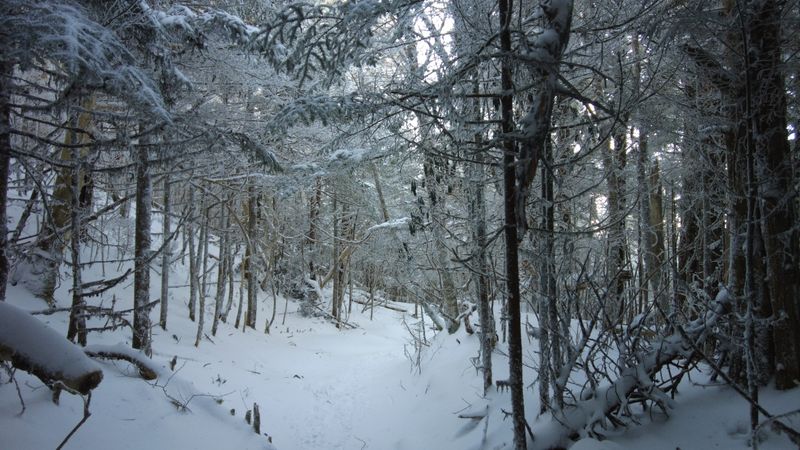
Roan Mountain’s high balds feel like an arctic meadow above the trees.
Wind brushes the snow into ripples, and the horizon unrolls past layered Blue Ridge ridges.
Your camera can breathe here, because the scene stays uncluttered and bright.
Access the Appalachian Trail from Carvers Gap, where the path climbs quickly into open country.
Frost clings to spruce edges, framing the bald with silver lace.
Footprints vanish overnight, so early starts reward you with untouched textures.
Clouds race low in winter, casting fast shadows that paint the snow in shifting bands.
Sunrise lights the grass blades with tiny prisms that pop in macro shots.
Wide lenses capture the sweep, while a short tele compresses distant ridges into a soft stack.
Tripods hold firm in the wind, so keep legs low and straps tight.
The Tennessee line sits just steps away, but your view still holds deep North Carolina identity.
Cold snaps can rim the fences and posts, adding graphic foreground lines.
Stay on trail to protect fragile vegetation beneath the crust.
Snow squalls arrive fast, so check forecasts before committing to the ridge.
Even in gray light, the bald’s subtle tones read beautifully on a neutral profile.
Golden hour warms the grasses and cools the shadows for balanced color.
When mist clears, distant valleys open like a map under glass.
Pack microspikes for icy patches near the stiles and steps.
Light layers help you move without overheating on the climbs.
Every crest offers another clean line, so keep walking until the composition clicks.
Address, Carvers Gap Trailhead, NC 261 at TN 143, Bakersville, NC.
2. Max Patch Winter Summit
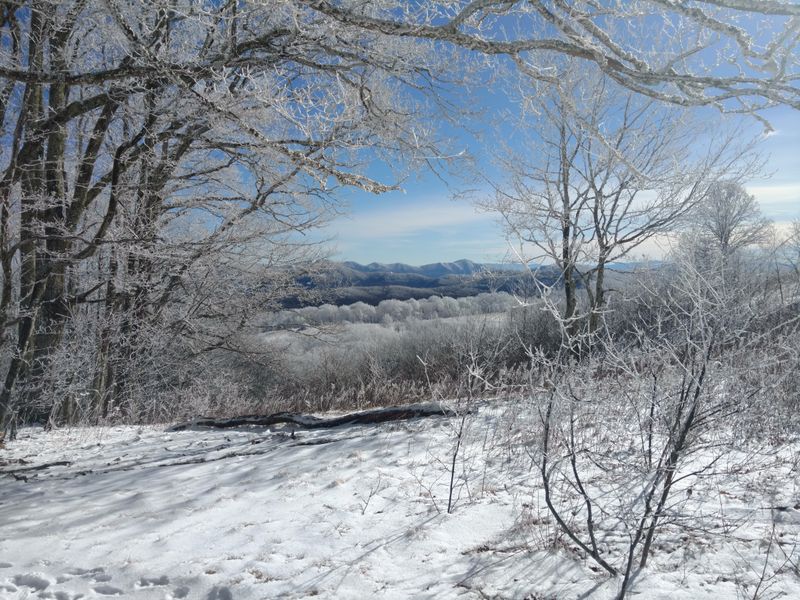
Max Patch trades summer picnics for winter quiet that stretches to the skyline.
The bald rises gently, giving you space to line up snow textures against rolling peaks.
Sunset or sunrise paints the ridge rim with soft fire, perfect for silhouettes.
The approach is straightforward, but drifts can smooth the path into flowing curves.
That makes leading lines easy, because every boot print becomes a guide.
Bring a cloth to brush frost from lenses when wind kicks up crystals.
Side light reveals crosshatch patterns in the frozen grass, which look great in close focus.
A low angle can hide the parking area and leave only sky and meadow.
Short videos of cloud shadows sweeping the ridge add motion to your set.
Long exposures round the clouds into soft streaks when the air moves fast.
North Carolina’s high country shows clear from here, especially after a cold front.
Keep an eye on the western horizon for color bloom even before the sun appears.
Tripod feet may need snow baskets to stay level on crust.
Warm gloves with thin fingertips help you handle dials without fumbling.
Pack out every trace, since the bald recovers slowly in winter.
In low fog, the summit becomes minimal and graphic, ideal for black and white.
On clear days, ridge layers stack into soft blues that reward polarizers sparingly.
Do a slow 360 to scout compositions before the best light hits.
Use a person in a bright jacket for scale if the frame feels too open.
Then step aside to let the landscape carry the story alone.
Address, Max Patch Parking Area, Max Patch Rd, Hot Springs, NC.
3. Craggy Gardens Icy Thickets
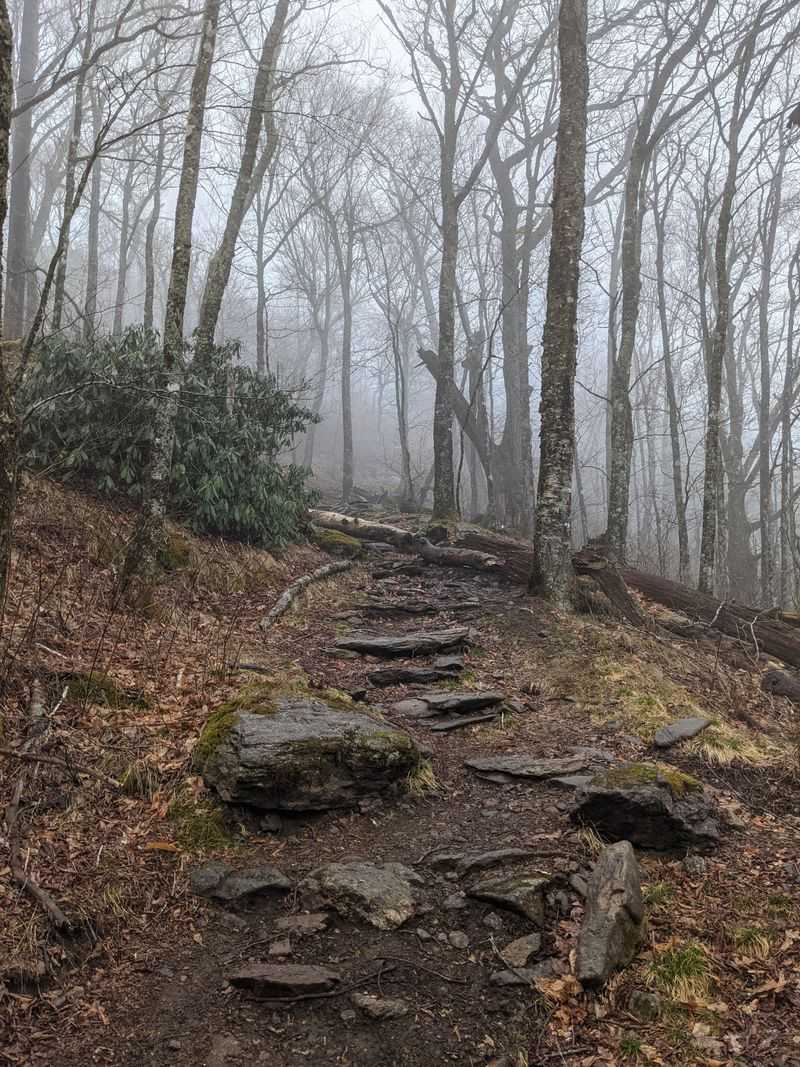
Craggy Gardens turns sculptural when rhododendron leaves curl and glaze with ice.
The tunnels feel storybook quiet, and your breath hangs in the still air.
Close focus reveals crystal edges that catch light like tiny mirrors.
When the Parkway gates are open, overlooks frame cloud seas that slide across valleys.
Even when partial closures happen, spur trails near the picnic area often hold snow.
Textures dominate here, so think detail shots as much as big views.
Bring a small reflector to bounce light into shadowed ice for clean highlights.
Use a shallow depth to isolate one frosted leaf against a soft gray backdrop.
Wind can load rime on exposed branches, adding feathery lines to your composition.
A light dusting turns roots and stone steps into bold patterns.
North Carolina’s Blue Ridge shows a cooler palette in winter, which grades nicely in RAW.
Check for trail ice where meltwater refreezes across the path.
Microspikes help you move slowly without slipping in narrow spots.
Cloud breaks often flash pink and then fade fast, so keep the camera ready.
Low sun pencils shadows across fresh snow, giving a quiet sense of depth.
Tripod legs should be shortened inside the thickets to avoid snagging branches.
A lens hood blocks stray flakes that drift sideways in light wind.
Work both macro and landscape to tell a fuller winter story.
Leave the plants untouched, since brittle limbs snap easily in the cold.
Step back toward trailheads before dark, because temps drop quickly.
Address, Craggy Gardens Visitor Center, Blue Ridge Pkwy, Barnardsville, NC.
4. Elk River Falls Ice And Flow
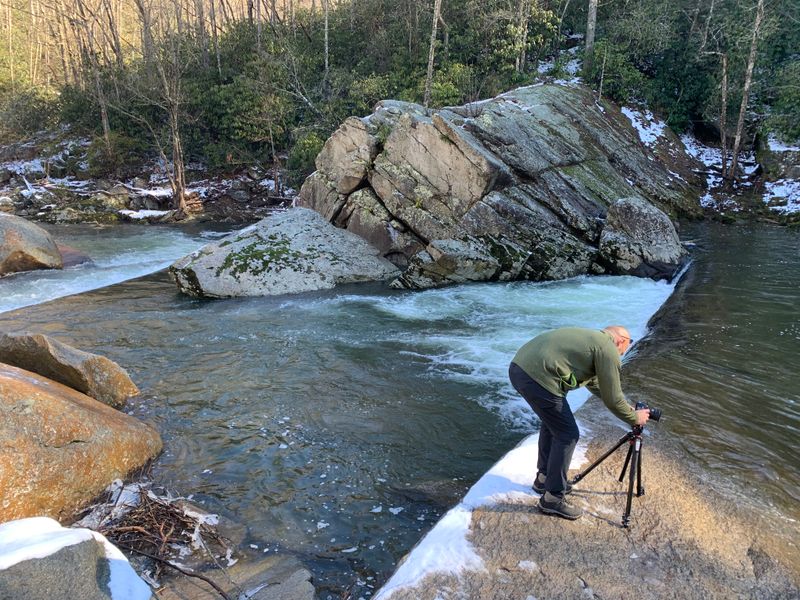
Elk River Falls barrels into a cold pool while ice crawls along the edges.
The contrast between rush and freeze gives you a classic winter waterfall scene.
Snow on boulders sets clean shapes that anchor your frame.
Use a sturdy tripod at a safe distance from slick rock near the water.
Fast shutters freeze the spray, while slower speeds smooth the white ribbons.
A circular polarizer tames glare on wet stone and deepens evergreen tones.
Footpaths can glaze over after thaw and refreeze, so step carefully.
Fog may rise from the plunge pool and hang as a fine veil.
Side compositions keep you out of the mist and protect your gear.
Neutral density filters help in bright snow when you want longer exposures.
This corner of North Carolina holds a wild feel even close to the trailhead.
Fresh snow on the banks cleans up busy backgrounds for simpler lines.
Bring a towel to dry the camera after bursts of spray push ashore.
In cold snaps, icicles braid along the lip and glisten at first light.
Midday shadows can go deep, so bracket to preserve texture in the dark rock.
Watch the forecast for water levels that change the mood from gentle to thunder.
Compose from the path to avoid unsafe scrambling on icy slabs.
Leave no trace and give the river edge a wide berth.
A minimalist shot of the ice wall can tell the whole story without the full drop.
Pack traction and warm layers for the walk back to the car.
Address, Elk River Falls Trailhead, Elk River Rd, Elk Park, NC.
5. Dry Falls Winter Curtain
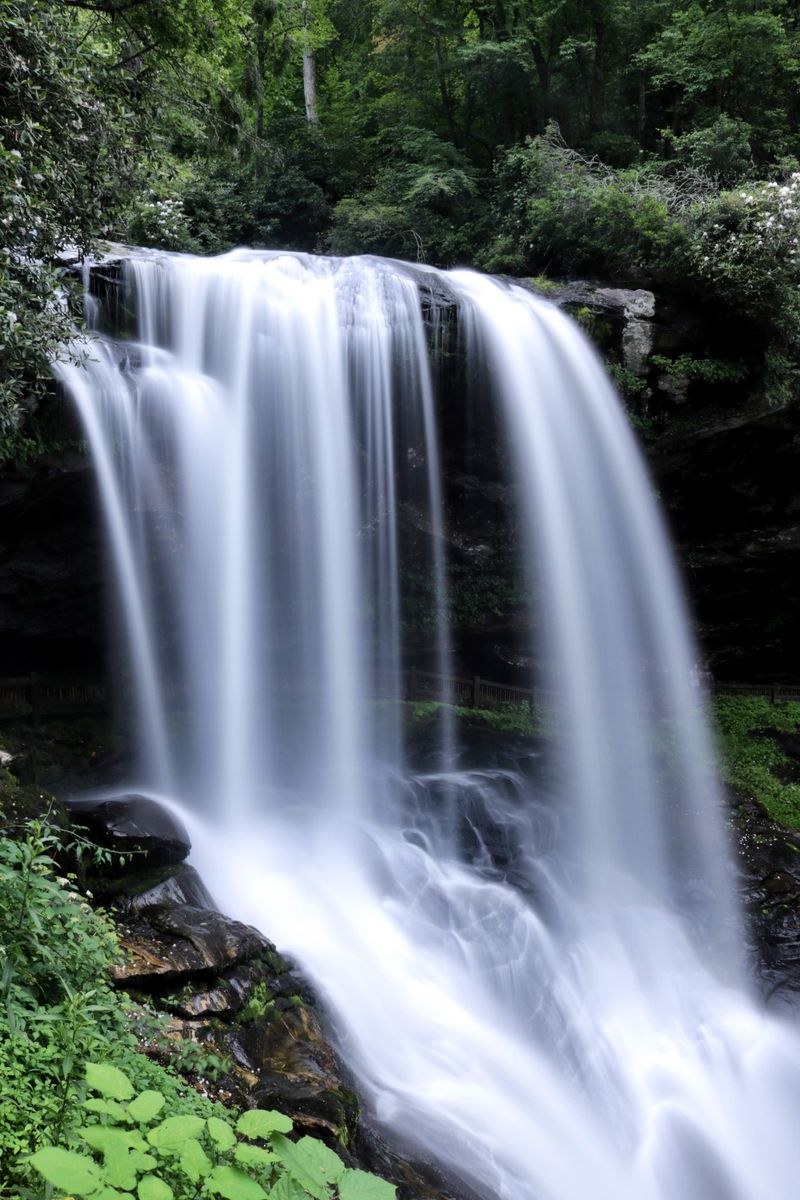
Dry Falls turns theatrical when cold air builds a shimmering curtain of ice behind the drop.
The walkway frames the scene from safe ground, giving steady angles in any weather.
Icicles grow in dense clusters that photograph well from a side position.
Spray drifts across the path, so lens cloths and hoods are essential.
Short exposures catch diamond sparkles, while longer ones blur the sheet into silk.
On quiet mornings, the rumble softens under snow and becomes a steady hum.
Compositions from the far end of the walkway show the scale of the overhang.
Reflections in small puddles add a second frame when the light sits low.
North Carolina’s Highlands area sees frequent freeze thaw cycles that sculpt new patterns daily.
Guard rails frost over and create useful leading lines toward the fall.
Watch for drips forming circular dimples in slush that read as fine detail.
Wear waterproof layers, because mist collects on jackets quickly.
Crowds thin in cold, leaving room to wait for perfect cloud cover.
Back up to include snow draped evergreens for a balanced composition.
Silence returns fast when visitors move on, so record a short ambient clip.
Polarizers can be too strong here, so use a light touch to keep reflections natural.
Tripod feet should be placed well inside railings to avoid slick edges.
A vertical frame accentuates the fall’s height and the icicle columns.
In brighter moments, spot meter off midtone rock to hold detail.
When you leave, scan the walkway for black ice hiding under powder.
Address, Dry Falls, 2468 Franklin Rd, Highlands, NC.
6. Looking Glass Falls Roadside Frost
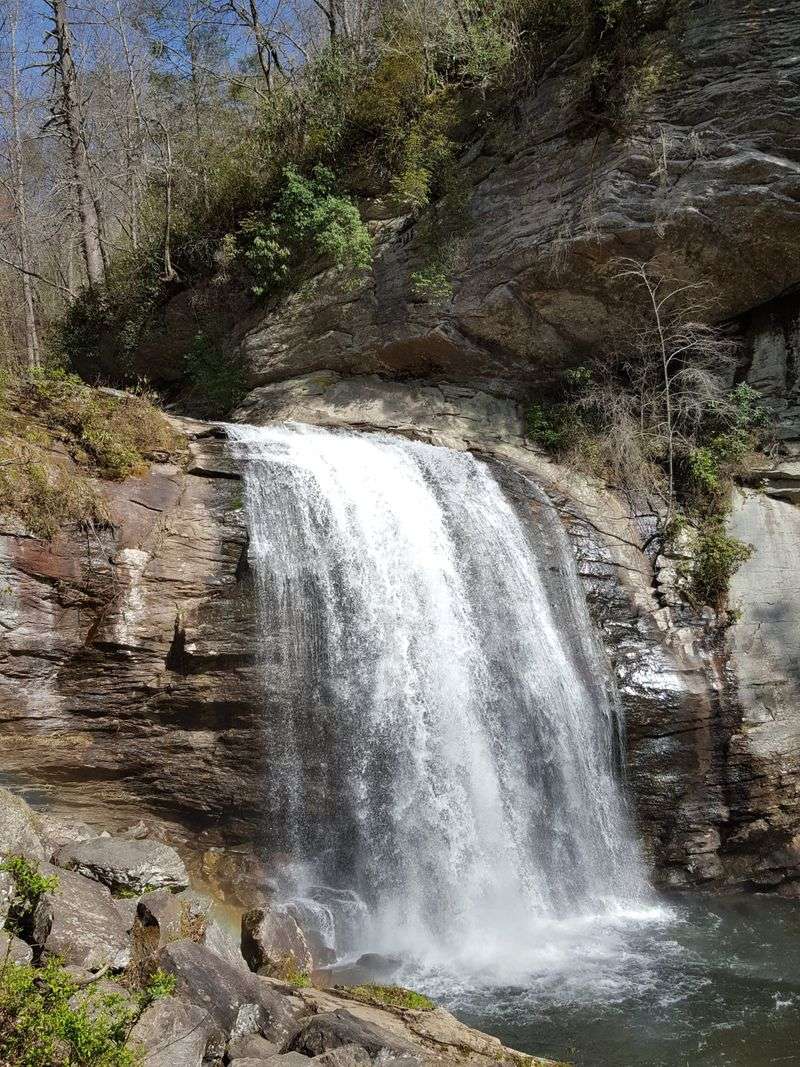
Looking Glass Falls becomes a crisp, accessible showpiece when temperatures dip.
The roadside viewpoint lets you set up fast before light shifts.
Snow on the stone steps and rails frames the descent to the lower platform.
A handheld shot works if wind discourages tripod use on the overlook.
Spray can freeze on the railing, so gloves with grip help a lot.
Cut glare on the pool with a polarizer to bring out green depths.
Slow shutter blur gives a soft pillar of water that contrasts with icy edges.
In low cloud, tones turn pearly and flatter the waterfall’s clean shape.
Early and late hours reduce contrast on the bright cascade.
The forest’s hemlocks and hardwoods offer texture even without leaves.
North Carolina travelers love this spot in every season, but winter adds calm.
A tight crop isolates the drop, while a wide view sets it in context.
Bring a microfiber to clear fine mist that settles on the front element.
Ice collars the boulders near shore, creating tidy foreground interest.
A vertical orientation can simplify the frame when the scene feels busy.
If conditions allow, step down to the lower platform for a centered view.
Avoid slick rock near the waterline and keep to rails.
Compose quickly, then wait for breath to drift away from the lens.
Leave space above the falls to show the rock amphitheater.
Walk back slowly, because shaded patches stay icy after sun.
Address, Looking Glass Falls, 3360 Pisgah Hwy, Pisgah Forest, NC.
7. Panthertown Valley Snow And Stone
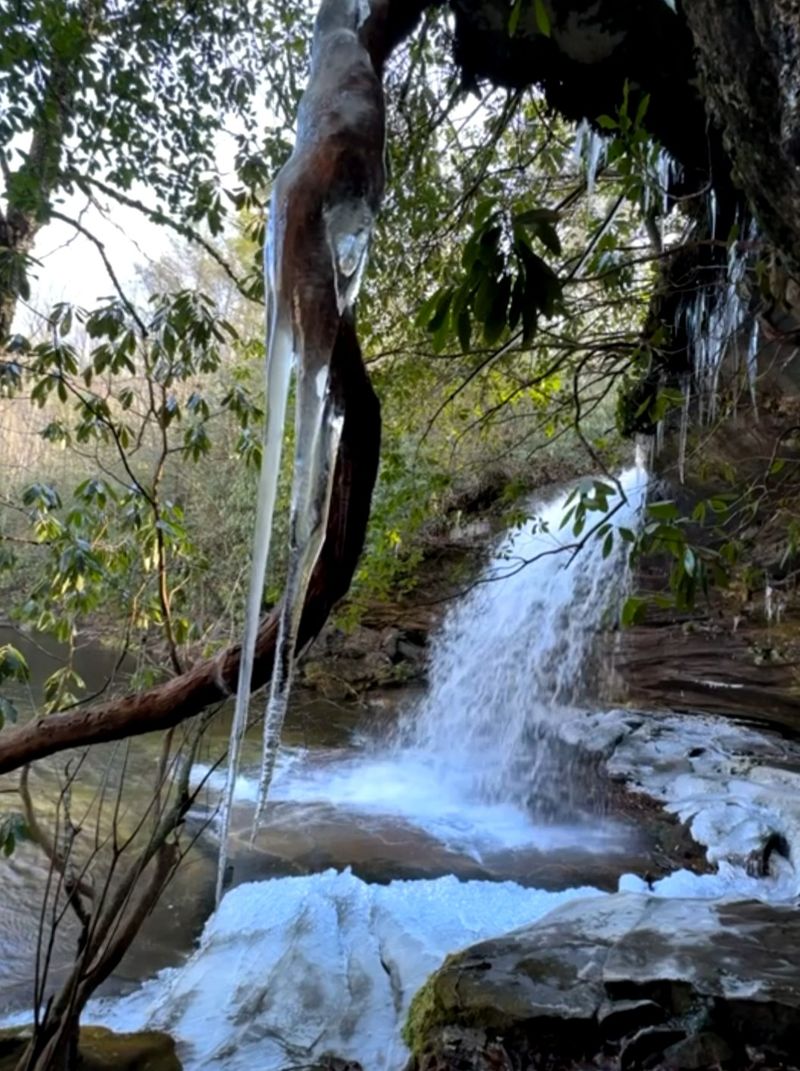
Panthertown Valley hides a maze of trails where snow settles into a serene hush.
Granite domes rise above the trees and wear white like soft caps.
Streams slow and form glassy shelves that split reflections into shards.
Choose a route toward Salt Rock Overlook for a sweeping first vantage.
The scene spreads wide, with layered cliffs and forest quilting the valley.
From there, pick side trails to smaller falls that glaze with clear ice.
Trip planning matters, because intersections can be subtle under powder.
GPS tracks and printed maps help you stay oriented between landmarks.
The backcountry calm rewards careful listening and steady steps.
Textures steal the show, from lichen freckles to snow pressed fern fronds.
North Carolina wilderness feels close here, even near the access roads.
Golden light filters through bare branches and lifts the cool palette.
Telephoto compression turns the domes into layered fans of rock.
Wide angles love the granite slabs where snow thins to reveal warm tones.
Pack traction and extra layers for long pauses at overlooks.
Tripods sit well on flat stone if you brush away loose snow first.
Water crossings may ice at the edges, so probe with poles before stepping.
Minimalist frames emphasize lines rather than busy detail.
Keep an eye on time, because winter dusk arrives sooner than you expect.
Step softly to leave the quiet intact for the next visitor.
Address, Salt Rock Parking Area, Salt Rock Rd, Cashiers, NC.
8. Linville Falls Winter Gorge

Linville Falls cuts through a rugged gorge that gains extra drama in winter.
The overlooks stack along the rim, each with a different angle on the churning water.
Snow trims the cliff edges and defines the canyon lines with stark clarity.
From Erwins View Trail, the river’s curves lead your eye through the composition.
A fast shutter holds detail in the whitewater without losing texture.
In colder spells, icicles spear down the walls and mirror the falling flow.
Low cloud simplifies color and makes the rock tones read stronger.
Tripods help in dim light under the overcast canopy.
Watch footing on steps that shadow all day and keep patches icy.
Telephoto frames isolate the plunge, while wides include the gorge amphitheater.
North Carolina’s high gorge country feels remote once the trail quiets.
Start early to let the first light rim the cliff tops gently.
Bracketing protects detail in snow against dark forest bands.
Fallen needles on snow add warm specks that photograph well at close range.
Wind can push mist up the walls, so wipe down gear between shots.
Side compositions from Chimney View show depth through layered ledges.
Consider a vertical frame to emphasize the canyon’s height.
Stay within railings because edges can undercut beneath snow.
Carry a simple kit, since climbs feel steeper in cold air.
Leave time to walk back before the blue hour dims the trail.
Address, Linville Falls Visitor Center, Blue Ridge Pkwy, Linville Falls, NC.
9. Graveyard Fields Snowy Meadows

Graveyard Fields swaps autumn crowds for soft, wintry meadows and quiet water.
Snow smooths the open flats and turns shrubs into delicate silhouettes.
The river steps through small cascades that glass over in cold snaps.
Boardwalks guide you through without crushing the fragile ground.
Use the planks as simple leading lines into the white open space.
Fog often drifts low and makes every color whisper.
Macro shots of hoarfrost on grasses feel like tiny sculptures.
Wide frames show the basin’s gentle bowl with ridges rising in layers.
When a thin sun appears, highlights skim the meadow and glow warm.
A neutral profile preserves subtle detail in the snow’s surface.
North Carolina’s Parkway highlands lean quiet here in deep winter.
Boot traction is helpful where slush refreezes in shade.
Tripods stabilize long exposures on the cascades without crowd pressure.
Keep an eye on the sky, because weather can flip from clear to gray fast.
Side trails reveal pockets of ice framed by bent reeds.
Compose with negative space to keep the mood calm and open.
Protect lenses from breath fog when you pause in the cold.
Pack layers that vent, since the basin can feel warmer than ridgelines.
Exit before dusk if fog thickens and trail markers blur.
Leave the meadow tidy and undisturbed for the next fresh snow.
Address, Graveyard Fields Overlook, Blue Ridge Pkwy, Canton, NC.
10. Alleghany County Quiet Roads
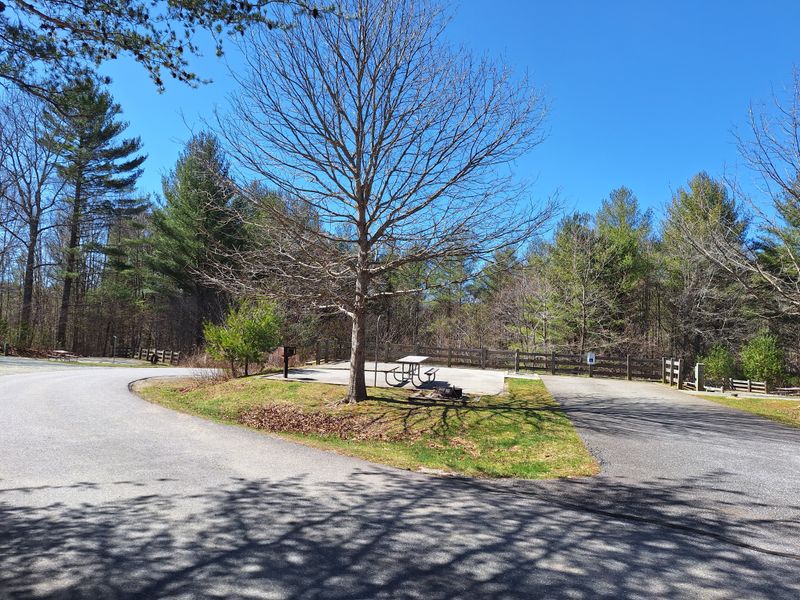
Alleghany County’s backroads turn into a calm gallery after a fresh snowfall.
Fences trace gentle curves that lead your frame toward distant barns.
Wind breaks pile snow in soft drifts that photograph as simple shapes.
Early light makes long shadows that stripe the road in narrow bands.
Look for hill crests where power lines disappear for a cleaner skyline.
Park fully off the pavement and keep safety first on quiet routes.
Barns wear thin caps of snow that glow against weathered wood.
Minimalist compositions let the farm grid become a quiet pattern.
Cloudy days mute color and keep details smooth across the fields.
Watch for plowed berms that add a bright edge to the lane.
North Carolina country scenes feel timeless when the roads empty out.
Telephoto lenses compress rolling land into soft waves.
Wider angles tell the story of a road wandering into white distance.
Tripods are optional, since exposures stay manageable in open light.
Fresh flakes on fence wire create tidy lines that pop at close range.
Keep footsteps off pristine ditches if you want untouched foregrounds.
If fog settles, let it erase detail for a gentle, painterly look.
Respect private property and shoot from public rights of way.
As snow resumes, capture motion as streaks across the frame.
Wrap up before roads refreeze and conditions shift quickly.
Address, Main St and US 21, Sparta, NC.
Dear Reader: This page may contain affiliate links which may earn a commission if you click through and make a purchase. Our independent journalism is not influenced by any advertiser or commercial initiative unless it is clearly marked as sponsored content. As travel products change, please be sure to reconfirm all details and stay up to date with current events to ensure a safe and successful trip.
