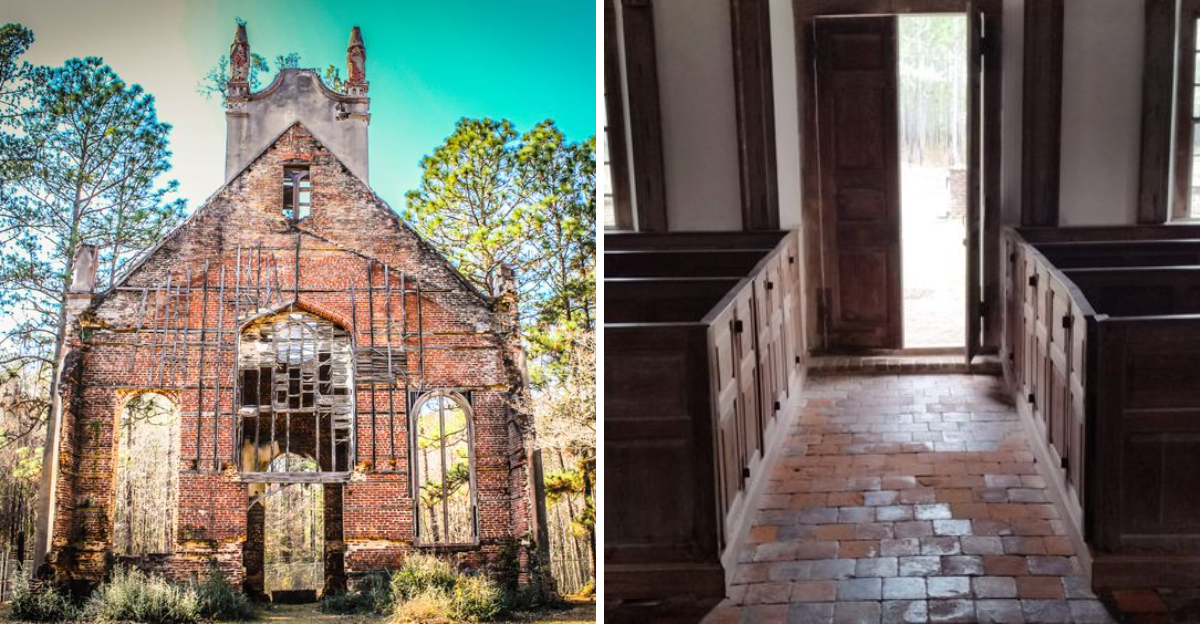
South Carolina hides timeworn sanctuaries where brick and moss hold stories that your lens will love.
This guide leads you through the Lowcountry and beyond, where you will find graceful arches, weathered walls, and live oaks casting lacey shadows that change by the minute.
Photographers return in every season because the light here feels cinematic and the textures reward patient framing.
I spent months verifying access tips, seasonal nuances, and preservation notes so you can plan with confidence, always prioritizing care for history and respect for these fragile places we visit.
The architectural styles represented, ranging from the classic Georgian grandeur of Old Sheldon to the unique tabby construction of St. Helena, offer a rich tapestry of the state’s early history and building materials.
These ruins are the physical remnants of colonial parish life, established when the region was a bustling center of rice and indigo cultivation.
The decay visible today, the missing roofs, the fire-scarred brick, the tabby crumbling back into shell, tells a powerful story of war, economic upheaval, and nature’s slow reclamation.
Understanding this context enriches the photographic process, transforming a simple architectural shot into a deep historical narrative.
Navigating these rural and sometimes remote sites requires preparation, but the solitude and profound beauty of these locations make the effort essential for any Lowcountry photographer.
1. Old Sheldon Church Ruins, Yemassee
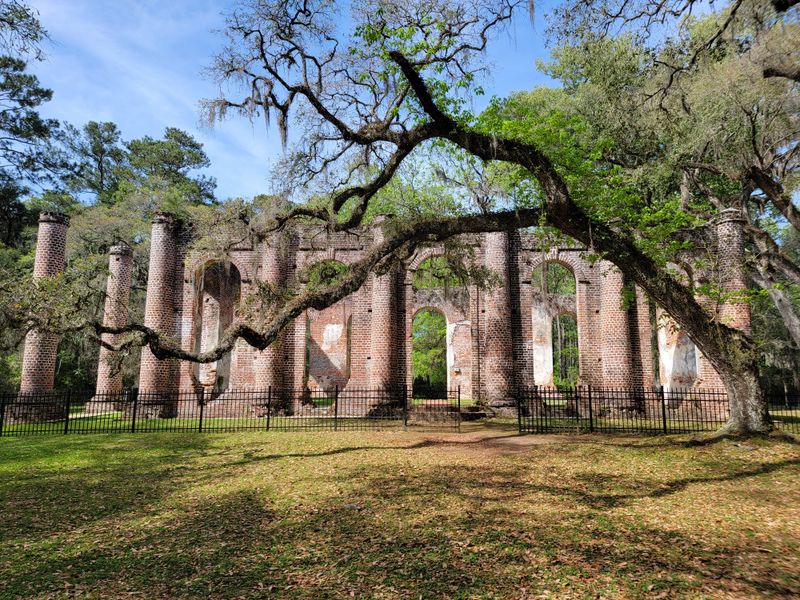
Old Sheldon Church Ruins sit quietly among live oaks where light filters through brick arches that look sculpted by time.
You will want to arrive early because the morning glow makes the columns feel warm and dimensional.
Tripods are allowed on the public grounds, but be courteous around other visitors and keep gear compact.
Compositions work well from low angles that stack arches against canopies while keeping the horizon level.
Longer lenses isolate brick details and chiseled inscriptions that otherwise fade into the background.
After rain, puddles collect in divots and create reflective symmetry that reads beautifully in vertical frames.
Respect the posted signs and avoid stepping onto fragile remains since the site is an active historic churchyard.
Seasonally, camellias and azaleas add soft color notes that complement the red brick.
Winter light can be crisp and blue, so set a warmer white balance or use a small gold reflector to tame tones.
Wildlife occasionally wanders near the edge of the oaks which can add a candid moment if you are patient.
Consider bracketing exposures because the interior shadows run deep compared to the bright canopy.
Weekday afternoons tend to be quieter, which helps when you need clean frames for prints.
The texture of mortared joints rewards macro work that focuses on pattern, lichen, and age.
Locals sometimes tell stories of spectral carriage wheels, but treat those as legend rather than verified history.
Pack bug spray in summer and tuck a microfiber cloth for humidity on front elements.
South Carolina weather shifts quickly, so a light rain shell for you and a lens hood for your camera help.
Nearby parking is limited, and you should avoid blocking driveways or access lanes.
Blue hour lingers here and adds a nostalgic mood that flatters the brick silhouettes.
Address: Old Sheldon Church Road, Yemassee, SC 29945
2. Chapel of Ease Ruins, St. Helena Island
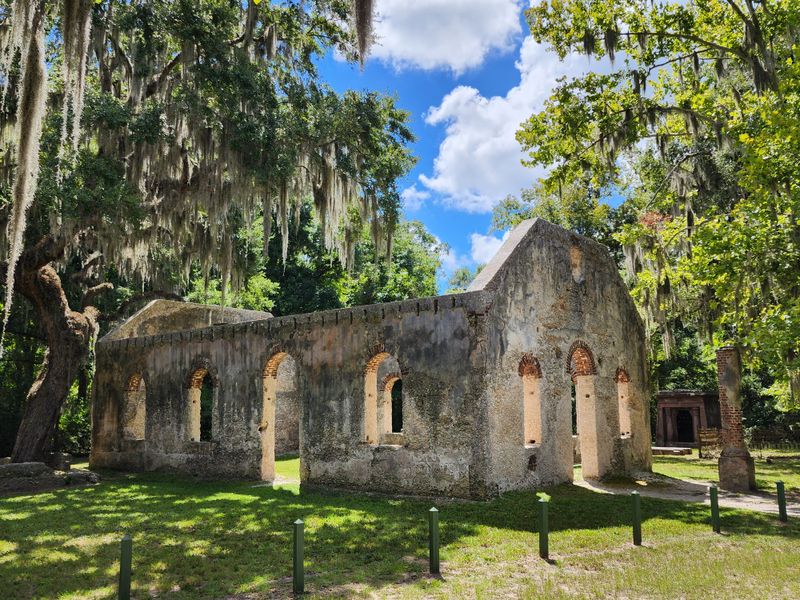
The Chapel of Ease Ruins on St. Helena Island show the Lowcountry craft of tabby, a shell rich material that glows in angled sun.
You will notice tiny oyster shells embedded in the walls which add sparkle under raking light.
Early or late hours help because the coast tends to blast midday frames with contrast.
Tabby can crumble under pressure, so set up off the remains and keep stands on firm ground.
Use a polarizer gently to manage glare without removing the natural sheen of shell.
Paths around the ruin form leading lines that work nicely with a 24 millimeter prime.
Spanish moss drapes like soft curtains that invite layered compositions across foreground and background.
A headlamp with a warm setting helps during blue hour without overpowering delicate texture.
Birdsong and breezes add a calm rhythm that encourages slow, careful framing.
As tides change nearby, humidity thickens and can fog glass, so keep caps handy.
Respect private property signs that border parts of the approach and stay within public areas.
Local lore speaks of gentle voices at night, but categorize that as legend rather than documented fact.
Winter brings clear skies that lean cool, so bump Kelvin a touch for balanced color.
In spring, new growth softens edges and reduces harsh shadows across the tabby.
Photographers who shoot infrared often find the moss and palmettos transform into airy silver.
Focus stacking close details can reveal shell patterns that standard depth misses.
Tripods with spiked feet handle sandy patches better than rubber alone.
This coastal corner of South Carolina rewards patience and quiet steps as you work.
Address: Lands End Rd, St Helena Island, SC 29920
3. Pon Pon Chapel of Ease Ruins, Jacksonboro
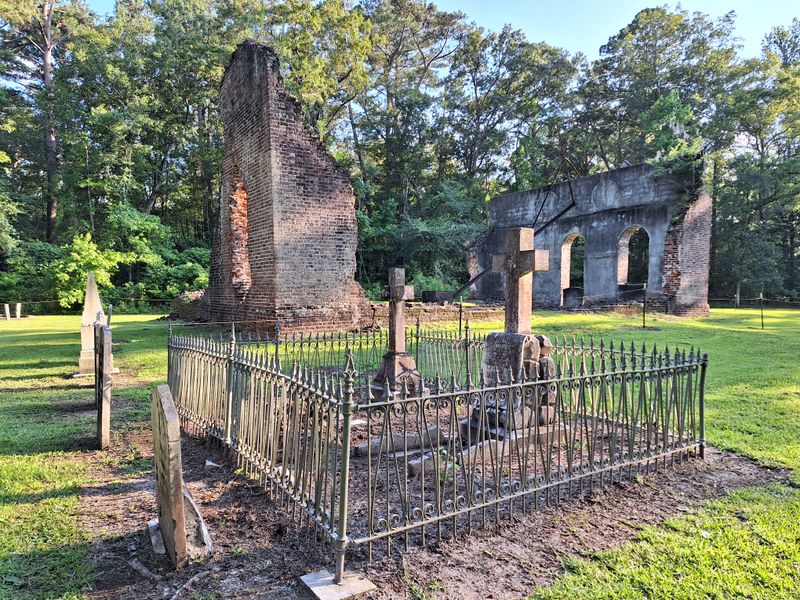
Pon Pon Chapel of Ease Ruins stand in a serene clearing where brick fragments meet soft leaf litter and filtered sun.
You can trace the outline of the old chapel from foundation hints that invite wide views and careful framing.
Golden hour reaches sideways here, so a lens hood helps reduce flare and ghosting.
Consider a three shot bracket to tame highlights in the sky that peek through pines.
The site is quiet most weekdays which gives time to explore angles without rushing.
Bring a cloth for dust because the path sometimes lifts fine grit that settles on filters.
Macro shooters will love charred brick seams that hold intricate textures and color shifts.
Watch your footing near roots and avoid leaning on fragile walls that continue to weather.
Legends mention a fiery past and whispered sightings, and you should label those as unverified stories.
Use a 35 millimeter lens to keep distortion low while capturing the full facade.
Overcast days are excellent because the forest canopy acts as a giant softbox.
Pack a small stool if kneeling on pine needles is not your thing during long sessions.
Color grading with gentle contrast keeps the mood natural and grounded in place.
Sounds of insects provide a steady backdrop that can help with timing long exposures.
The ruin lies within rural South Carolina, so cell service can be spotty, and offline maps help.
Look for diagonal lines in fallen branches to introduce dynamic energy into otherwise quiet scenes.
A simple hand sweep clears small distractions without disturbing the setting.
Twilight silhouettes the remaining walls and creates a dignified profile against the treeline.
Address: Park St, Jacksonboro, SC 29438
4. Biggin Church Ruins, Moncks Corner
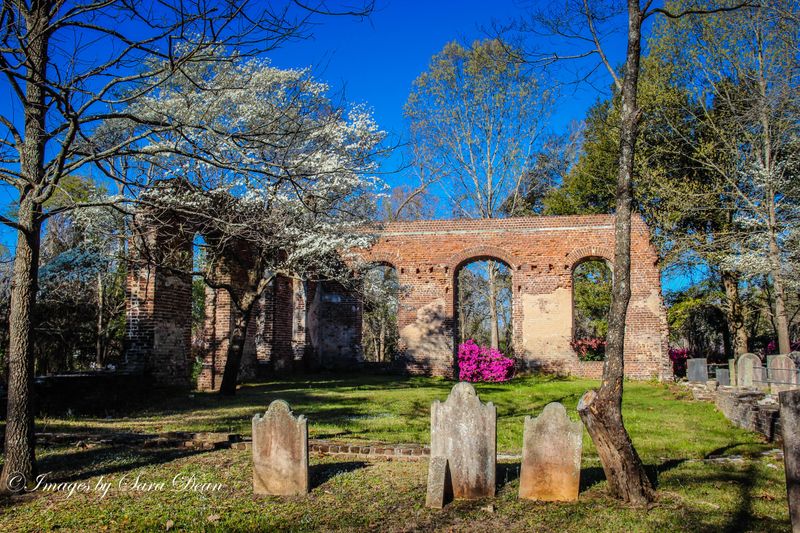
Biggin Church Ruins rise taller than you expect with arches that frame sky and treetops in handsome symmetry.
You will find broad sightlines that reward panoramic stitches from a sturdy tripod.
A 50 millimeter lens captures proportions naturally while still letting details breathe.
Mossy patches and ivy softening the brick make gentle color accents for close studies.
Arrive near sunset when the field glows and the walls catch warm sidelight.
Wind can tug at leaves and create motion blur, so raise shutter speed or time lulls.
Respect barricades and do not climb, since preservation teams monitor stability.
Compose from corners to pull leading lines toward the central arch with pleasing depth.
Use manual focus for edges because autofocus sometimes hunts against patterned brick.
Cloud layers frequently paint subtle gradients that look lovely with soft contrast curves.
Local history notes fires and rebuilding cycles, though much of the original footprint remains readable.
Pack bug protection and neutral shoes that blend into the scene for self portraits.
Nights bring cooler air and clearer skies that suit minimalist silhouettes.
If you shoot video, record room tone to capture the hush that defines the setting.
This corner of South Carolina balances accessibility with a sense of calm that inspires careful work.
Parking is nearby but keep valuables out of sight to maintain focus on your shoot.
After rain, subtle reflections collect near the entry and mirror the arch shapes.
Leave no trace and brush off debris so the next visitor experiences the same quiet beauty.
Address: Wadboo Rd, Moncks Corner, SC 29461
5. Prince Frederick’s Chapel Ruins, Plantersville
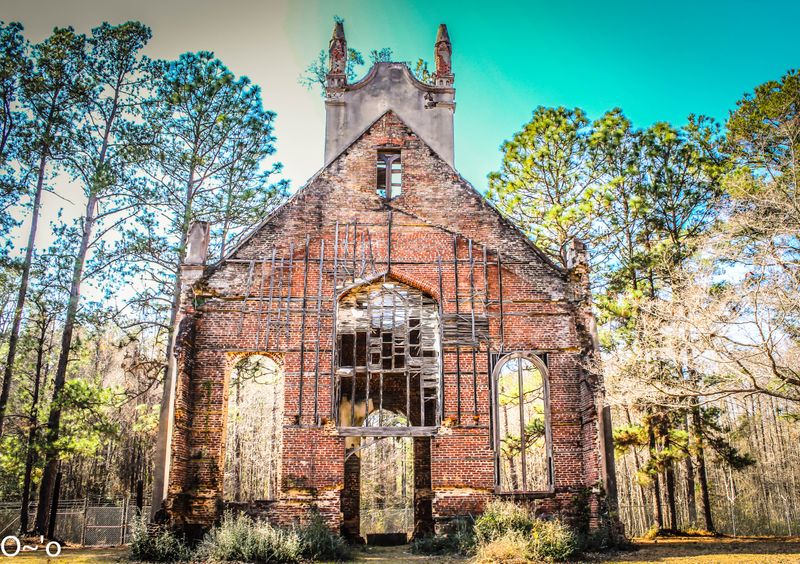
Prince Frederick’s Chapel Ruins linger beside the blackwater rivers where fog often drifts through the trees at dawn.
You can frame the remaining walls against cypress silhouettes for a moody Lowcountry study.
Use a tripod with a low center column to keep lines straight while working near uneven ground.
A gentle polarizer helps control glare on damp brick and leaves after misty mornings.
Open shade protects color, so wait for clouds when the sun turns harsh.
Textures pop at 85 millimeters where compression simplifies busy backgrounds.
Angle slightly to avoid converging verticals and correct the rest in post carefully.
Shoes with grip make a difference because leaf litter can be slick under dew.
Local accounts note multiple phases of construction and decline, with exact dates varying by source.
Treat unsourced claims about hidden burials as rumor unless confirmed by signage or archives.
Bring a microfiber cloth because fog beads on glass and lifts contrast unpredictably.
Quiet minutes before sunrise often deliver soft pink air that flatters brick tone.
South Carolina mornings can turn humid quickly, so store lenses in a breathable pouch.
Listen for woodpeckers which add gentle rhythm if you record ambient audio for reels.
Work the site clockwise to discover sightlines that layer trunks and arch fragments.
When the sun breaks, try backlight and let the edges rim glow for a timeless feel.
Leave small natural elements in place and avoid staging that alters the scene.
Plan an exit before dark because trails here feel remote and navigation is minimal.
Address: 6101 N Fraser St, Plantersville, SC 29585
6. St. James Santee Brick Church Ruins, McClellanville, Charleston County
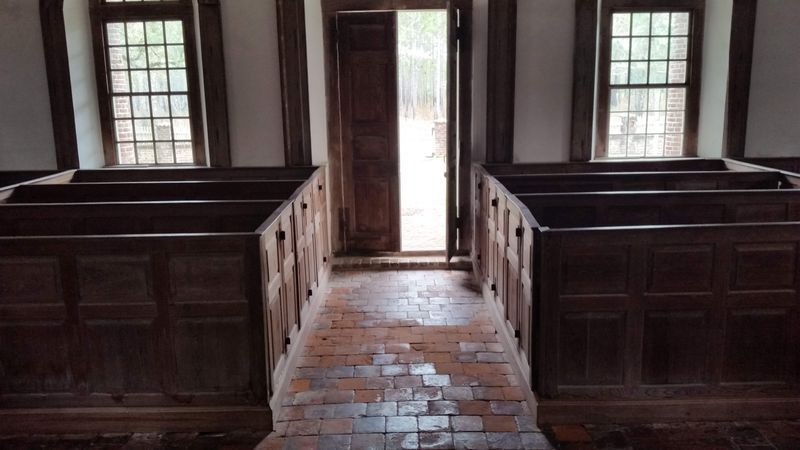
The St. James Santee Brick Church Ruins, often known locally and affectionately as the Brick Church at Wambaw, stands as one of the most magnificent and isolated colonial ruins in the South Carolina Lowcountry.
Consecrated in 1768, this stately structure is a prime example of high Georgian architecture, built by French Huguenot settlers who were prominent in the successful rice planting economy of the Santee River area.
The church features a grand, perfectly symmetrical design with a massive brick portico and distinctive Palladian doors and windows, elements that elevate its aesthetic far beyond that of a simple country chapel.
After the Civil War, the church fell into decline as the rice economy collapsed and the community shifted, and it was ultimately abandoned, leaving behind the spectacular, roofless brick shell that photographers seek out today.
The thick, weathered walls and towering archways create powerful geometric compositions, beautifully juxtaposed against the quiet, rural landscape near McClellanville, offering a serene and dramatic subject for historical and architectural photography.
Its isolation is a key photographic asset, ensuring minimal foot traffic and providing the solitude necessary for long, uninterrupted creative sessions.
Look for the sharp, dramatic shadows cast by the deep recesses of the entry arches, especially in low, sidelight, which can be striking for black-and-white conversions that emphasize texture.
The remote setting guarantees a profound silence, broken only by the sounds of the surrounding forest, which should be captured for ambient audio if you are shooting video.
The enduring presence of the church in this secluded corner of the Lowcountry is a testament to its historical significance and the resilience of colonial craftsmanship.
Address: Old King’s Hwy, McClellanville, SC 29458
Dear Reader: This page may contain affiliate links which may earn a commission if you click through and make a purchase. Our independent journalism is not influenced by any advertiser or commercial initiative unless it is clearly marked as sponsored content. As travel products change, please be sure to reconfirm all details and stay up to date with current events to ensure a safe and successful trip.
