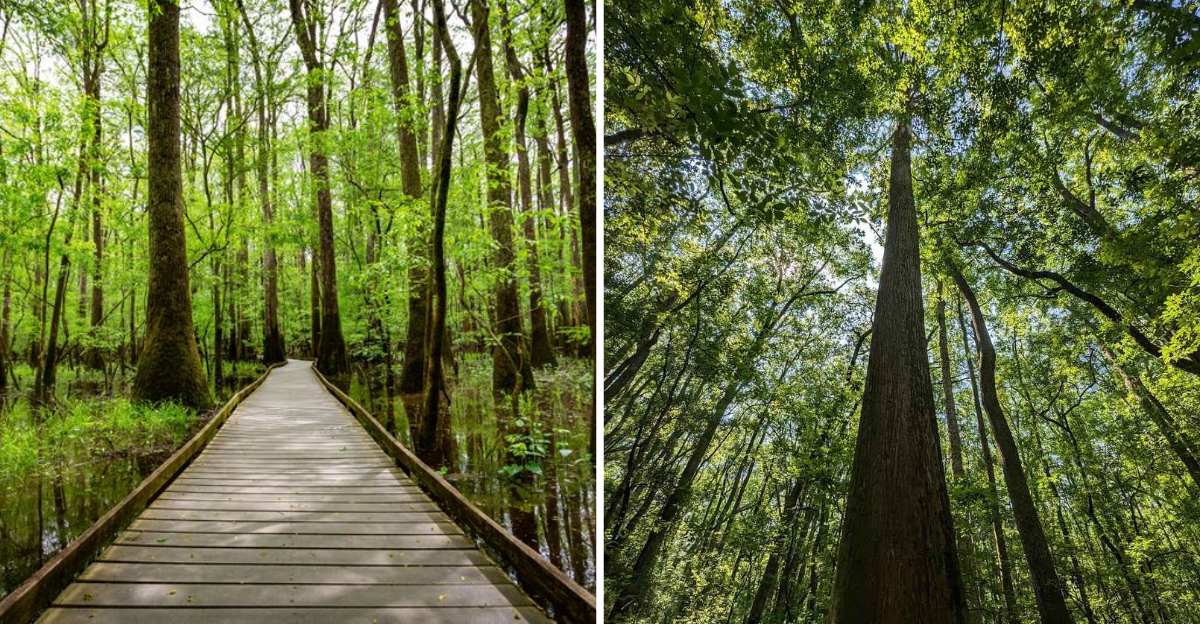
Towering trees rise above a South Carolina floodplain where the sounds change dramatically after sunset. Barred owls call through the canopy, frogs echo across the water, and the forest takes on an atmosphere that can feel surprisingly mysterious.
I have to admit, the idea of walking beneath trees more than 160 feet tall while listening to wildlife after dark is fascinating. The landscape protects one of America’s most remarkable remaining old-growth forests, with enormous hardwoods, cypress trees, and winding waterways.
The strange nighttime atmosphere has inspired stories about the forest, including an old legend that imagines cypress knees as tiny woodland creatures. Yet the natural sounds alone are enough to make an evening visit memorable.
What I find most interesting is that the mystery doesn’t require a ghost sighting. The calls of owls, the movement of water, and the shifting shadows create an experience that feels extraordinary without adding anything supernatural.
Giants That Make You Feel Small
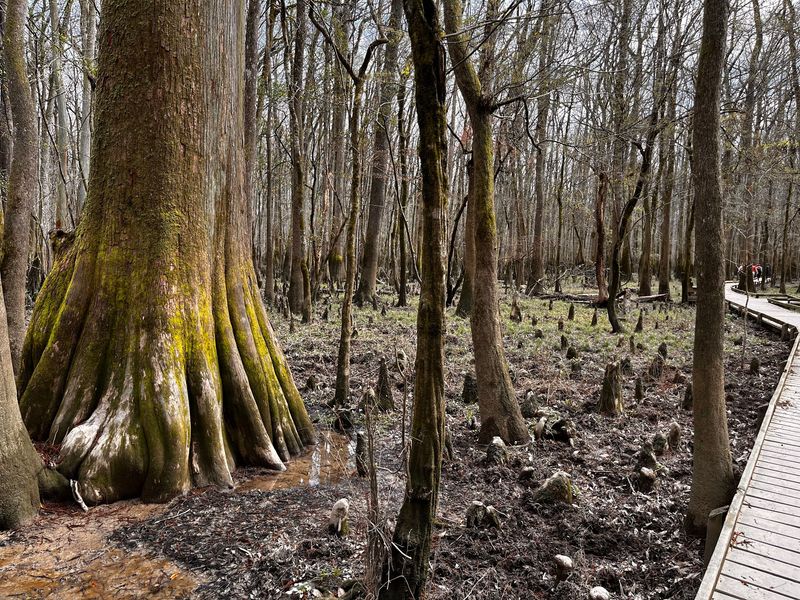
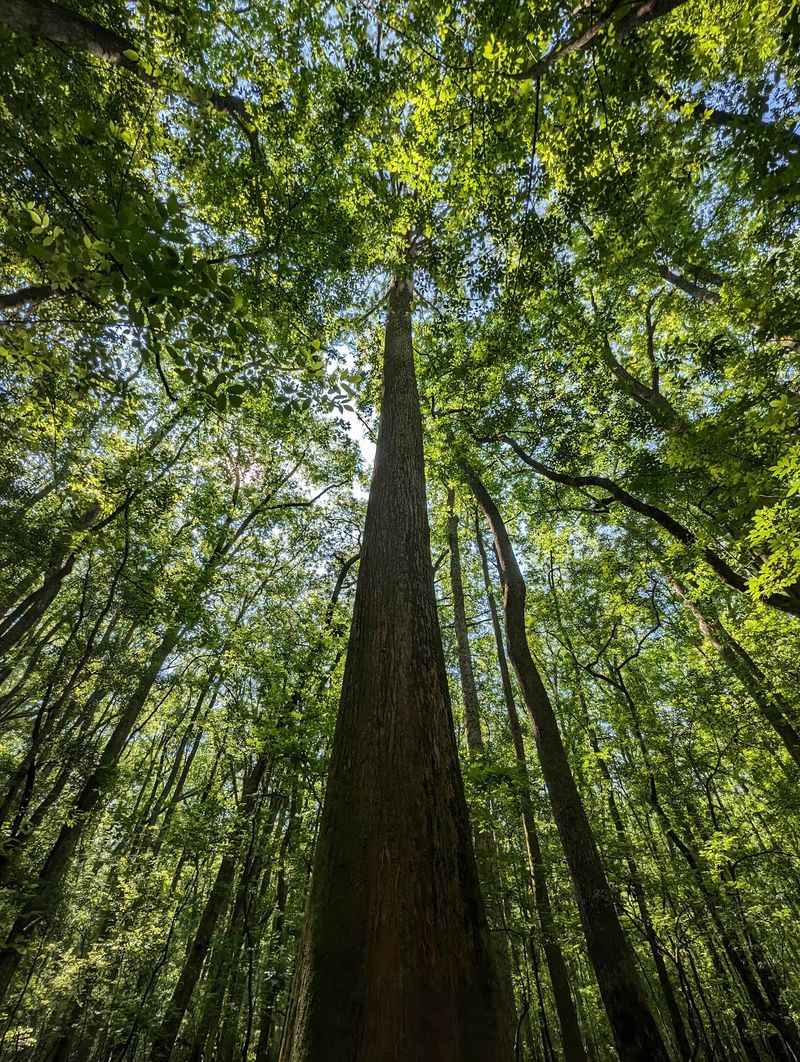
Looking up at the park’s towering trees gives visitors a remarkable sense of the forest’s scale. Congaree protects the largest intact stretch of old-growth bottomland hardwood forest left in the southeastern United States, and some of the loblolly pines climb past 160 feet.
Foresters call this one of the highest temperate deciduous canopies anywhere in the world. Standing under it does something odd to your sense of scale.
The Boardwalk Loop Trail is the easiest way to see it, an elevated wooden path that carries you over sloughs and muck without soaking your shoes. I walked it slowly, stopping at the bald cypress and water tupelo whose flared trunks look like they were poured rather than grown.
Cypress knees poke up everywhere, knobby little shapes that gave rise to more than a few local legends. When the floodplain fills, the whole scene doubles itself in the water.
A fun bit of trivia: the park holds a remarkable cluster of champion trees, meaning the largest known individuals of their species. That is not marketing language, it is measured and recorded.
Here is my practical advice. Go early or late in the day when the light slants sideways through the trunks, bring bug spray between May and September, and give yourself at least ninety minutes for the loop instead of rushing it.
The forest rewards people who stand still. Every time I paused, something moved that I had not noticed before.
When the Owls Start Talking
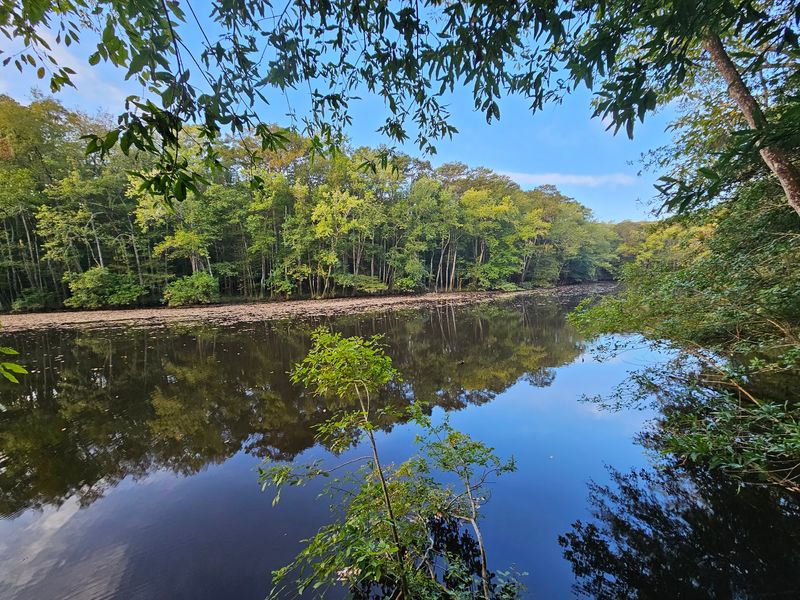
Around the time the last daylight drains out of the sky, the volume in Congaree changes completely. Day sounds fade, and the night crew clocks in.
Barred owls are the headliners, and their call really does sound like someone asking who cooks for you. Hearing two of them answer each other across the creek is the closest thing to a conversation I have heard from wildlife.
Rangers lead Owl Prowl programs in spring and fall, and those walks are worth planning a trip around. Guides know where the birds tend to perch and how to call them closer.
Katydids join in later, usually after nine, with that steady pulsing rhythm people often mistake for cicadas. Crickets hum underneath everything like a background track nobody turns off.
Frogs add croaks and trills from the shallow water, and every so often something splashes in Cedar Creek and refuses to explain itself. Those unexplained splashes are, I think, where a lot of the local storytelling begins.
What surprised me most were the gaps. During brief lulls, the creak of old wood and the shuffle of leaves take on a strangely vocal quality when your ears are straining.
Bring a headlamp with a red setting so you keep your night vision, and try turning it off for a full minute. Standing in real darkness while a forest talks around you is not something you forget.
Dress in long sleeves, since evening is when the insects get ambitious.
Stories Locals Keep to Themselves
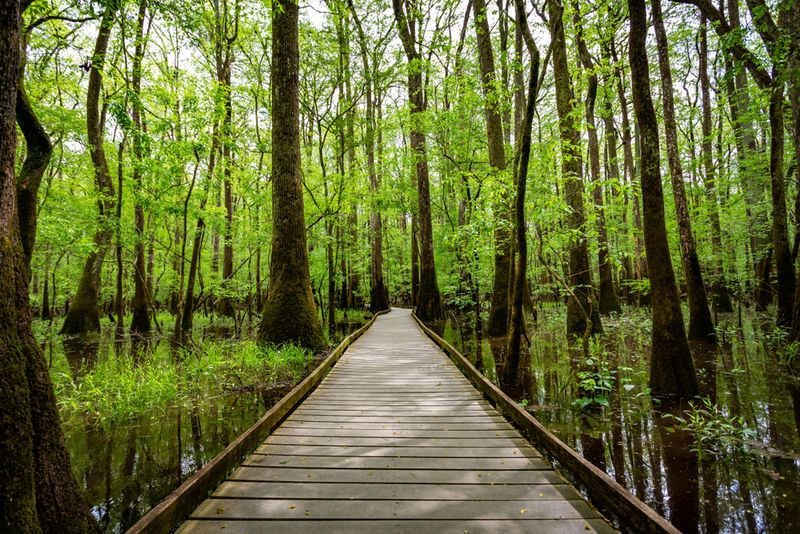
Ask around Hopkins, South Carolina about the swamp after dark and you will notice a pause before the answer. Folklore clings to this forest the way moss clings to the branches.
One of the oldest tales says the cypress knees are wood elves that wake at night and wander between the trunks. Silly in daylight, less silly at nine at night with fog on the water.
Other stories run heavier. The Congaree floodplain once sheltered people escaping slavery, communities who survived in the deepest, least reachable parts of the wetland, and many accounts tie lingering presences to that history.
Visitors have described unexplained voices drifting through the canopy, sudden cool pockets on warm nights, and the certainty of being watched. Hikers report footsteps behind them on empty trails.
The forest’s history and unusual nighttime sounds have inspired folklore, although many specific supernatural claims are difficult to verify. Stories about mysterious figures should be treated as unverified unless they can be traced to documented local accounts.
Sound scientists would point to acoustic tricks. Water, dense wood, and still air bounce noise around in genuinely weird ways, and your brain fills in the blanks.
Personally, I do not need a verdict. The stories give the place texture, and they connect the landscape to the human history buried in it.
Listen respectfully, keep your voice down, and let the forest do the talking.
Trails That Pull You Deeper In
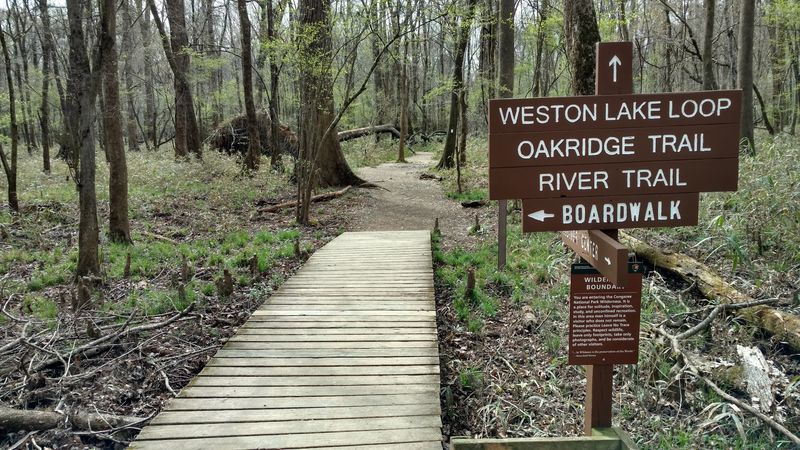
The boardwalk is the appetizer. Past it, more than 25 miles of trails fan out through different pockets of forest, and each one has its own personality.
Weston Lake Loop was my favorite for a half day, tracing Cedar Creek with regular chances to spot deer or turkey. The ground stays mostly flat, so distance feels shorter than the numbers suggest.
Oakridge Trail goes longer and quieter, weaving through ridges of hardwood that stay dry more often than the surrounding low ground. River Trail pushes all the way to the Congaree River through thick vegetation.
Birders swear by Kingsnake Trail, particularly when the sloughs are holding water and the warblers move through. I saw more woodpecker activity there in one hour than anywhere else in the park.
A caution worth taking seriously: water levels swing hard here. The rivers spill into the floodplain roughly ten times a year, and trails that were dry last week can be shin deep today.
Check conditions at the visitor center before committing, and wear shoes you do not mind soaking. Trekking poles help more than you would guess in soft mud.
Trails are marked with brown blazes and trail numbers, and the National Park Service recommends carrying a map and navigation tools for longer backcountry hikes. Download offline maps too if you are heading past Weston Lake.
What I loved was how the forest kept shifting, from open pine ridges to dim tupelo hollows, all within a single loop.
Paddling Under the Canopy
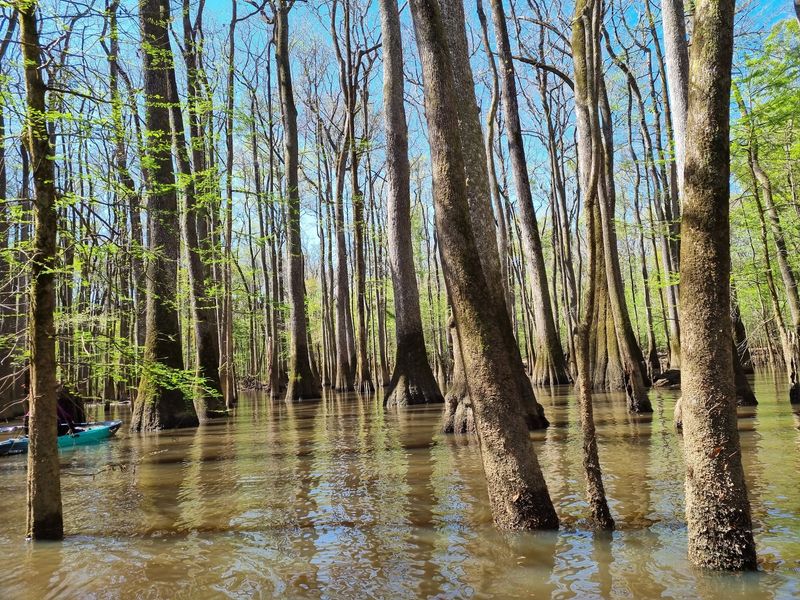
Nothing changed my view of Congaree faster than getting down at water level. From a kayak, the cypress trunks tower over you and the reflections make the world feel doubled.
Cedar Creek Canoe Trail is the marked route, a winding blackwater passage under a shaded roof of branches. Paddling it is quiet work, mostly steering around deadfall and low limbs.
Guided trips are available through the park and outfitters, which I would recommend for a first visit. Navigation gets confusing when the water is high and the creek spreads into the trees.
Bring your own boat if you prefer, but call ahead about conditions. Too little water means dragging, too much means fast current and hidden hazards.
Wildlife shows up constantly out here. River otters, turtles stacked on logs, wading birds, deer at the bank, and occasionally an alligator sunning itself in the warmer months.
For serious paddlers, the 50-mile Congaree River Blue Trail runs beyond the park boundary and supports multi-day trips. That is a bigger commitment and requires shuttle planning.
Late afternoon paddles are magic, when the light goes gold and the frogs start warming up. Just leave yourself time to get off the water before full dark unless you are with a guide.
Fireflies, Stars, and the Park After Sundown
Late May in Congaree comes with a light show that sounds made up until you see it. Synchronous fireflies flash together in waves through the understory, and it genuinely stops conversation.
The display runs about two weeks somewhere between mid May and mid June. Because the insects are fragile and the crowds are large, the park uses a special vehicle pass system for viewing nights.
Plan far ahead if that is your goal, and read the rules about lights carefully. Bright flashlights disrupt the whole event for everyone.
Outside firefly season, the park is a strong spot for stargazing thanks to relatively dark skies. Lying back and watching constellations rise over that giant canopy connects the ground and sky in a way city viewing never does.
Rangers also run programs built around the night, including guided walks focused on listening and using senses other than sight. Artificial light stays minimal on purpose.
Night paddling on Cedar Creek, when offered with a guide, might be the most memorable version of this park. Water goes glassy, owls call overhead, and those unexplained splashes keep you honest.
Wear closed shoes, carry a red light, and check the park calendar before driving out. Programs fill quickly and schedules shift with the seasons.
Congaree after dark is not spooky so much as deeply awake, and that feeling stayed with me long after I got back to the car.
Address: 100 National Park Rd, Hopkins, South Carolina 29061.
