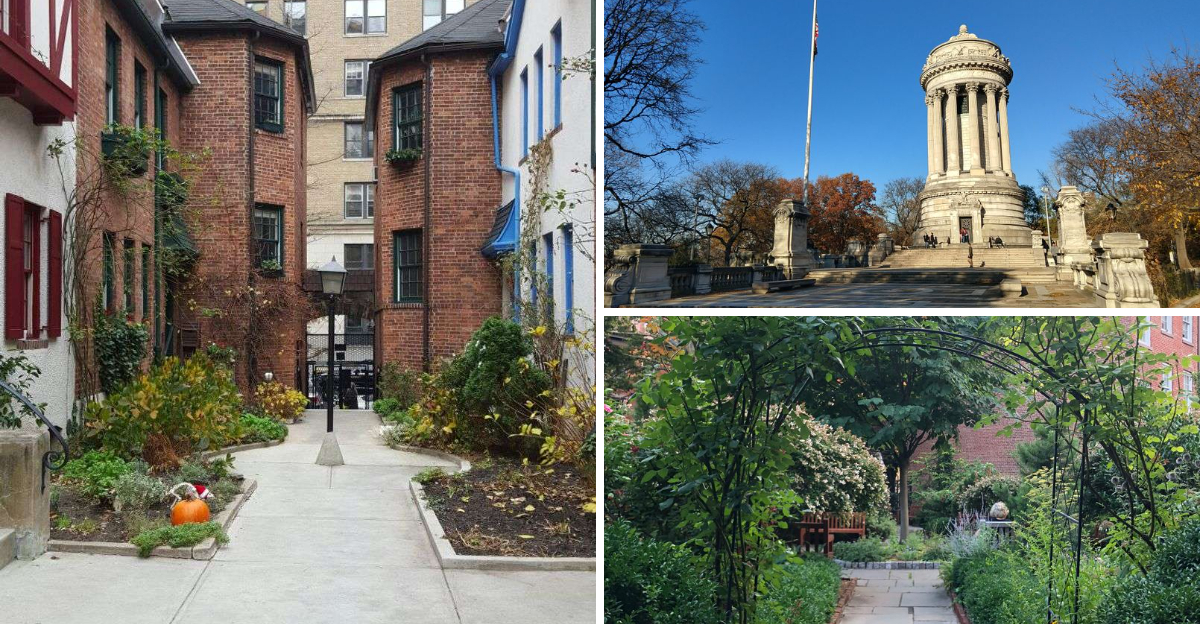
New York City pulses with an energy that draws millions of visitors each year, but the real magic happens in the quiet corners where locals actually live their lives.
Beyond Times Square and the Statue of Liberty, there exists a different New York, one filled with secret gardens, hidden courtyards, and peaceful retreats that reveal the city’s authentic soul.
These lesser-known spots offer a chance to experience the genuine character of the city, where neighborhood charm replaces tourist chaos and you can finally hear yourself think.
Whether you’re seeking tranquil green spaces, historic hideaways, or atmospheric venues that locals cherish, these ten destinations show you the New York that residents know and love.
1. Elizabeth Street Garden
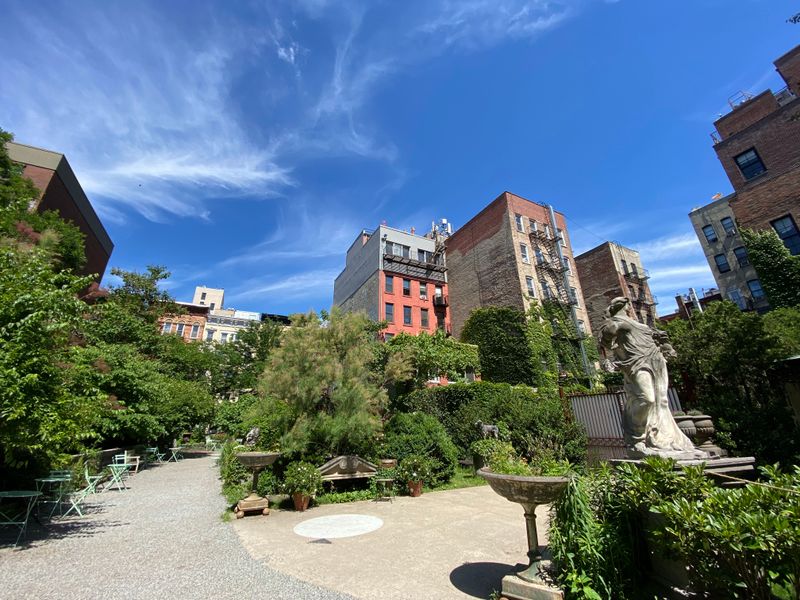
Tucked between the bustling neighborhoods of SoHo and Little Italy sits a remarkable green space that feels like stepping into a European courtyard.
Classical statues stand guard among flowering vines and towering trees, creating an atmosphere that transports visitors far from the concrete jungle surrounding it.
This one-acre sanctuary began as a collection of architectural salvage and sculptures, gradually transforming into one of Manhattan’s most enchanting hidden gardens.
Locals treasure this spot for morning coffee, afternoon reading sessions, or simply escaping the relentless pace of city life for a few precious moments.
The garden’s collection includes weathered stone figures, ornate fountains, and architectural fragments that tell stories of bygone eras.
Sunlight filters through the canopy of mature trees, dappling the pathways and benches where neighbors gather to chat or enjoy solitude.
Unlike the manicured perfection of formal parks, this garden embraces a romantic, slightly wild aesthetic that feels refreshingly authentic.
Community events occasionally bring residents together here, strengthening the neighborhood bonds that make this more than just a pretty space.
The garden represents something increasingly rare in Manhattan: a place where commercial interests haven’t dominated, where beauty exists simply for its own sake.
Visitors who discover this gem often return repeatedly, drawn by its unique combination of artistry, nature, and peaceful energy.
During spring, the garden explodes with blooms, while autumn brings golden leaves that carpet the ground between the sculptures.
This is where New York reveals its softer side, proving the city contains multitudes beyond its famous hustle.
Address: 210 Elizabeth Street, New York, New York
2. Le Petit Versailles
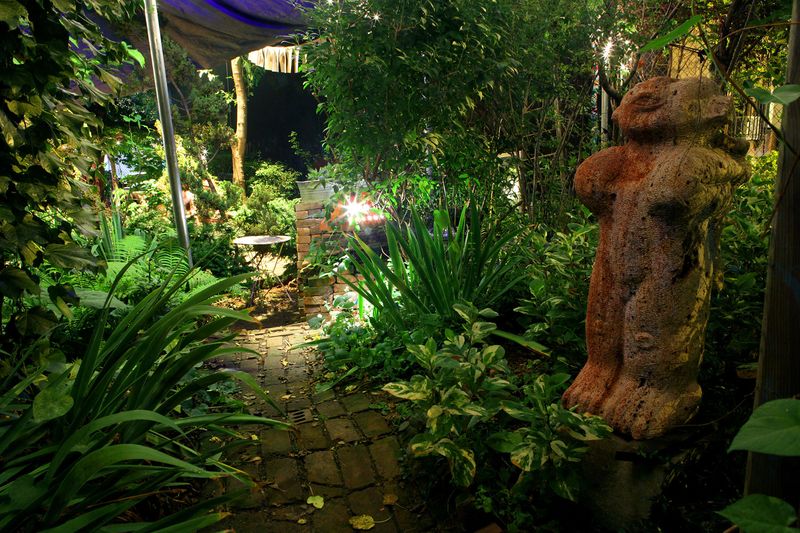
Magic happens nightly in a tiny Lower East Side garden where string lights twinkle overhead and creativity flourishes in every corner.
What began as a neglected lot has blossomed into a whimsical gathering space where poetry, music, and film transform ordinary evenings into memorable experiences.
The garden’s founders envisioned a place where art and nature could coexist, where neighbors could connect over shared cultural experiences rather than just passing on the street.
Wooden benches encircle a modest stage area, creating an intimate setting that feels more like a friend’s backyard than a public venue.
Throughout warmer months, the calendar fills with readings, acoustic performances, and outdoor film screenings that draw diverse crowds.
Colorful murals adorn the surrounding walls, while carefully tended plants add bursts of green that soften the urban edges.
This isn’t a place you stumble upon by accident; locals guard its location somewhat protectively, sharing it with visitors who genuinely appreciate community-built spaces.
The atmosphere here differs completely from commercial entertainment venues, carrying an authenticity that money simply cannot manufacture.
On warm summer nights, the garden fills with laughter, conversation, and the kind of spontaneous connections that define true neighborhood culture.
Volunteers maintain the space with obvious love, ensuring the flowers bloom and the lights continue twinkling for everyone who needs a moment of beauty.
Children play near the plantings while adults sip drinks and settle in for whatever performance the evening offers.
This represents grassroots New York at its finest, where residents create the culture they want to experience rather than waiting for someone else to provide it.
Address: 346 East 2nd Street, New York, New York
3. Bathtub Gin
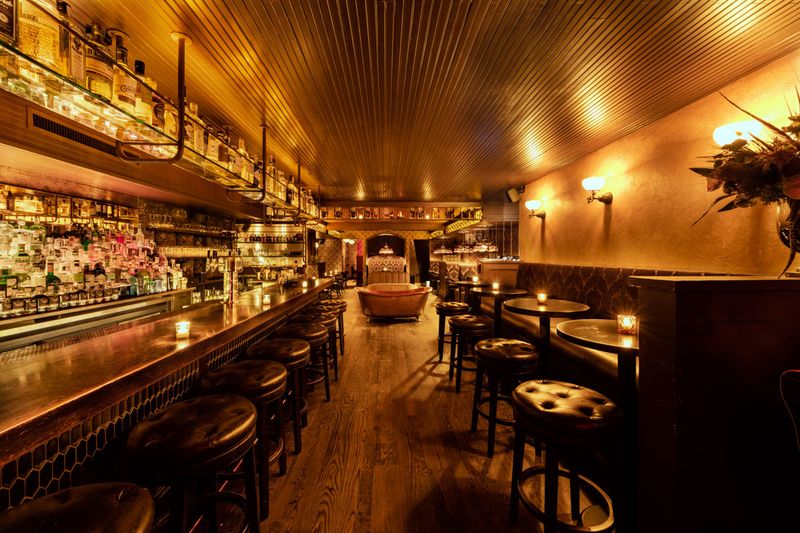
Behind an ordinary Chelsea coffee shop lies a portal to the Roaring Twenties, accessible only to those who know where to look.
The entrance requires a bit of detective work, adding to the thrill of discovery that made speakeasies exciting nearly a century ago.
Once inside, the transformation is complete: dim lighting, velvet seating, and the clink of expertly crafted drinks transport patrons to Prohibition-era New York.
Bartenders here take their craft seriously, mixing drinks with precision and flair that honors the golden age of cocktail culture.
The space itself feels like a secret worth keeping, with exposed brick walls and vintage decor that avoids feeling like a theme park recreation.
Jazz music drifts through the air, sometimes live, sometimes recorded, but always perfectly suited to the atmosphere.
Regulars know to arrive early on weekends, as the intimate space fills quickly with those seeking an alternative to generic nightlife.
Conversations flow easily here, the dim lighting and cozy layout naturally encouraging connection rather than shouting over pounding music.
The drink menu celebrates classic recipes while occasionally offering creative twists that showcase the bartenders’ skills.
This isn’t about being seen or posting photos for social media; it’s about savoring a well-made drink in surroundings that respect the art of hospitality.
Staff treat guests like members of an exclusive club, remembering preferences and making recommendations based on genuine knowledge.
The speakeasy concept could easily feel gimmicky, but the execution here strikes the right balance between theatrical and authentic.
For a few hours, the modern world fades away, replaced by the romance and sophistication of a bygone era.
Address: 132 9th Avenue, New York, New York
4. The Cloisters in Fort Tryon Park
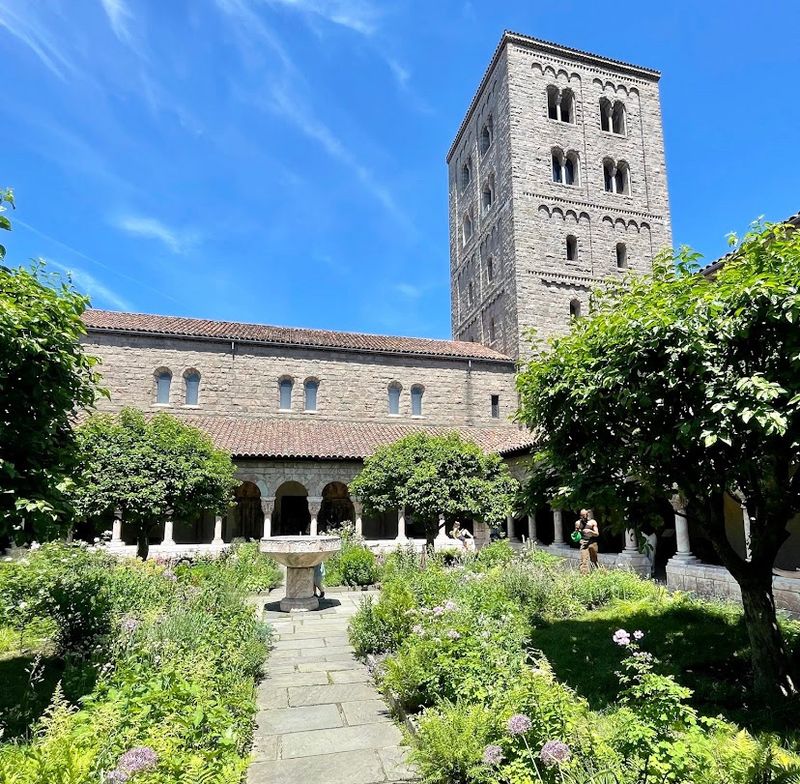
Perched high above the Hudson River in upper Manhattan stands a structure so unexpected that first-time visitors often question whether they’re still in New York City.
The Cloisters incorporates actual medieval architectural elements shipped from Europe and reassembled to create an authentic monastery experience.
Stone archways frame views of the river below, while carefully maintained herb gardens release fragrant scents that transport visitors across centuries.
The museum houses an impressive collection of medieval art, but many visitors come simply to wander the peaceful grounds and absorb the tranquil atmosphere.
Unlike the crowded halls of the Metropolitan Museum downtown, this northern outpost offers space to breathe and contemplate.
Fort Tryon Park surrounds the building with winding paths, dramatic overlooks, and seasonal gardens that reward exploration.
During autumn, the foliage transforms the landscape into a tapestry of reds and golds that rival any countryside destination.
The journey here requires commitment, as the location sits far from typical tourist routes, but that distance keeps crowds manageable.
Inside, the cool stone walls provide relief on hot summer days, while winter visits offer a different kind of magic with fewer visitors and stark beauty.
The Unicorn Tapestries remain the star attraction, but the building itself deserves equal attention for its architectural significance.
Locals from surrounding neighborhoods treat this as their backyard treasure, bringing visitors they want to impress with New York’s hidden depths.
The combination of art, architecture, nature, and history creates an experience that satisfies multiple interests simultaneously.
This represents New York’s ability to contain entire worlds within its borders, from cutting-edge contemporary culture to medieval contemplation.
Address: 99 Margaret Corbin Drive, New York, New York
5. Riverside Park (116th to 124th Streets)
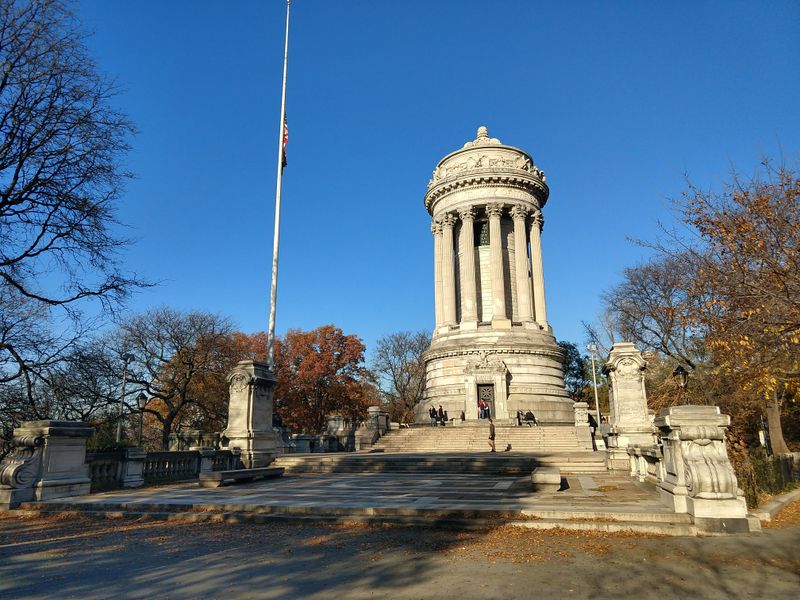
While Central Park draws millions of visitors annually, this stretch of Riverside Park offers equally stunning beauty with a fraction of the foot traffic.
Cherry trees line the pathways here, erupting into clouds of pink blossoms each spring that rival any postcard-perfect scene.
The Hudson River flows steadily beside the park, its broad expanse providing a sense of openness rare in Manhattan’s dense urban fabric.
Joggers, dog walkers, and families populate the paths, but the space never feels overcrowded or chaotic like more famous parks.
Benches positioned along the waterfront offer perfect spots for reading, sketching, or simply watching boats glide past on the river.
The park’s design incorporates different levels, with upper pathways providing elevated views and lower sections bringing visitors closer to the water’s edge.
During summer evenings, the setting sun paints the New Jersey Palisades across the river in shades of orange and purple.
Neighborhood residents treat this park as an extension of their living rooms, gathering for impromptu picnics or morning coffee before work.
The atmosphere reflects the surrounding communities, blending Columbia University students, long-time residents, and young families into a diverse tapestry.
Autumn brings its own spectacle as the trees lining the park transform into brilliant yellows and reds.
Winter strips away the leaves, revealing the park’s bones and offering unobstructed river views that showcase the landscape’s natural drama.
Playgrounds scattered throughout provide entertainment for children while parents relax nearby, creating a genuinely communal atmosphere.
This section of Riverside Park embodies the New York that residents experience daily, beautiful and functional without needing to announce itself to the world.
6. Hallett Nature Sanctuary
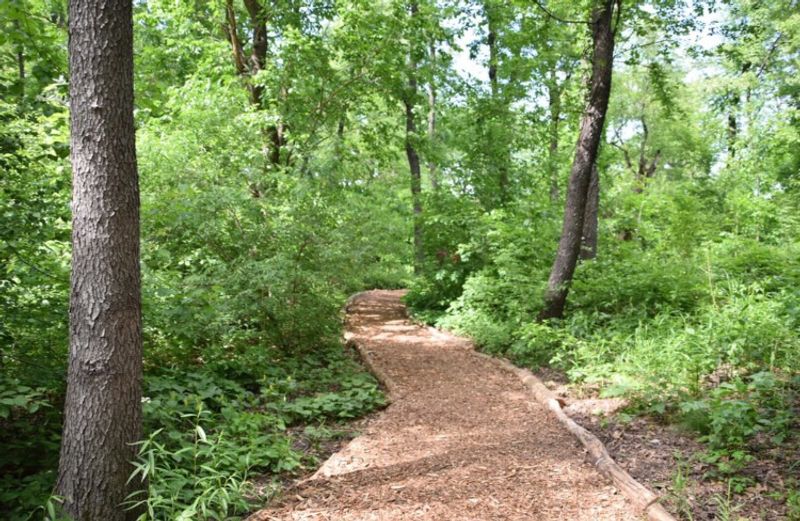
Most Central Park visitors never discover the four-acre woodland tucked into the park’s southeastern corner, accessible through a single, easily overlooked entrance.
Hallett Nature Sanctuary remained closed to the public for decades, allowing nature to reclaim the space and create a genuine ecosystem within the city.
Winding trails disappear into dense vegetation, creating the illusion of being miles from civilization rather than steps from Fifth Avenue.
Bird songs replace traffic noise here, as the sanctuary attracts species rarely seen elsewhere in Manhattan.
The Pond borders one edge of the sanctuary, its waters reflecting surrounding trees and providing habitat for turtles and fish.
Native plants dominate the landscape, carefully maintained to support local wildlife and demonstrate what the area looked like before urban development.
Visitors must follow marked paths to protect the delicate ecosystem, but the trails provide ample opportunity for exploration and discovery.
During migration seasons, birdwatchers gather quietly, binoculars trained on branches where warblers and other species pause during their journeys.
The sanctuary’s closure for so many years created an accidental wilderness experiment, proving nature’s resilience when given space to flourish.
Children delight in spotting wildlife, from squirrels and chipmunks to occasional raccoons and the diverse bird population.
The microclimate here differs noticeably from surrounding areas, with cooler temperatures and higher humidity created by the dense tree cover.
Educational signs along the trails identify plants and explain ecological relationships, turning visits into learning experiences.
This represents Central Park’s lesser-known mission: not just providing recreation but preserving natural habitats within the urban environment.
Finding the entrance requires intention, ensuring only those genuinely seeking tranquility discover this remarkable retreat.
7. The Garden at St. Luke in the Fields
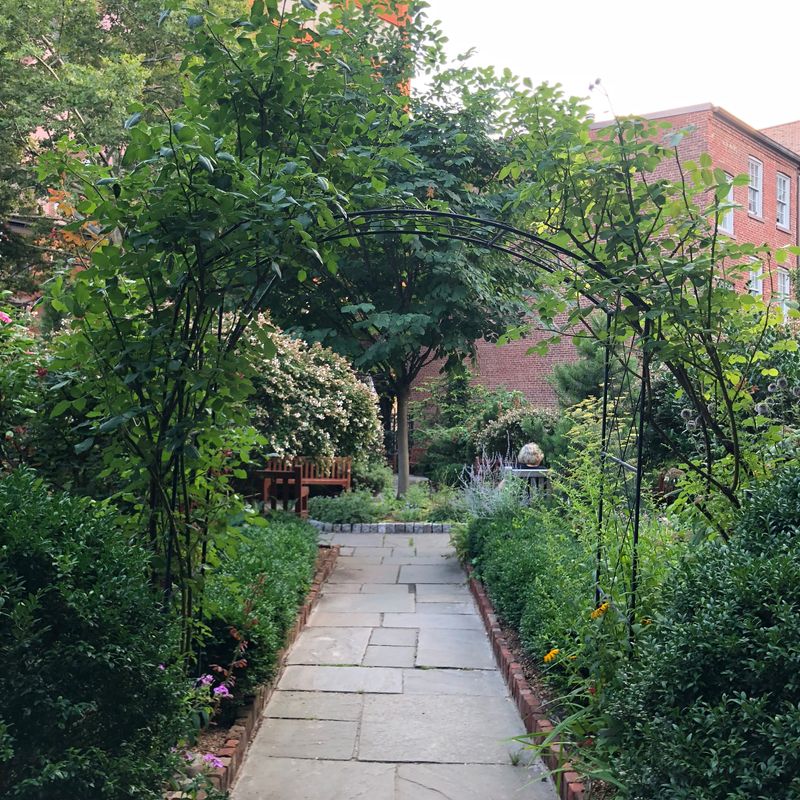
High brick walls in the West Village conceal one of Manhattan’s most enchanting secrets, a garden that feels transported from an English countryside estate.
St. Luke in the Fields church has maintained this green space for generations, creating a living sanctuary that serves the surrounding community.
Six distinct sections divide the garden, each with its own character and plantings that ensure something blooms throughout the growing season.
Cherry trees anchor the space, their spring blossoms creating a canopy of pink and white that draws gasps from first-time visitors.
Winding paths encourage meandering rather than rushing, inviting contemplation and appreciation of small details often missed in daily life.
The garden serves multiple purposes: a peaceful retreat for neighbors, a venue for community events, and a living classroom for local schools.
Benches positioned throughout offer resting spots where visitors can sit beneath flowering vines or beside herb gardens releasing aromatic scents.
Unlike botanical gardens designed for impressive displays, this space prioritizes intimacy and accessibility over grandeur.
The church community welcomes visitors during designated hours, trusting guests to respect the garden’s peaceful nature.
Seasonal changes transform the space dramatically, from spring’s explosion of color to winter’s stark beauty when architectural bones become visible.
Volunteers maintain the plantings with obvious care, ensuring the garden remains healthy and beautiful for everyone who needs it.
The surrounding West Village neighborhood provides the perfect frame for this hidden gem, its historic streets and townhouses complementing the garden’s timeless appeal.
This garden represents community values that prioritize shared beauty over private ownership, creating spaces where strangers become neighbors through shared appreciation.
Address: 485 Hudson Street, New York, New York
8. New York Marble Cemetery
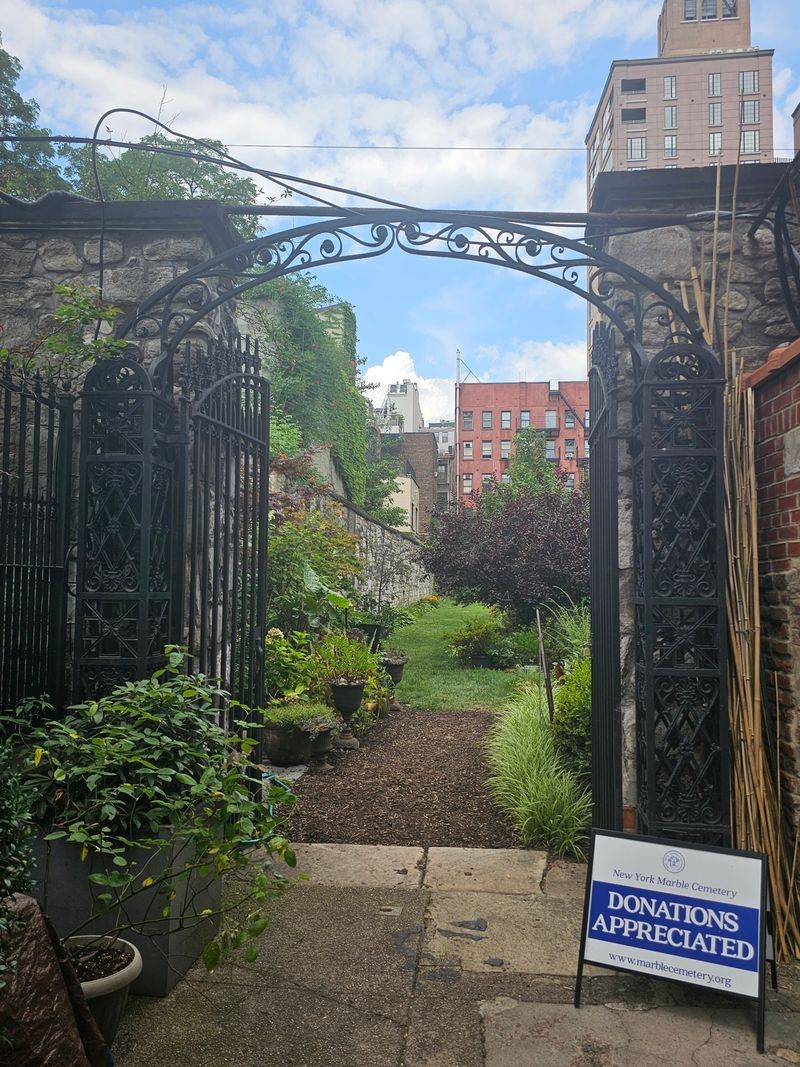
A narrow alley in the East Village opens onto a half-acre of tranquility that few New Yorkers even know exists.
The New York Marble Cemetery dates to the 1830s, making it one of the city’s oldest burial grounds and a remarkable example of changing funeral practices.
Instead of traditional headstones, marble plaques line the walls, marking underground vaults that hold the remains of early New York families.
A simple lawn occupies most of the space, bordered by mature trees that provide shade and a sense of timelessness.
The cemetery opens to the public only occasionally, adding to its mystique and ensuring it remains peaceful when accessible.
History enthusiasts discover fascinating stories here, from Revolutionary War connections to prominent merchants who shaped early Manhattan.
The space feels suspended outside normal time, offering a rare opportunity to contemplate mortality and history simultaneously.
Unlike active cemeteries with regular visitors, this one maintains a profound stillness that amplifies its contemplative atmosphere.
The surrounding East Village buzzes with energy, making the cemetery’s quietude even more striking by contrast.
Preservation efforts have maintained the site’s integrity while allowing limited access for those seeking historical knowledge or peaceful reflection.
The marble plaques themselves represent artistic craftsmanship from an era when even death received elegant treatment.
Birds nest in the trees overhead, their songs the primary sound breaking the silence within these walls.
This cemetery reminds visitors that New York contains layers of history, with each era leaving traces for those curious enough to seek them.
The experience of standing here connects present-day New Yorkers with ancestors who walked these same streets centuries ago.
Address: 41 1/2 2nd Ave, New York, New York
9. Pomander Walk
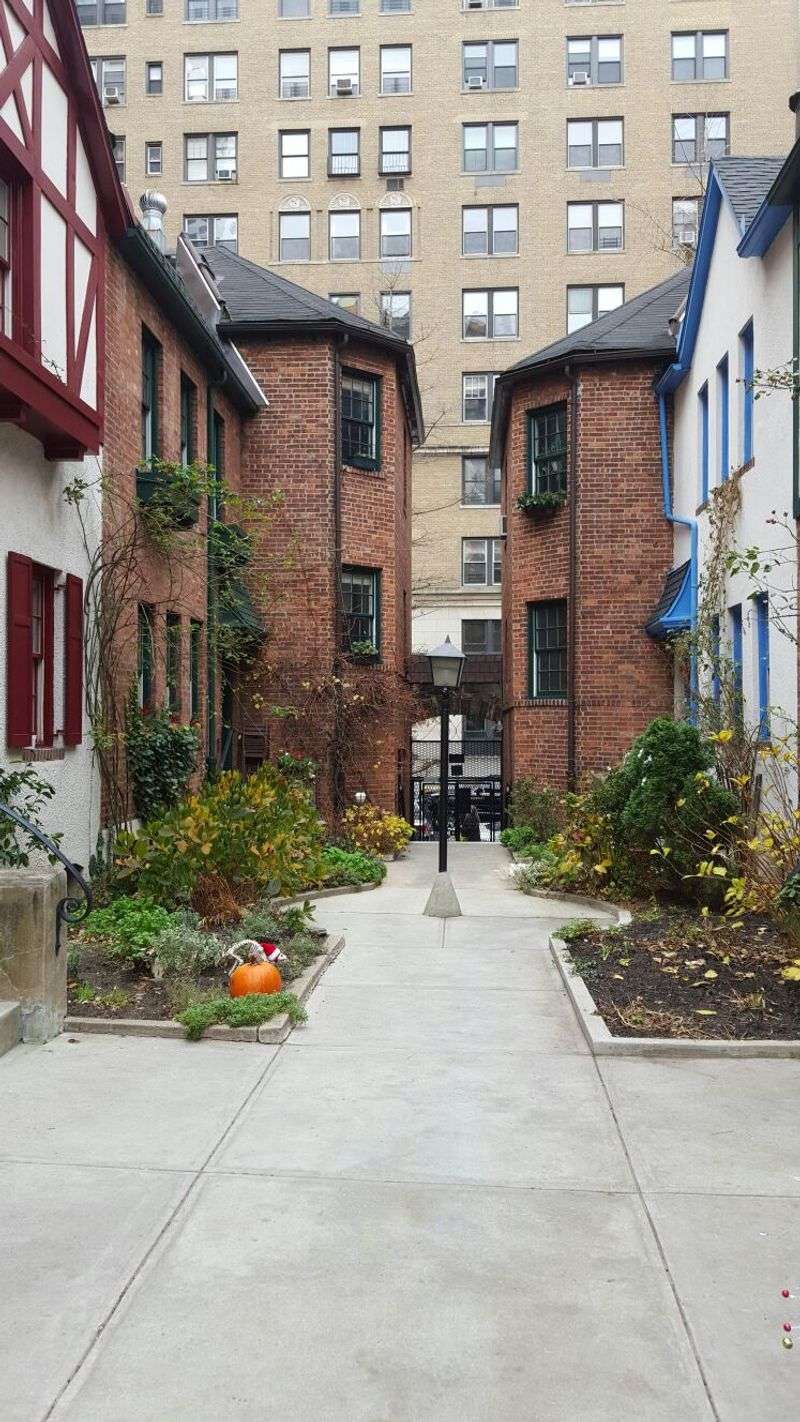
A locked gate on the Upper West Side guards access to what appears to be a fragment of an English village mysteriously transported to Manhattan.
Pomander Walk consists of two facing rows of Tudor-style homes built in 1921, creating a private pedestrian street that feels utterly removed from surrounding Broadway.
The architectural style deliberately evokes a stage set, as the development was inspired by a popular play of the same name.
Stucco walls, timber framing, and steep rooflines give each home a storybook quality that photographers dream of capturing.
Small gardens flourish in front of the homes, residents tending flowers and shrubs that add color and life to the already charming streetscape.
Only residents and their guests can access the walk, making it one of Manhattan’s most exclusive addresses despite its modest scale.
The private nature of the street creates a genuine neighborhood atmosphere where residents know each other and children play safely away from traffic.
Celebrity residents over the years have included actors and artists drawn to the unique character and peaceful environment.
The contrast between this quiet enclave and the bustling Broadway corridor just steps away couldn’t be more dramatic.
Passersby occasionally peek through the gate, catching glimpses of this hidden world and wondering about the lives lived behind those picturesque facades.
The walk represents an early experiment in creating human-scaled urban housing that prioritizes community and aesthetics over maximum density.
Preservation efforts have maintained the original character, ensuring future generations can experience this architectural time capsule.
During holidays, residents sometimes decorate their homes, creating scenes that belong on greeting cards rather than Manhattan streets.
Address: Between West 94th and 95th Streets, New York, New York
Dear Reader: This page may contain affiliate links which may earn a commission if you click through and make a purchase. Our independent journalism is not influenced by any advertiser or commercial initiative unless it is clearly marked as sponsored content. As travel products change, please be sure to reconfirm all details and stay up to date with current events to ensure a safe and successful trip.
