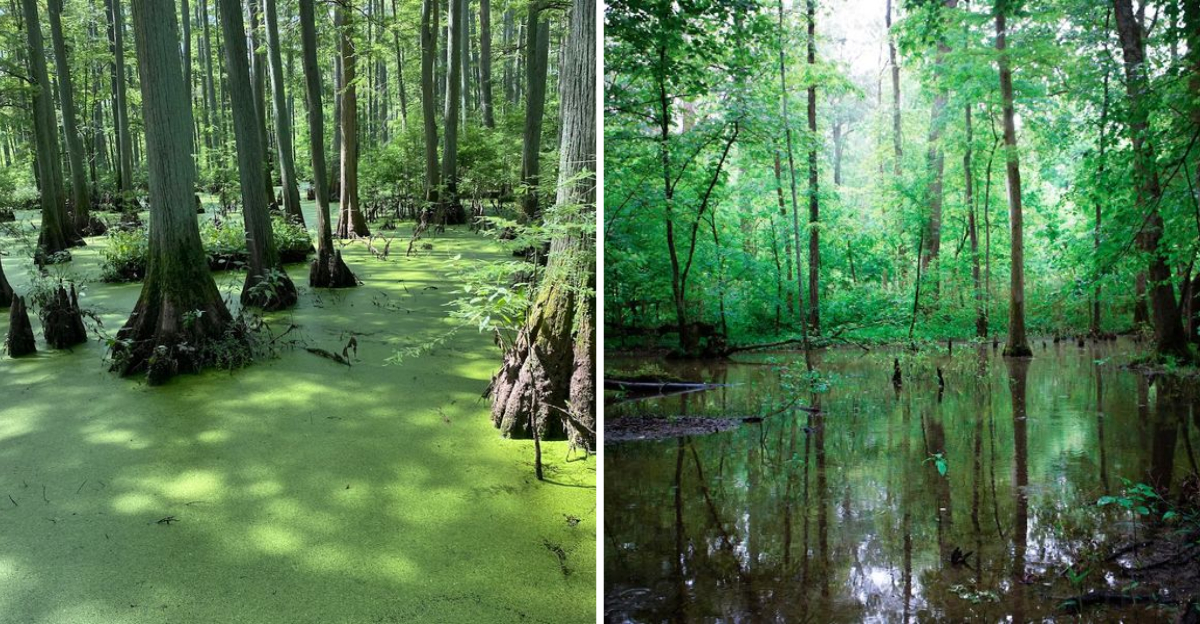
The air smells like wet earth and ancient wood. The trees here were already giants when medieval castles were being built across the ocean.
I found this southern Illinois swamp on a cool spring morning, arriving just as the sky turned from purple to pale gold. The floating boardwalk stretched out ahead into water that felt completely wild and untouched. Mist curled up from the dark surface in slow, ghostly spirals. Bald cypress trees rose from the water on all sides, their massive bases flaring out like cathedral columns, their knees poking up through the surface like strange wooden sculptures.
This is one of those rare places that quietly blows your mind before you even realize what is happening.
The Floating Boardwalk at Dawn: Where the Magic Actually Starts
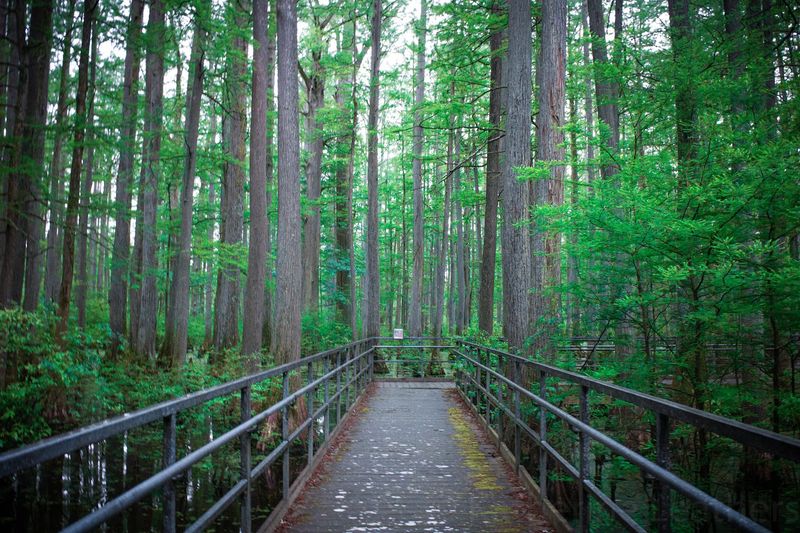
The boardwalk at Heron Pond does not feel like a typical park path. It floats, literally, on the surface of the swamp water, shifting ever so slightly under your feet as you walk, which gives the whole experience a dreamlike quality that is hard to shake even hours after you leave.
Getting there at dawn is the move. The light at that hour is soft and low, slipping between the cypress trunks in long golden ribbons.
The water below the boards is almost perfectly still, and the mist rises from it in slow, twisting columns that catch the early light and glow like something from a fantasy novel.
The Todd Fink-Heron Pond Trail is about 1.5 miles total, and the floating boardwalk section winds right into the heart of the cypress-tupelo swamp. It is rated easy, so you do not need to be an experienced hiker to enjoy it.
Families with kids do this trail regularly, and it is manageable for most fitness levels.
What makes the dawn visit so special is the near-total silence. There are no crowds, no noise from roads, just the occasional call of a bird echoing off the water.
The mist spirals move with the faintest breeze, drifting between trees that have been standing since before the printing press was invented. It is a genuinely humbling experience.
Bring a light jacket because mornings here carry a chill, and give yourself time to just stand still and take it all in.
Ancient Cypress Trees: A Living Record of Time
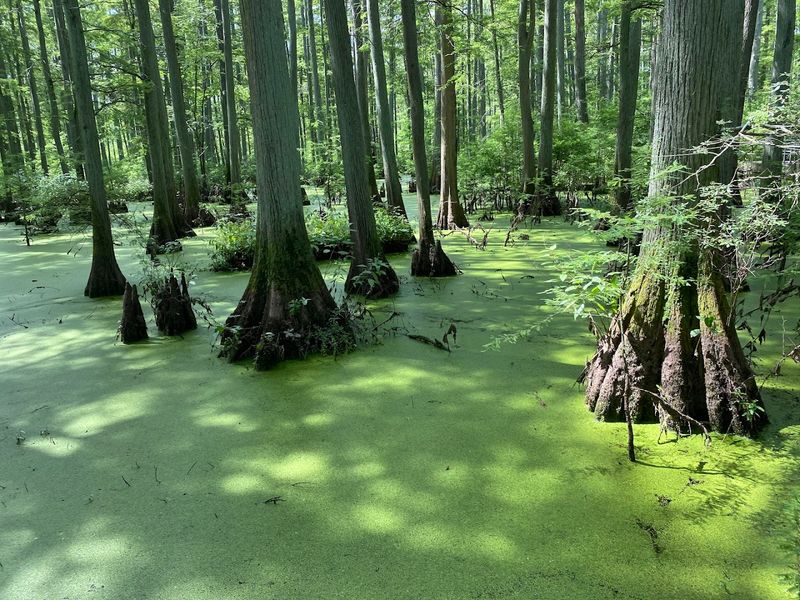
Some of the bald cypress trees at Heron Pond are over 1,000 years old. That number is almost impossible to process when you are standing next to one of them, looking up at a trunk so wide it would take several people with arms outstretched to wrap around it.
The buttressed bases of these trees are extraordinary. Some measure more than 40 feet in circumference, flaring out at the waterline like the roots of something from another world.
The state champion bald cypress tree lives right here in this area, and seeing it in person is one of those experiences that recalibrates your sense of scale in a very satisfying way.
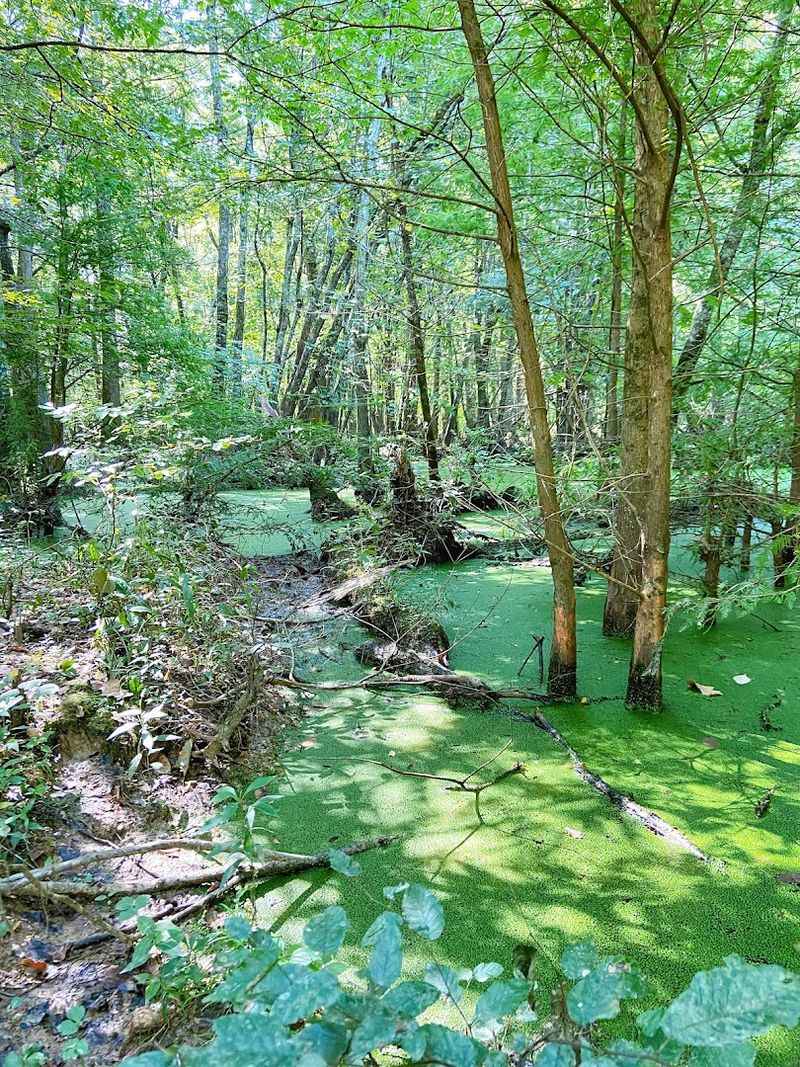
Cypress knees poke up from the shallow water all around the bases of the trees. These woody projections rise from the root system and create a surreal, almost architectural landscape across the swamp floor.
Nobody fully agrees on exactly what biological purpose they serve, which somehow makes them even more interesting.
The bark of the older trees has a deeply textured, almost sculptural quality, with long vertical ridges and patches of moss and lichen that have been building up for centuries. There is something deeply grounding about pressing your hand against a tree that was already ancient when your great-great-great-grandparents were born.
These trees are not just impressive to look at. They are living proof that some things survive and thrive when left alone, and that is a pretty remarkable thing to witness up close.
The Mist Phenomenon: Why Dawn Changes Everything Here
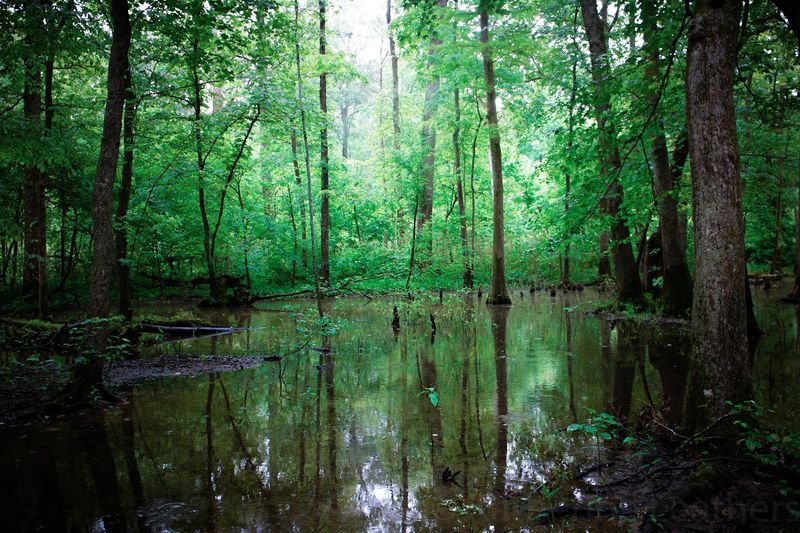
The mist at Heron Pond is not just weather. It is a full sensory event that transforms the swamp into something that feels genuinely otherworldly, especially in the first hour after sunrise when the temperature difference between the water and the air is at its greatest.
Warm water releases moisture into cooler morning air, and the result is these slow, spiraling columns of mist that rise from the surface and drift through the cypress trunks like something choreographed. The darker the water and the cooler the morning, the more dramatic the effect.
Spring and fall mornings tend to produce the most striking displays because the temperature contrast is sharpest during those seasons.
Watching it happen from the floating boardwalk puts you right in the middle of it. The mist moves around you, not just in front of you, which makes the whole thing feel immersive in a way that photographs honestly struggle to capture.
You can feel the cool dampness on your face and smell the rich, earthy scent of the swamp mixing with the fresh morning air.
Photographers who make the early drive out here are usually rewarded generously. The combination of still water reflections, ancient tree silhouettes, and rising mist in golden light creates compositions that look almost too beautiful to be real.
But they are real, and you do not need fancy camera gear to appreciate them. Just get there early, find a spot on the boardwalk, and let the swamp do its thing.
Wildlife You Might Actually See Along the Trail
Heron Pond earned its name for a reason. Great blue herons are a regular presence here, and spotting one standing absolutely still in the shallow water at the edge of the swamp is one of those quietly thrilling moments that reminds you why getting outside is worth the effort.
The Cache River watershed is one of the most biologically diverse wetland systems in the entire Midwest. Wood ducks, barred owls, river otters, and various species of turtles all call this area home.
Early morning is when the activity is highest, which is yet another reason to push yourself out of bed before sunrise when you visit.
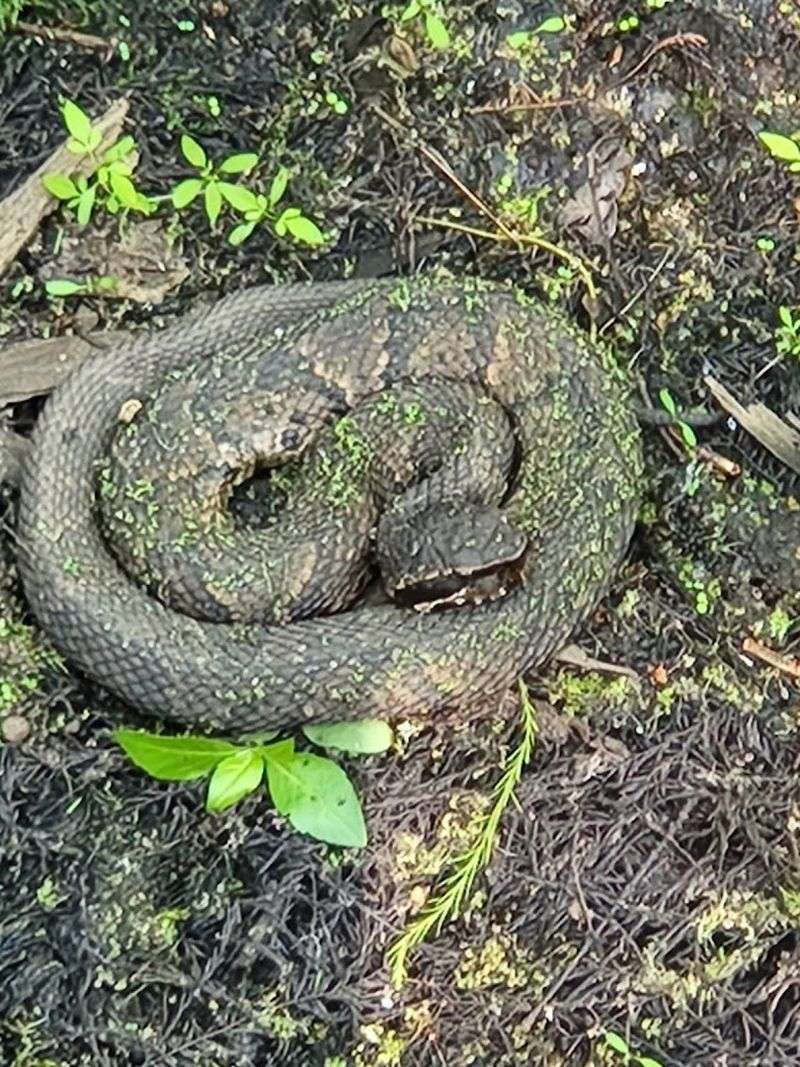
Water moccasins are present in the area and have been spotted along the trail by visitors, so staying on the boardwalk and designated paths is genuinely important here, not just a suggestion. Being aware of your surroundings adds to the experience rather than detracting from it.
The swamp is wild, and that wildness is exactly what makes it special.
Birding here is particularly rewarding during spring migration, when the canopy fills with warblers and other songbirds passing through. The interpretive signs along the trail point out various species and natural features, which makes the walk educational as well as beautiful.
Even if you do not consider yourself a nature person, the sheer variety of life packed into this relatively small area tends to change perspectives. There is something happening everywhere you look, from the water surface to the treetops.
Best Times to Visit and How to Prepare for the Trip
Spring and fall are the sweet spots for visiting Heron Pond. Temperatures during those seasons typically range from around 40 to 70 degrees Fahrenheit, which is comfortable for hiking without the brutal humidity that southern Illinois summers can bring.
Summer visits are possible but come with a significant caveat: the bugs. Mosquitoes and other insects thrive in the swamp environment during warm months, and several visitors have noted that insect repellent is not optional, it is essential.
Wearing long sleeves and pants even in warmer weather is a smart call if you plan on being near the water at dawn when insects are most active.
The trail is designated for day use only, so overnight stays are not permitted at Heron Pond itself. Arriving at or just before sunrise requires planning your drive accordingly, since the area is located near Vienna, Illinois, which may be a significant drive depending on where you are coming from.
The address is Vienna, IL 62995 if you are plugging it into a navigation app, though some visitors have noted that GPS directions can be unreliable in this area, so downloading an offline map is worth doing ahead of time.
Footwear with decent grip is a good idea since the boardwalk can be slippery when damp. Bring water, a light snack, and a camera or fully charged phone.
The trail itself is easy and takes roughly 45 minutes to an hour at a relaxed pace, which leaves plenty of time to linger and absorb the atmosphere without feeling rushed.
Why Heron Pond Feels Like a Window Into a Lost World
There are not many places left in the American Midwest that look the way they did a thousand years ago. Heron Pond is one of them.
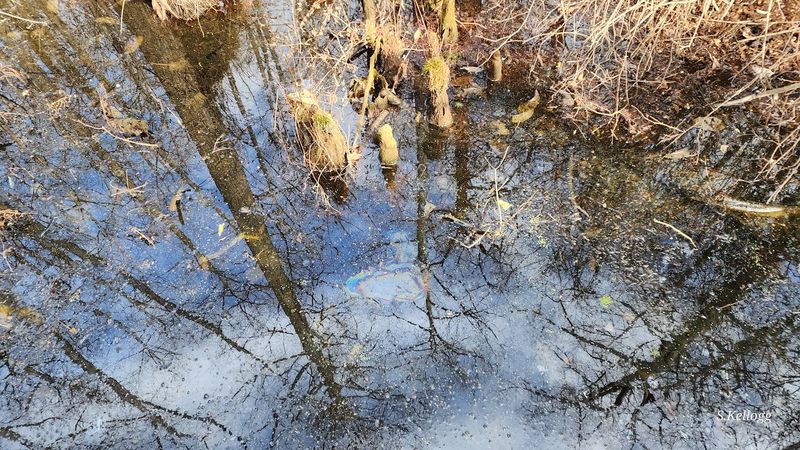
The wetland ecosystem here has remained largely undisturbed for millennia, and that continuity is visible in every detail, from the cathedral-scale trees to the layers of moss and lichen that coat every surface.
Before widespread land development changed the landscape of Illinois, cypress swamps like this one were far more common across the region. What you are seeing at Cache River is essentially a preserved remnant of a world that no longer exists almost anywhere else in the state.
That context makes the experience feel significant in a way that goes beyond just enjoying a pretty hike.
The interpretive signs along the Todd Fink-Heron Pond Trail help frame what you are seeing and give historical and ecological context that deepens the experience considerably. Reading about the age of the trees while standing next to one of them hits differently than reading about it at home.
The information becomes tangible and real in a way that classroom learning rarely achieves.
People who visit Heron Pond tend to leave feeling something. Maybe it is humility, maybe it is wonder, maybe it is just a quiet sense of gratitude that places like this still exist and are protected.
Whatever the feeling, it tends to linger. The swamp has a way of staying with you long after the mud has dried off your boots and the drive home is done.
That kind of impact is rare, and it is worth every early alarm.
Address: Vienna, IL 62995
