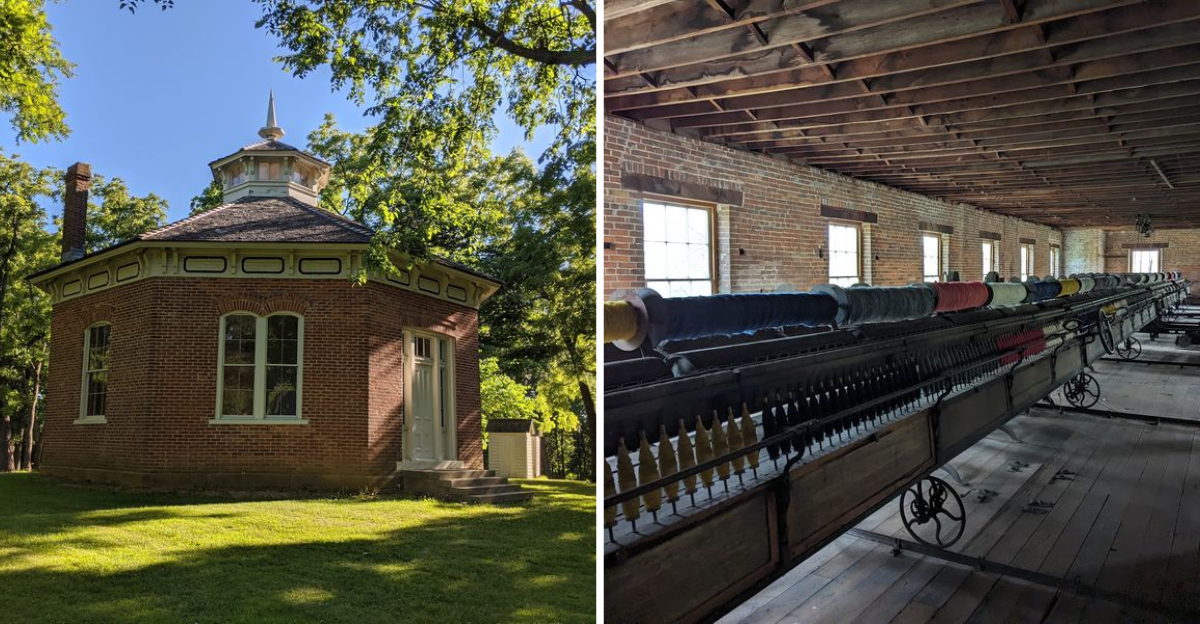
Three stories of handmade brick with rows of windows watching the road. That is what stopped me in my tracks the first time I looked up at a mill in rural Missouri.
It sits quietly at the edge of farm fields, a relic of an era when wool cloth was made by hand and machine in the same room. Inside, more than fifty original textile machines are still standing where workers left them, making this the only 19th?century textile mill in the country that kept its full set of equipment.
I kept running my hand along wooden railings worn smooth by other hands, and it hit me that nobody had to rebuild any of this. The whole property feels frozen in the 1870s, from the family home to the little octagonal schoolhouse down the lane.
The floorboards creaked under my feet, and the looms sat silent but still intact, their belts and bobbins hanging exactly where they were placed over a century ago. I walked through rooms where workers once stood, their voices long gone but their tools still present.
History you can actually walk through; this one is hard to beat.
The Brick Mill That Time Forgot
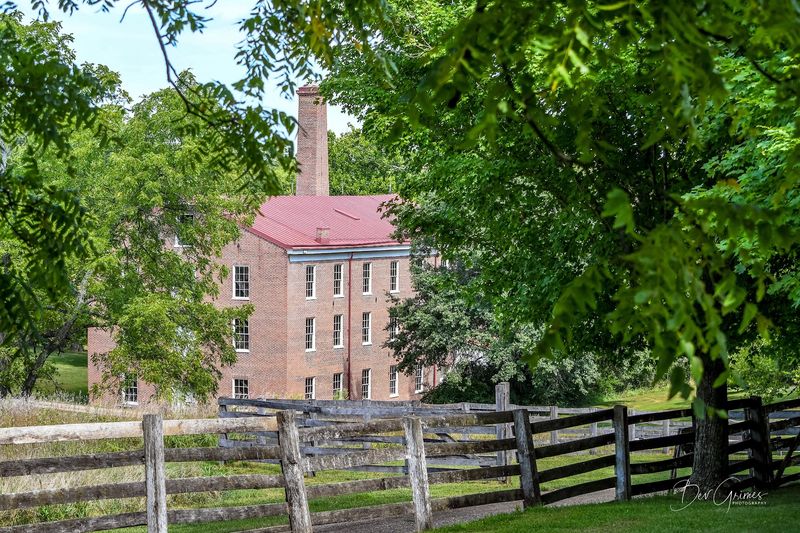
My first impression was the sheer size of it. Waltus L.
Watkins put this mill up in 1860, and production started in the summer of 1861, right as the country was falling apart around it.
The bricks were made by hand on the property itself, and the lumber came off Watkins land too. Nothing about the structure was shipped in from somewhere fancy, which somehow makes it feel more honest.
What earns the mill its fame is not the outside, though. Every major machine inside is original, making it the only 19th century textile mill in North America that still holds its complete working equipment.
That fact turned into a National Historic Landmark designation in 1966, and a National Mechanical Engineering Historic Landmark title in 1980. Two separate honors for one modest brick box in the countryside.
I walked the perimeter before going in, and the windows are the detail that stuck with me. They are enormous by 1860 standards, because the workers inside needed daylight to see fine wool fibers and thread breaks.
Take a moment outside before your tour begins. Once you step through the door, the machines take over your attention completely, and the building itself becomes easy to forget.
Carding And Spinning On The Top Floor
Climbing to the third floor felt like entering an attic full of sleeping giants. The carding and spinning machines up here are the first stop in wool’s journey, and they fill the space almost wall to wall.
Raw wool went into the carding machines to be combed straight, then moved on to spinning equipment that twisted those loose fibers into usable yarn. Watching the guide point out each step made the whole process click for me in a way no textbook ever managed.
All this machinery came west by railroad from eastern states, which was no small feat in the 1860s. Someone had to haul heavy iron and wood frames hundreds of miles, then get them up two flights and bolted into place.
The wooden floors creak underfoot, and there is a faint smell of old lanolin and dry timber that I noticed within seconds.
Look up while you are here. Overhead shafts and leather belt lines run across the ceiling, showing exactly how power traveled from one machine to the next.
Stairs are narrow and steep, so wear shoes with grip. The climb is worth every step, because this floor is where the mill’s story truly starts.
Looms, Warping Mills, And Twisters One Flight Down
Honestly, the second floor is where I lost track of time. Row after row of looms sit here, and each type did a different job for the Watkins operation.
Power broadlooms turned out blankets. Plain looms handled tabby and twill fabric, while fancy looms wove the patterned cloth that customers paid extra for.
A warping mill stands nearby, used to line up hundreds of yarn threads before weaving could begin. Ring frame twisters, a skeiner, and yarn packaging machinery round out the collection, all of it sitting exactly where it was used.
I tried to picture the noise. With dozens of looms running at once, conversation would have been nearly impossible, and the vibration must have traveled through the whole building.
The mill processed somewhere between 40,000 and 60,000 pounds of wool every year at its peak. That number sounds abstract until you see the machines that chewed through it.
Blankets, shawls, knitting yarns, batting, and bolts of fabric all left this floor headed for Missouri households and shops.
Ask your guide about the fancy looms specifically. The way patterns were programmed with wooden parts and chains is one of the cleverest things I have seen anywhere.
Dye Vats And Finishing At Ground Level
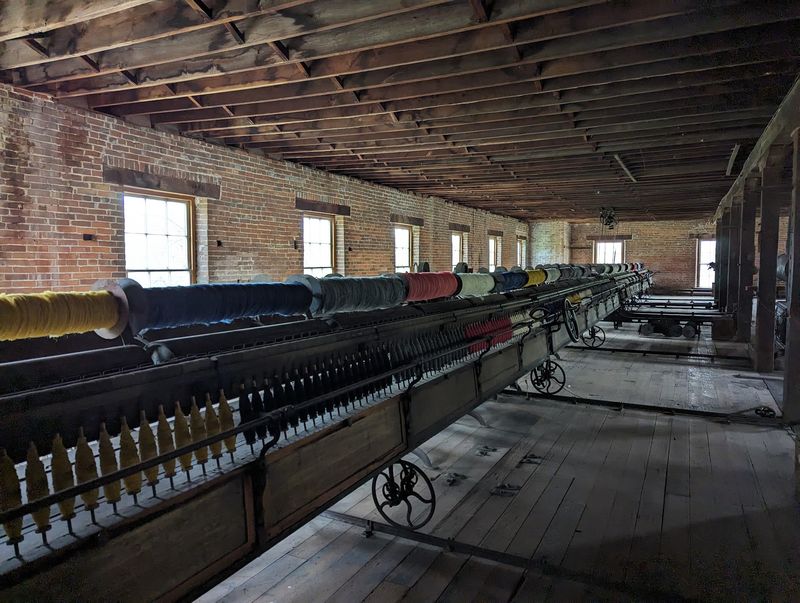
Ground floor duty was the messy work. Dyeing and finishing happened down here, which means this was the hottest, dampest, most demanding corner of the entire building.
Wool arrived white or off-white and left in colors, and getting those colors even across an entire batch took real skill. The vats and finishing equipment still occupy their original spots.
Finishing meant washing, pressing, and brushing cloth until it looked good enough to sell. Nobody bought scratchy, uneven fabric if they could help it, so this step decided whether the whole run was a success.
Something else shares this level. A gristmill built back in 1849 was eventually folded into the factory building, grinding flour and cornmeal for sale and doing custom work for neighboring farmers.
I liked that detail a lot. Watkins was not just making cloth, he was serving his community’s daily needs, and both operations ran under one roof.
The gristmill outlasted the textile side too, staying in business until 1905 while wool production wrapped up in 1898.
Bring a light jacket even in warm months. The first floor stays cool and shaded, and standing still while your guide talks means you feel that chill sooner than expected.
The Steam Engine And A Riverboat Boiler
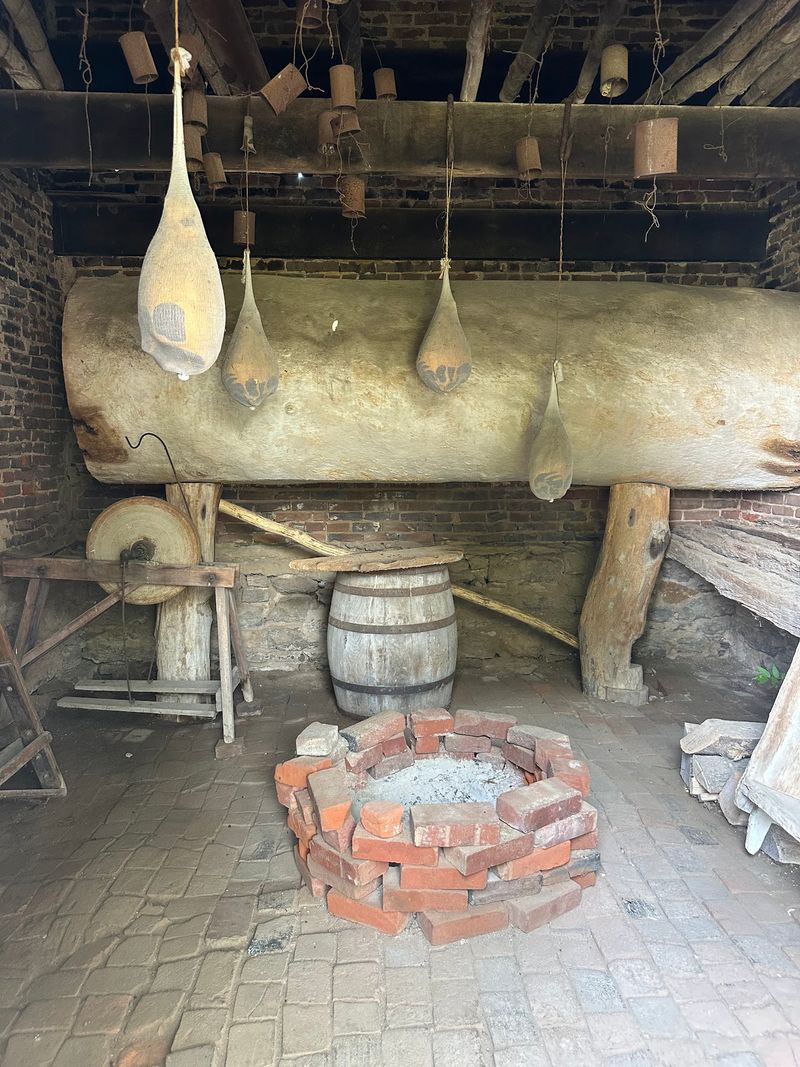
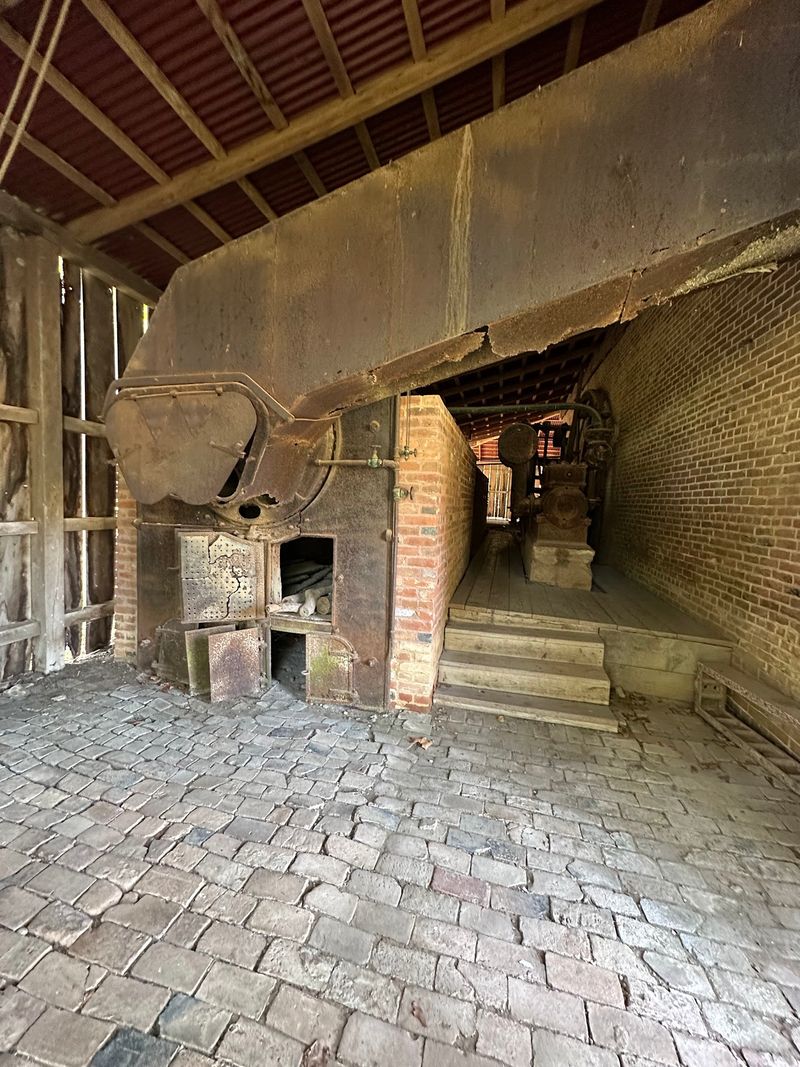
Here is the fact that made me grin. The power source for all those machines included a 30-foot riverboat boiler that came upriver by steamboat from St. Louis.
Paired with a 65-horsepower steam engine, that boiler drove every shaft, belt, and pulley in the building. No river wheel, no wind, just steam and coal and constant tending.
Think about the logistics for a second. Someone loaded a boiler the length of a school bus onto a boat, floated it up the Missouri, then hauled it overland to a farm near Lawson.
The engineering side of the operation is exactly why the site picked up its Mechanical Engineering Historic Landmark status in 1980. This was serious industrial technology for rural Missouri.
I found myself more interested in the power system than the looms, which surprised me. There is something impressive about the plumbing of an old factory, all the ways force got distributed through a building.
The mill ran at full capacity right up until 1886, then slowed before closing in 1898 as bigger eastern factories took over the market.
Ask about how workers kept the boiler fed. The answer involves a lot more manual labor than most people picture.
Inside The Watkins Family Home
The house tour turned out to be my favorite surprise of the day. Completed sometime between 1850 and 1854, the Watkins home is a two-and-a-half story Greek Revival brick residence, and it sits a short walk from the mill.
Rooms are furnished to reflect life in the 1870s, so you get a real sense of how a large family lived while running a factory out the back door.
Outbuildings scatter across the yard, and each had a purpose. A summer kitchen kept cooking heat out of the main house, while the smokehouse, icehouse, and fruit dry house handled food storage before refrigeration existed.
The icehouse fascinated me most. Cutting and storing ice so it lasted through a Missouri summer required planning that started in the dead of winter.
House tours and mill tours are separate, and each runs roughly 45 minutes. I would recommend doing both if your schedule allows, since the contrast between home and factory is the whole point.
Stairs are involved in both buildings, so plan accordingly if mobility is a concern.
Tours generally start on the hour, which makes timing easy. Just check ahead so you do not arrive after the final one leaves.
The Octagon Schoolhouse, Church, And Living History Grounds
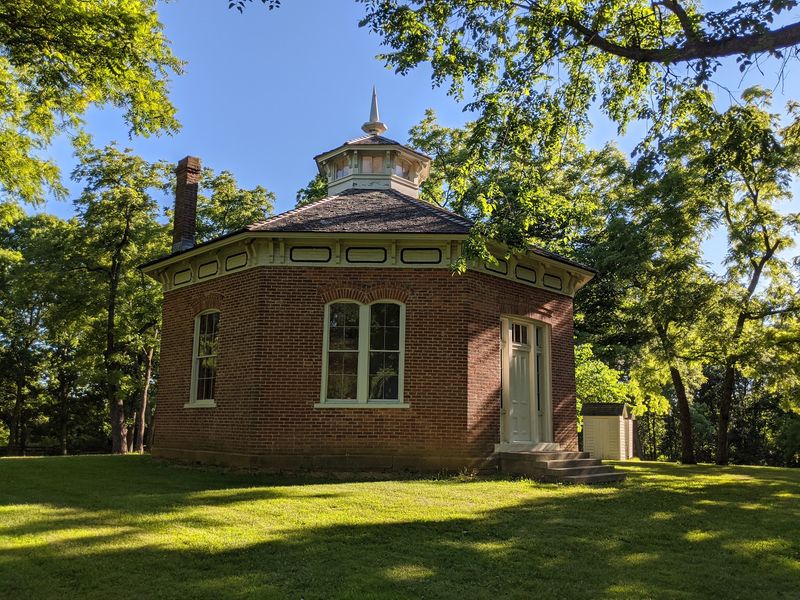
Two small buildings on the property caught my eye before I even reached the mill. Franklin Academy, built in 1856, is an octagonal schoolhouse, and its eight-sided shape is genuinely odd for a country school.
Nearby stands Mount Vernon Church, put up in 1871. Both served the Watkins family and the people who worked for them, which tells you this was a whole community, not just a workplace.
By 1870 the Bethany Plantation had grown to 3,660 acres, and it operated as a nearly self-sufficient world with its own school, church, farm, and factory.
Living history programs bring some of that back to life. An heirloom garden grows the kinds of vegetables the family would have eaten, and minor breed livestock graze nearby.
I spent a while at the fence just watching the animals, which felt like the right way to slow down after all those machines.
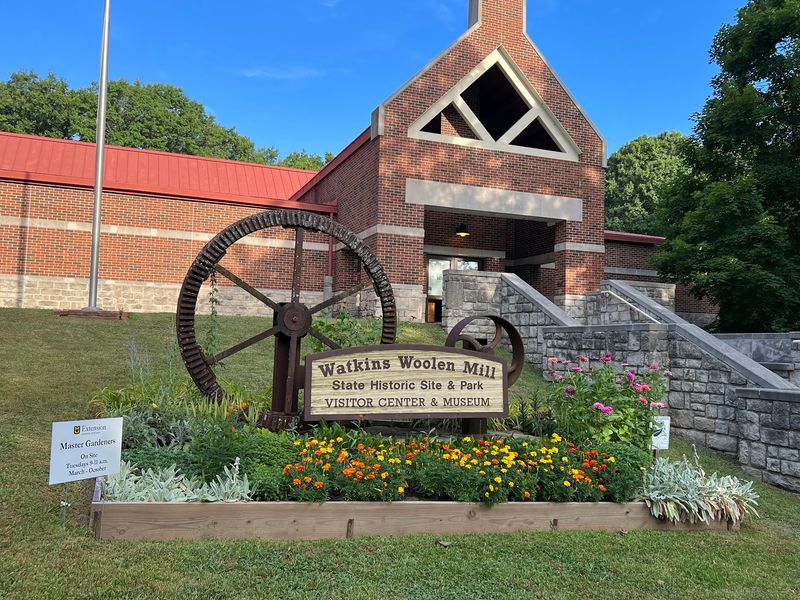
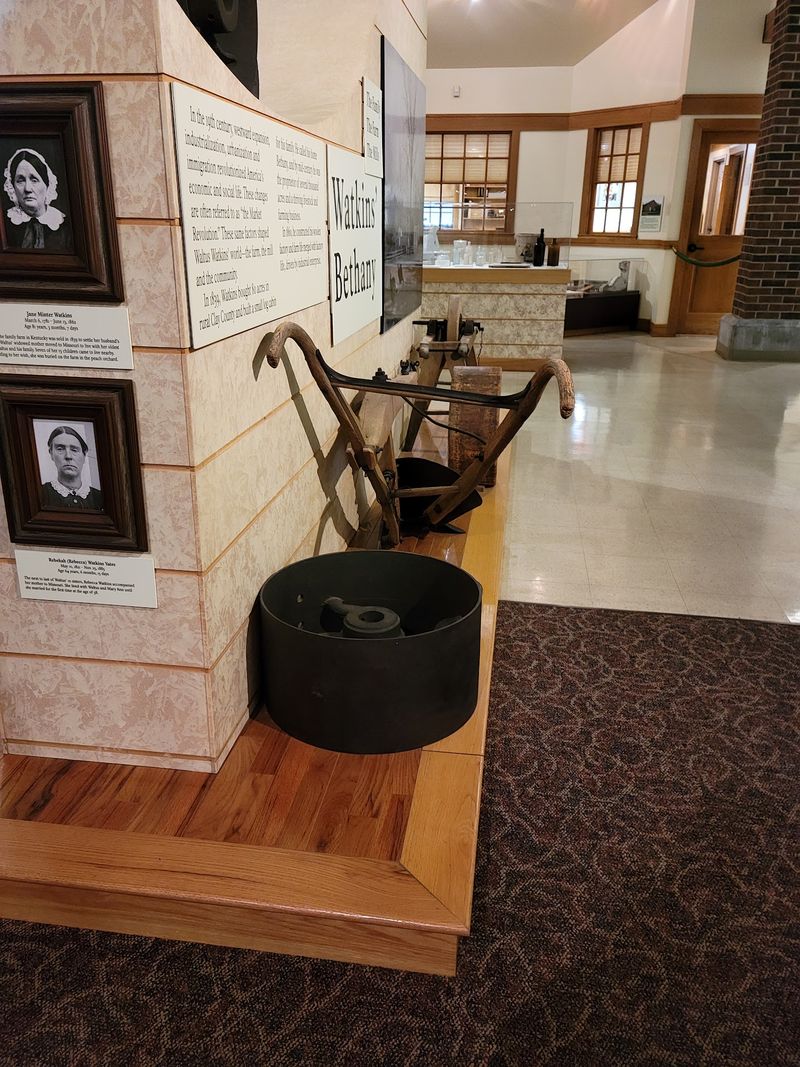
Start your visit at the visitor center. Exhibits there cover the Watkins story, the farm, and how industrialization changed rural Missouri, plus there is a small gift shop and a miniature model of the mill.
Address: 26600 Park Road N, Lawson, MO 64062
