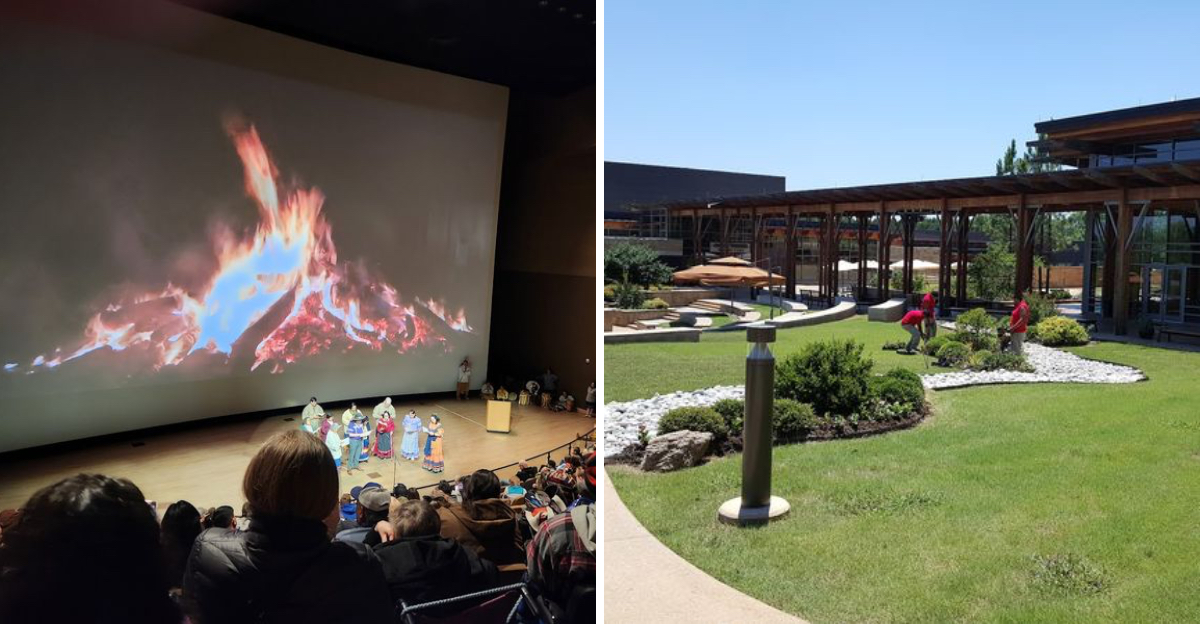
I still remember the moment I first walked onto the grounds of the Chickasaw Cultural Center in Sulphur, Oklahoma. The sprawling campus, nestled in the rolling hills of southern Oklahoma, instantly transported me to a world where centuries of tradition meet modern storytelling.
This isn’t just another museum where you shuffle past glass cases and read plaques. It’s a living, breathing celebration of the Chickasaw Nation, one of the most influential tribes in American history.
From the moment the friendly guard waved me through the entrance gate, I knew I was about to experience something extraordinary.
The center tells the story of a people who survived forced removal, adapted to new lands, and built a thriving nation that continues to honor its past while embracing the future.
A Campus That Takes Your Breath Away
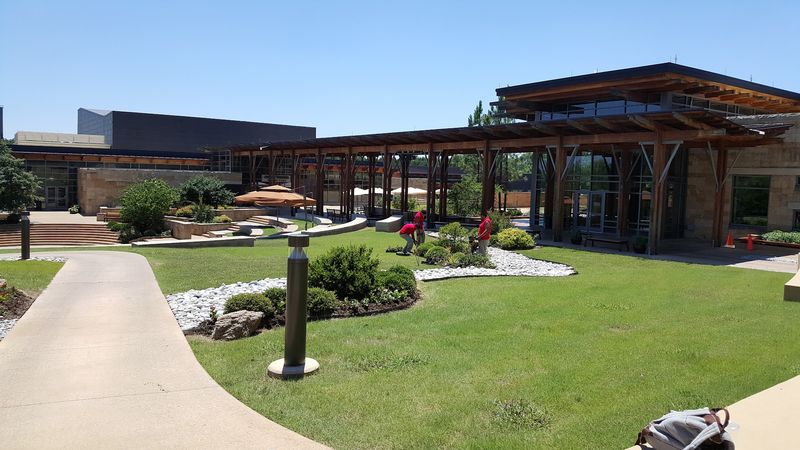
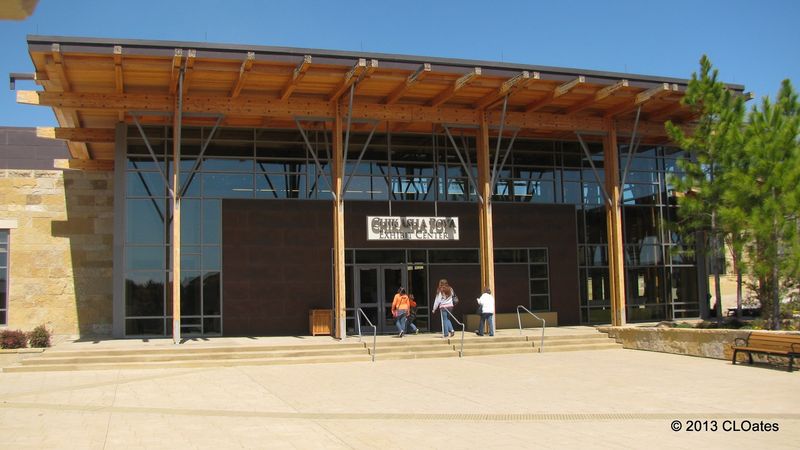
Walking through the entrance at 867 Cooper Memorial Rd, I was immediately struck by how the architects managed to blend contemporary design with natural beauty. The buildings seem to rise organically from the landscape, their lines echoing the curves of the surrounding hills.
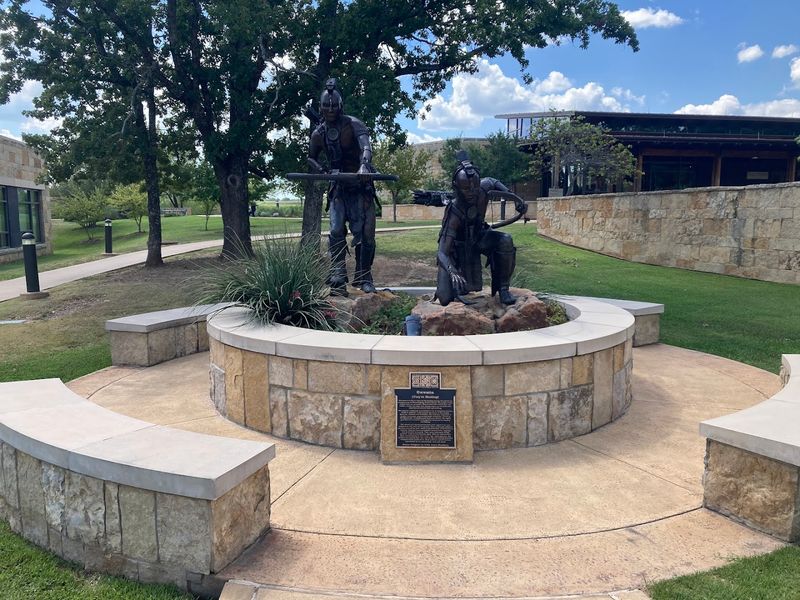
Everything about this place feels intentional and thoughtful. The Honor Garden sits like a peaceful sanctuary, inviting visitors to pause and reflect.
Stone pathways wind through carefully maintained grounds, connecting different areas of the campus in ways that encourage exploration rather than rushing.
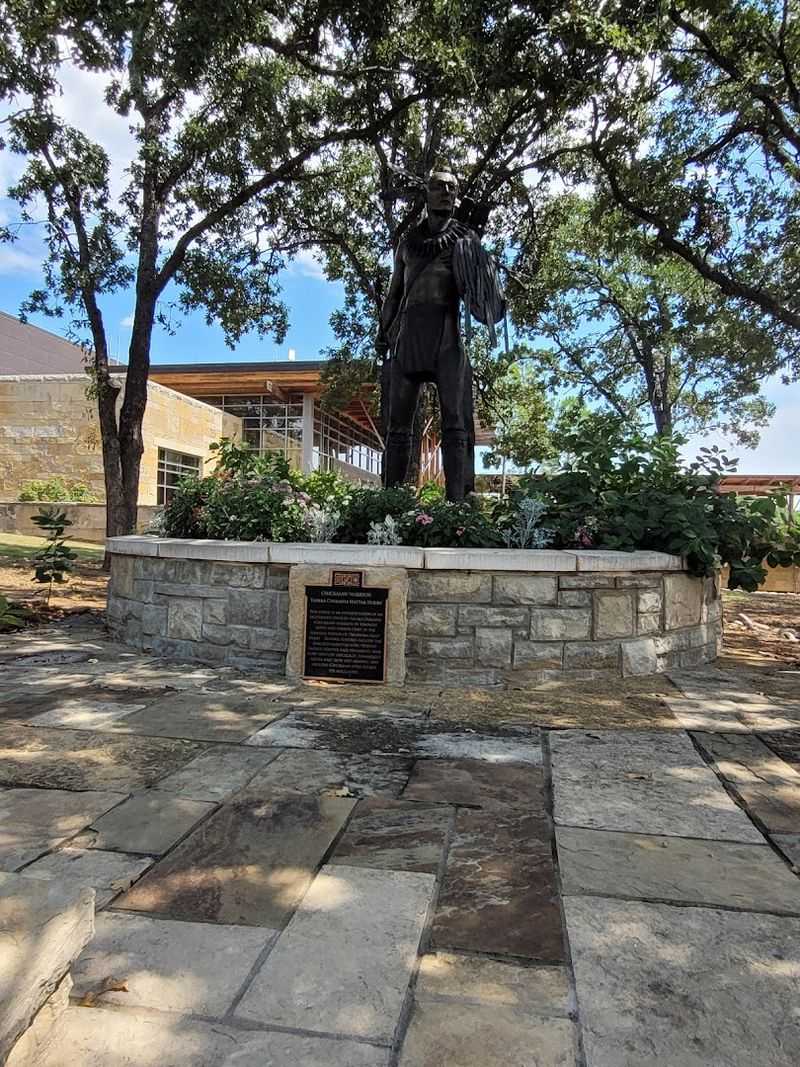
What impressed me most was how the center manages to feel both grand and welcoming at the same time. Bronze statues scattered throughout the property tell stories without words, their presence commanding respect while adding artistic depth to every corner.
The spiral garden offers a meditative walk that symbolizes the journey of the Chickasaw people.
I found myself constantly stopping to take photos, though my camera never quite captured the full majesty of the setting. The way afternoon light plays across the buildings creates an almost ethereal quality.
Staff members mentioned they’re embarking on a five-year construction project to expand even further, which speaks to the center’s commitment to growth and education.
The Traditional Village Brings History to Life
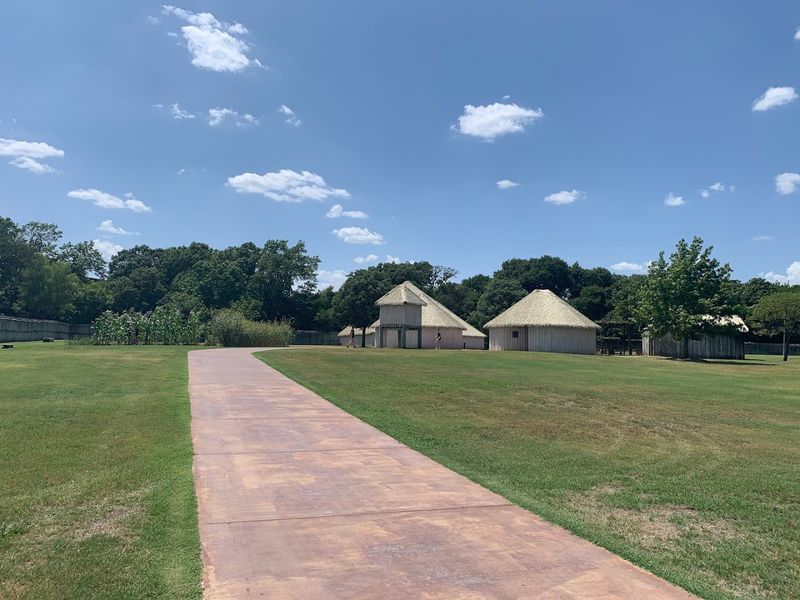
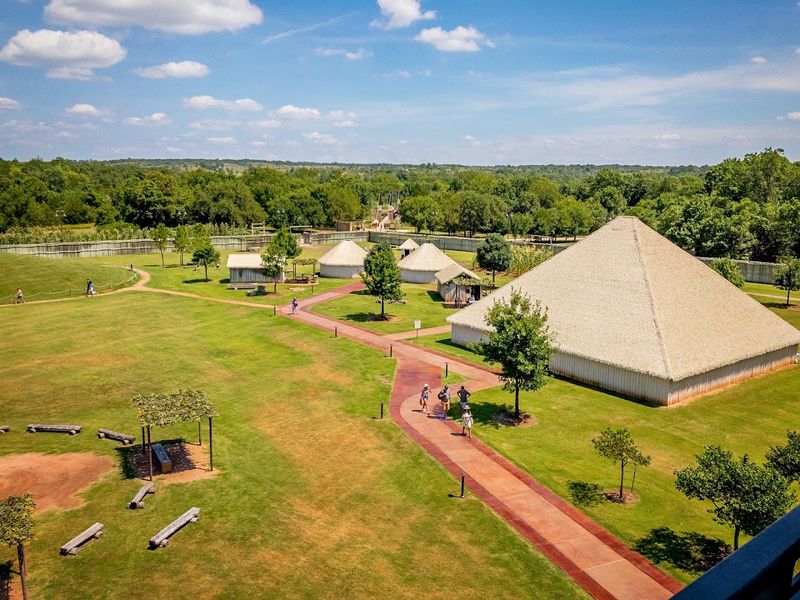
The outdoor village replica stands as one of the most impressive reconstructions I’ve encountered at any cultural site. Unlike static displays that feel frozen in time, this village invites you to step directly into the daily life of Chickasaw ancestors.
Each structure serves a specific purpose, from family dwellings to communal gathering spaces.
I spent nearly an hour wandering between the buildings, imagining what life must have been like centuries ago. The thatched roofs, carefully constructed using traditional methods, provide shade and demonstrate the ingenuity of Chickasaw engineering.
Interpretive signs explain the function of each space without overwhelming visitors with information.
What made the experience particularly special was encountering staff members throughout the village who shared stories and answered questions. Their knowledge runs deep, and their passion for preserving these traditions shines through every conversation.
One guide explained how families would have organized their living spaces and the significance of central fire pits.
The village sits on a hillside that offers beautiful views of the surrounding Oklahoma countryside. I visited during spring when wildflowers dotted the landscape, adding splashes of color to an already picturesque setting.
This immersive experience helps visitors understand that Chickasaw history isn’t confined to books but lives on in tangible, touchable ways.
Stomp Dancing Connects Past and Present
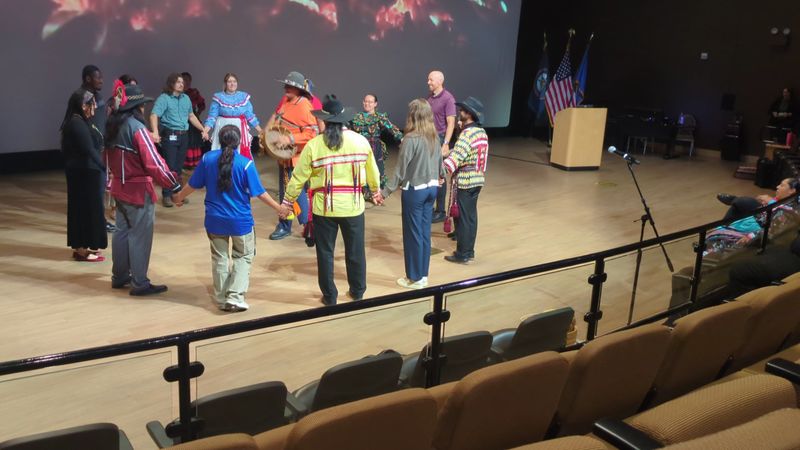
Attending a stomp dance demonstration ranks among the most memorable experiences of my visit. Scheduled daily at 11 AM and 1 PM, these performances offer far more than entertainment.
They represent a living tradition passed down through generations, and watching young dancers carry forward these ancient rhythms filled me with genuine emotion.
The guide who introduced the demonstration explained the meaning behind each movement and sound. Turtle shell shakers worn around dancers’ legs create rhythmic patterns that sync with singing and footwork.
Three different traditional dances were performed, each with its own story and cultural significance.
What struck me most was the interactive nature of the presentation. Children from the audience were invited to join in, learning basic steps and becoming part of the circle.
My own kids jumped at the chance, and their faces lit up as they stomped alongside experienced dancers who patiently showed them the movements.
The performances take place in an outdoor area that feels both intimate and spacious. Staff members emphasized that stomp dancing isn’t a relic of the past but an active practice within the Chickasaw community today.
Young people continue learning these dances, ensuring that future generations will carry forward traditions that have survived centuries of change. This continuity between past and present makes the demonstration especially powerful and relevant.
The Museum Tells Difficult Truths
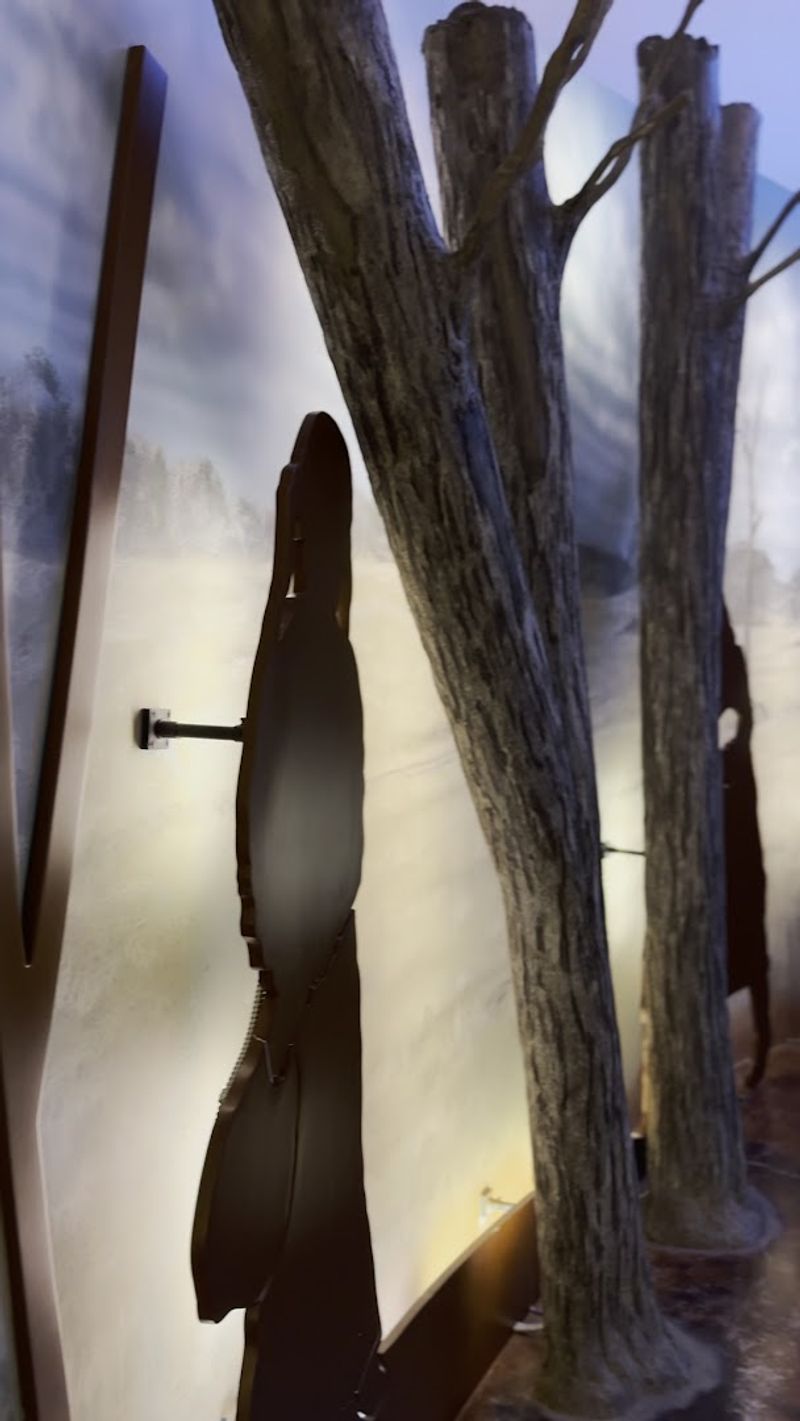
Stepping into the museum portion of the center requires an admission fee, but the investment proves worthwhile for anyone seeking deeper understanding.
The exhibits don’t shy away from painful chapters in Chickasaw history, including forced removal and the trauma of government boarding schools designed to erase Native identity.
I found myself standing in front of a barber chair where children once sat while their hair was cut against their will. Reading letters written by these children, seeing their words preserved behind glass, created a profound connection across time.
The emotional weight of these displays is profound and deeply moving.
Yet the museum balances sorrow with celebration. Exhibits showcase Chickasaw contributions to American society, highlighting leaders, artists, and innovators who shaped history despite facing systematic oppression.
The narrative arc moves from survival to resilience to thriving, showing how the nation rebuilt itself and continues growing stronger.
Interactive displays engage visitors of all ages, making complex history accessible without oversimplifying. I appreciated how the museum presents information at multiple levels, allowing children to grasp basic concepts while adults can dive into nuanced details.
The architecture of the museum itself deserves mention, with thoughtful use of light and space that enhances rather than distracts from the stories being told.
Cafe Food That Honors Tradition
I’ll admit I wasn’t expecting much from a museum cafe, but the restaurant at the Chickasaw Cultural Center completely exceeded my assumptions. The menu features traditional Chickasaw foods prepared with obvious care and respect for authenticity.
Every dish tells a story about the tribe’s culinary heritage and relationship with the land.
The venison stew deserves special mention as possibly the best I’ve ever tasted. Tender chunks of meat practically melted in my mouth, swimming in a rich broth flavored with traditional seasonings.
One reviewer called it the best venison they’d had in their entire life, and I completely understand that sentiment.
I also tried the buffalo burger, which offered a leaner but incredibly flavorful alternative to standard beef. The Chickasaw special, priced at just ten dollars, provides an excellent introduction to several traditional dishes on one plate.
Grape dumplings proved to be a unique dessert experience, sweet and comforting in unexpected ways.
The cafe staff radiates warmth and knowledge about the food they serve. They’re happy to explain ingredients and preparation methods, turning a simple meal into an educational experience.
The dining area overlooks beautiful portions of the campus, making lunch or dinner feel like a special occasion rather than just refueling between exhibits. This commitment to culinary tradition adds another dimension to understanding Chickasaw culture.
Accessibility and Thoughtful Design
One aspect that impressed me throughout my visit was how thoughtfully the center accommodates visitors with different mobility needs. The sprawling campus covers significant ground, which could prove challenging for some guests.
The solution comes in the form of tram service that picks up visitors from the parking area and transports them to various destinations throughout the property.
These aren’t impersonal shuttle buses but friendly cart drivers who double as informal tour guides, sharing tidbits of information during the short rides. The service runs regularly throughout operating hours, ensuring nobody feels stranded or overwhelmed by distances between buildings and outdoor exhibits.
Pathways throughout the campus are well-maintained and navigable, though the terrain does include some hills that reflect the natural Oklahoma landscape. I saw families with strollers moving comfortably through most areas, and ramps provide alternatives to stairs at key locations.
The staff clearly considered how people of all ages and abilities could fully experience what the center offers.
Restrooms are clean and conveniently located, another detail that enhances the overall visitor experience. Benches appear at regular intervals, offering rest stops with beautiful views.
The attention to these practical matters doesn’t detract from the cultural focus but rather supports it, ensuring that physical limitations don’t prevent anyone from engaging with Chickasaw history and traditions. This inclusive approach reflects the welcoming spirit mentioned repeatedly in visitor reviews.
Perfect Timing for Your Visit
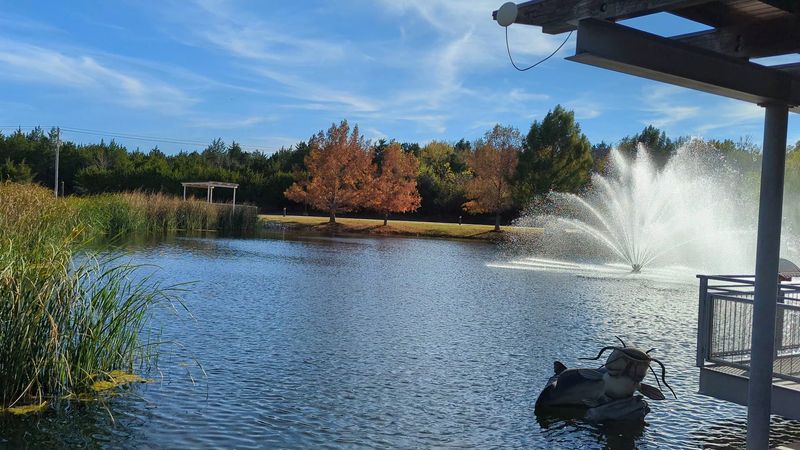
Planning when to visit the Chickasaw Cultural Center can significantly impact your experience. The facility operates Tuesday through Saturday from 10 AM to 5 PM, remaining closed on Sundays and Mondays.
I recommend arriving when doors open to maximize your time exploring the extensive campus without feeling rushed.
Spring and fall offer particularly pleasant weather for walking the outdoor portions of the center. Oklahoma summers can bring intense heat, though the air-conditioned indoor spaces provide welcome relief.
I visited during September and found the temperature perfect for spending hours outside exploring the village and gardens without discomfort.
Special events throughout the year add extra dimensions to the standard experience. The Toompalli festival brings additional activities for children, while the Christmas light display transforms the campus into a magical wonderland.
These seasonal offerings are free and draw crowds, so arriving early helps secure parking and avoid congestion.
Weekday visits tend to be less crowded than Saturdays, allowing for more intimate interactions with staff and performers. However, the energy of weekend crowds brings its own appeal, especially during stomp dance demonstrations when larger audiences create communal excitement.
Before visiting, I suggest calling ahead to confirm cafe hours, as they don’t always align perfectly with the center’s operating schedule. This small step prevents disappointment if you’re planning to enjoy traditional Chickasaw food during your visit.
Free Access to Most Experiences
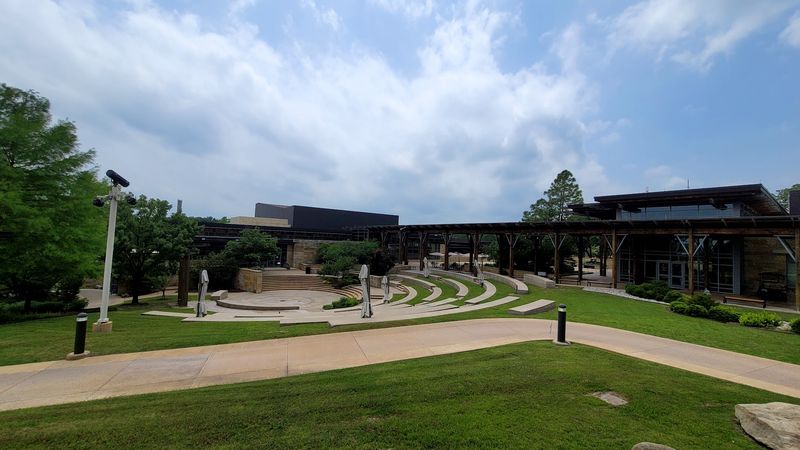
Perhaps the most remarkable aspect of the Chickasaw Cultural Center is its accessibility not just physically but financially. The majority of the campus and its offerings come with no admission charge whatsoever.
You can explore the grounds, walk through the village, watch stomp dance demonstrations, and enjoy outdoor exhibits without spending a penny beyond gas money to get there.
This generous approach to sharing Chickasaw culture stands in stark contrast to many attractions that nickel and dime visitors at every turn. Only the museum portion requires an admission fee, and even that proves reasonable compared to similar institutions.
The policy reflects a genuine desire to educate and share rather than simply profit from cultural heritage.
Free comic books available for children provide another thoughtful touch that families appreciate. One reviewer mentioned their kids devoured these educational comics within twenty-four hours of visiting, demonstrating how effective storytelling can engage young minds.
These small gifts extend the learning experience beyond the physical visit.
The cafe operates as a separate business, so food purchases are additional, but prices remain very reasonable for the quality and uniqueness of what’s offered.
I found myself calculating the value of my visit as I drove away, realizing that a full day of world-class cultural education had cost my family less than a single movie theater trip.
This commitment to accessibility ensures that economic barriers don’t prevent anyone from learning about and appreciating Chickasaw history and traditions.
Educational Value for All Ages
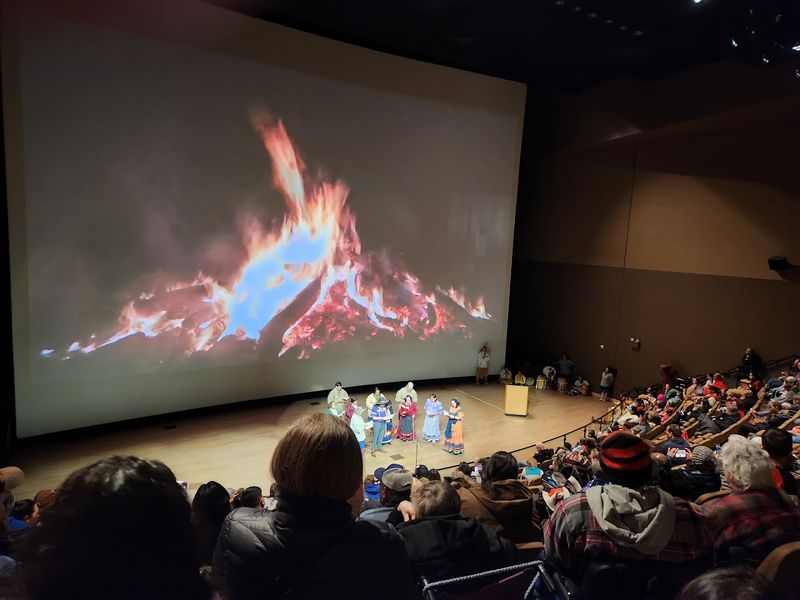
Teachers and parents constantly search for destinations that genuinely educate while keeping children engaged, and the Chickasaw Cultural Center delivers on both fronts brilliantly.
The approach to presenting information works across age ranges, offering depth for adults while remaining accessible to younger visitors who might struggle with dense historical text.
I watched kids light up during hands-on demonstrations, particularly when staff taught them to play stickball, a traditional Chickasaw sport. The employees didn’t just explain the game but actively played with children, creating memories that will stick far longer than any textbook lesson.
This interactive philosophy extends throughout the center, turning passive observation into active participation.
School groups frequently visit, and the center clearly designed programming with educational standards in mind. However, the experience never feels like homework or obligation.
Instead, learning happens naturally through storytelling, visual displays, and personal connections with knowledgeable guides who answer questions with patience and enthusiasm.
For older visitors, including retirees and history enthusiasts, the center offers layers of complexity that reward careful attention and thoughtful engagement.
I overheard several conversations between staff and visitors that went deep into linguistic preservation, political history, and contemporary Chickasaw governance.
The center serves as a bridge between academic rigor and popular education, making sophisticated concepts understandable without dumbing them down. This balance makes repeat visits worthwhile as understanding deepens over time.
The Butterfly Garden and Natural Spaces
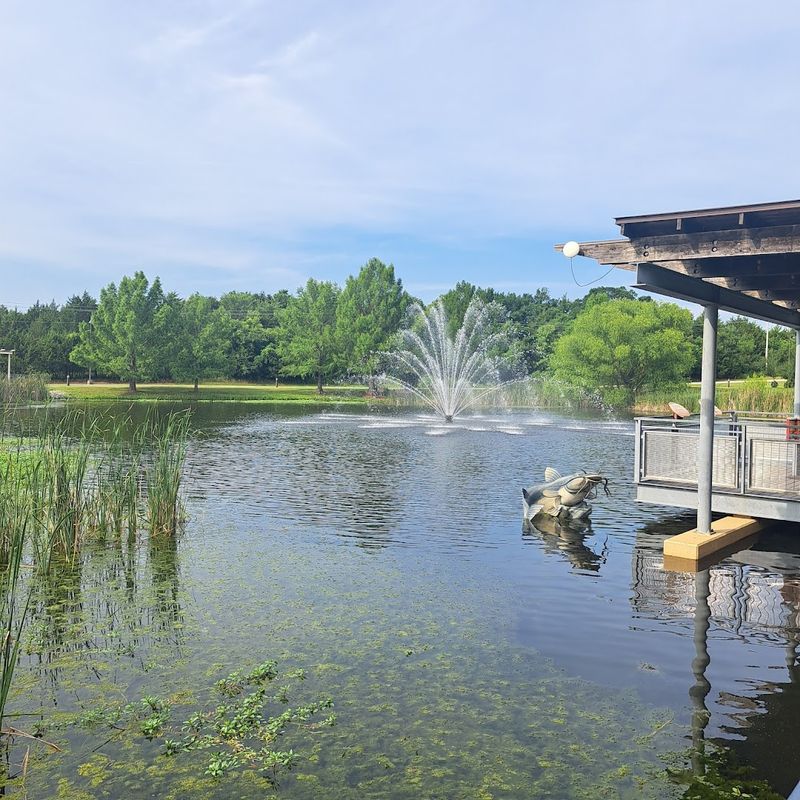
Beyond the buildings and structured exhibits, the natural spaces at the Chickasaw Cultural Center deserve exploration and appreciation.
The butterfly garden creates a living laboratory where visitors can observe these delicate creatures while learning about native Oklahoma plants that support local ecosystems.
Special butterfly festivals held periodically bring additional programming focused on environmental education.
I visited during a weekday when the garden wasn’t crowded, allowing me to wander the paths at my own pace. The landscaping reflects traditional Chickasaw understanding of the relationship between people and land, showing how the tribe has always practiced environmental stewardship.
Interpretive signs explain which plants served medicinal purposes, which provided food, and which held ceremonial significance.
The spiral garden mentioned earlier offers another contemplative natural space. Its design carries symbolic meaning related to life’s journey and the cyclical nature of seasons and generations.
Walking the spiral provides a meditative break from the information-dense indoor exhibits, giving your mind time to process what you’ve learned.
Throughout the campus, native trees and carefully maintained grounds demonstrate that beauty and education need not exist separately. The Chickasaw Cultural Center sits near the Chickasaw National Recreation Area, and the landscape design echoes the natural beauty of southern Oklahoma.
These outdoor spaces remind visitors that Chickasaw culture developed in relationship with specific land, plants, and animals, making the environment itself part of the story being told.
Staff Knowledge Creates Personal Connections
Technology and exhibits can only accomplish so much in cultural education. The real magic happens through human connection, and the staff at the Chickasaw Cultural Center elevate the entire experience through their knowledge, warmth, and obvious pride in their heritage.
From the security guard at the entrance to the museum docents to the cafe servers, every employee seems genuinely invested in visitor satisfaction.
I asked countless questions during my visit, sometimes interrupting staff members who were clearly busy with other tasks. Not once did anyone seem annoyed or dismissive.
Instead, they took time to provide thoughtful answers, often expanding on my original question to provide context I hadn’t even known to ask about. This generosity with their time and knowledge transforms a good visit into an exceptional one.
Many staff members are Chickasaw themselves, bringing personal and family connections to the history being shared. Hearing someone say “my grandmother remembered” or “in our family we still” adds authenticity that no amount of research can replicate.
These personal touches help visitors understand that this isn’t ancient history sealed away in the past but living culture practiced today.
The professionalism combined with genuine warmth creates an atmosphere where learning feels like conversation among friends rather than a formal lecture. I left feeling not just educated but welcomed, as if I’d been invited into someone’s home to hear their family stories.
This human element, more than any single exhibit or building, makes the Chickasaw Cultural Center truly special.
A Place That Stays With You
Driving away from the Chickasaw Cultural Center as the afternoon sun cast long shadows across the Oklahoma hills, I found myself already planning a return visit.
The experience had exceeded my expectations in every measurable way, but more importantly, it had given me something I hadn’t anticipated: a genuine connection to a people and culture I’d known embarrassingly little about before arriving.
The center accomplishes something rare in cultural institutions. It presents difficult historical truths without dwelling in victimhood, celebrates resilience without glossing over ongoing challenges, and honors tradition while embracing contemporary Chickasaw life.
This balanced approach respects both the past and present, showing how the nation has adapted and thrived despite centuries of adversity.
I’ve recommended the center to dozens of friends since my visit, and several have already made the trip based on my enthusiasm. Each person has returned with similar stories of being moved, educated, and inspired by what they experienced.
The consistent five-star reviews online reflect genuine visitor satisfaction rather than polite courtesy.
What makes the Chickasaw Cultural Center essential isn’t just what you learn but how it changes your perspective. Understanding the full scope of American history requires hearing voices that have been marginalized or silenced.
This center amplifies those voices with dignity, beauty, and power, ensuring that future generations will know the true story of one of Oklahoma’s most influential nations.
Dear Reader: This page may contain affiliate links which may earn a commission if you click through and make a purchase. Our independent journalism is not influenced by any advertiser or commercial initiative unless it is clearly marked as sponsored content. As travel products change, please be sure to reconfirm all details and stay up to date with current events to ensure a safe and successful trip.
