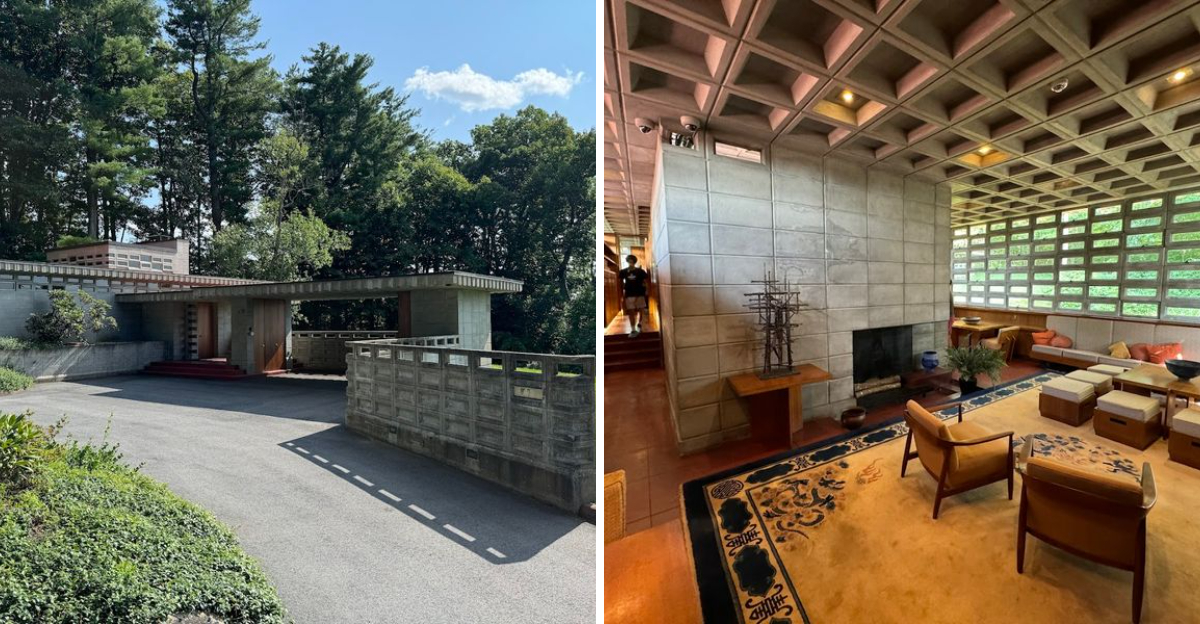
You do not normally expect to find Frank Lloyd Wright houses in New Hampshire, because those usually belong out in the Midwest or tucked into wealthy California neighborhoods. But there are two of them here, hiding in plain sight, and you can actually go inside both of them if you know where to look.
The architecture is unmistakable once you see it, with those low horizontal lines and the way the light comes through the windows at specific times of day. I walked through both houses slowly, trying to figure out how someone thinks the way Wright thought when he designed these spaces.
New Hampshire does not shout about these houses, which is exactly why most people have no idea they exist.
The Currier Museum of Art: Your Gateway to Wright’s World
Every great adventure has a starting point, and for these two legendary houses, that starting point is the Currier Museum of Art on Ash Street in Manchester. The museum itself is a cultural powerhouse, and arriving here feels like the opening chapter of something genuinely special.
Tours of Zimmerman and Kalil Houses depart from this very building, where a shuttle bus whisks small groups directly to the properties on Heather Street. The ticketing process is smooth, the staff is enthusiastic, and the museum’s lobby gives you just enough context to prime your architectural appetite before the real show begins.
New Hampshire does not always get credit as an architectural destination, but the Currier pulls that conversation wide open. Advance reservations are absolutely essential here.
Spots fill up fast, tour groups are intentionally kept small, and walking in without a booking is a gamble you do not want to take. Plan ahead, arrive early, and let the museum set the stage for what is coming next.
Frank Lloyd Wright’s Usonian Vision: What It Actually Means
Before stepping inside either house, it helps to understand the big idea behind them. Frank Lloyd Wright developed his Usonian concept as a direct response to a simple question: could great architecture exist for everyday American families, not just the wealthy elite?
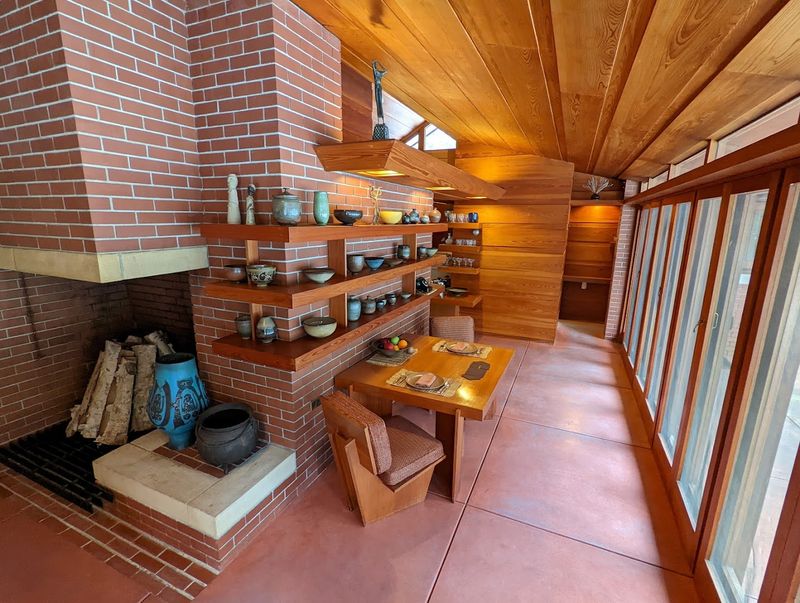
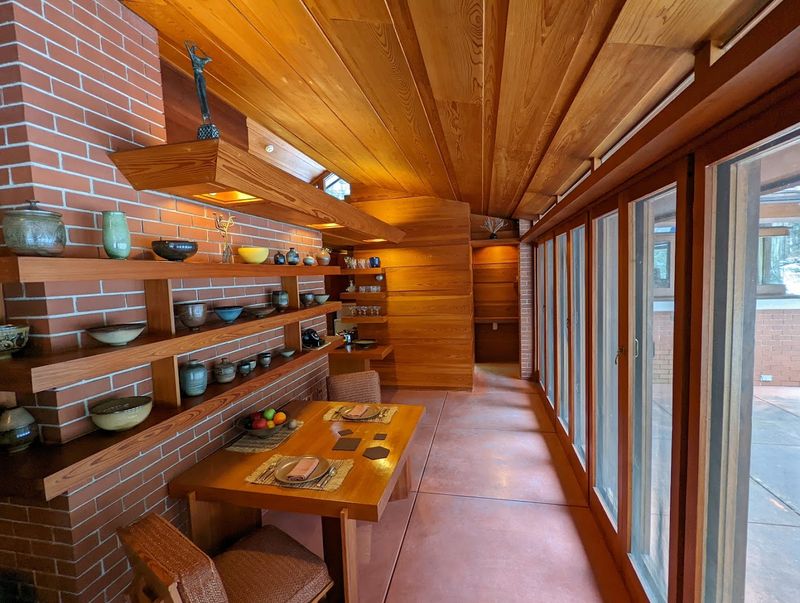
The answer was a resounding yes. Usonian homes feature open floor plans, flat or low-pitched roofs, natural materials like brick and wood, and a seamless connection between interior spaces and the surrounding landscape.
No basements, no attics, no wasted space. Every square inch carries purpose and intention.
What makes the Tours of Zimmerman and Kalil Houses so remarkable is that you get to experience this philosophy not as a museum exhibit behind glass, but as a living, breathing domestic space. Wright designed everything, from the built-in furniture to the garden layout and even the mailbox.
Standing inside a Usonian home in New Hampshire feels less like touring a monument and more like stepping into a perfectly composed piece of music. The philosophy clicks the moment you cross the threshold.
The Zimmerman House: A 1950s Masterpiece Still Frozen in Time
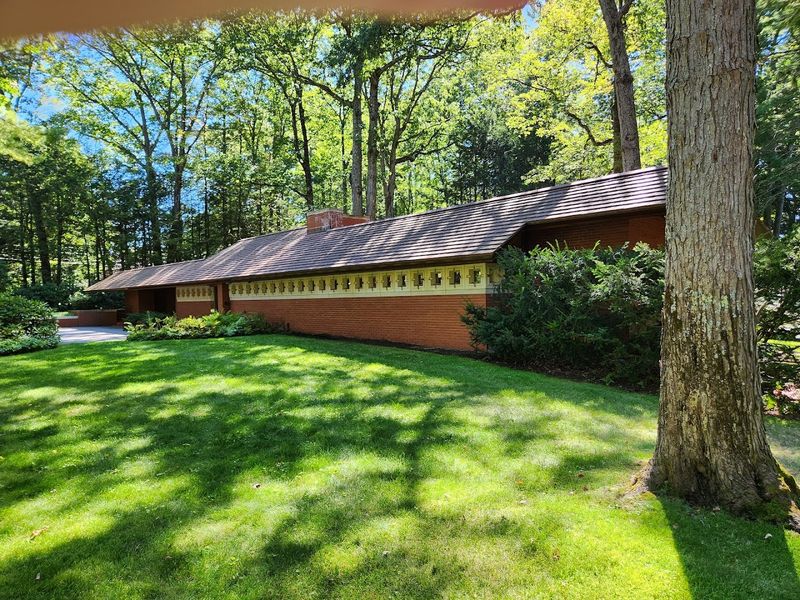
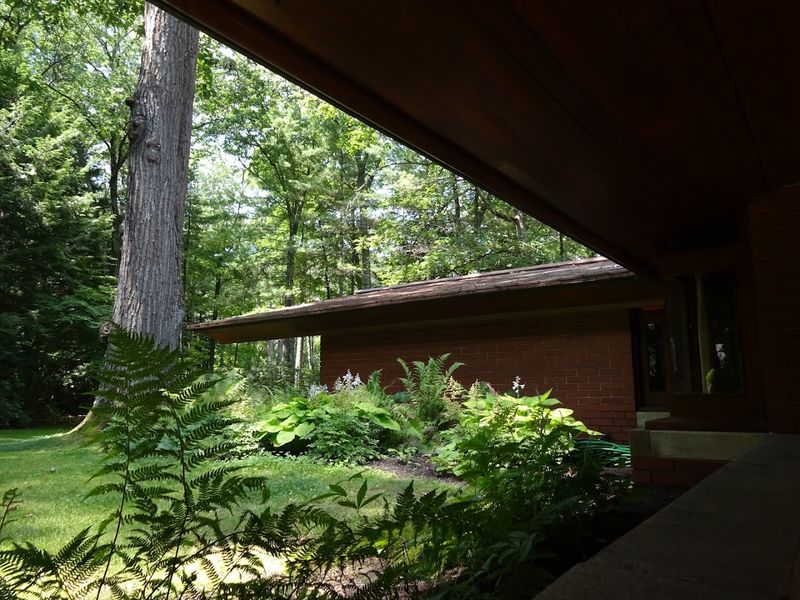
Walking up to the Zimmerman House for the first time, my jaw genuinely dropped. The low horizontal profile hugs the ground with quiet authority, its Georgia cypress and brick exterior blending into the neighborhood landscaping like it grew there naturally.
Commissioned by Dr. Isadore Zimmerman and his wife Lucille, this residence was completed in the early 1950s and represents one of Wright’s most polished formal Usonian designs. The couple lived here for decades before generously bequeathing the property to the Currier Museum of Art, which opened it to the public in 1990.
Inside, the compression of the entry corridor suddenly releases into a breathtaking great room flooded with light from the garden-facing windows. Built-in banquette seating lines the walls, original textiles remain intact, and the spatial choreography Wright engineered feels genuinely ahead of its time.
The Zimmerman House holds the distinction of being the only Frank Lloyd Wright home open to the public in all of New England, a fact that still feels almost unbelievable given how quietly it sits in a Manchester residential street.
The Kalil House: Concrete Blocks and Pure Architectural Daring
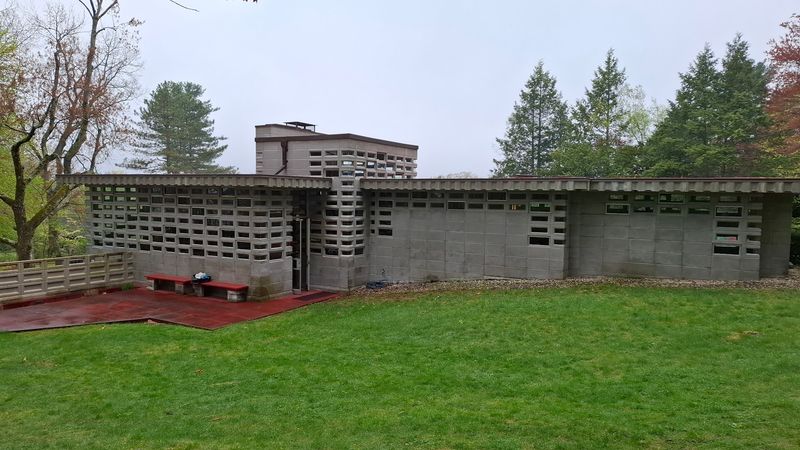
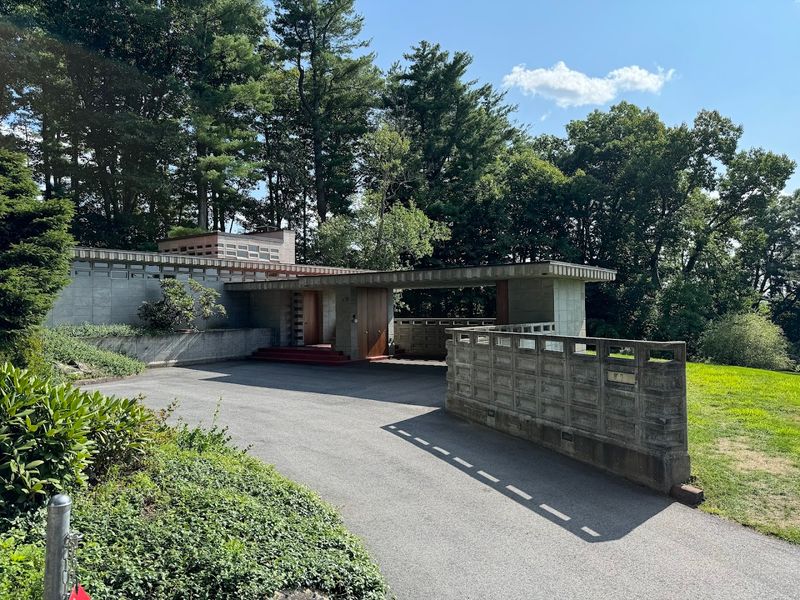
If the Zimmerman House is the polished elder statesman of this architectural duo, the Kalil House is the bold, geometric younger sibling that refuses to be ignored. Designed by Wright in 1955 and completed two years later, this residence belongs to an exceptionally rare category called the Usonian Automatic.
The concept behind Usonian Automatic homes was radical: modular concrete blocks, cast on-site, assembled by the homeowners themselves to reduce construction costs. Only a handful of these homes were ever completed worldwide, making the Kalil House a genuinely rare architectural artifact.
Dr. Toufic Kalil and his wife Mildred were inspired to commission Wright after seeing the Zimmerman House next door, and the resulting design pushed the concrete block concept to its most refined expression.
More than two thousand concrete blocks went into its construction, each one interlocking with geometric precision. The Currier Museum of Art acquired the Kalil House in late 2019, and it has since opened as part of the Tours of Zimmerman and Kalil Houses experience.
Seeing both properties on the same tour reveals just how brilliantly diverse Wright’s residential vocabulary truly was.
Inside the Great Room: Where Wright’s Genius Hits Hardest
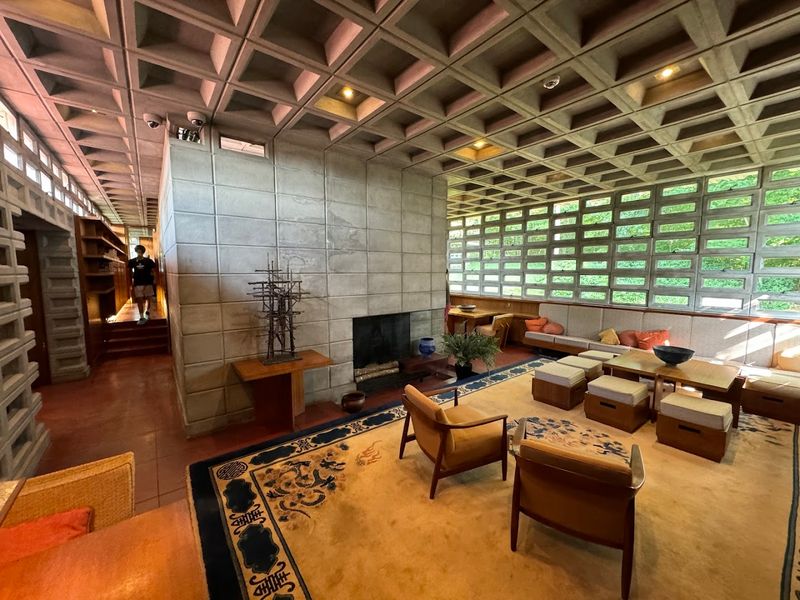
There is a specific moment inside the Zimmerman House when everything Wright intended suddenly snaps into focus. You enter through a deliberately low, compressed corridor, and then the great room opens up before you like a held breath finally released.
Floor-to-ceiling windows along the garden wall dissolve the boundary between inside and outside. Original built-in sofas line the front wall beneath a band of clerestory windows that diffuse light without revealing the street beyond.
The ceiling drops and rises strategically, directing your gaze and your movement through the space with invisible but insistent guidance.
Every piece of furniture was designed by Wright specifically for this room, for these dimensions, for these people. Nothing is decorative for its own sake.
The rugs, the textiles, the planters, all of it participates in a unified composition that feels startlingly modern even decades after completion. New Hampshire does not have many interiors that stop you in your tracks quite like this one.
Spending time in this room is less about looking at architecture and more about feeling what it means to live beautifully within it.
Gardens and Grounds: The Outdoor Rooms Wright Designed
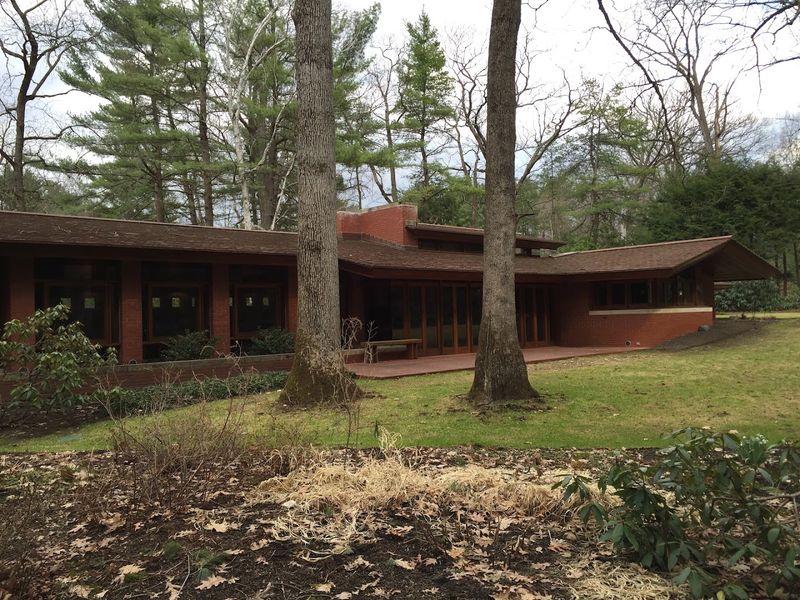
Frank Lloyd Wright never considered a building finished at its walls. The garden at the Zimmerman House is as deliberately designed as any interior space, extending the geometric logic of the architecture outward into the landscape with quiet confidence.
Brick pathways echo the masonry of the house itself. Planting beds follow the same horizontal emphasis that defines the building’s profile.
Even the mailbox, a small sculptural object near the entry, carries Wright’s design signature. Every element of the property was conceived as part of a single unified composition, and walking the grounds reinforces just how total his vision actually was.
The Kalil House grounds share a similar philosophy, with the concrete block geometry of the building finding its echo in the surrounding plantings and hardscape. Touring both properties in New Hampshire on the same afternoon gives you a remarkable sense of how Wright adapted his landscape thinking to two completely different structural systems.
The outdoor spaces are not afterthoughts. They are the final punctuation marks in each home’s architectural sentence, and they deserve the same careful attention you give to the interiors.
The Shuttle Bus Ride: A Short Trip That Builds Serious Anticipation
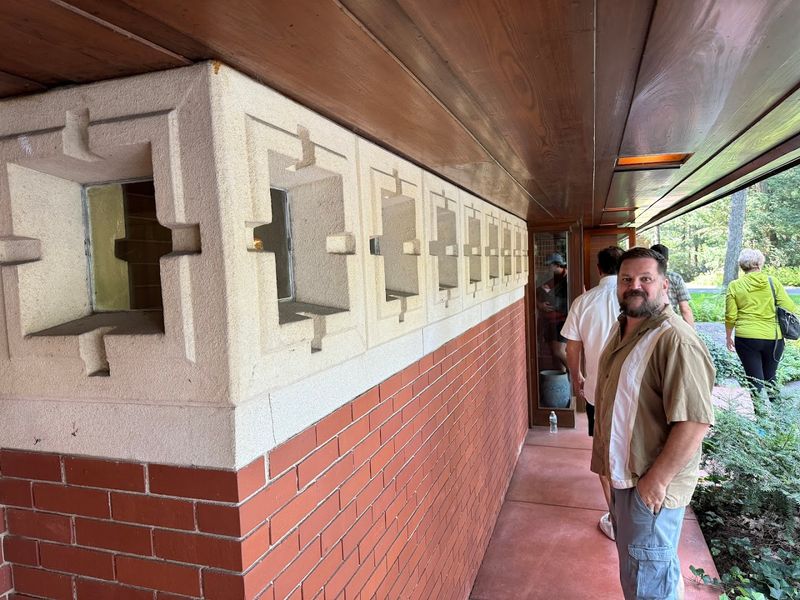
Something unexpectedly charming happens on the short shuttle bus ride from the Currier Museum of Art to the houses on Heather Street. The guide begins talking, the group leans in, and by the time the bus pulls up to the first property, everyone on board is buzzing with anticipation.
That brief transit time is not dead space. It is when the docent establishes the historical and personal context for what you are about to see, weaving together the story of the Zimmerman and Kalil families, their relationship with Wright, and the remarkable chain of events that brought these private homes into public stewardship.
By the time the bus doors open, you are not just a tourist arriving at a landmark.
Tours of Zimmerman and Kalil Houses use this travel time brilliantly, turning a practical logistical necessity into a genuine part of the experience. The guides are knowledgeable, enthusiastic, and clearly devoted to these buildings.
Arriving at the Zimmerman House already primed with context transforms the first glance at that low brick facade from pleasant to genuinely moving. It is a small detail that makes a big difference.
The Rarity Factor: Why These Two Houses Matter So Much
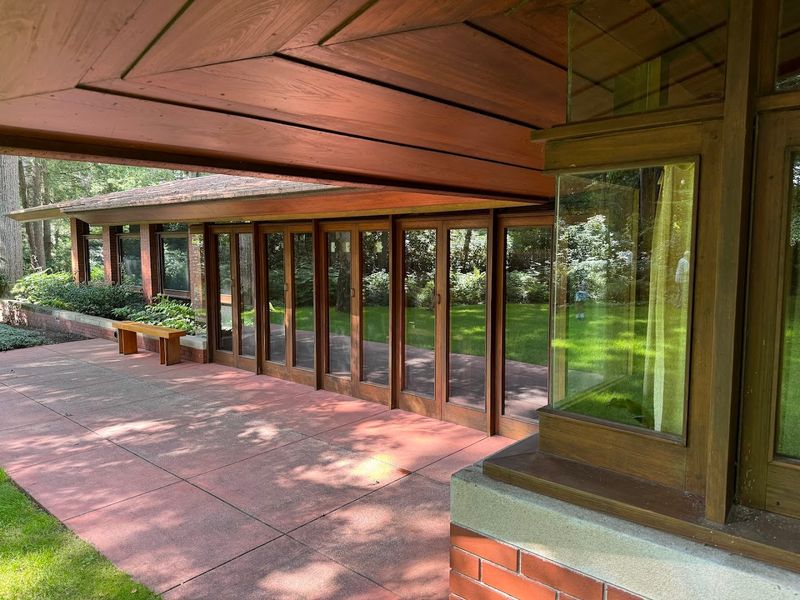
Context matters enormously when appreciating these two properties. The Currier Museum of Art is the only art museum in the entire world that owns and operates two Frank Lloyd Wright-designed buildings.
That fact alone should make any architecture enthusiast stop scrolling immediately.
The Zimmerman House stands as the sole Wright residence open to the public anywhere in New England, a region not typically associated with his work. The Kalil House belongs to a category of only a small number of completed Usonian Automatic homes worldwide, making it a genuinely rare architectural specimen.
Both properties are listed on the National Register of Historic Places, cementing their significance beyond regional pride.
New Hampshire, a state better known for its mountains and fall foliage, quietly holds two of the most significant mid-century modern residential buildings in the country. The Tours of Zimmerman and Kalil Houses experience transforms that quiet fact into a vivid, tangible reality.
Standing inside either building, you feel the weight of that rarity pressing pleasantly against your sense of wonder. These are not merely nice old houses.
They are irreplaceable documents of one of America’s greatest creative minds.
Tips for Making the Most of Your Tour
A little preparation goes a long way when planning a visit to Tours of Zimmerman and Kalil Houses. Book your tickets well in advance through the Currier Museum of Art website, because these tours sell out, and walk-in availability is essentially nonexistent on popular dates.
Tours run Thursday through Sunday, departing from the Currier in the late morning. The full experience lasts roughly ninety minutes to two hours, so wear comfortable shoes and bring a layer since New Hampshire mornings can be brisk even in warmer months.
Protective shoe covers are provided before you enter the homes, a small but important detail that helps preserve the original flooring and textiles.
Photography policies vary, so check current guidelines when booking. After the tour wraps up, your ticket includes complimentary entry to the Currier Museum of Art itself, which houses an impressive permanent collection well worth exploring.
The museum’s cafe is a pleasant spot to decompress and process everything you just experienced. Arriving with some background knowledge of Wright’s Usonian philosophy makes the tour richer, but the guides are so thorough and engaging that even complete newcomers leave feeling like they just took a graduate-level architecture seminar.
Plan Your Visit: Address, Hours, and Getting There
Manchester, New Hampshire is easy to reach from Boston, roughly an hour north on the highway, making it a perfectly viable day trip from most of New England. The city has its own airport and solid highway connections, so logistics are genuinely stress-free for most travelers.
Tours of Zimmerman and Kalil Houses are managed through the Currier Museum of Art, located at 150 Ash Street, Manchester, NH 03104. That is where you check in, board the shuttle, and begin the full experience.
The houses themselves sit on Heather Street nearby, but independent access is not permitted. All visits must go through the museum.
Operating hours run Thursday through Sunday, with morning departure slots available. The museum’s phone number is 603-669-6144, and full tour information along with online booking can be found at currier.org.
Parking near the museum is available and straightforward. If you have never considered Manchester as a travel destination before, let this be the reason that changes your mind.
New Hampshire has been quietly sitting on an architectural treasure for decades, and now the doors are finally open wide enough for everyone to walk through.
