Deep in the Nevada desert lies a place where time stands frozen and history whispers through crumbling walls.
Rhyolite, once a booming mining town with dreams of prosperity, now sits abandoned as one of America’s most captivating ghost towns.
Located at Nevada 89003, about 120 miles northwest of Las Vegas near Death Valley National Park, this eerie settlement tells the story of hope, fortune, and ultimate abandonment.
Walking through its dusty streets feels like stepping into a time machine that takes you back to the early 1900s when thousands of people called this desert outpost home.
The Legendary Cook Bank Building
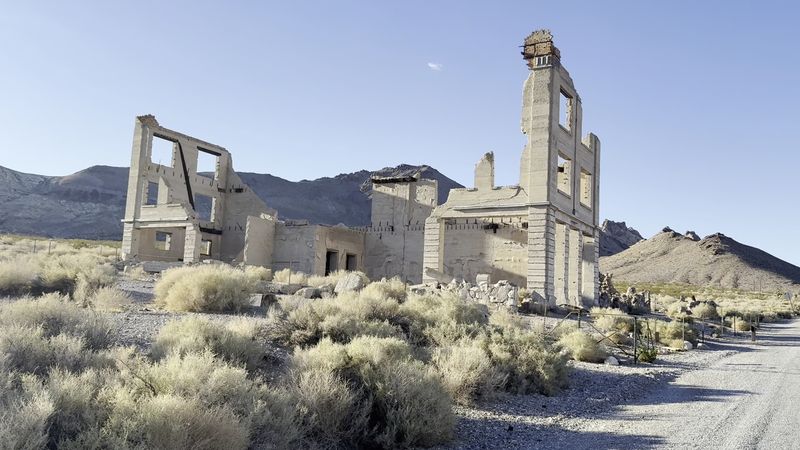
Standing tall among the desert ruins, the Cook Bank Building remains Rhyolite’s most photographed landmark.
Built in 1908 during the town’s golden era, this three-story concrete structure once housed the financial heart of a community bursting with mining wealth.
The building cost an impressive $90,000 to construct, which would be millions in today’s money.
Its thick walls were designed to protect the gold and silver deposits that miners brought in daily from the surrounding Bullfrog Hills.
Today, the building stands as a hollow shell, its windows empty and its roof long gone.
Yet somehow, it maintains an air of dignity despite decades of harsh desert weather.
Visitors can walk right up to the structure and peer inside, imagining the bustling activity that once filled these spaces.
The bank’s survival is remarkable considering many other buildings completely vanished.
Photographers love capturing this building at sunset when the golden light makes the ruins glow.
The stark contrast between the solid concrete walls and the empty desert sky creates an unforgettable image.
Many people report feeling a strange energy around the building, as if the spirits of bankers and miners still linger.
The structure serves as a powerful reminder of how quickly fortunes can change.
What was once a symbol of wealth and permanence is now just another monument to human ambition and nature’s ultimate victory.
The Cook Bank Building stands as Rhyolite’s most enduring legacy, a testament to both human achievement and the fleeting nature of boom towns.
The Mysterious Bottle House
Imagine building your entire home from old beer and liquor bottles.
That’s exactly what Tom Kelly did in 1906 when he constructed Rhyolite’s most unusual dwelling.
With lumber being extremely expensive and scarce in the desert, Kelly got creative with the thousands of discarded bottles littering the mining camp.
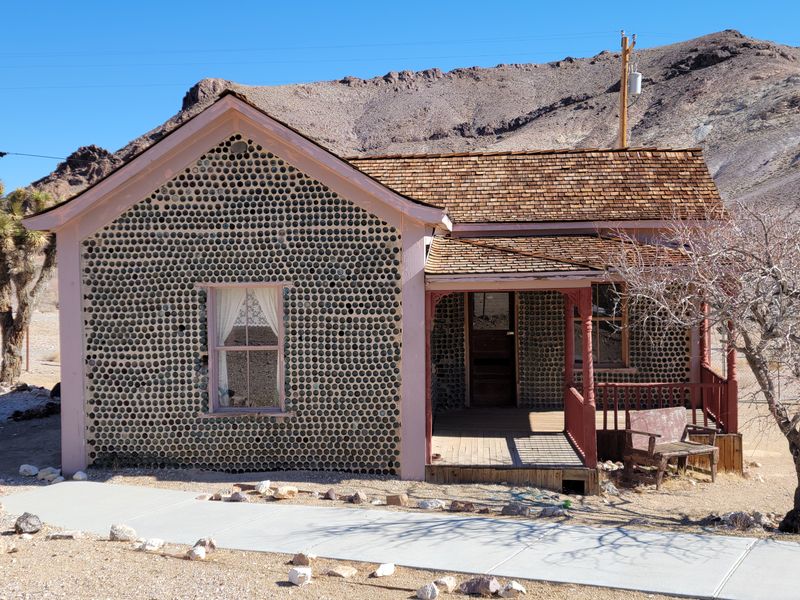
He used approximately 50,000 bottles to build his one-story house, setting them in adobe mud to create sturdy walls.
The bottles were laid on their sides with the bottoms facing outward, creating a unique pattern that caught the sunlight beautifully.
This wasn’t just an artistic statement; it was practical engineering in a place where traditional building materials were hard to come by.
The bottle walls actually provided excellent insulation against the extreme desert temperatures.
During Rhyolite’s heyday, the house became a local curiosity that visitors wanted to see.
After the town’s collapse, the Bottle House somehow survived when almost everything else crumbled.
In the 1920s, it was partially restored by Paramount Pictures for a movie production.
Later restoration efforts in the 1950s helped preserve this architectural oddity for future generations.
Today, it stands as one of the few structures visitors can still appreciate in relatively good condition.
The green, brown, and clear glass bottles create a mosaic effect that changes with the light throughout the day.
Many visitors touch the bottles, connecting with the resourcefulness of early settlers who refused to let harsh conditions defeat their need for shelter.
The Haunting Train Depot Ruins
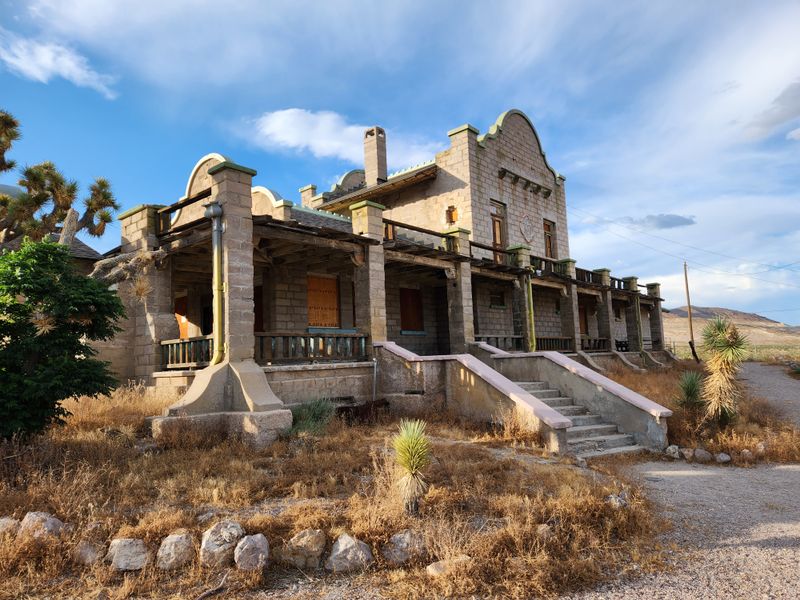
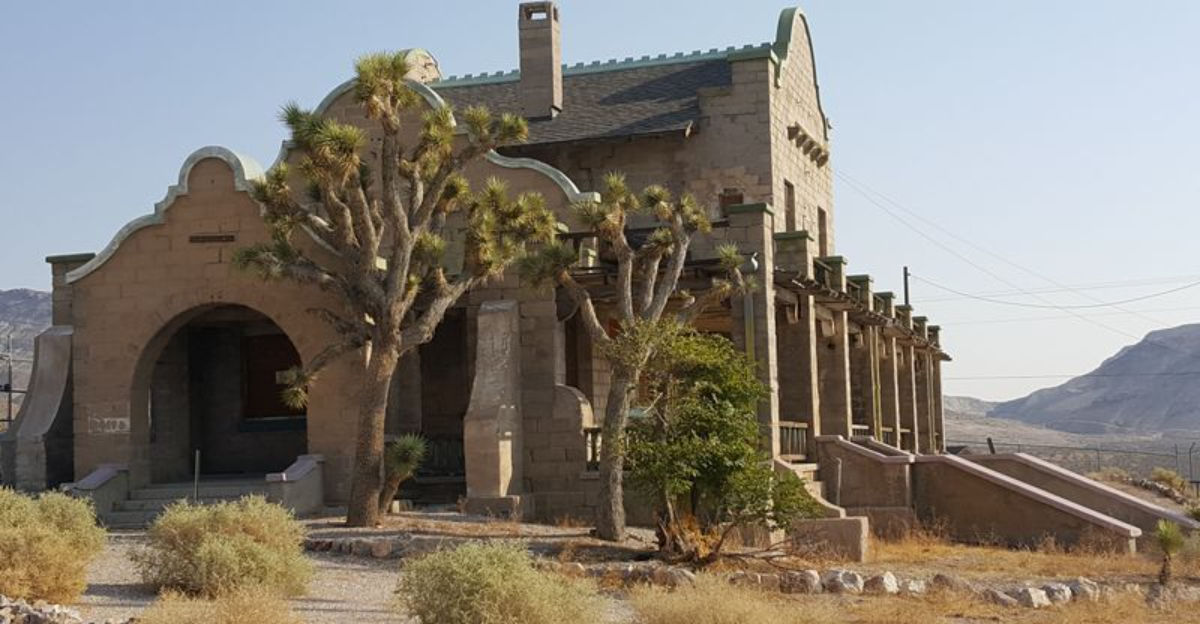
Back when Rhyolite was thriving, the train depot represented the town’s connection to the outside world.
The Las Vegas and Tonopah Railroad made Rhyolite accessible, bringing supplies, mail, and hopeful prospectors to this remote desert location.
The depot building itself was a substantial structure that handled dozens of passengers daily during the boom years.
Trains would arrive with mining equipment, food, furniture, and everything else needed to sustain a growing community.
They’d depart loaded with ore from the mines, carrying the town’s wealth to processing facilities.
At its peak, the depot buzzed with activity from dawn until dusk.
Families reunited on its platform, businessmen made deals in its waiting room, and telegraph messages connected Rhyolite to distant cities.
The railroad company invested heavily in the depot because they believed Rhyolite would become a major Nevada city.
Unfortunately, that optimism proved unfounded when the mines started failing around 1910.
As the population dwindled, train service became less frequent until it finally stopped altogether.
The depot was abandoned along with everything else, left to face the destructive desert elements.
Today, only partial walls and foundations remain where the depot once stood.
Visitors can still trace the outline of the building and imagine the steam engines that once pulled up alongside it.
Some claim to hear phantom train whistles echoing through the valley on quiet nights, though skeptics attribute this to wind and imagination.
The Crumbling School House Foundation
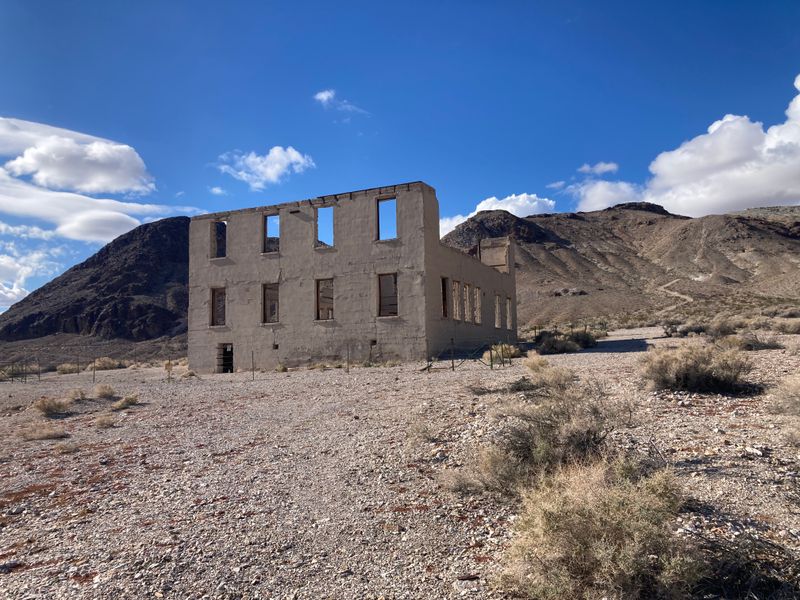
Nothing speaks more powerfully about a community’s hopes than the presence of a school.
Rhyolite built a substantial schoolhouse to educate the children of miners and merchants who believed they were establishing a permanent town.
The school opened its doors in 1909, featuring modern amenities unusual for a frontier mining camp.
It had multiple classrooms, proper desks, blackboards, and even a small library.
Teachers were recruited from established cities back east, lured by higher salaries and the promise of adventure.
At its peak, the school enrolled over 250 students ranging from first grade through eighth grade.
Children learned reading, writing, arithmetic, history, and geography in this desert outpost.
The school also served as a community center where town meetings and social gatherings took place.
Parents invested in their children’s education because they genuinely believed Rhyolite had a future.
Sadly, the school operated for less than three years before declining enrollment forced its closure.
As families left town seeking opportunities elsewhere, classroom after classroom emptied out.
By 1911, so few students remained that keeping the school open no longer made financial sense.
The building was eventually stripped of anything valuable, and nature began reclaiming the structure.
Today, visitors can explore the foundation and imagine the voices of children who once played in this now-silent space.
The Eerie Jail House Remains
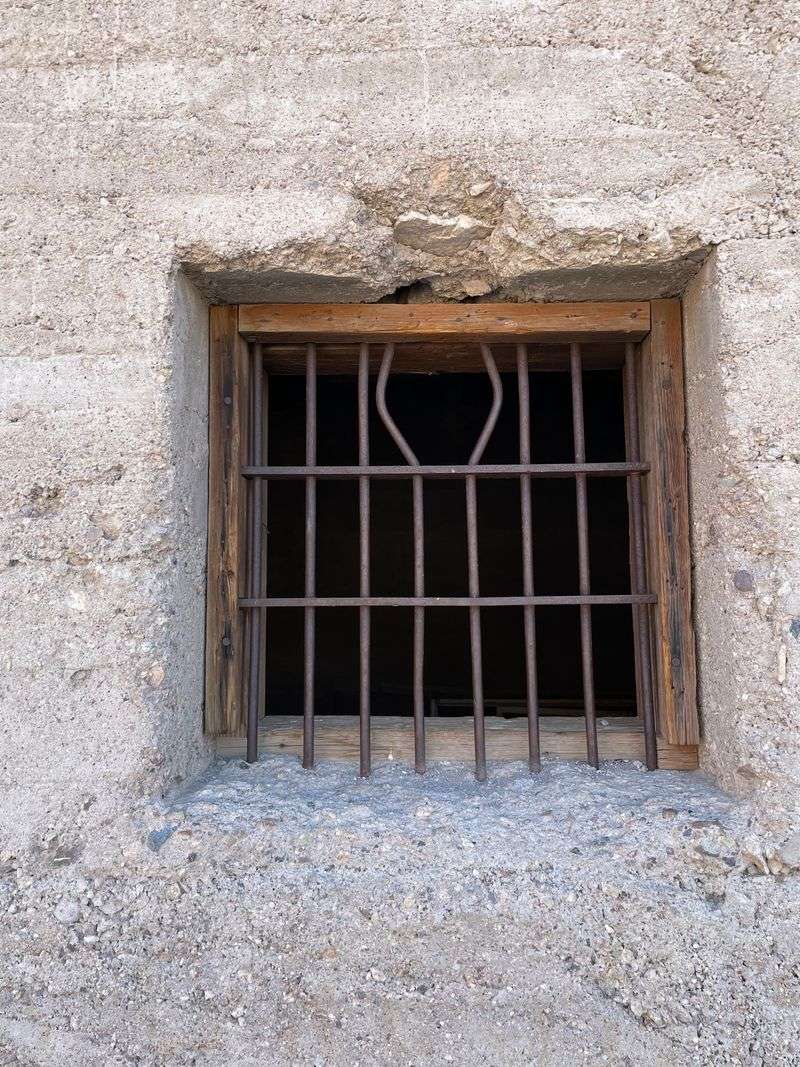
Even boom towns needed law and order, which is why Rhyolite built a sturdy jailhouse.
The small stone building with iron-barred windows housed troublemakers, drunks, and the occasional violent criminal.
Mining towns attracted all types of people, and not everyone came with honest intentions.
Gamblers, con artists, thieves, and claim jumpers all tried their luck in Rhyolite.
The jail kept order in a place where tensions ran high and fortunes could be made or lost overnight.
Its thick walls and small windows were designed to prevent escapes in a town where the nearest proper law enforcement was miles away.
The town marshal and his deputies worked hard to maintain peace among thousands of residents from diverse backgrounds.
Saturday nights were particularly busy, with miners spending their wages on whiskey and entertainment.
Fights would break out in saloons, and the jail cells would fill with men sleeping off their drunkenness.
By Monday morning, most would pay their fines and return to work in the mines.
More serious crimes occasionally occurred, including claim disputes that turned violent and robberies targeting successful miners.
The jail witnessed countless human dramas during its brief operational period.
When Rhyolite emptied out, even criminals had no reason to stay.
The jailhouse stood abandoned, its cells empty and its doors hanging open.
Today, partial walls remain standing, and visitors often report feeling uneasy near the ruins, as if the suffering of past prisoners still lingers in the stones.
The Ghostly Mine Shafts
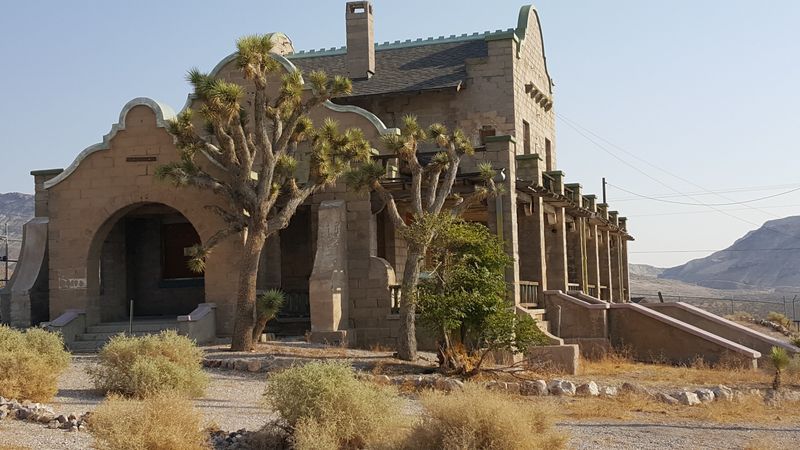
Everything about Rhyolite existed because of the mines scattered throughout the surrounding Bullfrog Hills.
In early 1905, prospectors discovered gold and silver deposits that sparked one of Nevada’s most dramatic mining rushes.
Within months, thousands of people flooded into this remote desert area, staking claims and digging tunnels.
The Montgomery Shoshone Mine was the most profitable, producing millions of dollars in ore during its peak years.
Other significant operations included the National Bank Mine and the Tramps Consolidated.
Miners worked in dangerous conditions, descending hundreds of feet underground in poorly ventilated shafts.
Cave-ins, gas explosions, and equipment failures claimed numerous lives during Rhyolite’s boom period.
Despite the risks, men continued working because the pay was good and the dream of striking their own claim remained alive.
The mines operated around the clock, with different shifts keeping the ore flowing constantly.
Unfortunately, many of these promising deposits proved less extensive than initially believed.
By 1910, production had dropped dramatically as the richest veins played out.
Mining companies pulled out, leaving behind abandoned shafts and worthless equipment.
Today, dozens of old mine openings dot the hills around Rhyolite.
Most are extremely dangerous, with unstable tunnels and hidden vertical shafts that could prove fatal.
Visitors are strongly warned never to enter these mines, though their dark openings continue to fascinate those who explore the ghost town.
The Forgotten Cemetery
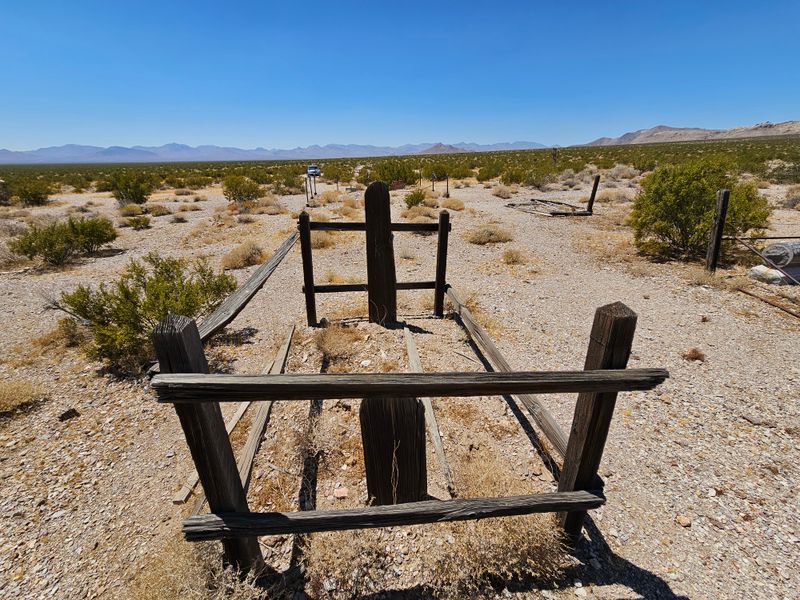
Every town has a cemetery, but Rhyolite’s burial ground tells particularly poignant stories.
Located on a hillside overlooking the town, the cemetery contains graves of miners, merchants, women, and children who died far from their original homes.
Mining accidents claimed many lives, with cave-ins and explosions creating sudden tragedies.
Disease also swept through the camp periodically, killing people who lacked access to proper medical care.
Childbirth was dangerous in this remote location, and several graves mark mothers and infants who didn’t survive.
Some headstones bear names and dates, while others are unmarked wooden crosses that have weathered to near invisibility.
The desert sun has bleached many markers, making inscriptions difficult or impossible to read.
Unlike cemeteries in established towns, Rhyolite’s graveyard received no ongoing maintenance after the population left.
Wooden fences that once surrounded family plots have collapsed into piles of rotted lumber.
Desert plants have grown over some graves, slowly reclaiming the space.
Walking through this cemetery provides a sobering reminder that real people with real dreams rest here.
They came seeking fortune but found only a final resting place in the harsh Nevada desert.
Some visitors report feeling overwhelming sadness when visiting the cemetery, particularly near the graves of children.
Others claim to see shadowy figures moving among the graves at dusk, though these reports remain unverified.
The cemetery stands as perhaps the most haunting part of Rhyolite, where the human cost of the mining boom becomes impossible to ignore.
The Skeletal Porter Brothers Store
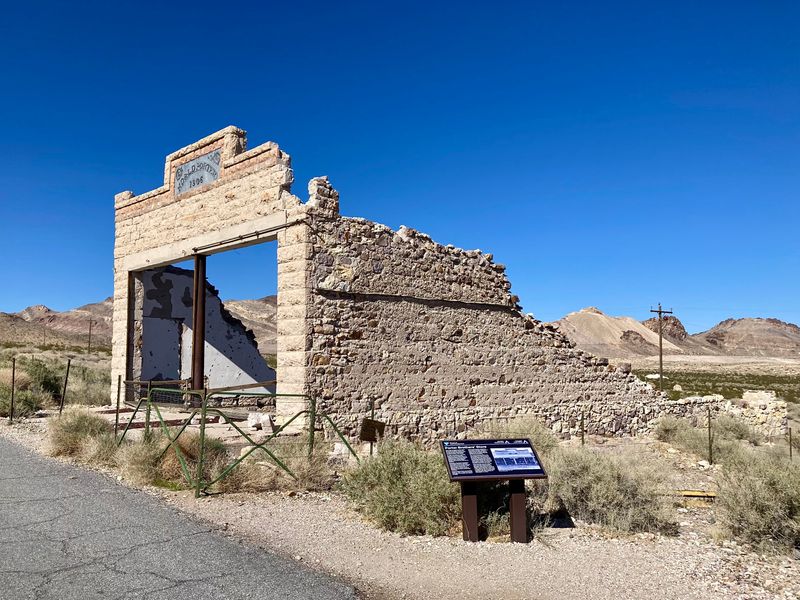
Before online shopping or even proper roads, the Porter Brothers Store supplied everything Rhyolite residents needed.
This substantial mercantile building stocked food, clothing, mining supplies, household goods, and even luxury items for those who struck it rich.
The Porter Brothers recognized opportunity when they saw it and established their store early in Rhyolite’s development.
Their timing proved perfect, as they enjoyed several years of tremendous profits supplying a growing population.
The store occupied a prominent location on the main street, making it impossible to miss.
Inside, shelves stretched from floor to ceiling, packed with merchandise shipped in by train from distant suppliers.
Miners would come in after payday, buying everything from canned beans to fancy pocket watches.
Women shopped for fabric, patterns, and ready-made clothing that brought a touch of civilization to the desert.
The store also served as an informal gathering place where people exchanged news and gossip.
Bulletin boards displayed job opportunities, items for sale, and announcements about community events.
As Rhyolite’s population declined, the Porter Brothers watched their customer base disappear.
They eventually closed the store and moved on, taking whatever inventory they could transport.
The building was left empty, and over time, the roof collapsed and walls crumbled.
Today, only partial walls remain standing, creating a skeletal outline of what was once a bustling commercial establishment.
Visitors can still identify the store’s foundation and imagine the activity that once filled this space with life and commerce.
The Decaying Red Light District
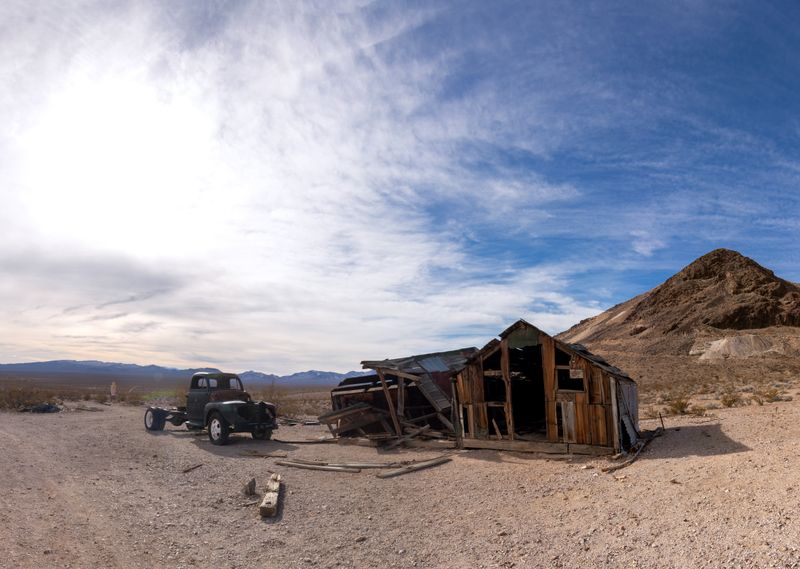
Mining towns had reputations for wild behavior, and Rhyolite was no exception.
A section of town housed saloons, gambling halls, and brothels that catered to miners with money to spend.
After long, dangerous shifts underground, men sought entertainment and distraction.
The red light district operated openly, as frontier towns generally took a practical approach to such establishments.
Saloons stayed open late into the night, with piano music and raucous laughter spilling into the streets.
Card games ran constantly, with fortunes won and lost over poker hands.
The women who worked in these establishments came from various backgrounds, some seeking economic opportunity and others fleeing difficult circumstances elsewhere.
Life in the district was hard, and many of these women faced exploitation and danger.
Despite the rough nature of this area, it was an integral part of Rhyolite’s economy and social structure.
Property owners grew wealthy renting space to saloon keepers and madams.
Local merchants profited from the district’s residents, who needed food, clothing, and other supplies.
When the mines failed and the population exodus began, the red light district emptied quickly.
The entertainers and business owners moved to newer boom towns or returned to established cities.
Today, the district’s buildings are among the most deteriorated in Rhyolite.
Only scattered foundations and partial walls indicate where these establishments once stood, their colorful history now reduced to archaeological traces in the desert sand.
The Desolate Town Site Overview

Standing at the edge of Rhyolite and looking across the entire town site creates an overwhelming sense of loss and wonder.
At its peak in 1908, this desert valley held approximately 5,000 residents living in hundreds of buildings.
The town boasted electric lights, concrete sidewalks, a telephone exchange, newspapers, an opera house, and a stock exchange.
For a brief moment, Rhyolite seemed destined to become a major Nevada city.
Investors poured money into substantial buildings because they believed in the town’s permanence.
The 1906 San Francisco earthquake even sent refugees to Rhyolite, adding to the population boom.
However, the 1907 financial panic and declining mine production triggered Rhyolite’s rapid collapse.
By 1910, the population had dropped to around 675 people.
By 1920, the census recorded only 14 residents stubbornly hanging on.
Today, walking through the scattered ruins reveals the full scope of this dramatic rise and fall.
Foundations outline where homes, businesses, and civic buildings once stood.
Desert vegetation has reclaimed much of the town, with creosote bushes growing where streets once bustled with activity.
The silence is profound, broken only by wind and the occasional bird.
Rhyolite sits at Nevada 89003, approximately 120 miles northwest of Las Vegas in the Bullfrog Hills near Death Valley National Park’s eastern boundary.
Visiting requires driving on dirt roads, but the journey rewards those interested in American history and the boom-and-bust cycles that shaped the West.
Dear Reader: This page may contain affiliate links which may earn a commission if you click through and make a purchase. Our independent journalism is not influenced by any advertiser or commercial initiative unless it is clearly marked as sponsored content. As travel products change, please be sure to reconfirm all details and stay up to date with current events to ensure a safe and successful trip.
