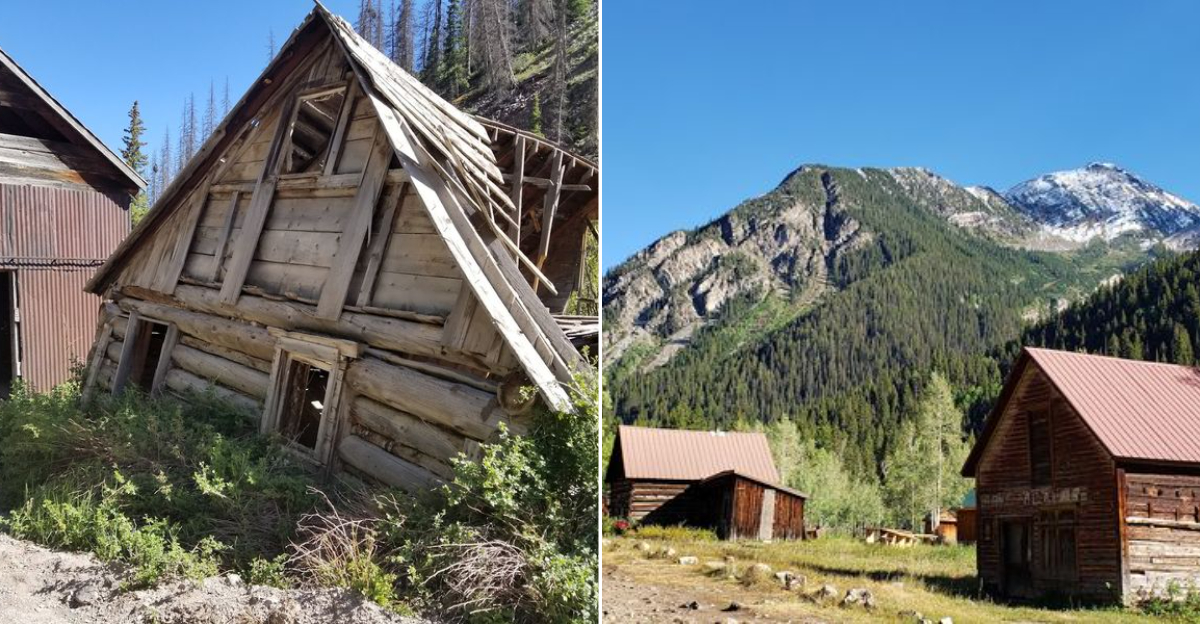
A former mining settlement where legend says a lantern still glows in an abandoned cabin. A town that vanished after the railroad chose a different route, leaving behind silent streets and weathered buildings.
A remote outpost where residents once gathered for church services, now visited only by curious hikers and the occasional deer.
These are the strange and fascinating ghost towns of Colorado, places where time stopped when the mines closed and the last train pulled away.
From perfectly preserved main streets to crumbling stone foundations nearly swallowed by forest, each town has its own quiet mystery. No scary stories, just the gentle echo of a past that feels close enough to touch.
So which ten Colorado ghost towns offer the most intriguing glimpse into the state’s wild frontier history, without the fright? Lace up your boots, pack a camera, and read on to discover them.
1. St. Elmo
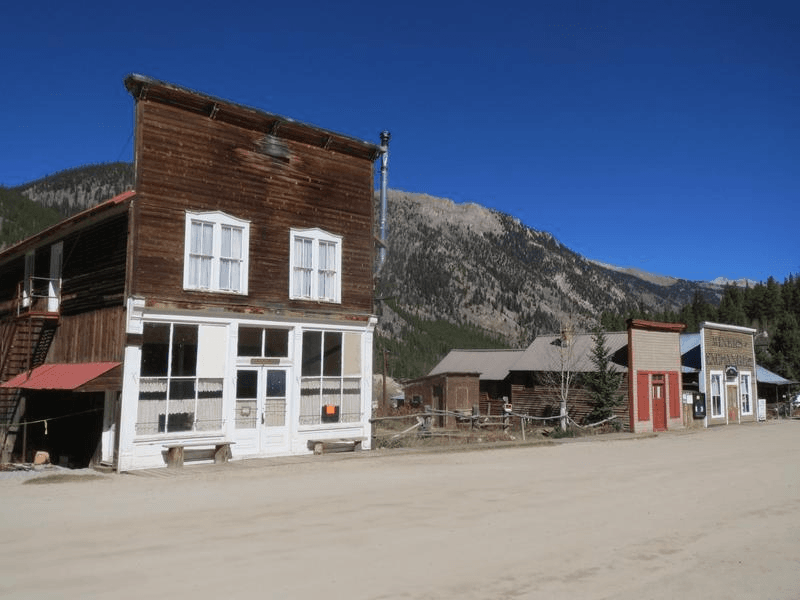
You know that feeling when a place is beautiful enough to calm you down and creepy enough to make you check over your shoulder anyway? That is exactly how St. Elmo feels, tucked into the mountains with its tidy old buildings, silent road, and that odd stillness that seems to press against your ears.
It looks almost too well preserved at first, which somehow makes the ghost stories hit harder.
The name you hear most is Annabelle Stark, often called Dirty Annie, and locals have long said her spirit still keeps watch over the property she loved. People talk about doors slamming inside the old hotel, tools turning up in different spots, and sudden cold pockets that do not match the weather at all.
One skier even claimed to see a woman in white standing in an upstairs window, only for her to vanish a moment later.
What gets me here is that St. Elmo never feels staged, and that gives every story a little extra weight. You can walk slowly, listen to the boards creak, and imagine how fast gossip must have traveled when the town was alive.
Out of all the haunted places in Colorado, this one feels the most like it is still waiting for someone to come home.
2. Animas Forks
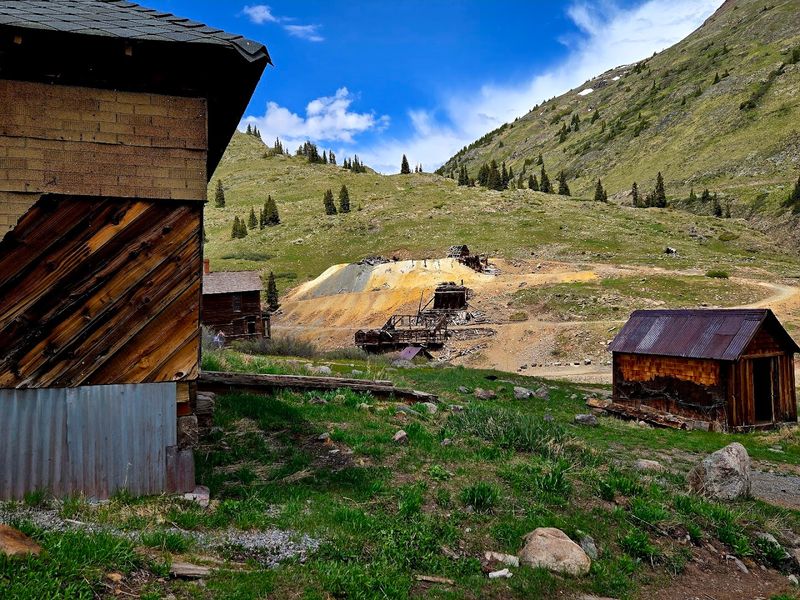
Some places feel haunted because of a legend, and some feel haunted because the landscape itself is so intense that your brain starts filling in the blanks. Animas Forks definitely lands in that second category, way up in the San Juan Mountains where the wind cuts across the basin and the old buildings look startlingly exposed.
Even on a clear day, the town can feel like it is half fading back into the slope.
Local stories often circle around a vanished prospector named Elias Dimitri, whose shadow is said to drift through the ruins long after he disappeared. People have mentioned strange laughter on the breeze, odd footsteps near empty structures, and that unmistakable sense that someone else is nearby when nobody should be.
Because the setting is so remote, every little sound gets magnified, and that makes the stories cling to you.
I think Animas Forks unsettles people because it is both gorgeous and unforgiving, which is a strong combination in Colorado. You are not just looking at old cabins here, you are standing in a place where survival once depended on weather, luck, and timing.
When the clouds lower and the valley goes quiet, it becomes very easy to understand why locals still talk about presences that never really left.
3. Leadville
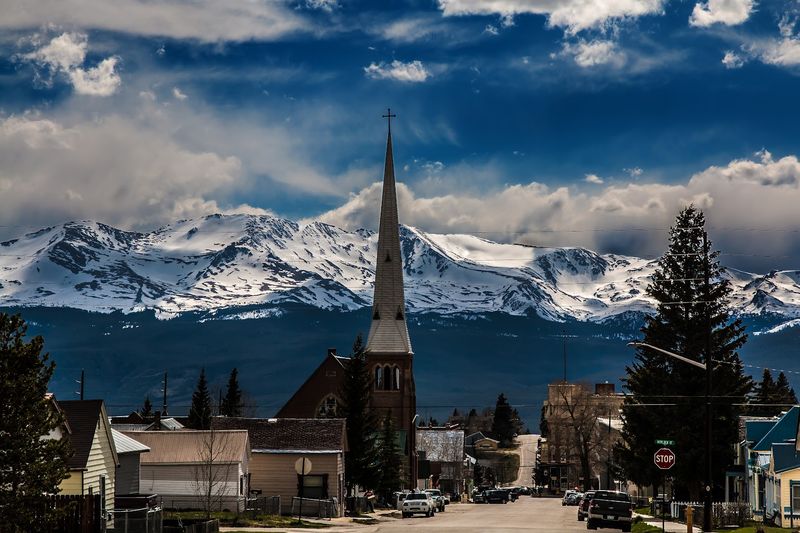
Here is the thing about Leadville: it is still a living town, but parts of it carry the mood of a place that never fully stepped out of its boomtown past. The high elevation, the old brick blocks, and the mining scars around town all give it a kind of stern, watchful personality.
You can be walking through an active street and still feel like some older version of Leadville is standing right beside it.
That mood feeds a lot of stories, especially around historic buildings, old mining sites, and cemeteries where hard lives ended abruptly. People have long talked about footsteps in empty halls, voices where no one is present, and shadowy figures turning up in windows after dark.
Because Leadville was built on silver dreams and brutal work, the haunting tales tend to feel less playful and more like leftover pressure in the walls.
What I like about including Leadville is that it shows how ghost stories in Colorado do not always belong to totally abandoned places. Sometimes the strange feeling comes from a town that kept going while still carrying a heavy amount of memory.
If you go slowly and let yourself notice the details, Leadville feels like the kind of place where history never really settled down, it just learned how to stand quietly in public.
4. Nevadaville
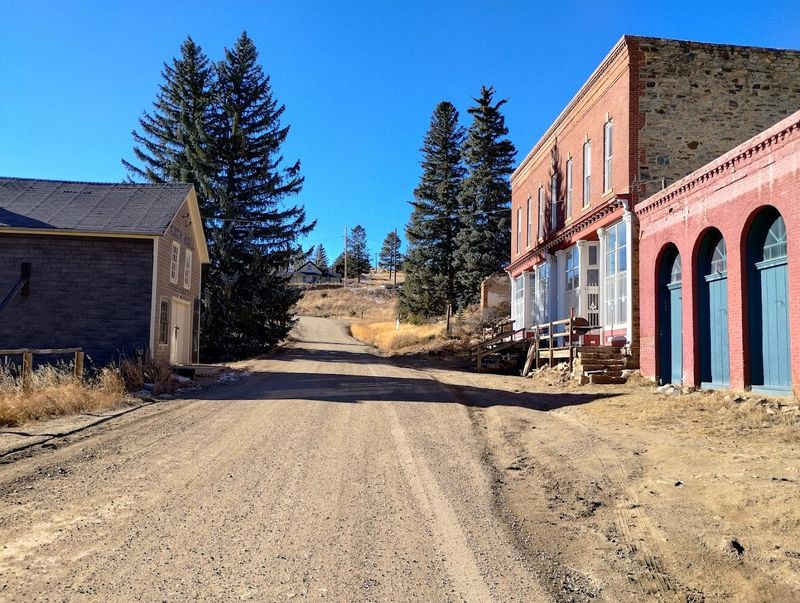
What makes Nevadaville strange is that it does not need much to get under your skin. The scattered old buildings on the hillside, the worn roads, and the half-quiet feeling of a place that never fully disappeared create an atmosphere that is subtle at first and then oddly persistent.
You are close to Central City, but the mood here feels more stripped down, like the story has been left outside in the weather.
There are not as many famous ghost tales pinned directly to Nevadaville as there are to some other towns, but that almost makes it creepier. Its historic graves, abandoned structures, and deep ties to the same mining world that produced so many hauntings nearby give locals plenty to speculate about.
Even the fact that the old Masonic lodge still sees use adds a layer of tension, because the town is neither fully empty nor fully active.
I like Nevadaville because it leaves room for your imagination without feeling made up. In Colorado, some places announce themselves loudly, but this one stays quiet and lets the road, the wind, and the buildings do the work.
If you are the kind of person who gets uneasy when a nearly abandoned place still shows signs of life, Nevadaville will probably stay with you longer than you expect.
5. Central City
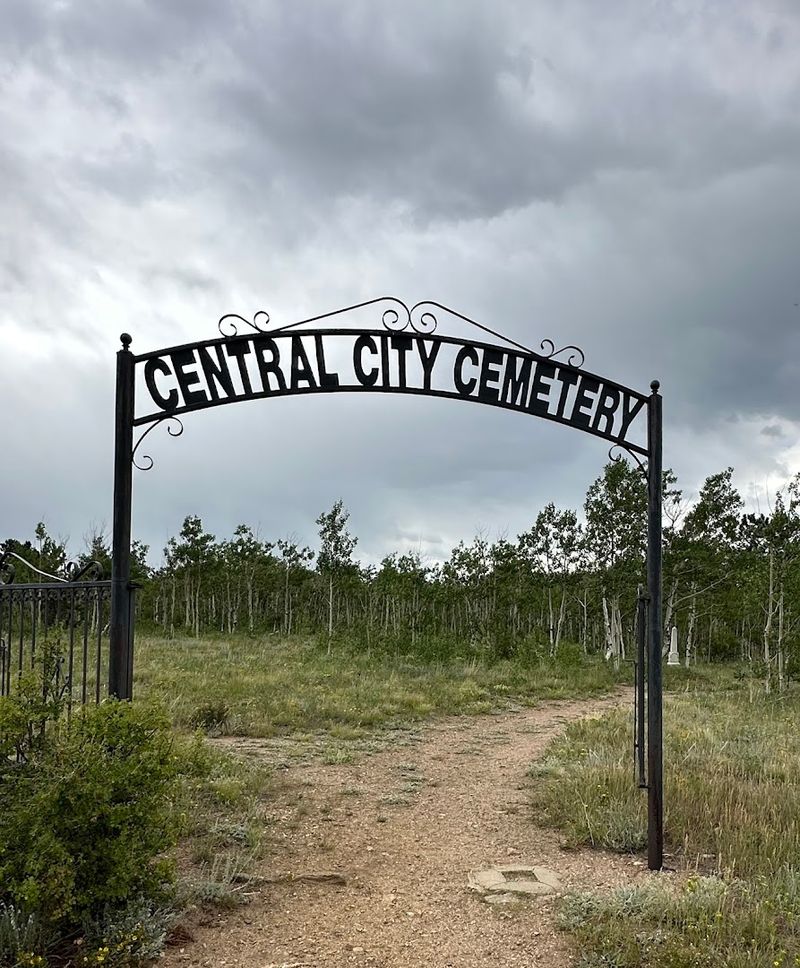
Central City has that rare ability to feel lively and haunted at the same time, which honestly might be the most unnerving combination of all. The old buildings still hold their shape, the streets still invite wandering, and yet story after story suggests that not everyone here has actually left.
It is one of those Colorado places where history feels close enough to tap you on the shoulder.
The biggest cluster of tales gathers around the Masonic cemetery, where people have reported a Lady in Black appearing near a grave before fading from sight. Then there is the opera house, where whispers and lingering presences have fueled rumors for years, plus the Teller House and the old casino buildings with their own parade of uneasy stories.
Add in accounts of vanishing figures, odd lights, and even a spectral rider moving through town, and Central City starts sounding less like a collection of legends and more like an ongoing conversation.
What I appreciate here is how layered it all feels, because the hauntings are not tied to just one dramatic incident or one lonely structure. Instead, the whole town seems to hum with leftover emotion from mining, ambition, scandal, grief, and plain bad luck.
If you like a place where every corner seems to come with another whispered story, Central City absolutely delivers.
6. Crystal
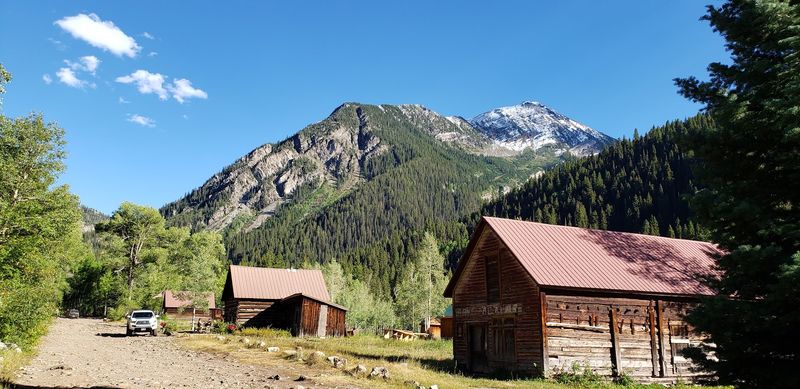
Some ghost towns feel eerie because they are visibly ruined, but Crystal feels eerie because it is so pretty that the silence catches you off guard. The valley is lush, the surrounding peaks are dramatic, and the remaining structures sit there with this calm, almost careful stillness.
It feels less like a collapse and more like a pause that somehow lasted too long.
Crystal does not have the same big catalog of famous ghost stories as some other places on this list, yet that does not make it feel less haunted. In fact, the isolation and the preserved look of the old site can make your imagination work overtime, especially when weather moves in and the road behind you starts feeling very far away.
People tend to talk less about named apparitions here and more about a heavy quiet, odd sounds, and the sense that the town never completely emptied out emotionally.
I think that is why Crystal stays with people, because it feels intimate rather than dramatic. You are not overwhelmed by spectacle, and that gives every creak, gust, and shadow more room to matter.
In Colorado, plenty of mining towns carry stories of hard endings, and Crystal feels like one of the places where those endings settled into the landscape so deeply that even the beauty cannot smooth them over.
7. Ashcroft
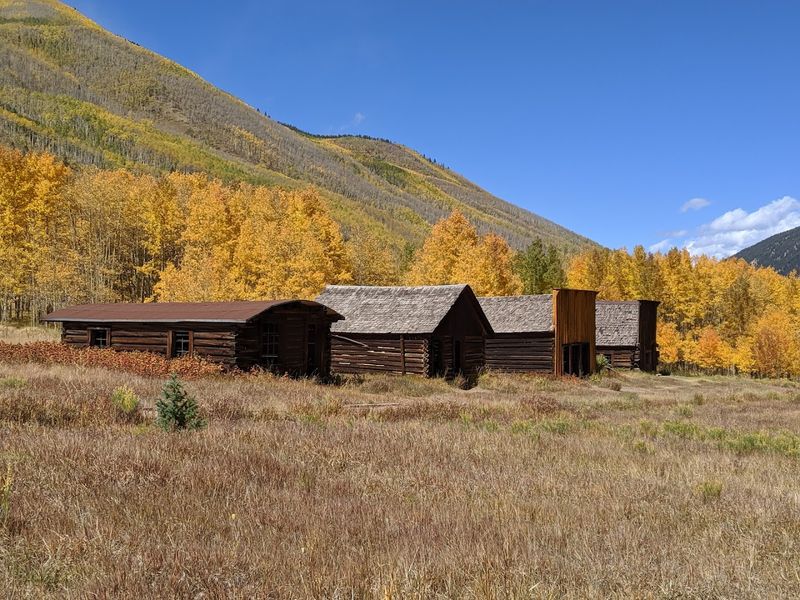
Ashcroft has a softer look than some ghost towns, but do not let that fool you into thinking it feels harmless. The preserved buildings sit in an open mountain setting near Aspen, and on a calm day the whole place can seem almost gentle, right up until the silence starts feeling a little too thick.
It is one of those places where your pace naturally slows, as if the town expects you to pay attention.
Stories from visitors and staff lean into the same strange pattern over and over again: unexplained noises, cold spots, moving shadows, and objects that seem to shift on their own. The old saloon and the View Hotel get mentioned often, and some hikers have even claimed they heard piano music drifting out when there was no power to make that possible.
People also talk about a low sense of unease here, which is honestly the kind of detail I trust most because it is hard to fake.
What gets me about Ashcroft is the contrast between the beauty and the weirdness. Colorado does this very well, where a stunning mountain setting somehow makes a haunting feel more believable instead of less.
You walk through the town expecting history, but what lingers afterward is the feeling that someone might still be moving quietly from room to room.
8. Independence
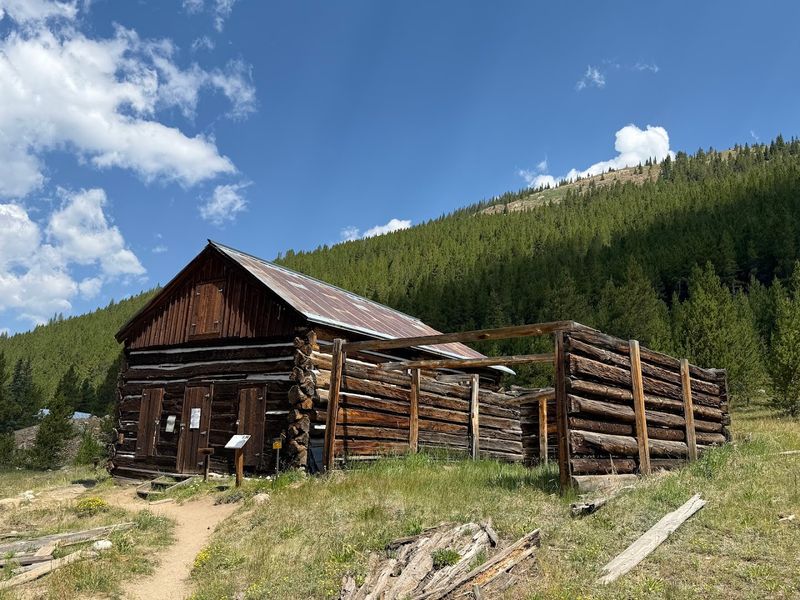
Independence feels like the kind of place where the mountain never really wanted a town there in the first place. Perched high near the pass, with scattered cabins and exposed remains, it carries that uneasy relationship between human ambition and brutal weather that so many Colorado mining stories share.
Even in daylight, the site has a thin, windswept loneliness that makes you lower your voice without thinking about it.
There is not one single famous ghost tale that dominates Independence, but the atmosphere does a lot of the work all by itself. People often describe the place as unnervingly quiet, with sudden gusts, creaks from old structures, and a feeling that the town was abandoned in the middle of a conversation.
Because it sits in such a severe setting, it is easy to imagine all the hopes, arguments, and losses that got left behind when the camp emptied out.
I always think ghost stories are strongest when the landscape makes the history feel physically present, and Independence absolutely does that. You can look around and understand how quickly excitement could turn into desperation up here.
That is what gives the place its haunting quality, not some flashy legend, but the sense that the mountain kept every emotion it witnessed and now gives them back in the form of wind, silence, and stubborn memory.
9. Creede
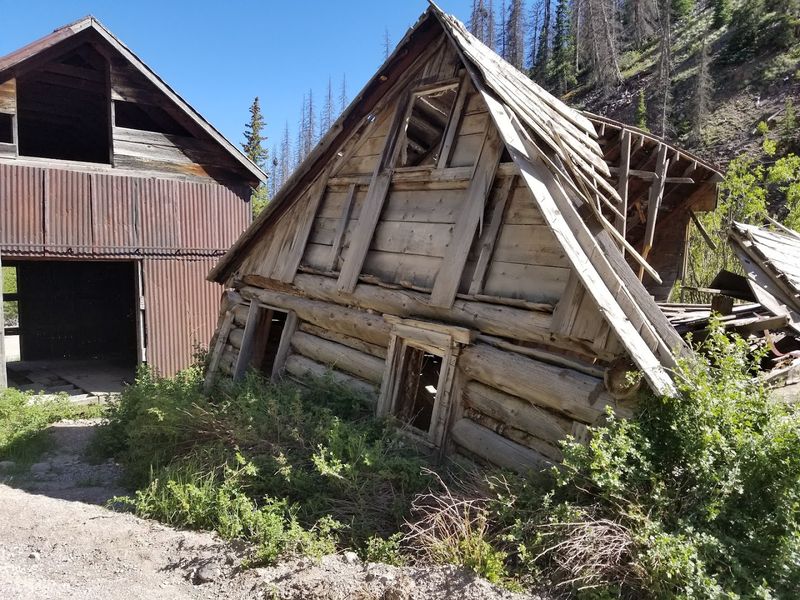
Creede is another place that is very much still alive, but parts of it feel like they are running side by side with an older, stranger version of themselves. The narrow canyon setting adds a lot, because those steep walls make every sound bounce and linger longer than you expect.
That alone is enough to put you in the right headspace before any ghost story even enters the picture.
The area’s mining history, old structures, and cemetery lore have long fed stories of lingering presences around town and in the hills beyond it. Creede is the kind of place where people talk about unexplained footsteps, sudden changes in temperature, and encounters that feel tied less to one famous spirit than to the weight of the whole past.
That broad, unsettled feeling works here, because the town has always had a dramatic setting and a history shaped by risk.
What I find interesting is that Creede does not try too hard to sell its weird side, and that makes it more convincing. In Colorado, some haunting stories survive because a place keeps giving people the same uneasy sensation over and over again, even when nobody is trying to perform it.
Creede has that quality, where the canyon, the mines, and the old buildings seem to hold onto echoes just long enough for you to notice.
10. Winfield
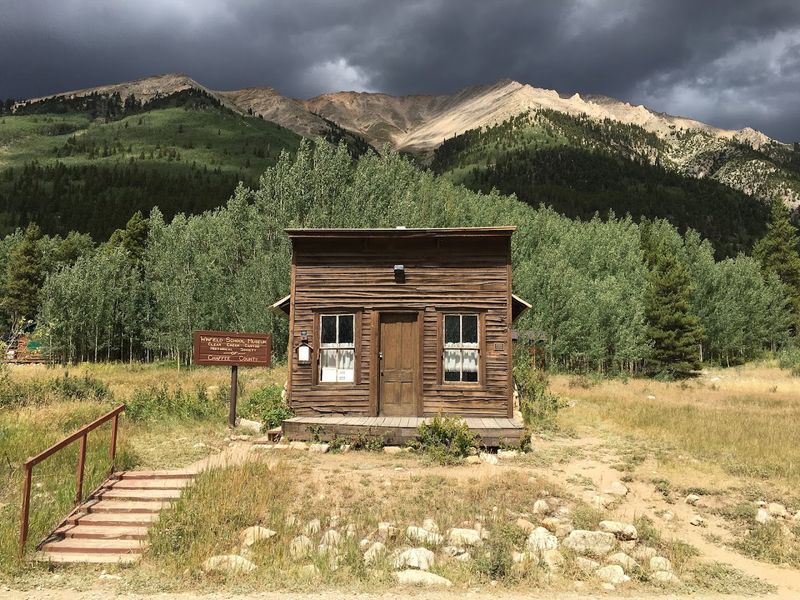
Winfield catches you in a different way because it looks so open and peaceful at first. The cabins, schoolhouse, and wide valley setting give it a cleaner, calmer feel than the rougher mining camps, and for a minute you might think this one is all nostalgia and mountain light.
Then the stillness settles in, and the emptiness starts feeling more personal than scenic.
Like several of Colorado’s less sensational ghost towns, Winfield is not famous for one huge paranormal legend that everybody repeats the same way. Instead, it works through atmosphere, through the sense that ordinary lives stopped here and left their routines hanging in place.
When a place still looks this legible, with homes and community buildings easy to picture in use, it becomes very simple to imagine footsteps, voices, or movement returning for a moment when the wind shifts.
I think that is why Winfield can feel unexpectedly haunting, even if it does not shout about it. Abandonment is often stranger when it happens in a place that still feels livable, because you keep sensing the gap between what was normal here and what remains now.
If you like ghost towns that feel tender as much as eerie, Winfield has that softer kind of sadness that can be just as unsettling as any dramatic apparition.
