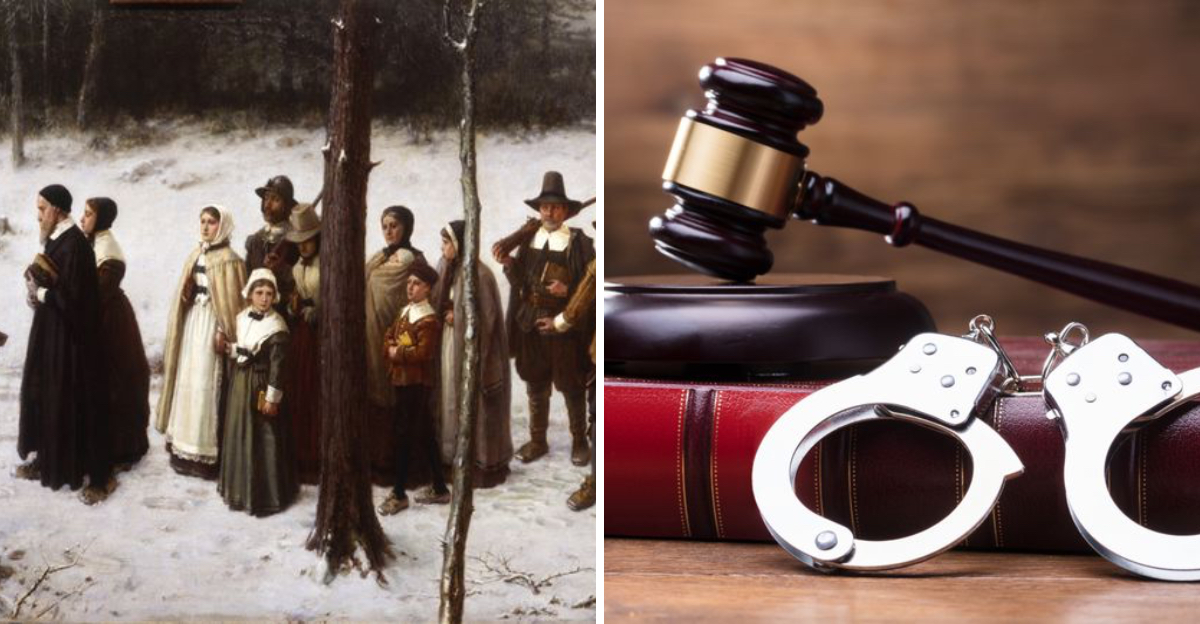
Massachusetts wears its past in the fine print, where colonial rules still echo through town halls and archives.
As a travel writer roaming the Bay State’s meetinghouses and green commons, I kept stumbling on statutes that reveal how tightly faith, defense, and daily life once intertwined.
These oddities are windows into a world that shaped modern governance in surprising ways.
Read on for ten unusual laws, rooted in early Massachusetts history, that tell a vivid story of control, community, and conviction.
1. The Stubborn Children Law of 1646
In colonial Massachusetts, the so called Stubborn Children Law, enacted in the mid seventeenth century, mirrored biblical punishments for defiant sons. It allowed capital penalties for persistently disobedient male children, though historians find no documented execution under this statute. The law illustrates how Puritan leaders sought to impose strict family order through civil authority.
Travelers exploring Boston or Salem can see how public life once policed private households. At the Massachusetts Archives in Boston, researchers can view facsimiles and references that situate this law within broader Puritan governance. The statute’s language was later softened in revisions, reflecting a shift toward rehabilitative approaches.
Today, the law survives only as a stark historical artifact. It underscores how civic codes once enforced religious ideals across the colony. When you visit Massachusetts, museum placards and court records give clear context, turning a chilling clause into a lesson on evolving rights.
2. Armed to Church, Armed to Serve
Colonial Massachusetts often required men to bring a firearm or sword to worship, blending militia readiness with religious duty. The rule was practical, rooted in frontier security and communal defense during unsettled times. Surviving town orders and provincial statutes reference carrying a piece to meeting, especially in rural settlements.
Visitors can trace this legacy by touring historic meetinghouses in places like Hingham or Dedham, where galleries and common land hint at dual civic and spiritual roles. Interpretive displays in local museums explain how sabbath gatherings doubled as musters. The practice faded as threats waned and professional military structures expanded.
Modern Massachusetts law differs, with regulated carry in public places guided by contemporary statutes. Still, the idea that worship and watch stood side by side helps frame colonial priorities. Walking the greens, you feel how faith and defense once moved in lockstep.
3. The Massachusetts Body of Liberties, 1641
The Massachusetts Body of Liberties codified rights and penalties in a striking blend of English common law and biblical references. It protected trial by jury and property rights while prescribing capital offenses drawn from scripture. This text became a cornerstone of colonial jurisprudence and influenced later New England legal culture.
Travelers can explore copies and commentary at the Massachusetts Historical Society in Boston, where curated exhibits unpack its clauses. The document shows an early experiment in limiting magistrates while preserving moral order. Its protections feel forward looking, even as its punishments look severe by modern standards.
Reading the Body today reveals the colony’s attempt to balance liberty with piety. That tension still animates legal debates across Massachusetts. Seeing the pages up close connects courthouse halls and classroom lectures to their seventeenth century roots.
4. Criminalizing False News and Official Lies
Early Massachusetts statutes treated spreading false news or lying to authorities as a punishable offense. Leaders feared public disorder from rumors that could incite panic, undermine courts, or disrupt the militia. Laws addressing slander and misinformation appear in colonial legal compilations and town records.
In Boston, legal exhibits at court museums outline how speech limits once aimed to secure the commonweal. The approach contrasts with modern First Amendment standards, which protect most speech while penalizing fraud or perjury. The colonial lens shows a community prioritizing stability over robust dissent.
For travelers, this history reframes old printing presses and broadsides in museum galleries. What seems like quaint typography carried real risk if it stoked unrest. Massachusetts archives preserve these tensions in ink, letting you read how words could tip the scales of peace.
5. Strangers, Lodging, and Town Permission
Colonial ordinances in Massachusetts often restricted hosting strangers without town approval. Selectmen monitored newcomers to prevent vagrancy, poor relief burdens, or hidden dissent. Inns and licensed houses filled a regulated niche, while private lodging faced oversight.
Travelers can trace this culture by visiting preserved inns in towns like Concord, where interpretive panels discuss licenses and wayfaring rules. Town records show how wardens counted guests and enforced curfews. Hospitality was civic business, not just private courtesy.
Today, Massachusetts welcomes visitors, yet the past lingers in the careful licensing of lodging. Walking historic streets, you can imagine knock and entry tracked in ledgers. The layered rules reveal a colony intent on order before openness.
6. Puritan Sunday Rules and Public Decorum
Massachusetts enforced strict Sunday observance under Puritan authority, limiting work, travel, and public amusements. Local bylaws targeted idleness and conduct deemed indecent, including displays of affection in public spaces. These norms framed the Sabbath as communal discipline rather than private choice.
Visitors touring Salem or Plymouth museums can view sabbath day artifacts and seating charts that reflect this shared rhythm. Church bells set the pace, and constables walked the green to keep order. Over time, blue laws relaxed, though traces remain in retail hours and quiet cultural expectations.
Experiencing a calm Sunday walk on a Massachusetts town common now feels like tradition rather than mandate. Yet the roots lie in those early statutes. Seeing the meetinghouse door, you hear echoes of rules that shaped the week.
7. Militia Duty Woven Into Worship
Some colonial Massachusetts rules paired public assembly with militia readiness. Men arrived at meeting armed, and towns kept equipment available near the green. This knit defense into civic life, with musters called beside sermon and town meeting.
Travelers can stand on Lexington and Concord greens to grasp how quickly a congregation could become a company. Interpretive signs explain the storage of powder and shot, and the inspection routines. Though these famous sites reflect the revolutionary era, the habit was older, formed in colonial practice.
Modern Massachusetts separates military roles from worship, guided by contemporary law. Still, walking those paths shows how preparedness settled into custom. The landscape itself teaches the lesson, with steeple and training field only steps apart.
8. Seventeenth Century Sodomy Statutes
Massachusetts adopted capital penalties for sodomy in the seventeenth century, reflecting biblical provisions in early codes. Court records document prosecutions and executions during that era. These laws served as instruments of moral governance and social control.
Researchers visiting state and university archives can consult transcribed cases and legal digests that explain definitions and procedures. Exhibits contextualize how such statutes policed identity and behavior. Over centuries, the legal landscape changed, culminating in modern constitutional protections.
Reading these records in Massachusetts is sobering, yet vital for understanding the colony’s legal DNA. The texts reveal a regime enforcing strict conformity through severe punishment. Museums and libraries present the material carefully, inviting reflection on rights won later.
9. Town Stores of Powder for the Sabbath
Early Massachusetts towns kept communal stores of arms and ammunition, ready for both worship and alarm. Orders specified a competent number of pieces, with powder and shot maintained near meeting places. This logistics mindset ensured a rapid response to threats.
Visitors in places like Deerfield can view fortified meetinghouse exhibits and militia artifacts that illustrate storage and inspection. The arrangement joined spiritual assembly with practical defense, a hallmark of frontier life. Local guides explain how constables checked readiness alongside attendance.
Though the system faded, Massachusetts greens still frame where supplies once stood at hand. The memory survives in plaques and careful reconstructions. Standing there, you sense the weight of vigilance that shaped daily routines.
10. Colonial Roots of Modern Carry Restrictions
While not a colonial statute itself, modern Massachusetts regulations on carrying firearms in certain public ways have historical roots. Colonists long balanced the need for arms with town control over where and how they were borne. This lineage helps explain why contemporary rules emphasize permits, training, and sensitive locations.
Travelers can see the legal through line by visiting the John Adams Courthouse in Boston, where exhibits connect early codes to later jurisprudence. The story shows continuity, not imitation, with colonial practice informing civic priorities. Historical markers around the city outline how public safety shaped rights over time.
Massachusetts today applies modern constitutional standards, yet history casts a long shadow. Reading court summaries beside seventeenth century orders makes the evolution visible. It is a compelling walk through law, from green to gallery to courtroom.
Dear Reader: This page may contain affiliate links which may earn a commission if you click through and make a purchase. Our independent journalism is not influenced by any advertiser or commercial initiative unless it is clearly marked as sponsored content. As travel products change, please be sure to reconfirm all details and stay up to date with current events to ensure a safe and successful trip.
