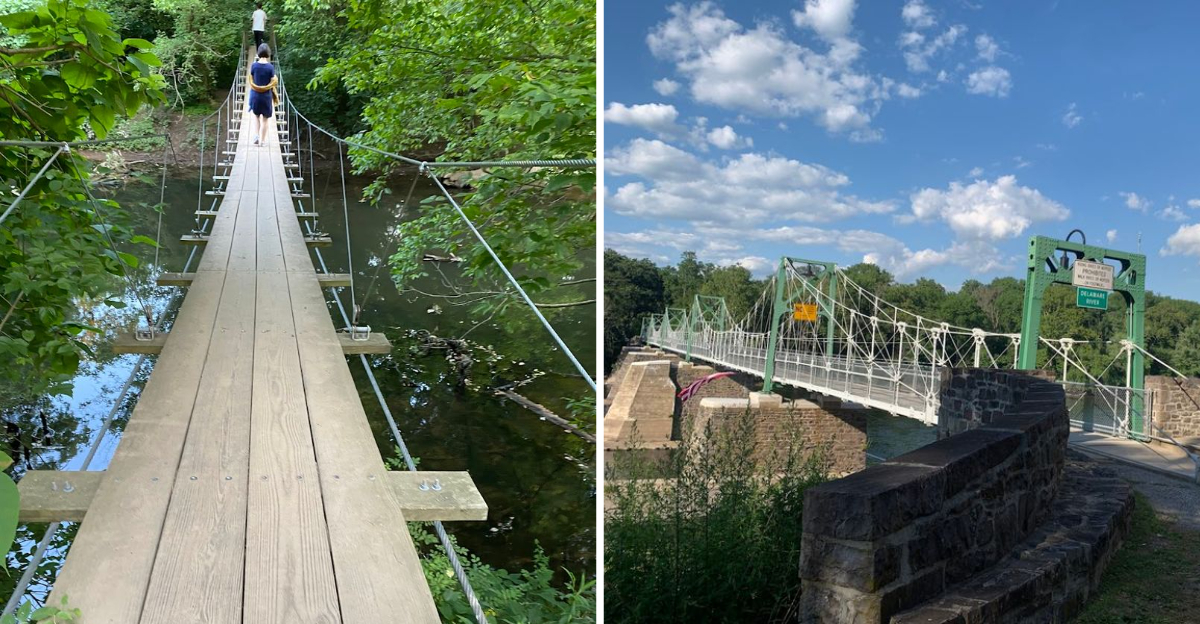
New Jersey has more than just diners and traffic jams. It has suspension bridges that will make you stop mid step just to stare.
Some are historic, some are hidden in state parks, and all of them offer that perfect mix of engineering nerdery and what a view.
From walkable wooden planks to steel giants carrying cars over water, these crossings prove that getting from point A to point B can actually be the highlight.
Grab your camera and maybe a friend who isn’t afraid of heights. Let’s go explore.
1. George Washington Bridge
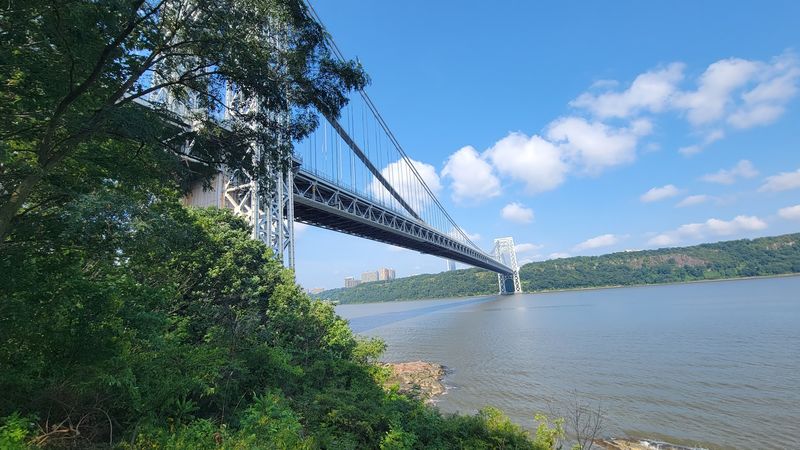
Few bridges in the world carry the same kind of weight, literally and historically, as this one. Connecting Fort Lee, New Jersey, to Manhattan, the George Washington Bridge is the busiest motor vehicle bridge on the planet.
It handled over 104 million vehicles in a single year, which is a number that is almost too big to picture.
The bridge stretches 4,760 feet overall, with a main span of 3,500 feet, and when it opened in 1931, it was the longest suspension bridge in the world. A second deck, affectionately nicknamed Martha, was added in 1962 and boosted capacity by 75 percent.
Standing beneath the massive steel towers feels like being next to something that simply refuses to be ignored. The bridge carries 14 vehicular lanes across two decks, a record no other suspension bridge in the world matches.
On clear days, the views of the Hudson River and the Manhattan skyline stretch in every direction. Pedestrians and cyclists can cross on the dedicated walkway, making this a genuinely accessible landmark.
Address: George Washington Bridge, Fort Lee, NJ 07024
2. Benjamin Franklin Bridge
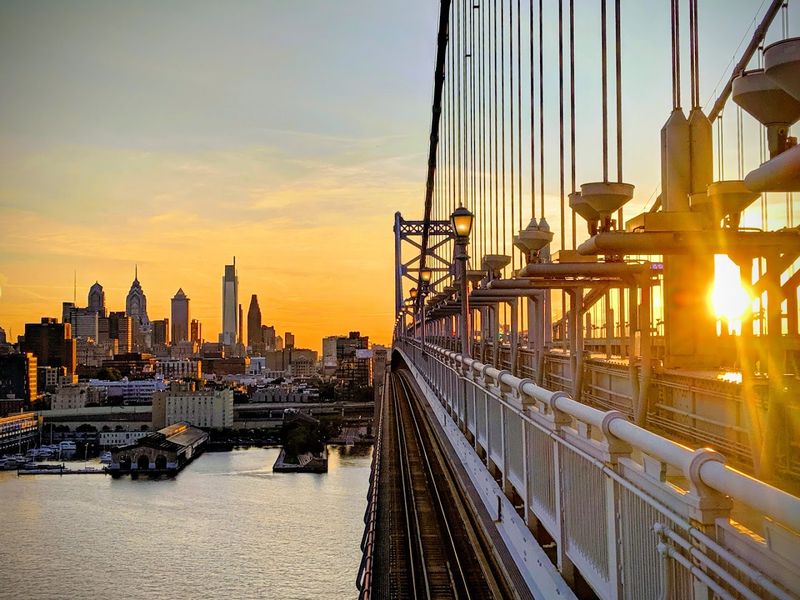
When it opened in 1926, this was the longest suspension bridge in the entire world, and standing at its Camden end today, it is easy to understand why people were stunned.
The Benjamin Franklin Bridge stretches across the Delaware River, linking Camden, New Jersey, with Philadelphia, Pennsylvania, with a confidence that feels almost theatrical.
The signature blue suspension cables are impossible to miss, cutting a bold visual line across the sky no matter what time of day you visit. At night, the lighting displays transform the whole structure into something that looks more like public art than infrastructure.
The bridge carries Interstate 676 and U.S. Route 30, meaning millions of people cross it each year, many of them barely glancing up from their steering wheels.
A pedestrian and bicycle path runs along the side, giving walkers a front-row seat to the river below and the skylines on both banks. It is one of those structures that rewards a slow, deliberate crossing far more than a fast one.
Address: Benjamin Franklin Bridge, Camden, NJ 08102
3. Riegelsville Bridge
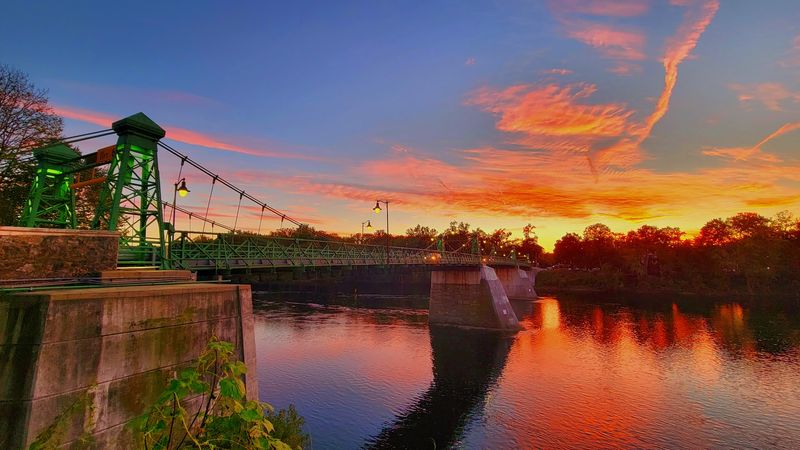
Most bridges are built to be functional. The Riegelsville Bridge was built to be remembered.
Constructed in 1904 by the John A. Roebling Sons Company, this ornate two-lane suspension bridge carries an unusual level of decorative detail that makes it stand out from practically every other crossing on the Delaware River.
The Roebling name carries serious weight in bridge history. This is the same company responsible for manufacturing the cables used on the Brooklyn Bridge, the George Washington Bridge, and the Golden Gate Bridge.
Finding one of their smaller, more elaborate works quietly spanning a river in New Jersey feels like discovering a hidden chapter in a famous book.
The bridge features four towers and pedestrian walkways running along both sides, which gives walkers a comfortable and unhurried way to take in the river scenery. A sensitive rehabilitation completed in 2012 preserved the historic integrity of the structure while addressing the practical needs of modern use.
The ironwork details are genuinely worth stopping to examine up close.
Address: Riegelsville Bridge, Riegelsville, NJ 08848
4. Pochuck Quagmire Bridge
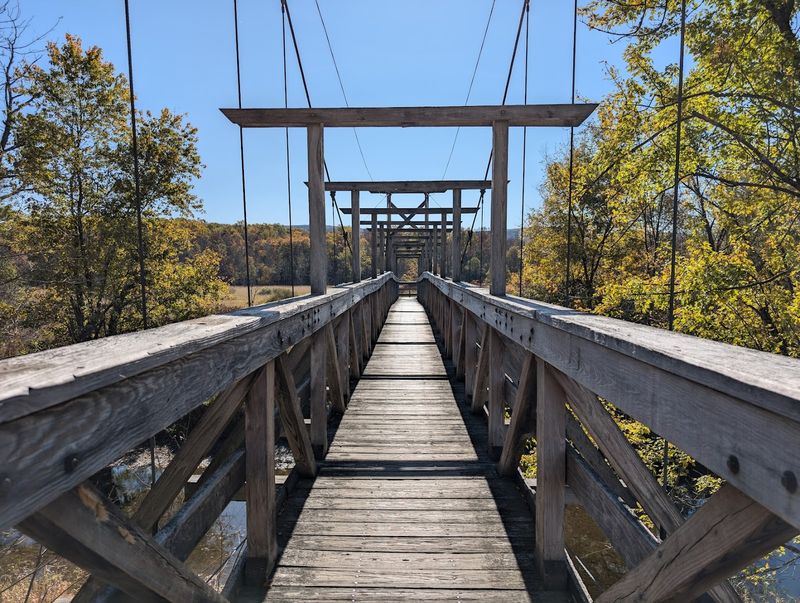
The name alone should tell you this is not your average bridge crossing.
Pochuck Quagmire Bridge sits along the Appalachian National Scenic Trail in Vernon Township, spanning Pochuck Creek through a living, breathing wetland ecosystem that feels genuinely wild in every direction.
Spring visits bring vibrant birdlife overhead and wildflowers blooming along the boardwalk approach. Fall turns the whole scene into something golden and amber, with the foliage reflecting in the slow-moving water below the bridge.
The gentle swaying underfoot as you cross adds a sensory element that no highway bridge can replicate.
The wooden design fits naturally into the surrounding landscape, which feels intentional rather than accidental.
This stretch of the Appalachian Trail is considered one of the more memorable sections in New Jersey, partly because the wetland environment is so different from the forested ridgelines that dominate much of the trail.
Hikers who make the trip often describe the boardwalk and bridge combination as one of the most photogenic spots in the entire state.
Address: Pochuck Boardwalk, Vernon Township, NJ
5. Lumberville-Raven Rock Bridge
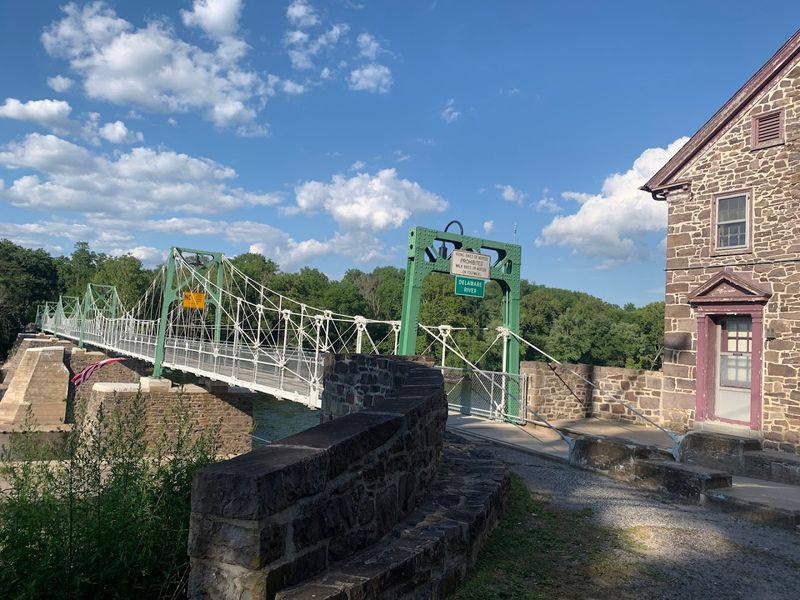
Getting to this bridge already feels like a small adventure.
Bulls Island Recreation Area on the New Jersey side sits at the confluence of the Raritan Canal and the Delaware River, and the approach through the trees gives the whole experience an appropriately remote feeling before the bridge even comes into view.
Built in 1947 with involvement from John A. Roebling’s Sons Co., the Lumberville-Raven Rock Bridge is a pedestrian-only crossing that connects New Jersey to the small village of Lumberville on the Pennsylvania side.
The Delaware River moves with real energy beneath this bridge, and the views in both directions are unobstructed and genuinely beautiful. Tall trees line both banks, and the absence of vehicle noise makes the whole setting feel tucked away from the rest of the world.
Birdwatchers tend to love this area, and it is easy to understand why. The combination of river habitat, mature forest, and open water creates ideal conditions for spotting species you would not find in more developed areas.
Address: Raven Rock Road / NJ-29 area, Delaware Township, NJ
6. Shaky Bridge
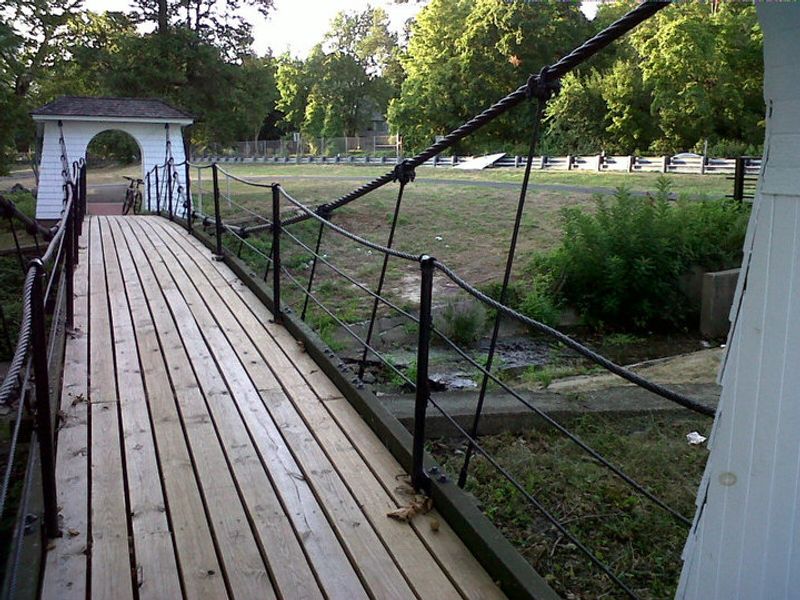
The nickname says everything you need to know before you even set foot on it.
Shaky Bridge, located in Stacy Park in Trenton, has earned its reputation with every wobbling step taken by generations of locals who grew up crossing it on dares and afternoon walks alike.
Stacy Park is one of Trenton’s quieter green spaces, and the bridge adds a playful, slightly unpredictable element to what would otherwise be a straightforward park stroll. The movement underfoot is not alarming, but it is definitely noticeable, which is part of what makes it memorable.
The surrounding park setting provides a pleasant frame for the whole experience. Trees line the banks on both sides, and the water below moves at a pace that feels unhurried and calm.
Trenton has a complicated history, but Stacy Park and its famous wobbly bridge represent one of the city’s most lighthearted offerings. It is the kind of local landmark that never makes the big tourism lists but absolutely should.
Crossing it takes about thirty seconds, but the combination of the sway, the scenery, and the sheer silliness of the name tends to stick in the memory far longer than most more serious engineering achievements.
Address: East end of Stacy Park, near NJ-29, Trenton, NJ
7. Ravine Bridge
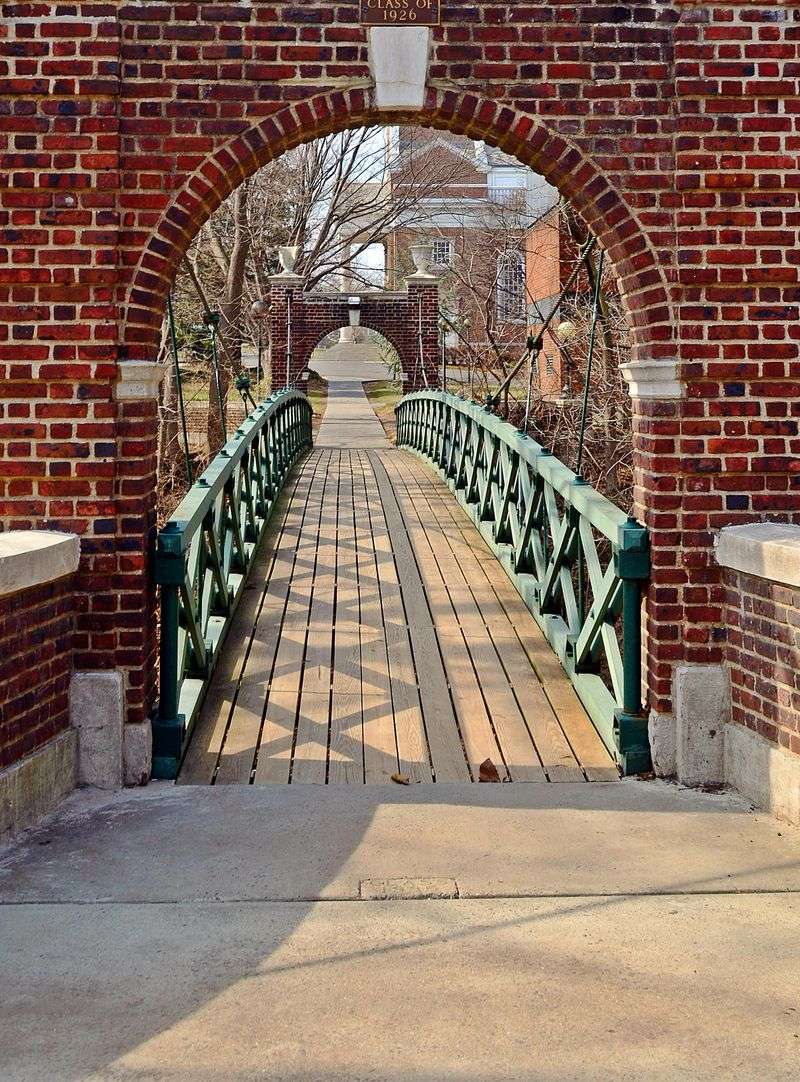
College campuses can hide some surprisingly interesting architecture, and Rutgers University’s Douglass Campus in New Brunswick is no exception.
The Ravine Bridge is a pedestrian suspension bridge that spans a wooded ravine, giving students and visitors a crossing that feels more like a nature trail feature than a campus walkway.
Built in 1927, the bridge has a quiet, understated charm that fits naturally into the heavily wooded landscape surrounding it.
The ravine below is deep enough to create a genuine sense of elevation when you cross, and the tree canopy on both sides provides shade and a kind of visual privacy that makes the walk feel removed from campus life.
It is one of those spots that regular visitors walk past constantly without fully registering how unusual it is.
The Douglass Campus itself has a distinct character compared to the rest of Rutgers, with more open green space and mature trees that give the whole area a slower, more reflective pace. The Ravine Bridge fits that atmosphere perfectly.
Address: Douglass Campus, New Brunswick, NJ 08901
8. Institute Woods Swinging Bridge
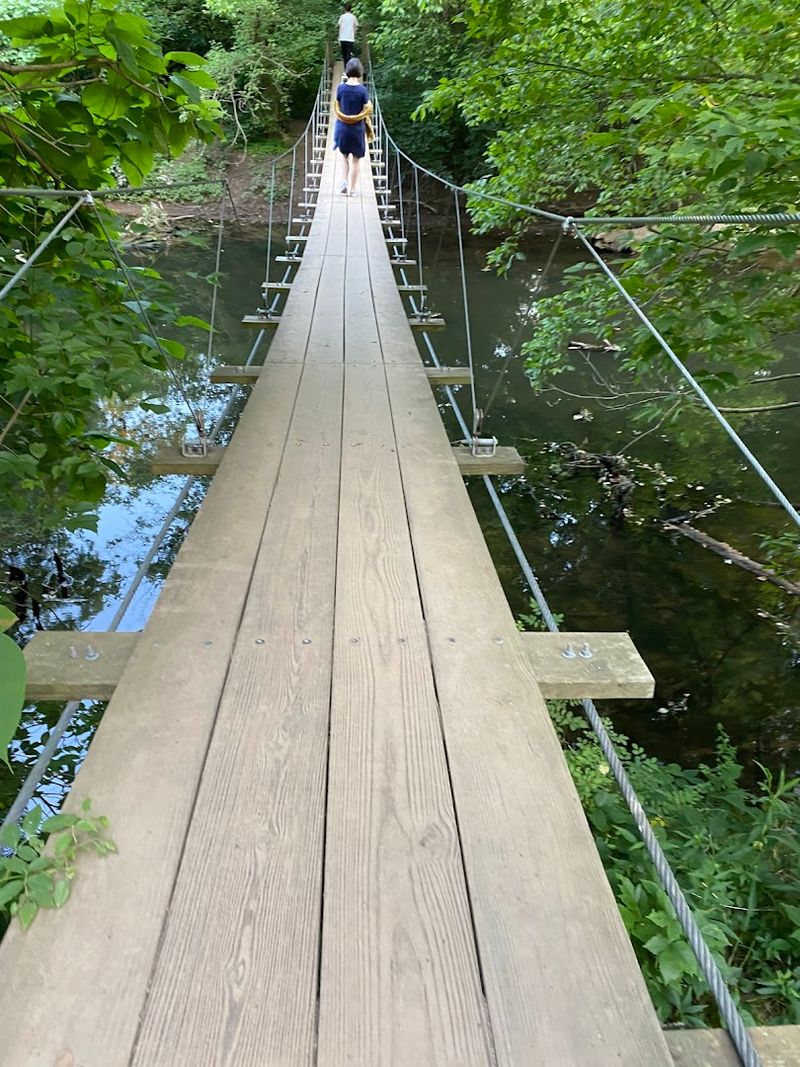
Tucked at the back of Institute Woods in Princeton, this swinging bridge has a history that goes well beyond its modest size. Dedicated in 1950 by J.
Robert Oppenheimer as part of the Founders Walk trail system, it carries a kind of intellectual and historical gravity that feels perfectly suited to its Princeton surroundings.
The bridge crosses Stony Brook on a 2.2-mile round-trip hiking loop that winds through some of the most beautiful mature forest in central New Jersey. The woods here are old and dense, with tall trees that create a cathedral-like canopy overhead.
Crossing the bridge mid-hike feels like a natural pause point, a moment to stop and appreciate the water moving below and the quiet of the surrounding landscape.
Institute Woods is managed by the Institute for Advanced Study, which adds another layer of unusual history to an already compelling location. The trail system is well-maintained and genuinely accessible, making it a popular destination for local hikers, birders, and anyone who appreciates a peaceful walk through old-growth forest.
The bridge itself is simple in design but effective in impact, swaying just enough to remind you that it is a suspension structure and not a fixed crossing. Visiting in early morning, when the light filters through the canopy and the birds are loudest, turns an ordinary hike into something genuinely special.
Address: Princeton Battlefield State Park, 500 Mercer Rd, Princeton, NJ 08540
9. Walt Whitman Bridge
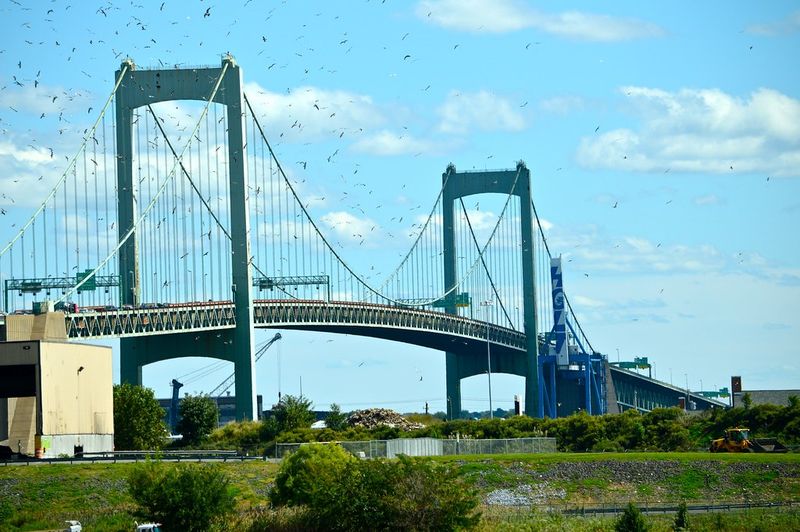
Named after one of America’s most celebrated poets, this bridge carries a name that deserves to be spoken with some appreciation.
The Walt Whitman Bridge spans the Delaware River between Gloucester City in Camden County, New Jersey, and Philadelphia, Pennsylvania, and it does so with the kind of confident, no?nonsense engineering that the industrial mid?twentieth century did so well.
Opening in 1957, the bridge became an important southern alternative to the Benjamin Franklin Bridge for commuters and freight traffic moving between New Jersey and Pennsylvania. The main span stretches 2,000 feet, and the towers rise high enough to be visible from considerable distances on both sides of the river.
It carries Interstate 76 and handles an enormous daily traffic volume, about 120,000 vehicles, that keeps the Delaware Valley moving.
The views from the bridge are expansive in every direction, with the river stretching wide and open beneath the cables. On clear evenings, the light on the water turns the whole crossing into something almost poetic, which feels appropriate given whose name the bridge carries.
The Camden waterfront has developed significantly in recent years, and approaching the bridge from the New Jersey side now means passing through a stretch of the region that is actively investing in its future.
The bridge remains one of the most recognizable landmarks on the Delaware River corridor, instantly identifiable by its towers and suspension geometry.
Address: Walt Whitman Bridge, Gloucester City, NJ 08030
10. Delaware Memorial Bridge
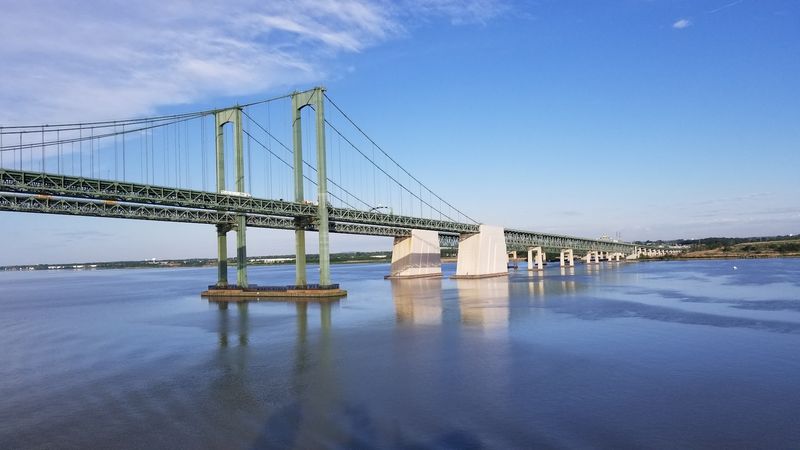
Seeing the Delaware Memorial Bridge from the water level is a completely different experience from crossing it in a vehicle.
The twin spans rise with a symmetry that is almost mathematical in its precision, and the reflection of the cables on the river surface on calm mornings creates an image that photographers return to repeatedly.
The first span opened in 1951, and the second followed in 1968. Both structures were designed to mirror each other so closely that the seams between old and new are essentially invisible from any normal viewing angle.
Together they form what is officially recognized as the world’s longest twin-span suspension bridge, a record that has held for decades.
The bridge connects Pennsville Township in Salem County, New Jersey, to the state of Delaware, serving as a critical link for commerce and commuters along the Eastern Seaboard.
The approach from the New Jersey side offers wide, open views of the river marshes and the industrial waterscape that frames this part of the Delaware.
Othmar Ammann, whose engineering legacy includes the George Washington Bridge and the Verrazano-Narrows Bridge, contributed consulting expertise to the project. His influence on the proportions and structural approach is evident in the clean, confident lines of both spans.
Standing near the water and looking up at both bridges simultaneously is one of the more genuinely awe-inspiring moments available along the New Jersey waterfront.
Address: Delaware Memorial Bridge, Pennsville Township, NJ 08070
11. Cranberry Lake Footbridge
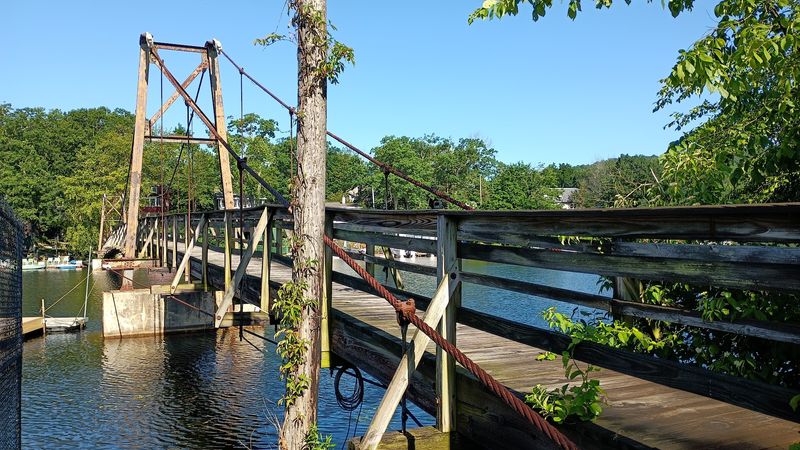
For nearly a century, the Cranberry Lake footbridge has been more than just a way to cross the water. It is living, swaying history.
Built in 1930 by the state as a reconstruction of earlier crossings, this three?span steel suspension bridge stretches about 200 feet across the lake, making it one of the longest pedestrian suspension bridges in New Jersey. But its story starts even earlier.
Imagine this: before the bridge, the first wooden crossing was built in 1903 to shuttle train passengers from the depot directly to a roaring amusement park on the shore. We are talking dance halls, boat rentals, and even a miniature railway.
When the park closed in 1910, the railroad dismantled that old bridge, later replaced in 1925 before the current structure rose in 1930.
The present bridge, a beloved local landmark, has sadly been closed to foot traffic since 2019 due to safety concerns. But hope is not lost.
A passionate group called Save Our Bridge is actively raising funds to restore this piece of history for future generations.
Address: Route 206 at the northern end of Cranberry Lake in Byram, New Jersey.
