The noise arrives before the birds do. At first, it sounds like something much bigger than a flock.
Then the sky starts moving. One crane.
Ten. A hundred.
Then so many sandhill cranes are dropping toward the wetlands that counting stops being useful. This Alabama refuge becomes one of the region’s great winter gathering spots, with thousands of birds arriving from across the country and settling around the Tennessee River.
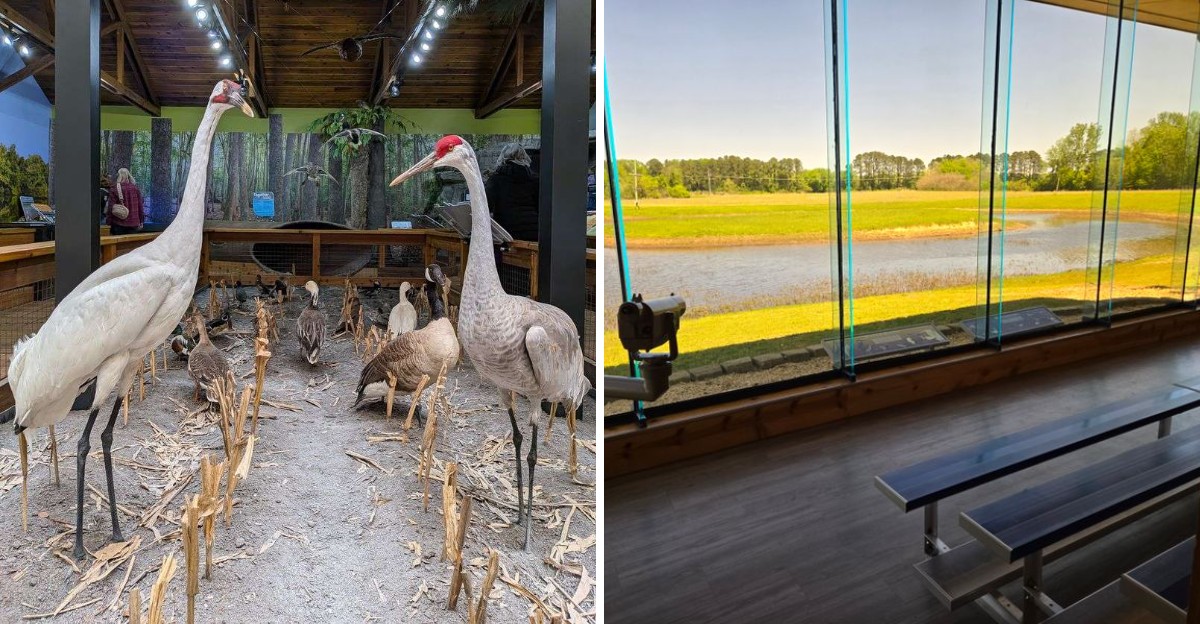
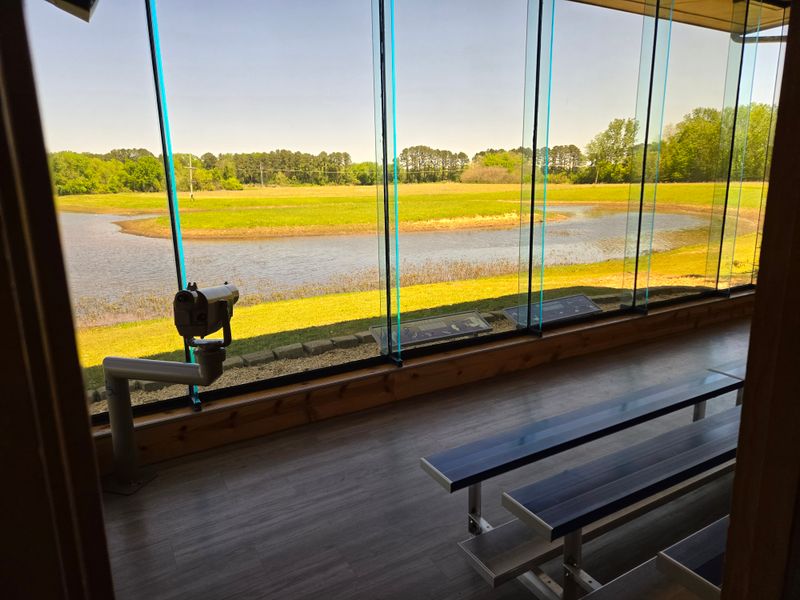
From the glass-walled observation building, the spectacle unfolds almost directly in front of you, while amplified crane calls add an amusing soundtrack indoors. Wait until late afternoon.
That is when the sky starts getting crowded.
The Refuge That Rewrote the Rulebook in 1938
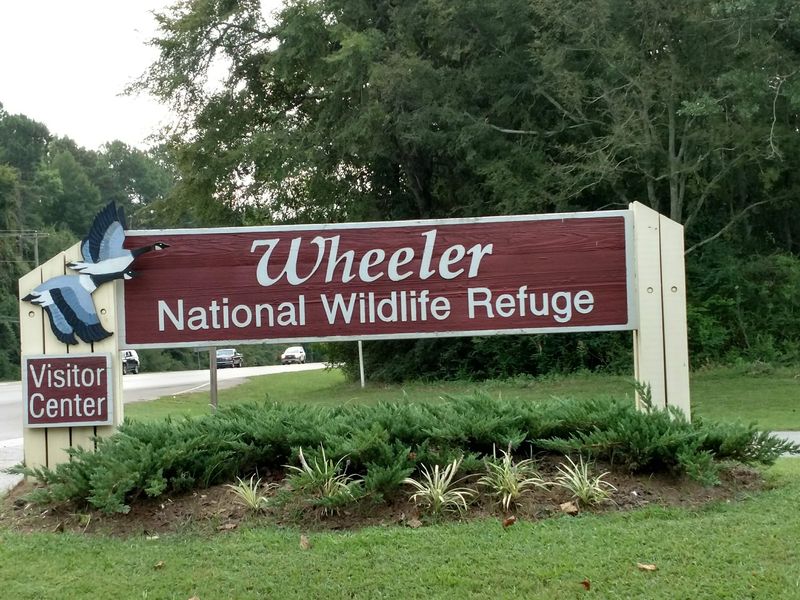
History buffs get an unexpected bonus here. Wheeler was signed into existence on July 7, 1938, under President Franklin D.
Roosevelt, and it became the first National Wildlife Refuge in the country ever laid on top of a hydroelectric impoundment.
That sounds technical, but the idea was simple and a little bold for the time. Nobody knew whether ducks and geese would settle on a working reservoir built for flood control and power.
The Tennessee Valley Authority had dammed the river at Wheeler Dam in 1936, creating wide shallow backwaters. Refuge managers noticed something useful.
When those shallow areas were drained in spring and summer to keep mosquito numbers down, wild millet and other seed-bearing plants sprang up on their own.
Re-flood the same ground in winter and suddenly there is a buffet waiting for waterfowl. The experiment worked so well it shaped refuge management practices elsewhere.
The name honors Major General Joseph Wheeler, a figure tied to both the Confederate Army and the Spanish-American War, which gives the place a layered backstory beyond the birds.
Geography helps too. Sitting just east of the main Mississippi Flyway, the refuge catches an enormous variety of migrating species each year.
Reading the interpretive panels before heading outside makes the landscape click into place. Those flat, wet fields are not accidents.
They are the result of eight decades of deliberate work.
When 30,000 Sandhill Cranes Move In for the Winter
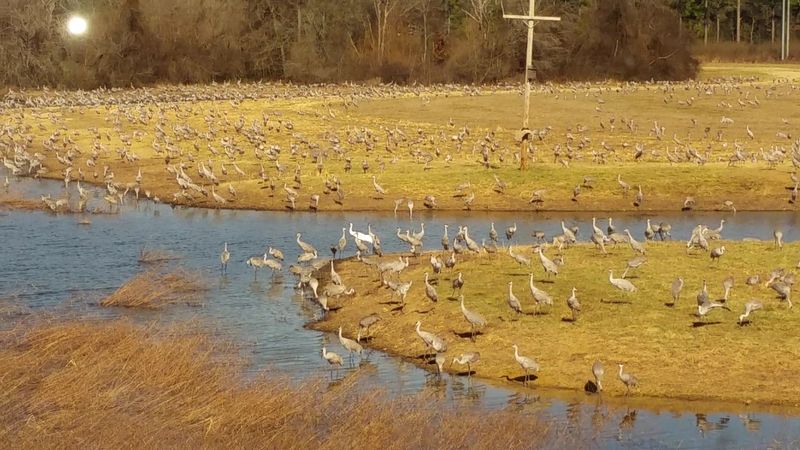
The numbers are hard to picture until the fields come into view. Between late October and mid-February, sandhill cranes gather at Wheeler in counts that have climbed anywhere from 10,000 to roughly 32,000 during the peak stretch in late December and early January.
Tall, gray, red-capped, and endlessly noisy. They stand in harvested crop fields and wetlands like a gray carpet that occasionally lifts and rearranges itself.
Their calls do most of the work on the memory front. The trumpeting rolls across open ground with a rattling, ancient quality that recordings never quite capture.
Behavior watching is half the fun. Cranes probe the soil for leftover grain, squabble over spots, preen, and sometimes break into their bouncing courtship dance with wings half-raised and heads thrown back.
The Wildlife Observation Building gives clear sightlines across the feeding areas, which means binoculars are helpful but not strictly required.
Timing matters more than gear. Weekday afternoons in early January tend to line up with the biggest crowds of birds, and the light is kinder for photos.
Dress warmer than expected. The building shelters visitors from wind, though the walk out and back sits in open air.
Seeing that many large birds packed into one valley makes the refuge’s purpose obvious in about thirty seconds.
Spotting a Whooping Crane, Alabama’s Rarest Winter Guest
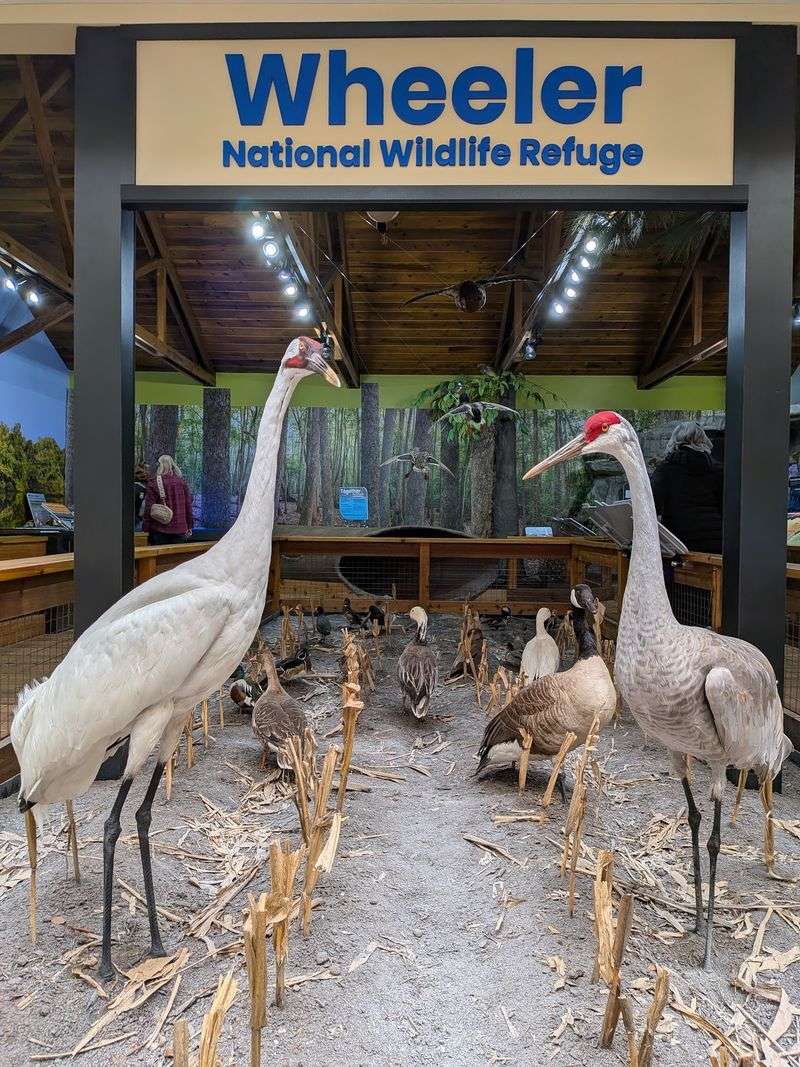
Scan the gray crowd long enough and a flash of brilliant white might appear. Whooping cranes, one of North America’s most endangered birds, winter at Wheeler in small numbers, and the refuge ranks among Alabama’s best places to see them.
They are noticeably taller than sandhills, with white bodies and black wingtips that show clearly in flight.
Their arrival story is recent. The first whooping cranes turned up on the refuge in 2004, and yearly counts have since ranged from about 10 to 29 individuals.
Because both species use similar habitat, whoopers often forage and roost right alongside sandhill cranes in the wetlands and farm fields. That mixing makes identification easier for beginners.
Biologists track individual birds using colored leg bands, monitoring movement, nesting success, and survival within the Eastern Migratory Population. Refuge staff can sometimes tell visitors which bird is which.
Cooperative farming agreements and careful wetland management keep the food supply steady, which is the quiet reason these birds keep returning.
Patience pays off. Set up at the observation building, work slowly across the flock, and look for height and color rather than movement.
Finding one feels less like luck and more like witnessing a species clawing its way back from the edge.
That Last Hour of Light When the Sky Gets Crowded
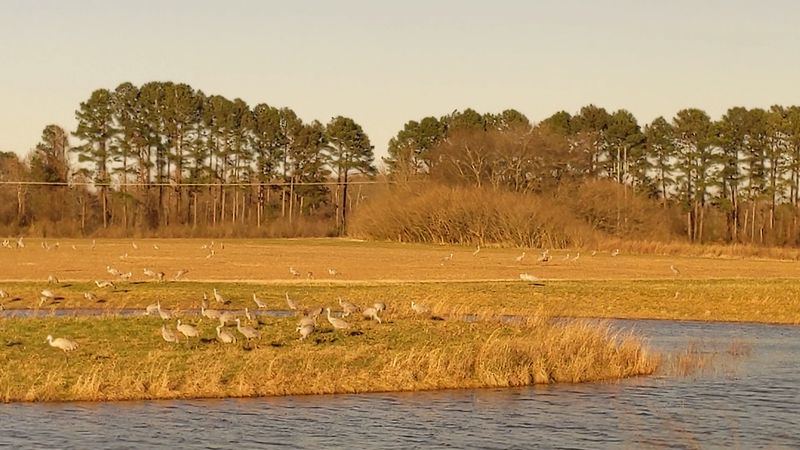
Late afternoon changes everything. The hour or two before sunset is widely considered the best window for wildlife viewing at Wheeler, and the reason becomes clear as the light softens.
Cranes that spent the day scattered across distant fields begin streaming back toward their night roosts in the shallow backwaters, especially around Flint Creek Island and Garth Slough.
Upwards of 10,000 sandhill cranes can pile up near the Wildlife Observation Building before making their final short hop to the water. Wave after wave keeps arriving.
The sound builds along with the numbers. Layers of rattling calls overlap into something between a chorus and controlled chaos, and it echoes across open water in a way that feels much older than the surrounding farmland.
Visually, it is silhouettes and long wings crossing orange, pink, and deep blue. The composition never repeats itself.
Practical notes help. Arrive well before sunset to claim a good spot, and keep voices low since sound carries.
Cameras with longer lenses do best, though phone video captures the noise surprisingly well.
Check refuge hours before planning a dusk visit, as gate and building times shift seasonally.
Standing there while thousands of birds settle in for the night ranks among the most memorable things North Alabama offers in winter.
295 Bird Species, Gray Bats, and Everything Else Living Here
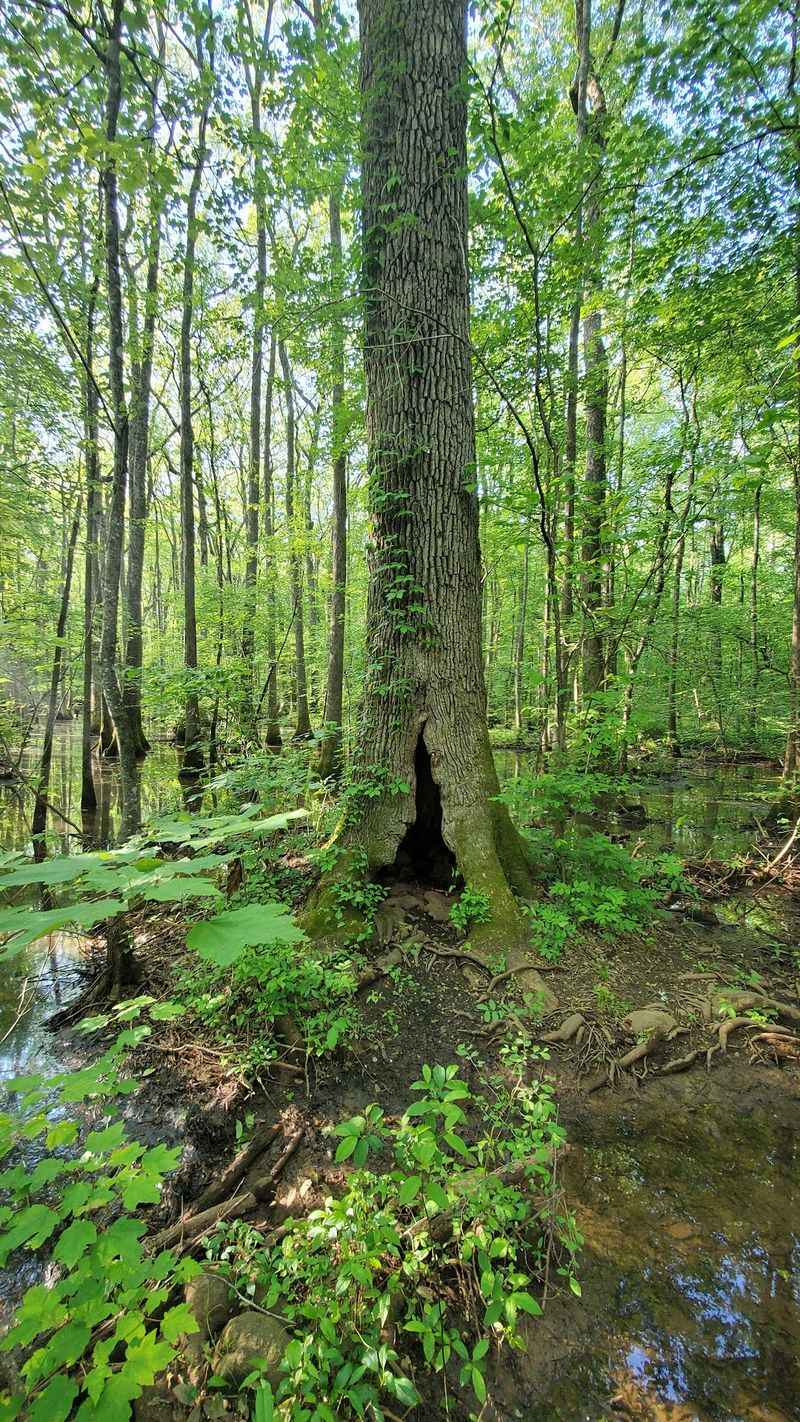
Cranes get the headlines, but they are far from the whole cast. The refuge stitches together deep river channels, tributary creeks, tupelo swamps, open backwater embayments, bottomland hardwoods, pine uplands, and working farm fields.
All that variety supports 295 recorded bird species, which keeps birders busy in every season, not just winter.
Ducks and geese fill the shallows during colder months. Warblers and other songbirds pour through during migration, and wading birds work the edges of the swamps.
Beyond birds, the tally includes 115 fish species, 74 reptiles and amphibians, and 47 mammals. Squirrels, raccoons, opossums, rabbits, and white-tailed deer all turn up along the trails.
Twelve federally listed endangered or threatened species find shelter here, which explains why habitat management stays so hands-on.
Summer brings a completely different spectacle. Tens to hundreds of thousands of endangered gray bats stream out of Cave Springs Cave after sunset, swirling into the darkening sky in a living column.
That single fact tends to surprise people who assume the refuge closes up shop once the cranes leave.
Pack a field guide or download a bird ID app before arriving. Half the enjoyment comes from realizing how much is moving in the brush while everyone else watches the big birds.
Boardwalks, Blinds, and a Visitor Center Worth the Stop
Access is refreshingly straightforward here. The Wheeler National Wildlife Refuge Visitor Center at 3121 Visitor Center Road, Decatur, AL 35603, works as the natural first stop, with exhibits on local habitats and wildlife plus an orientation video that explains what the refuge is actually doing.
From behind the building, a 200-yard Wildlife Observation Trail leads straight to the Observation Building.
Renovations added glass-walled viewing rooms and piped-in crane vocalizations, which means comfortable viewing even on raw, windy January afternoons. Families with young kids appreciate that detail.
Photographers have dedicated blinds available, positioned so cameras can work without pushing birds off their feeding grounds.
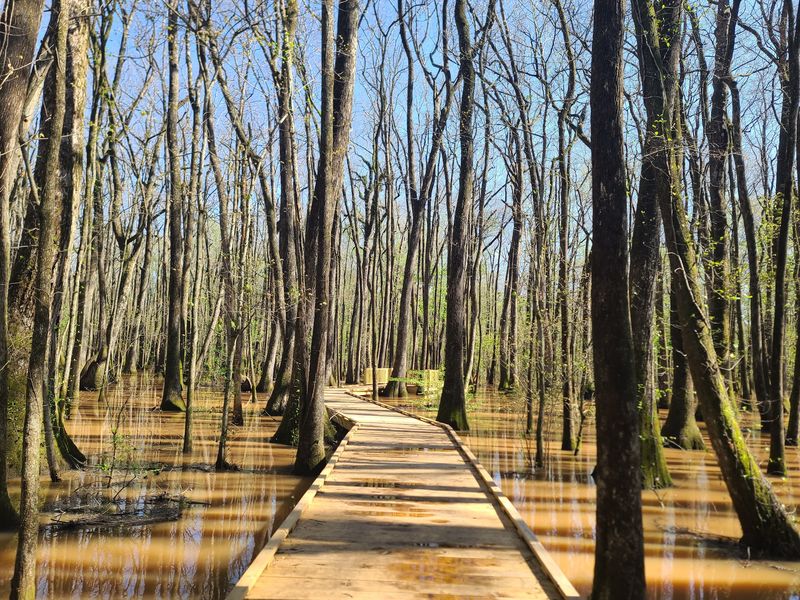
Hikers get five trails ranging from that short 200-yard stroll up to a four-mile route through varied habitat. The Atkeson Cypress Boardwalk stands out, carrying visitors over wetland instead of around it.
Water access exists too. Six improved boat launch areas open the Tennessee River to canoes, kayaks, and fishing trips.
Footwear advice is simple. Trail surfaces can stay damp through winter, so waterproof shoes beat sneakers.
Between paved paths, boardwalks, and an enclosed viewing space, the refuge manages something rare. Serious wildlife watching without requiring serious effort, which makes it workable for grandparents and toddlers on the same outing.
A Town That Throws a Party for Long-Legged Birds
Decatur leans into its crane season, and that community energy shows up in the calendar. The Festival of the Cranes, usually held in January, celebrates the winter migration with a mix of indoor programs and outdoor activities spread around the refuge.
It pulls in locals and out-of-state visitors alike, all pointed at the same fields.
Guided Whooping Crane Walks run through the winter months, offering a chance to learn about the endangered birds from people who track them regularly. Signing up ahead is wise since spots fill.
Refuge staff and volunteers handle the unglamorous side of all this. Managing water levels, maintaining trails, running education programs, and keeping cooperative farming agreements in place so migrating birds find food waiting.
That last part is worth appreciating. The grain those cranes eat exists because of agreements signed and crops planted with birds in mind.
Visitors do not need an event to feel the connection, though. A quiet weekday walk on the cypress boardwalk carries the same message in a lower voice.
Pair a refuge visit with time in downtown Decatur for a full day that balances wild and walkable.
What sticks with most people is the sense that an entire town decided these birds were worth showing off.
