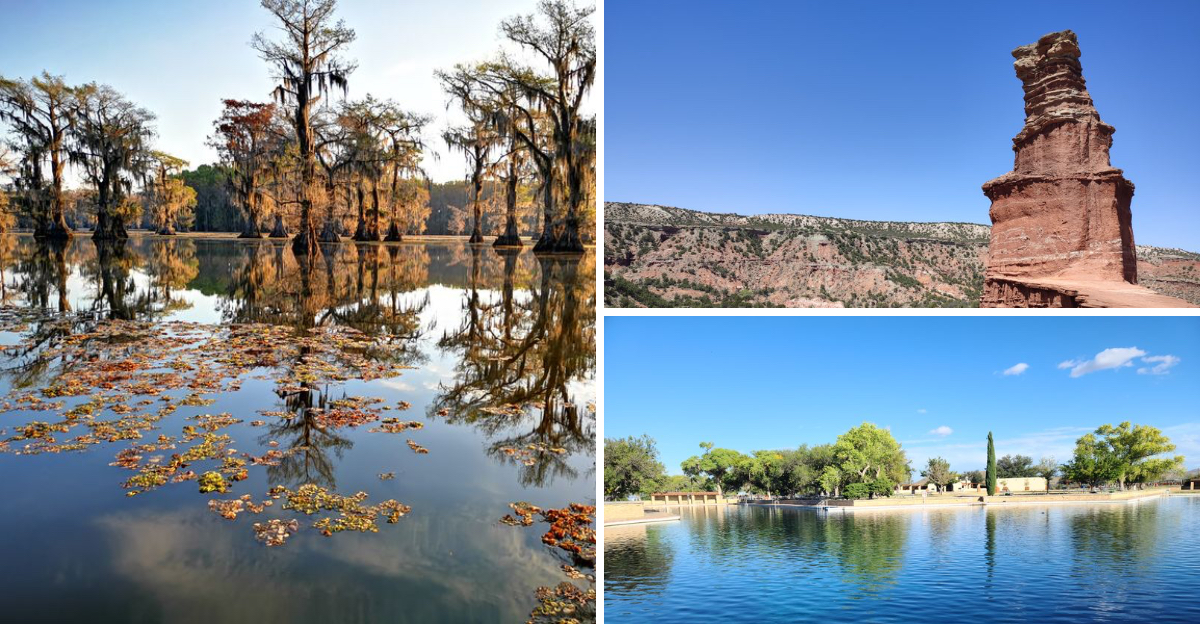
Texas holds countless secrets tucked away in corners most guidebooks never mention.
Locals treasure these spots for their authentic charm and unspoiled beauty, far from the crowded attractions that dominate travel brochures.
But as word spreads through social media and travel blogs, even the most hidden gems face the threat of becoming overrun.
This list reveals ten places Texans quietly wish could stay under the radar just a little longer.
1. Hamilton Pool Preserve
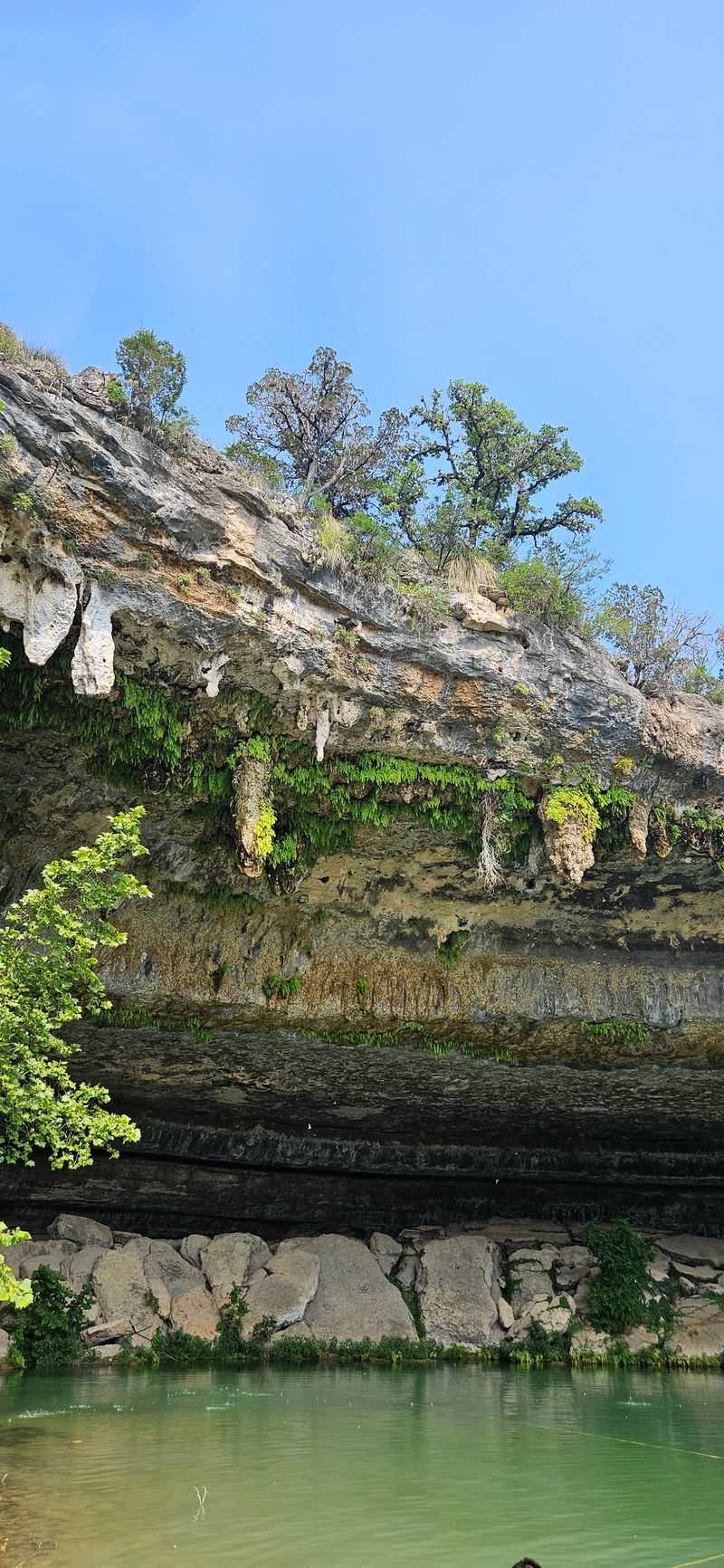
Nature carved something extraordinary into the limestone bedrock west of Austin, creating a collapsed grotto that feels like stepping into another world entirely.
The jade pool beneath a massive overhang draws visitors year-round, but locals remember when you could show up any summer afternoon without a reservation system.
Reservations now sell out weeks in advance during peak season, transforming what was once a spontaneous swimming hole into a carefully managed destination.
The fifty-foot waterfall that spills over the grotto’s edge creates a curtain of mist that cools the air even on scorching Texas afternoons.
Stalactites drip from the ceiling where the limestone dome hasn’t yet collapsed, adding an almost cathedral-like quality to the space below.
Ferns and moss thrive in the constant moisture, clinging to every available surface and softening the harsh rock with unexpected greenery.
The hike down to the pool follows a quarter-mile trail that winds through typical Hill Country vegetation before revealing the hidden oasis.
Swimming availability depends on water quality testing, so some visitors arrive only to find the pool closed for safety reasons.
Early morning visits offer the best chance of experiencing the preserve with fewer crowds and better lighting for photographs.
Local families who once treated this as their backyard swimming spot now compete with international tourists for limited entry slots.
Address: 24300 Hamilton Pool Road, Dripping Springs, TX 78620
2. Terlingua Ghost Town
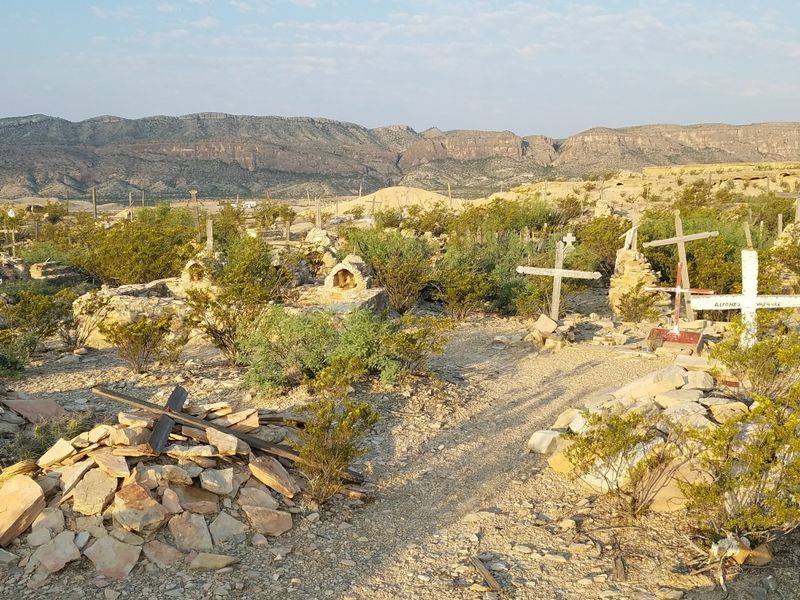
Far West Texas holds remnants of a mercury mining boom that went bust decades ago, leaving behind crumbling structures that artists and wanderers now call home.
The ghost town sits just outside Big Bend National Park, attracting visitors who stumble upon it while exploring the remote Chihuahuan Desert region.
Old adobe walls stand in various states of collapse, their earthen bricks slowly melting back into the desert floor with each passing rainstorm.
A small community of permanent residents has claimed spaces among the ruins, creating an eccentric outpost that blurs the line between preservation and occupation.
The historic Terlingua cemetery overlooks the town from a hillside, its weathered crosses and handmade markers telling stories of harsh frontier life.
Locals gather at the Starlight Theatre, a restored building that serves food and hosts live music in an atmosphere thick with character and history.
Chili cook-offs held here draw massive crowds each November, temporarily overwhelming the tiny settlement with thousands of competitive cooks and spectators.
The night sky above Terlingua offers some of the darkest conditions in the continental United States, making stargazing an almost spiritual experience.
Daytime temperatures in summer regularly exceed one hundred degrees, limiting comfortable exploration to early morning and evening hours.
Artists have established studios in old mining buildings, selling paintings and crafts that capture the raw beauty of the surrounding landscape.
The increasing popularity of Big Bend has brought more attention to Terlingua, changing the dynamics of what was once a truly forgotten place.
3. Caddo Lake
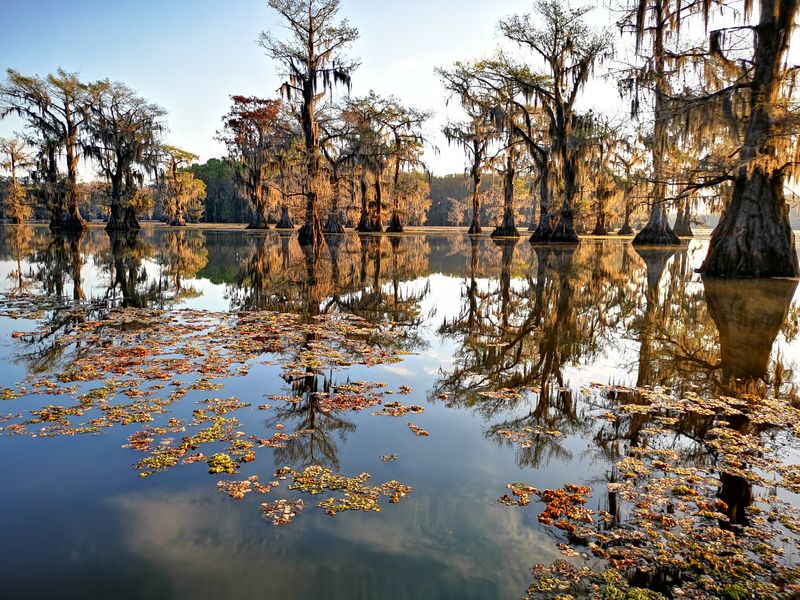
East Texas harbors a mysterious wetland that looks nothing like what most people picture when they think of the Lone Star State.
Bald cypress trees rise from dark water, their knobby knees breaking the surface while Spanish moss drapes from branches overhead.
The lake straddles the Texas-Louisiana border, creating a labyrinth of channels, sloughs, and bayous that can confuse even experienced paddlers.
Locals navigate these waterways with practiced ease, knowing which channels lead somewhere and which dead-end in impenetrable thickets.
Alligators inhabit the lake, though they typically avoid human contact and sightings remain relatively rare despite their presence.
The ecosystem supports incredible biodiversity, including species found nowhere else in Texas but common in Louisiana swamplands.
Kayaking through the cypress forest feels like traveling back to prehistoric times, especially when morning fog settles over the water.
Fishing enthusiasts pursue largemouth bass and crappie in the tangled waters, often catching impressive specimens in the structure-rich environment.
The lake formed naturally behind a massive logjam on the Red River, though a dam now maintains water levels year-round.
Small towns surrounding Caddo Lake maintain their quiet character, but increasing tourism threatens to change their sleepy atmosphere.
Boat rentals and guided tours have proliferated in recent years, making it easier for outsiders to explore what was once difficult to access.
Wildlife photographers flock here for images of the atmospheric landscape, particularly during golden hour when light filters through the moss and mist.
4. Balmorhea State Park
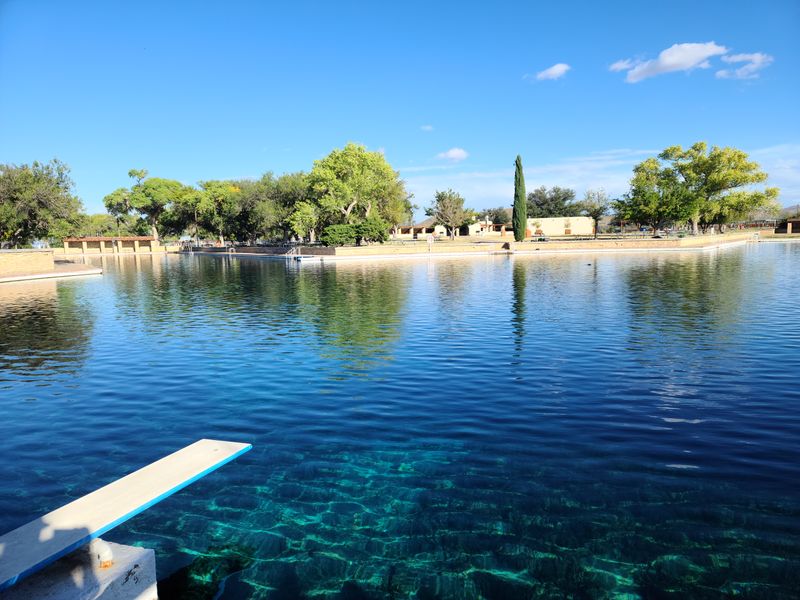
Desert springs feed the largest spring-fed swimming pool in Texas, creating an oasis that seems impossible in the arid landscape of West Texas.
The pool holds nearly three and a half million gallons of water that maintains a constant temperature around seventy-six degrees throughout the year.
Visibility underwater often exceeds thirty feet, allowing swimmers to observe native fish species and aquatic plants in remarkable detail.
Scuba divers use the pool for training and recreation, descending to depths of twenty-five feet in the crystal-clear springwater.
The Civilian Conservation Corps built the pool and surrounding facilities during the Great Depression, using local stone and careful engineering.
San Solomon Springs produces more than fifteen million gallons daily, ensuring the pool water stays fresh and clean through constant natural circulation.
Endangered species including the Comanche Springs pupfish live in the pool, making it not just recreation but also critical habitat.
Local families have been swimming here for generations, treating it as their community pool despite the official state park designation.
Recent social media attention has brought crowds that overwhelm the small park, especially during summer weekends and holidays.
The town of Balmorhea itself remains tiny and remote, offering limited services to the increasing number of visitors drawn by the pool.
Early morning swims before the heat builds offer the most peaceful experience, with fewer people and better chances of spotting wildlife.
Address: 9207 TX-17, Toyahvale, TX 79786
5. Luckenbach
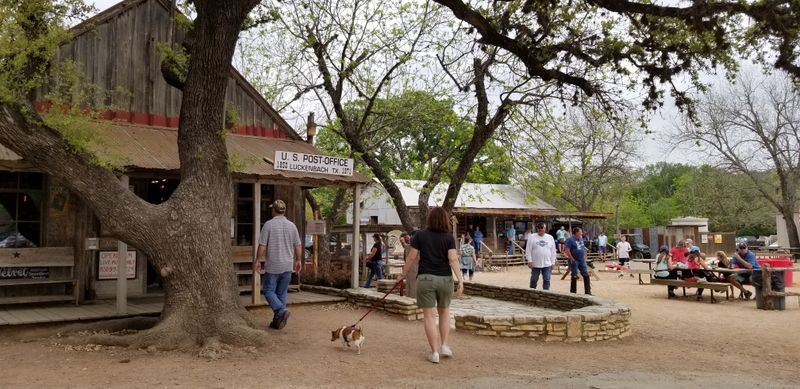
Willie Nelson and Waylon Jennings sang about this tiny Hill Country settlement, immortalizing a place that barely qualifies as a town.
The entire community consists of a general store, dance hall, and post office, all clustered under spreading live oak trees.
Live music happens regularly on the outdoor stage, where touring musicians and local pickers share songs in an unpretentious setting.
The general store sells cold drinks, souvenirs, and nostalgia, its walls covered with business cards and signatures from decades of visitors.
Locals used to gather here for dominoes and conversation, but tourist crowds now fill the picnic tables most weekends.
The dance hall hosts concerts that draw fans from across Texas, transforming the sleepy settlement into a packed venue.
No stoplights, no chain stores, and barely any permanent residents give Luckenbach an authentic feel that marketing campaigns struggle to manufacture.
The surrounding Hill Country offers beautiful drives through rolling terrain covered with cedar, oak, and seasonal wildflowers.
Guitar pickers often jam informally under the trees, creating spontaneous music sessions that capture the spirit of old Texas.
The post office still operates, giving visitors a chance to mail postcards with the famous Luckenbach postmark.
What began as a genuine backwater gathering spot has become a tourist destination, though it retains more charm than most commercialized attractions.
Address: 412 Luckenbach Town Loop, Fredericksburg, TX 78624
6. Enchanted Rock
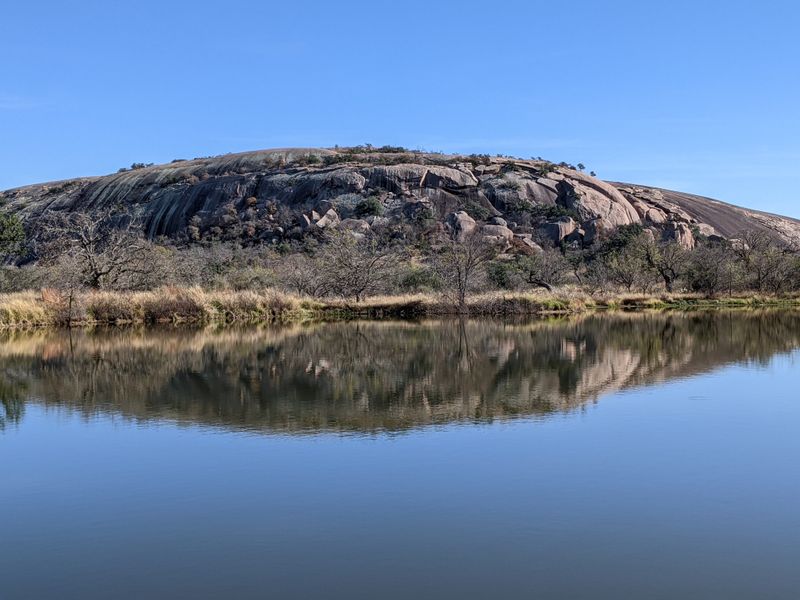
A massive pink granite dome rises above the Hill Country landscape, visible for miles and sacred to indigenous peoples long before European settlement.
The rock covers more than six hundred acres of solid stone, its surface worn smooth by millions of years of weathering and erosion.
Hikers follow a steep trail to the summit, gaining elevation quickly on the exposed granite that reflects intense heat during summer months.
Views from the top stretch across rolling hills covered in oak and juniper, with distant ridges fading into blue haze.
The rock makes creaking and groaning sounds as it expands and contracts with temperature changes, contributing to legends about the place being haunted.
Vernal pools collect rainwater in shallow depressions on the dome, supporting unique ecosystems of fairy shrimp and specialized plants.
Rock climbing routes of various difficulties attract climbers to the steeper sections, though most visitors stick to the hiking trail.
Camping in the park allows visitors to experience the rock at dawn and dusk, when lighting transforms the granite into glowing shades of pink and gold.
Tonkawa and Comanche peoples considered the rock sacred, and their legends still echo in the names and stories told about the formation.
The park now requires reservations during peak seasons, a management strategy implemented after overcrowding threatened both safety and the environment.
Local climbers who once had the rock mostly to themselves now share it with crowds arriving from Austin and San Antonio.
Address: 16710 Ranch Road 965, Fredericksburg, TX 78624
7. Palo Duro Canyon
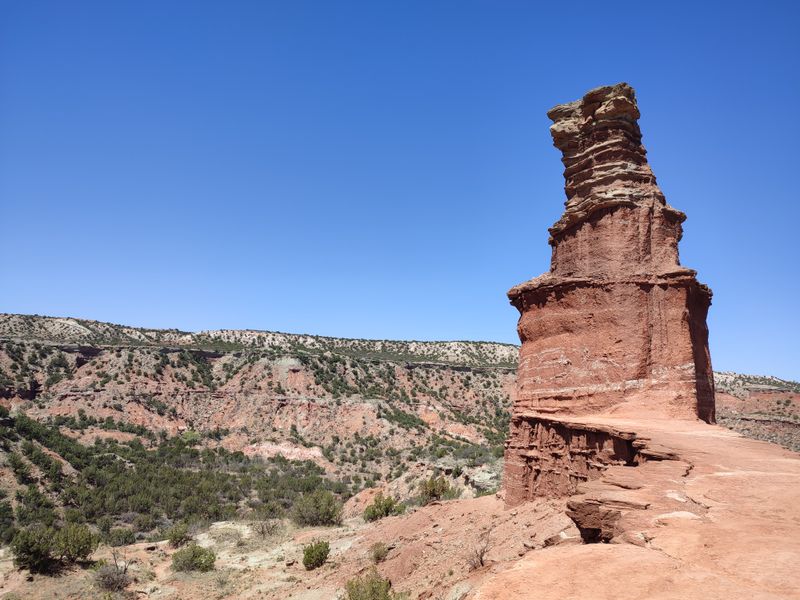
The Texas Panhandle conceals the second-largest canyon system in the United States, a geological wonder often overlooked in favor of more famous southwestern canyons.
Colorful layers of red, orange, and yellow rock tell millions of years of geological history, exposed by erosion from the Prairie Dog Town Fork of the Red River.
The canyon stretches roughly one hundred twenty miles long and reaches depths of more than eight hundred feet in places.
Hiking trails wind through the canyon floor and climb to rim overlooks, offering perspectives that change dramatically with elevation.
The Lighthouse formation stands as the canyon’s most iconic feature, a distinctive rock pillar that requires a moderately strenuous hike to reach.
Wildlife including roadrunners, mule deer, and wild turkeys inhabit the canyon, adapted to the harsh climate and limited water sources.
Summer temperatures regularly exceed one hundred degrees, making spring and fall the most comfortable seasons for extended exploration.
The outdoor musical drama performed in the canyon amphitheater each summer draws audiences to watch a show with the canyon walls as backdrop.
Horseback riding and mountain biking trails provide alternatives to hiking, allowing visitors to cover more ground in the expansive park.
Local ranchers and longtime Panhandle residents remember when access to the canyon was limited and visitor numbers remained modest.
Increased promotion of the park has brought more tourists, though it still sees far fewer visitors than comparable attractions in neighboring states.
Address: 11450 State Hwy Park Road 5, Canyon, TX 79015
8. South Padre Island
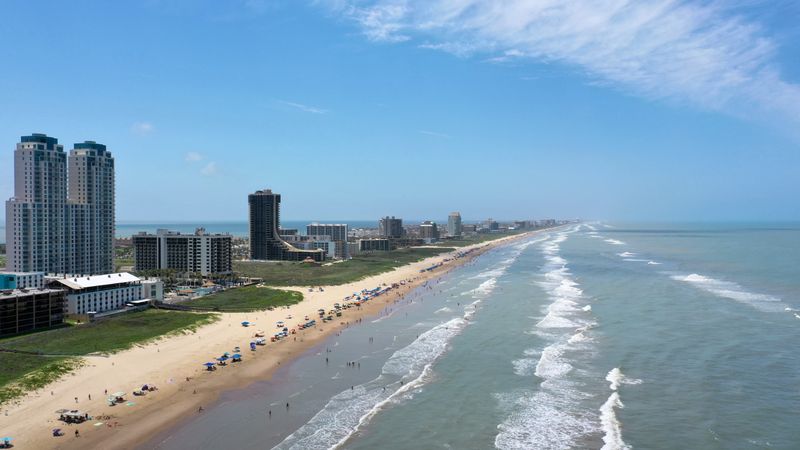
The southern tip of Texas meets the Gulf of Mexico at a barrier island known for spring break chaos, but locals know a quieter side exists beyond the party zones.
Miles of undeveloped beach stretch north from the main tourist area, accessible only by four-wheel drive vehicles that can handle soft sand.
Sea turtle nesting season brings these ancient mariners to shore, where volunteers monitor nests and protect hatchlings during their vulnerable journey to the sea.
Birding opportunities rival anywhere on the Gulf Coast, with the island serving as a crucial stopover point during spring and fall migrations.
Fishing from the beach, pier, or charter boats produces catches of redfish, speckled trout, and tarpon depending on the season.
The Laguna Madre on the bay side offers calm, shallow waters perfect for kayaking and stand-up paddleboarding through seagrass meadows.
Winter Texans flock here to escape colder climates up north, temporarily swelling the population with retirees in recreational vehicles.
Dolphins frequently swim close to shore, their dorsal fins cutting through the surf as they hunt for fish in the waves.
Local restaurants serve fresh seafood caught daily from surrounding waters, though quality varies widely between tourist traps and genuine local spots.
The increasing development threatens the island’s natural character, with high-rise condos replacing the beachfront houses that once defined the skyline.
Residents who grew up knowing every family on the island now navigate crowds of strangers during peak tourist seasons.
9. Lost Maples State Natural Area
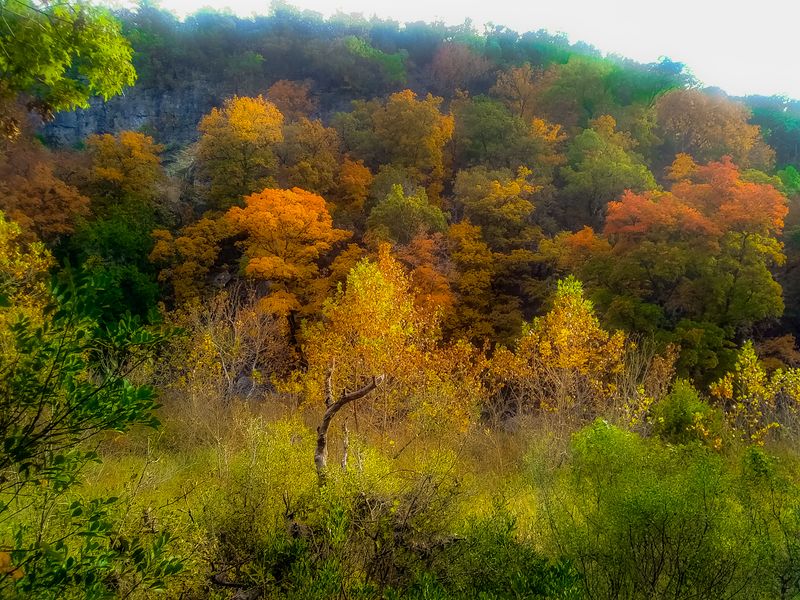
Bigtooth maples thrive in isolated canyons west of San Antonio, creating fall color displays rare in Texas and drawing leaf-peepers each autumn.
The maples represent a relict population left behind as climate changed after the last ice age, surviving in protected microclimates within the canyons.
Peak color typically occurs in late October or early November, though timing varies with weather conditions and can be difficult to predict.
Hiking trails wind through the canyons past the colorful trees, crossing clear streams and climbing to overlooks with expansive Hill Country views.
The park limits daily visitors during fall weekends to prevent overcrowding, often filling to capacity before midday arrives.
Spring brings different beauty when wildflowers carpet the hillsides and the maples leaf out in bright green.
Bird species including the rare golden-cheeked warbler nest in the area, making it important habitat beyond just scenic value.
The clear streams support aquatic life adapted to the intermittent flow patterns typical of Texas Hill Country waterways.
Camping in the park allows visitors to experience the maples at dawn when morning light illuminates the colorful leaves.
Locals who discovered this spot decades ago now share it with thousands of visitors who learned about it through social media posts.
Photography enthusiasts arrive with serious camera equipment, seeking that perfect shot of autumn color reflected in stream pools.
The park sits far enough from major cities that visiting requires commitment, but improved roads have made access easier than in previous generations.
Address: 37221 FM 187, Vanderpool, TX 78885
10. Marfa
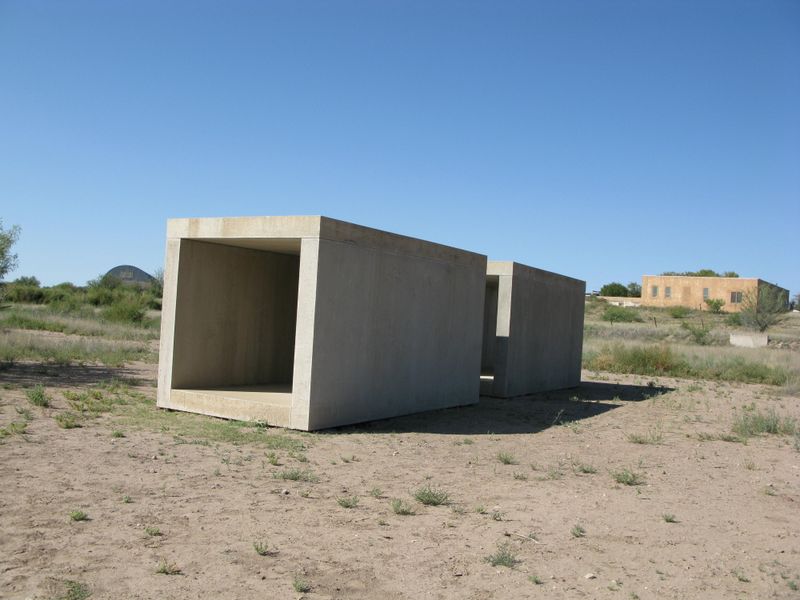
An unlikely art scene transformed a remote ranching town into an international destination where minimalist installations contrast sharply with the surrounding desert.
Donald Judd established his foundation here in the nineteen seventies, converting military buildings into spaces for large-scale permanent art installations.
Galleries, boutique hotels, and restaurants have followed, creating an incongruous blend of sophistication in a town that once served primarily as a water stop.
The mysterious Marfa Lights appear on certain nights east of town, unexplained glowing orbs that have sparked theories ranging from scientific to supernatural.
A fake Prada storefront stands alone on a highway outside town, an art installation that has become one of the most photographed spots in West Texas.
Local ranchers who have lived here for generations now share their town with artists, tourists, and wealthy part-time residents from both coasts.
The night sky offers spectacular stargazing opportunities, with minimal light pollution and high desert clarity enhancing celestial views.
Film crews use Marfa as a location for movies and commercials, drawn by the dramatic landscape and unique light quality.
Food options range from excellent to pretentious, with prices that reflect the influx of visitors with disposable income rather than local economics.
The surrounding landscape holds a stark beauty that grows on people, with vast open spaces and distant mountains defining the horizon.
Gentrification has driven up property values and cost of living, pricing out some longtime residents and changing the town’s character fundamentally.
Dear Reader: This page may contain affiliate links which may earn a commission if you click through and make a purchase. Our independent journalism is not influenced by any advertiser or commercial initiative unless it is clearly marked as sponsored content. As travel products change, please be sure to reconfirm all details and stay up to date with current events to ensure a safe and successful trip.
