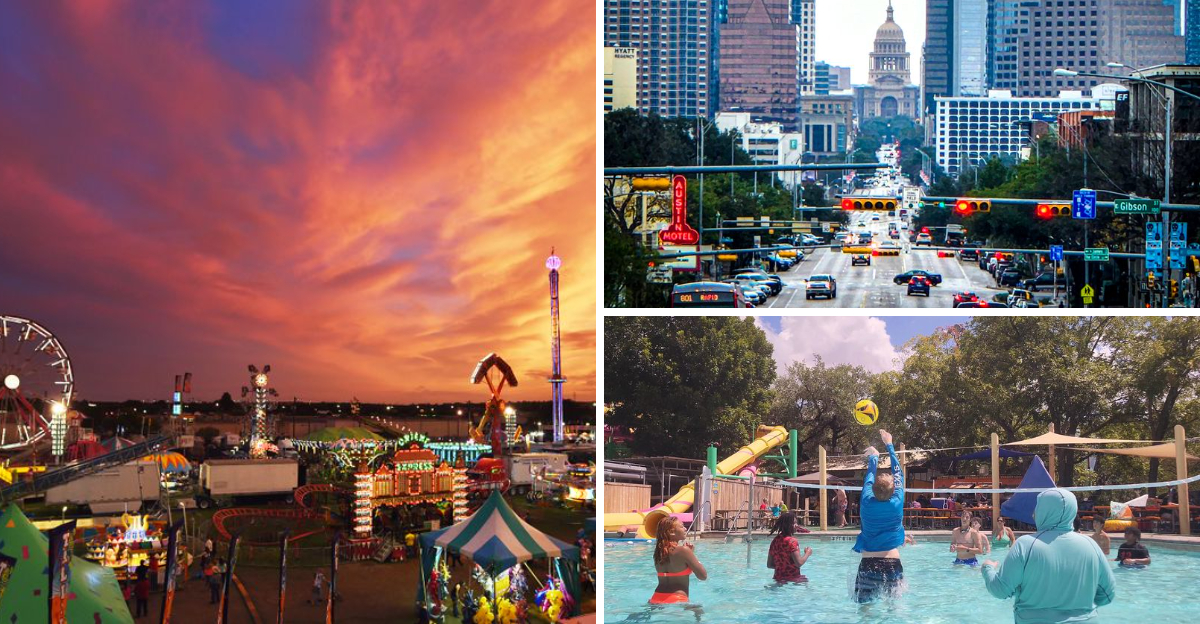
Texas stretches across landscapes so diverse they feel like different countries. From the limestone hills of the Hill Country to the humid Gulf Coast, and from the sprawling urban centers to the quiet desert plains, the Lone Star State offers something for every traveler.
Historic missions stand alongside modern museums, natural swimming holes beckon under ancient oak trees, and vibrant cultural districts pulse with energy. These destinations have drawn visitors for decades, offering glimpses into Texas history, natural beauty, and that famous Southern hospitality.
But popularity has its price, and many spots that once felt like local secrets now overflow with tourists year-round, transforming peaceful retreats into packed attractions where finding parking becomes an adventure in itself.
1. The Alamo
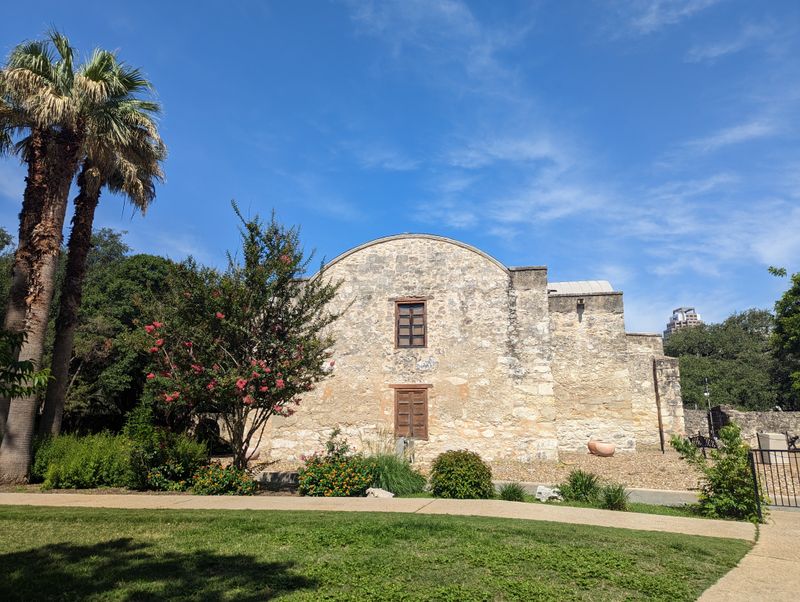
San Antonio’s most famous landmark sits in the heart of downtown, a small stone mission that witnessed one of the most pivotal battles in Texas history. The 1836 siege and battle here became the rallying cry for Texas independence, and the weathered limestone walls still carry the weight of that dramatic story.
Visitors come to walk the same ground where Davy Crockett, William Travis, and Jim Bowie made their last stand against General Santa Anna’s army.
During peak tourist season, which stretches from spring break through summer, the plaza surrounding the mission becomes a sea of tour groups, school field trips, and international visitors. The courtyard that once offered quiet reflection now buzzes with constant chatter and the clicks of countless cameras.
Lines to enter the chapel itself can stretch for thirty minutes or more on busy days.
Local historians remember when you could spend an hour here absorbing the somber atmosphere without jostling for space. Now the experience feels rushed as crowds push through the small interior rooms.
The gift shop overflows with shoppers, and finding a moment of solitude to contemplate the significance of this sacred ground proves nearly impossible.
The surrounding area has transformed too, with tourist-focused restaurants and souvenir shops replacing the quieter businesses that once lined the streets. Many San Antonio residents now visit only when hosting out-of-town guests, and even then, they choose early morning hours on weekdays to avoid the worst congestion.
Address: 300 Alamo Plaza, San Antonio, Texas
2. River Walk
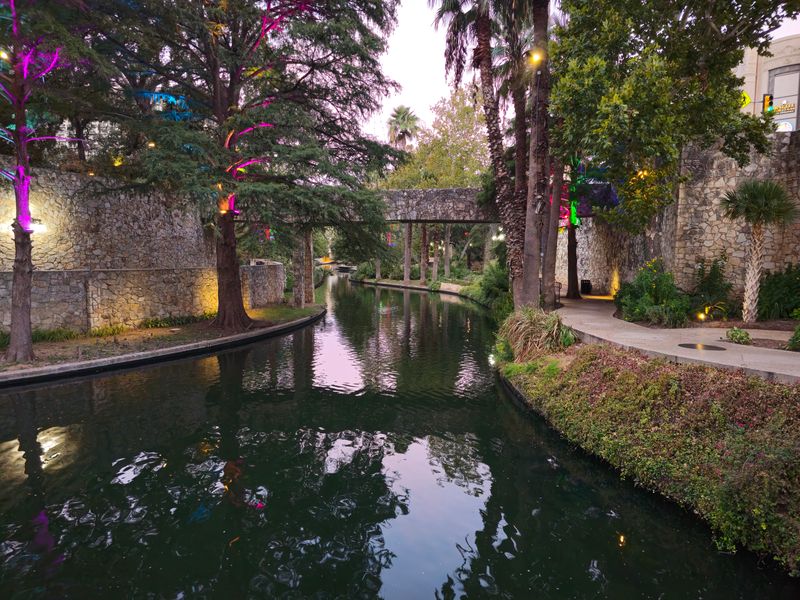
Winding through downtown San Antonio twenty feet below street level, this network of stone pathways follows the curves of the San Antonio River for miles. Cypress trees drape over the water, creating shaded corridors lined with restaurants, shops, and historic hotels.
The original vision transformed flood control into an urban oasis, and for decades it served as a peaceful escape from the city bustle above.
Today’s River Walk bears little resemblance to that tranquil vision during high season. Shoulder-to-shoulder crowds pack the narrow walkways, especially in the most popular stretches near the Alamo and the restaurant district.
River barges filled with tourists glide past every few minutes, their tour guides’ amplified voices echoing off the stone walls and drowning out conversation.
Weekend evenings bring the heaviest congestion, when both tourists and locals seeking dinner reservations compete for space.
The pathway becomes a slow-moving parade, with families pushing strollers, couples trying to walk hand-in-hand, and groups stopping suddenly to take photos creating constant bottlenecks.
What should be a leisurely twenty-minute stroll can stretch to forty-five minutes of stop-and-go shuffling.
Restaurant patios that once offered romantic ambiance now feel more like busy cafeterias, with tables crammed together and servers navigating obstacle courses of diners and passersby.
The constant flow of foot traffic means privacy vanishes, and conversations compete with street performers, boat tours, and the general din of thousands of visitors.
Long-time San Antonio residents recall quieter times when the River Walk felt like a neighborhood gathering spot rather than a theme park attraction.
3. Barton Springs Pool
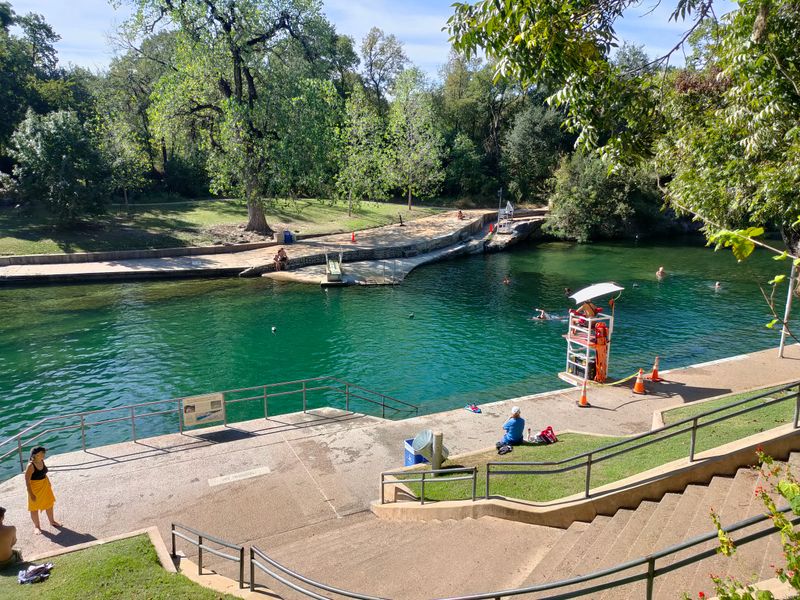
Crystal-clear water bubbles up from underground springs at a constant temperature, filling this three-acre pool nestled in the heart of Austin’s Zilker Park. The natural limestone bottom and lush vegetation surrounding the pool create an oasis that feels worlds away from the city, despite being just minutes from downtown.
For generations, Austinites have gathered here to escape the brutal Texas heat, diving into water that stays refreshingly cool even when summer temperatures soar past one hundred degrees.
Summer weekends now transform this natural wonder into something resembling a public beach at capacity. By ten in the morning, every inch of grassy space around the pool’s perimeter fills with towels, coolers, and sunbathers.
The water itself becomes crowded with swimmers, making lap swimming nearly impossible and turning the shallow end into a congested wading area where finding your own space proves challenging.
The single entrance creates bottlenecks, with lines forming during peak hours as visitors wait to pay admission and pass through the gates. Parking in Zilker Park becomes a competitive sport on hot days, with cars circling for thirty minutes or more hoping to snag a spot.
Many give up and park blocks away, hauling their swimming gear through the heat.
Local swimmers who once came daily for exercise now avoid weekends entirely, arriving instead at dawn on weekdays when the pool still offers some semblance of tranquility.
The afternoon crowds bring noise levels that shatter the peaceful atmosphere, with children’s shouts and music from portable speakers echoing across the water.
Address: 2131 William Barton Drive, Austin, Texas
4. Hamilton Pool Preserve
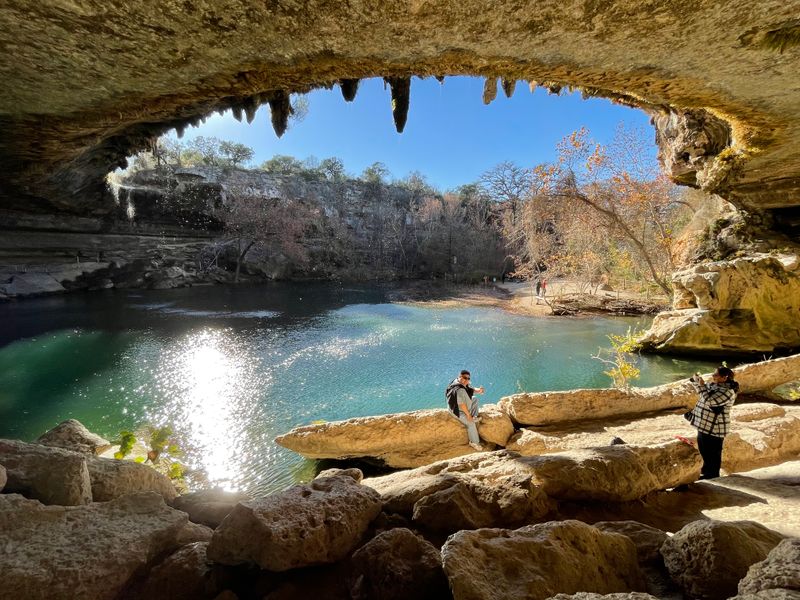
A collapsed grotto ceiling thousands of years ago created one of the most stunning natural swimming holes in Texas. Water cascades fifty feet over limestone cliffs draped with emerald moss and ferns, splashing into a jade-green pool surrounded by towering canyon walls.
The cathedral-like space, with its natural dome open to the sky and stalactites hanging overhead, feels almost mythical in its beauty.
Social media turned this once-obscure swimming spot into an international sensation, and the consequences have been dramatic. The preserve now operates on a reservation system because demand so far exceeds capacity.
Reservations open online months in advance and disappear within hours, sometimes minutes. Walk-up spots are limited and require arriving when the gates open with no guarantee of entry.
Even with reservations, the experience has changed fundamentally. The trail down to the pool becomes a conga line of visitors, and the swimming area itself accommodates far fewer people comfortably than show up to use it.
Photographers jockey for position to capture that perfect Instagram shot, often spending more time staging photos than actually swimming. The magical sense of discovering a hidden paradise evaporates when you’re sharing it with a hundred other people.
Environmental concerns have grown alongside visitor numbers. The delicate ecosystem struggles under the pressure of thousands of feet trampling vegetation and sunscreen washing into the pristine water.
The county has implemented stricter rules and shorter visiting windows to protect the preserve, but these measures also mean even less time to enjoy this natural wonder.
Location: Travis County, Texas
5. Magnolia Market at the Silos
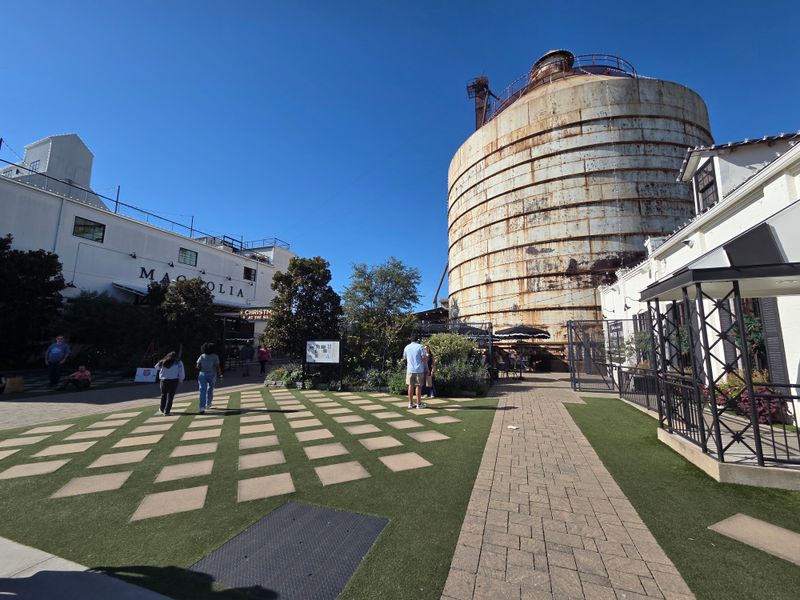
What began as a modest home renovation show on cable television transformed a quiet Waco neighborhood into a retail phenomenon. The shopping complex built around two repurposed grain silos draws fans from across the country and around the world, all eager to experience the lifestyle brand in person.
The property includes retail shops, food trucks, sprawling lawns with games, and seasonal displays that change throughout the year.
Parking challenges begin before you even reach the property, with the surrounding streets clogged and paid lots filling early on weekends. Inside the gates, the crowds make browsing difficult, with popular sections of the home goods store becoming nearly impassable during peak hours.
The outdoor spaces, designed as gathering areas for families, fill to capacity with visitors sitting on every available bench and patch of grass.
Food trucks that serve the property draw long lines, with wait times of thirty to forty-five minutes common for even simple orders. The bakery, famous for its treats, often sells out of popular items by early afternoon.
Photo opportunities at signature spots like the Silos themselves or the large lawn games create queues of people waiting their turn for that perfect social media post.
Waco residents who initially welcomed the economic boost the attraction brought now find their daily lives complicated by the constant influx of visitors. Traffic congestion extends beyond the immediate area, affecting commute times and making simple errands more time-consuming.
The neighborhood’s character has shifted from residential to tourist district, with new hotels and restaurants catering to visitors rather than locals.
Address: 601 Webster Avenue, Waco, Texas
6. South Congress Avenue

Vintage neon signs glow above quirky boutiques, food trailers serve innovative cuisine, and street musicians provide the soundtrack along this iconic Austin thoroughfare.
The mile-long stretch from the river to Oltorf Street embodies the city’s unofficial motto to “Keep Austin Weird,” with independent shops selling everything from cowboy boots to vintage clothing to locally made art.
Historic buildings house modern businesses, creating a blend of old and new that captures Austin’s evolving identity.
Weekend foot traffic now rivals major shopping districts in much larger cities, with sidewalks so packed that walking at a normal pace becomes impossible. Popular restaurants and cafes draw hour-long waits, and the limited parking situation has reached crisis levels.
Cars circle blocks repeatedly, and paid lots charge premium rates that would make downtown Chicago proud. The neighborhood’s residential side streets have become unofficial overflow parking, frustrating homeowners who can’t park near their own houses.
The character of the avenue has shifted as rising rents force out longtime independent businesses, replaced by chains and tourist-focused shops that sacrifice authenticity for profitability. The funky, laid-back vibe that made South Congress special in the first place fades as commercialization accelerates.
Street vendors and performers now compete for attention in an atmosphere that feels more like a carnival than a neighborhood shopping district.
Austinites who remember when South Congress was a slightly rundown but charming local hangout now avoid it except for specific errands. The area feels like it belongs to tourists now, with the organic weirdness replaced by a manufactured version designed to meet visitor expectations.
7. Blue Bell Creameries
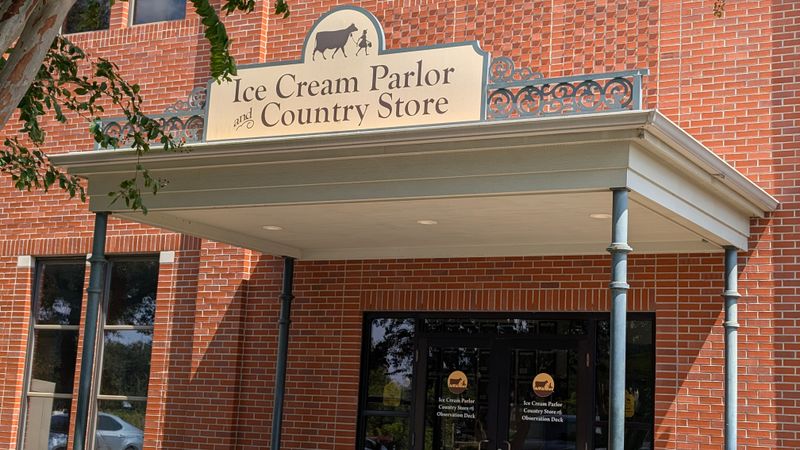
The small town of Brenham, halfway between Houston and Austin, has produced ice cream since 1907. Factory tours at this beloved Texas brand offer visitors a behind-the-scenes look at how the frozen treats go from ingredients to finished product, complete with samples of flavors fresh off the production line.
The company’s headquarters maintains a small-town charm, with a country store selling exclusive merchandise and ice cream flavors not available elsewhere.
Tour reservations book up weeks or even months in advance, especially during summer break when families plan Texas road trips. The factory can accommodate only limited numbers per tour due to food safety regulations and space constraints, creating intense competition for available slots.
When reservations open online, they disappear faster than concert tickets for a major headliner.
The small visitor center and country store, designed for a fraction of current visitor volume, become uncomfortably crowded during peak times. The parking lot overflows onto adjacent streets, and the ice cream counter inside serves a constant stream of customers, with lines extending out the door on busy weekends.
What should be a leisurely stop to enjoy ice cream in a charming small town becomes a rushed experience focused on getting in and out.
Brenham itself has seen tourism increase dramatically, with visitors exploring the town before or after their factory visit. Local restaurants and shops benefit economically, but the infrastructure of this town of 17,000 wasn’t built to handle the influx.
Traffic on main streets increases noticeably on days when multiple tour groups cycle through the factory.
Address: 1101 South Blue Bell Road, Brenham, Texas
8. Schlitterbahn Waterpark

New Braunfels sits along the Guadalupe and Comal Rivers in the Texas Hill Country, and this waterpark has been a summer destination since the 1970s. The sprawling complex features rides ranging from gentle lazy rivers to adrenaline-pumping slides that drop riders from tower heights.
Natural river sections flow through parts of the park, incorporating the area’s spring-fed waters into the attractions and providing a unique swimming experience.
Summer weekends and holidays transform the park into a test of patience, with entrance lines forming before opening and wait times for popular slides stretching to two hours or more. The wave pools and main swimming areas become so packed that finding space to spread out a towel requires strategy and luck.
Lounge chairs around the pools fill immediately after the gates open, forcing latecomers to claim spots on concrete or grass.
Navigating between attractions means wading through crowds on narrow pathways, with families pushing rented strollers and groups trying to stay together creating constant congestion. The most thrilling rides draw the longest waits, and the park’s size means significant walking between areas.
By midday in the Texas heat, the combination of crowds, lines, and sun exposure can be exhausting.
Food service areas face their own challenges during peak times, with every restaurant and snack bar drawing substantial lines. Finding a table to eat becomes competitive, with families hovering near occupied tables waiting for them to clear.
Lockers and changing facilities also experience heavy use, with waits developing even for these basic amenities.
Locals who grew up visiting Schlitterbahn now choose weekdays during the school year or skip it entirely.
Address: 400 N Liberty Ave, New Braunfels, Texas
9. Texas State Fair
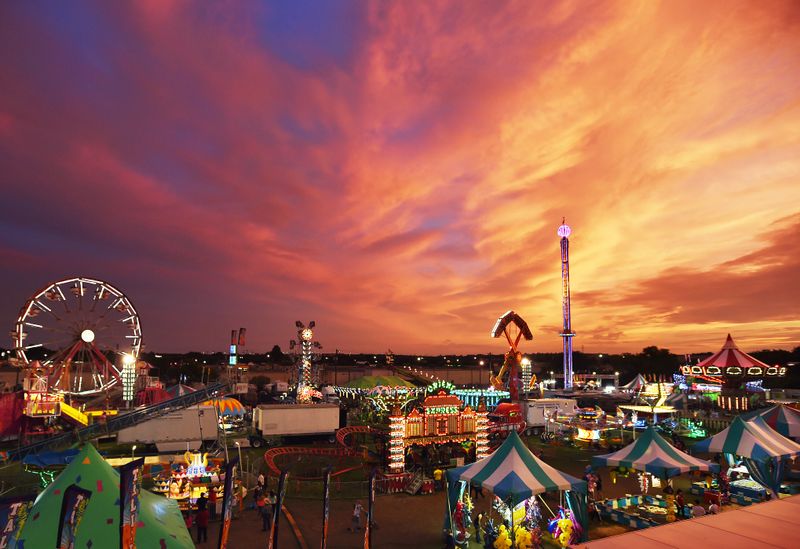
Every autumn for over a century, Dallas has hosted this massive celebration of Texas culture, agriculture, and pure fun. The fairgrounds come alive with livestock shows, concerts, carnival rides, and the famous midway where vendors compete to create the most outrageous fried foods imaginable.
Big Tex, the 55-foot cowboy statue, welcomes millions of visitors who come to experience this Texas tradition, which runs for three weeks in late September and October.
Attendance figures now regularly exceed two million people over the fair’s run, creating crowd conditions that can feel overwhelming, especially on weekends and during special events like the Red River Rivalry football game.
The midway becomes a slow-moving river of humanity, with families, teenagers, and couples packed together shuffling past game booths and food stands.
Lines for popular rides can take an hour or more, and even getting a corn dog or funnel cake means waiting through substantial queues.
Parking near Fair Park turns into an expensive ordeal, with official lots charging premium prices and still filling to capacity. Many fairgoers park miles away and take shuttle buses, adding significant time to their visit.
Inside the grounds, finding a place to sit and rest becomes difficult, with benches and shaded areas claimed quickly.
The agricultural exhibits and creative arts buildings, once peaceful refuges from the midway excitement, now see heavy foot traffic that makes appreciating the displays challenging.
The heat, crowds, and noise create sensory overload, especially for families with young children or anyone seeking a more relaxed experience.
Dallas residents who once attended annually now think twice about battling the masses.
Locations: Fair Park; 1300 Robert B Cullum Boulevard; Dallas, TX 75210
10. Natural Bridge Caverns
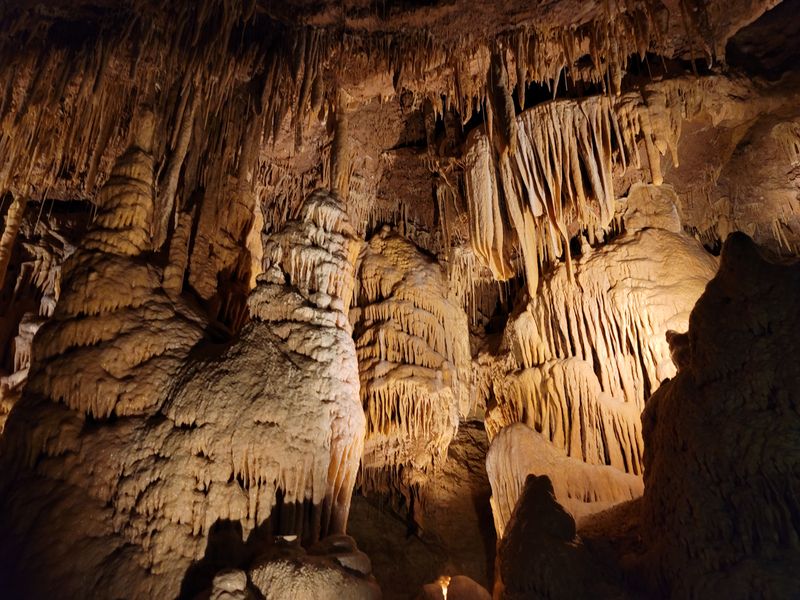
Sixty feet below the surface, a maze of limestone passages reveals spectacular formations created over millions of years. Stalactites drip from cathedral ceilings, stalagmites rise from cavern floors, and flowstone cascades down walls in frozen waterfalls of stone.
Discovered in the 1960s, these caverns north of San Antonio rank among the largest and most impressive in Texas, with several miles of passages including sections still being explored by scientists.
Tour groups now cycle through the caverns every few minutes during busy periods, creating a conveyor belt effect that diminishes the wonder of the underground environment.
The narrow passages can accommodate only so many people comfortably, and when tours bunch up at popular formations, the cavern rooms become crowded and noisy.
The magic of standing in ancient underground chambers fades when you’re surrounded by dozens of other tourists all trying to take photos.
Above ground, the property has expanded to include adventure activities like zip lines and rope courses, drawing even more visitors and creating parking challenges during peak season. The visitor center and gift shop experience heavy traffic, with families waiting to check in for their reserved tour times.
Summer weekends and spring break bring the heaviest crowds, with multiple tour groups often visible in the same cavern room simultaneously.
The pace of tours has accelerated to accommodate more visitors, leaving less time to absorb the geological wonders and ask questions. Guides rush through their presentations, and the experience feels more like a theme park attraction than a natural wonder.
The temperature inside remains a constant 70 degrees year-round, but the crowds generate enough body heat to make some passages feel stuffy.
Address: 26495 Natural Bridge Caverns Road, San Antonio, Texas
Dear Reader: This page may contain affiliate links which may earn a commission if you click through and make a purchase. Our independent journalism is not influenced by any advertiser or commercial initiative unless it is clearly marked as sponsored content. As travel products change, please be sure to reconfirm all details and stay up to date with current events to ensure a safe and successful trip.
