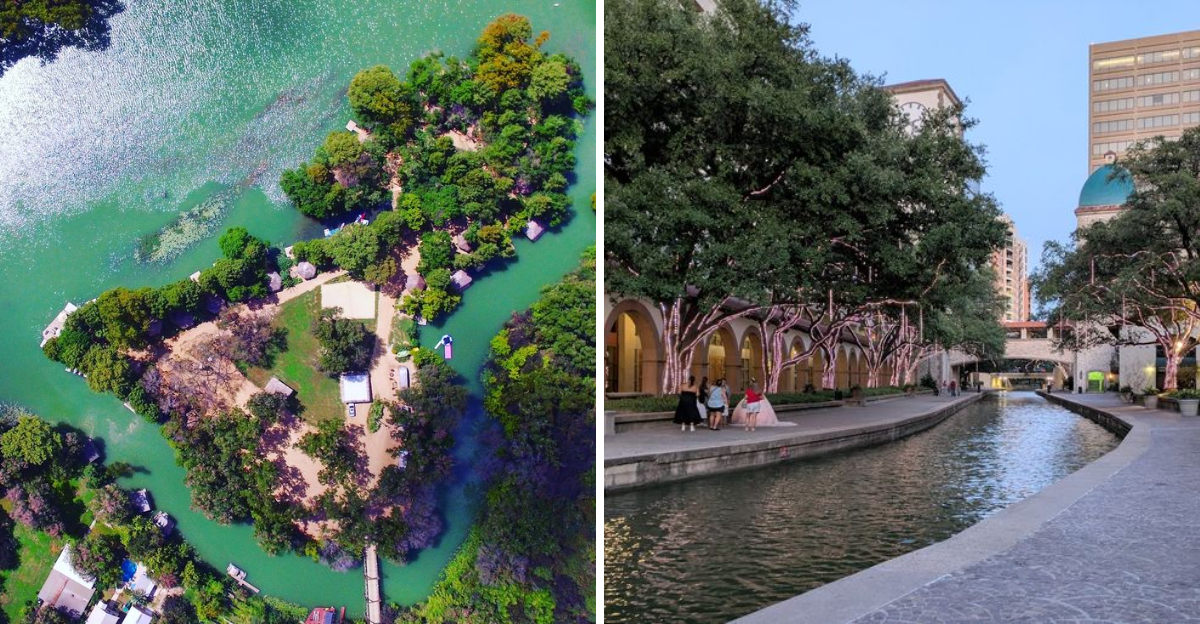
A swimming hole with water so clear it looks fake. A stretch of road that curves through canyons like a postcard.
A small town diner that serves pie so good it should have a waitlist. These places exist in Texas, and somehow they are not famous.
They have all the ingredients, beauty, character, and a story to tell, but they stay under the radar while other spots get all the attention. No crowds, no long lines, no fighting for a photo.
Just quiet, beautiful, and waiting for someone to notice. Texas has plenty of famous landmarks, but the best ones are often the ones that never made the list.
Go find them before someone else does. The secret is already out, just not to everyone.
1. Acton State Historic Site, Granbury
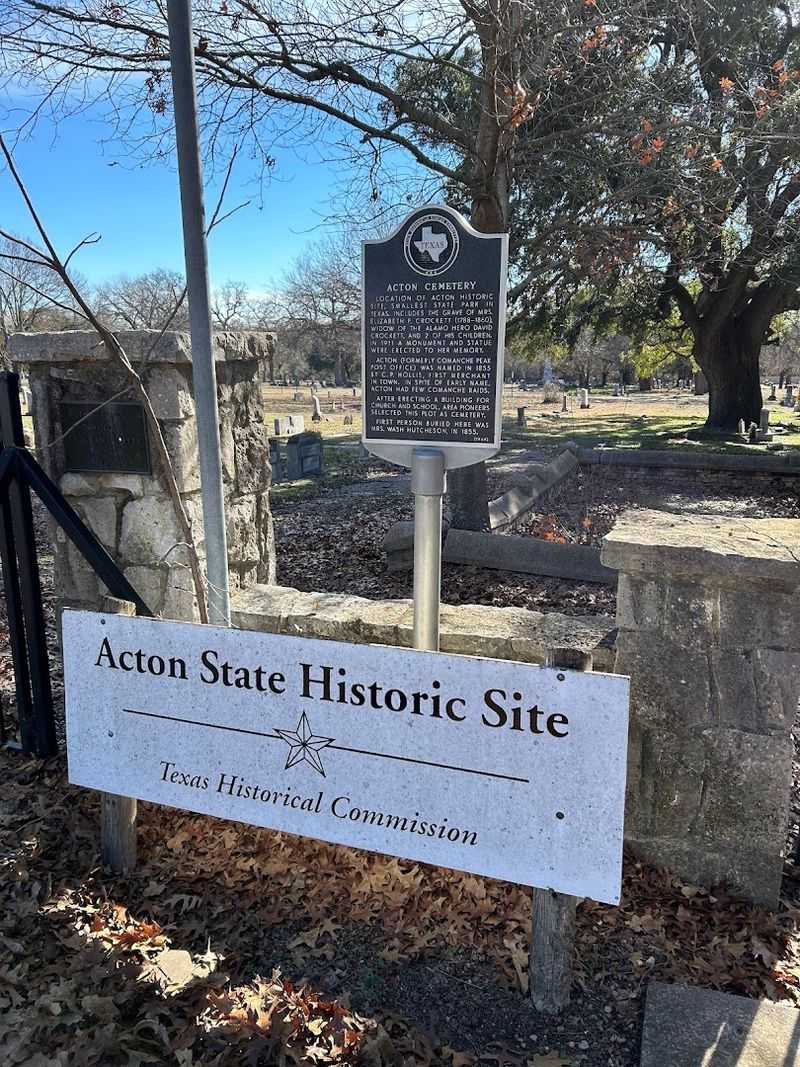
There’s something quietly powerful about a place this small carrying this much history. Acton State Historic Site holds the title of the smallest state park in Texas, covering barely a tenth of an acre, yet it marks the grave of Elizabeth Crockett, wife of the legendary Davy Crockett.
That detail alone makes it feel like a spot that should draw far bigger crowds than it does.
The site sits in a residential area of Granbury, easy to miss if you aren’t looking for it. A tall granite monument marks the grave, surrounded by a simple iron fence and shaded by mature trees.
It’s the kind of place that rewards the curious traveler who takes a moment to slow down and pay attention.
What makes Acton special isn’t spectacle. It’s the intimacy of it, the fact that you can stand just a few feet from a piece of frontier American history without a single gift shop or crowd in sight.
Elizabeth Crockett made the journey to Texas after her husband’s death at the Alamo, and she lived out her years here in Hood County. Her story is just as compelling as his, and this small plot of land is one of the few places in Texas that honors it directly.
Granbury itself is a charming town worth exploring before or after your visit. The courthouse square is lined with local shops and restaurants, making it easy to turn a quick stop into a full afternoon.
Address: 167 Granbury Ct, Granbury, TX
2. Magoffin Home State Historic Site, El Paso
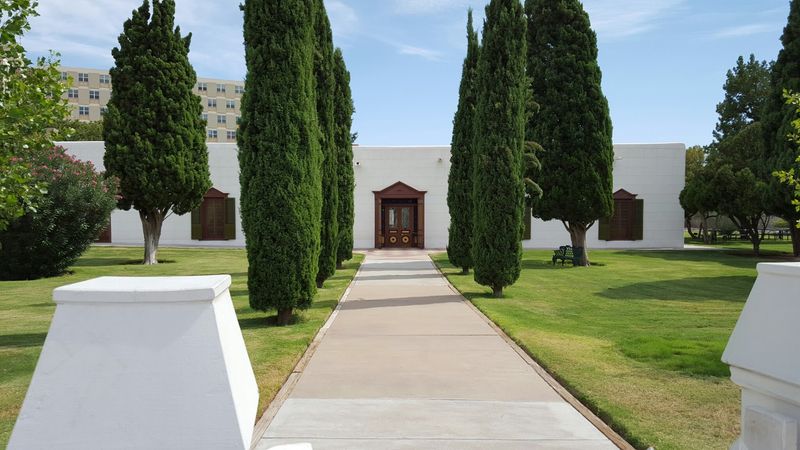
El Paso gets attention for its border culture and its connection to the wider American Southwest, but the Magoffin Home tends to fly under the radar even among locals.
Built in 1875, this territorial-style adobe home belonged to Joseph Magoffin, a prominent El Paso mayor, and it remained in the same family for over a hundred years before becoming a state historic site.
Stepping inside feels like the calendar rolled backward without warning. The thick adobe walls keep the interior cool even in the blazing West Texas heat, and the furnishings reflect the layered cultural identity of a borderland family navigating two worlds at once.
Spanish colonial influence blends with Victorian American sensibility in a way that feels completely natural rather than curated.
Guided tours are the main way to experience the home, and the guides here tend to be genuinely enthusiastic about the stories they share. You’ll learn about the Magoffin family’s role in shaping early El Paso, their political connections, and the daily rhythms of life in a household that sat at the crossroads of two nations.
It’s the kind of history that feels personal rather than textbook-dry.
The surrounding neighborhood has its own character, and the home sits close enough to downtown El Paso that you can pair a visit with a walk through the city’s older streets.
For anyone interested in the complicated, fascinating history of the Texas-Mexico borderland, this place offers one of the most honest windows available.
Address: 1120 Magoffin Ave, El Paso, TX
3. Slaton Harvey House, Slaton
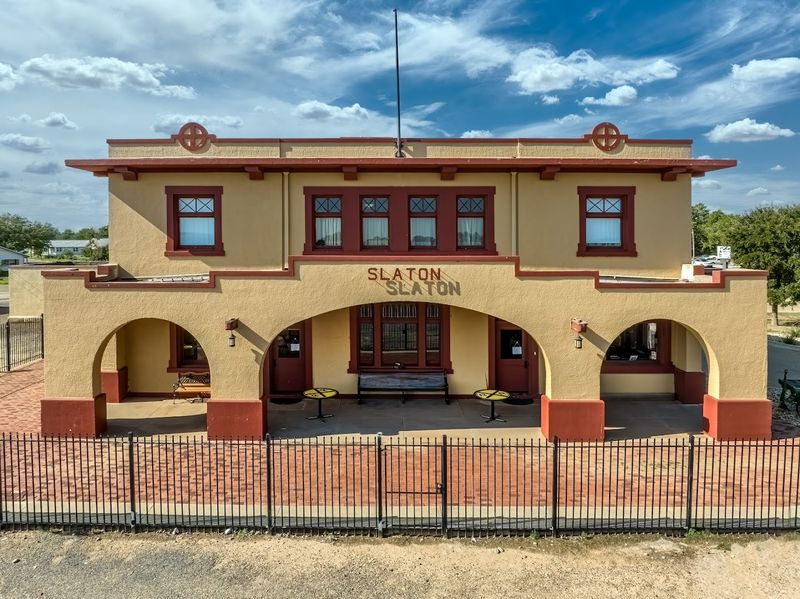
Most people have never heard of a Harvey House, which is exactly what makes finding one feel like discovering a hidden chapter of American history.
The Slaton Harvey House was once part of a legendary chain of railroad dining establishments that transformed how travelers ate across the American West in the late 1800s and early 1900s.
Fred Harvey’s restaurants were famous for their quality and consistency at a time when most rail stop food was genuinely terrible.
The Slaton location opened in 1912 and served the Santa Fe Railway line, feeding passengers and crew who passed through this small South Plains town.
At its peak, Harvey Houses were staffed by the famous Harvey Girls, young women recruited from across the country to work as professional waitresses, a role that was surprisingly progressive for the era.
Their story alone is worth knowing.
Today the building stands as a reminder of a transportation era that shaped the American interior. Restoration efforts have kept the structure standing, and visiting it gives you a real sense of how important the railroad once was to towns like Slaton.
The building’s brick facade and period architecture stand out against the flat, open landscape of West Texas in a way that feels almost cinematic.
Slaton itself is a small, unpretentious town where people are genuinely friendly to visitors who show up with curiosity. The Harvey House isn’t a bustling museum, which is part of its appeal.
It’s quiet, a little worn, and completely authentic in the way that only forgotten history can be.
Address: 400 Railroad Ave, Slaton, TX
4. Devil’s Rope Museum, McLean
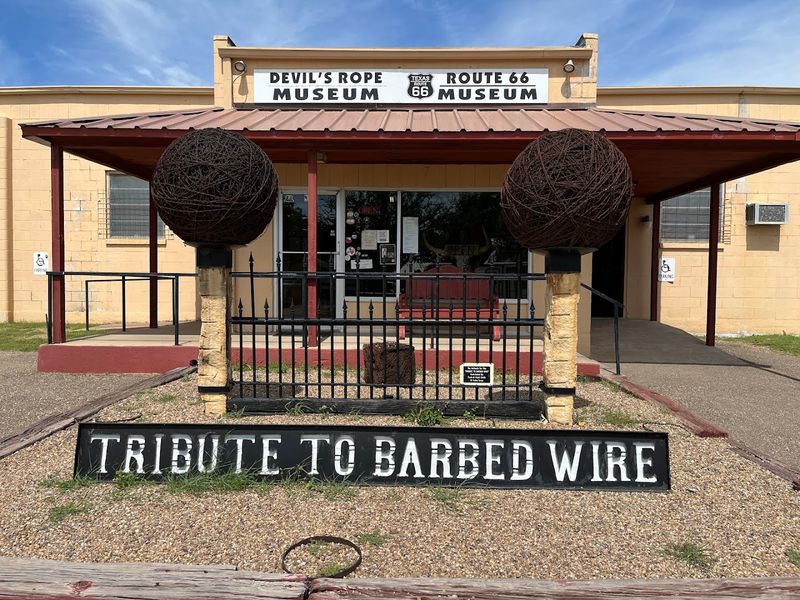
Barbed wire changed the American West more than almost any other invention, and yet most people never stop to think about it. The Devil’s Rope Museum in McLean, Texas, makes a genuinely compelling case that they should.
Barbed wire, nicknamed devil’s rope by the Native American tribes who encountered it on the open plains, ended the era of the open range and reshaped land ownership, cattle culture, and conflict across the frontier.
The museum houses one of the largest collections of antique barbed wire in the country, with hundreds of varieties on display, each with its own patent history and design quirk.
It sounds niche, and it absolutely is, but there’s something oddly fascinating about seeing just how many ways humans invented to make wire sharp.
The displays are thoughtful and the context provided makes the collection feel meaningful rather than random.
McLean sits along old Route 66, and the museum doubles as a celebration of that iconic road. Artifacts, photographs, and memorabilia from the Route 66 era share space with the wire collection, giving the place a dual identity that works surprisingly well.
I found myself spending more time here than I planned, which is usually the sign of a good museum.
The town of McLean is tiny and unhurried, which adds to the experience. There’s no rush, no ticket line, and no gift shop pressure.
Just honest, well-presented history in a part of Texas that most travelers pass through without stopping. That’s a genuine shame, because McLean rewards the pause.
Address: 100 Kingsley St, McLean, TX
5. Barney Smith’s Toilet Seat Art Museum, The Colony
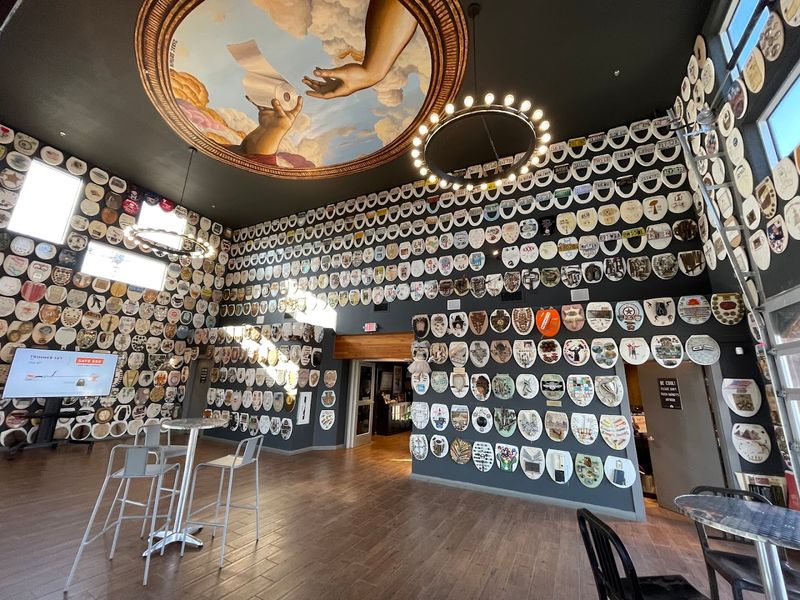
There are museums, and then there is whatever Barney Smith created in his garage over the course of several decades. The Toilet Seat Art Museum is exactly what it sounds like, and also somehow so much more than that.
Barney Smith, a retired master plumber, began decorating toilet seats as a hobby and never really stopped. By the time his collection grew to over a thousand pieces, it had become one of the most genuinely strange and joyful art installations in Texas.
Each seat is its own small world. Some are covered in maps, coins, or military patches.
Others feature painted portraits, pop culture references, or mementos from specific events in American history. There’s no consistent theme except the enthusiasm behind each one, and that enthusiasm is infectious.
You end up looking at these things far more carefully than you ever expected to look at toilet seats.
Barney passed away in 2020, but his collection found a new home in The Colony, where it continues to welcome visitors. The experience still carries his personality, warm, funny, and completely unpretentious.
It’s outsider art in the truest sense, made by someone who simply loved making things and never worried about whether the art world would approve.
For travelers who appreciate the weird and wonderful corners of American culture, this is a must. It’s the kind of stop that sounds ridiculous when you describe it to someone who hasn’t been, and then becomes the first thing you recommend once you have.
Texas has plenty of quirky roadside attractions, but this one has genuine heart.
Address: 5959 Grove Ln, The Colony, TX
6. The Starlight Theatre, Terlingua
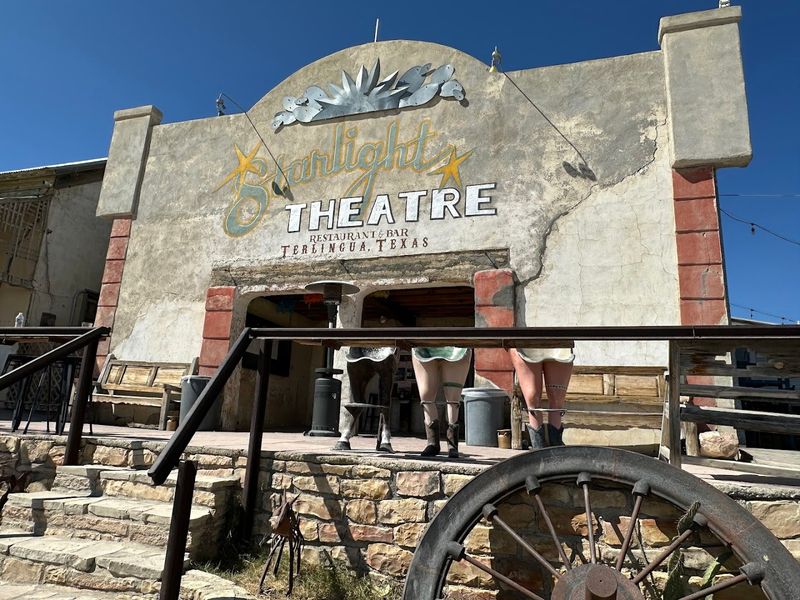
Terlingua is already one of the more atmospheric places in Texas, a genuine ghost town built on the ruins of a quicksilver mining operation that collapsed decades ago. But within that ghost town, the Starlight Theatre manages to feel like the beating heart of something still very much alive.
It’s a restaurant and live music venue that occupies a building with serious history, and the combination of crumbling desert surroundings and vibrant nightly performances creates an atmosphere that’s hard to replicate anywhere else.
The building itself dates back to the mining era, and the walls carry that weight visibly. Exposed stone, weathered wood, and mismatched furniture give the interior a character that no designer could manufacture.
When live music fills the space on a weekend night, with the desert darkness pressing in from outside, it feels like a scene from a film that hasn’t been made yet.
Terlingua attracts a particular kind of traveler, people who drove past the last gas station an hour ago and kept going anyway. The Starlight fits that crowd perfectly.
It’s not trying to be polished or famous. It just exists, doing its thing in the middle of the Chihuahuan Desert, serving food and hosting music for anyone willing to make the journey.
Big Bend National Park is nearby, which gives the area a steady trickle of visitors, but the Starlight remains genuinely underappreciated as a destination in its own right. If you find yourself in far West Texas, this is the kind of place you’ll talk about long after you’ve left.
Address: 631 Ivey Rd, Terlingua, TX
7. Smitty the Giant Gingerbread Man, Smithville
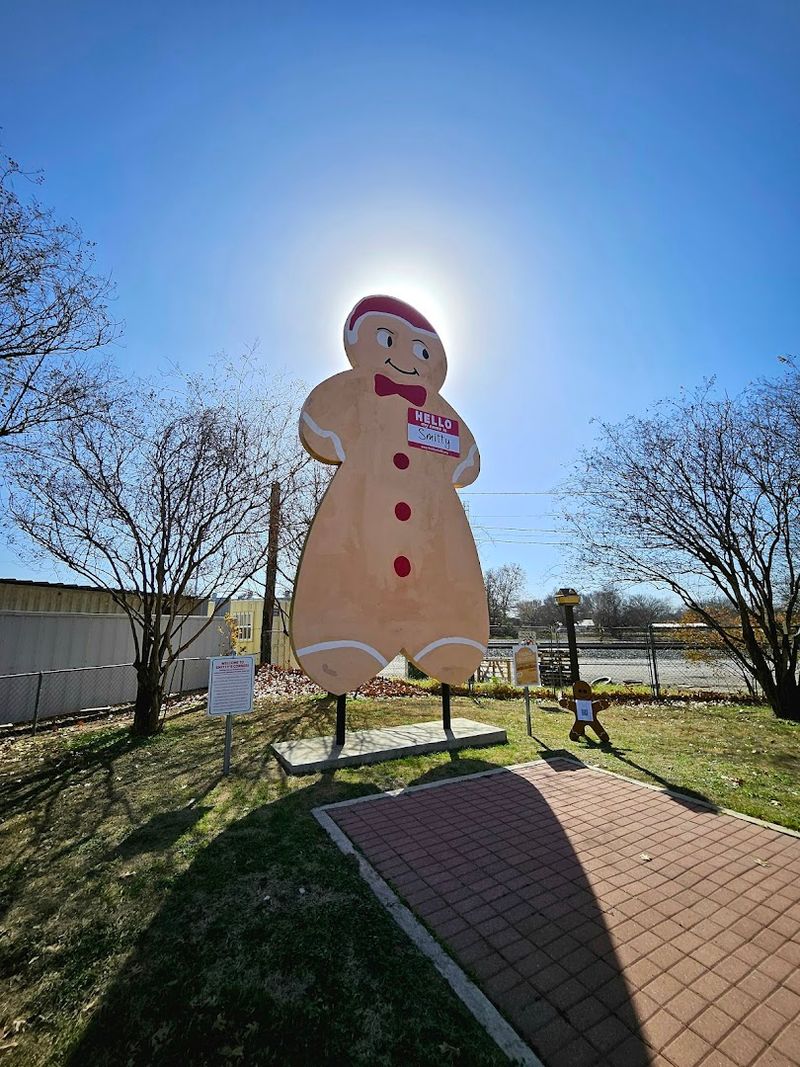
Smithville is a small town with a big personality, and Smitty the Giant Gingerbread Man is its most enthusiastic ambassador. Standing tall at the corner of NE 1st Street, this oversized fiberglass figure is the kind of roadside attraction that makes you brake without fully deciding to.
He’s cheerful, a little absurd, and completely committed to his role as the town’s unofficial mascot.
Smithville has appeared in a few films over the years, most notably in the movie Hope Floats, which gave the town’s historic downtown a brief moment of cinematic fame.
The streets still carry that small-town charm that productions tend to seek out, with well-preserved storefronts and a genuine sense of community that’s hard to fake.
Smitty fits right into that character, adding a playful note to a town that takes pride in its warmth.
What I like about stops like this is how they reflect local identity. Smitty isn’t here because a marketing team decided he should be.
He’s here because Smithville has a gingerbread tradition tied to its community events, and the town decided to make it permanent and oversized. That kind of civic personality is worth celebrating.
The Colorado River runs nearby, and the surrounding Bastrop County landscape is genuinely pretty, especially in fall when the loblolly pines add color to the region. Smithville is the kind of town where you park once and spend an afternoon without planning to.
Smitty is just the reason you stop in the first place.
Address: 102 NE 1st St, Smithville, TX
8. Son’s Island, Seguin
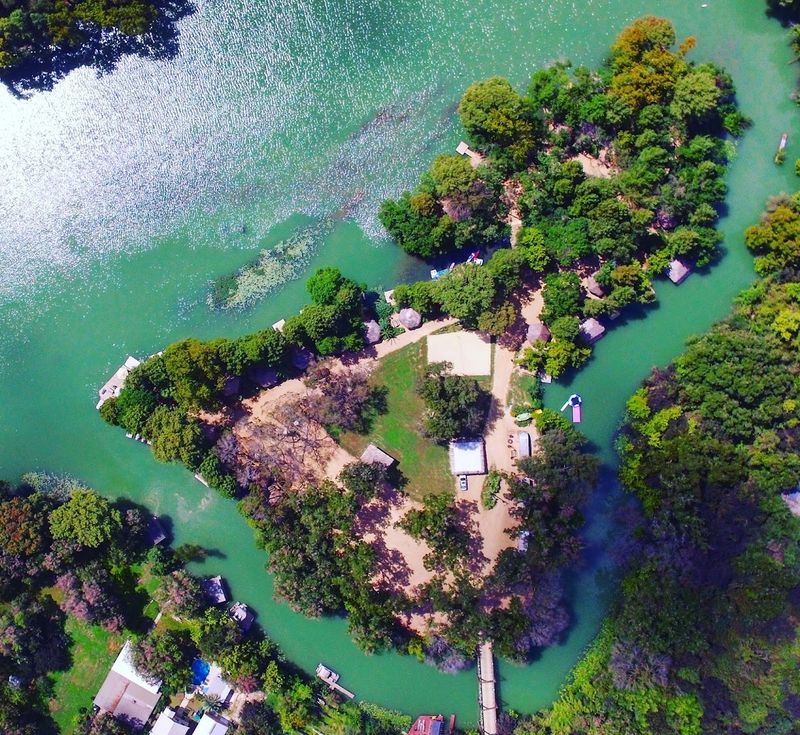
Hidden inside the city limits of Seguin, Son’s Island is a genuine green retreat that most Texans outside the Guadalupe Valley have never heard of.
The park sits on an island in the Guadalupe River, accessible by a short footbridge, and the moment you cross it, the noise of town feels like it belongs to a different world entirely.
Cypress trees line the banks, their roots reaching into the clear river water like something out of a painting.
Seguin itself is often overshadowed by nearby San Marcos and New Braunfels, both of which attract heavy tourist traffic. That’s exactly why Son’s Island feels like such a find.
The park is locally loved but rarely overcrowded, which means you can actually hear the river and enjoy the shade without competing for space.
The island has picnic areas, open grass, and river access that makes it popular with families on warm days. But it also works beautifully as a quiet place to sit and do absolutely nothing, which is underrated as a travel activity.
The Guadalupe here is calm and shallow in places, with that characteristic Hill Country clarity that makes the water look almost unnaturally clean.
Seguin’s downtown is worth a walk before or after, with the famous pecan tree legacy of the town visible in various forms around the square. The town holds a legitimate claim as the pecan capital of Texas, and the local pride around that is genuine and charming.
Son’s Island is the natural complement to a day spent exploring this underappreciated city.
Address: 110 Lee St, Seguin, TX
9. Stonehenge II, Ingram
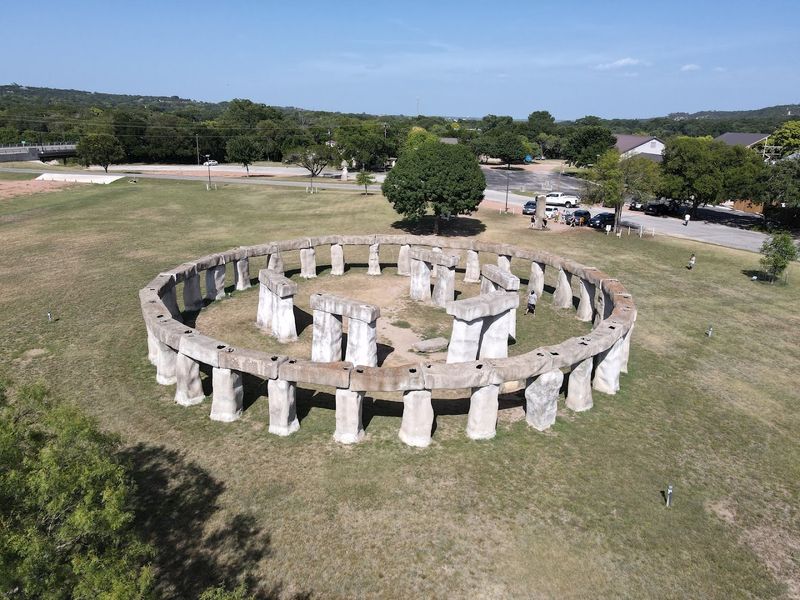
Nobody expects to find Stonehenge in the Texas Hill Country, which is precisely what makes Stonehenge II so delightful.
Built by local artist Al Shepperd in the 1990s with help from Doug Hill, this replica stands at roughly ninety percent of the original’s scale and sits on a quiet plot of land outside Ingram that feels like it belongs in a dream sequence.
Two Easter Island-style moai statues flank the structure, because apparently if you’re going to build a Stonehenge replica in Texas, you might as well add some island mystery to the mix.
The piece started as a private art project and grew into something the community embraced. It was eventually moved to its current home at the Hill Country Arts Foundation, where it can be visited regularly.
The setting is relaxed and unpretentious, a wide open field with big sky views and the kind of silence that makes you feel genuinely far from everywhere.
What makes Stonehenge II work as a travel experience is the combination of absurdity and craftsmanship. It’s funny, yes, but it’s also surprisingly impressive up close.
The scale and detail put into the construction make it more than a novelty. It becomes a meditation on why humans have always felt compelled to build monuments, even in the middle of nowhere, even out of steel and cement.
Ingram is a small, quiet community near Kerrville, and the surrounding Hill Country landscape makes the drive out here genuinely scenic. This is a stop that earns its place on any Texas road trip itinerary without apology.
Address: 120 Point Theatre Rd S, Ingram, TX
10. Longhorn Cavern State Park, Burnet
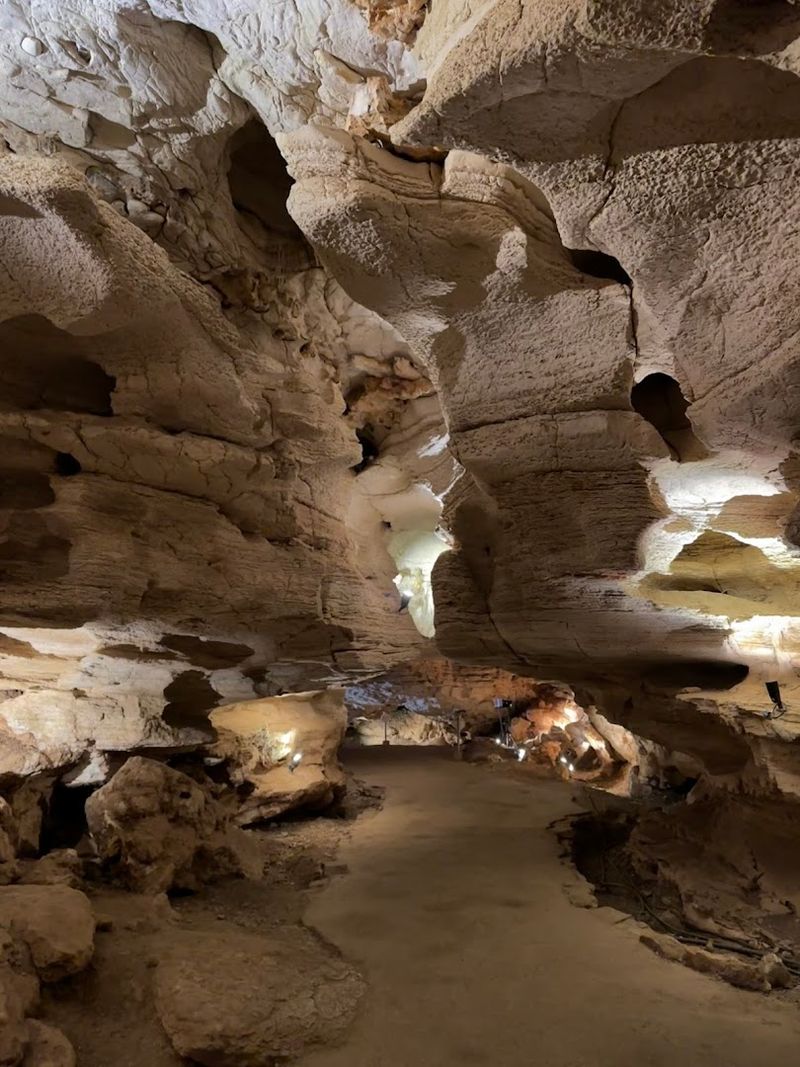
Natural Bridge Caverns near San Antonio gets most of the cave tourism attention in Central Texas, but Longhorn Cavern has a story and a character that sets it completely apart.
Carved by an underground river over millions of years, the cavern has served as a shelter for prehistoric humans, a Confederate munitions storage site during the Civil War, and even a speakeasy during Prohibition.
That’s a biographical resume most caves can only dream about.
The cavern itself is visually striking, with large open chambers, smooth limestone walls polished by ancient water, and a temperature that stays around 64 degrees year-round regardless of what the Texas summer is doing above ground.
Tours are guided and move at a comfortable pace, with stories woven throughout that make the geology feel alive rather than academic.
The New Deal-era buildings at the surface, constructed by the Civilian Conservation Corps in the 1930s, add another layer of history to the visit. The stone structures have a handsome, sturdy quality that reflects the craftsmanship of that period, and they blend naturally into the surrounding Hill Country landscape.
It’s a rare park where both the above-ground and below-ground experiences are worth your time.
Burnet, known as the bluebonnet capital of Texas, is a pleasant base for exploring this part of the Hill Country. Lake Buchanan is nearby, and the combination of water, wildflowers in season, and underground adventure makes this area one of the most underappreciated corners of the state.
Longhorn Cavern deserves far more recognition than it currently gets.
Address: 6211 Park Rd 4 S, Burnet, TX
11. Mandalay Canal Walk at Las Colinas, Irving
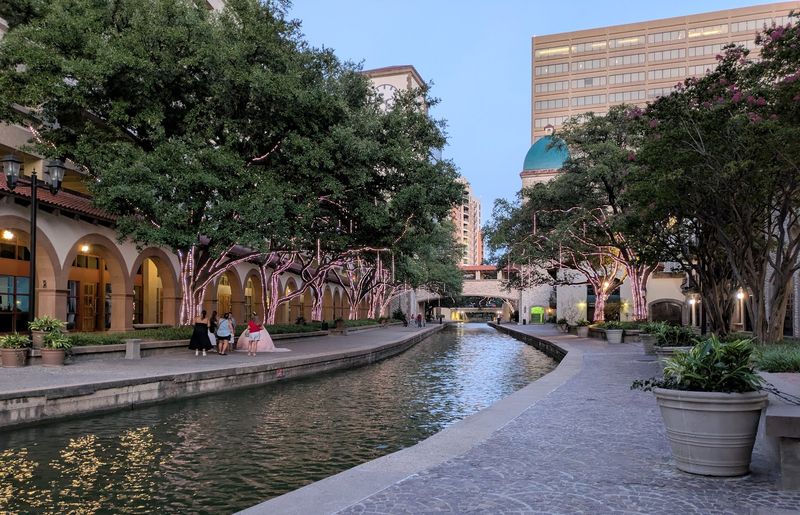
Most people associate canals with Venice or Amsterdam, not the suburbs of Dallas. But the Mandalay Canal Walk in Las Colinas is a genuinely lovely urban waterway that feels like it was airlifted from somewhere in southern Europe and quietly installed in Irving without anyone making much fuss about it.
The canal runs through a planned development called Urban Center, lined with restaurants, outdoor seating, and architecture that leans Mediterranean in its styling.
Gondola rides are available on the canal, which is either charming or surreal depending on your perspective, and honestly it might be both at once. The water is calm, the reflections are pretty, and the whole setup has a relaxed, walkable energy that’s surprisingly easy to enjoy.
It doesn’t try to be something it isn’t, which is a quality worth appreciating in a place this deliberately constructed.
Las Colinas is also home to the Mustangs of Las Colinas, a massive bronze sculpture of wild horses mid-gallop through a shallow pool, which is one of the most dramatic public art installations in Texas and somehow still not widely known outside the DFW area.
The two attractions pair well together for an afternoon that feels more like a European city break than a suburban Texas outing.
The canal walk is free to stroll, accessible, and genuinely photogenic at almost any time of day. Evening light turns the water golden and the restaurant terraces fill with a relaxed after-work crowd.
For anyone spending time in the Dallas area who wants something unexpected, this is the kind of place that earns a quiet reputation among those who find it.
Address: 215 Mandalay Canal, Irving, TX
