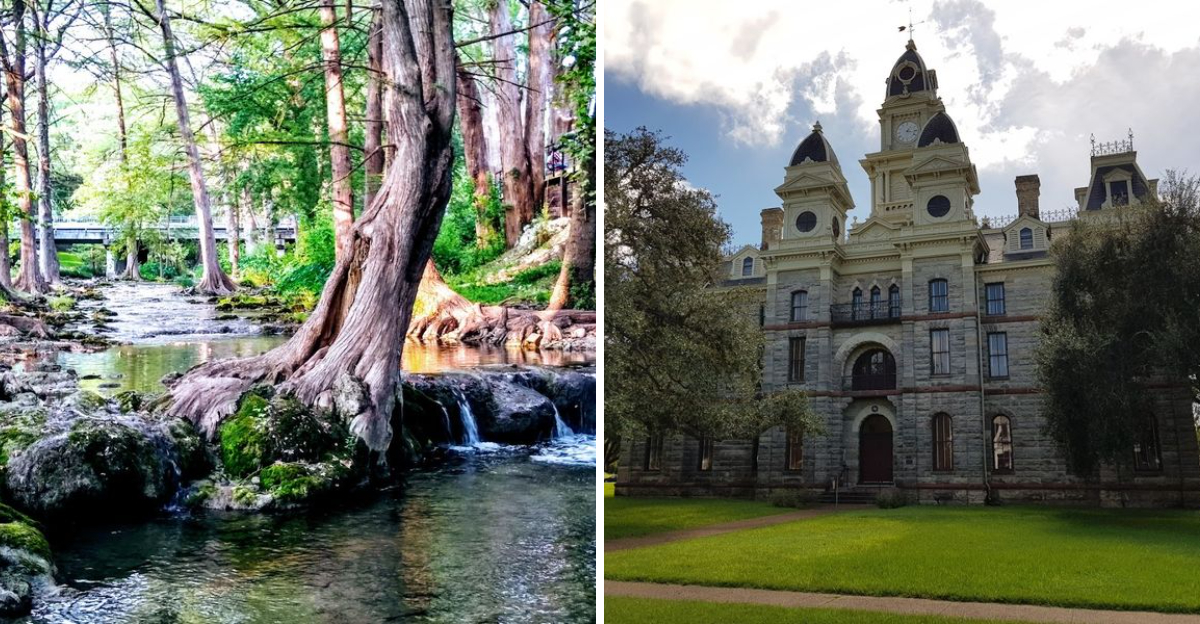
Texas does not always reveal its best places on the first try. Sometimes they show up when you take a random turn, follow a road that looks a little too quiet, and decide not to overthink it.
That is when the real surprises tend to happen. A misty cypress swamp appears where you expected flat land.
A forgotten ghost town sits just off the highway. An art-filled desert community pops up where the map looked empty.
The magic of this state is not always in the headline attractions. It lives in the detours, the places that never tried to be famous but somehow end up being the most memorable stops of the whole trip.
1. Terlingua Ghost Town
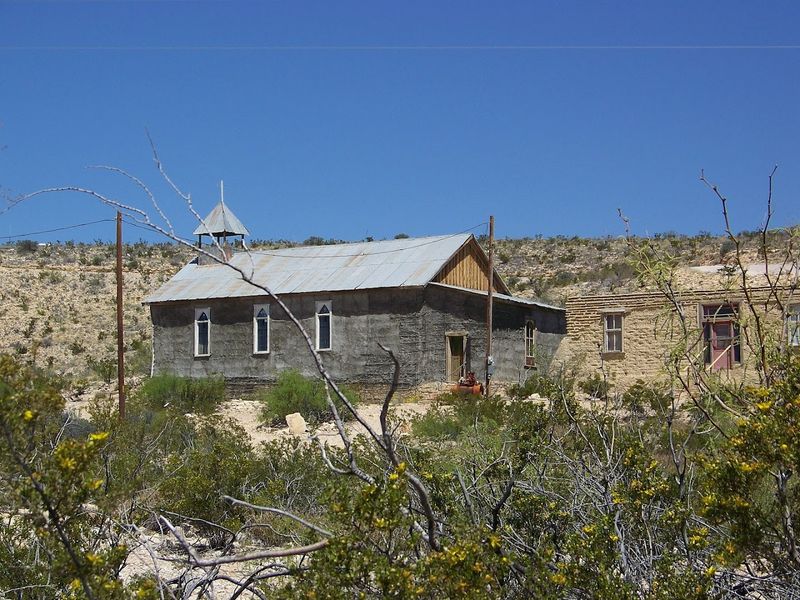
Terlingua feels like a place that forgot to disappear. Once a booming mercury mining settlement, it collapsed when the mines dried up and left behind a scattering of sun-bleached ruins that somehow became a community again.
People actually live here now, hidden among the crumbling adobe walls and rusted equipment. It is an odd mix of history and present-day quirk that you genuinely cannot manufacture.
The cemetery at the edge of town is one of those unexpected places that makes you stop and think. Handmade markers, faded photographs, and small offerings left by visitors create something quietly moving against the backdrop of the Chisos Mountains.
Big Bend National Park sits just a short drive away, so many travelers use Terlingua as a base. But the ghost town itself deserves more than a quick glance from the car window.
Sunsets here are extraordinary. The desert light turns everything amber and rust, and the silence gets thick enough that you notice it.
Terlingua is not trying to be a destination. It just ended up being one, slowly and on its own terms.
2. Caddo Lake
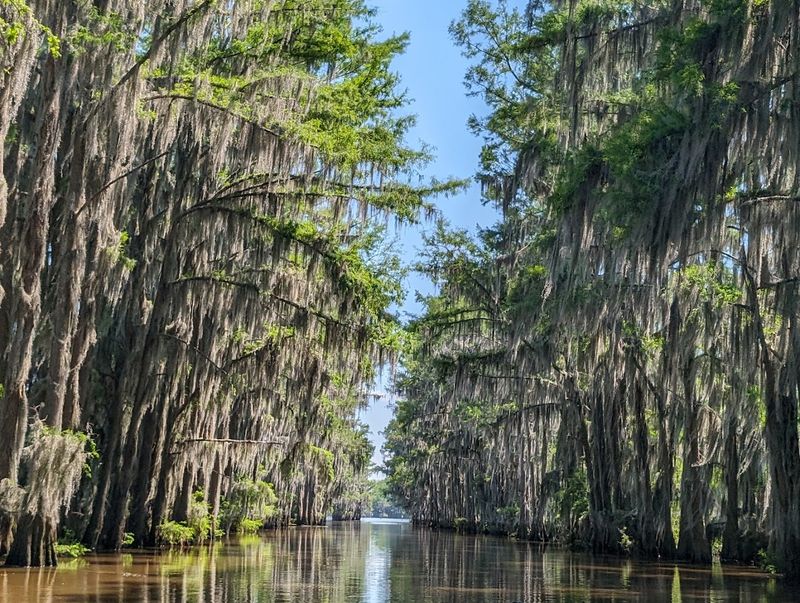
Caddo Lake does not look like it belongs in Texas. The moment you push a canoe into that dark, still water and cypress knees start rising around you, it feels more like a bayou pulled straight from Louisiana.
Spanish moss hangs from ancient bald cypress trees in long gray curtains, and the light filters through in scattered pieces. The whole place has a hush to it that feels almost deliberate.
This is actually the only naturally formed lake in Texas, which makes it geologically rare on top of being visually stunning. The lake stretches across the state line into Louisiana, and the ecosystem it supports is genuinely diverse.
Paddling through the channels is the best way to experience it. Alligators sun themselves on logs without much concern for onlookers, and herons move through the shallows with practiced patience.
The small town of Uncertain sits on the western shore, and yes, that is really its name. It is the kind of detail Caddo Lake seems to attract without effort.
The whole area rewards people who slow down and let the atmosphere settle around them rather than rushing to check it off a list.
3. Dripping Springs
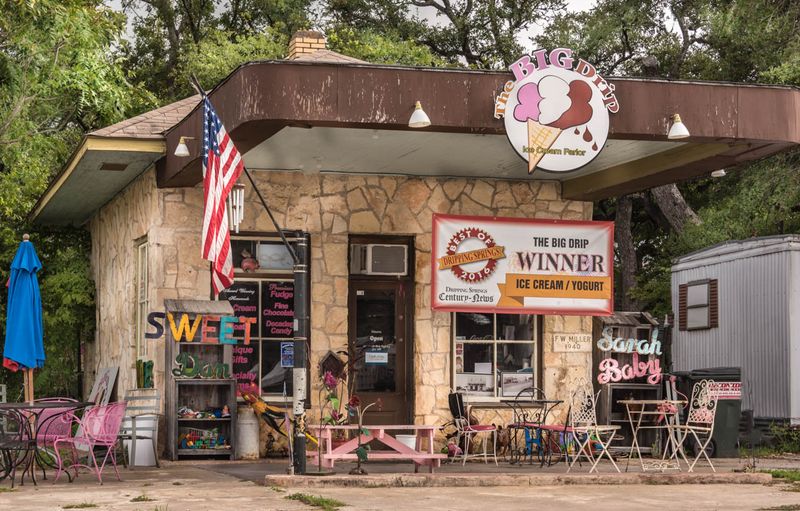
Dripping Springs sits at the edge of the Hill Country like a deep breath before the landscape gets dramatic. It is close enough to Austin to feel accessible but far enough that the pace genuinely slows down once you arrive.
Hamilton Pool Preserve is the headline attraction, and for good reason. The collapsed grotto creates a natural swimming hole shaded by an overhang of rock, and jade-green water collects below a waterfall that drops straight from the limestone shelf above.
Reservations are required to visit the preserve, so planning ahead matters here. But the town itself has plenty to offer beyond the famous pool, including local farms, boutique shops, and a growing food scene that feels rooted rather than trendy.
The wildflower season in spring transforms the roadsides into something almost theatrical. Bluebonnets and Indian paintbrush line the drives between properties, and it feels less like a tourist attraction and more like the landscape just decided to show off.
Families tend to love Dripping Springs for its combination of outdoor access and small-town warmth. It earns its nickname as the Gateway to the Hill Country not through marketing but through simple geography and honest charm.
4. Enchanted Rock State Natural Area
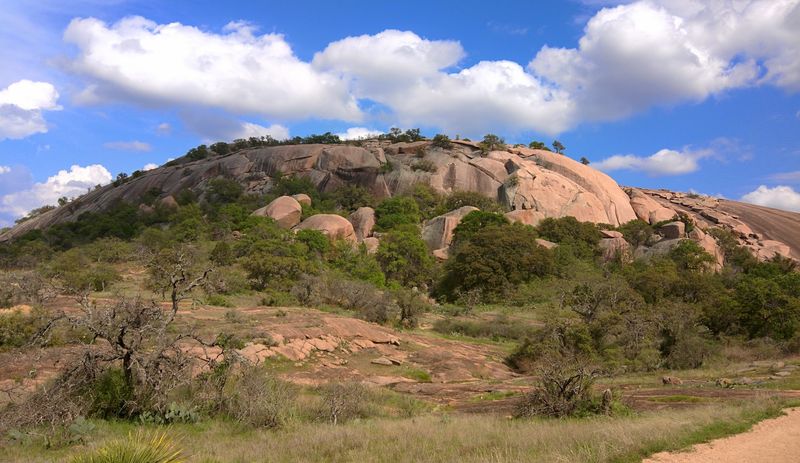
Enchanted Rock is one of those geological oddities that earns its name. The massive pink granite dome rises about 425 feet above the surrounding Hill Country floor, and when you are climbing it, the exposed rock feels almost warm underfoot even in cooler weather.
Indigenous peoples considered this place sacred for centuries, and standing on top of it, looking out across the rolling landscape in every direction, it is easy to understand why. There is a presence to it that goes beyond the view.
The dome creaks and groans at night as the rock cools and contracts, a sound that reportedly unnerved early settlers and contributed to local legends. Camping here means you might hear it yourself, which is either fascinating or slightly unnerving depending on your imagination.
The park fills up quickly on weekends, and timed entry passes are required. Going early on a weekday is the move if you want the summit without a crowd pressing close behind you.
Beyond the main dome, the park has secondary domes, wildflower meadows, and creek beds worth exploring. Enchanted Rock does not rely on manufactured drama.
The geology handles everything on its own.
Address: 16710 Ranch Road 965, Fredericksburg, TX 78624
5. Palo Duro Canyon
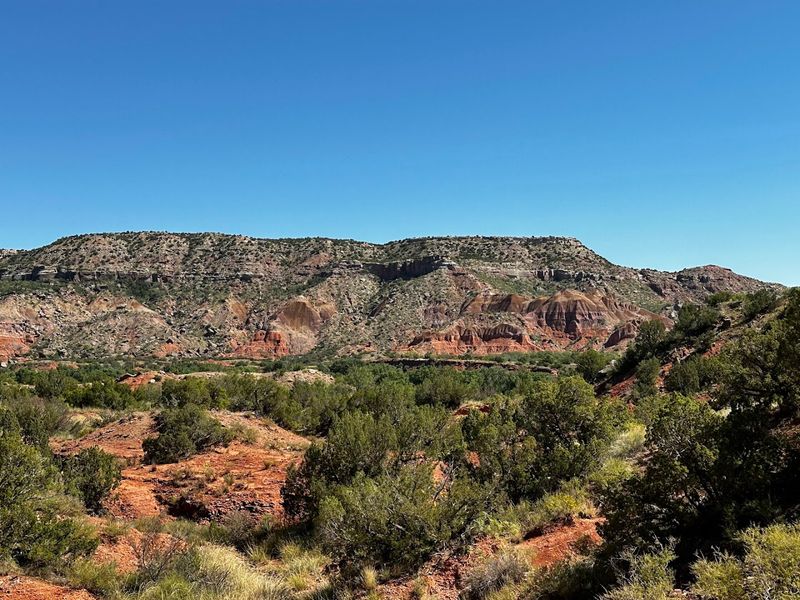
Most people picture flat farmland when they think about the Texas Panhandle. Palo Duro Canyon tends to rearrange that assumption pretty quickly.
It is the second largest canyon in the country, stretching roughly 120 miles long and dropping nearly 800 feet at its deepest point.
The canyon walls shift through layers of red, orange, and purple rock, each band representing a different geological era. Driving the park road for the first time genuinely feels like the earth opened up without warning.
Hiking trails range from easy walks along the canyon floor to more demanding climbs with views that stretch into New Mexico on a clear day. The Lighthouse Trail is the most popular, ending at a distinctive rock formation that looks exactly like its name.
Camping inside the canyon puts you in a completely different acoustic world. The wind moves differently down there, and the canyon walls hold the temperature in unexpected ways.
Amarillo is only a short drive north, but Palo Duro feels completely removed from anything urban. The canyon has been here for millions of years and carries that long patience in every eroded layer of stone.
You feel genuinely small standing at the rim, and that is not a bad feeling.
6. Wimberley
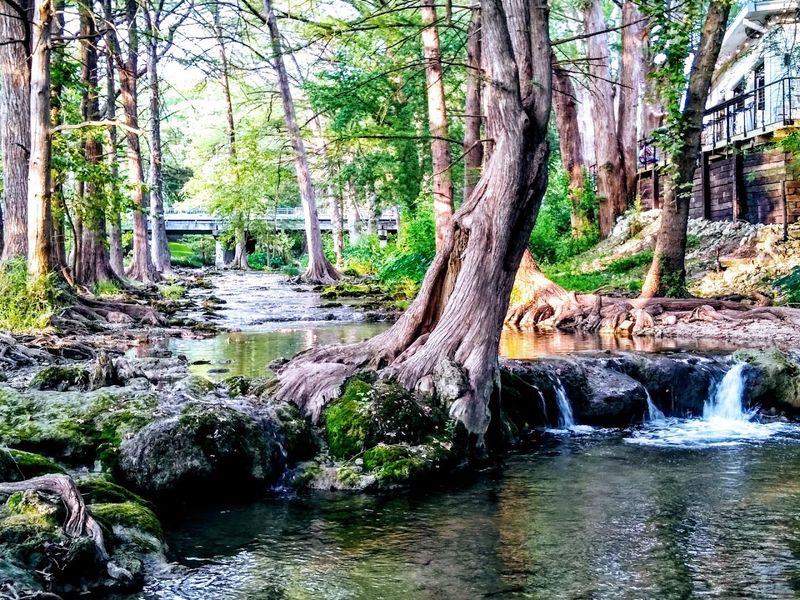
Wimberley has a reputation for being charming, and for once, the reputation actually holds up. Tucked into the Hill Country where Cypress Creek meets the Blanco River, it is a town that developed its personality organically rather than through branding.
Blue Hole Regional Park is the centerpiece of any summer visit. The swimming area is fed by a spring-fed creek and shaded by enormous cypress trees, and the water is so clear it almost looks fake in photographs.
It is not. It is just genuinely that good.
The town square hosts a large market on the first Saturday of each month from April through December. Local artists, craftspeople, and food vendors set up across the grounds, and the energy is unhurried in a way that weekend markets in bigger cities rarely manage.
Jacob’s Well is another natural attraction nearby, a vertical underwater cave system that draws swimmers and divers. The opening is a perfect circle in the creek bed, and the water churning up from below creates a mesmerizing effect.
Wimberley does not need much help presenting itself. The landscape does the heavy lifting.
Every visit feels a little different depending on the season, and that variability keeps people coming back without needing much convincing.
7. Langtry
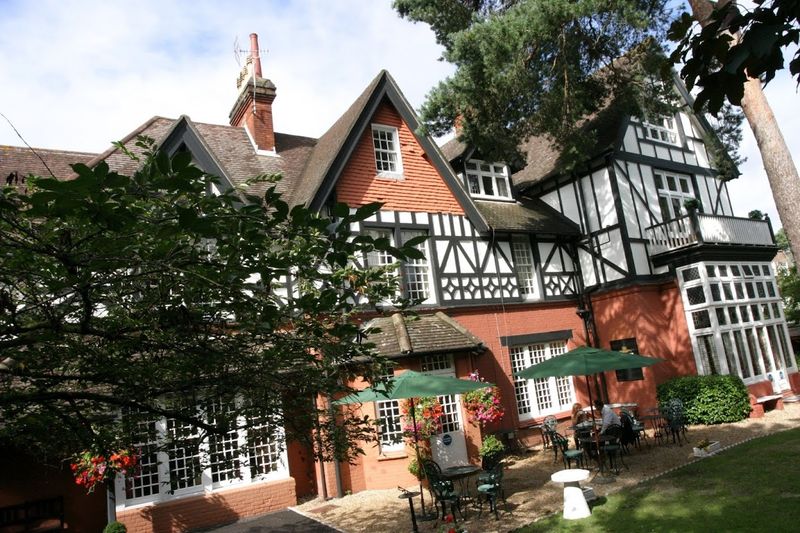
Langtry is the kind of town that most maps barely acknowledge. Perched above the Pecos River Canyon in far west Texas, it is remote in a way that feels absolute rather than merely inconvenient.
Judge Roy Bean made this place famous, or at least notorious. He set up his combination saloon and courtroom here in the 1880s and declared himself the Law West of the Pecos.
The original Jersey Lilly building still stands, and the state runs a visitor center and museum on the grounds.
The Pecos River Canyon overlook behind the visitor center is worth the trip by itself. The river cuts deep through the limestone plateau below, and the view extends for miles in both directions with nothing man-made interrupting it.
Langtry has a population that hovers around a dozen people depending on the season. That number is not a typo.
The isolation here is genuine, and it gives the whole visit a quality that is hard to replicate anywhere more populated.
There is something clarifying about places this remote. The history feels less curated and more honest than it does in bigger tourist towns.
Langtry simply exists, out there in the canyon country, doing exactly what it has always done.
8. Balmorhea State Park
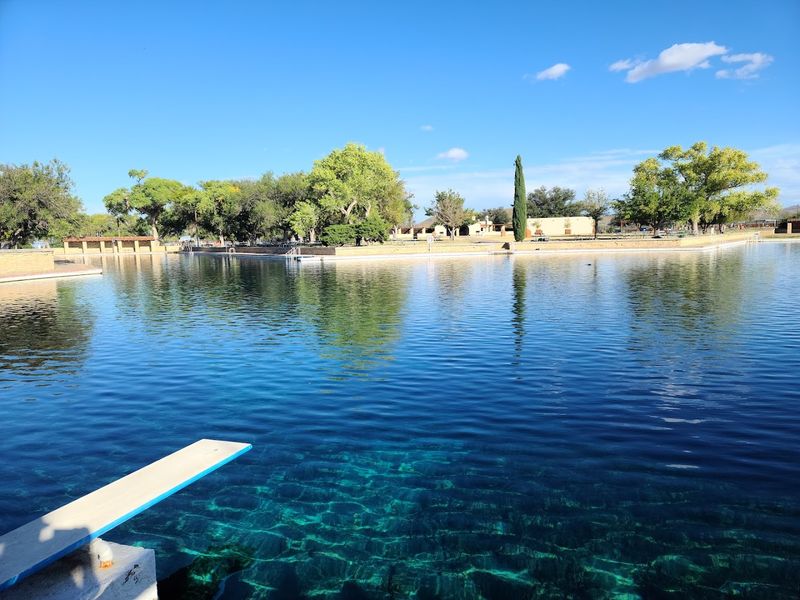
Balmorhea is the kind of discovery that makes a long drive through west Texas feel absolutely worth it. The park sits in the Chihuahuan Desert, and at its center is a massive spring-fed swimming pool that has been drawing visitors since the 1930s.
San Solomon Springs feeds the pool continuously, pushing out millions of gallons of clear, cool water every day. The pool covers about 1.75 acres and reaches depths of around 25 feet in places, making it large enough that even a crowd does not feel cramped.
Snorkeling here reveals a surprising ecosystem. Freshwater fish, turtles, and even the endangered Comanche Springs pupfish share the water with swimmers.
You can rent gear on site, and floating face-down over the sandy bottom while fish drift past is genuinely surreal in the best way.
The surrounding landscape is stark and flat, which makes the oasis quality of the park even more pronounced. Driving in from the desert and seeing that expanse of clear water feels almost like a mirage resolving into reality.
Camping is available nearby, and evenings here are spectacular for stargazing given the extreme lack of light pollution. Balmorhea earns loyalty from everyone who finds it.
Address: 9207 TX-17, Toyahvale, TX 79786
9. Gruene
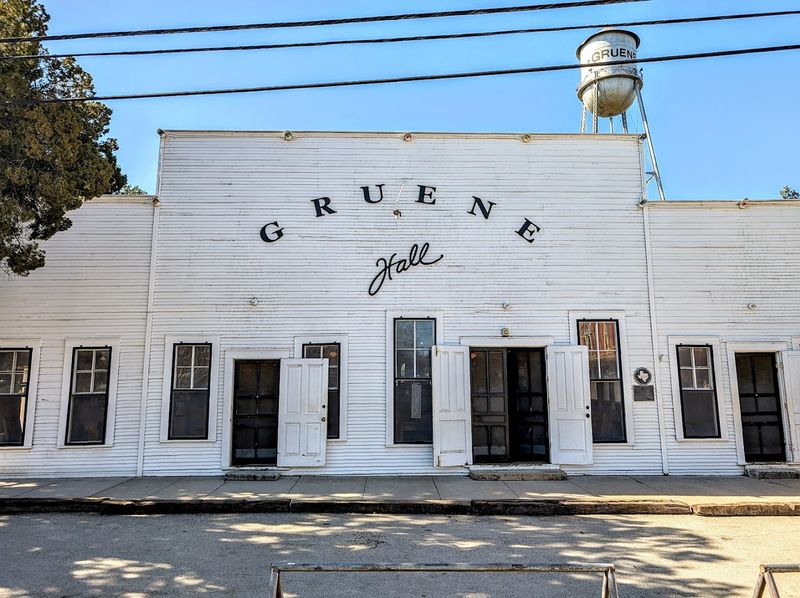
Gruene is technically a historic district within New Braunfels, but it carries itself with enough personality to feel like its own world entirely. The whole area is centered around a handful of original buildings from the 1870s and 1880s, and the crown of it all is Gruene Hall.
Texas’s oldest continually operating dance hall has hosted everyone from legends of country music to local bands playing to a Tuesday night crowd. The building is wonderfully unrestored.
Mismatched chairs, bare light bulbs, open-air sides that let the breeze through in summer, and a wooden floor worn smooth by generations of boots.
The Guadalupe River runs just below the historic district, and tubing the river has become a beloved summer tradition for the surrounding region. Families, groups of friends, and solo travelers all share the water in a cheerful, slow-moving procession.
Gruene Market Days happen several times a year and fill the grounds with artisans, antiques, and food vendors. The shopping here leans toward handmade and regional rather than mass-produced, which makes browsing genuinely interesting.
There is no pretense in Gruene. The old buildings are old because nobody tore them down, not because someone rebuilt them to look historical.
That distinction matters and you can feel it.
10. Rockport
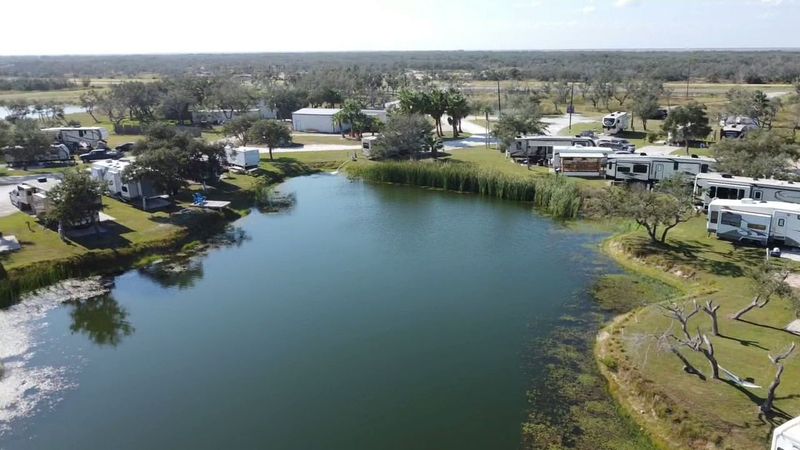
Rockport sits on the Texas Gulf Coast in a way that feels genuinely unpretentious. It does not have the spring break energy of South Padre or the resort infrastructure of Corpus Christi.
What it has instead is a working waterfront, a serious birding community, and a pace of life that refuses to hurry.
The town is one of the top birding destinations in the entire country. Whooping cranes overwinter nearby at the Aransas National Wildlife Refuge, and the sheer size of those birds in person is startling.
They stand nearly five feet tall and have a wingspan that defies reasonable expectations.
The historic downtown area has art galleries that reflect the local landscape rather than generic coastal themes. Several artists have lived and worked here for decades, drawn by the quality of light over the bay and the unpretentious community that grew around them.
Fulton Mansion State Historic Site sits just north of town, a Victorian home built in the 1870s with plumbing, central heat, and gas lighting that were extraordinary for their era. The contrast between that ambition and the surrounding simplicity of coastal life is fascinating.
Rockport does not need to advertise itself loudly. Word travels slowly and honestly, the way the town prefers it.
11. Jefferson
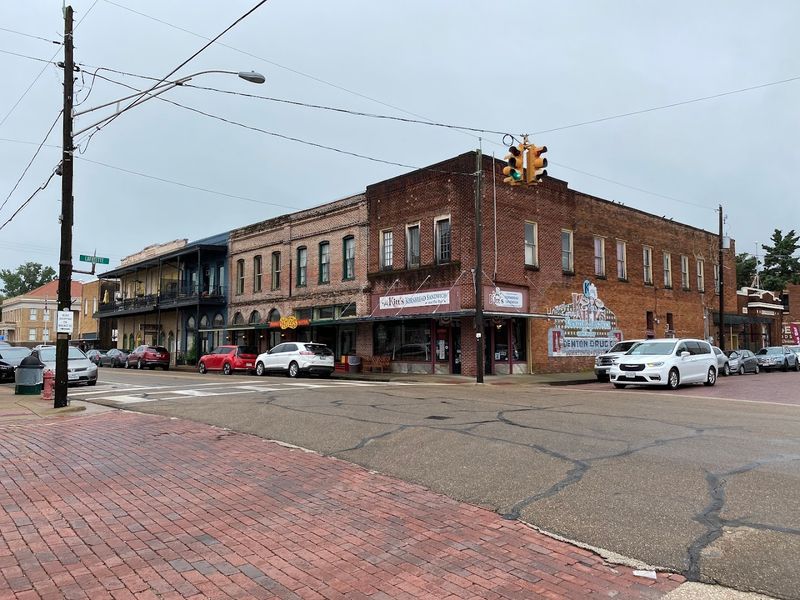
Jefferson was once one of the most important cities in Texas. In the mid-1800s, it was a major inland port connected to the Gulf via a complex of waterways, and its grand homes and commercial buildings reflect that former prosperity in ways that feel genuinely impressive rather than reconstructed.
The town sits in the Piney Woods of east Texas, and the landscape around it is lush and green in a way that surprises people expecting the drier palette of central or west Texas. Ancient trees line the streets and lean over the historic district.
Antique shopping in Jefferson is serious business. Several large shops carry regional pieces and genuine period furniture from the homes and plantations of the area, and browsing them feels more like exploring than shopping.
The Excelsior House Hotel has been operating continuously since the 1850s, and guests have included Ulysses S. Grant and Oscar Wilde.
The rooms are furnished with period antiques, and staying there is less about luxury and more about the accumulated weight of all those years.
Jefferson is quiet now compared to its steamboat heyday. That quietness is not a failure.
It is just history settling into a comfortable shape, and the town wears it without apology.
12. Shafter
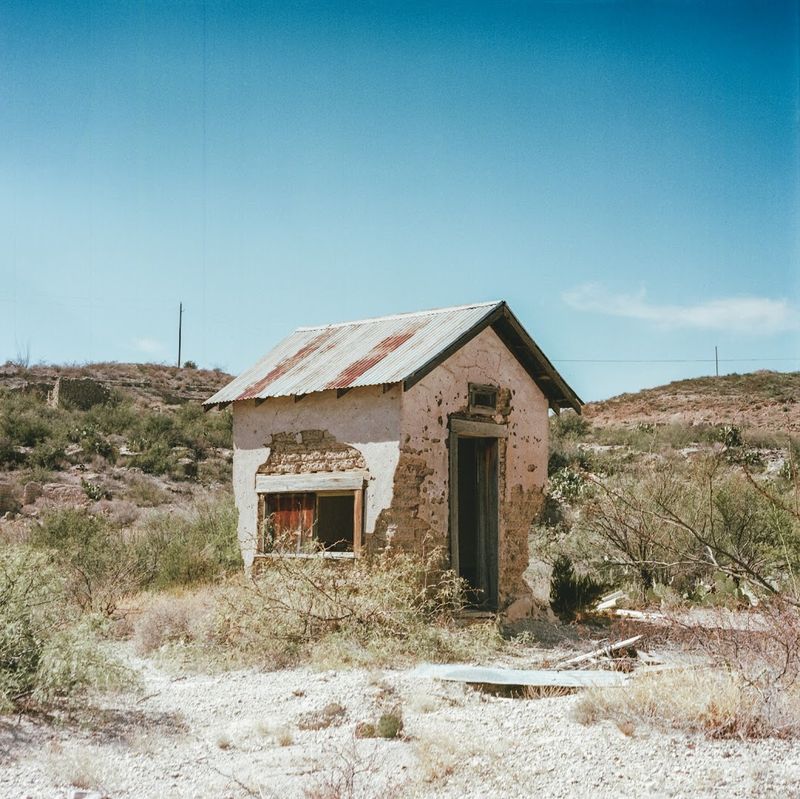
Shafter barely registers on most maps of Texas, which is part of what makes it worth finding. Located in Presidio County between Marfa and the Rio Grande, this former silver mining town is one of those places where the past and present occupy the same crumbling space.
Silver was discovered here in the 1880s and the mine operated on and off for nearly a century. What remains now is a scattering of stone ruins, collapsed wooden structures, and the shell of a company store that hints at the scale of the operation during its peak years.
The surrounding landscape is dramatic in the way that far west Texas tends to be, which is to say it is enormous and unhurried. The Chinati Mountains frame the view to the south, and the light at different times of day transforms the ruins into something almost cinematic.
A small Catholic church still stands in Shafter, occasionally used by the few remaining residents. Its presence among the ruins gives the place a complexity that pure ghost towns sometimes lack.
Photographers find Shafter endlessly interesting. Every angle offers something decayed but structurally beautiful, and the complete absence of crowds means you can take all the time you need with whatever catches your eye.
13. Goliad
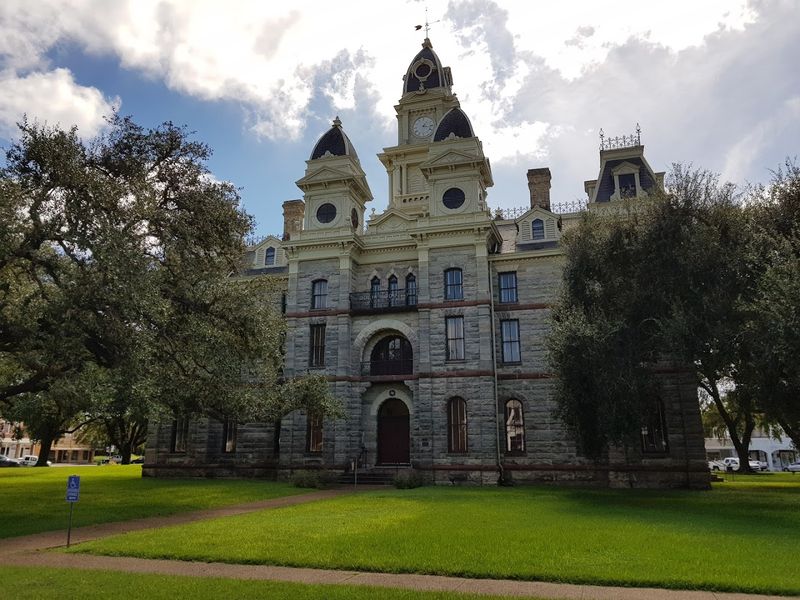
Goliad carries more Texas history per square mile than almost anywhere else in the state. The town was the site of a massacre in 1836 that killed more Texans than the Alamo, yet it draws a fraction of the visitors and none of the commercial noise.
Presidio La Bahia is the main draw, and it is extraordinary. The Spanish fort was originally built in 1749 and is considered one of the finest examples of a Spanish colonial frontier fort remaining in the western hemisphere.
The chapel inside still holds regular Mass, which gives the whole structure a living quality that a museum-only site would lack.
The town square around the courthouse has a genuine small-town rhythm to it. Local businesses, a few excellent restaurants, and residents who seem genuinely pleased when visitors take the time to look around properly.
General Zaragoza, the Mexican general who led the victory at the Battle of Puebla celebrated on Cinco de Mayo, was born in Goliad. A monument near his birthplace marks the spot with quiet dignity.
Goliad does not compete with San Antonio for your attention. It simply holds its history with care and lets the weight of it speak for itself, which turns out to be more than enough.
Dear Reader: This page may contain affiliate links which may earn a commission if you click through and make a purchase. Our independent journalism is not influenced by any advertiser or commercial initiative unless it is clearly marked as sponsored content. As travel products change, please be sure to reconfirm all details and stay up to date with current events to ensure a safe and successful trip.
