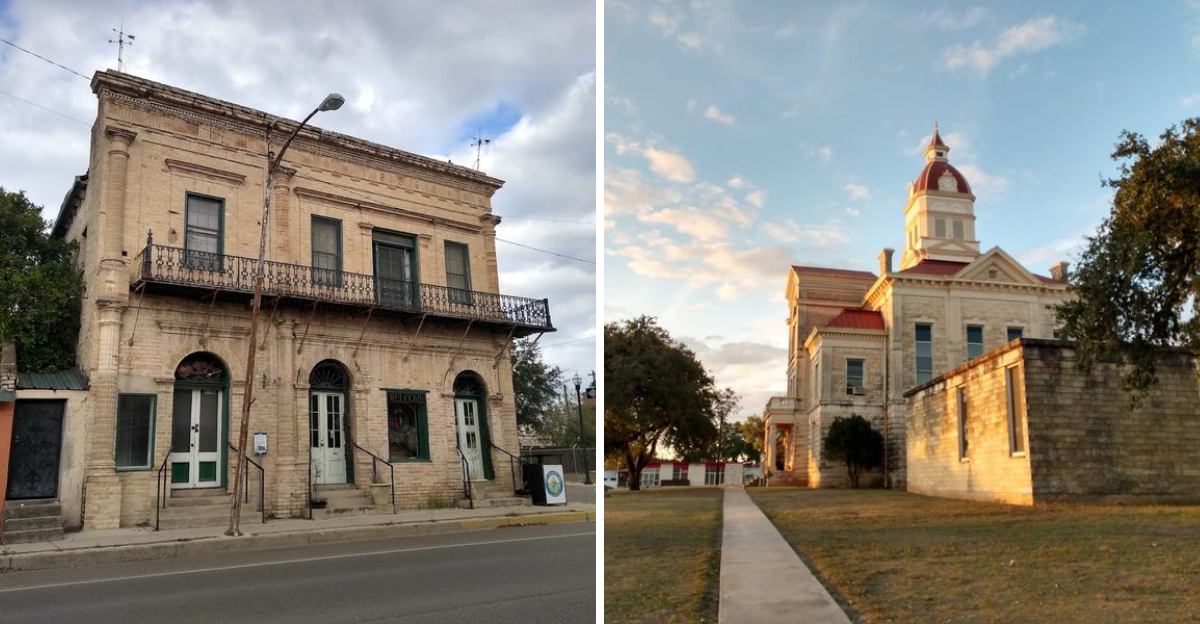
A general store that has been selling goods since the 1880s. A diner where the payphone still works and nobody has tried to remove it.
A motel that hands out keys on plastic diamond shaped tags, the kind most people have only seen in movies. These places still exist in Texas, and they are not museums.
They are real, working businesses that refuse to let the old days fade away. No retro themed decor here, because none of it is pretend.
The floors creak, the signs are original, and the owners have stories that go back generations. A person could walk into these spots and feel like they time traveled without a single special effect.
Texas is growing fast, but these 12 places have planted their feet and refuse to budge. No updates, no modern makeovers, just the old days, still alive and kicking.
1. Gruene
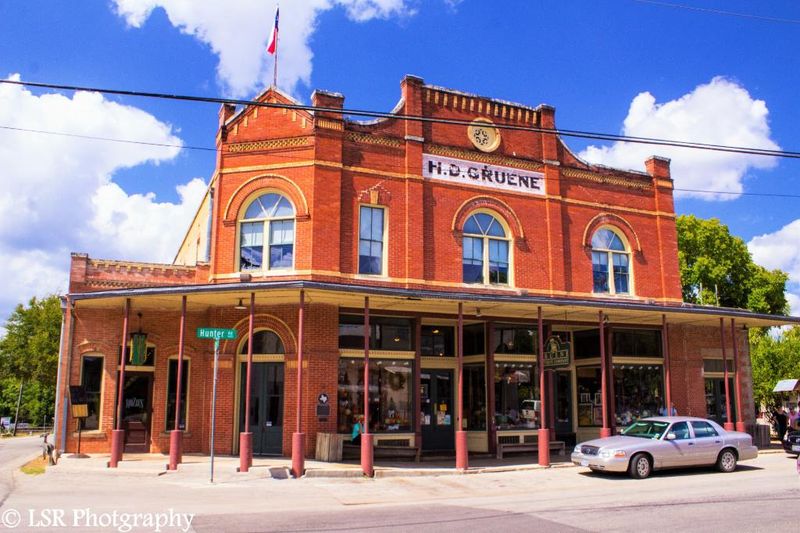
There’s something almost theatrical about Gruene, like the town decided long ago that it had no interest in changing and has been quietly winning that argument ever since.
Founded in the 1840s by German immigrants, this small community became a cotton-producing hub before hard times nearly erased it from the map.
What survived is now one of the most beautifully intact historic districts in the entire state.
Gruene Hall anchors the whole place. It has been operating continuously since 1878, making it Texas’ oldest dance hall, and the creaky wooden floors and hand-painted signs give it a character that no renovation could ever replicate.
Musicians have played here across generations, and the acoustics feel like they were built by accident into something perfect.
The old cotton gin didn’t survive intact, but its ruins became home to the Gristmill River Restaurant, where you can sit among stone walls and timber beams that once processed crops.
The Guadalupe River hums just below, and the whole scene feels less like a tourist stop and more like an ongoing conversation between past and present.
Gruene is technically a historic district within New Braunfels now, but it carries its own identity with remarkable ease. Weekends bring visitors from across Texas, yet the place never feels overrun.
Something about the old architecture and the shade of the oak trees keeps the mood unhurried. It’s a town that earns your respect the longer you stay in it.
2. Luckenbach
Luckenbach is the kind of place that shouldn’t exist anymore, and that’s precisely what makes it so extraordinary. It started as a trading post in the 1840s, grew slowly, then nearly vanished entirely by the mid-twentieth century.
The whole town was bought in 1970 by a local rancher named Hondo Crouch, who turned it into something the world hadn’t quite seen before.
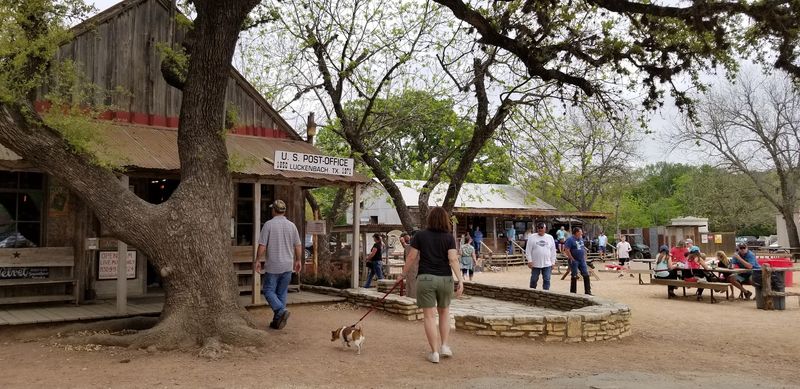
When Waylon Jennings and Willie Nelson released a song with Luckenbach in the title, the tiny community became a landmark almost overnight. People came from everywhere expecting to find something grand and discovered instead just two buildings: a dance hall and a general store.
That gap between expectation and reality became part of the charm.
The general store doubles as a post office and gathering spot, and the dance hall hosts live music most weekends without any pretense about it. Folding chairs, string lights, and the sound of a guitar drifting through oak trees, that’s the entire production.
It works because nobody here is trying to impress anyone.
Luckenbach sits in the Texas Hill Country outside Fredericksburg, surrounded by rolling fields and cedar brush. The pace slows the moment you pull off the road.
Conversations with strangers happen easily here, which says something about the kind of place it is. There are no crowds trying to be seen, just people who wanted to be somewhere that felt real.
Luckenbach is maybe the most honest square acre in Texas.
3. Terlingua
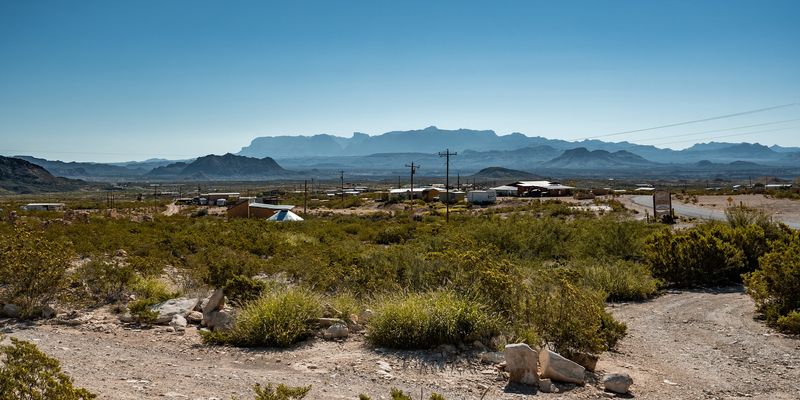
Terlingua is a ghost town that refused to be fully haunted. Hidden into the Chihuahuan Desert near Big Bend, the place boomed in the 1890s when the Chisos Mining Company struck mercury deposits and built an entire community around extracting them.
For decades, the town hummed with workers, families, and the particular energy of a place that believes it will last forever.
The Chisos Mining Company shut down in 1946, and Terlingua emptied out with quiet speed. What remained were adobe ruins, stone walls, processing furnaces, and a cemetery that sits on a hill overlooking the whole scene.
The cemetery is still in use today, which gives Terlingua a continuity that most ghost towns can’t claim.
Fewer than a hundred people live in the historic district now, and most of them seem to have chosen the place specifically because it asks nothing of you.
Artists, wanderers, and desert enthusiasts make up the permanent population, and their presence gives Terlingua an artsy, unhurried personality that feels genuinely earned.
The annual chili cook-off draws visitors from across the country every November, transforming the dusty flats around the ruins into a temporary city of tents and campfires. But even during that event, the ruins themselves stay quiet, watching everything with the patience of something very old.
The drive out here through Big Bend country is long and dramatic. By the time Terlingua appears on the horizon, you already feel like you’ve crossed into a different era entirely.
4. Castroville
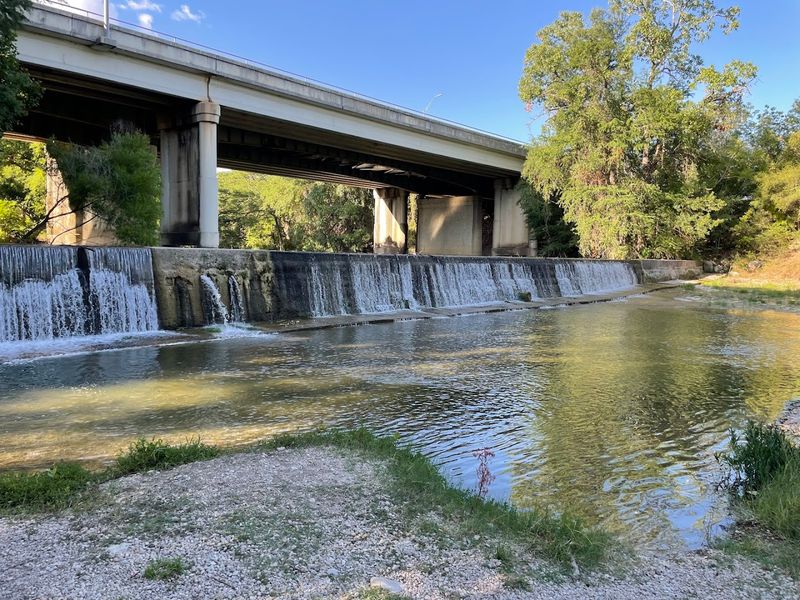
Castroville doesn’t look like the rest of Texas, and that’s exactly the point. Founded in 1844 by Henri Castro and a group of settlers from the Alsace region of France, the town was built to reflect the architecture and customs of a very specific corner of Europe.
More than 175 years later, the Alsatian influence is still visible in the stonework, the building styles, and the quiet, unhurried pace of the streets.
The town sits along the Medina River about twenty miles west of San Antonio, close enough to the city to be accessible but far enough to feel like its own world.
Historic homes and public buildings from the 1840s and 1850s still stand throughout the community, many of them beautifully preserved and actively used.
The St. Louis Catholic Church, built in 1870, dominates the skyline with a presence that commands attention from every direction.
Castroville was designated a National Historic Landmark in 1974, which sounds like a bureaucratic detail until you actually walk the streets and understand what it means. This isn’t a reconstructed village or a theme park version of history.
These are real buildings where real families lived, and their descendants still call Castroville home.
The town also maintains a Landmark Inn State Historic Site, where visitors can stay overnight in restored 19th-century buildings. Waking up there feels like borrowing a moment from a much earlier century.
Castroville is proof that Texas history isn’t just cowboys and cattle drives. Sometimes it’s stone walls and French surnames.
5. Bandera
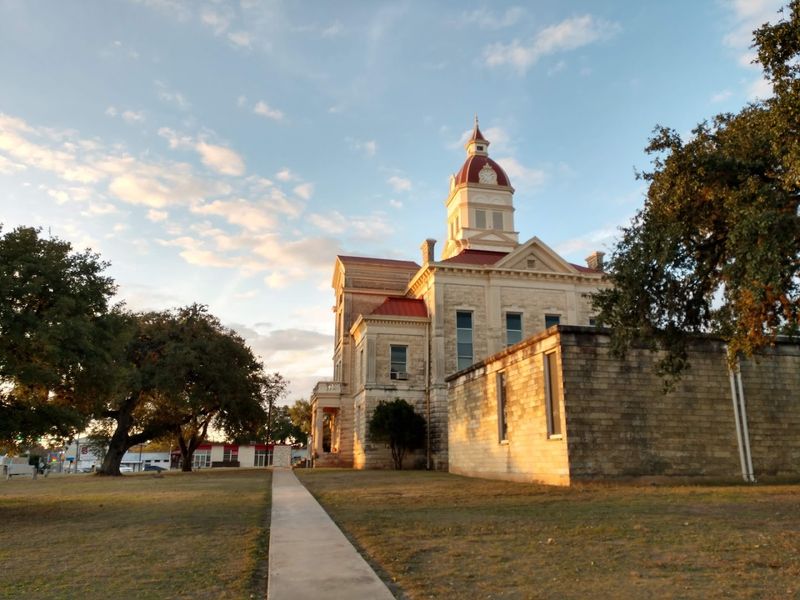
Bandera wears its nickname, the Cowboy Capital of the World, with zero irony. This is a town where the past didn’t just leave a footprint, it stayed for dinner and never really left.
In the late 1800s, Bandera was a key staging point for massive cattle drives heading north, and that ranching identity has held firm through every decade since.
Historic Eleventh Street is the kind of place where you half expect to hear horseshoes on cobblestone. Saddle makers and blacksmiths still operate here, which is not something you can say about many towns anywhere in America.
The original county jail and courthouse still stand, both weathered and proud, giving the whole downtown a sense of unbroken continuity.
Dude ranches surrounding the area offer something genuinely rare: the chance to spend a few days living close to how early Texans actually lived. Horseback rides through cedar-covered hills and chuckwagon-style meals under open skies aren’t performance, they’re just part of what Bandera does.
The rodeo culture here runs deep. Local rodeos draw real participants, not just spectators, and the enthusiasm in the stands feels earned rather than manufactured.
I’ve been to plenty of Western-themed towns, but Bandera is different because it never needed a theme. The history is the town.
Every cracked wooden sign and worn hitching post is just further proof that some places simply refuse to be anything other than exactly what they’ve always been.
6. Jefferson
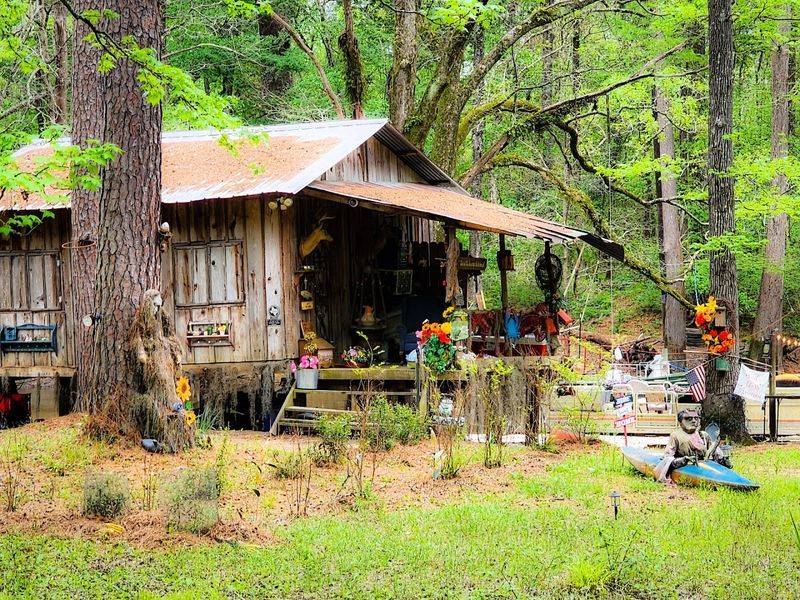
Jefferson was once one of the most important cities in all of Texas, which makes the quiet you find there today feel almost surreal. During the mid-1800s, it operated as a major riverport and steamboat town, with goods flowing in and out along Big Cypress Bayou at a pace that rivaled cities far larger.
Then the railroads changed everything, bypassed Jefferson, and the boom simply stopped.
What the economic slowdown left behind was an accidental preservation. Because Jefferson never tore down its old buildings to build new ones, the 19th-century architecture survived almost completely intact.
The town earned a place on the National Register of Historic Places, and walking its streets feels less like sightseeing and more like reading a very detailed diary.
The Excelsior House Hotel is one of Texas’ oldest continuously operating hotels, hosting guests since the 1850s. Ulysses S.
Grant and Oscar Wilde both stayed here, which is an unusual combination by any measure. The rooms are furnished with period antiques, and the creaking hallways carry a weight that newer hotels simply cannot manufacture.
Jefferson has also built a reputation as one of Texas’ most haunted towns, with the Jefferson Hotel drawing ghost hunters and curious travelers year-round. Whether you believe in that sort of thing or not, the atmosphere supports the stories.
The moss-draped trees, the bayou mist, and the darkened storefronts after closing time all conspire to make Jefferson feel permanently suspended between centuries.
7. Rio Grande City
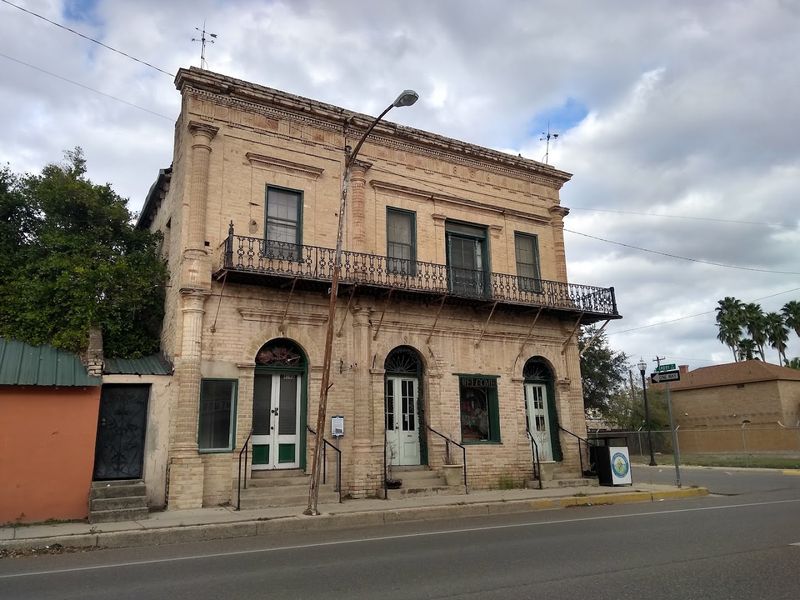
Rio Grande City sits at the edge of Texas in a way that feels entirely intentional, perched above the Rio Grande with a view into Mexico and a history that stretches back through Spanish colonial rule, frontier conflicts, and border culture that doesn’t fit neatly into any single national story.
The town was officially established in 1848, but the land beneath it has been shaped by centuries of human movement.
The downtown area holds some of the most distinctive architecture in South Texas, with Spanish colonial and Victorian influences layered together in ways that reflect the complicated, fascinating history of the border region.
Old commercial buildings line the streets with a dignity that speaks to the prosperity this town once commanded as a trade hub along the river.
Fort Ringgold, established in 1848 just east of the town center, is one of the oldest military posts in Texas and played a significant role in border defense and frontier history. Robert E.
Lee was stationed here before the Civil War, and the fort’s remaining structures are among the most historically significant in the entire Rio Grande Valley.
The culture of Rio Grande City blends Mexican and Texan traditions in a way that feels organic rather than curated. The food, the music, the language spoken in the streets, all of it reflects a community that has been shaped by two nations simultaneously.
There’s a particular kind of depth to places that exist on borders, and Rio Grande City has more of that depth than most travelers ever discover.
8. Comfort
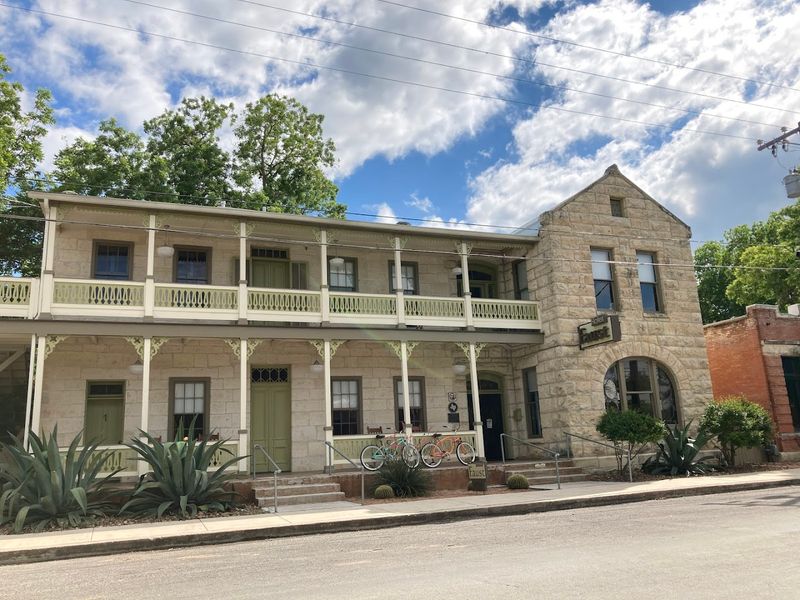
Comfort is a Hill Country town that earned its name honestly. There’s a gentleness to this place that hits you before you even park the car, something in the way the limestone buildings line the streets without competing for attention, each one settled comfortably into its spot as if it’s been there forever.
Many of them have been, since the 1850s.
German freethinkers founded Comfort in 1854, and that independent spirit shaped the town in unusual ways. Most notably, Comfort was a Unionist community during the Civil War, a rare position in Texas at the time.
The Treue der Union monument, erected in 1866 to honor the German Texans who died defending their anti-secession beliefs, still stands in the center of town and is considered one of the oldest Civil War memorials in the South.
High Street is where the architecture really speaks. Nearly every building dates to the 19th century, and most are still in active use as shops, galleries, and small businesses.
The scale of the town is human-sized in a way that larger cities have mostly lost, with everything arranged for walking rather than driving.
The Cypress Creek running through town adds a natural rhythm to the whole experience. Shade trees line the banks, and on a warm afternoon the sound of the water competes with birdsong and not much else.
Comfort is the kind of small Texas town that people often say they’re looking for without quite knowing where to find it.
9. Salado
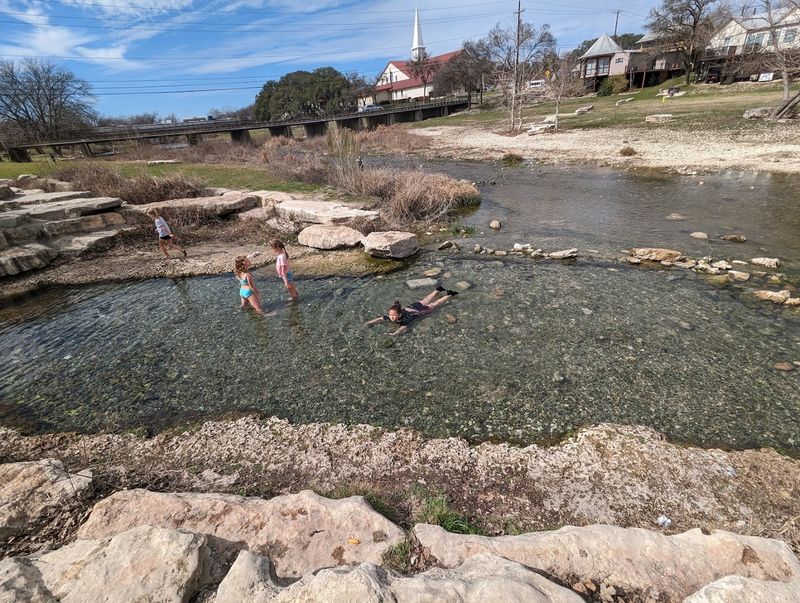
Salado is one of those towns that earns its reputation through subtlety rather than spectacle.
Hidden along Salado Creek in Central Texas, the village was a significant stop on the Chisholm Trail during the cattle drive era, and its position along the creek made it a natural gathering point for travelers, merchants, and settlers moving through the region.
The historic district holds an impressive number of 19th-century stone buildings for a town this size, and the creek itself is still the visual and emotional center of the whole place.
Crystal-clear water running over limestone, shaded by enormous pecans and elms, it’s the kind of scene that makes you understand immediately why people chose to stop here and stay.
Salado has developed a reputation as an arts community over the decades, with galleries and studios occupying many of the historic storefronts. The blend of frontier history and creative culture gives the town an identity that feels layered and authentic.
You’re not choosing between the past and the present here, both are happening at the same time.
The Stagecoach Inn has been welcoming travelers since 1861, and its longevity says something about the town’s ability to hold onto what matters. Salado also hosts a Shakespeare festival each summer, which adds another layer of unexpected character to the place.
It’s a small town with a surprisingly wide range of things to offer, and it manages all of it without ever feeling like it’s trying too hard.
10. Goliad
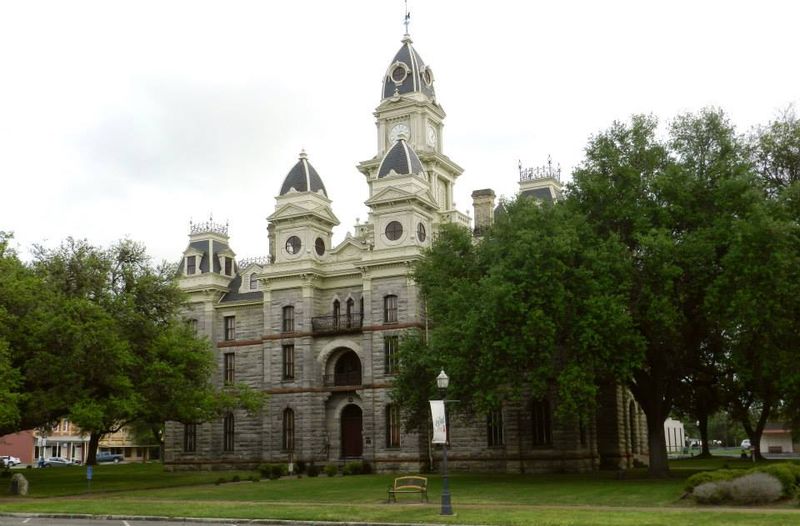
Goliad carries its history with a weight that you feel the moment you see the stone walls of Presidio La Bahia rising from the South Texas plains. This is a place where the Texas Revolution left one of its most devastating marks, and the land has never quite let that go.
In March 1836, Colonel James W. Fannin Jr. and nearly four hundred Texian soldiers were executed here on the orders of Santa Anna, an event that became a rallying cry for the rest of the revolution.
Presidio La Bahia is one of the best-preserved Spanish colonial forts in North America, and touring it gives a sense of scale and solidity that photographs can’t capture. The chapel inside the presidio walls is still an active place of worship, which adds a living dimension to what could otherwise feel purely like a museum.
Goliad State Park holds Mission Espiritu Santo, one of the largest and most successful missions in Texas history. The reconstructed mission buildings sit in a beautiful riverside setting along the San Antonio River, surrounded by oak trees and open sky.
The whole park moves at a pace that encourages reflection rather than quick sightseeing.
The Zaragoza Birthplace State Historic Site within the park honors Ignacio Zaragoza, the Mexican general born here who led the victory at the Battle of Puebla, the event commemorated by Cinco de Mayo. Goliad holds more layers of history per square mile than almost anywhere else in Texas.
11. Lockhart
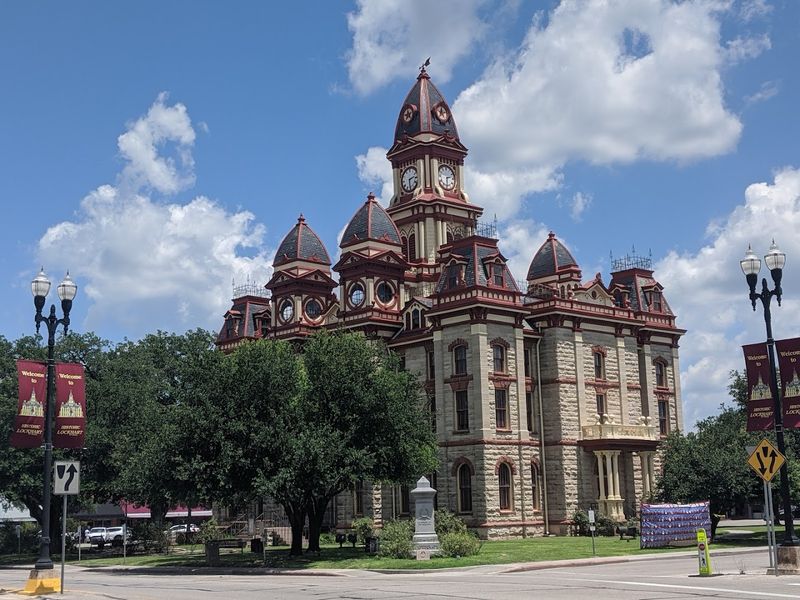
Lockhart has a courthouse that stops people mid-stride. The Caldwell County Courthouse, built in 1894 in Romanesque Revival style, sits at the center of the town square with the kind of architectural confidence that belongs to a different era entirely.
Red granite and limestone, towers and arched windows, it’s the kind of building that makes you realize how much ambition went into constructing small-town Texas.
The town square around it has kept its 19th-century commercial character remarkably well. Historic storefronts line the streets, many of them occupied by local businesses that have been operating for generations.
There’s no manufactured nostalgia here, just a town that found its identity early and saw no reason to change it.
Lockhart is also the official barbecue capital of Texas, a designation that carries serious weight in a state where that conversation is never casual. The barbecue joints here are legendary, with histories stretching back over a century in some cases.
The food culture is inseparable from the town’s identity, and the smoke drifting through the square on a weekend morning is its own kind of welcome.
Beyond the food, Lockhart offers a genuinely pleasant small-town experience built on real history rather than recreation. The Dr. Eugene Clark Library, built in 1899, is the oldest continuously operating public library in Texas.
That kind of institutional longevity reflects a community that takes its past seriously. Lockhart rewards the traveler who slows down enough to notice the details hidden in plain sight.
12. Hico
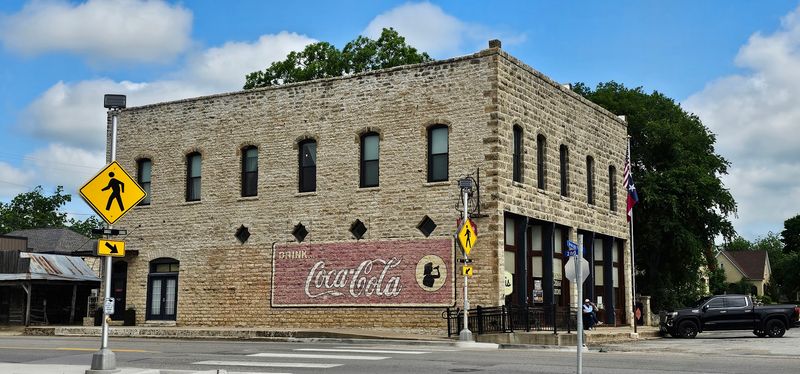
Hico is the kind of town that Central Texas seems to specialize in producing: small, proud, and carrying a story that most people passing through on the highway will never hear.
Settled in the 1870s, the town grew into a modest but lively commercial center for the surrounding farm and ranch communities, and its downtown still reflects that era with a directness that feels almost defiant.
The brick storefronts along Pecan Street date mostly to the late 19th and early 20th centuries, and their well-maintained facades suggest a community that genuinely values what it inherited. Local shops and small businesses occupy these spaces, keeping the buildings alive rather than just preserved.
There’s a difference between a town that maintains its history and one that actually lives inside it, and Hico belongs to the second category.
Hico is also famous for its connection to Billy the Kid, or more precisely, to the persistent local legend that a man named Ollie Roberts, who lived in the area until 1950, was actually the outlaw who supposedly died in 1881.
The Billy the Kid Museum in town explores the claim with enthusiasm, and whether you buy the story or not, it gives Hico a layer of quirky mythology that most towns its size simply don’t have.
The surrounding Hamilton County landscape, rolling hills covered in cedar and live oak, frames the town in a way that makes the drive in feel like an arrival rather than just a stop. Hico is small enough to see in an afternoon and interesting enough to stay longer than you planned.
