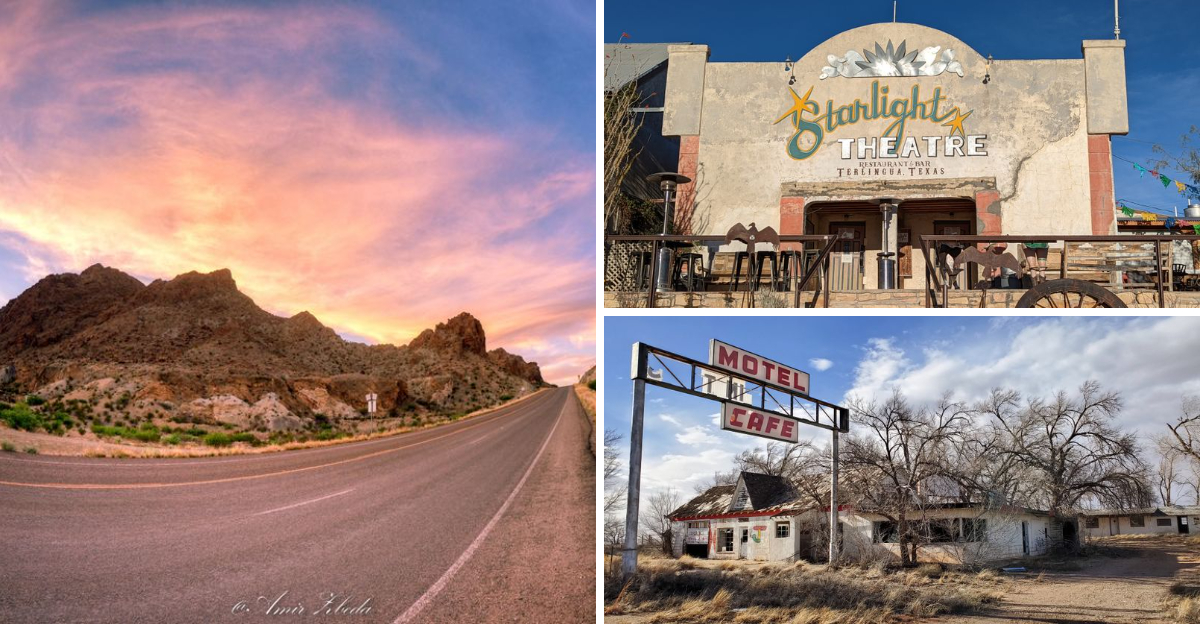
Texas loves to brag about growth, and to be fair, some cities just keep getting bigger and louder every year. But once I started driving past the highways and headline towns, I noticed a different story playing out.
Small places where the gas station closed years ago, main streets sit quiet, and the only thing changing is the population sign as the numbers drop. I have walked through towns where schools got smaller, businesses disappeared, and longtime locals talk about how busy things used to be like it was yesterday.
What happened to these places? Sometimes it was a factory shutting down, sometimes a highway reroute, sometimes a storm that changed everything.
Whatever the reason, you can feel it when you are there. Time slows down, buildings age in place, and the future feels uncertain.
These towns are not just dots on a map. They are pieces of Texas history quietly slipping away.
1. Kent
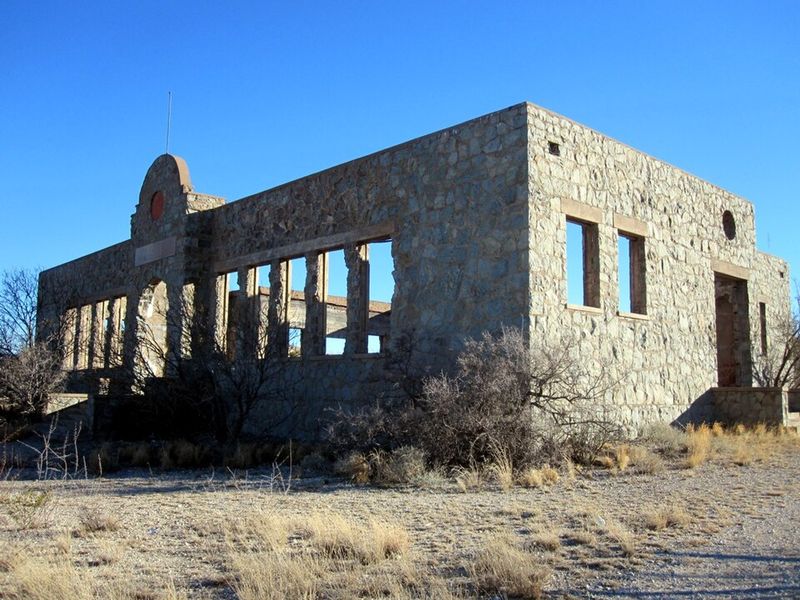
Kent rose in the late 1800s as a railroad stop and cattle-shipping point in one of the most unforgiving stretches of West Texas. For a brief moment, it mattered.
Trains stopped, cattle moved, and a small but determined community took shape against the desert.
Then the water failed. Wells dried, drought tightened its grip, and the railroad found fewer reasons to slow down.
Ranching declined, families moved on, and Kent emptied out piece by piece rather than all at once.
Today, thick stone walls and roofless buildings still stand against the wind, stubbornly refusing to disappear. Walking through Kent feels like intruding on a town that never accepted it was finished, even as the desert quietly reclaimed everything else.
2. Indianola
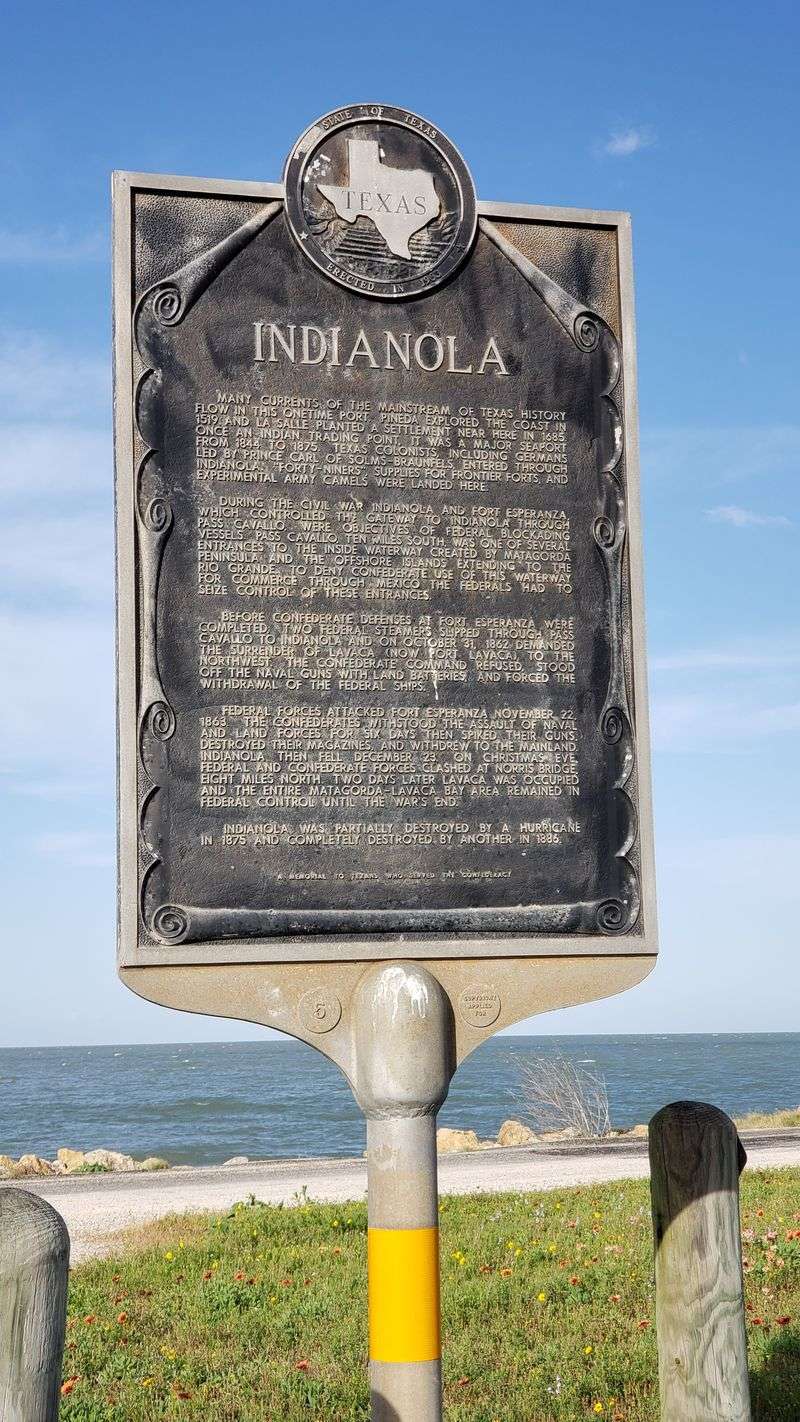
Picture a thriving port city with over 5,000 residents, bustling docks, elegant Victorian homes, and a future as bright as the Texas sun. That was Indianola in the 1870s, established in 1846 on the shores of Matagorda Bay.
German immigrants arrived by the thousands, merchants grew wealthy from maritime trade, and the town seemed destined to become one of Texas’s greatest cities.
Then nature decided to rewrite the script in the most devastating way possible. In September 1875, a massive hurricane slammed into Indianola with terrifying force, destroying homes and claiming lives.
The resilient residents rebuilt, determined to restore their beloved city to its former glory. But fate had crueler plans waiting just over the horizon.
Eleven years later, in August 1886, an even more catastrophic hurricane struck Indianola with winds so fierce they erased entire neighborhoods. Fire broke out amid the chaos, consuming what the storm had spared.
This time, the survivors made a heartbreaking decision: they would not rebuild. The remaining population scattered to safer ground, abandoning their once-magnificent port city to the elements.
Today, Indianola exists only in fragments and foundations barely visible beneath coastal vegetation. A few scattered cemetery stones mark where families were laid to rest, their descendants now living elsewhere.
The bay waters lap at the shoreline where grand ships once docked, and occasional visitors search for traces of the Victorian mansions that once lined these streets. Indianola stands as a powerful reminder that even the most prosperous communities can disappear when nature unleashes its full fury.
3. Lobo
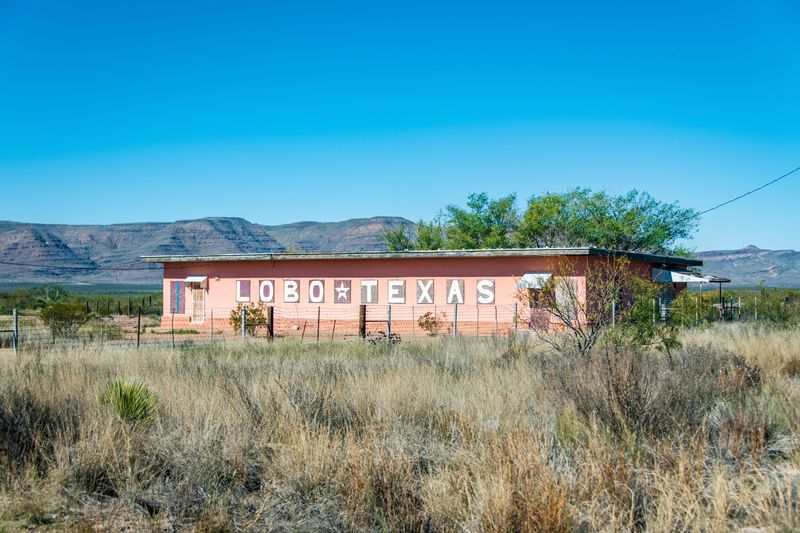
Way out in Culberson County, where the desert stretches endlessly and water is more precious than gold, Lobo once served as a vital railroad stop. Founded in 1882, this community sprang up around the railroad’s need for a water station, and cotton farmers saw opportunity in the harsh West Texas landscape.
For a few decades, Lobo hummed with activity as trains stopped regularly and farmers worked the stubborn soil.
Everything changed in the 1920s when an earthquake shook the ground beneath Lobo’s feet. The town’s hotel collapsed, and that disaster marked the beginning of a slow but steady exodus.
By the mid-1930s, only ten hardy souls remained, stubbornly clinging to their desert home despite mounting challenges. The railroad eventually reduced its stops, and the cotton fields struggled against increasingly difficult conditions.
Drought became Lobo’s ultimate enemy, more destructive than any earthquake. Year after year, the skies withheld rain, and the wells ran drier and drier.
Cotton farming became impossible, and without water, human habitation made no sense. The last residents finally admitted defeat and moved to places where turning on a faucet didn’t require a miracle.
Now Lobo sits abandoned beneath the relentless West Texas sun, its empty buildings slowly crumbling into dust. Tumbleweeds roll through structures where families once gathered for dinner, and the railroad tracks that gave birth to this town still run past its corpse.
Visitors brave enough to venture into this remote corner of Texas find a haunting testament to the harsh realities of desert life and the absolute necessity of water for survival.
4. Independence
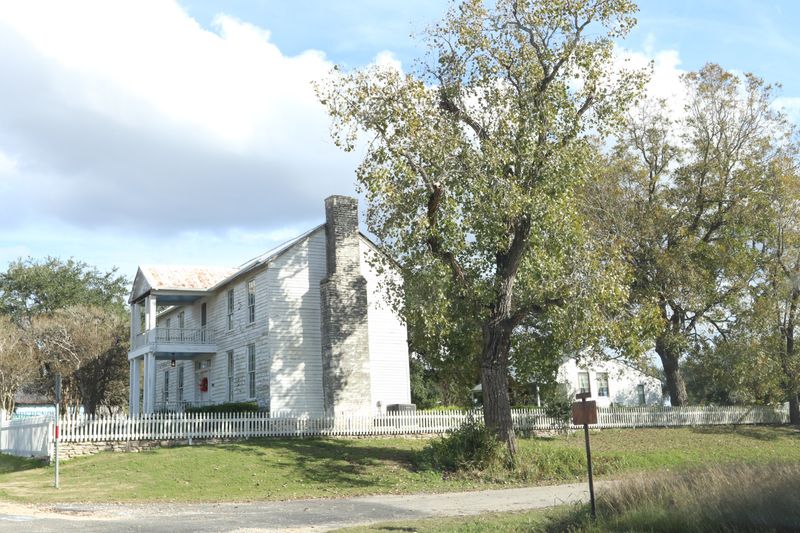
Independence once rivaled the most important towns in Texas, sitting proudly on a hilltop with wealth, education, and influence. As the original home of Baylor University, it attracted students, professors, and prosperity, giving it a sense of permanence few frontier towns ever achieved.
That confidence shattered when Baylor relocated, taking people, money, and relevance with it. Businesses closed, families left, and Independence slowly slipped from prominence into near abandonment.
What remains is hauntingly beautiful. Grand ruins, historic churches, and old cemeteries overlook rolling countryside, offering a quiet reminder that even intellectual and cultural centers can vanish when their anchor is removed.
5. Terlingua
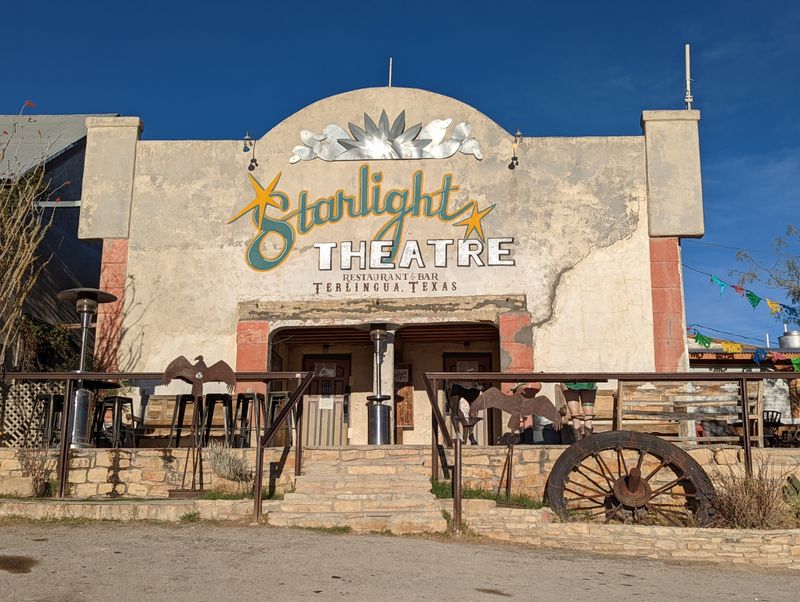
Deep in the Big Bend region, Terlingua tells a story of boom, bust, and surprising resurrection. Mercury mining brought this remote desert community to life in the early 1900s when the Chisos Mining Company discovered rich cinnabar deposits.
Miners and their families endured the harsh desert environment, attracted by steady paychecks and the promise of prosperity in this isolated corner of Texas.
For several decades, Terlingua thrived despite its extreme remoteness. At its peak, around 2,000 people called this desert outpost home, supporting schools, a company store, and a theater.
The mercury extracted here supplied important industrial and military applications, making Terlingua strategically valuable despite its inhospitable location.
Mercury prices crashed in the 1940s, and mining operations became economically unsustainable. The Chisos Mining Company shut down, and Terlingua’s population evaporated almost as quickly as water in the desert heat.
Buildings stood empty, slowly deteriorating under the relentless sun, and the town seemed destined to become just another forgotten ghost town on the Texas landscape.
But Terlingua refused to die completely. Artists, river guides, and adventurous souls began trickling back in the 1960s and 1970s, attracted by the dramatic scenery, proximity to Big Bend National Park, and the romantic allure of a genuine ghost town.
Today, Terlingua exists in a strange limbo between ghost town and quirky living community. Ruins of the old mining operations stand alongside functioning businesses, and a small population of hardy residents embraces the town’s eccentric character.
Visitors exploring Big Bend often stop in Terlingua, discovering a place where past and present coexist in fascinating ways beneath the vast desert sky.
6. Glenrio
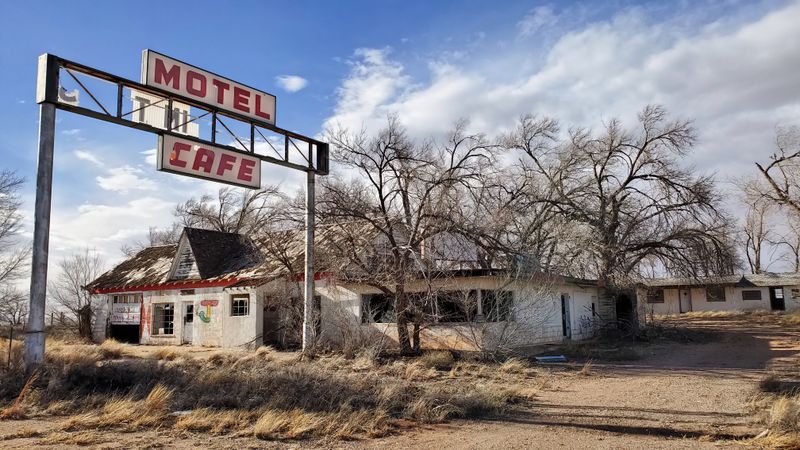
Straddling the Texas-New Mexico border, Glenrio owes its existence to Route 66, the legendary highway that connected Chicago to Los Angeles. When the Mother Road was at its peak, Glenrio served as a vital stop for travelers making the long journey across the Southwest.
Gas stations, motels, and diners lined the highway, and the town prospered from the steady stream of cars passing through day and night.
Route 66 made Glenrio, but the Interstate Highway System killed it. When Interstate 40 was constructed in the 1970s, it bypassed Glenrio entirely, routing traffic several miles to the south.
Overnight, the stream of travelers that had sustained the town for decades simply vanished. Gas stations pumped their last gallons, motels turned away their final guests, and restaurant owners served their last meals.
Business owners faced an impossible choice: relocate to the interstate or watch their livelihoods die. Most chose to leave, abandoning buildings they had operated for years.
Families who had lived in Glenrio for generations packed up and moved to towns with better economic prospects. By the 1980s, Glenrio was effectively dead, its population reduced to zero.
Now Glenrio stands as a preserved ruin, a time capsule of mid-century American travel culture. Abandoned gas stations with their vintage pumps, empty motel rooms with sagging beds, and faded signs advertising long-gone businesses create a haunting atmosphere.
Route 66 enthusiasts make pilgrimages to Glenrio, photographing the decay and remembering when this border town bustled with activity.
The town serves as a powerful reminder that communities built on transportation routes face extinction when those routes change, leaving behind only empty buildings and faded dreams along forgotten stretches of pavement.
7. Fort Griffin
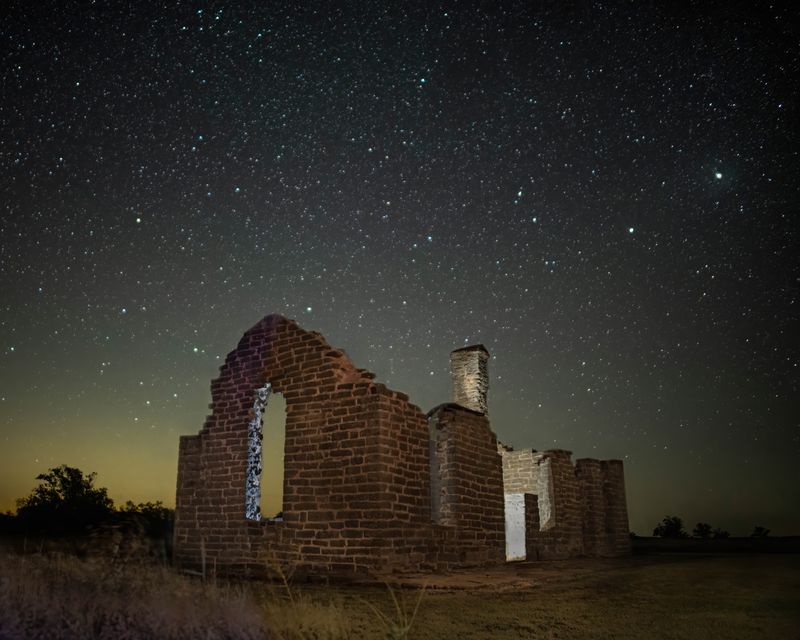
Fort Griffin began as a rough military outpost on the edge of the Texas frontier, built to control Native American resistance and protect westward expansion. Soldiers, buffalo hunters, and merchants crowded the nearby settlement, creating a lawless boomtown atmosphere.
When the military moved on and the frontier closed, Griffin’s purpose evaporated. Businesses followed opportunity elsewhere, and the once-notorious town faded into silence.
Now limestone ruins sit under wide skies, their walls cracked but recognizable. Standing among them, it is easy to imagine the noise and violence that once filled this place, and just as easy to understand how quickly it all disappeared.
8. Toyah
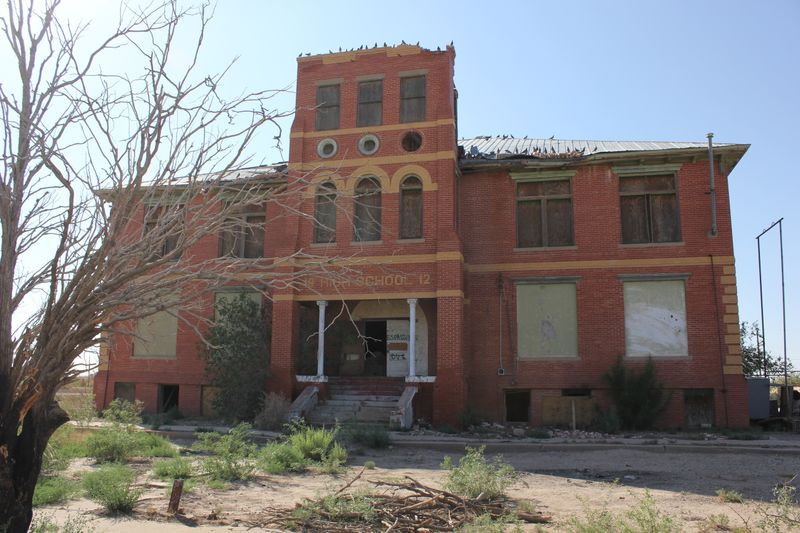
Water made Toyah possible, and the loss of water is slowly killing it. Located in Reeves County in far West Texas, Toyah sprang up in the 1880s when the Texas and Pacific Railway established a station there.
Early settlers discovered artesian wells that provided abundant water, a precious commodity in the arid region. Farmers successfully grew crops, and the town grew to over 1,000 residents by the early 1900s.
Agriculture sustained Toyah for decades, with cotton and vegetables thriving thanks to irrigation from underground aquifers. The railroad brought supplies in and shipped produce out, creating a sustainable economic cycle.
Schools, churches, and businesses served a community that seemed to have found the magic formula for desert survival: reliable water and good transportation connections.
But aquifers are not infinite, and decades of pumping gradually depleted Toyah’s water supply. Wells that once flowed freely required deeper drilling and more expensive pumping.
Agricultural productivity declined as water became scarcer and more costly. Young people left for cities with better opportunities, and businesses closed as the customer base shrank.
Today, Toyah persists with a tiny fraction of its former population, its downtown largely empty and its future uncertain. Abandoned buildings outnumber occupied ones, and the few remaining residents watch their community slowly fade.
The railroad still runs through town, but trains no longer stop like they did in Toyah’s prosperous days. Driving through Toyah feels melancholy, seeing the bones of a once-thriving agricultural community slowly dying of thirst.
The town stands as a stark warning about the unsustainability of desert communities when water resources run dry, leaving behind only dust, memories, and a handful of residents refusing to abandon their dying home.
9. Barstow
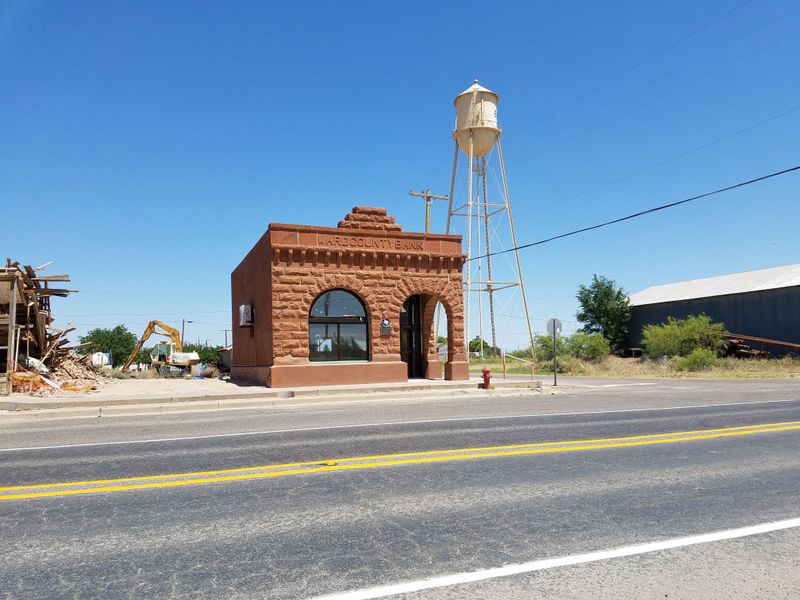
Railroads built many Texas towns, and Barstow in Ward County is no exception. Established in 1891 as a division point on the Pecos Valley Railway, Barstow enjoyed importance as a place where train crews changed and locomotives took on water.
The town grew to several hundred residents who serviced the railroad and provided amenities for travelers passing through this remote section of West Texas.
For decades, Barstow maintained steady population levels thanks to its railroad connections. Families built lives around the rhythms of train schedules, and local businesses catered to railroad workers and their families.
Schools educated children who expected to follow their parents into railroad careers, and the future seemed secure as long as trains kept running.
Then diesel locomotives replaced steam engines, eliminating the need for frequent water stops. Railroad companies consolidated operations, and Barstow lost its status as a division point.
Crew changes happened elsewhere, and trains began passing through without stopping. The economic foundation that had supported Barstow for nearly a century crumbled, and residents faced the reality that their town no longer served a necessary function.
Barstow still appears on maps, but its population has dwindled to a fraction of its peak. Empty buildings line the main street, and the few remaining residents are mostly elderly, watching their community slowly die.
The railroad tracks still run through town, a cruel reminder of the industry that created Barstow and then abandoned it. Young people leave as soon as possible, seeking opportunities in larger cities, and each passing year brings Barstow closer to complete abandonment.
The town exemplifies how technological changes in transportation can render entire communities obsolete, leaving behind only a handful of stubborn residents and the ghosts of busier times.
10. Lajitas
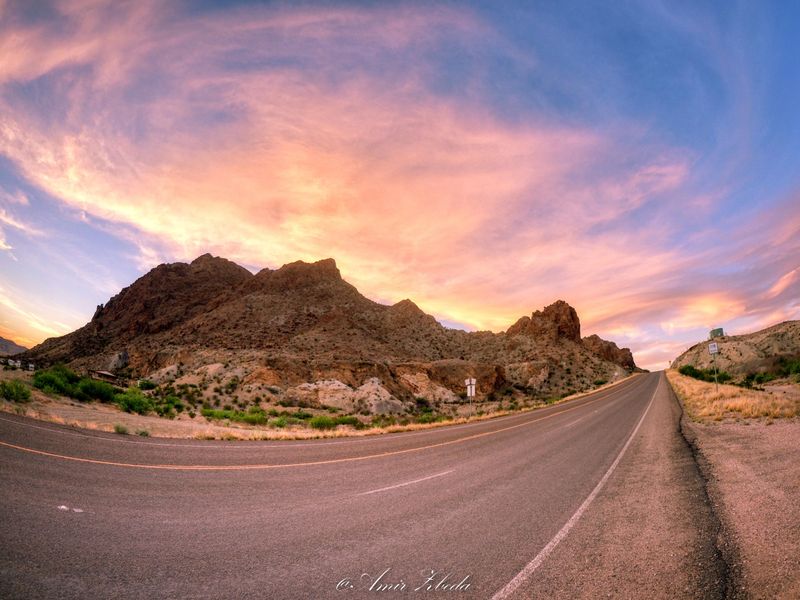
Lajitas was born from mercury mining, clinging to life along the Rio Grande in an isolated corner of Texas where survival was never guaranteed. Workers endured brutal heat and isolation for steady pay, and a small town grew where almost nothing else could.
When the mines closed, Lajitas collapsed almost overnight. Buildings emptied, machinery rusted, and the desert reclaimed streets that had barely existed for a generation.
Unlike most dying towns, Lajitas never fully vanished. Its crumbling remains attracted outsiders drawn to isolation and spectacle, leaving it suspended between ghost town and living oddity, a place where decline stopped just short of complete erasure.
Dear Reader: This page may contain affiliate links which may earn a commission if you click through and make a purchase. Our independent journalism is not influenced by any advertiser or commercial initiative unless it is clearly marked as sponsored content. As travel products change, please be sure to reconfirm all details and stay up to date with current events to ensure a safe and successful trip.
