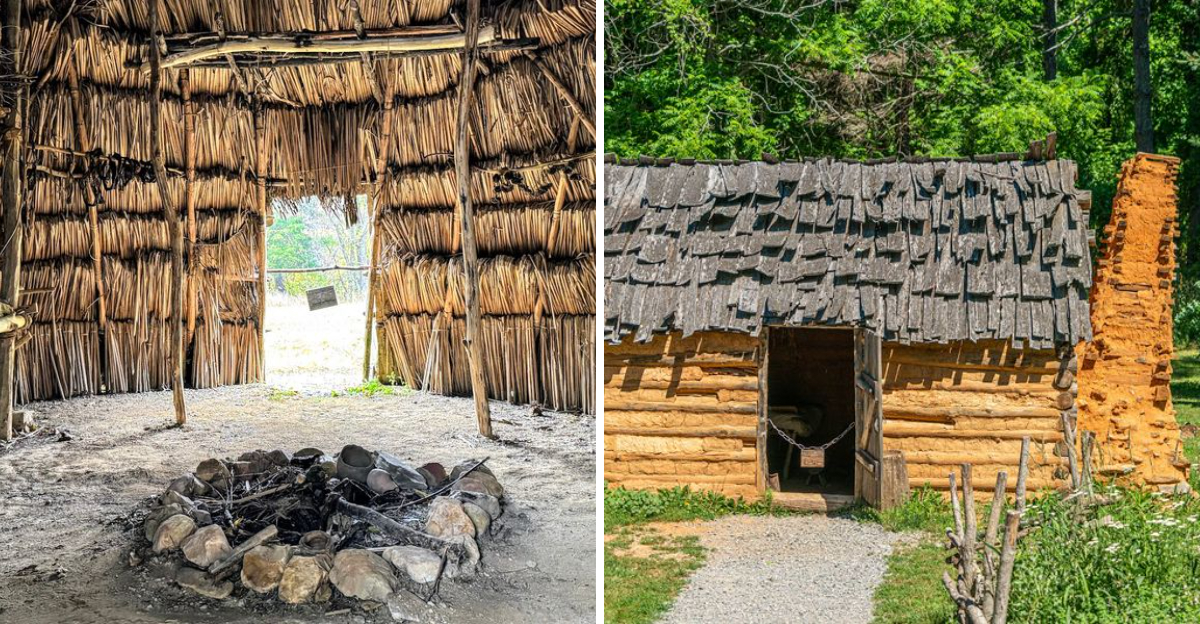
You walk down a path and suddenly you are in a German farmhouse from the 1700s. A few steps later, you are in an Irish thatched cottage.
Then an English farm, then an American homestead. This 200-acre Virginia museum is not a museum at all.
It is a journey through time and across oceans. The recreated farms show how settlers lived centuries ago, with interpreters in period clothing demonstrating the skills that kept families alive.
I spent hours here, watching a blacksmith shape iron, smelling bread bake in a stone oven, and walking through fields that looked like paintings. The museum is mostly outdoors, so wear comfortable shoes.
Virginia has plenty of history, but this living museum lets you touch it. Go with time to wander.
The Open-Air Layout That Makes History Feel Alive
Walking into this place feels less like entering a museum and more like teleporting through time. The grounds stretch across nearly 200 acres.
Almost two miles of paved trails connect each exhibit in a way that feels surprisingly natural, almost like a countryside stroll with a serious history lesson attached.
What makes the layout so clever is the division between the Old World and America sections. You literally walk from European farmsteads into colonial American backcountry, and the shift in atmosphere is palpable.
The air smells different, the sounds change, and the buildings tell a completely new story at every turn.
Golf cart rentals are available for those who prefer a breezy ride over a workout, and shuttle options make the experience accessible for everyone. Comfortable shoes are a must, and arriving early gives you the best chance to soak everything in without rushing.
Plan for at least a couple of hours, though a full day is honestly more satisfying.
A 17th-Century English Farm Frozen in Time
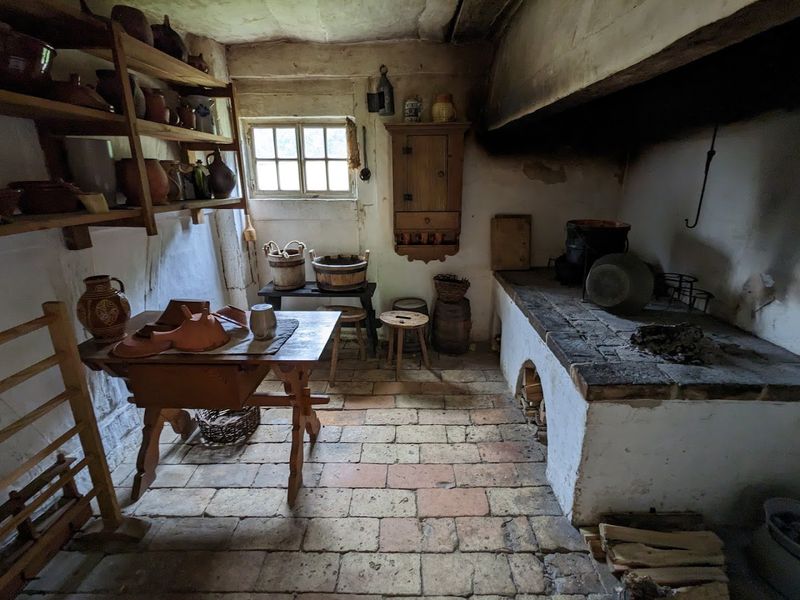
Thatched roofs, timber frames, and the faint smell of woodsmoke greet you the moment you approach the English farm exhibit. Representing rural life from the 1600s, this reconstructed farmstead is one of the most visually striking spots on the entire property.
Every detail, from the low doorways to the hand-hewn furniture inside, has been carefully researched and authentically recreated.
Costumed interpreters bring the space to life in ways that no placard ever could. Ask them anything, and they deliver answers with the kind of enthusiasm that makes you forget you’re standing in modern-day Virginia.
The farm demonstrates how English settlers carried their domestic traditions across the Atlantic, adapting them to a rugged new landscape.
Seeing original or faithfully reproduced buildings up close gives a completely different understanding of what daily survival looked like centuries ago. The cramped quarters, the heavy tools, and the modest hearths make it abundantly clear that pioneer life demanded serious grit.
It’s one of those exhibits that sticks with you long after you’ve left the grounds of Frontier Culture Museum, Staunton.
The Irish Farm and Forge Where Sparks Still Fly
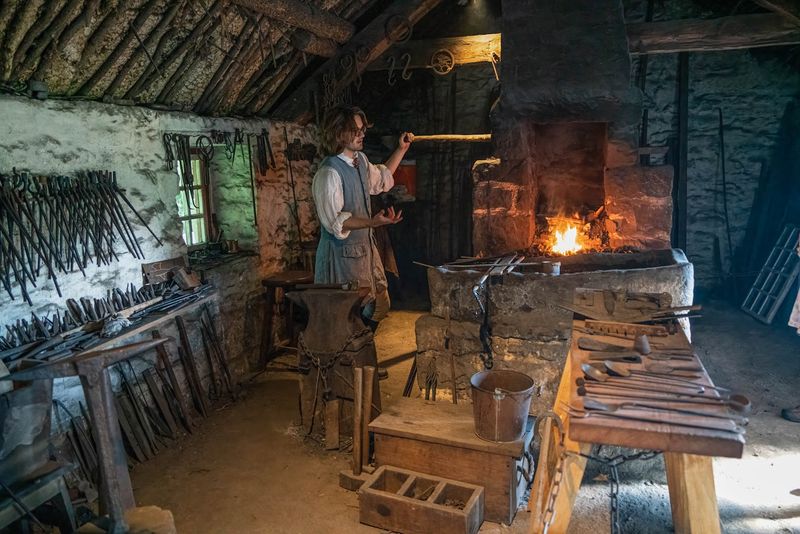
There’s something almost theatrical about watching a blacksmith work a forge, the rhythmic clang of hammer on iron, the burst of orange sparks, the focused intensity on the interpreter’s face.
The Irish farm and forge exhibit brings early 19th-century rural Ireland to life in a way that feels genuinely electric.
This isn’t a dusty diorama. It’s a fully functioning demonstration of old-world craft.
One of the most memorable hands-on experiences here involves working with flax, learning how it gets cleaned, combed, and eventually spun into thread. The interpreters walk you through each step with patience and humor, turning what sounds like a tedious chore into something genuinely fascinating.
You leave with a new respect for the labor behind every piece of fabric worn by early settlers.
The Irish section also tells a broader story about migration, hardship, and cultural resilience. Understanding why so many Irish families packed up everything and crossed an ocean adds emotional depth to every pot, tool, and stone wall on display.
Frontier Culture Museum, Staunton does a remarkable job of making those distant lives feel deeply personal and surprisingly relatable.
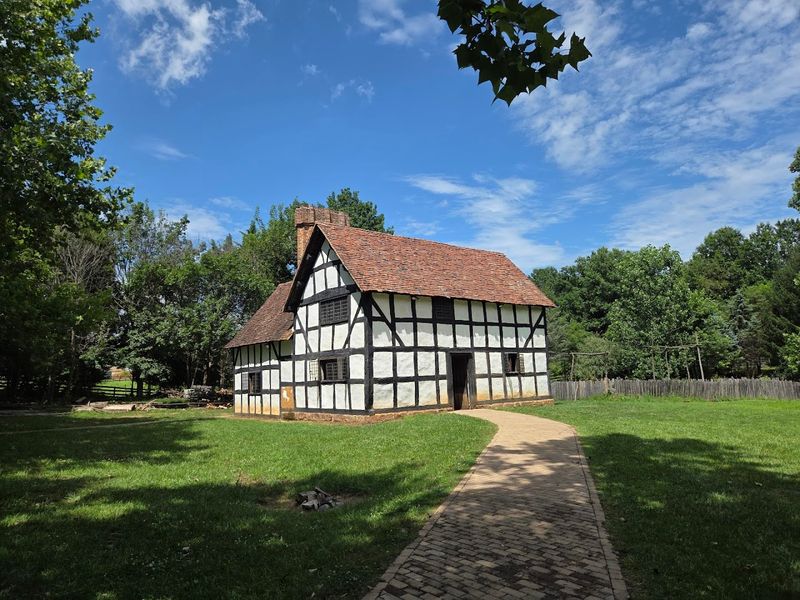
Germany Meets Virginia on a 1700s Farmstead
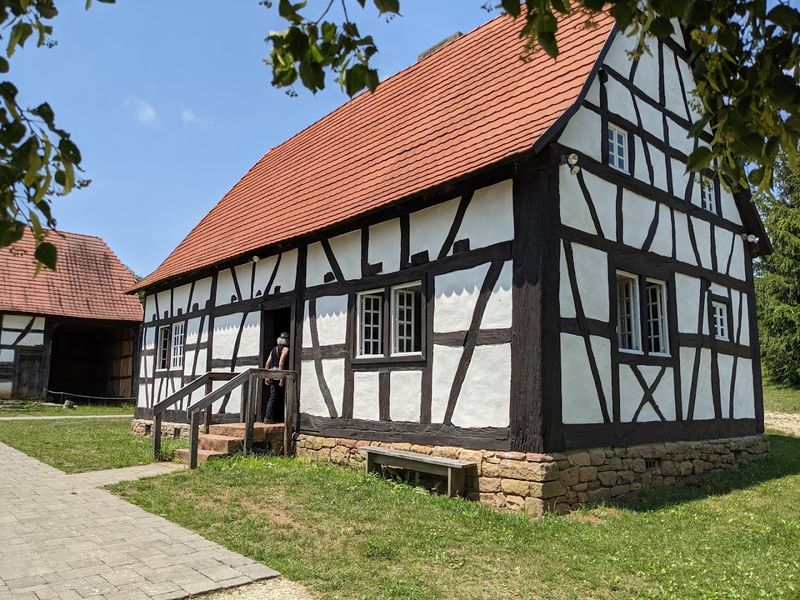
The German farm exhibit is a showstopper, and not just because of its impressive half-timbered architecture. Representing rural life from the 1700s, this farmstead highlights the enormous influence German immigrants had on shaping the culture and agricultural practices of Virginia’s Shenandoah Valley.
The craftsmanship in the buildings alone is worth the trip.
What makes this section especially memorable is the quality of interpretation. During my visit, the interpreter stationed here had actually grown up in Germany and spoke the language fluently.
Her knowledge of period farming techniques, household customs, and emigration history turned a simple walkthrough into a genuinely enriching conversation.
German settlers brought with them a distinct approach to barn construction, crop rotation, and community life, all of which left a lasting imprint on American frontier culture.
Seeing those traditions represented through original and reconstructed structures makes the connection between Old World roots and New World identity feel tangible.
If you only have time for one Old World exhibit at Frontier Culture Museum, Staunton, the German farmstead makes a compelling case for being your first stop.
West African Roots and the Igbo Family Compound
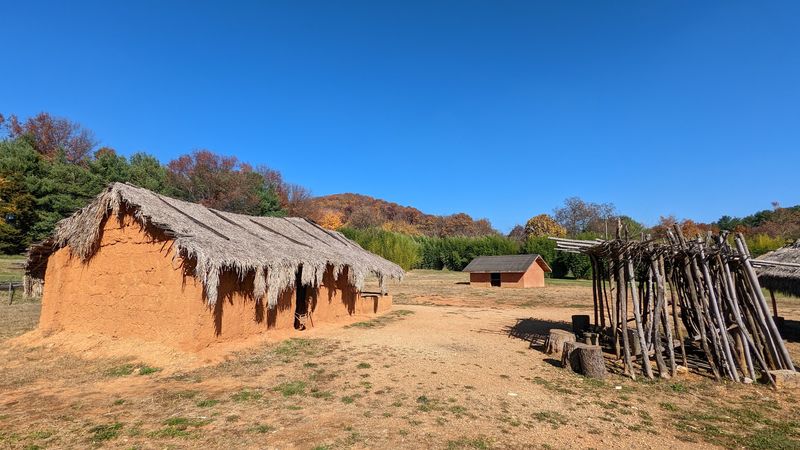
Easily one of the most powerful and thought-provoking exhibits on the property, the West African site represents an 18th-century Igbo family compound with remarkable care and cultural sensitivity. Most American history museums gloss over or entirely omit the African origins of enslaved people.
This exhibit refuses to do that, and the result is something genuinely moving.
The structures here reflect the architectural traditions of the Igbo people of present-day Nigeria, using natural materials and spatial arrangements that carry deep cultural meaning.
Interpretive staff provide context that connects this West African heritage directly to the lives of African Americans who shaped Virginia’s frontier communities.
The exhibit doesn’t shy away from complexity, and that honesty is exactly what makes it so valuable.
Standing in this compound and then walking toward the American side of the museum creates a powerful narrative arc. The journey from this exhibit to the 1860s African American church later in the tour is one of the most quietly profound experiences the museum offers.
Frontier Culture Museum, Staunton treats this history with the seriousness and dignity it deserves, making it an absolute highlight of the entire visit.
American Indian Life Through the Ganatastwi Settlement
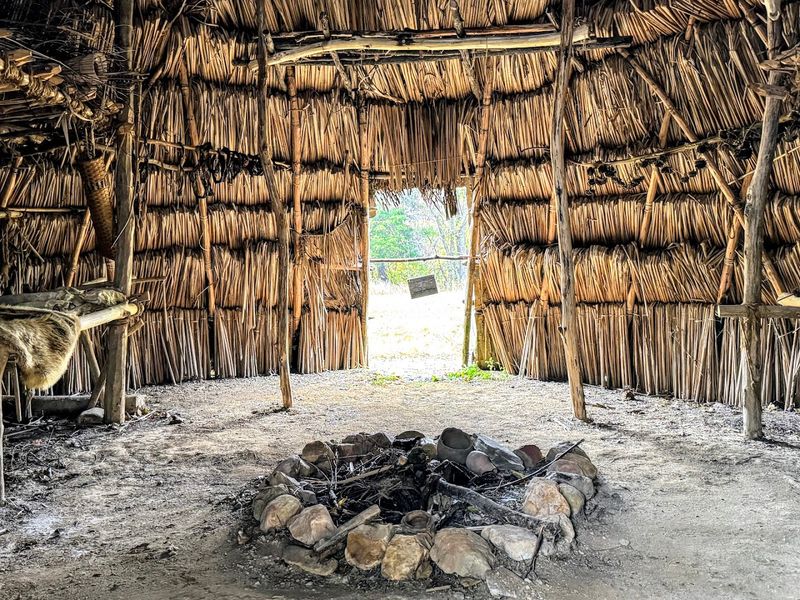
Long before European settlers arrived with their plows and livestock, Indigenous communities had already developed sophisticated ways of living on this land. The American Indian exhibit at this Virginia museum covers more than a century of Native life, from the 1650s through the 1760s.
It’s centered around a Ganatastwi settlement that represents the Eastern Siouan-speaking peoples of the region.
The structures here are carefully reconstructed based on archaeological research, and the interpreters bring a level of nuance to the subject that goes far beyond the usual simplified narratives.
The exhibit explores how Native communities adapted, traded, and ultimately navigated the dramatic changes brought by European colonization.
It’s a perspective that adds essential depth to the broader story this museum tells.
Spending time in this section reshapes the way you understand the entire arc of American frontier history. The land these farms now occupy was never empty, and the museum makes that point clearly and respectfully.
Visiting during a special event day, when additional demonstrations take place, can make this exhibit even richer. Pack your curiosity and come ready to ask questions, because the interpreters here genuinely welcome the conversation.
Four American Farms That Span Over a Century of Change
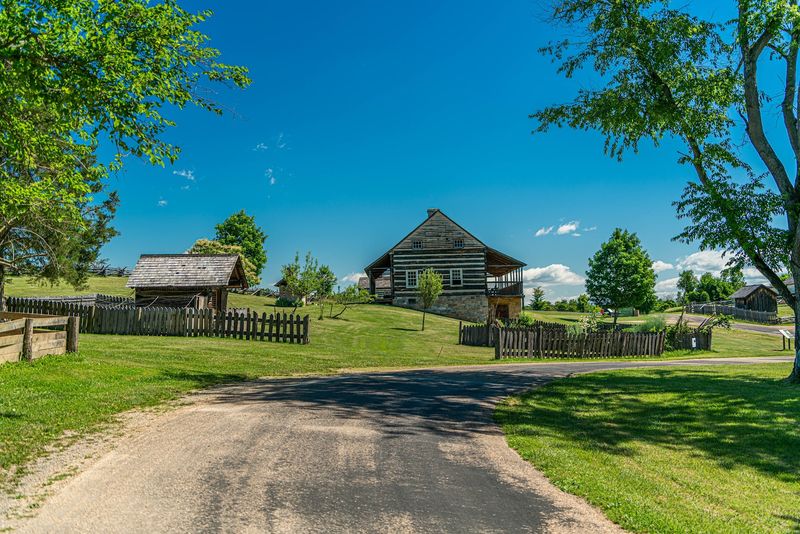
Few exhibits anywhere manage to show the passage of time quite as effectively as the sequence of American farm sites here. Spread across the museum’s American section, farms representing the 1740s, 1760s, 1820s, and 1850s each tell a distinct chapter of frontier life in Virginia.
Walking between them is like watching a slow-motion transformation of rural America unfold right before your eyes.
The earliest farms are raw and spare, reflecting the desperate practicality of settlers carving out survival in the wilderness. By the time you reach the mid-1800s farmstead, the buildings are more refined, the tools more specialized, and the domestic arrangements noticeably more comfortable.
The contrast is striking and makes the concept of historical progress feel genuinely visible rather than abstract.
Animals roam many of these farm sites, adding an extra layer of authenticity that kids absolutely love. Some of the animals can even be touched with staff permission, which turns an educational outing into something far more memorable.
The combination of architecture, agriculture, and living animals creates an immersive experience that no textbook can replicate. These farms are the beating heart of everything Frontier Culture Museum, Staunton stands for.
The 1840s Schoolhouse That Puts Modern Classrooms to Shame
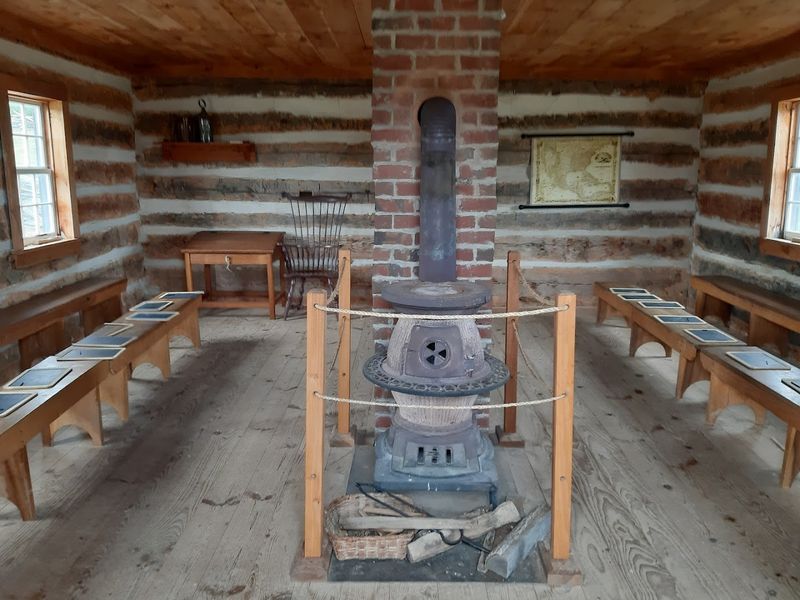
Stepping inside this one-room schoolhouse is one of those unexpectedly charming moments that catches you completely off guard. Built to represent education in the 1840s, the space is tiny, spare, and somehow deeply evocative.
Wooden benches, a simple chalkboard, and period-accurate school supplies paint a vivid picture of what learning looked like for frontier children in Virginia.
The schoolhouse is a fan favorite for good reason. It sparks immediate comparisons between then and now, and those comparisons are fascinating.
Kids who visit often come away with a new appreciation for their own classrooms, while adults find themselves nostalgic for a simplicity that never quite existed in their own lifetimes but feels oddly appealing anyway.
Interpreters stationed here often demonstrate period lessons or explain the social role education played in early American communities. Literacy was a hard-won privilege in the 1840s, not a given, and the schoolhouse makes that reality feel immediate and personal.
It’s a small building with an outsized emotional impact, and many people who’ve visited the museum point to it as their single favorite exhibit. Bring your inner student and prepare to be schooled in the best possible way.
The 1860s African American Church and Its Quiet Dignity
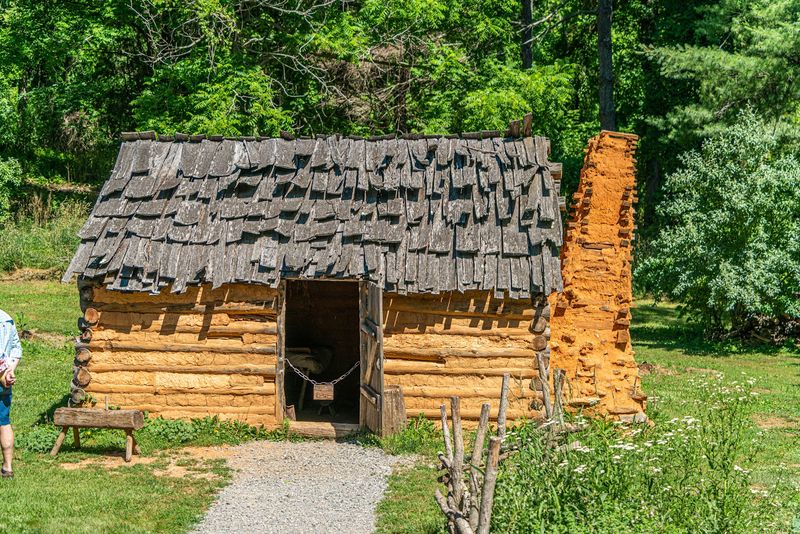
At the far end of the American section stands a small wooden church that carries enormous historical weight. Representing African American religious life in the 1860s, this exhibit is one of the most quietly powerful spaces on the entire property.
Churches like this one served as far more than places of worship. They were community anchors, schools, meeting halls, and sanctuaries in every sense of the word.
The interior is modest and unadorned, with simple wooden pews and plain walls that somehow feel full of presence.
Interpreters provide context about the role of the Black church in post-Civil War Virginia, connecting this humble building to broader narratives of freedom, community-building, and cultural survival.
The storytelling here is careful, respectful, and genuinely illuminating.
Visiting this exhibit after walking through the West African compound earlier in the tour creates a powerful sense of narrative closure. The arc from an Igbo family compound in West Africa to a Virginia church built by free Black Americans is one of the most meaningful journeys the museum offers.
It’s a reminder that history isn’t a collection of isolated facts but a continuous, deeply human story. This church earns every moment of quiet reflection it inspires.
Plan Your Visit to 1290 Richmond Ave in Staunton
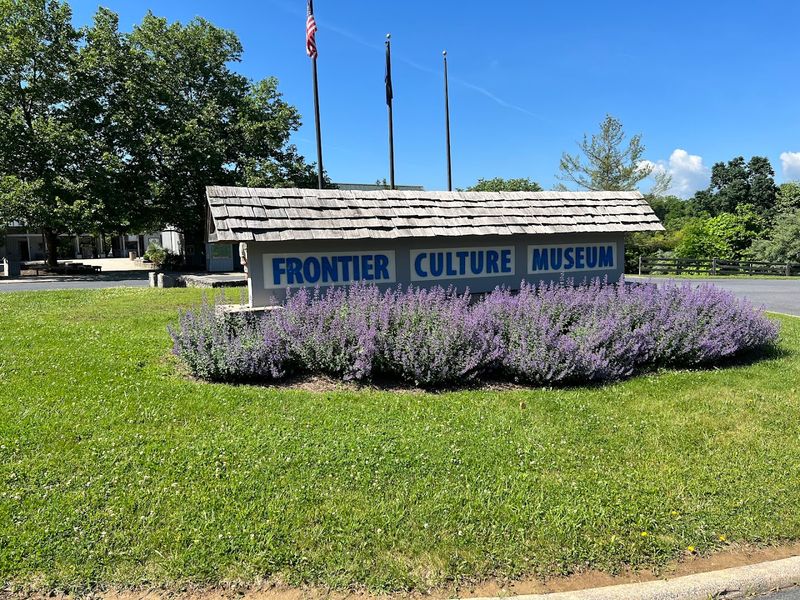
Getting to Frontier Culture Museum, Staunton is straightforward, and the experience waiting on the other side is absolutely worth the drive.
It is located at 1290 Richmond Ave, Staunton, VA 24401. The museum sits conveniently near Interstate 81, making it an easy stop whether you’re on a dedicated day trip or passing through the Shenandoah Valley on a longer Virginia road trip.
The museum opens daily at 9 AM and closes at 5 PM, giving you a solid window to explore at your own pace. Golf cart rentals are available on-site for those who prefer a more leisurely tour, and shuttle services help make the grounds accessible for everyone.
A gift shop rounds out the visit with reasonably priced souvenirs that actually feel worth buying.
Special event days throughout the year bring additional demonstrations like sheep shearing, wool spinning, butter churning, and live blacksmithing. Cooler months offer a more comfortable walking experience, though the museum is genuinely enjoyable year-round.
Phone ahead at +1 540-332-7850 or browse frontiermuseum.org for current programming and event schedules. Virginia has no shortage of incredible historical destinations, but few offer the immersive, multi-cultural depth that this one delivers.
Pack your curiosity, wear comfortable shoes, and go.
