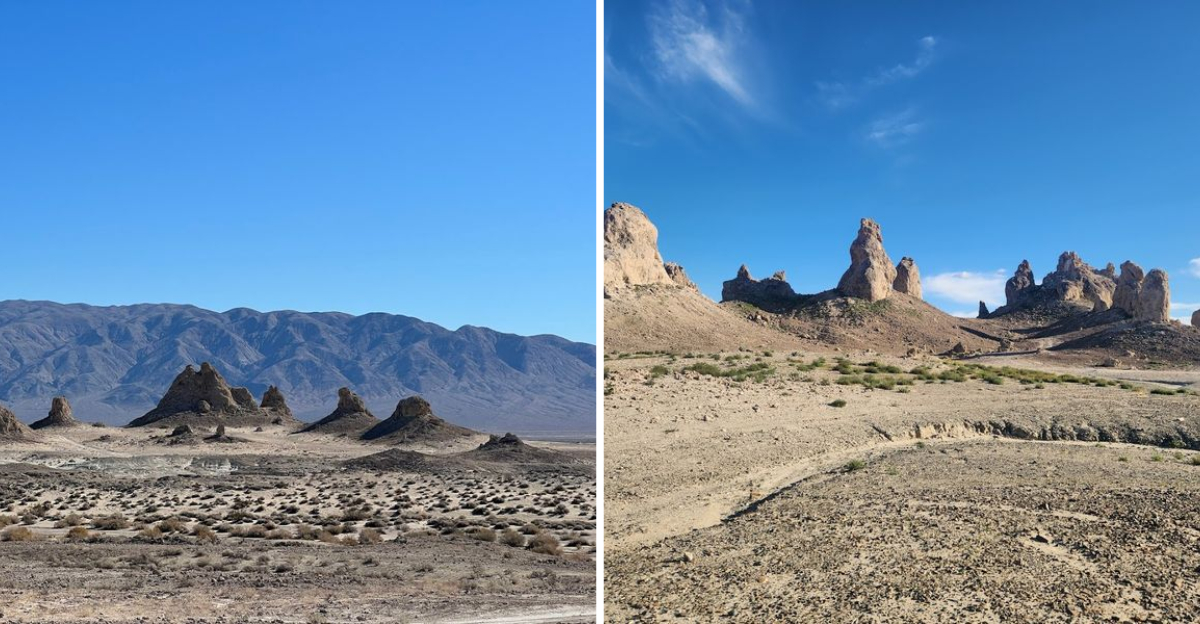
I never expected one of the strangest landscapes I’ve ever seen to be sitting out in California. At first glance, it looks like the set of a science fiction movie, complete with giant rock towers rising out of the desert floor for no obvious reason. Then you find out nature pulled it off thousands of years ago, and somehow it gets even more impressive.
It’s the kind of stop that makes you wander around with your camera in one hand and a hundred questions in your head. If unusual road trip destinations are your thing, California has one that feels almost too weird to be real.
What Tufa Spires Actually Are and Why They Matter
Most people hear the word “tufa” and draw a complete blank, which is totally fair. Tufa is a type of porous limestone that forms when calcium-rich groundwater mixes with carbonate-rich water, usually in a lake environment.
The chemical reaction causes calcium carbonate to slowly crystallize and build up over time, layer by layer, into solid rock formations.
At Trona Pinnacles, this process happened deep beneath Searles Lake during the Pleistocene Ice Ages. The lake was enormous back then, sitting under as much as 640 feet of water at its deepest point.
The spires grew slowly and silently in that underwater world for tens of thousands of years.
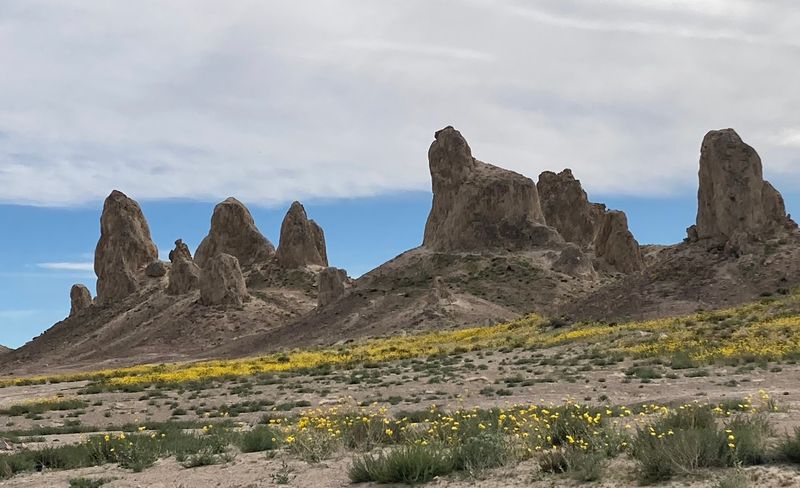
What makes this site especially remarkable is the sheer variety of shapes left behind. Scientists classify the pinnacles into four general forms: towers, tombstones, ridges, and cones.
Each shape reflects slightly different conditions during formation. Some spires shoot straight up like needles while others look wide and squat.
Seeing them all together across 14 square miles of flat desert floor is genuinely one of the more mind-bending natural experiences you can have in California.
The Ancient Lake That Built This Landscape
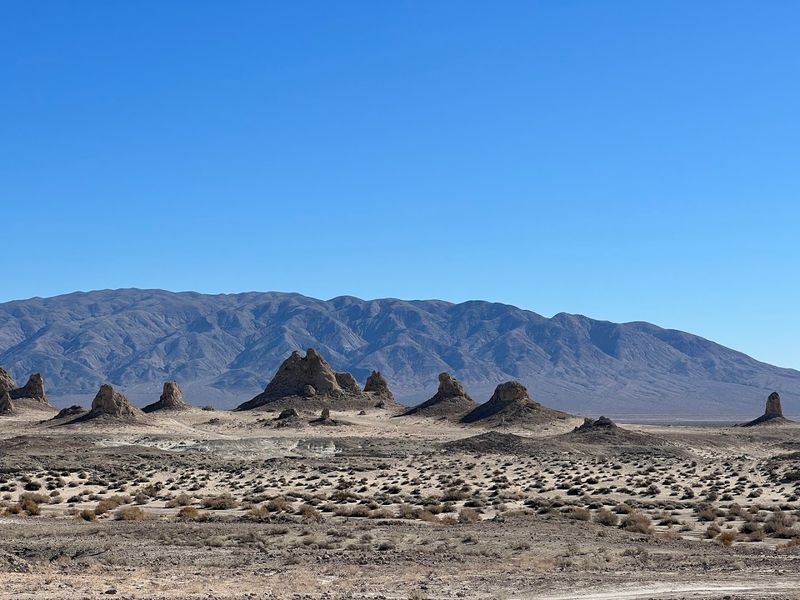
Searles Lake does not look like much today. It is a dry, flat, alkaline lakebed that stretches across the Mojave with almost no vegetation in sight.
But roughly 10,000 to 100,000 years ago, it was part of a connected chain of inland lakes fed by Sierra Nevada snowmelt that reached all the way from Mono Lake down toward Death Valley.
During the Pleistocene Ice Ages, massive amounts of runoff poured into these basins, filling them to depths that are hard to imagine now. Searles Lake alone reached depths of around 640 feet at its peak.
As the climate shifted and temperatures rose after the last ice age, the water slowly evaporated, leaving behind mineral deposits and, of course, the tufa pinnacles.
The lake’s retreat was not a sudden event. It happened gradually over thousands of years, which is why the pinnacles were exposed in stages rather than all at once.
That slow uncovering is part of why they survived in such incredible condition. The dry desert air has preserved them remarkably well, giving visitors today a front-row seat to a geological story that started long before humans walked this continent.
Three Groups, Three Ice Ages, One Stunning Site
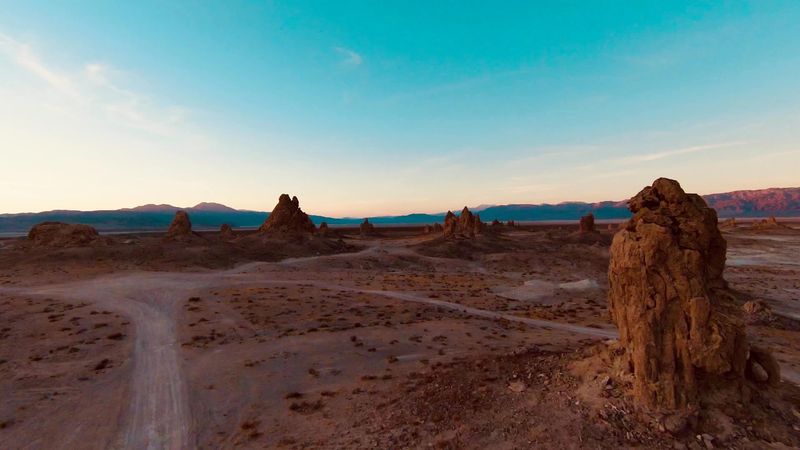
Not all of the pinnacles at Trona are the same age, and that detail alone makes the site feel like a living geology textbook. The spires are divided into three groups based on when they formed: northern, middle, and southern.
Each group corresponds to a different ice age period, and the age differences are significant.
The northern group is the youngest, dating from about 11,000 to 25,000 years old. The middle group sits in between, and the southern group is the oldest of all, with some formations estimated to be between 32,000 and 100,000 years old.
The further south you walk, the further back in time you are essentially looking.
You would not necessarily notice the age difference just by looking, but knowing it changes how you experience the place. The southern spires have had far longer to weather and erode, giving them a slightly different texture and silhouette compared to the younger northern formations.
Geologists and curious visitors alike can spend hours comparing the groups. Honestly, even without a geology background, picking up on those subtle differences becomes a surprisingly satisfying little puzzle to work through while you explore.
Getting There and What to Expect on the Road
Getting to Trona Pinnacles is part of the adventure, and it is worth being honest about what that road is like. The site sits about five miles off the main highway on an unpaved dirt road that can be rough, bumpy, and slow going.
Most vehicles can manage it, but high clearance definitely helps, especially after rain when washouts and mud puddles can appear.
Plan on spending at least 30 to 45 minutes just navigating the access road, especially if you are taking it carefully. The potholes and dips are real, and the road is narrow in sections.
Going slow is not just recommended, it is basically required if you want to arrive with your suspension intact.
Once you get through that stretch, the payoff is immediate. The pinnacles appear on the horizon and grow taller as you approach, which creates this wonderful slow-burn reveal that a paved highway entrance could never replicate.
There is a basic parking area near the formations, and a pit toilet is available on site. There are no other facilities, so pack everything you need: water, food, sun protection, and a good spare tire.
The remoteness is part of what makes the place feel so special and untouched.
Camping Under the Stars Among the Spires
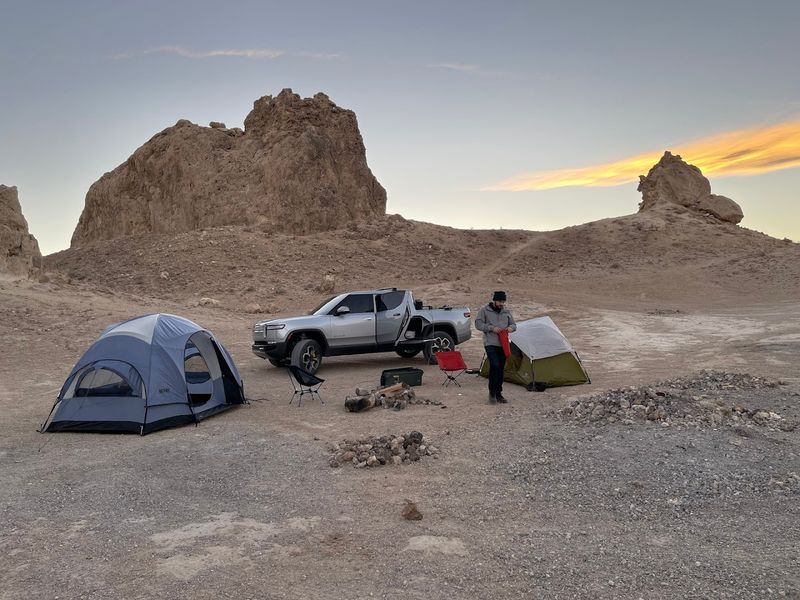
Camping at Trona Pinnacles is one of those experiences that stays with you for a long time. The site allows dispersed camping, meaning you can set up pretty much anywhere around the formations, and the options feel almost endless.
Waking up with those ancient spires silhouetted against a pale desert sunrise is something I would recommend to just about anyone who loves the outdoors.
The night sky out here is extraordinary. Far from city lights, the Milky Way becomes visible on clear nights, and the silence is the kind you rarely find anywhere near civilization.
A few reviewers have mentioned wind being a real factor, so staking your tent down properly is not optional. It can get surprisingly gusty after dark.
There is no trash service on site, so the pack-in, pack-out rule applies completely. Leave no trace is not just a suggestion here, it is the only thing standing between this place staying beautiful and it becoming a mess.
Rangers do patrol the area, which adds a sense of security. Fires are permitted, and the combination of crackling wood, towering ancient spires, and a sky full of stars makes for a genuinely unforgettable desert night.
Movie Magic and Pop Culture at the Pinnacles
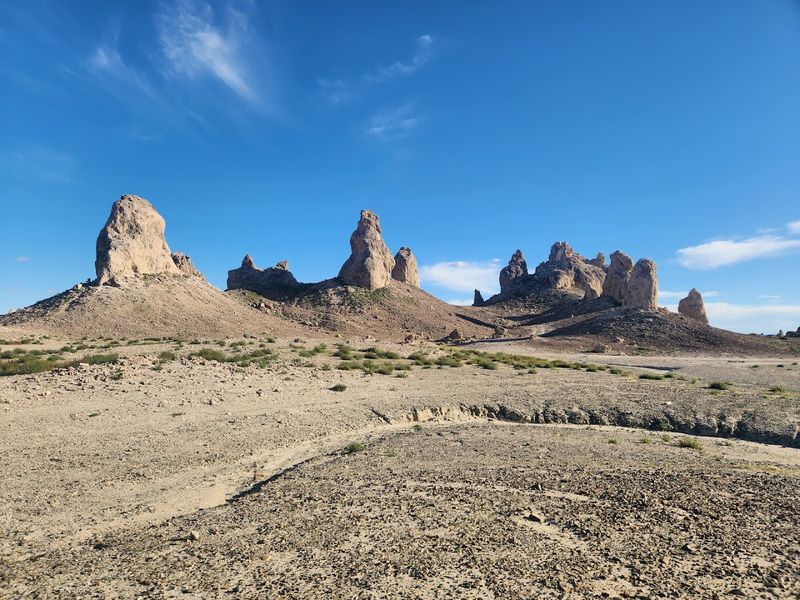
If the Trona Pinnacles feel vaguely familiar the first time you see them, there is a good reason for that. This landscape has appeared in numerous films and television productions over the decades, most famously as the planet Sha Ka Ree in Star Trek V: The Final Frontier.
The alien, otherworldly quality of the spires makes them a natural choice for filmmakers looking for something that does not look like anywhere else on Earth.
Beyond Star Trek, the site has attracted productions looking for that perfect combination of dramatic scale and raw, barren beauty. The formations photograph beautifully in almost any light, but golden hour and blue hour shots are particularly striking.
It is easy to see why directors keep coming back.
Knowing the cinematic history of the place adds a fun layer to any visit. You find yourself looking at certain spire clusters and thinking about how a camera might frame them, or noticing how the light changes the mood of the landscape entirely from one hour to the next.
Whether you are a film buff or not, there is something genuinely cool about standing in a location that has doubled as an alien world on the big screen while knowing the real geological story is even wilder than any script.
Tips for Making the Most of Your Visit
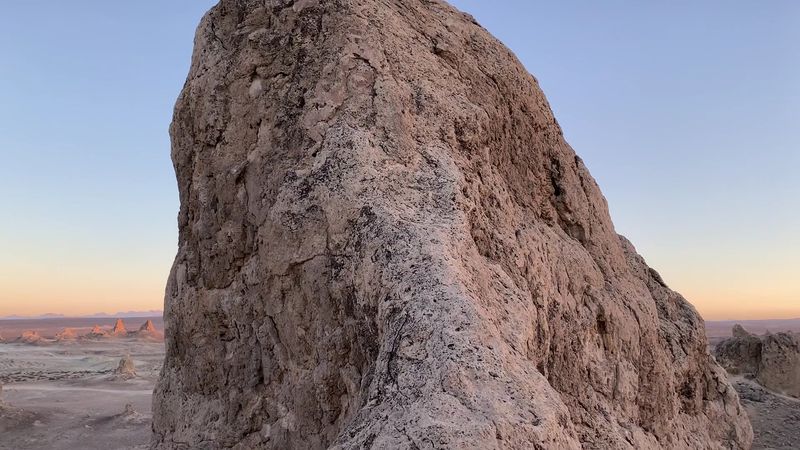
Timing your visit makes a huge difference at Trona Pinnacles. Sunrise and sunset are genuinely breathtaking out here, with the warm light turning the spires shades of orange and red that feel almost surreal.
Midday in summer can be brutally hot with very little shade, so early morning or late afternoon is the smart play for most of the year.
Wear sturdy shoes because the ground around the pinnacles is uneven and rocky. Bringing more water than you think you need is not an exaggeration, the desert heat pulls moisture out of you fast.
Sun protection matters too: a hat, sunscreen, and lightweight long sleeves go a long way toward keeping a fun trip from turning uncomfortable.
Do not climb the pinnacles themselves. They are fragile formations that took thousands of years to build, and foot traffic erodes them quickly.
Stick to the walking trails and explore from the ground level, where the views are honestly just as impressive. If you have a four-wheel-drive vehicle, the surrounding wilderness offers even more to discover.
The Trona Pinnacles were designated a National Natural Landmark in 1968, which means protecting them is something every visitor shares responsibility for.
