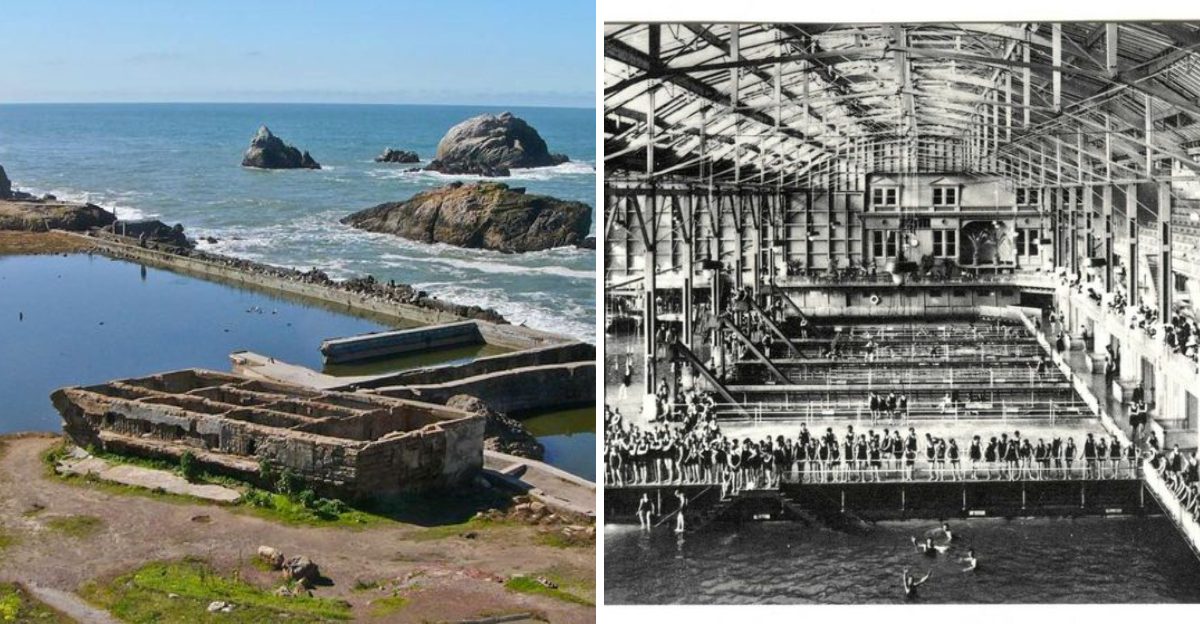
Perched on the rugged edge of San Francisco, the Sutro Baths once stood as a marvel of ambition and imagination.
Today, these crumbling ruins whisper stories of grandeur, mystery, and a vision that seemed almost impossible when it was first dreamed up.
Whether you’re a history buff, an adventure seeker, or someone who loves exploring forgotten places, the abandoned cliffside baths offer a hauntingly beautiful glimpse into California’s past.
A Visionary’s Dream Brought to Life
Adolph Sutro, a self-made millionaire and former San Francisco mayor, imagined something extraordinary back in the 1890s.
He wanted to create a public bathing complex that would be accessible to everyday people, not just the wealthy elite. His vision transformed a rocky coastline into one of the world’s largest indoor swimming facilities.
Construction began in 1894 and took two years to complete. Workers carved into the cliffs and built massive walls to hold back the Pacific Ocean. The project cost over one million dollars, a staggering amount at the time.
Sutro believed that everyone deserved a place to relax, exercise, and enjoy the beauty of the California coast. His dream became reality when the baths opened in 1896. Thousands of visitors flocked to experience this architectural wonder, and it quickly became a beloved San Francisco landmark that symbolized progress and community spirit.
Seven Pools of Wonder
Walking through the baths in their heyday meant choosing from seven different swimming pools, each with its own temperature and purpose. The largest pool could hold over 1,000 swimmers at once, making it a social hub where families and friends gathered. Smaller pools ranged from brisk and refreshing to warm and soothing.
Ocean water filled the pools through a clever system during high tide. At low tide, a massive pump kept the water circulating and fresh. The varying temperatures meant everyone could find their perfect spot, whether they wanted an invigorating plunge or a gentle soak.
Springboards and diving platforms added excitement for the adventurous. Children splashed in the shallower areas while adults tested their skills on the high dives.
The pools created an aquatic playground that felt both luxurious and welcoming, offering something special for visitors of all ages and swimming abilities.
Glass Palace by the Sea
Imagine standing under a ceiling made almost entirely of glass, with natural sunlight streaming down onto sparkling pools below.
The main building featured over 100,000 square feet of glass panels supported by an intricate iron framework. This architectural masterpiece allowed visitors to enjoy the outdoors while staying protected from San Francisco’s famous fog and wind.
The glass roof created a greenhouse effect, keeping the air warm and comfortable even on chilly days. Plants and palm trees grew inside, adding a tropical feel to the space. The design was revolutionary for its time, blending industrial engineering with natural beauty.
Victorian-era details decorated every corner, from ornate railings to elegant arches. The structure rose several stories high, creating a cathedral-like atmosphere that made swimming feel almost sacred.
Visitors often described feeling transported to another world, somewhere magical where the ocean met human ingenuity in perfect harmony.
More Than Just Swimming
Beyond the pools, Sutro Baths housed an entire entertainment complex that kept visitors busy for hours. A museum filled with curiosities collected from around the world occupied the upper floors. Egyptian mummies, shrunken heads, and exotic artifacts fascinated guests who wandered through the dimly lit exhibition halls.
Three restaurants served meals and snacks throughout the day. Families could enjoy lunch with ocean views before heading back to the pools. An amphitheater hosted performances, from concerts to theatrical productions, adding culture to the recreational experience.
The complex included private dressing rooms, towel rentals, and even a laundry service. Visitors could rent old-fashioned bathing suits if they forgot their own. Shopping areas sold souvenirs and beach gear.
This wasn’t just a swimming spot but a full day’s destination where people created lasting memories while enjoying world-class amenities in a stunning coastal setting.
The Decline Begins
By the 1930s, the Sutro Baths faced growing challenges that threatened their survival. Automobile culture changed how people spent leisure time, and newer attractions drew crowds away from the aging facility. The Great Depression hit hard, and fewer families could afford the admission price, even though it remained relatively affordable.
Maintenance costs soared as the saltwater corroded pipes and the glass roof required constant repairs. The building’s massive size became a burden rather than an asset. Heating the pools and maintaining the structure consumed enormous resources that became increasingly difficult to justify.
Ownership changed hands several times as investors tried different approaches to revive interest. The pools were eventually reduced from seven to one large tank.
The museum closed, and the restaurants struggled. What once symbolized progress and prosperity now represented the challenges of preserving historic structures in changing times and shifting economic landscapes.
The Mysterious Fire
On June 26, 1966, flames engulfed the Sutro Baths in a fire that would seal their fate forever. The blaze started during demolition work, though the exact cause remains debated to this day.
Some say it was accidental, while others whisper about suspicious circumstances surrounding the convenient timing.
Firefighters battled the inferno for hours, but the old wooden structures and remaining materials burned intensely. The glass roof shattered from the heat, sending dangerous shards cascading down. Thick smoke billowed across the coastline, visible for miles as San Franciscans watched a piece of their history disappear.
The owner had planned to demolish the baths and build apartments on the site. The fire made demolition unnecessary but also sparked controversy.
Many locals felt suspicious about losing their historic landmark so suddenly. Today, the fire remains one of those urban mysteries that adds an extra layer of intrigue to the ruins’ story.
Ruins That Tell Stories
What remains today speaks volumes about what once was. Concrete foundations outline where pools once held thousands of gallons of seawater.
Crumbling walls stand against the elements, their surfaces worn smooth by decades of wind and salt spray. Metal reinforcement bars poke through broken concrete like bones exposed by time.
Tunnels that once channeled ocean water into the pools now fill and empty with the tides. Visitors can walk through these passages during low tide, experiencing the engineering marvel firsthand. The scale becomes apparent when you stand where swimmers once played.
Graffiti artists have left their marks over the years, adding colorful layers to the gray ruins. Some see this as vandalism while others view it as modern storytelling continuing the site’s legacy.
Nature reclaims more territory each year, with plants growing in cracks and seabirds nesting in protected corners of the remaining structures.
A Photographer’s Paradise
Sunrise and sunset transform the ruins into something otherworldly. Golden light paints the concrete warm orange and pink, while shadows create dramatic contrasts in the empty pools. Photographers arrive early to catch the magic hour, when fog rolls in and creates an ethereal atmosphere around the crumbling walls.
The Pacific Ocean provides a constantly changing backdrop. Waves crash against rocks, sending spray high into the air during storms. Calmer days reveal tide pools teeming with life in the crevices. Each visit offers different lighting, different weather, and different moods to capture.
Many professional and amateur photographers consider the Sutro Baths ruins among the Bay Area’s most photogenic locations. The combination of history, nature, and decay creates compelling compositions.
Social media feeds fill with images from this spot, each person finding their own unique angle on a place that refuses to be forgotten despite its ruined state.
Wildlife Reclaims the Space
Seals and sea lions often bask on the rocks below the ruins, their barks echoing off the concrete walls. These marine mammals have made the area their home, unbothered by the human visitors who watch from above. During certain seasons, you might spot dozens of them lounging in the sun or playing in the waves.
Seabirds nest in the protected corners and crevices of the remaining structures. Gulls, cormorants, and pelicans all frequent the area, diving for fish in the nearby waters. The ruins provide shelter from wind and predators, making them ideal habitat for coastal species.
Tide pools within the old foundations host anemones, crabs, starfish, and small fish. These miniature ecosystems thrive where swimmers once splashed. Nature has transformed what humans abandoned into thriving habitats.
The site demonstrates how quickly the natural world adapts and flourishes when given the opportunity, creating beauty from what some might consider merely ruins.
Part of the Golden Gate National Recreation Area
The National Park Service now manages the Sutro Baths site as part of a larger coastal preserve. This protection ensures the ruins remain accessible to the public while preventing further development. Trails connect the baths to other scenic points along the coastline, creating opportunities for extended exploration.
Rangers occasionally lead guided walks that share the history and ecology of the area. These programs help visitors understand both the human and natural stories woven into the landscape. Educational signs provide context about what once stood here and why preservation matters.
Being part of the recreation area means the site stays free to visit and open to everyone. Parking is available nearby, though it fills quickly on nice weekends.
The designation honors Adolph Sutro’s original vision of creating public spaces where all people, regardless of background or income, can experience the beauty of California’s dramatic coastline and connect with history.
Visiting the Ruins Today
Getting to the Sutro Baths is easy from downtown San Francisco. The ruins sit at the western edge of the city, near Ocean Beach and the Cliff House. Parking can be challenging on weekends, so arriving early or taking public transportation makes sense for many visitors.
Wear sturdy shoes because the terrain is uneven and often slippery from ocean spray. The concrete can be slick, and tide pools require careful navigation. Bringing layers is smart since coastal weather changes quickly, and wind often whips across the exposed site.
The ruins are always open, and admission is free. You can explore at your own pace, reading informational plaques that explain the history. Many people combine their visit with walks along nearby trails or stops at other coastal viewpoints.
Whether you spend twenty minutes or two hours, the site offers a powerful connection to the past and a beautiful spot to appreciate California’s stunning shoreline.
Dear Reader: This page may contain affiliate links which may earn a commission if you click through and make a purchase. Our independent journalism is not influenced by any advertiser or commercial initiative unless it is clearly marked as sponsored content. As travel products change, please be sure to reconfirm all details and stay up to date with current events to ensure a safe and successful trip.
