Nevada holds more than neon, it keeps quiet stories in the trees.
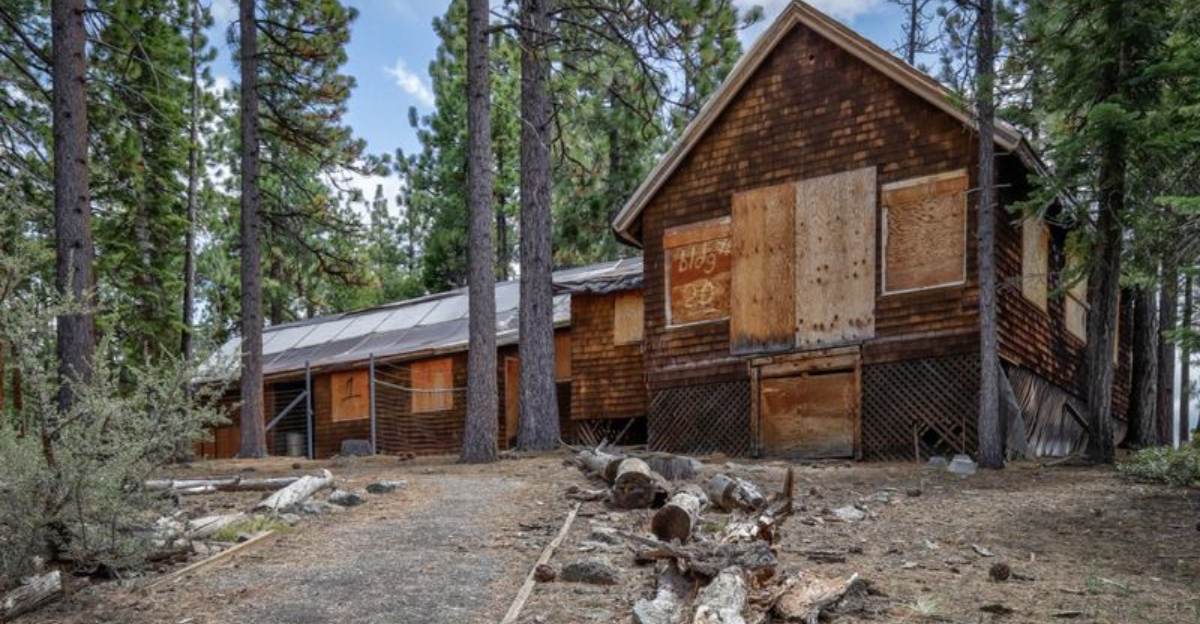
On a pine-covered slope above Zephyr Cove on Lake Tahoe’s Nevada side, the old hillside lodging cabins of a once-active resort now sit in patient stillness while the beach below remains lively.
The hill feels bright at noon and strangely hollow by late afternoon, when the light slants and the windows seem to watch back.
Walk with me up the rise, and let the shadows guide a careful tour of a place that once echoed with laughter and now whispers only to the wind.
A grand lakeside vision turned quiet ruin
Round Hill Pines Resort once was a modest hillside retreat now survives only as memory. Cabins stepped up the slope above Zephyr Cove, offering views through tall Jeffrey pines and a quiet lakefront. The mood was modest and neighborly, with cabins tucked along the incline rather than sprawled across the shore.
Built in the 1920s and expanded mid-century, the hillside lodging reached its peak then closed around 1969 due to infrastructure costs.
Operations paused when infrastructure demands outgrew the site’s aging systems. Upgrades were needed and never arrived, and the cabins fell silent. Today the resort survives as a memory on the hill, a place where paths still lead somewhere, yet nowhere at all.
The narrative is Nevada specific, a counterpoint to the state’s louder attractions. What remains invites a slower gaze, not a show. The rise above the bay holds still, leaving visitors to read the grain of wood and the ways weather writes its own ending.
While the beachfront side of the resort continues operation as a day-use beach/resort facility, the cabin hilltop zone has not been restored and remains boarded up.
The hillside setting under pines and silence
The hill climbs gently from the lakeshore, then suddenly feels steep. Cabins once perched here, angled for glimpses of blue water through Jeffrey pines. The incline still shapes the experience, each step changing the sound of wind and the smell of sap.
Now many structures sit boarded or fallen, edges softened by needles and snowmelt. The approach grows quiet as you rise, like a volume knob turning down the lake’s bustle. At the top, the feeling becomes private, as if the slope curated a small museum of hush.
Nevada’s mountain forest gives more than scenery, it gives presence. The hillside holds a watchful air, neither threatening nor welcoming. It waits, and the silence lets small details surface, from rusted hinges to the pattern of pine shadows drifting across old stoops.
Architecture fading into the forest
A lodge once anchored the hill, with cabins and service buildings scattered like satellites. Timber walls, stone chimneys, and simple rooflines matched the terrain rather than competing with it. Nothing flashy, just honest materials placed with practical intent.
Decades of snow and sun have blurred the lines. Roofs sag, porches tilt, and lichen brushes the grain with pale green. The forest has begun to edit the site, softening corners, reclaiming gaps with seedlings and duff.
Look closely at the joinery and you can still read the craft. A lintel cut for weight, a stair tread worn to a curve, a chimney that refuses to topple. In Nevada’s alpine light, these fragments tell a lesson about time, upkeep, and the patience of wood in cold air.
“Shadows linger” the feeling of abandonment
Evening arrives and the place changes character. Light slips through broken panes, pulling long patterns across empty floors. Doorways become thresholds to nothing, framing trees instead of guests.
People who wander here talk about still standing stone ovens and chimneys that feel ceremonial. They are anchors in a drifting scene, heavy markers as the rest thins into brush and air. The mood is less spooky than reflective, a quiet theater where the sun directs one last act.
Nevada’s high country dusk adds a cool tint, turning wood to silver and pine to shadow. For a moment the cabins seem to breathe, then the temperature drops and silence settles. That is when the phrase makes sense. Shadows really do linger too long.
Access and visibility above a living shoreline
Down at the water, the beachfront hums with visitors and seasonal activity. Up the hill, the older cabin zone stays quiet, screened by trees and distance. The split feels surreal, one property with two tempos.
Some paths are maintained for public use, others lead into areas that remain off limits. Signs matter here, as do fences and locked doors. Respecting boundaries protects both the site and the steep, fragile ground.
From certain bends you can glimpse the lake, alive with motion, while the cabins remain still. That contrast defines the experience in Nevada’s Tahoe basin. It is a study in visibility, where the present shines and the past chooses shade.
Access may be limited; check for closures or signs as some of the land is under Forest Service permit or private ownership.
Nature reclaiming the resort steadily
Weather writes the longest chapter here. Snow loads strain beams, spring melt seeps into joints, and summer heat pries boards apart. Pine needles pile in corners and begin the slow work of soil.
Tarps cover a few roofs, fluttering like tired flags. Trees poke through floors where gaps widened one season too many. Some cabins have folded completely, leaving only outlines and hardware scattered in the duff.
Nevada’s mountain storms arrive quickly, then pass just as fast, but their signatures remain. You can see the cycles in warped doorframes and spalled stone. Nature, rarely in a hurry, keeps impeccable records.
The slope hints at past eras: timber work, leisure retreats, and subtle human marks that survive in cabin pads, cut stumps, and terraces. The land saw farming, then timber, then leisure, each era leaving a mark. Faint terracing, cut stumps, and the grid of cabin pads map those shifts.
Artifacts surface in small ways. A length of pipe, an iron latch, a foundation stone that feels too square for geology. Each piece nudges the story forward without shouting.
In Nevada, history often hides in plain sight, especially where recreation meets resource pasts. Listening means slowing down and letting the site speak in fragments. The hill tells a long tale, and the quiet helps you hear it.
Why the ghost hillside motif resonates
The lakefront thrives with voices, music, and easy movement. Above it, the cabins refuse to perform, choosing stillness instead. That tension creates a powerful frame for reflection.
Because the structures remain on the hill, absence becomes visible. You can point to it, walk around it, see how rooms once held warmth. The metaphor is literal here, a shadowed resort beside a lively one.
Nevada’s broader story includes boom and pause, flash and fade. This slope captures that rhythm without sentimentality. It asks nothing, it simply shows what is left when the season ends for good.
The cabins are fragile, and the hillside is unforgiving. Wood can break underfoot, nails sit half buried, and loose stones shift without warning. Safety starts with staying on signed routes and keeping distance from unstable walls.
Access may change with seasons or management decisions. Always check current guidance before walking uphill, and obey closures. Treat the area as a historic ruin, not an obstacle course.
Nevada’s outdoor ethics apply here. Leave what you find, pack out what you bring, and let the quiet remain quiet. The best souvenir is a careful memory and a photograph that honor.
Dear Reader: This page may contain affiliate links which may earn a commission if you click through and make a purchase. Our independent journalism is not influenced by any advertiser or commercial initiative unless it is clearly marked as sponsored content. As travel products change, please be sure to reconfirm all details and stay up to date with current events to ensure a safe and successful trip.
