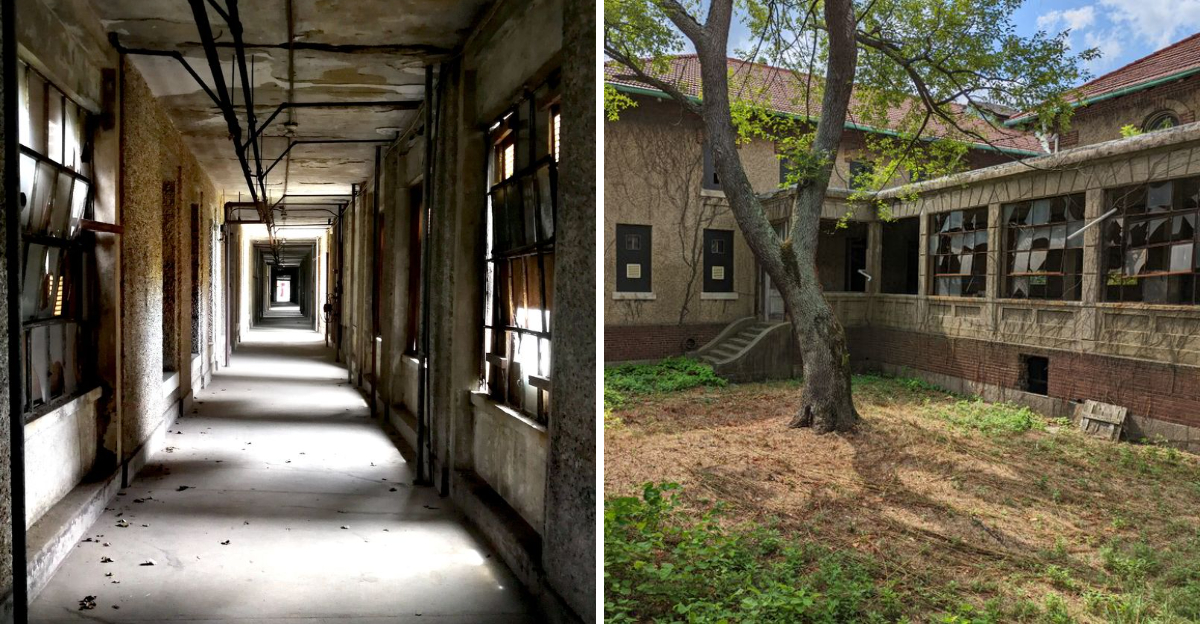
Ellis Island holds a special place in American history as the gateway through which millions of immigrants passed between 1892 and 1954.
Most people know about the grand immigration museum on the north side of the island, but few are aware of the abandoned hospital complex that sits crumbling on the southern shore.
This sprawling medical facility once treated thousands of sick immigrants, but today it stands silent and decaying, accessible only through special hard hat tours that reveal its haunting past.
The Ellis Island Immigrant Hospital in New Jersey waters served as both a place of hope and despair for newcomers to America.
While some patients recovered and continued their journey to a new life, others never left the island, succumbing to diseases like tuberculosis, typhoid, and scarlet fever within its walls.
The complex included 22 buildings spread across the southern portion of Ellis Island, making it one of the largest public health facilities of its time.
Walking through the abandoned wards feels like stepping into a time capsule where medical equipment still sits gathering dust and patient records lie scattered across rotting floors.
Ever wondered what it would be like to explore a place where the walls literally whisper stories of the past?
Curious about the secret tunnels that connected the contagious disease wards?
Buckle up, because this journey through one of New Jersey’s most haunted locations is about to get seriously spooky!
A Medical Complex Frozen in Time Since 1954
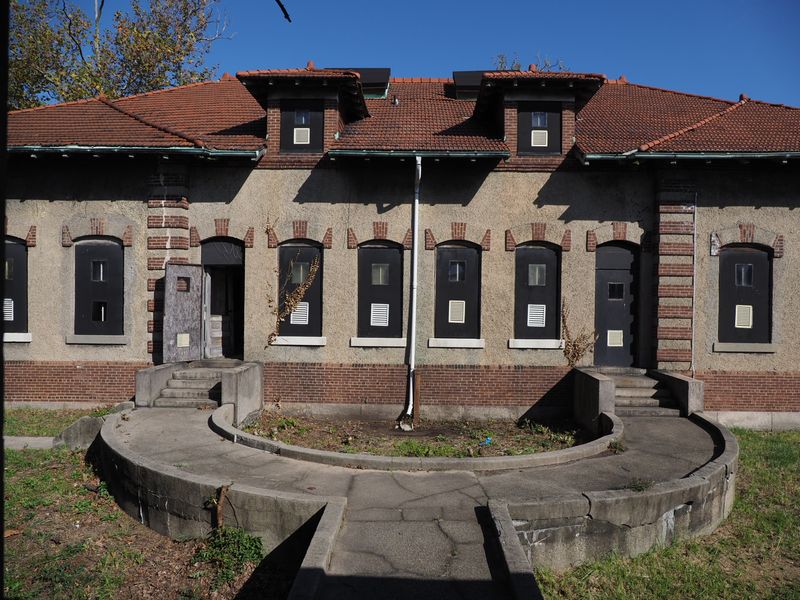
Picture walking into a hospital where doctors and nurses simply locked the doors one day and never came back.
That’s exactly what happened when Ellis Island Immigrant Hospital closed its doors in 1954 after six decades of operation.
The facility was abandoned so abruptly that medical instruments, patient beds, and even personal belongings were left behind to decay with the buildings.
Nature has slowly reclaimed the 22-structure complex, with trees growing through floors and vines creeping through broken windows.
The hospital complex sits on the southern portion of Ellis Island, technically in New Jersey waters despite the island’s association with New York.
Unlike the restored immigration museum on the north side, these buildings have remained largely untouched since closure.
Peeling paint reveals layer upon layer of institutional colors, while rusted bed frames stand as silent witnesses to decades of medical history.
What makes this abandonment particularly eerie is how much evidence of daily life remains visible throughout the structures.
Pharmacy bottles still line shelves in the dispensary, surgical tools rest in examination rooms, and patient charts lie scattered across floors damaged by decades of water infiltration.
The Save Ellis Island Foundation has worked since 1999 to stabilize the buildings and offer hard hat tours, but much of the complex remains in its original deteriorated state.
Visitors on guided tours often report an overwhelming sense of sadness and unease while walking through the corridors.
The combination of medical equipment, personal effects, and stories of suffering creates an atmosphere that feels heavy with the past, making it understandable why few people want to explore these buildings alone.
The Contagious Disease Wards That Isolated the Sick
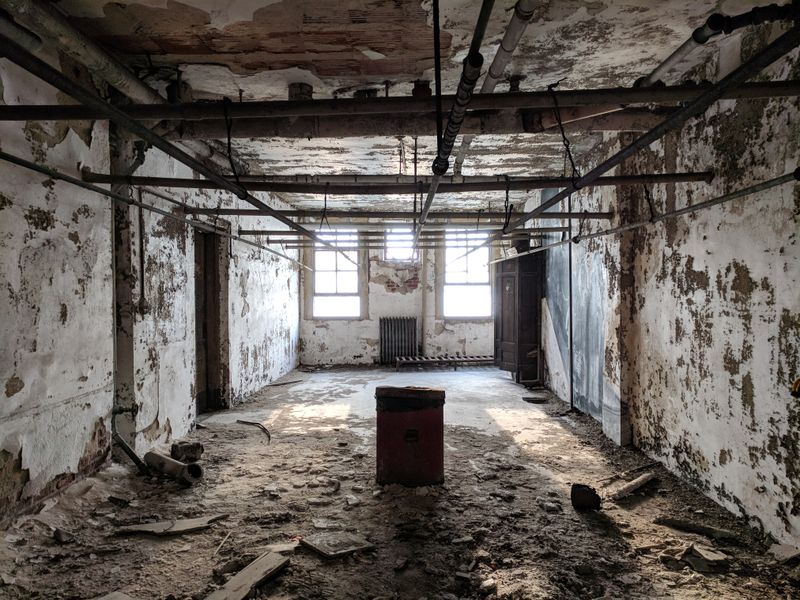
Among the most unsettling sections of the hospital complex are the contagious disease wards, where immigrants diagnosed with highly infectious illnesses were quarantined away from the general population.
These specialized buildings housed patients suffering from tuberculosis, diphtheria, scarlet fever, measles, and other deadly diseases that could spread rapidly in the crowded conditions of early 20th-century immigration.
Families were often separated at this point, with healthy members sent to New York while their sick relatives remained behind on the island.
The architecture of these wards reflects the medical understanding of disease transmission during that era.
Large windows allowed for maximum sunlight and fresh air, which doctors believed helped combat infection.
Wide hallways enabled staff to move patients efficiently while minimizing contact between different disease groups.
Each ward was designed with separate entrances and exits to prevent cross-contamination between various contagious conditions.
Today, these buildings stand as particularly haunting reminders of isolation and fear.
Imagine being separated from your family in a strange country, unable to speak the language, confined to a hospital bed with an uncertain future.
The emotional weight of those experiences seems to linger in the empty rooms and echoing hallways.
Tour guides report that visitors frequently experience unexplained cold spots and feelings of being watched while exploring these specific structures.
The contagious disease wards also contained autopsy rooms and a morgue, as not all patients survived their illnesses.
These spaces add another layer of darkness to an already somber environment, contributing to the hospital’s reputation as one of the most haunted locations in New Jersey.
The Psychopathic Pavilion and Mental Health Treatment
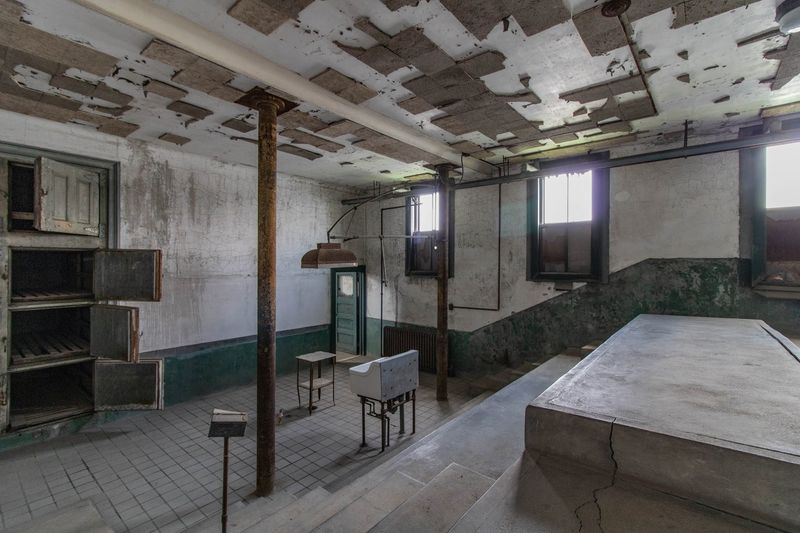
Built in 1906, the Psychopathic Pavilion represents one of the most controversial and disturbing aspects of Ellis Island’s medical history.
This specialized facility housed immigrants deemed mentally unfit for entry into the United States, a diagnosis that was often subjective and culturally biased.
Mental health treatment during this period was primitive by modern standards, and the stigma surrounding mental illness meant that placement in this building could end an immigrant’s American dream before it even began.
The criteria for mental unfitness were shockingly broad and often reflected the prejudices of the time rather than actual medical conditions.
Immigrants who appeared confused, disoriented, or unable to answer questions satisfactorily might be labeled as mentally deficient.
Language barriers frequently led to misdiagnosis, as translators were not always available and cultural differences in behavior were misunderstood.
Women traveling alone were particularly vulnerable to being classified as morally or mentally suspect.
Walking through the Psychopathic Pavilion today feels especially oppressive, as visitors contemplate the lives forever altered within its walls.
The building features small examination rooms, isolation cells, and observation areas where staff monitored patient behavior.
Unlike other hospital buildings, this structure has an institutional feel that seems more prison-like than medical, reflecting the era’s approach to mental health care.
Many tour participants report this building as the most uncomfortable to explore, with some refusing to enter certain rooms due to overwhelming negative feelings.
Whether these sensations stem from the building’s dark history or something more paranormal remains debatable, but the Psychopathic Pavilion consistently ranks as the most unsettling structure in the entire hospital complex.
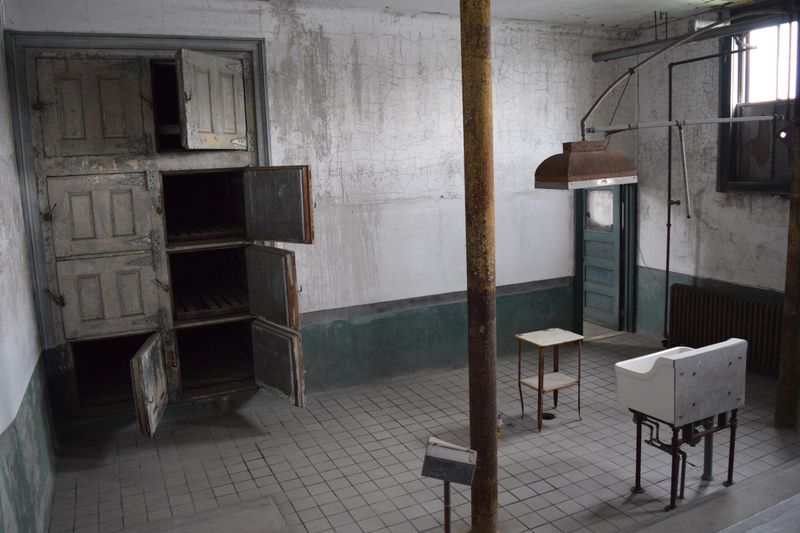
The Morgue and Autopsy Rooms Where Hope Ended
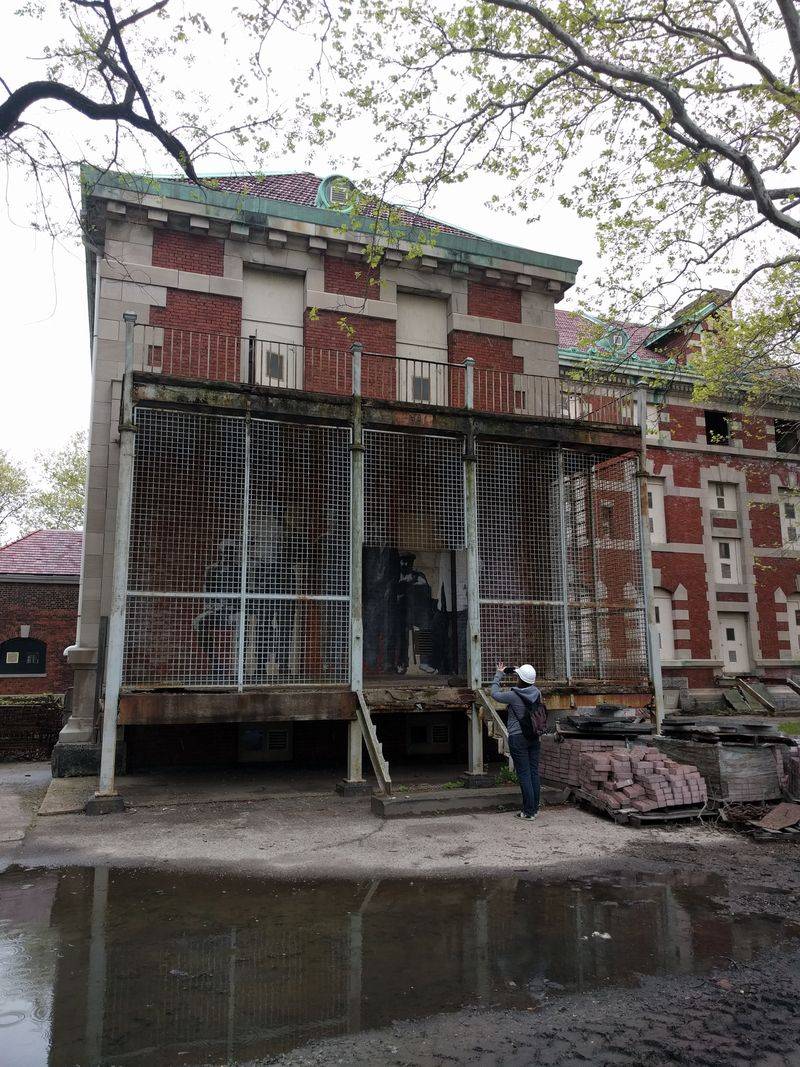
Not every immigrant story ended with the triumphant entry into America, and the hospital morgue stands as a sobering reminder of those who never completed their journey.
Located in the basement level of one of the hospital buildings, the morgue and autopsy facilities processed the bodies of immigrants who died from disease, complications during treatment, or occasionally suicide.
Exact numbers are difficult to confirm, but estimates suggest that around 3,500 people died on Ellis Island during its years of operation.
The autopsy rooms served multiple purposes beyond determining cause of death.
Medical staff studied disease progression to better understand how to treat future patients, and autopsies were sometimes required before bodies could be released to families.
The rooms contained examination tables, surgical instruments, and specimen storage areas that remain visible today in various states of decay.
Ceramic tile walls, chosen for easy cleaning and sanitation, now display cracks and water damage from decades of neglect.
Visitors to this area often describe it as the most emotionally difficult part of the tour.
The clinical coldness of the morgue contrasts sharply with the human tragedy it represents, creating a profound sense of loss and sadness.
Many immigrants who died on the island were buried in local cemeteries, often in unmarked graves, their dreams of a new life ending just miles from their destination.
Paranormal investigators have focused particular attention on the morgue area, reporting unusual electromagnetic readings, unexplained shadows, and electronic voice phenomena.
Whether these occurrences have supernatural origins or result from the power of suggestion in such a historically tragic location, the morgue remains one of the most avoided areas during tours.
The Infectious Disease Laboratory and Research Facilities
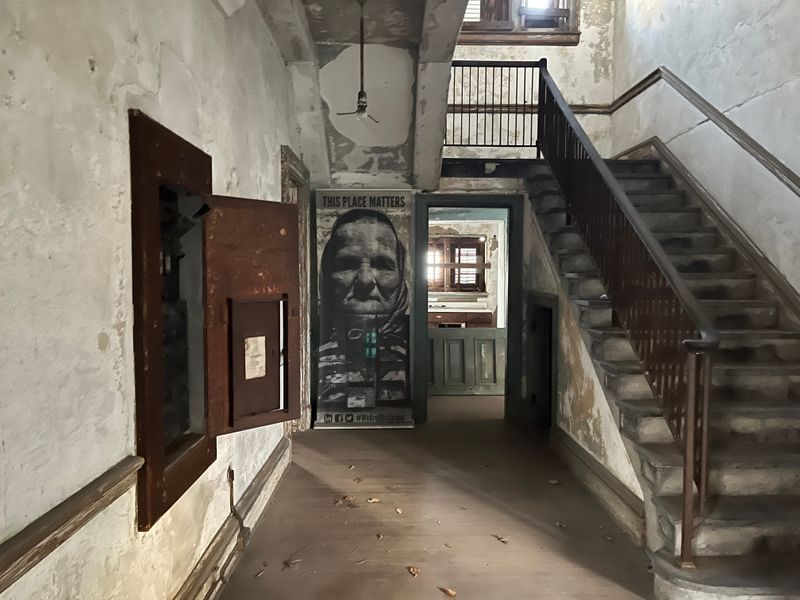
Hidden within the hospital complex was a sophisticated laboratory where medical staff analyzed samples, conducted research, and worked to identify the various diseases affecting immigrant populations.
This facility represented cutting-edge medical science for its time, equipped with microscopes, testing equipment, and specimen storage that enabled doctors to make accurate diagnoses.
The laboratory played a crucial role in preventing disease outbreaks from spreading to the mainland United States, serving as a critical line of defense for public health.
Scientists working in these labs studied everything from bacterial infections to parasitic diseases brought from countries around the world.
Their research contributed to the broader medical understanding of infectious diseases and treatment protocols.
Glass specimen jars, chemical bottles, and scientific instruments still remain in various locations throughout the laboratory spaces, creating an eerie time capsule of early 20th-century medical practice.
The laboratory areas showcase the dual nature of Ellis Island’s mission: welcoming immigrants while simultaneously protecting American citizens from disease.
Medical staff worked under tremendous pressure, processing thousands of patients while conducting research and maintaining detailed records.
The abandoned laboratories now display the remnants of this intense activity, with paperwork, slides, and equipment scattered throughout the deteriorating rooms.
Exploring these scientific spaces provides insight into the medical challenges of the immigration era.
Diseases that are now easily treatable or preventable through vaccination were deadly threats in the early 1900s.
The laboratory equipment, though primitive by today’s standards, represented the best available technology and the dedicated efforts of medical professionals working to save lives while managing an overwhelming patient load in New Jersey’s most historically significant medical facility.
The Laundry and Kitchen Buildings That Served Thousands
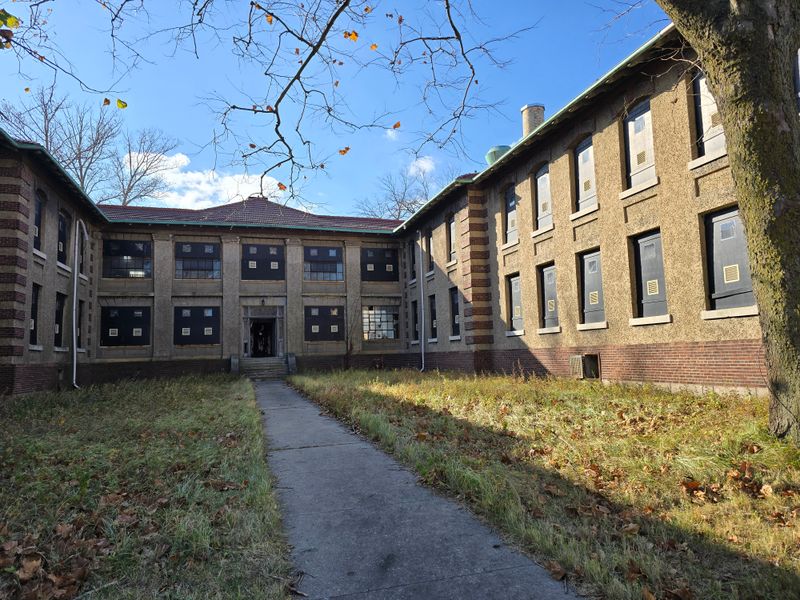
Supporting the medical operations were massive laundry and kitchen facilities designed to serve thousands of patients and staff members daily.
The laundry building processed an enormous volume of linens, hospital gowns, and bedding that required constant washing to maintain sanitary conditions and prevent disease spread.
Industrial-sized washing machines, drying equipment, and pressing stations filled the space, operated by workers who labored in hot, humid conditions to keep the hospital functioning.
Adjacent to the laundry stood the kitchen complex, where cooks prepared meals adapted to accommodate the diverse dietary needs and cultural preferences of patients from around the world.
The facility included massive ovens, industrial refrigeration units, and food preparation areas capable of producing thousands of meals per day.
Feeding such a varied population presented unique challenges, as staff attempted to provide familiar foods to patients already stressed by illness and separation from their families.
These utilitarian buildings might seem less dramatic than the medical wards, but they reveal important details about daily life in the hospital complex.
The scale of operations required to maintain the facility becomes apparent when viewing the enormous equipment and workspace.
Rusted machinery, collapsed ceilings, and vegetation growing through floors now dominate these structures, transforming once-bustling work areas into ghostly industrial ruins.
Workers in these buildings had their own stories and experiences, spending long hours in demanding physical labor to support the hospital’s mission.
The laundry and kitchen staff were essential to operations but often overlooked in historical accounts.
Today, these buildings stand as monuments to the countless support workers whose efforts enabled medical staff to focus on patient care in one of New Jersey’s most important historical facilities.
The Children’s Ward and Pediatric Care Facilities
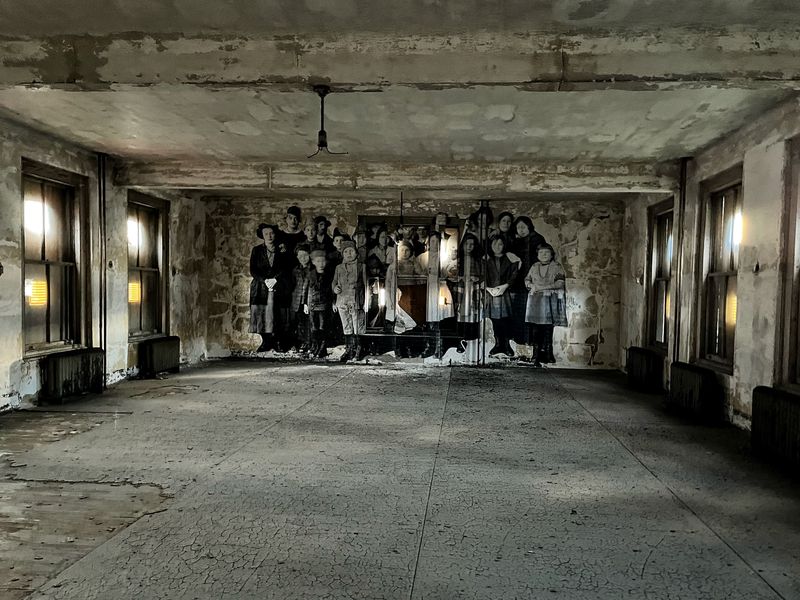
Perhaps the most heartbreaking section of the hospital was the children’s ward, where young patients received treatment separated from their parents who were either detained elsewhere on the island or had already been sent to the mainland.
Children suffering from measles, scarlet fever, whooping cough, and other childhood diseases filled these wards, often confused and frightened by their circumstances.
Medical staff faced the challenge of providing care while managing the emotional trauma these young patients experienced.
The pediatric facilities were designed with children in mind, featuring smaller beds, play areas, and attempts at creating a less intimidating environment than the adult wards.
Despite these efforts, the reality of sick children isolated from their families in a strange country remains one of the most tragic aspects of Ellis Island’s history.
Some children spent weeks or months in these wards, while others never recovered, dying far from home with only hospital staff present.
Tour guides often note that the children’s ward provokes the strongest emotional reactions from visitors.
The sight of small beds, abandoned toys, and child-sized medical equipment creates a powerful connection to the human cost of immigration.
Parents touring this area frequently express how difficult it would be to face similar circumstances with their own children, bringing the historical experience into sharp personal focus.
Reports of paranormal activity in the children’s ward include the sounds of crying, laughter, and footsteps when no one is present.
Some visitors claim to feel small hands touching them or sense the presence of children in empty rooms.
Whether these experiences reflect actual supernatural phenomena or the powerful emotional impact of the location’s history, the children’s ward consistently affects people differently than other areas of the New Jersey hospital complex.
The Staff Housing and Administrative Buildings
Medical staff, nurses, administrators, and support workers who operated the hospital complex needed housing, and several buildings on the island served this purpose.
These residential structures provided living quarters for personnel who often worked long shifts managing the constant flow of patients.
Staff housing ranged from private rooms for doctors and administrators to dormitory-style accommodations for nurses and junior staff members.
Living on the island meant being constantly available for medical emergencies and the unpredictable arrival of ships carrying sick immigrants.
The administrative buildings contained offices where staff maintained patient records, processed paperwork, and coordinated with immigration officials regarding patient status.
These spaces were the bureaucratic heart of the operation, where decisions about deportation or admission were documented and communicated.
Filing cabinets still filled with deteriorating paperwork, desks covered in debris, and typewriters frozen in time create an atmosphere of sudden abandonment throughout these structures.
Exploring the staff areas provides a different perspective on the hospital experience, revealing the human side of those who worked there.
Personal items occasionally discovered during tours remind visitors that doctors, nurses, and administrators had their own lives, relationships, and experiences while serving at this isolated facility.
The stress of working with contagious diseases, witnessing suffering, and making life-altering decisions about immigrant fates must have taken a significant toll on staff members.
These buildings are less frequently discussed than the medical wards but offer valuable insights into the complete Ellis Island experience.
The combination of living quarters and administrative spaces creates a fuller picture of the self-contained community that existed on the island, where hundreds of people worked and lived to process the massive wave of immigration that defined an era in American history.
The Underground Tunnels Connecting the Complex
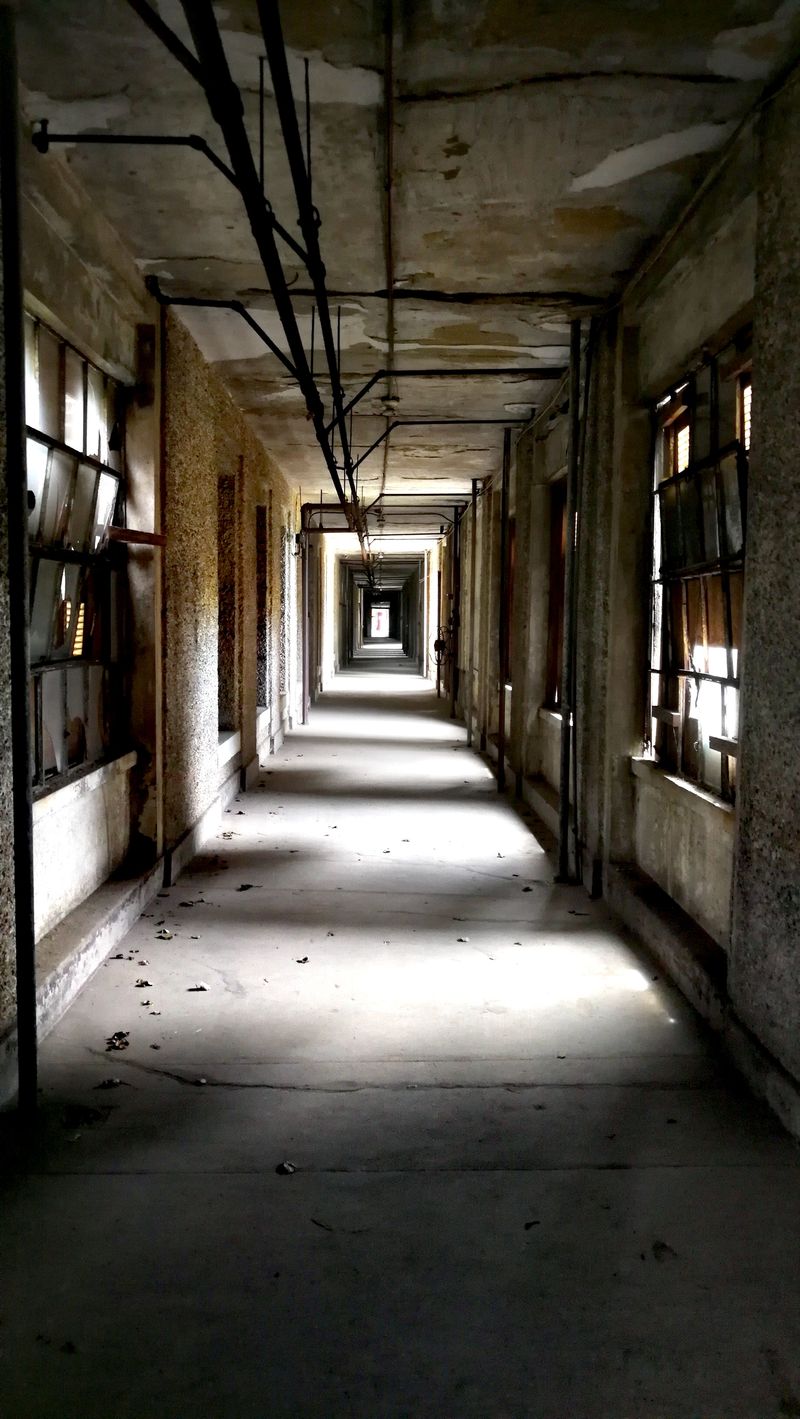
Beneath the visible buildings of Ellis Island Immigrant Hospital runs a network of underground tunnels that connected various structures throughout the complex.
These passages served multiple practical purposes, allowing staff to move between buildings during harsh weather, transporting supplies without disrupting patient areas, and providing discrete routes for moving deceased patients to the morgue.
The tunnel system also housed utility lines, steam heating pipes, and infrastructure essential to operating such a large medical facility.
Walking through these underground passages today is an experience few forget, as the tunnels represent the most claustrophobic and unsettling part of the hard hat tours.
Crumbling brick walls, low ceilings, standing water, and complete darkness in some sections create an atmosphere of genuine danger and discomfort.
The tunnels are not accessible on all tours due to safety concerns, making them a rare glimpse into the hidden infrastructure of the hospital complex.
The practical purpose of these tunnels contrasts with their current reputation as the most haunted areas of the entire island.
Tour guides and visitors report strange sounds, unexplained cold spots, and overwhelming feelings of dread when traversing certain tunnel sections.
The combination of historical function and current decay creates an environment that feels genuinely threatening, whether from structural instability or something less tangible.
Understanding the tunnel system helps visitors appreciate the sophisticated planning behind the hospital complex.
The facility was designed as an integrated operation where different functions connected both above and below ground.
These hidden passages represent the invisible infrastructure that supported the visible medical mission, much like the countless unnamed workers whose efforts kept the hospital functioning during its decades of operation in New Jersey waters.
The Restoration Efforts and Hard Hat Tours Today
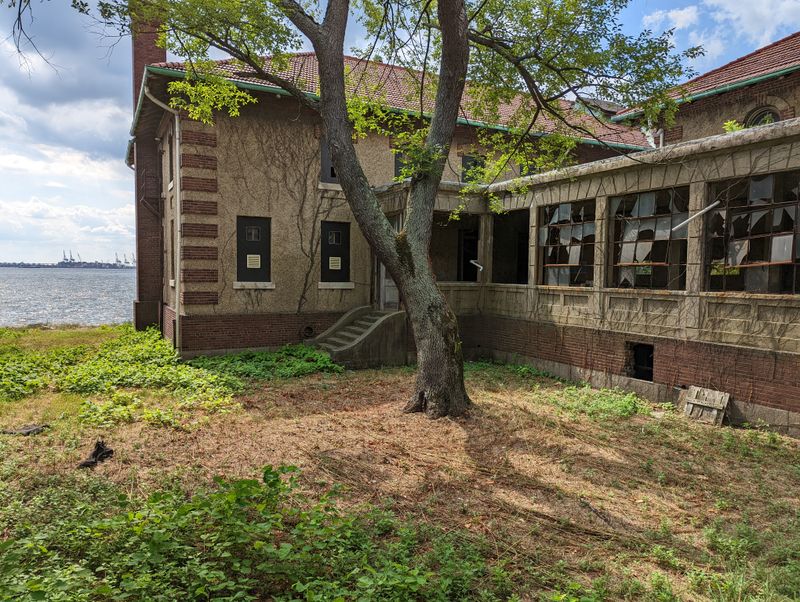
Since 1999, the Save Ellis Island Foundation has worked tirelessly to stabilize the deteriorating hospital buildings and make them accessible to the public through specialized hard hat tours.
These guided experiences allow visitors to explore areas that would otherwise remain closed due to safety hazards, providing a rare opportunity to witness historical preservation in progress.
Tour participants must wear protective equipment and follow strict safety protocols while navigating unstable floors, exposed structural elements, and areas where nature has aggressively reclaimed the buildings.
The restoration philosophy focuses on stabilization rather than full renovation, preserving the buildings in their current state of decay while preventing further deterioration.
This approach maintains the authentic atmosphere of abandonment while ensuring structures remain safe enough for limited public access.
The foundation has documented the complex extensively through photography and historical research, creating a comprehensive record of the hospital’s history and current condition.
Hard hat tours operate seasonally and require advance reservations, as group sizes are limited to ensure safety and preserve the fragile structures.
Guides provide historical context while leading visitors through the contagious disease wards, staff housing, and other significant areas.
The tours last approximately 90 minutes and are physically demanding, requiring participants to climb stairs, walk on uneven surfaces, and navigate spaces where traditional safety features no longer exist.
These restoration and tour efforts ensure that Ellis Island Immigrant Hospital’s story continues to reach new generations.
The hospital complex represents a crucial but often overlooked chapter in American immigration history, and the foundation’s work preserves this legacy for future study and reflection.
Visitors leave with a deeper understanding of the immigrant experience and the complex medical and social challenges that defined this era in New Jersey and American history.
Dear Reader: This page may contain affiliate links which may earn a commission if you click through and make a purchase. Our independent journalism is not influenced by any advertiser or commercial initiative unless it is clearly marked as sponsored content. As travel products change, please be sure to reconfirm all details and stay up to date with current events to ensure a safe and successful trip.
