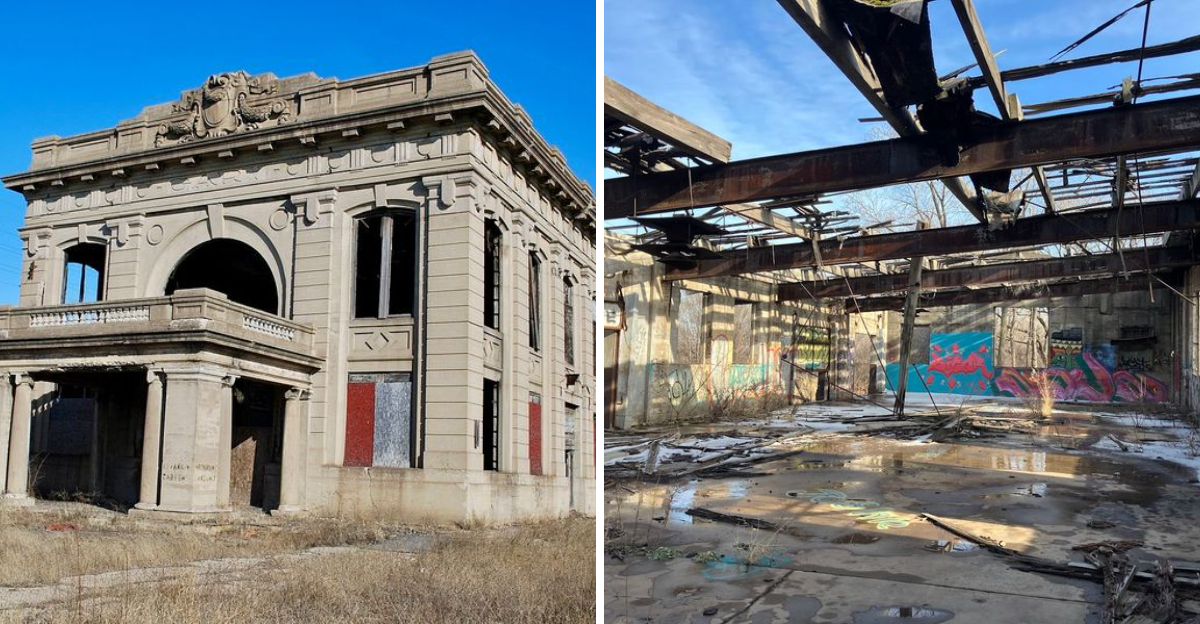
This early 20th-century transportation hub in Gary, Indiana once moved thousands of steel workers, travelers, and mail through Northwest Indiana during the height of the city’s industrial boom.
Today, its weathered concrete structure, broken skylights, and vast empty halls reflect a quieter chapter of that history.
What makes it especially compelling is that it is not just a forgotten relic, but a landmark with ongoing preservation interest and a story that continues to evolve.
For anyone interested in historic architecture or the legacy of America’s industrial cities, it remains one of the most striking and thought-provoking sites in the region.
The Apocalyptic Aesthetic That Actually Belongs in a Film
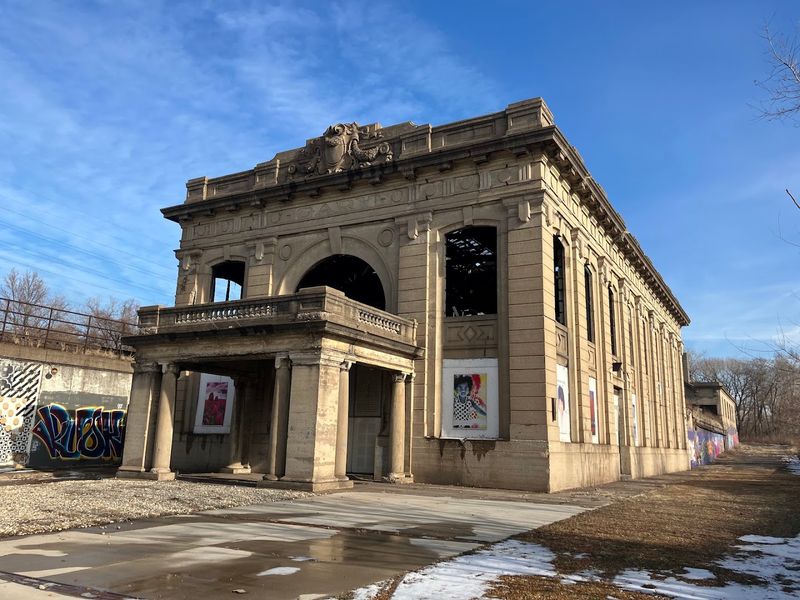
Very few abandoned buildings in the United States carry the kind of visual drama that Gary Union Station delivers without trying.
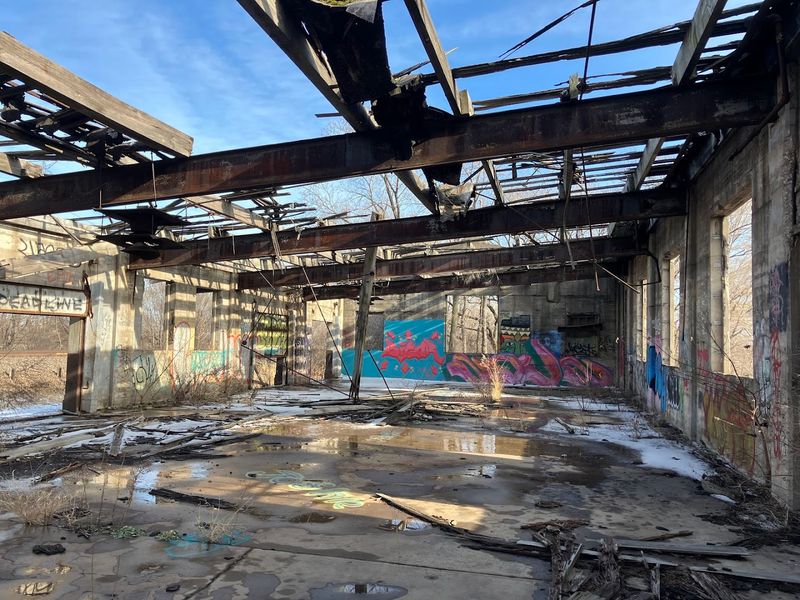
The two-story main hall features broken windows, missing skylights, and crumbling concrete surfaces that together create an atmosphere most filmmakers would spend millions to recreate on a soundstage.
Natural light cuts through the gaps in the structure at odd angles, casting long shadows across the rubble-strewn floor below.
That raw, unfiltered decay is exactly what draws photographers, urban explorers, and curious visitors from across Indiana and beyond. There is something genuinely striking about standing inside a space where nature and neglect have worked together for over fifty years.
The peeling plaster, the exposed rebar, and the rusted metal frames all tell a story that no museum exhibit could fully capture.
The building does not just look abandoned. It looks like a world that moved on without it, which is part of what makes it so magnetic.
Gary Union Station was actually used as a filming location for the 1951 film Appointment with Danger and the 1996 film Original Gangstas. It was also featured on the television series Life After People as a prime example of urban decay.
Visiting in person gives you a perspective that no screen can replicate. The scale, the silence, and the texture of the place are experiences that linger long after you leave.
The Real History of a Steel City’s Beating Heart
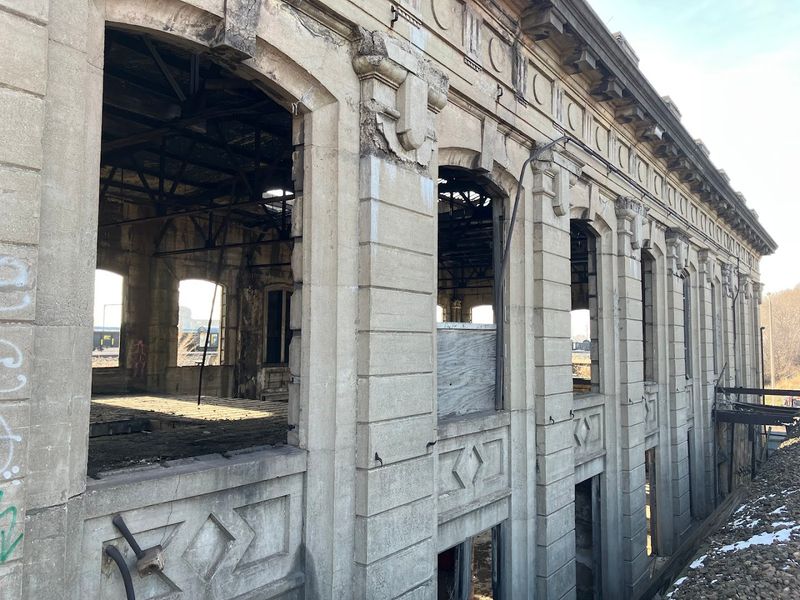
Gary Union Station was not just a place to catch a train. It was the front door of an entire industrial city.
When U.S. Steel founded Gary, Indiana in 1906, it needed a way to move thousands of workers, tons of coal, iron ore, and U.S. mail in and out of the region efficiently.
The station became that engine, processing a constant flow of people and goods that kept the steel mills running around the clock.
During the Great Migration of the early twentieth century, the station served as a point of arrival for many African American families moving north from the South in search of industrial work and better opportunities.
That human dimension adds a layer of meaning to the building that goes well beyond architecture or engineering.
The walls of Gary Union Station absorbed the hopes and exhaustion of generations of working people.
By the early 1970s, declining rail travel and the economic struggles of Gary led to the station’s closure and eventual abandonment. But the history it holds did not disappear with the last train.
In 2019, Gary Union Station was added to the National Register of Historic Places, a recognition of its significance to American industrial and social history. Visiting the station today means standing inside a place that shaped the lives of real families and real communities.
That kind of connection to the past is not something you find at every landmark.
Urban Photography That Practically Frames Itself
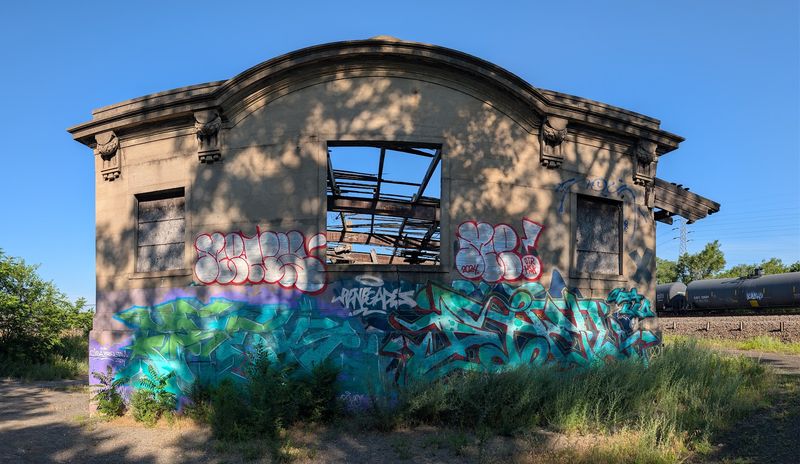
Few locations in the Midwest offer the kind of photographic opportunities that Gary Union Station provides completely free of charge. The combination of Beaux-Arts architectural details, massive scale, and decades of decay creates a visual environment that is almost impossible to photograph badly.
Light behaves differently inside a space like this, bending through broken windows and open roof sections in ways that change dramatically depending on the time of day and season.
Photographers who visit in the morning often find that the low-angle sunlight cuts directly through the eastern windows, creating long beams that illuminate dust particles and crumbling surfaces in stunning detail.
Afternoon visits tend to produce softer, more diffused light that brings out the texture of the concrete and the rich tones of rust and weathering.
Every visit produces a different set of images, which is part of why so many photographers return multiple times.
The station has become something of a landmark in the urban exploration and photography communities across Indiana and the broader Midwest. Images taken here have circulated widely on social media and photography platforms, drawing new visitors who want to see the location for themselves.
If you are serious about architectural or documentary photography, this place belongs on your shot list. The address is 251 Broadway, Gary, IN 46402, and the site is listed as open around the clock, though visiting during daylight hours will give you the best natural light for photography.
A Concrete Marvel That Was Ahead of Its Time
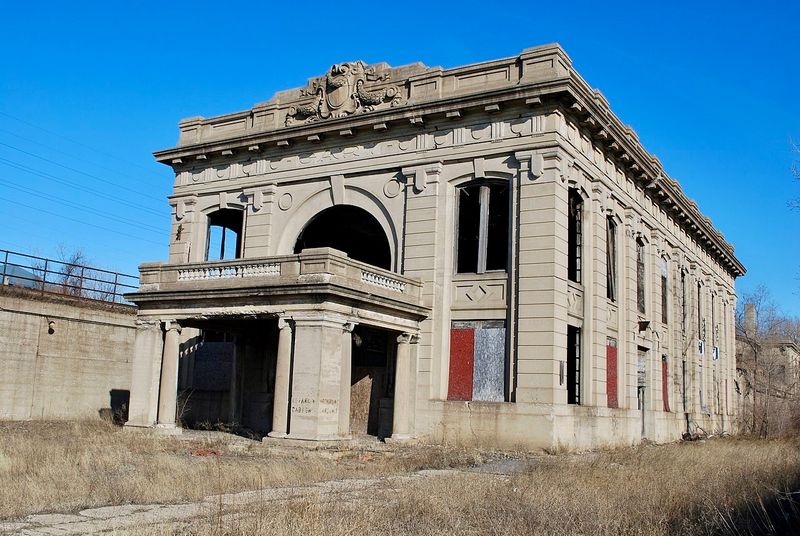
When Gary Union Station was built in 1910, concrete construction of this scale was still considered bold and experimental. Architect M.A.
Lang designed the building in the Beaux-Arts style and used cast-in-place, steel-reinforced concrete throughout.
That choice turned out to be remarkably forward-thinking because it is precisely why the building is still standing today, more than a century later, despite decades of abandonment and zero maintenance.
Most abandoned wood-frame or brick structures from that era have long since collapsed or been demolished. Gary Union Station defied that fate because of the strength baked into its original design.
The reinforced concrete walls have resisted the kind of structural failure that would have claimed a lesser building generations ago. You can see the integrity of that construction even now, in the way the main walls hold their shape despite the chaos inside.
For anyone interested in architectural history or engineering, the station is a genuinely rare case study. It shows what was possible at the very start of the twentieth century when builders were still figuring out what reinforced concrete could do.
Gary, Indiana was itself a brand-new city in 1910, founded just four years earlier by U.S. Steel to support its massive industrial operations.
The station was built to match that ambition. Seeing it today, even in its weathered state, gives you a real sense of how seriously that founding generation took the idea of building something that would last.
Preservation in Action Thanks to the Decay Devils
Not every abandoned building has people fighting for it. Gary Union Station does.
In 2018, a nonprofit group called the Decay Devils, formed by urban explorers who had spent years documenting the building, acquired the property and began leading real preservation efforts.
Their work has included large-scale cleanup operations, mural installations that add color and life to the interior walls, and ongoing outreach to find funding and redevelopment partners.
What makes the Decay Devils story compelling is that it started with people who simply loved the building enough to do something about it. They were not developers or city officials.
They were photographers and urban exploration enthusiasts who recognized that Gary Union Station was worth saving and decided to take responsibility for making that happen. That grassroots energy is still visible in the work being done at the site today.
Visitors who come to the station now are stepping into an active preservation project, not just a passive ruin. The murals on the interior walls reflect that ongoing creative investment, and the cleaned pathways show that the space is being cared for with intention.
Future plans for the station are ambitious, including proposals for a tech innovation center called Fiber Smart House, a workforce training facility, an incubator space, and a public multi-use venue that could include a restaurant and an art gallery.
The vision is real, and the people behind it are committed to seeing it through.
A Potential Gateway to Indiana Dunes National Park
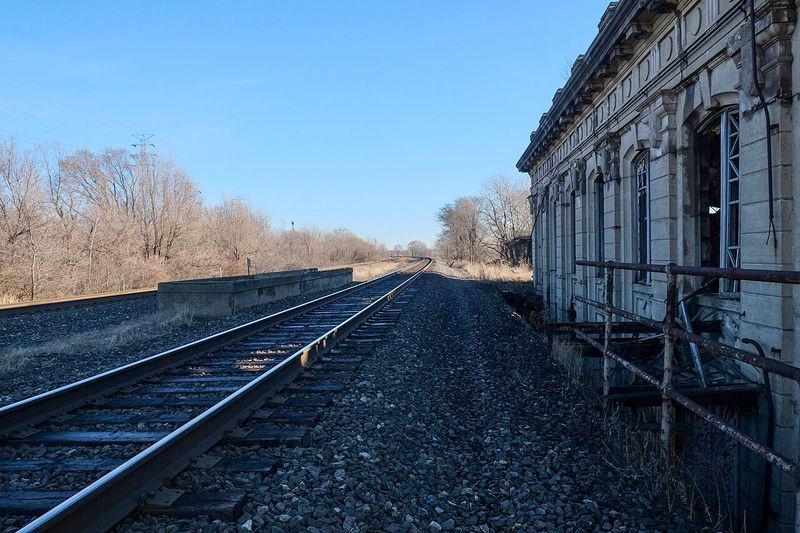
One of the most exciting possibilities tied to Gary Union Station is its potential role as a western gateway to Indiana Dunes National Park.
Future redevelopment plans have included proposals for a trail running directly through the station property, connecting the urban core of Gary to one of the most visited national parks in the country.
That kind of connection would transform the station from an isolated landmark into a genuine community asset.
Indiana Dunes National Park draws millions of visitors every year to its beaches, wetlands, and hiking trails along the southern shore of Lake Michigan.
Gary sits on the western edge of that park boundary, and a functioning gateway at Union Station could give both local residents and out-of-town visitors a meaningful starting point for exploring the dunes.
The idea of walking from a restored historic train depot out toward Lake Michigan is genuinely compelling.
Even without the trail fully in place, the proximity of Gary Union Station to Indiana Dunes National Park makes visiting both in the same trip a natural choice. The park’s Paul H.
Douglas Center for Environmental Education is located at 100 North Lake Street, Gary, IN 46403, and serves as an accessible entry point to the dunes experience.
Pairing a visit to the station with time spent at the national park gives you a full picture of what the Gary area has to offer, from industrial history to natural beauty, all within a short drive of each other.
Exploring Gary’s Broader Story Beyond the Station
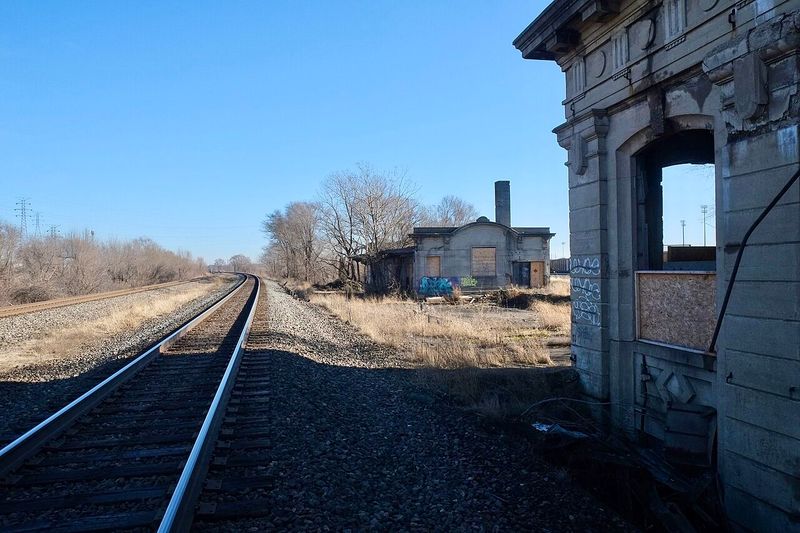
Gary Union Station does not exist in isolation. It is part of a larger urban story that unfolds across the city, and a visit to the station pairs naturally with exploring some of the other significant places nearby.
City Methodist Church, located at 577 Washington Street, Gary, IN 46402, is another stunning example of Gary’s architectural past, a massive Gothic Revival structure that has become one of the most photographed abandoned buildings in the Midwest.
For a change of pace after exploring decay and history, Marquette Park is worth the short drive. Located at 1 North Grand Boulevard, Gary, IN 46403, the park sits along the Lake Michigan shoreline and offers open green space, a historic pavilion, and easy access to the beach.
It is the kind of place where the industrial heaviness of the city gives way to something lighter and more open.
If you want to grab a meal while you are in the area, Gary has local options worth knowing about. Miller Beach area, which is part of Gary’s eastern side, has a small but genuine neighborhood feel with local eateries that serve the community year-round.
The broader Northwest Indiana region also offers easy access to towns like Chesterton and Portage, both within a reasonable drive. Visiting Gary Union Station as part of a full day in the region gives you a much richer sense of what Northwest Indiana actually looks and feels like beyond the headlines.
