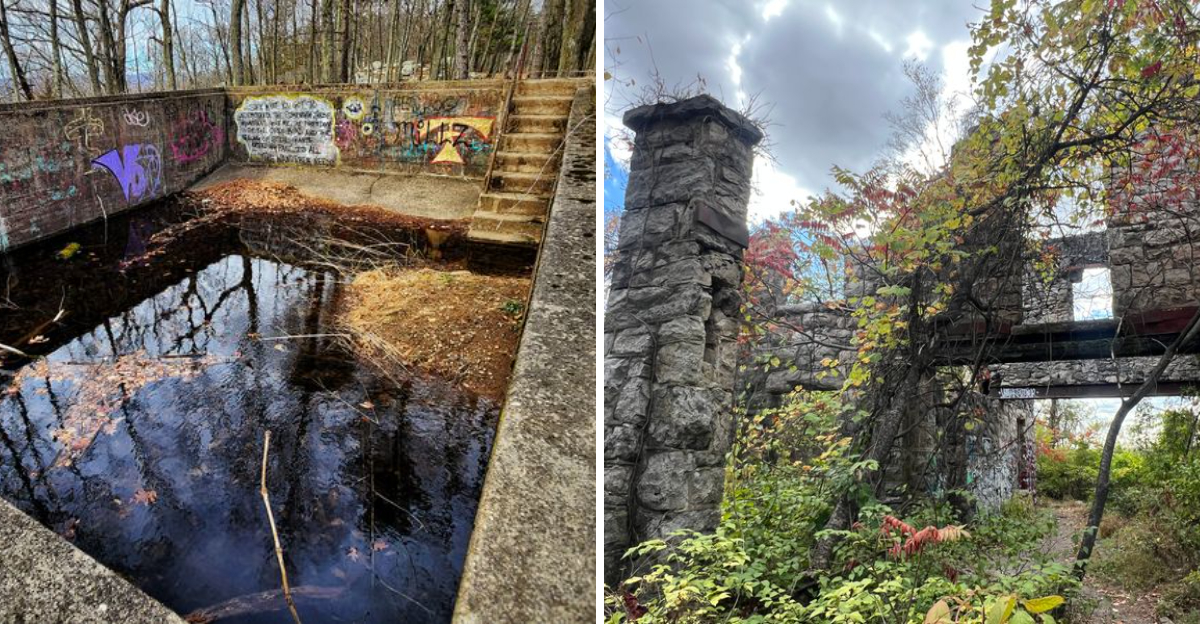
Deep in the wooded hills of northern New Jersey stands one of the state’s most mysterious landmarks. Van Slyke Castle isn’t your typical tourist attraction with guided tours and gift shops.
The stone ruins of this once-grand mansion now serve as a haunting reminder of a bygone era, hidden along rocky trails in the Ramapo Mountain Reservation near Wanaque.
Built over a century ago and later destroyed by fire, the castle has become a magnet for hikers, photographers, and curious adventurers who brave the challenging terrain to glimpse its crumbling walls.
What makes this place so irresistible is the perfect blend of natural beauty and eerie history. The journey to reach these ruins takes you through forests, past sparkling lakes, and over boulder-strewn paths that feel like stepping into another world.
Ever wondered what it’s like to discover a castle hidden in the Jersey wilderness? Ready to lace up your hiking boots and explore one of New Jersey’s most photogenic secrets?
Trust us, the views alone are worth every rocky scramble and steep climb!
The Castle’s Fascinating Origins and Early History
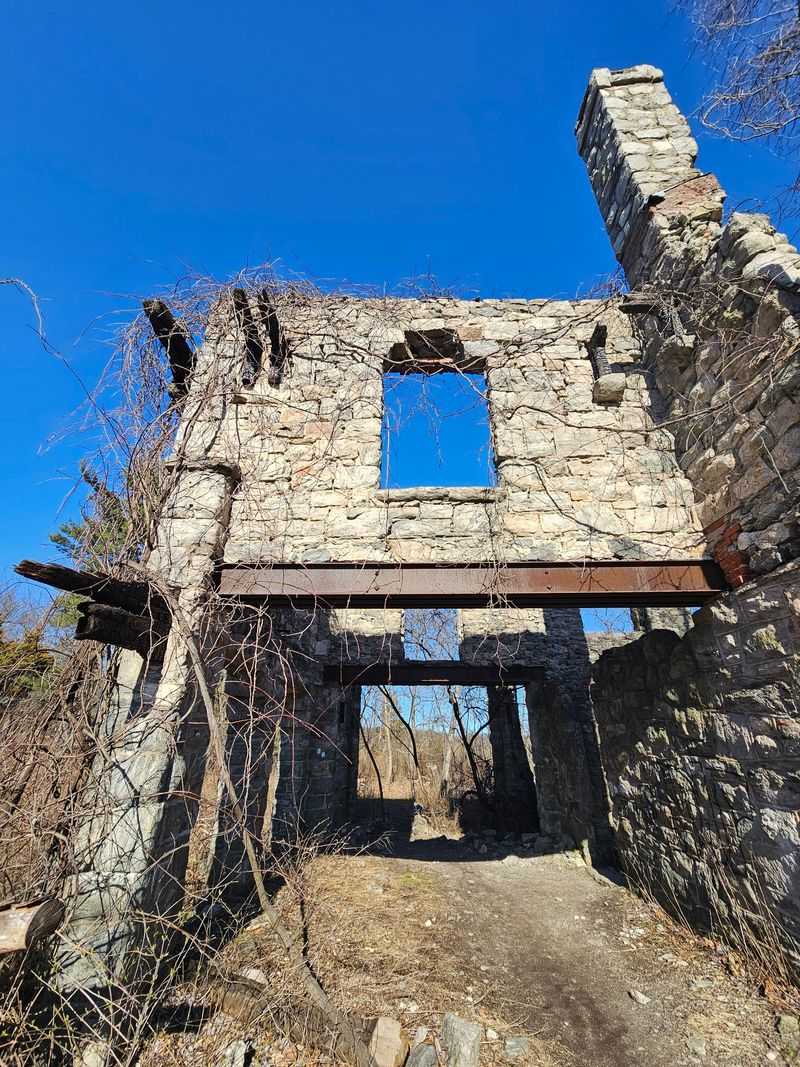
Ruth Slyke commissioned this magnificent stone mansion around 1906, naming it after her family and dreaming of creating a luxurious retreat in the Ramapo Mountains. Her vision included grand stone architecture that would stand the test of time, complete with multiple rooms, elegant features, and sweeping views of the surrounding wilderness.
The structure represented the height of early 20th-century ambition, when wealthy families sought private estates far from city crowds. Construction required hauling massive stones up the mountain, a feat that speaks to the determination behind this project.
Workers built the mansion using local stone, creating thick walls that still stand today despite decades of abandonment. The original design featured multiple levels, large windows to capture natural light, and architectural details that reflected the era’s craftsmanship.
Families who visited during its prime years enjoyed the peaceful mountain setting and the luxury of a private wilderness retreat.
Tragically, fire consumed the castle in the 1940s, leaving only the stone skeleton we see today. Some accounts suggest the blaze started accidentally, while local legends offer more dramatic explanations.
Regardless of how it happened, the fire marked the end of the castle’s brief life as a functioning mansion. What remains are walls, archways, and foundations that hint at the building’s former grandeur.
The ruins were eventually absorbed into the Ramapo Mountain Reservation, transforming from private estate to public curiosity. Today, these stone remains stand as a testament to both human ambition and nature’s power to reclaim what was once built.
The Challenging Hike That Keeps Most Tourists Away
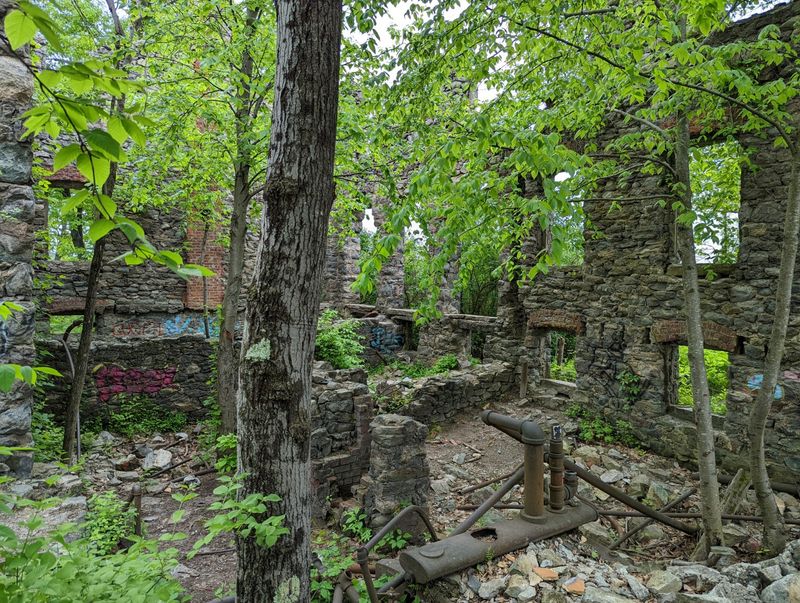
Getting to Van Slyke Castle requires more than just showing up with a camera. The trail system within Ramapo Mountain Reservation presents a moderate to challenging hike that weeds out casual visitors quickly.
Most hikers report covering between three and five miles roundtrip, depending on which route they choose and whether they explore additional features like the nearby lake and water tower. Elevation changes add significant difficulty, with steep climbs over rocky terrain that demand proper footwear and decent stamina.
Boulder scrambling becomes necessary on certain sections, especially as you approach the castle itself. Some areas require climbing over large rocks using both hands and feet, while other spots feature narrow paths with roots and uneven surfaces.
One particularly memorable section includes a steep wooden ladder attached to the mountainside, which some hikers find intimidating but manageable. Bringing dogs along is possible, though larger breeds may struggle with the ladder portion unless you’re prepared to assist them.
Trail markers help guide the way, with white blazes and red C symbols painted on trees throughout the route. However, reviews consistently mention that signage could be clearer, and cell phone service becomes unreliable once you enter the deeper woods.
The AllTrails app proves invaluable for navigation, as Google Maps often directs visitors to blocked roads rather than proper trailheads. Parking lots fill quickly, especially on weekends, forcing latecomers to find roadside spots or turn back entirely.
Plan to spend two to four hours completing the journey, and pack plenty of water because shade doesn’t always provide relief on hot days.
Stone Walls That Have Survived Nearly 80 Years of Abandonment
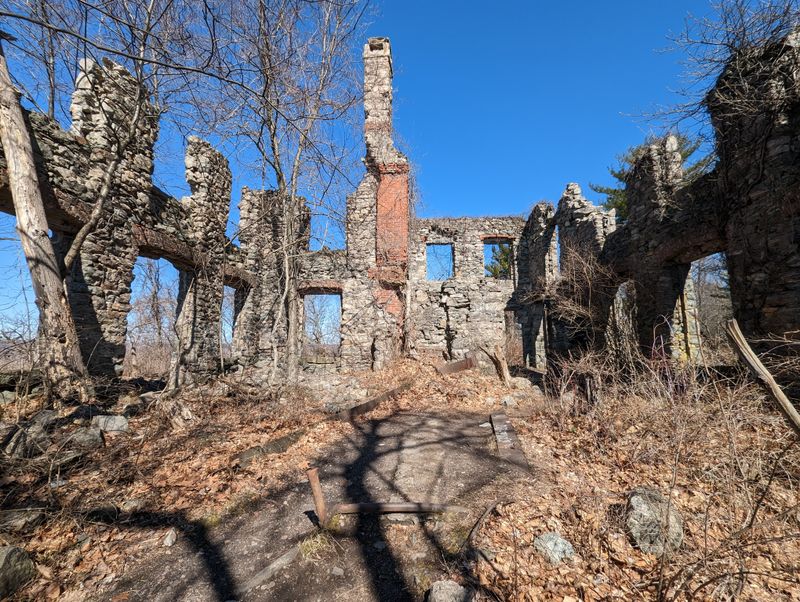
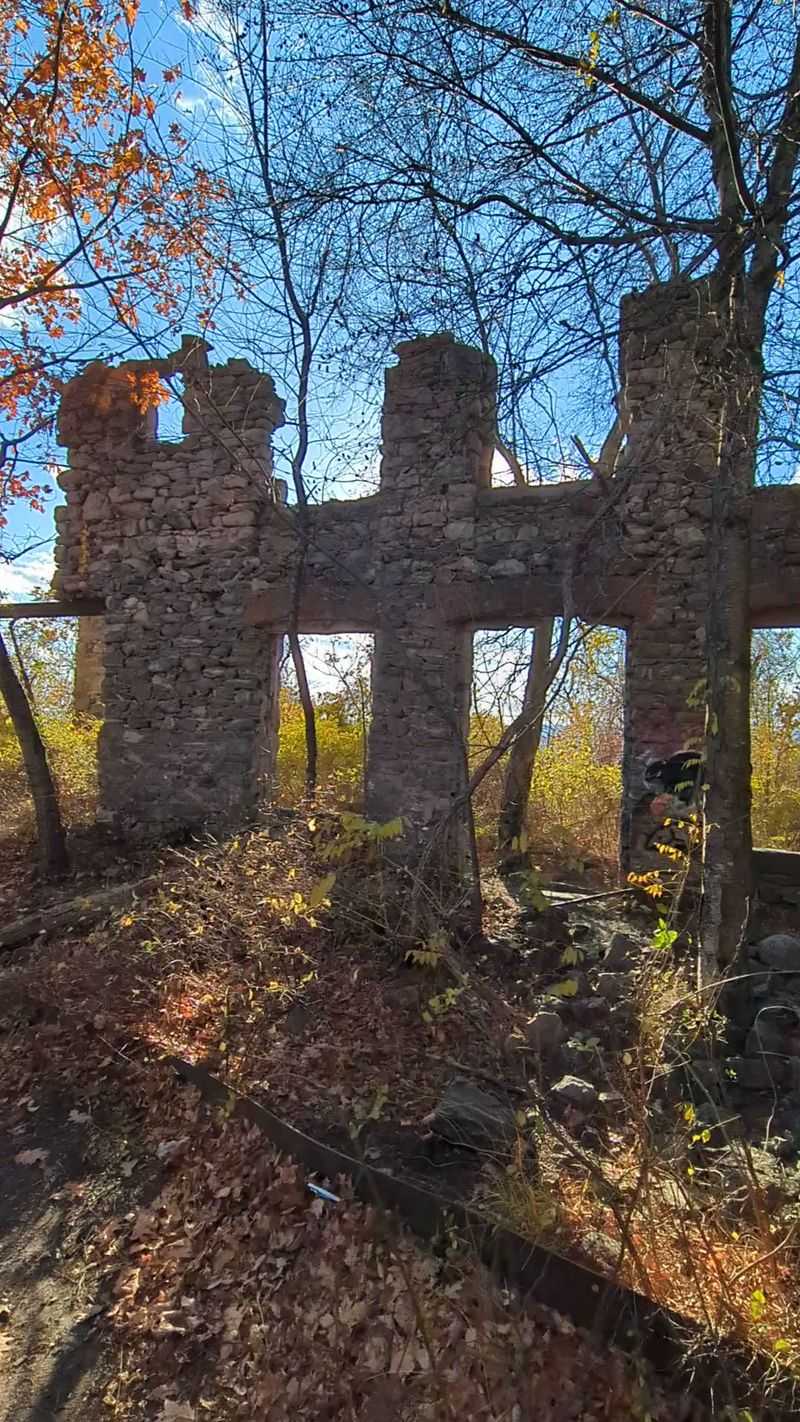
Walking among the ruins feels like stepping onto a movie set, except everything here is authentically weathered by time. The stone walls rise impressively from the forest floor, some reaching heights of 15 feet or more despite missing their roofs and interior floors.
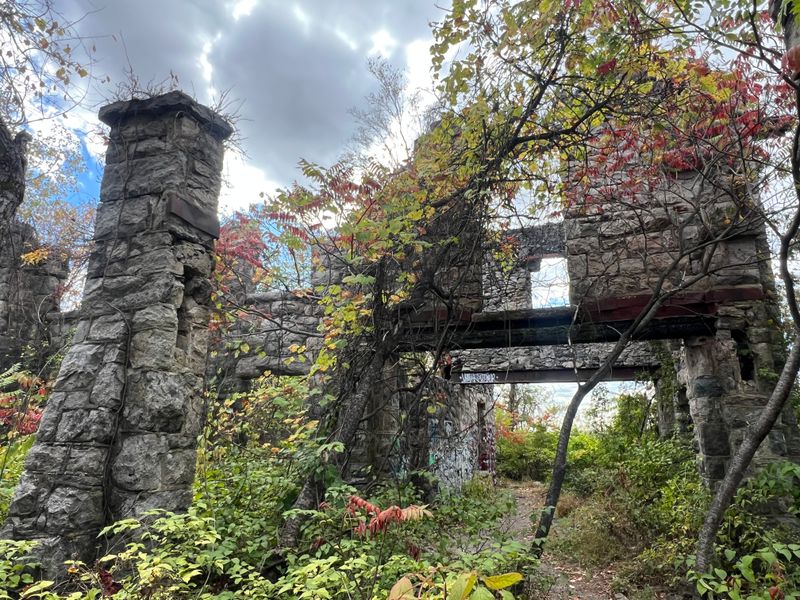
Archways frame views of the surrounding trees, creating natural picture frames that photographers absolutely adore. The craftsmanship evident in the stonework reminds visitors that skilled masons built this structure to last, even if fire ultimately gutted the interior.
Moss and vegetation now cling to many surfaces, adding texture and color that changes with the seasons. Autumn brings spectacular backdrops when fall foliage surrounds the gray stone with reds, oranges, and yellows.
Winter snows occasionally dust the ruins, creating stark contrasts that highlight every architectural detail. Spring and summer bring lush greenery that sometimes obscures portions of the structure, though the main walls remain clearly visible year-round.
Multiple rooms can still be identified by their remaining walls and foundations, allowing visitors to imagine the mansion’s original layout. Window openings provide glimpses through the structure, while doorways lead to spaces now open to the sky.
The stone’s durability has allowed these ruins to withstand not just weather but also the constant foot traffic of thousands of annual visitors. Unfortunately, graffiti mars some surfaces, a common complaint among reviewers who wish the site could remain pristine.
Despite this modern vandalism, the overall effect remains powerfully atmospheric, especially when afternoon light filters through the empty windows and illuminates the weathered stone.
The Graffiti Problem That Divides Visitor Opinions
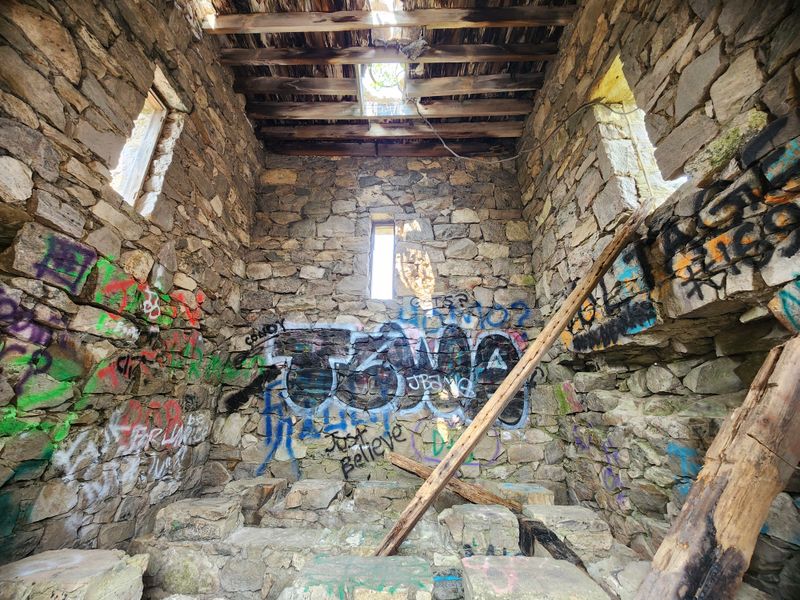
Spray paint covers portions of Van Slyke Castle’s walls, creating a controversial layer of modern history over the century-old ruins. Some visitors express frustration that vandals have defaced what should be preserved as historical ruins.
Colorful tags, names, and various artistic attempts compete for space on the stone surfaces, particularly in areas most accessible to visitors. Reviews frequently mention disappointment at finding graffiti where they expected untouched historical architecture.
Others take a more philosophical view, suggesting the graffiti adds an urban exploration aesthetic that appeals to certain photographers. The contrast between ancient stone and modern spray paint creates visual interest that some find compelling rather than offensive.
Younger visitors sometimes appreciate the street art aspect, seeing it as part of the location’s evolving story rather than pure vandalism. This divide in opinion reflects broader debates about how we interact with abandoned spaces and what constitutes respectful visitation.
Efforts to maintain the site face obvious challenges given its remote location and constant accessibility. No gates or guards prevent visitors from bringing paint, and the same trails that allow hikers to reach the ruins also permit vandals to carry supplies.
Some graffiti appears artistic and carefully executed, while other markings seem purely destructive. The situation worsens gradually as each new visitor sees existing graffiti as permission to add their own mark.
Photography enthusiasts work around the problem by choosing angles that minimize graffiti visibility or embracing it as part of the location’s current character. The stone’s natural texture and the surrounding forest still provide plenty of beautiful elements to capture.
Despite the graffiti issue, the castle remains popular because its fundamental appeal transcends surface decorations.
The Mysterious Water Tower That Adds Extra Adventure
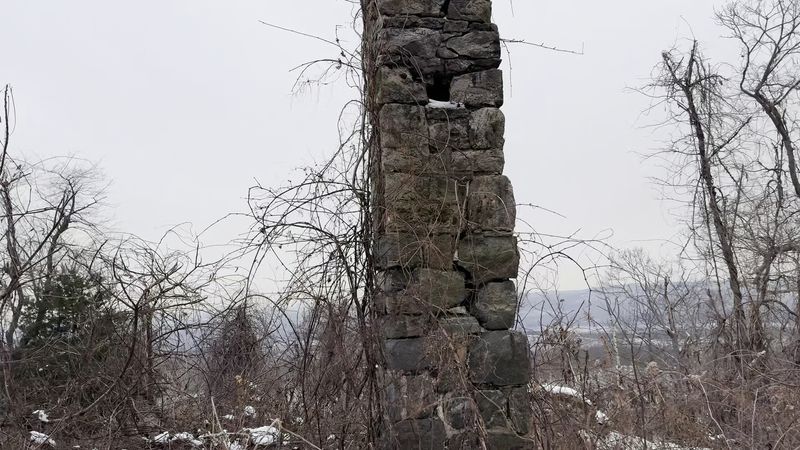
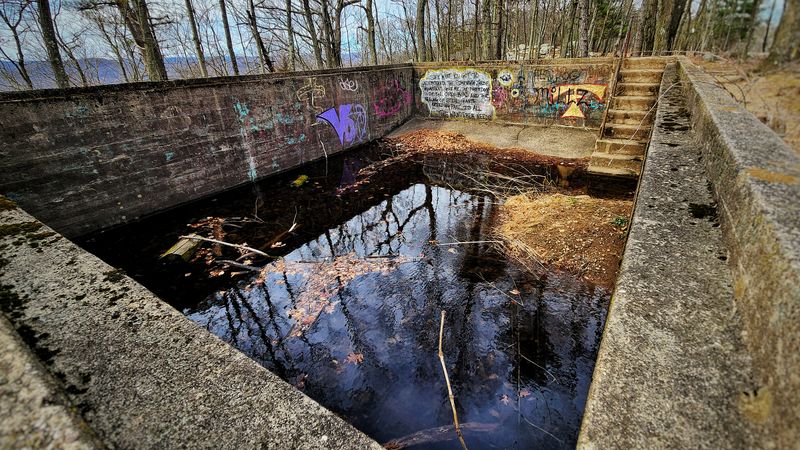
Beyond the main castle ruins lies another fascinating structure that many visitors discover only after exploring the area thoroughly. An old water tower stands among the trees, its stone construction matching the castle’s architectural style and suggesting it served the original estate.
This tower represents another piece of the property’s infrastructure, built to supply water to the mansion during its operational years. The structure’s survival alongside the castle creates a more complete picture of what once existed on this mountain.
Reaching the water tower requires additional hiking beyond the castle itself, extending your adventure if you have energy remaining after the initial climb. The tower’s design mirrors the castle’s sturdy stone construction, with thick walls that have weathered decades of exposure.
Some visitors report that the tower offers different photographic opportunities compared to the main ruins, with unique angles and less graffiti covering its surfaces.
Like the castle, the water tower has become part of the area’s collection of historical curiosities that draw explorers deeper into the reservation. Finding it requires following trails that branch off from the main castle area, and not every visitor realizes it exists until they consult detailed trail maps.
The tower’s presence reinforces how extensively developed this mountain estate once was, requiring sophisticated systems to function as a remote residence.
Combining visits to both the castle and water tower creates a fuller experience of the site’s history. The tower stands as a quieter, less-visited complement to the more famous ruins, offering solitude for those who make the extra effort.
Both structures together paint a picture of early 20th-century ambition meeting practical engineering challenges in a wilderness setting.
The Scenic Lake That Provides a Peaceful Contrast
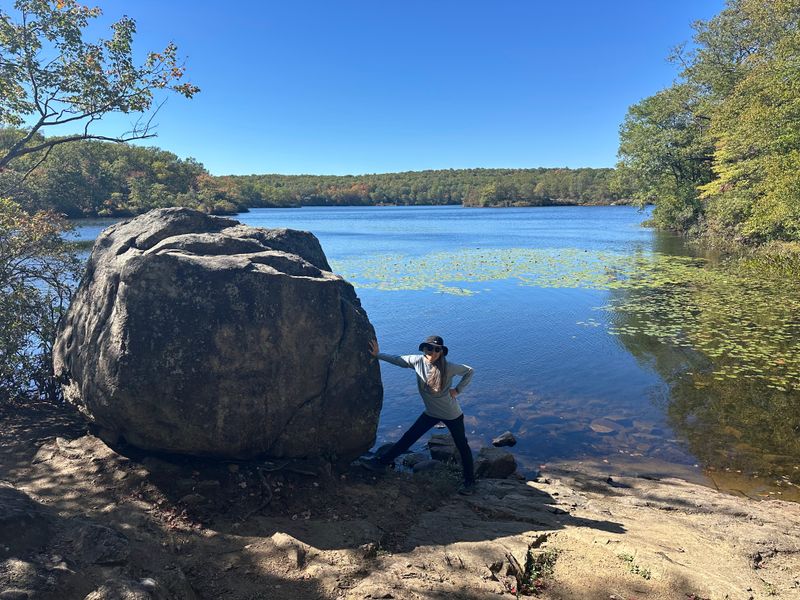
Ramapo Lake sits along the trail system near Van Slyke Castle, offering a completely different kind of beauty compared to the dramatic ruins. This serene body of water provides hikers with a peaceful resting spot where they can catch their breath before or after tackling the rocky sections.
The lake’s calm surface reflects surrounding trees and sky, creating picture-perfect moments that complement the castle’s haunting atmosphere. Many visitors appreciate having this natural feature as part of their hiking experience rather than focusing solely on manmade ruins.
Dogs particularly enjoy the lake area, where they can cool off and drink fresh water during warm weather hikes. The shoreline offers relatively easy access compared to the challenging terrain elsewhere on the trail.
Families with children often spend extra time here, allowing kids to explore the water’s edge and skip stones while adults rest their legs. The lake serves as a natural gathering point where hikers heading in different directions often cross paths and share trail information.
Swimming is not permitted in Ramapo Lake, as signs clearly indicate throughout the area. This restriction helps preserve water quality and protects the ecosystem that depends on the lake.
Despite the no-swimming rule, the lake remains a highlight for many visitors who appreciate its aesthetic value and the refreshing atmosphere it provides. The combination of water views and forest surroundings creates a classic New Jersey wilderness experience.
Photography at the lake differs significantly from castle photography, requiring different techniques to capture reflections and natural light on water. Early morning and late afternoon provide the best lighting conditions, when the sun sits lower in the sky and creates golden tones across the surface.
The lake’s presence makes the overall hiking experience more varied and memorable.
The Parking Nightmare That Tests Your Determination
Arriving at the trailhead parking area often presents the first major challenge of visiting Van Slyke Castle. The main parking lot holds a limited number of vehicles, and spaces fill remarkably fast even on weekday mornings.
Reviewers consistently report finding packed lots by 8:30 or 9:00 AM, forcing them to either wait for departing hikers or seek alternative parking along nearby roads. This parking scarcity can make or break your visit before you even hit the trail.
Two parking areas serve the castle trails, with the lower lot offering more spaces but requiring a longer hike to reach the ruins. The upper lot provides closer access but fills even faster due to its smaller size.
Some visitors park along the roadside in dirt areas, though this practice risks tickets and doesn’t guarantee your vehicle will be there when you return. The parking situation reflects the castle’s growing popularity as word spreads through social media and hiking apps.
Planning your visit for very early morning or late afternoon improves your chances of finding legitimate parking. Weekdays generally offer better availability than weekends, though even Tuesday mornings can see significant traffic during pleasant weather.
The single porta-potty at the main parking area often reaches capacity quickly, and reviewers warn that it frequently lacks toilet paper and becomes quite unpleasant by midday.
GPS navigation adds another layer of parking frustration, as Google Maps sometimes directs visitors to roads marked as no public access. Using AllTrails or other hiking-specific apps provides more reliable directions to the correct trailheads.
The combination of limited parking, unreliable GPS, and inadequate facilities means you should arrive prepared with backup plans and plenty of patience before your hike even begins.
Wildlife Encounters Including Black Bears
Black bears inhabit the Ramapo Mountain Reservation, and encounters happen frequently enough that hikers should take the possibility seriously. Multiple reviews mention hearing or seeing bears during their visits to Van Slyke Castle, though most encounters involve bears retreating from human presence rather than approaching.
New Jersey’s black bear population has grown substantially in recent decades, making the northern part of the state prime bear habitat. Understanding basic bear safety becomes essential before venturing onto these trails.
Making noise while hiking helps alert bears to your presence, giving them opportunity to move away before you get too close. Traveling in groups provides additional safety, as bears typically avoid larger parties of humans.
Carrying bear spray offers peace of mind, though most hikers complete the trail without needing any defensive measures. The key is staying alert and knowing how to respond if you do encounter a bear at close range.
Beyond bears, the forest hosts deer, various bird species, and smaller mammals that add to the wilderness experience. Squirrels and chipmunks are common sights, while birdsong provides a constant soundtrack during spring and summer months.
Insects become more numerous in warmer weather, with mosquitoes and ticks presenting the most concern for hikers. Wearing insect repellent and checking for ticks after your hike protects against Lyme disease and other tick-borne illnesses.
The presence of wildlife reminds visitors that they’re entering a genuine wilderness area rather than a manicured park. This authentic natural setting contributes to the castle’s appeal, creating an atmosphere where history and nature intertwine.
Respecting wildlife by maintaining distance and never feeding animals helps preserve this balance for future visitors to enjoy safely.
Perfect Photography Opportunities Throughout All Seasons
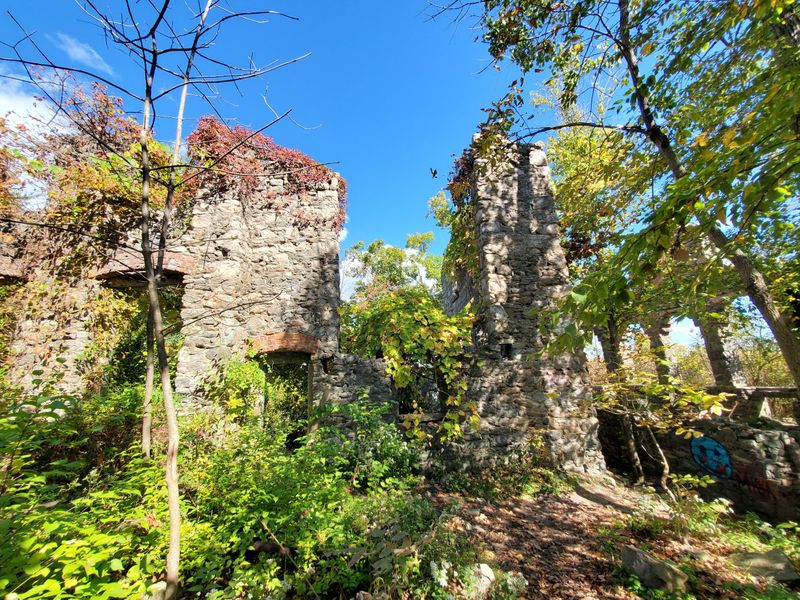
Photographers flock to Van Slyke Castle year-round because each season transforms the ruins into completely different subjects. October stands out as particularly spectacular, when fall foliage creates vibrant backdrops of red, orange, and yellow leaves framing the gray stone walls.
The contrast between colorful autumn leaves and weathered stone produces images that capture both natural beauty and historical decay. Golden hour light during fall afternoons adds warmth that makes the entire scene glow.
Winter photography presents its own rewards for those willing to brave cold temperatures and potentially icy trails. Snow-covered ruins offer stark, minimalist compositions where the stone’s texture becomes even more prominent against white surroundings.
Bare tree branches create intricate patterns around the castle, and the absence of leaves reveals architectural details that summer foliage might obscure. Winter also brings fewer visitors, allowing photographers to work without crowds in their frames.
Spring brings fresh green growth and wildflowers that soften the ruins’ harsh edges, creating a sense of nature reclaiming human construction. Summer’s lush vegetation sometimes obscures portions of the structure, though this can add mystery to photographs by partially hiding the ruins behind leaves and vines.
The changing seasons mean photographers can visit multiple times and capture entirely different moods and compositions.
Beyond seasonal changes, different times of day dramatically affect the light quality at the castle. Morning light comes from the east, illuminating certain walls while leaving others in shadow.
Afternoon sun creates different effects, and overcast days provide soft, even lighting that works beautifully for detail shots. The ruins’ elevation and forest setting create natural vignettes and framing opportunities that make composition relatively easy even for amateur photographers.
The Restoration Efforts and Current Preservation Status
Unlike many abandoned sites left entirely to decay, Van Slyke Castle benefits from some maintenance efforts within the Ramapo Mountain Reservation. A dedicated individual works on restoring native plants around the ruins and maintaining the grounds to prevent complete wilderness overtake.
Hikers occasionally encounter this person during visits, and some have shared positive interactions where they learned about ongoing preservation work. These efforts help balance accessibility with conservation, allowing visitors to enjoy the site while protecting its historical integrity.
The castle’s location within a state reservation provides some protection that purely private abandoned properties lack. Trail maintenance, limited signage, and basic oversight help manage the site’s popularity without destroying what makes it special.
However, the ruins themselves remain largely untouched, with no plans to rebuild or extensively restore the stone structures. This hands-off approach preserves the authentic abandoned aesthetic that draws visitors while preventing further deterioration.
Preservation challenges include the ongoing graffiti problem, erosion from foot traffic, and natural weathering that continues to affect the stone. Balancing public access with protection remains an ongoing struggle, as more visitors inevitably mean more impact on the fragile ruins.
Some advocates argue for stricter controls, while others believe the castle’s value lies partly in its accessibility to anyone willing to make the hike.
The ruins’ future likely depends on continued interest from hiking communities and photography enthusiasts who appreciate the site’s unique character. As long as people keep visiting and sharing their experiences, pressure exists to maintain trails and provide basic facilities.
Van Slyke Castle occupies an interesting middle ground between forgotten ruin and preserved monument, creating an authentic experience that feels like personal discovery rather than packaged tourism.
Dear Reader: This page may contain affiliate links which may earn a commission if you click through and make a purchase. Our independent journalism is not influenced by any advertiser or commercial initiative unless it is clearly marked as sponsored content. As travel products change, please be sure to reconfirm all details and stay up to date with current events to ensure a safe and successful trip.
