That castle-like prison in Ohio looked nothing like what I expected, all turrets and heavy stone and windows that seemed to watch you back. I had come mostly because of a famous film shot there, and I left thinking about the hundreds of thousands of men who actually lived inside those walls over the decades it operated.
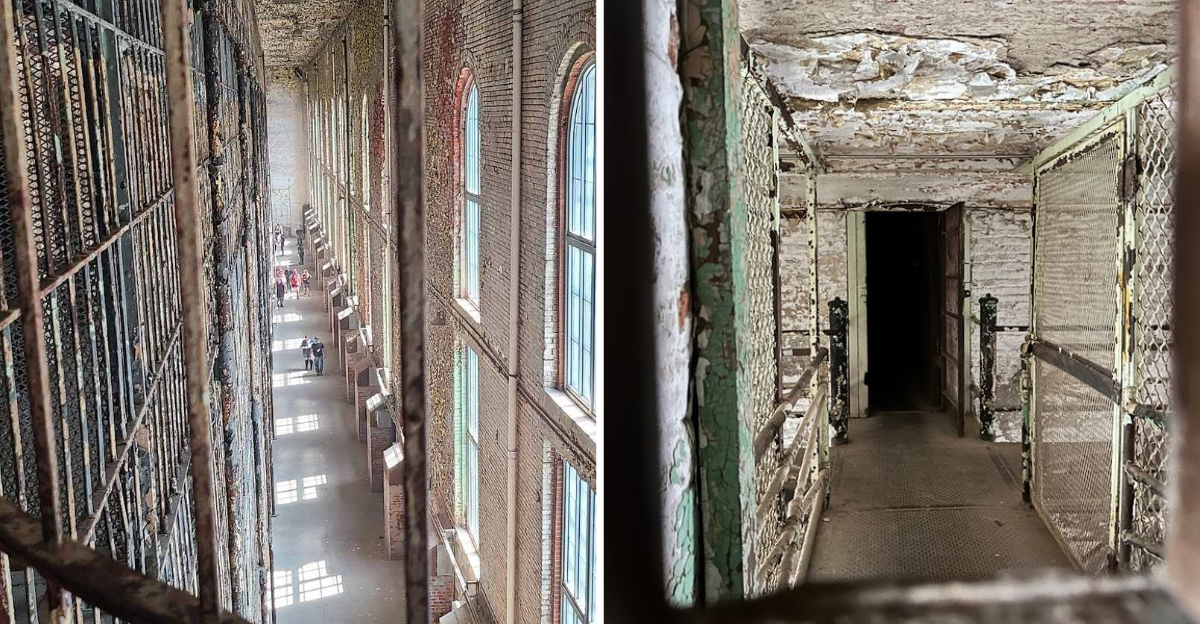
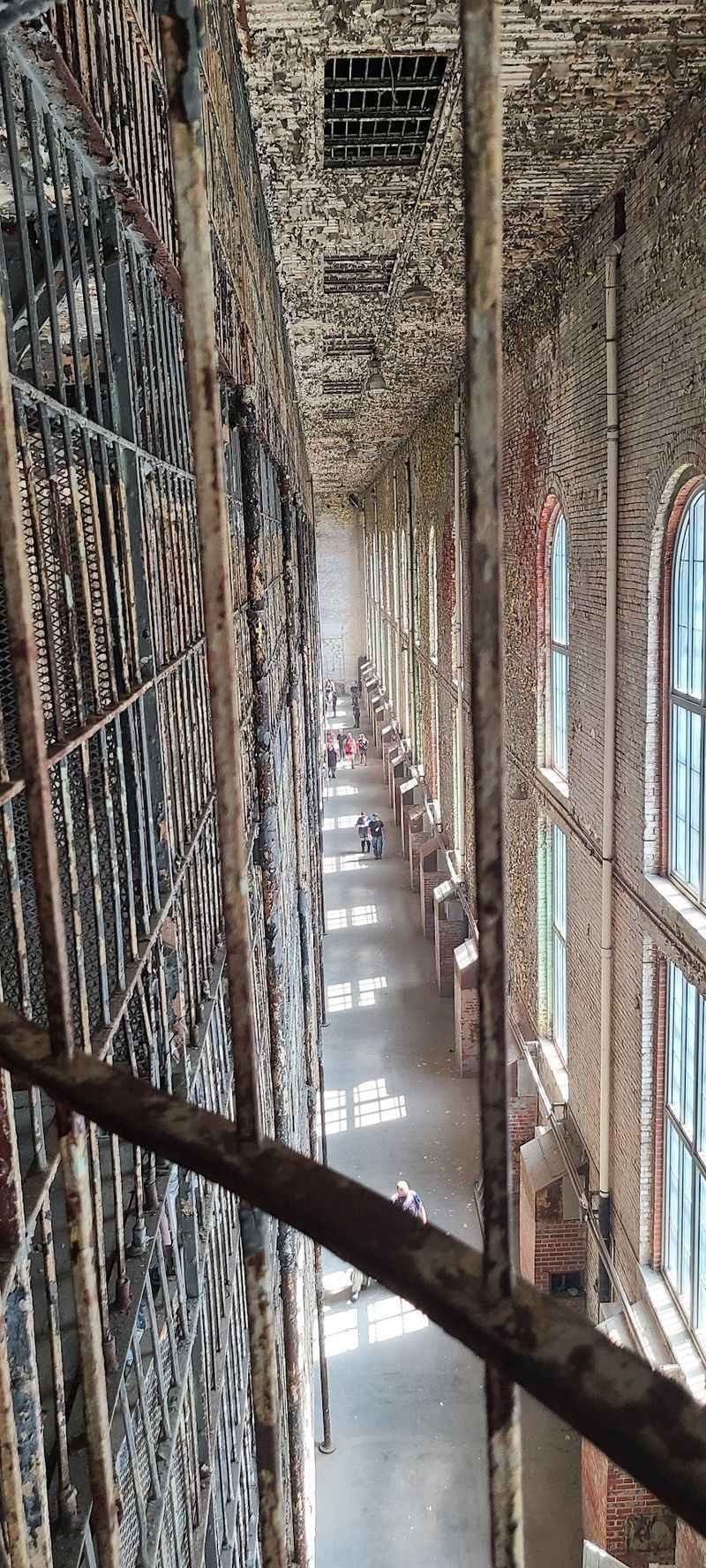
The scale of the building is staggering, with cell blocks stacked six tiers high and walkways that stretch so far you cannot see the end of them. There is something about the quiet in those cell blocks that sticks with you long after you get back in the car.
The silence is heavier than any other place I have visited, as if the walls have absorbed the voices of everyone who passed through them. I spent nearly four hours wandering, and I still missed things.
The chapel, the library, the execution room, each corner holds a story that has not been smoothed over or made comfortable for visitors. History that has not been polished into something easy to digest is exactly what this Ohio landmark delivers.
A Castle Built to Change Young Men
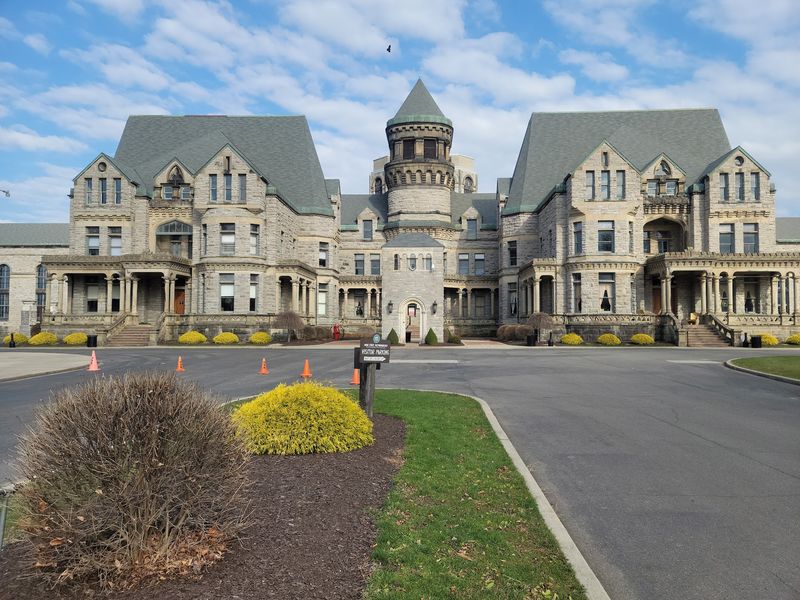
The architect behind this place was Levi T. Scofield of Cleveland, and he clearly had big ideas.
He mixed Victorian Gothic, Richardsonian Romanesque, and Queen Anne styles into one enormous stone building, borrowing inspiration from the 16th-century Chateau de Chambord in France.
Sounds strange for a prison, right? The thinking was that grand, church-like architecture might push young offenders toward repentance and a fresh start.
Construction began in 1886 on ground that had served as Camp Mordecai Bartley, a Civil War training camp. It was first called the Intermediate Penitentiary, then renamed the Ohio State Reformatory in 1891.
The first 150 young inmates arrived on September 15, 1896, though funding troubles meant the building wasn’t finished until 1910.
I spent a good ten minutes just standing on the lawn before going inside, mostly because the outside deserves that. Arched windows, sharp towers, dark stone that changes color depending on the light.
Bring a real camera if you have one. Phone photos flatten the scale, and scale is the whole point here.
Just know that photographing anything through the windows toward the active prison next door is prohibited under Ohio law.
The World’s Largest Free-Standing Steel Cell Block
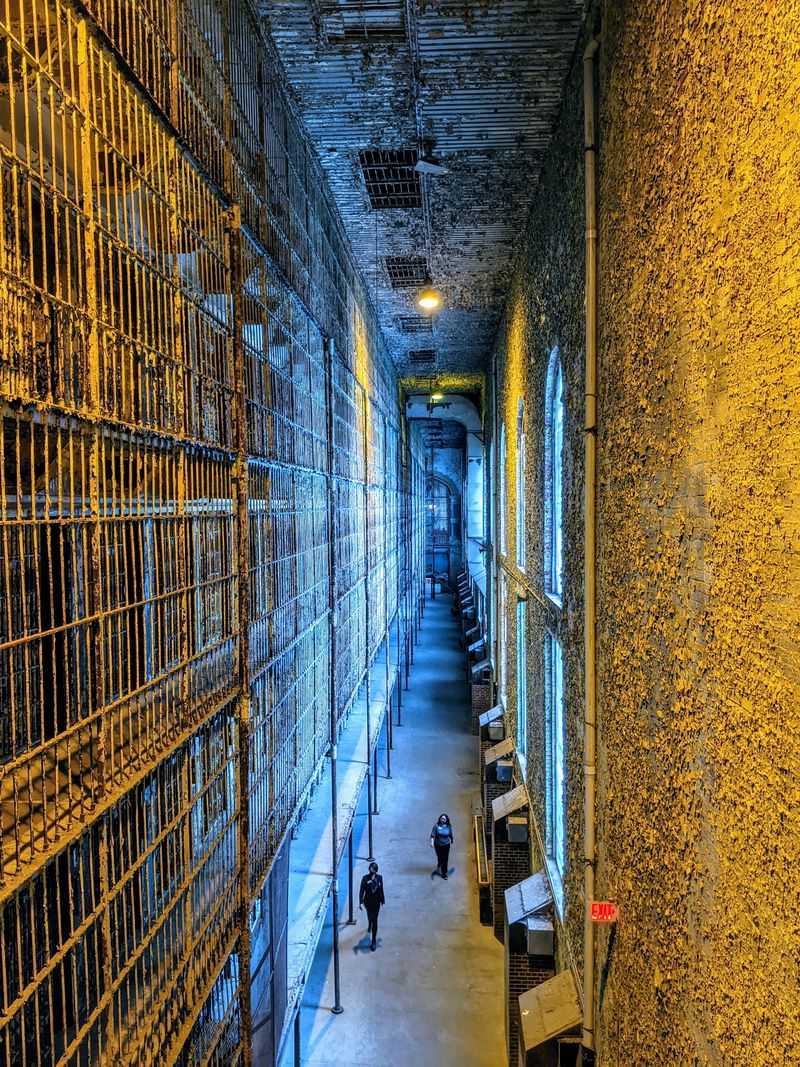
Nothing prepared me for the East Cell Block. Six tiers of steel cages stacked straight up, holding the world record as the largest free-standing steel cell block anywhere.
You walk along a narrow catwalk with cell doors on one side and a long drop on the other. My hand found the railing pretty fast.
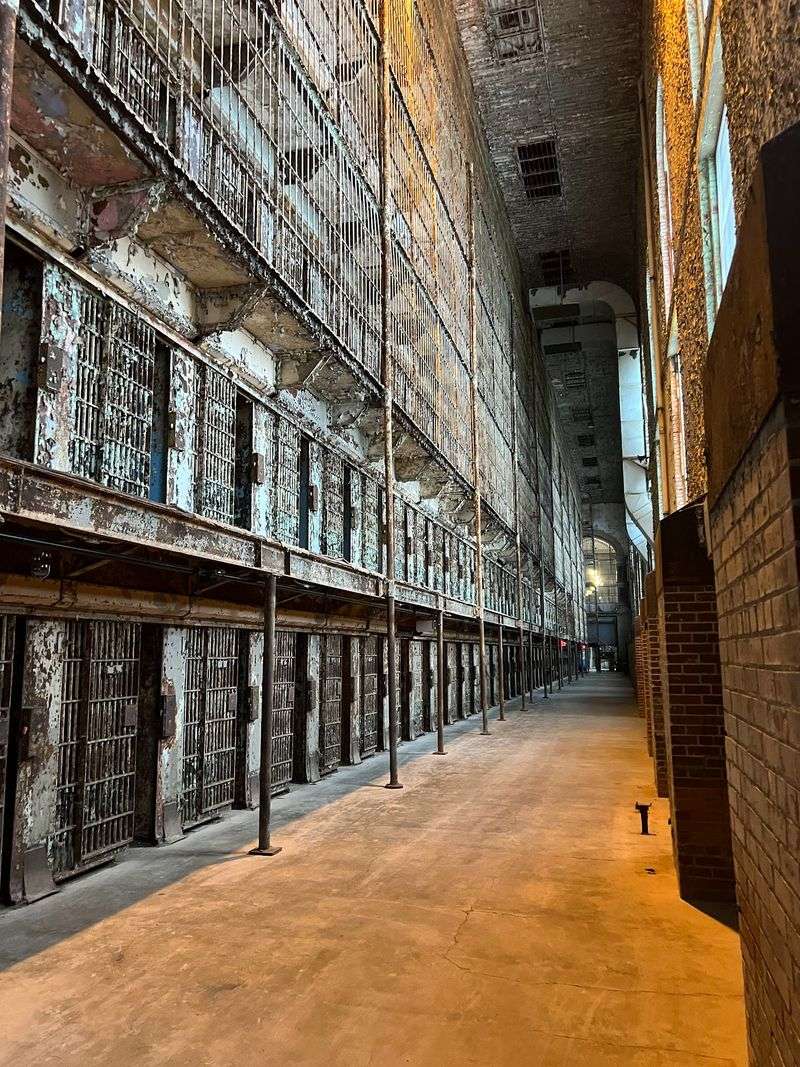
Originally the reformatory was designed for 1,500 men, one to a cell. By 1934 overcrowding had pushed two and sometimes three men into spaces meant for one, and you can see exactly how small those spaces are.
Sound behaves oddly in there. A cough three tiers up carries like it’s next to you, which tells you something about what living there must have been like.
A practical tip from someone who learned the hard way: if heights bother you, stick to the lower tiers. Several visitors mention the top level feeling uneasy, and the open railings do not help.
Wear shoes with grip. The floors are uneven, the stairs are steep, and you will be on your feet the entire visit.
Names That Made Headlines Behind These Walls
Here’s something that surprised me: the reformatory was built for first-time offenders, not hardened criminals. Even so, a few names in the records went on to become well known for very different reasons.
Henry Baker served time here before his involvement in the 1950 Brink’s Robbery made him notorious. Robert Daniels was executed in 1949 for killing the reformatory’s farm boss and his family.
Not every story ends badly, and those are the ones I found most interesting. Emil Balanescu, imprisoned in 1927 for murder, built a rock garden on the grounds and later worked as a landscaper in Mansfield.
Doyle Baird, an inmate from 1959 to 1963, turned to boxing after his release. Michael Humphrey, incarcerated in the late 1960s, came back years later as a volunteer tour guide and received a pardon from Governor Bob Taft in 2004.
Athletes passed through too, including Detroit Tigers outfielder Gates Brown and Cleveland Browns running back Kevin Mack.
Give the museum rooms real time. The displays about individual inmates are easy to breeze past, and they are honestly the heart of the place.
Shawshank Fans, Your Pilgrimage Starts Here
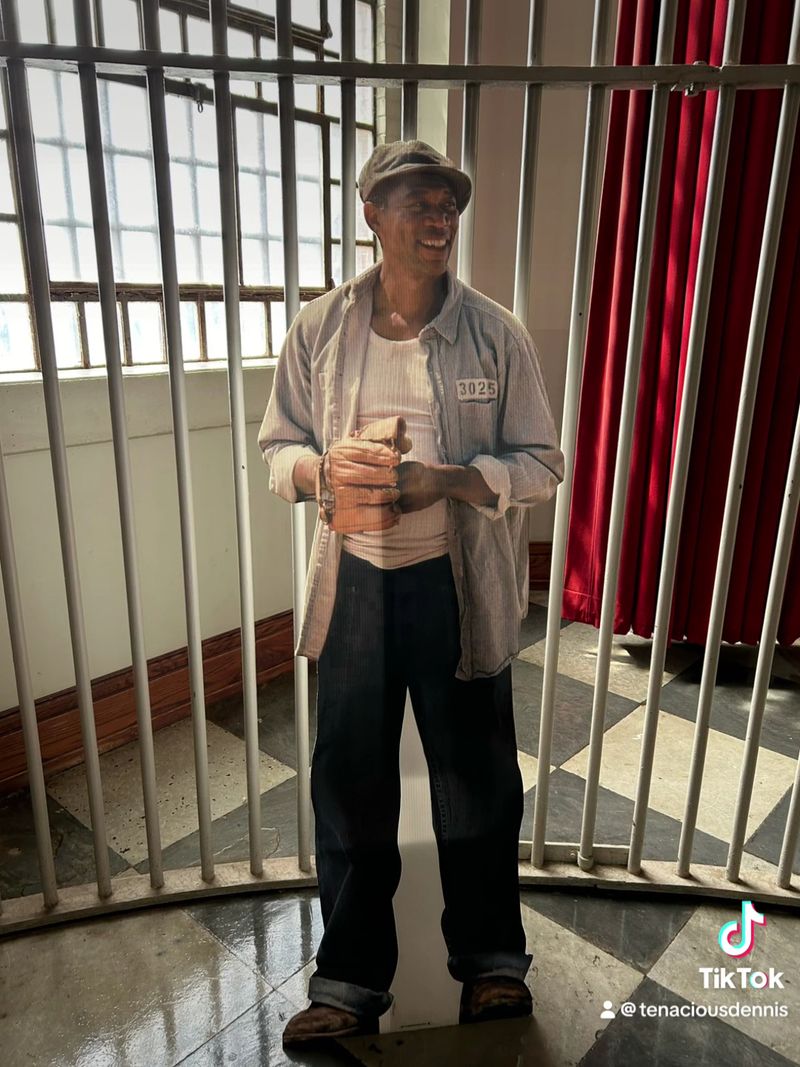
Fans of The Shawshank Redemption will recognize corners of this building before a guide says a word. The 1994 film used the reformatory as Shawshank State Prison, and the movie is a big reason the building still stands.
Props and set pieces are displayed throughout, and the warden’s office area draws a crowd for obvious reasons.
Other productions filmed here too. Harry and Walter Go to New York in 1975, Tango and Cash in 1989, and Air Force One in 1997 all used the site, along with music videos and paranormal shows.
My honest advice: rewatch the movie the night before. I did, and recognizing a hallway in person hit differently than reading about it on a plaque.
If Hollywood is your main draw, book the Hollywood Meets History guided tour rather than going self-guided. Visitors consistently say the film content lives there, and the standard route leans more toward prison history.
The guided version runs about 90 minutes. Guides move you through at a steady pace while still stopping to talk, which felt like the right balance.
Choosing Your Tour Without Overthinking It
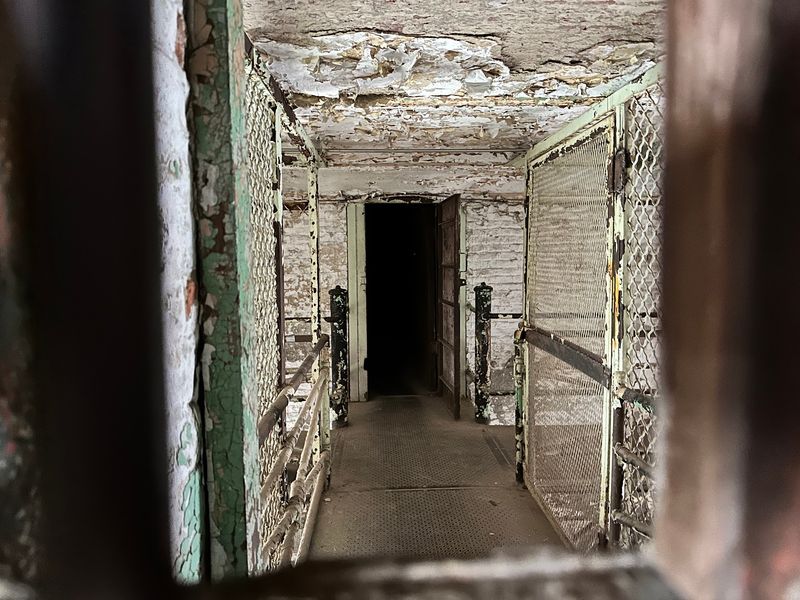
There are more ways to see this place than I expected, which is either great or paralyzing depending on your mood. Self-guided tours let you set your own pace and wander into quiet corners.
Guided options include history-focused walks and the Hollywood tour. Ghost tours and overnight ghost hunts run separately, and there’s an escape room too.
Doing the math, most people I overheard were spending three to five hours. Doors open at 11 AM daily and close at 4 PM, so an early arrival gives you breathing room.
My suggestion is to pair one guided tour with self-guided time afterward. The guide gives you context, then you go back and sit with the parts that got under your skin.
Parking is on-site, free, and easy to navigate, which is a small mercy after a long drive.
There’s a cafe and gift shop near the main entrance if you need a break, and a coffee halfway through my visit was weirdly restorative. Signage inside can be a little confusing at first, so grab a map and orient yourself early.
The Hard History You Cannot Walk Past
Not everything here is atmospheric fun, and the reformatory does not pretend otherwise. More than 200 people passed at the site during its operation, including two guards killed during escape attempts.
On April 21, 1930, a fire claimed 322 inmate lives after guards reportedly refused to open cell doors. Reading that near the actual cell blocks is a different experience than reading it at home.
Conditions collapsed further by the 1980s. Severe overcrowding and inhumane treatment led prisoners to file a class-action lawsuit known as the Boyd Consent Decree.
A federal court ordered the prison closed in 1986, though the doors stayed open until December 31, 1990, while a replacement facility went up next door. Around 1970 the institution had already shifted from a reformatory to a men’s maximum security prison.
Warden Arthur Lewis Glattke, who served from 1935 to 1959, introduced reforms like piped-in radio music in the cell blocks. His wife Helen passed away of pneumonia in 1950 after a handgun discharged in their quarters.
Take the solitary confinement area slowly. It’s the quietest spot in the building for a reason.
Saved From the Wrecking Ball, Alive With Events
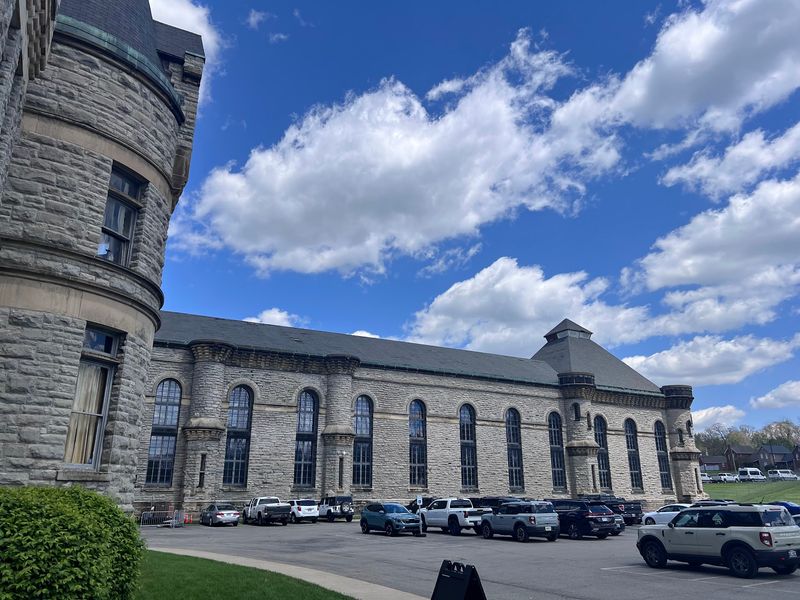
Almost none of this should still exist. After the 1990 closure, demolition was the plan, until the Mansfield Reformatory Preservation Society formed in 1992, took control in 1995, and bought the property outright in 2000.
Since then they’ve replaced the roof, restored the warden’s quarters and the central guard room, and put in new windows.
Restoration is ongoing, and honestly you can tell. Some sections gleam, others are raw and peeling, and that contrast is part of what makes the visit feel real rather than staged.
The building also has a busy social calendar these days. Concerts fill the grounds, the Blood Prison haunted attraction takes over in October, and events like Inkcarceration and Ink in the Clink bring in huge crowds.
Inside, the Ohio Corrections Museum displays an electric chair that was never used for executions at this location.
My timing tip: visit in spring or fall. Much of the building has no air conditioning, and stone holds summer heat like a skillet.
Call ahead at 419-522-2644 to confirm tour availability before driving out.
Address: 100 Reformatory Rd, Mansfield, Ohio
