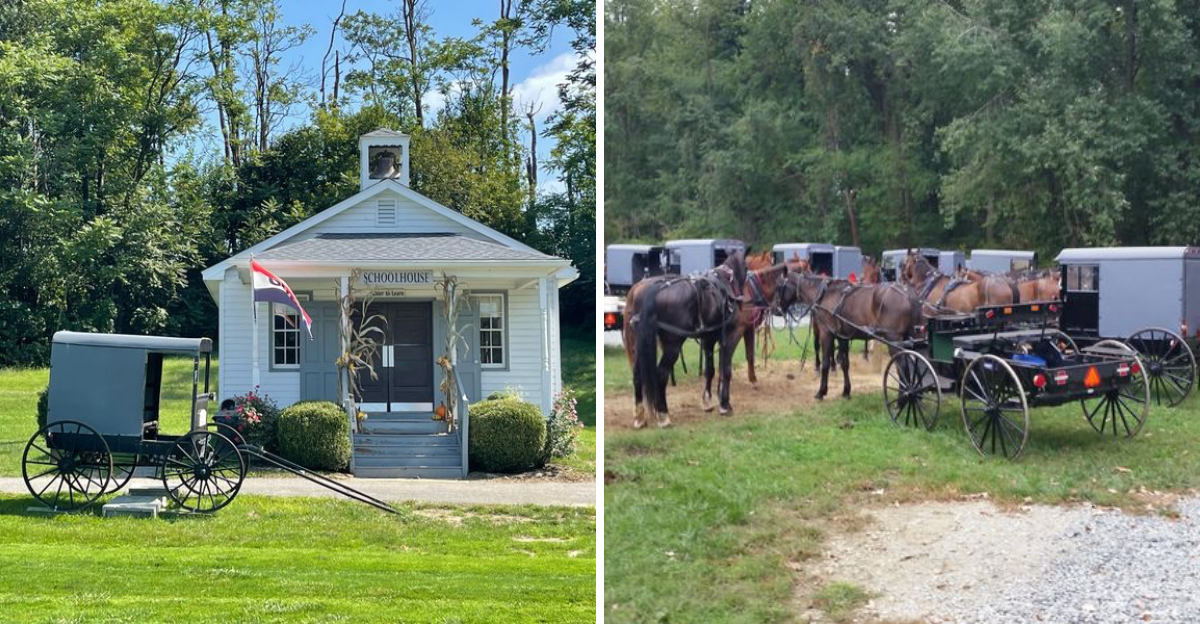
You can feel the rhythm of Pennsylvania farmland the moment wheels roll past a split rail fence and a white farmhouse rises over quilted fields.
Barns sit like anchors in the landscape, stitched to corn shocks, kitchen gardens, and orderly lanes where buggies whisper by.
These places are not staged attractions but living layouts shaped by work, faith, and seasons that still matter to the calendar.
If you are chasing photographs that breathe, this list traces where the geometry of Amish life meets the soft light travelers love.
1. Bird-in-Hand Farmlands, Lancaster County
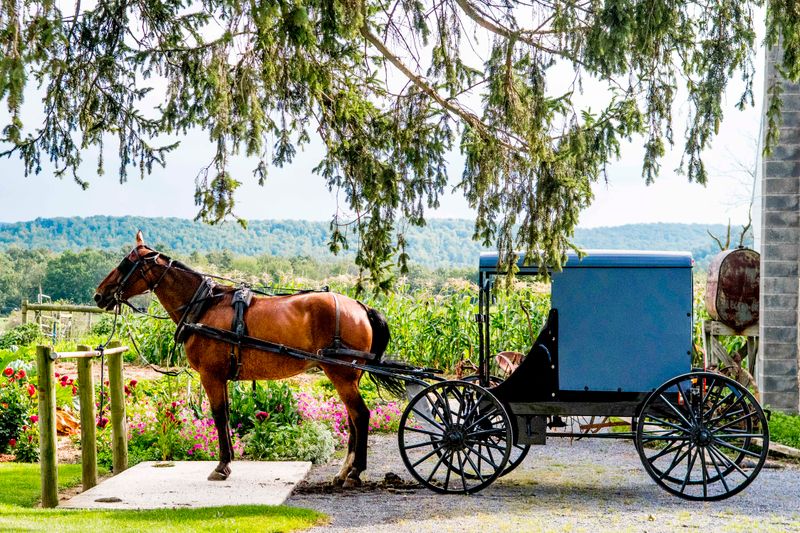
Early light drifts over Bird-in-Hand and turns every fence post into a metronome for the day’s chores.
Farm lanes stretch in clean lines toward bank barns, while white clapboard houses sit balanced against gardens and clotheslines.
Photographers love the spacing of silos, sheds, and corn cribs that create gentle frames without fuss.
Stand along the back roads and you will see tidy kitchen plots edged by grape arbors and stacked firewood.
Horses clip along smooth as a clock, and the carts give scale to the sweep of pasture and orchard.
The sound is low, just wheel and hoof and the rustle of leaves against tin roofs.
When clouds gather, fields turn darker green and barns pull forward like stage sets.
After a summer rain, puddles mirror ridge lines and make perfect foregrounds for a quiet portrait.
In winter, the layout simplifies to fence, lane, and gable, and the red of a barn warms the scene.
Spring brings wash lines bright with quilts that mark the wind and the weekday rhythm.
You can wander legally on public roads and respect private land with a careful distance.
People live and work here, and kindness is part of traveling well in Pennsylvania farm country.
Light shifts quickly around evening chores, so watch how shadows climb ladder rungs.
A silo’s curve, a wagon’s boards, and a neat woodpile turn into quiet compositions.
Bird-in-Hand remains photogenic because nothing feels forced and everything feels earned.
2. Intercourse Village Lanes and Fields
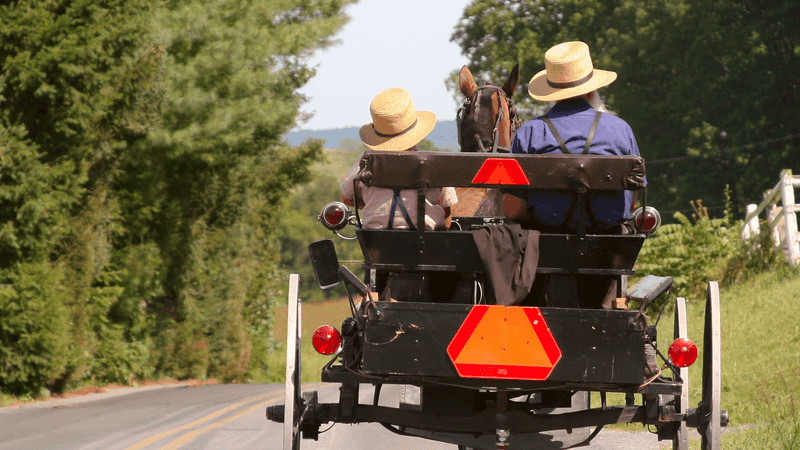
Intercourse holds a calm geometry where lanes cross fields at comfortable angles and fences guide the eye.
From the village edge, you can frame barns, silos, and kitchen gardens without crowding anything important.
The layouts feel deliberate yet soft, like a quilt stitched from pasture, orchard, and hay.
Crop rows march in quiet lines that catch low sun and throw steady shadows toward the road.
Watch for corn shocks in autumn placed with a rhythm that reads beautifully in a long lens.
White porches, milk houses, and springhouses create bright notes against weathered wood and stone.
Mornings bring low mist that layers barns in pale grays while roosters filter the background sound.
By late day, the fields glow and buggy silhouettes sail across ridges with graceful timing.
A respectful pull-off lets you work in peace while staying clear of private driveways and lanes.
Keep voices soft and engines idling low because this is working ground, not a backdrop.
Fences, gates, and hedgerows make useful natural frames that require no staging at all.
In winter, rows of stacked wood and feed bags provide texture when fields sit muted.
Spring turns clotheslines into quiet pennants that announce the wind’s direction and speed.
Look for small bridges where creeks mirror gables and silo crowns after rain.
Intercourse rewards patience, and Pennsylvania’s gentle hills return the favor with honest scenes.
3. Strasburg Rail Viewpoints and Meadows
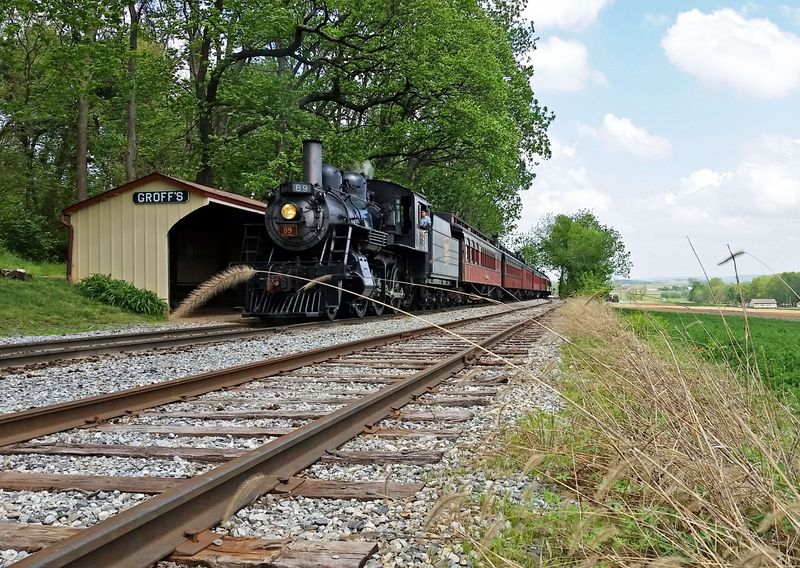
Near Strasburg, steam from the historic railroad curls above meadows and threads the farmland like a soft timeline.
Tracks run beside fields and lift your eye toward barns, silos, and white houses set back from the road.
The result is a layered scene where agriculture and motion share the frame without crowding.
Stand at a public crossing and the train’s plume becomes a leading line across pasture and corn.
Bank barns stack visually with water towers and hedgerows, building calm tiers of color and shape.
When the train passes, quiet returns and you hear swallows nesting under eaves along the lane.
In late afternoon, long shadows cross hay bales and grant friendly contrast to red boards and stone.
After rain, the rails gleam and mirror the sky while puddles double the barn doors.
Strasburg’s open views mean lenses can breathe and compositions stay clean and respectful.
Public pull-offs near farm corners let you work quickly and remain mindful of private ground.
Winter shows the skeleton of layout, all ridge lines, fence stakes, and the crisp bite of gables.
Spring folds in apple bloom that drifts through frames like a bright whisper from the orchard.
Photographers return because the same fields never repeat the same light twice.
It is a Pennsylvania scene where time, labor, and landscape speak in a calm, steady voice.
Strasburg offers structure and softness at once, and your images will feel grounded yet alive.
4. Paradise Township Ridge Roads
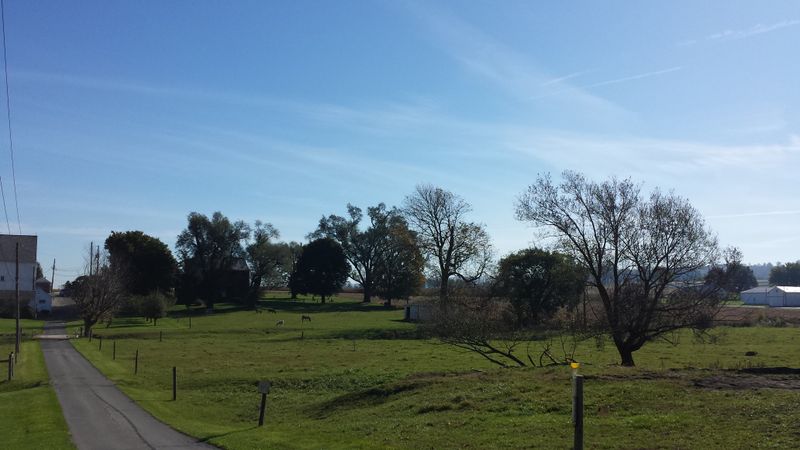
Paradise Township rises and falls in easy ridges that lay out farms like careful handwriting across the hills.
From the high points, roofs, silos, and windbreaks link together in patterns that photograph with quiet confidence.
Roadside pull-offs give safe room to compose without stepping onto private lanes or fields.
Look for diagonal fences that meet lanes at neat angles and direct the eye toward distant barns.
The houses often sit square to gardens with tidy borders and small orchards nearby.
Stacked hay, woodpiles, and wagon sheds create texture that works well in soft light.
When morning fog climbs the valleys, barns appear in layers and signal the day’s start.
At dusk, ridge shadows slide over pastures and leave barns glowing like banked coals.
Season to season, layouts shift with crops and chores but the underlying order holds steady.
On windy days, wash lines turn gentle and trace arcs that lead your composition.
Horses and buggies cross ridge crests where sky provides a clean, uncluttered backdrop.
Winter pulls color back and shows the bones of fences, posts, and stone foundations.
Spring greens arrive in bands, each field taking a different shade that layers the shot.
Paradise feels aptly named because the land reads calm and generous from almost any angle.
It is a Pennsylvania vantage where patience makes photographs that breathe without effort.
5. Gordonville Crossroads and Farm Markets
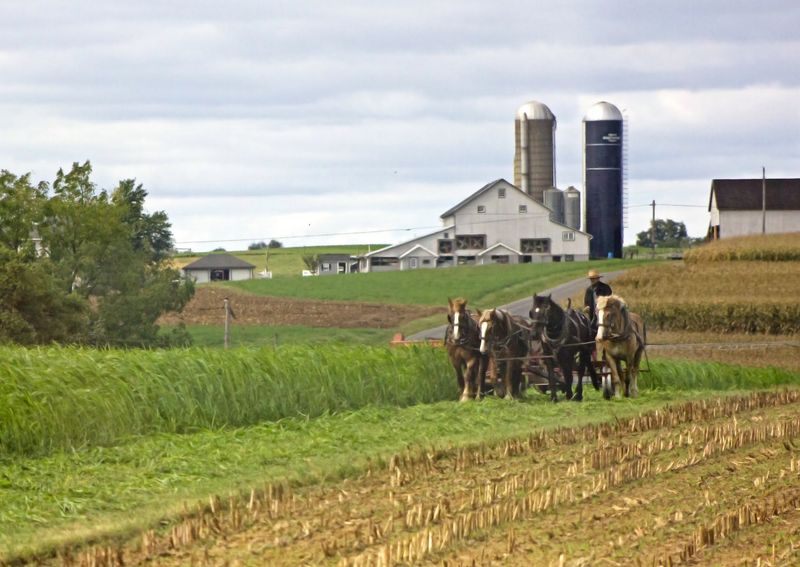
Gordonville gathers fields and crossroads into a tidy hub where daily life passes by in steady rhythms.
Farm markets sit near lanes, and beyond them barns, sheds, and smokehouses link into calm compositions.
The sightlines stay open enough to work with telephoto or a simple standard lens.
Morning deliveries bring wagons and buggies that move slowly, adding scale without dominating the frame.
Across the road, gardens border wash houses, and grapevines drape over small arbors with friendly shade.
Texture comes from stacked crates, hand tools, and the grain of weathered boards.
In soft overcast, white buildings glow against darker fields and make natural anchors for the shot.
After a shower, puddles gather beneath hitching rails and reflect gables like polished glass.
The crossroads allow quick shifts in angle, letting you tidy your background and keep lines clean.
When the sun drops, ridge silhouettes hold the sky while windows warm to evening chores.
Winter quiets the palette and reveals post-and-rail patterns that guide the eye gently.
Spring adds row crops that weave fine lines toward barns with brick foundations.
Please keep distance, use public sidewalks, and resist stepping onto private ground.
Gordonville offers the feeling of a shared neighborhood without the noise of busy highways.
This Pennsylvania corner rewards slow looking and listens kindly to careful photographers.
6. Leola Open Fields and Silo Clusters
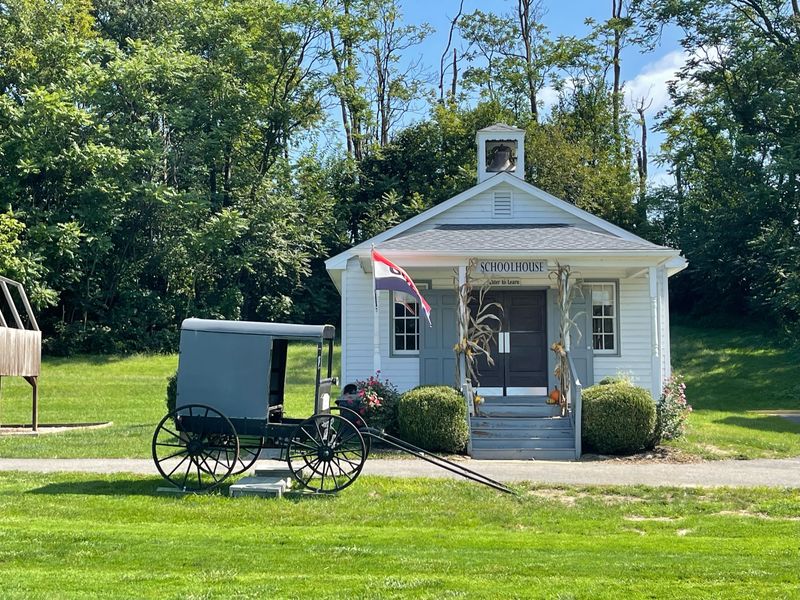
Leola opens into broad fields where silo clusters stand like calm lighthouses above the crops.
Spacing is generous here, and the distance between barns and houses gives compositions room to breathe.
Long rows pull you forward, and a single buggy can balance the frame with quiet dignity.
Look for sheds tucked behind bank barns where ramps, stonework, and shadow provide gentle contrast.
On clear evenings, warm light grazes clapboard and tin and softens the edges of every tool and gate.
After rain, the earth turns deep and rich, and wheel ruts trace thoughtful curves toward lanes.
Winter reduces the palette to clean grays and reds that photograph with classic simplicity.
Spring puts hay in motion, and wind shakes the tassels while crows sew dark stitches across sky.
Road shoulders are wide enough in places to stop safely without blocking traffic.
Respect posted signs, keep engines quiet, and let the landscape speak for itself.
Lines of firewood and stacked pallets create repeating shapes that sit well beneath towering silos.
White houses anchor the horizon and reflect the last light into nearby fields.
From one bend, you can stack three farms together and still keep a clean horizon.
This is a simple scene, yet the details accumulate into something steady and memorable.
Leola gives Pennsylvania’s farmland an open, generous stage that invites patient framing.
7. New Holland Edge-of-Town Barn Rows
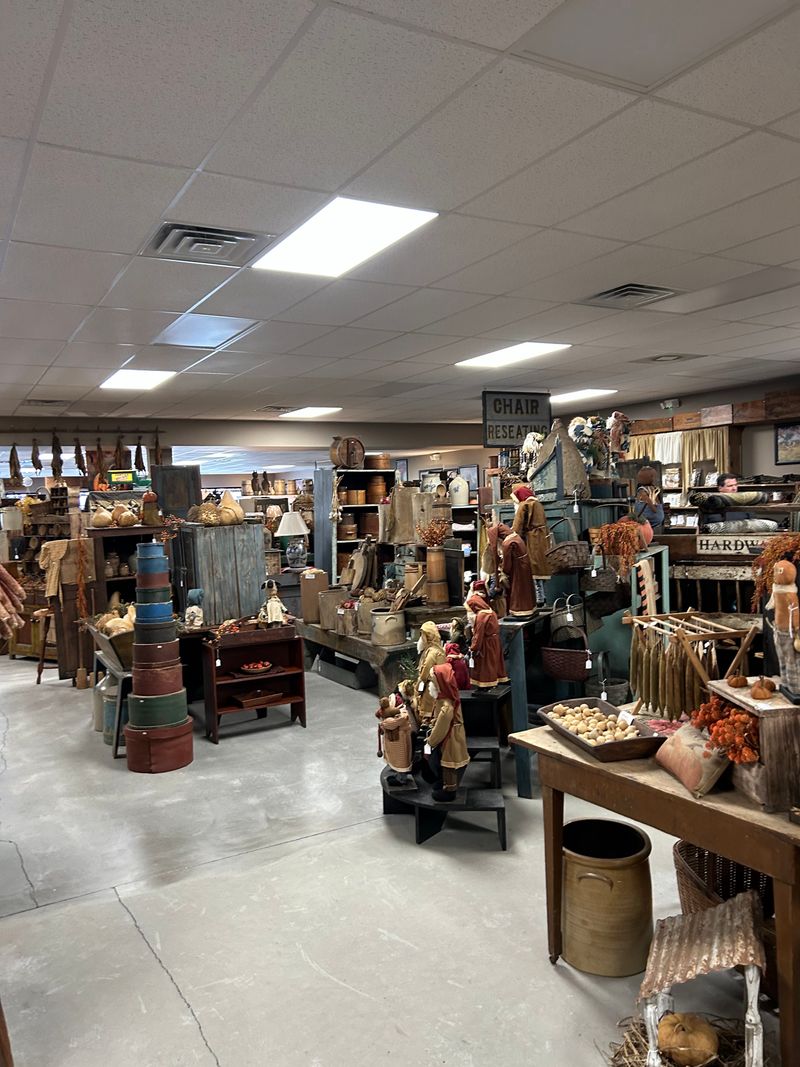
New Holland slides from small-town blocks into a graceful row of barns that parallels the road.
Each structure holds a different rhythm of windows, doors, and stone that photographs with quiet order.
The sequence lets you study variations in color and siding without losing the larger landscape.
Morning brings clean edges and crisp shadows that mark ladders, hinges, and hayloft openings.
By afternoon, the light softens and binds gardens, smokehouses, and wagon sheds into calm layers.
Look for kitchen gardens lined with herbs that trace neat borders along picket fences.
A buggy gliding past ties the set together and gives an honest sense of scale.
Please stand on public sidewalks or shoulders and avoid private drives that branch from the lanes.
After rain, the gravel darkens and puddles hold barn reflections like friendly mirrors.
In winter, you can read the bones of roofs and braces cleanly against the pale sky.
Spring wakes the fields behind the barns, and a thin haze lifts from turned soil.
The arrangement feels like a study in Pennsylvania craftsmanship set gently into pasture.
Photographers who like order will appreciate how each facade echoes the next without repeating.
Take time to frame the ridge line so the barns step down the hill with measured grace.
New Holland proves that edges of town can be as photogenic as deep countryside.
8. Quarryville South Country Folds
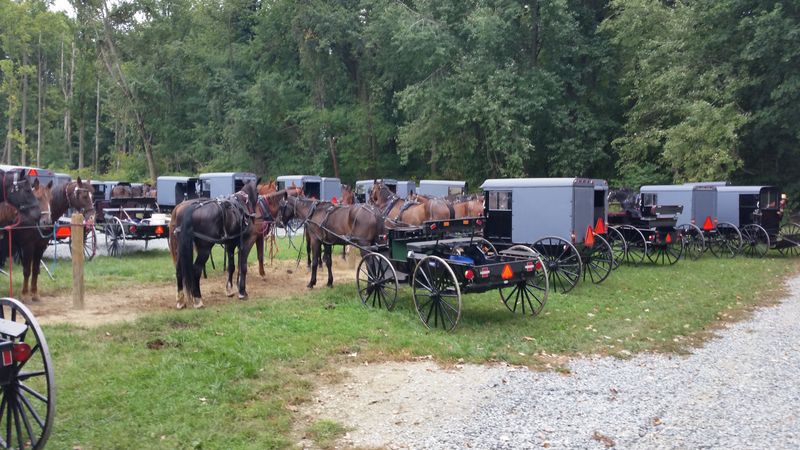
South of Quarryville the land gathers into folds that hide and reveal farms like careful stagecraft.
From a hilltop, rooftops, silos, and pastures align in pleasing tiers with nothing pressed or busy.
Curving lanes make natural leading lines that settle into valley bottoms without harsh angles.
Barns show a mix of stone and wood, and the textures sit well under slanting light.
When clouds move fast, shadows travel the hillsides and give every frame a living tempo.
After rainfall, creek seams brighten and guide the eye toward orchards and hedgerows.
Winter reveals terrace shapes and fence posts that run like dotted lines over snow.
Spring sets a long gradient from dark pasture to fresh hay and pale sky.
Pull-offs are scattered along quieter roads where you can work respectfully and unhurried.
Engines carry far in the still air, so keep idling low and conversations soft.
Corn shocks and hay wagons add measured accents that never upstage the barns.
White houses sit modestly and keep the horizon clean for wider compositions.
It is a landscape that rewards patience and small adjustments rather than big moves.
Quarryville’s folds present Pennsylvania farmland as a series of rooms, each with calm light.
Expect to leave with photographs that feel both spacious and intimate at once.
9. Ephrata Outskirts and Meadow Lines
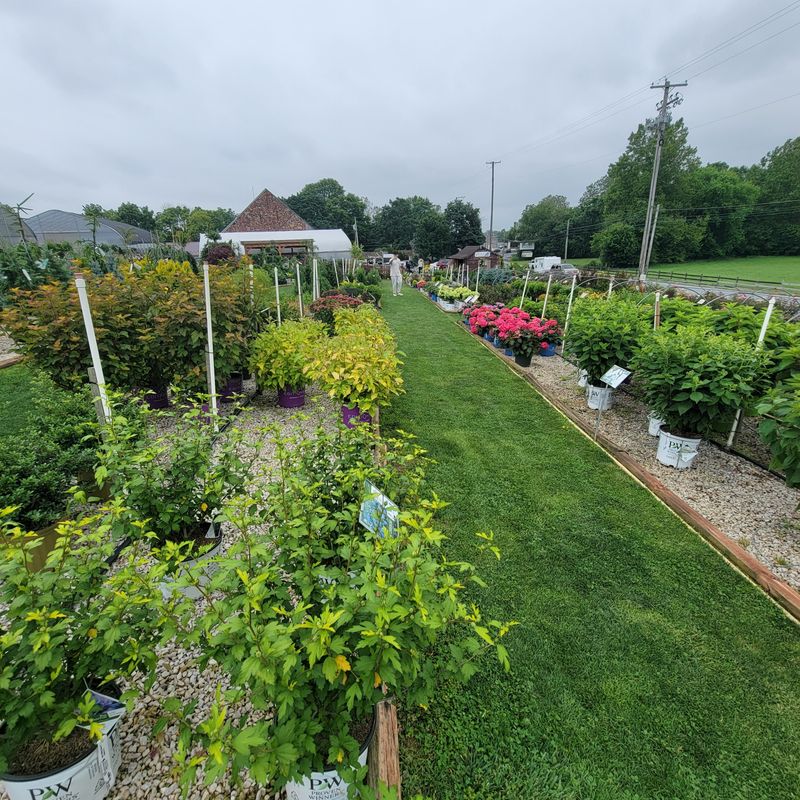
The outskirts of Ephrata soften into meadows where fences and hedges draw long, gentle lines.
Farmhouses sit back from the road with gardens that gleam after dew and first light.
Barns, sheds, and smokehouses place themselves with a quiet logic that photographs cleanly.
Mist gathers along the low ground and lifts in ribbons that slide past silo tops.
Clotheslines add bright accents that move just enough to show the wind’s character.
Gravel shoulders give you a safe perch to compose without intruding on daily work.
In late day, the meadow edges glow while rooflines hold a cool, steady blue.
After rain, grasses lean and catch highlights that run like threads across the frame.
Winter pares the scene to fence, lane, and gable, which reads simple and true.
Spring lays out fresh rows that echo the pitch of nearby barn roofs.
Place a tree trunk at the edge of your frame to anchor the open space.
Watch for buggies moving through shallow dips that reveal and hide them as they pass.
The calm here feels earned and free of distraction, perfect for unhurried looking.
Ephrata’s edges show Pennsylvania’s farm order without crowd noise or cluttered backdrops.
Your camera will find balance in the meadow lines and the measured pace of life.
Dear Reader: This page may contain affiliate links which may earn a commission if you click through and make a purchase. Our independent journalism is not influenced by any advertiser or commercial initiative unless it is clearly marked as sponsored content. As travel products change, please be sure to reconfirm all details and stay up to date with current events to ensure a safe and successful trip.
