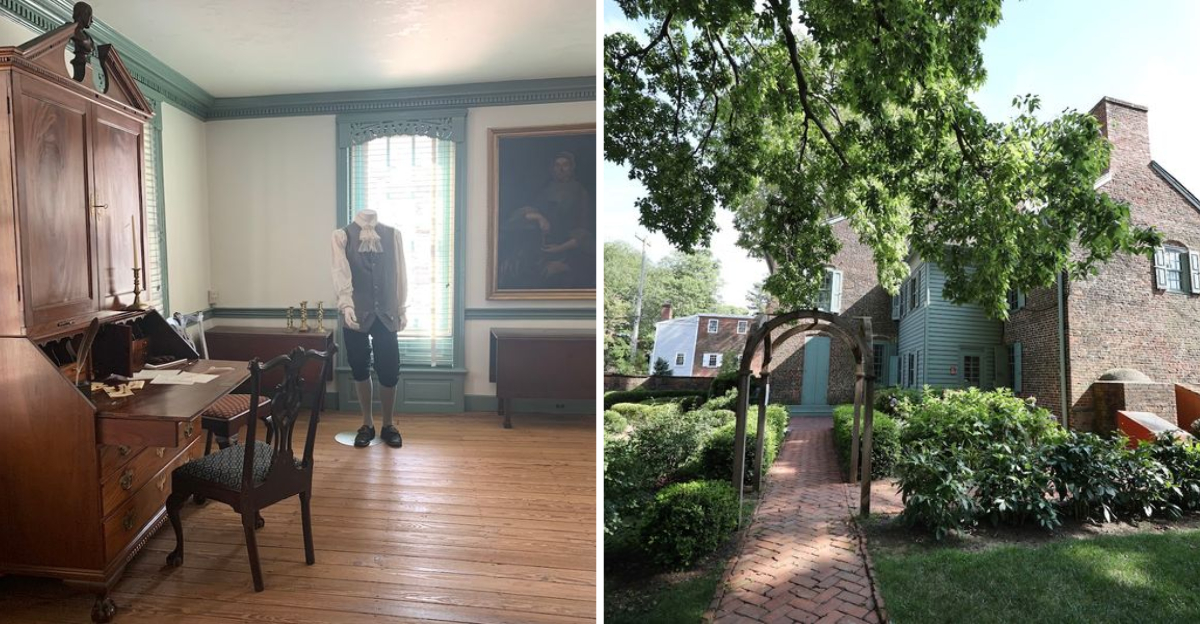
I am not usually a ghost person. Creaky floors and old buildings just feel like old buildings to me.
But then I heard about the woman in blue. Guests have reported seeing her for decades.
A lady in a long blue dress who appears in photographs, lingers in doorways, then vanishes. Some say she is friendly.
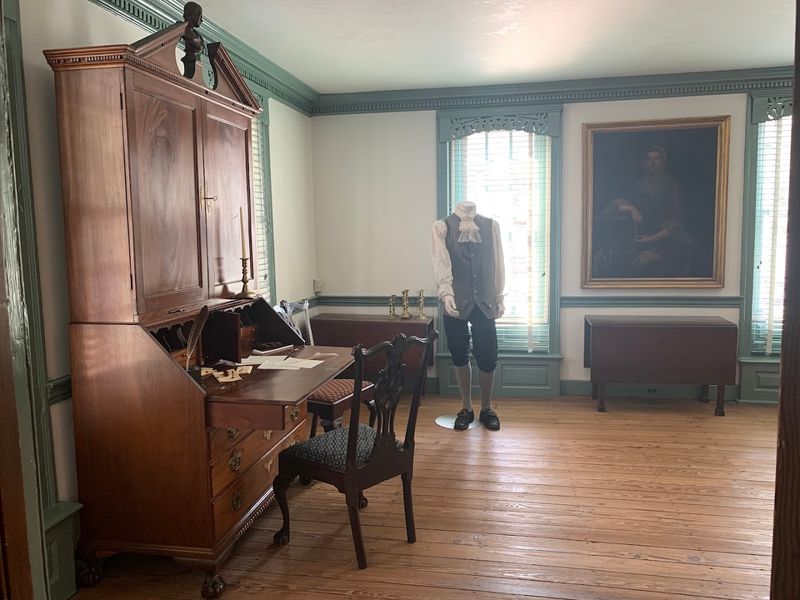
Others say she just watches. The house itself is gorgeous either way. Worn hardwood, antique furniture, that heavy quiet you only get in really old places.
I did not see her myself. But two other guests swore they did.
And honestly? Parts of that Delaware building gave me a feeling I could not explain.
A Georgian Gem Built in the 1730s
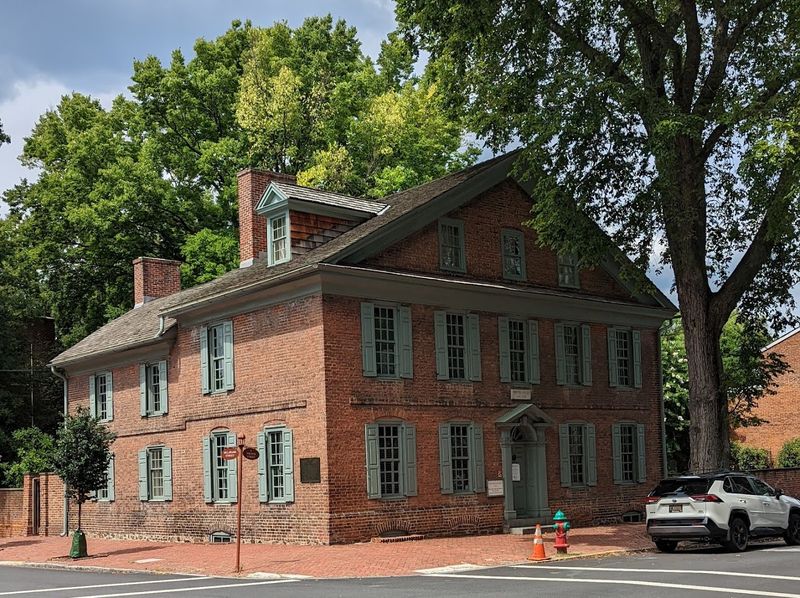
The moment you lay eyes on the Amstel House, something about its proportions just feels right. The brick facade is sturdy and symmetrical, the kind of architecture that communicates permanence without trying too hard.
It was built in the 1730s by Dr. John Finney, a physician who was among the wealthiest residents in New Castle at the time.
Dr. Finney did not cut corners. The house features original woodwork that has survived nearly three centuries, along with an open hearth that once warmed the rooms of Delaware’s colonial elite.
The craftsmanship throughout reflects a level of care that was clearly meant to impress.
What makes the architecture especially striking is how much of it remains intact. Many buildings from this era have been altered beyond recognition, but the Amstel House still carries its original bones.
The floor plan, the window placement, and the interior detailing all speak to a time when New Castle was a thriving port town at the center of early American life. For anyone who appreciates old buildings, this one delivers something genuinely rare: authenticity you can actually feel when you step inside.
Dr. John Finney and the Roots of New Castle’s Prosperity
Dr. John Finney was not just a doctor. He was the kind of man who shaped a community, and the house he built reflects exactly how much influence he carried in colonial New Castle.
As one of the town’s most prominent landowners, his wealth and social standing were written into every detail of the Amstel House’s construction.
He chose a location near the center of town, close to the courthouse and the church, which tells you something about how he saw himself in relation to civic life. The house was designed to receive guests, to host important conversations, and to signal success.
It worked.
When Finney died in 1774, the property passed to his daughter, Anna Dorothea, keeping it within the family. His legacy, though, extended well beyond the walls of the house.
The prosperity he represented helped define what New Castle was during its most influential decades as a colonial port. Visiting the Amstel House today is partly about understanding that world, the ambitions, the social structures, and the everyday rhythms of a town that once mattered enormously to the young American colonies.
Finney’s story is a good place to begin that understanding.
Nicholas Van Dyke and a Governor’s Residency
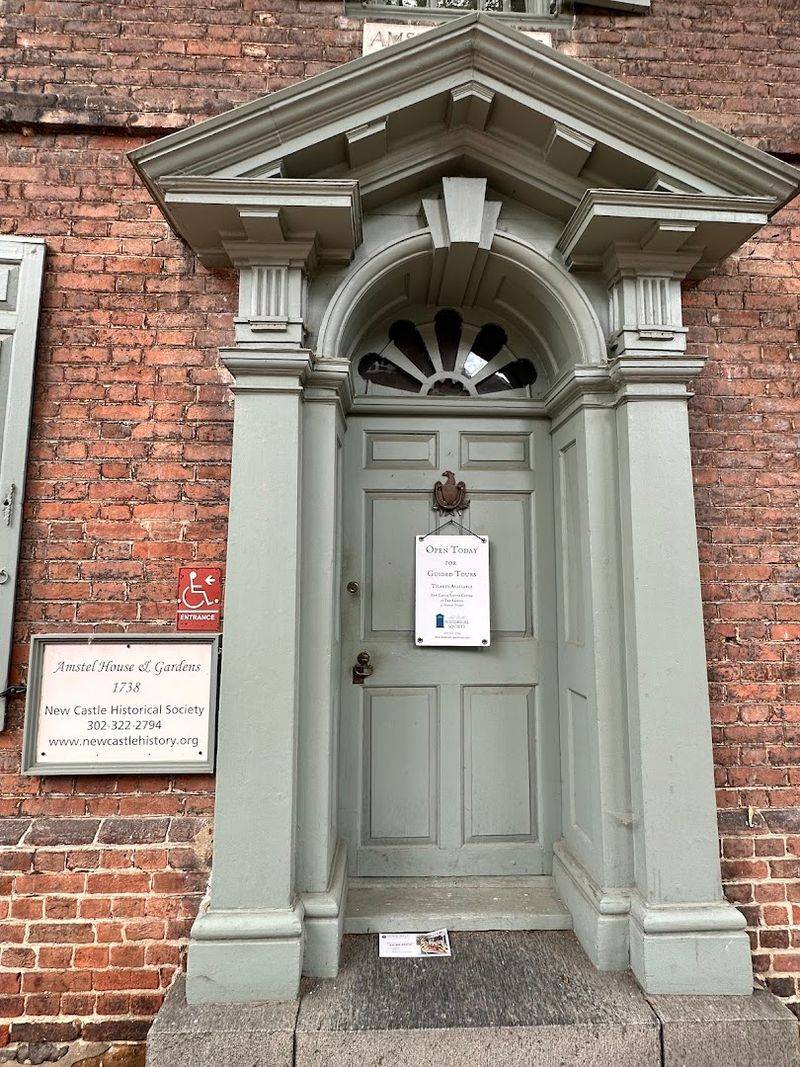
After Anna Dorothea inherited the property, she rented it to Nicholas Van Dyke, an attorney whose career was heading somewhere significant. He would go on to become the seventh governor of Delaware, and for a time, this house was his home base while he built that career.
There is something quietly thrilling about standing in a room where a future governor once prepared his legal arguments or entertained colleagues. The Amstel House absorbed those conversations, those ambitions, and that political energy.
It was not just a private residence; it functioned as a hub of influence during a formative period in American history.
Van Dyke’s connection to the house gives it a layer of political significance that goes beyond simple preservation. New Castle was a town where decisions mattered, where lawyers became governors and governors shaped states.
The fact that this building was part of that story makes every room feel a little heavier with meaning. Touring the house with this context in mind transforms the experience from a pleasant walk through old furniture into something more like reading a chapter of early American democracy, written in wood and brick rather than ink and paper.
The Day George Washington Came to the Wedding
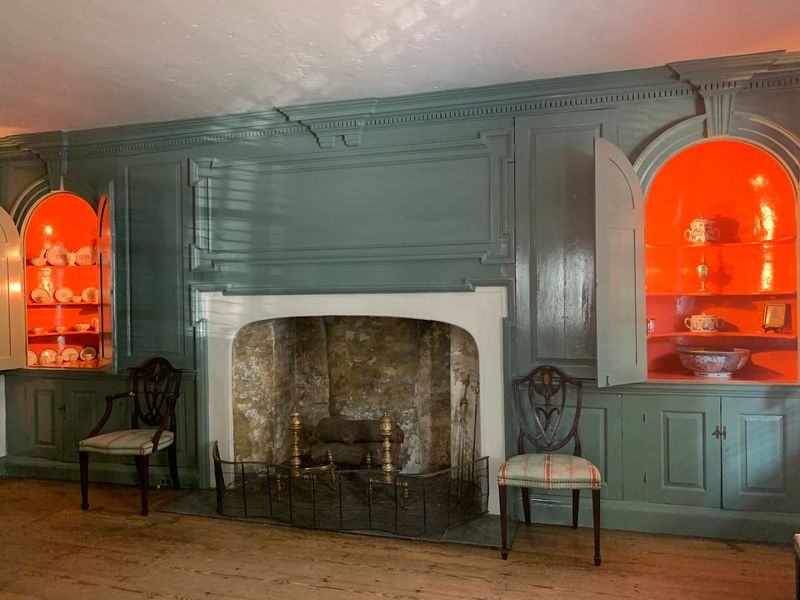
In 1784, George Washington attended a wedding in the parlor of the Amstel House. That sentence alone is enough to make you look at the room differently when you visit.
Ann Van Dyke, daughter of Nicholas Van Dyke, was married there, and Washington was among the guests.
It is worth pausing on that detail. This was not a famous battlefield or a government building.
It was a private home, a parlor with wooden floors and a fireplace, and one of the most recognizable figures in American history stood in it to celebrate a wedding. The intimacy of that moment is striking.
The parlor is still there, largely unchanged in its essential character. When the tour guide points out where the ceremony likely took place, the room takes on a different kind of weight.
History in museums can feel distant, sealed behind glass. Here, it feels personal.
You are standing in the same square footage where Washington once raised a glass and wished a young couple well. For American history enthusiasts, that kind of direct, tangible connection to the past is genuinely hard to find, and the Amstel House offers it without fanfare or exaggeration.
The Lady in Blue: New Castle’s Most Famous Ghost
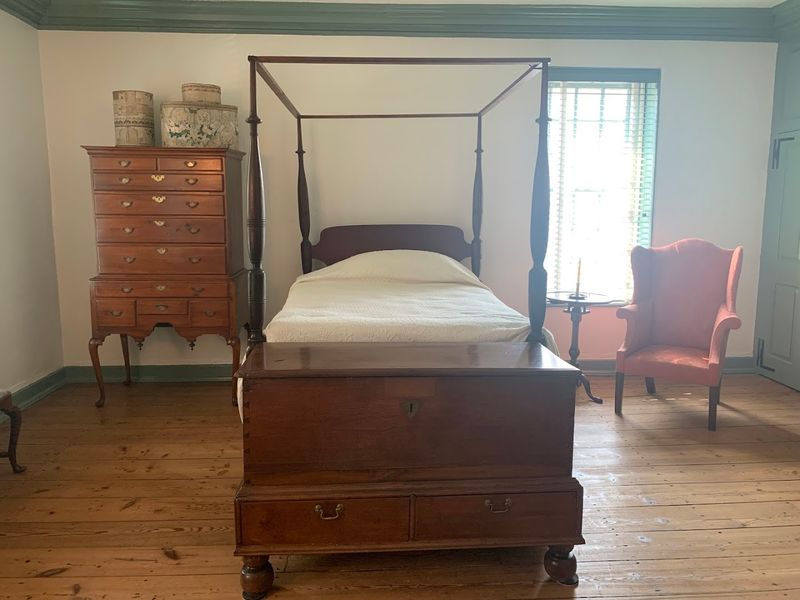
Nobody talks about the Amstel House for very long before the Lady in Blue comes up. She is the resident ghost, reportedly seen in the bedroom windows of the house for nearly a century, and she has become one of the most enduring pieces of local folklore in all of Delaware.
Nobody knows exactly who she is.
Some believe she is a family member who never quite found a reason to leave. Others think she may be connected to a loss that happened within the walls of the house, though the historical record does not confirm a specific story.
What keeps the legend alive is the consistency of the sightings reported by visitors and staff over the years.
I will admit, I kept glancing at the upstairs windows while I was outside. There is something about the way the light hits the old glass that makes your imagination run freely.
Whether you believe in ghosts or find the whole thing entertainingly spooky, the Lady in Blue adds a dimension to the Amstel House that no history book can fully capture. She is part of the building’s personality now, as much as the woodwork or the hearth, and she makes the place genuinely unforgettable.
Paranormal Tours and the Thrill of the Unknown
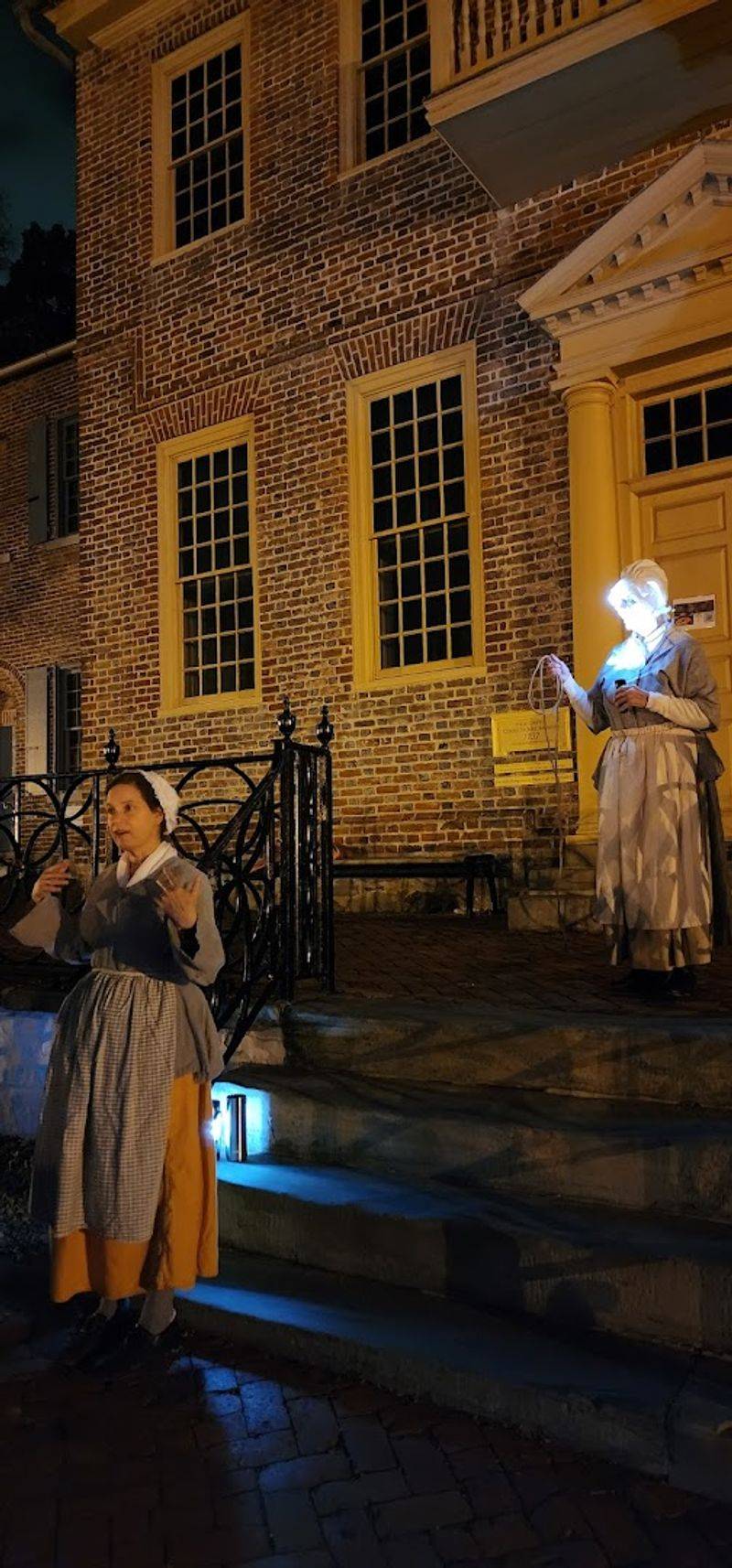
The New Castle Historical Society does not shy away from the paranormal side of the Amstel House. Guided tours cover the ghost stories alongside the architecture and historical facts, which makes for a surprisingly well-rounded experience.
You get the history and the haunting in one visit.
The tour format works well because the guides are knowledgeable and clearly enjoy what they do. They present the ghost stories as part of the house’s living legacy rather than as a cheap attraction.
That approach keeps things interesting for skeptics and believers alike.
If you visit during the autumn months, the atmosphere gets an extra layer of mood. The old brick, the narrow streets of New Castle, and the fading daylight all contribute to a setting that feels genuinely atmospheric.
Even if nothing unusual happens during your visit, the experience of moving through those rooms with the history and the folklore layered together is memorable on its own terms. Ghost tours at historic sites can sometimes feel gimmicky, but the Amstel House earns its reputation honestly.
The building has enough genuine history to anchor the spookier elements, and that balance makes the whole thing feel worthwhile rather than theatrical.
The New Castle Historical Society and Saving a Landmark
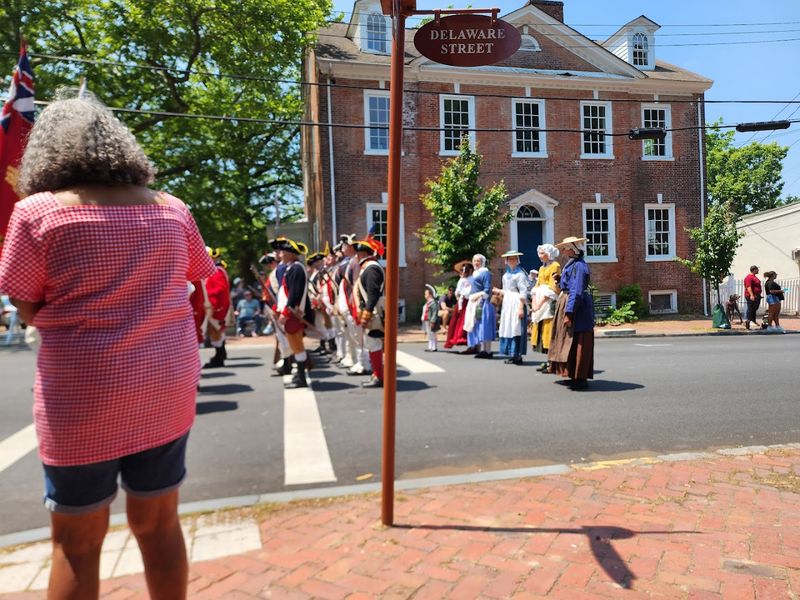
In 1931, a group of concerned citizens in New Castle decided they were not going to let the Amstel House fall into neglect. They raised funds, purchased the property, and in doing so, sparked the creation of the New Castle Historical Society.
That is a remarkable origin story for a preservation organization.
The Historical Society has since taken on the broader mission of protecting and maintaining New Castle’s historic architecture, which is saying something because the town has a lot of it. New Castle is one of the best-preserved colonial towns on the East Coast, and organizations like this one deserve a significant share of the credit for that.
Visiting the Amstel House is, in a small way, a vote of confidence for that kind of community-driven preservation work. The entrance fee supports the ongoing maintenance of the building and the educational programs the Society runs.
It is easy to take well-preserved historic sites for granted, but places like this exist because people decided they were worth fighting for. That story of civic commitment, layered on top of everything else the house represents, gives the visit a quiet sense of meaning that goes beyond tourism.
Planning Your Visit to 2 E 4th Street, New Castle
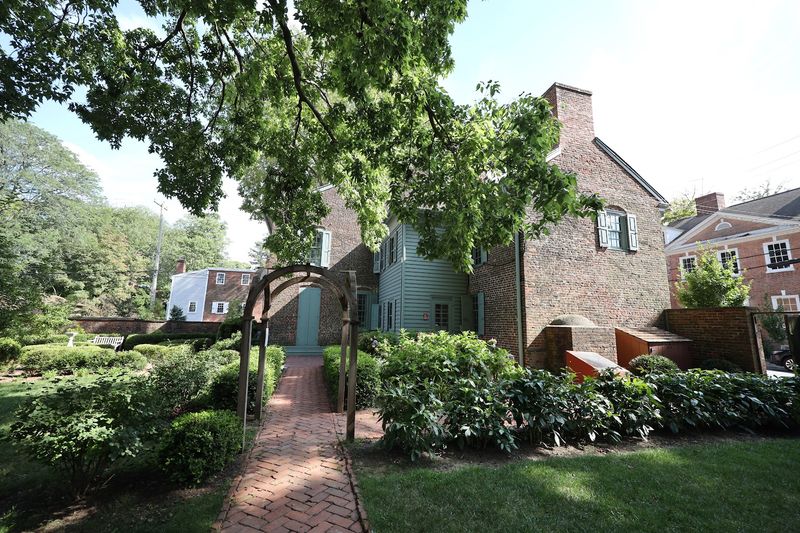
New Castle itself is worth the trip even before you factor in the Amstel House. The town’s historic district is compact and walkable, lined with colonial-era buildings, a scenic waterfront, and the kind of quiet charm that feels genuinely lived-in rather than staged for visitors.
It is an easy day trip from Philadelphia, Baltimore, or Wilmington.
The Amstel House is located at 2 E 4th Street, right in the heart of the historic district. Guided tours are offered through the New Castle Historical Society, and it is worth checking their schedule in advance, especially if you are visiting with a group or during a busy season.
Wear comfortable shoes because the floors are original and uneven in places, which is part of the charm but worth knowing ahead of time. Plan to spend at least an hour inside, more if you want to explore the surrounding neighborhood afterward.
There are benches along the waterfront and several small shops and restaurants nearby that make for a pleasant way to end the afternoon. The whole experience has a relaxed pace that suits the town perfectly.
New Castle rewards slow, attentive visitors, and the Amstel House is the best possible introduction to everything the town has to offer.
Address: 2 E 4th St, New Castle, DE 19720
