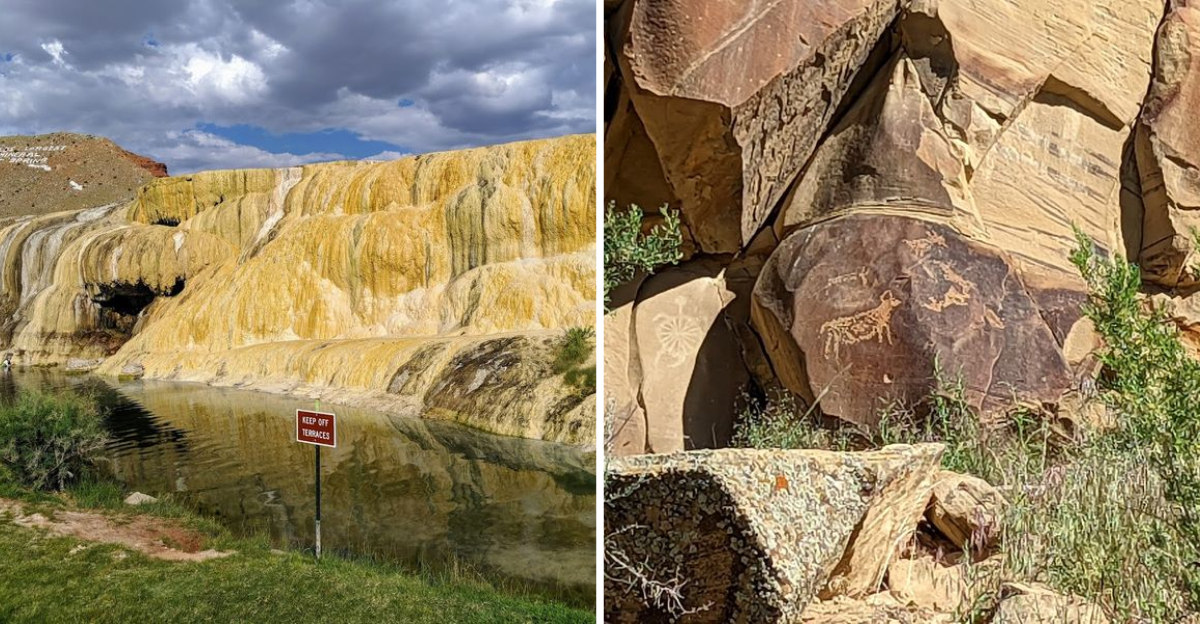
Pressing your eyes toward a sandstone cliff and realizing the marks carved into it were made before the Egyptian pyramids even existed. I almost skipped this Wyoming site while passing through. That would have been a serious mistake.
A winding gravel road leads to hundreds of petroglyphs spread across rock panels, some dating back thousands of years. The sheer age of these carvings is hard to fully wrap your head around. Once you are standing in front of them, the weight of that history hits differently.
This is one of those rare places that makes the ancient world feel startlingly close.
A Timeline That Rewrites What You Thought You Knew
Most people grow up thinking the Egyptian pyramids represent the oldest things humans ever made. Legend Rock quietly challenges that idea without making a big announcement about it.
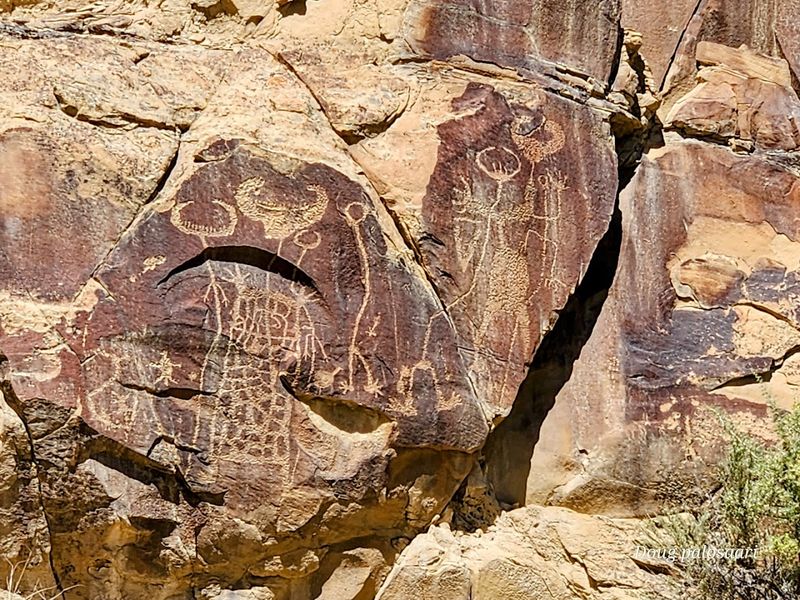
Some of the petroglyphs here have been dated to roughly 10,000 to 11,000 years ago, which means they were carved thousands of years before the first pyramid ever broke ground in Egypt.
The Step Pyramid of Djoser, one of the earliest Egyptian pyramids, was built around 2700 BCE. That puts it at roughly 4,700 years old.
The oldest carvings at Legend Rock beat that by more than double. Sitting with that comparison for a moment genuinely changes how you look at the rock panels in front of you.
These were not random scratches. The figures are deliberate, detailed, and varied, ranging from abstract shapes to recognizable animals and human-like forms.
The people who made them lived full lives in this valley, returned here across generations, and left something permanent behind. That kind of continuity across millennia is rare to witness anywhere in the world, let alone along a quiet creek in central Wyoming.
What the Dinwoody Tradition Actually Looks Like Up Close
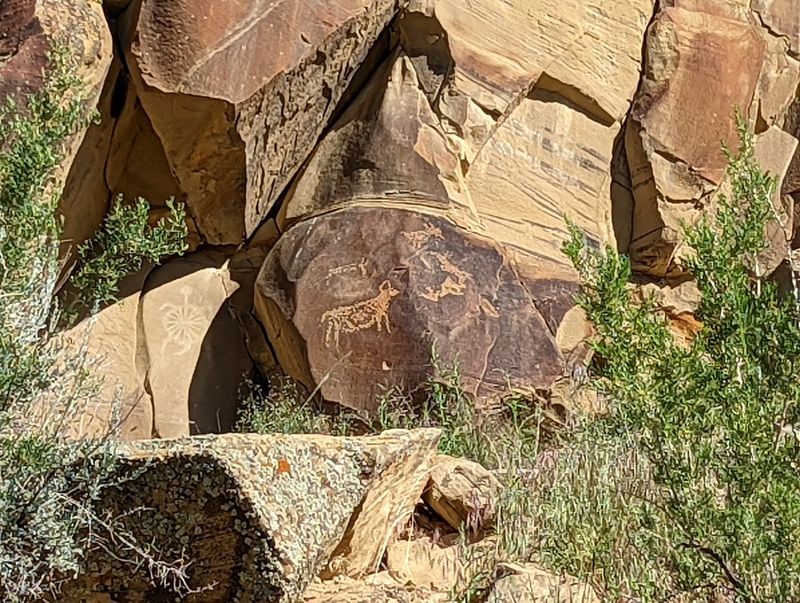
The Dinwoody tradition is a specific style of rock art found primarily in the Wyoming Basin, and Legend Rock is considered one of its finest examples. Named after Dinwoody Lake in Fremont County, this artistic tradition spans thousands of years and is distinguished by its deeply incised, large-scale figures that often appear almost ghostly or surreal in form.
Up close, the figures have a presence that photographs rarely capture fully. Some anthropomorphic forms have elaborate internal body decorations, almost like x-ray imagery, with ribs or organs suggested inside the outline of a figure.
Animals appear mid-motion, and some panels layer multiple generations of carvings on top of each other, creating a visual archive that reads like pages stacked in a book.
Archaeologists believe the Dinwoody tradition has roots stretching back at least 7,000 years at this site, with some elements possibly older. Scholars continue to study what these images meant to the people who made them, though definitive interpretations remain elusive.
What is clear is that this was not casual art. The effort required to carve deeply into hard sandstone suggests these images held serious cultural, spiritual, or ceremonial significance for the communities that created them.
55 Rock Panels and the Stories Between Them
Fifty-five rock panels might sound like a manageable number until you start moving between them and realize how much there is to absorb at each one. The panels stretch along the sandstone cliffs that line Cottonwood Creek, and each one feels like a different chapter in a very long, very old story.
Some panels are dense with carvings, others hold just a few figures, but none of them feel insignificant.
A numbered brochure available at the site helps visitors connect specific images to their corresponding panels. Picking one up before you start the trail makes a real difference, because without it, some of the smaller or more weathered carvings can be easy to overlook.
The lower gravel trail keeps you at a comfortable viewing distance from most panels, while an upper trail gets you closer to certain sections of the cliff.
Arriving early in the morning gives you the best light for spotting detail in the carvings, and the cooler air makes the walk far more comfortable. The whole trail covers roughly a mile, so it is accessible for most fitness levels.
Taking your time at each panel rather than rushing through the full route is genuinely worth it. There is a lot to see if you slow down enough to actually look.
Getting There Without Getting Lost
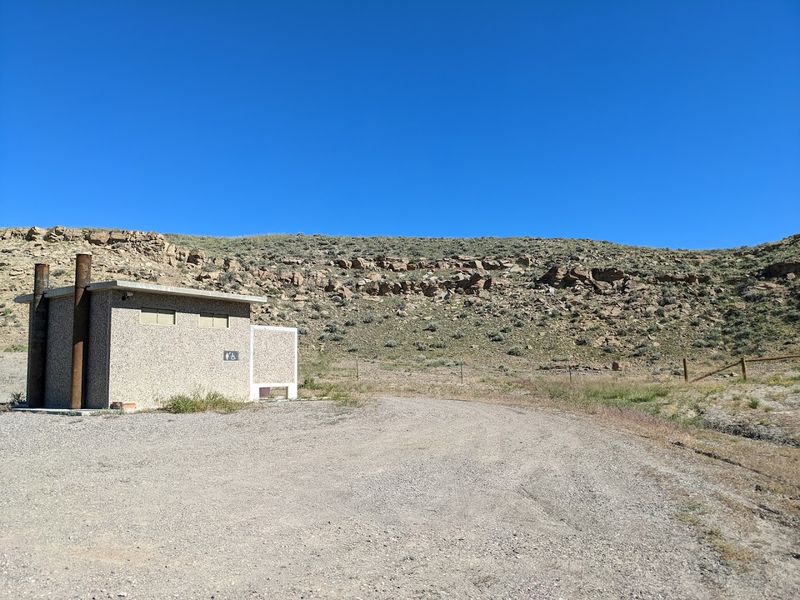
Getting to Legend Rock is part of the experience, but it does require a bit of attention. The most important thing to know is that GPS navigation apps, including Google Maps, have a habit of routing drivers through the Hamilton Dome oil field on rough dirt roads.
That route passes warning signs for hazardous gases and is absolutely not the right way to go.
The correct approach is to take Highway 120 and turn onto Cottonwood Road when you spot the brown highway sign for Legend Rock. From there, it is about 2.7 miles of gravel road to the parking area, with a notably steep downhill section just before you arrive.
Most vehicles handle it fine, though drivers with large RVs or trailers may want to check road gradient apps before committing to the descent.
The parking lot is spacious enough to accommodate larger vehicles if you do make it down. Vault restrooms are available on site, and a small interpretive center near the trailhead offers background on the site’s history when staff are present.
The site is open daily from 8 AM to 6 PM during the operating season, which generally runs May through September. Visiting outside that window means the gate will be locked, so plan accordingly.
The Valley Itself Has a Presence Worth Noticing
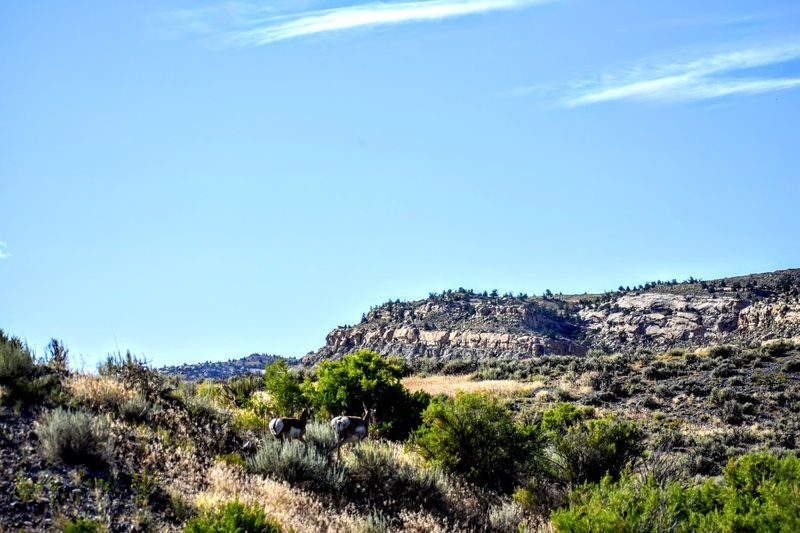
Before you even reach the first rock panel, the valley around Legend Rock starts to make its own impression. Cottonwood Creek runs quietly through the base of the canyon, and the surrounding sagebrush flats give way to dramatic sandstone walls that glow warm and orange in the morning sun.
It is easy to understand why people returned to this place for thousands of years.
Wildlife is part of the scenery here. The drive in often turns up deer, pronghorn, or birds of prey circling the ridgeline.
Rattlesnakes are also present in the warmer months, so watching where you step, especially on the upper trail, is genuinely important. Wearing sturdy footwear rather than sandals is a smart call for anyone planning to explore beyond the main gravel path.
The valley has a stillness to it that feels earned rather than accidental. On a quiet weekday morning, you might have the entire site to yourself, which gives you the space to actually absorb what you are looking at rather than navigating around other visitors.
That kind of solitude at a site this historically significant is increasingly rare. The creek sounds, the open sky, and the scale of the cliffs combine to make the setting feel genuinely ancient in the best possible way.
What to Bring and How to Make the Most of Your Visit
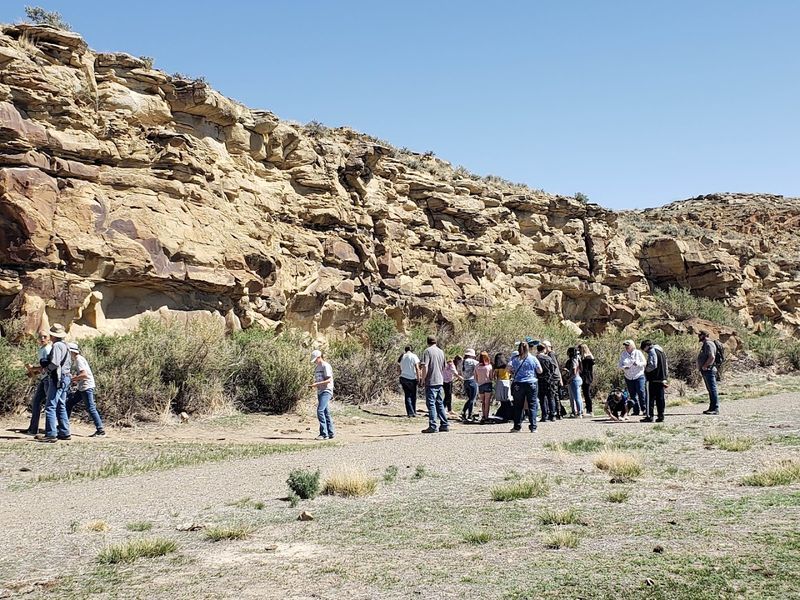
A little preparation goes a long way at Legend Rock. The site sits in open high desert with almost no shade along the trail, so a wide-brimmed hat and sunscreen are not optional extras, they are necessities, especially in summer.
Bringing more water than you think you need is equally smart, because the dry Wyoming air pulls moisture out of you faster than you expect.
Comfortable, closed-toe shoes with ankle support make the walk much more enjoyable, particularly if you plan to take the upper trail for closer views of the higher panels. The lower gravel trail is easy enough for most people, but the upper path gets a bit rougher and uneven in places.
Anyone with mobility concerns will find the lower trail perfectly satisfying on its own.
Grabbing the numbered brochure from the box near the trailhead is one of the simplest ways to get more out of the visit. It corresponds to markers placed beside each panel and gives context for what you are looking at.
Arriving early not only beats any potential crowds but also gives you better light for photography, since the morning sun hits the cliff face at an angle that brings out the depth of the carvings beautifully. Packing a simple picnic lunch to enjoy at the site makes the whole outing feel even more relaxed.
Why This Place Belongs on Your Wyoming Itinerary
Wyoming has no shortage of dramatic landscapes and outdoor destinations, but Legend Rock occupies a category all its own. This is not a place you visit because it is on a must-see list.
You visit because there is genuinely nothing else quite like standing in front of carvings that were made when woolly mammoths still roamed parts of North America.
The site earned its place on the National Register of Historic Places on July 5, 1973, and that recognition reflects how seriously archaeologists and historians regard its cultural value. With a 4.7-star rating across nearly 230 visitor reviews, it is clearly connecting with modern travelers just as powerfully as it connected with the communities who called this valley home for millennia.
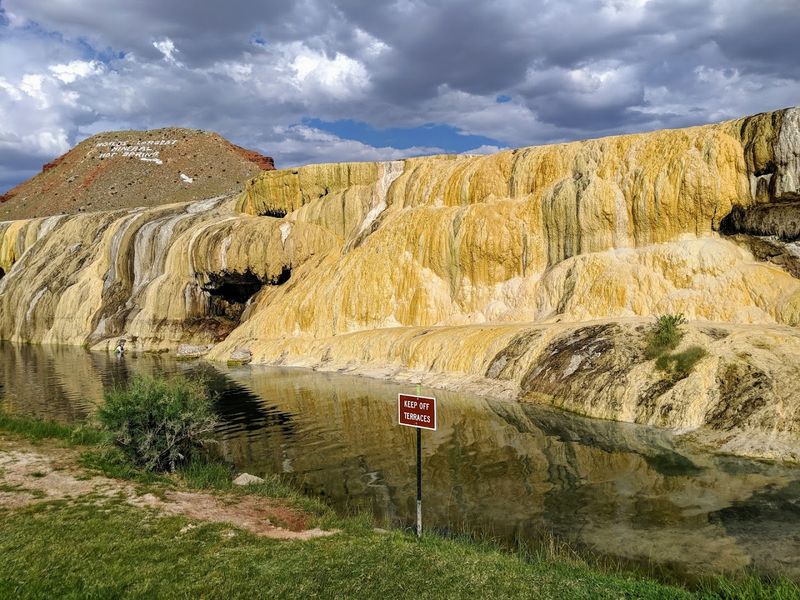
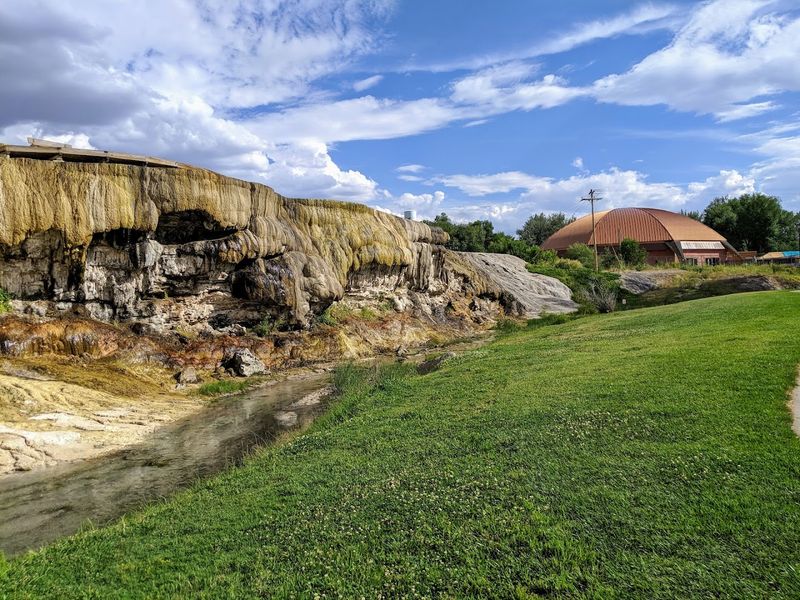
Thermopolis itself is worth a stop, known widely for its hot springs and the Wyoming Dinosaur Center. Adding Legend Rock as a half-day side trip from town creates a layered experience that moves from the prehistoric past to the ancient human record in a single afternoon.
The roughly 20-mile drive from Thermopolis is scenic and unhurried. For anyone traveling through central Wyoming, skipping this site would be the kind of decision you quietly regret for years afterward.
Address: 2861 West Cottonwood Road, Thermopolis, Wyoming
