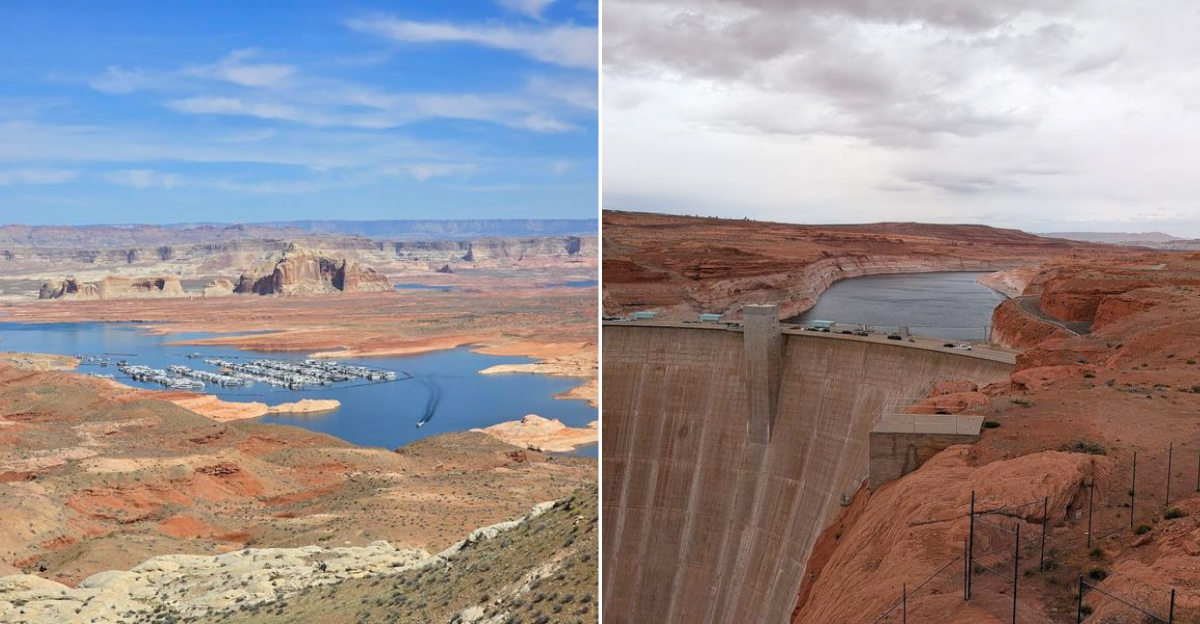
It is one thing to hear that a lake is dropping, and another to see the change become impossible to ignore. That is exactly what gives this Arizona lake such a gripping story right now.
What used to feel like a familiar landscape has taken on a much heavier mood as falling water levels have changed the shoreline and raised fresh questions about what happens next. The views can still stop you in your tracks, but they come with a very different kind of weight now.
That is why concern around this lake keeps growing. This is not just about a scenic Arizona destination looking a little different than it used to.
It is about a major lake hitting alarming lows and becoming part of a bigger conversation about drought, water pressure, and the future of the region. That tension is what makes this story so compelling, because the beauty is still there, but so is the warning written into the landscape.
Water Levels Changed The Story Of This Lake
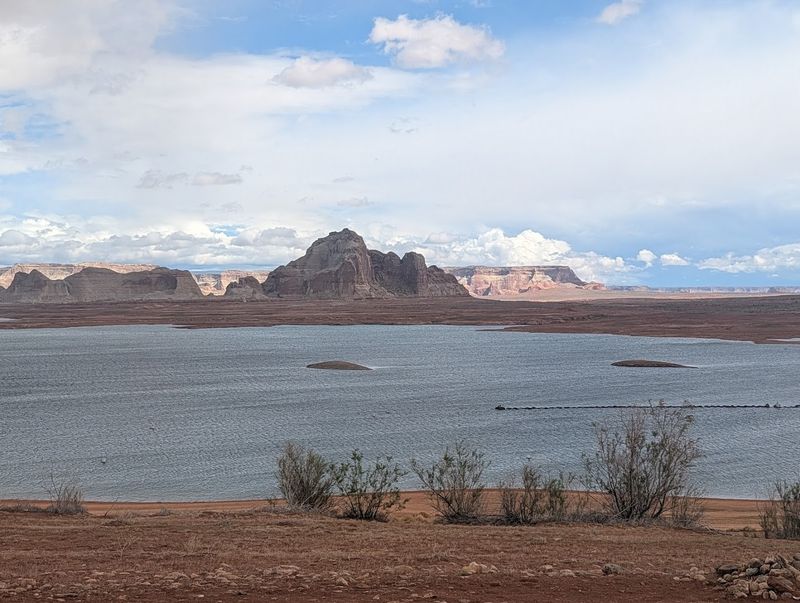
I used to think Lake Powell had one personality, bold and almost theatrical, but falling water changed the vibe and the stakes. The bathtub ring around those Navajo sandstone walls reads like a timeline, and it is not subtle.
You stand there and the cliffs feel taller, the coves longer, and the conversation in your head gets quieter, because the lake asks bigger questions than the map suggests.
Arizona feels present in the light and heat, while Utah frames the distance with those blocky mesas, and the water threads between them like a stubborn sentence. Rangers at Glen Canyon talk straight about conservation, energy, and releases, and you can hear the fatigue in that steady tone.
It is not drama, just the gravity of a system carrying more weight than it should.
Do you feel it too when a place keeps its beauty but reveals the bill? Marinas around Wahweap and Antelope Point tell the story with ramps that stretch, pivot, and try again.
Every quiet cove still invites a paddle, yet the paddle strokes carry a new awareness, like you are moving through a chapter that belongs to all of us, especially Arizona.
Exposed Shoreline Shows How Much Shifted
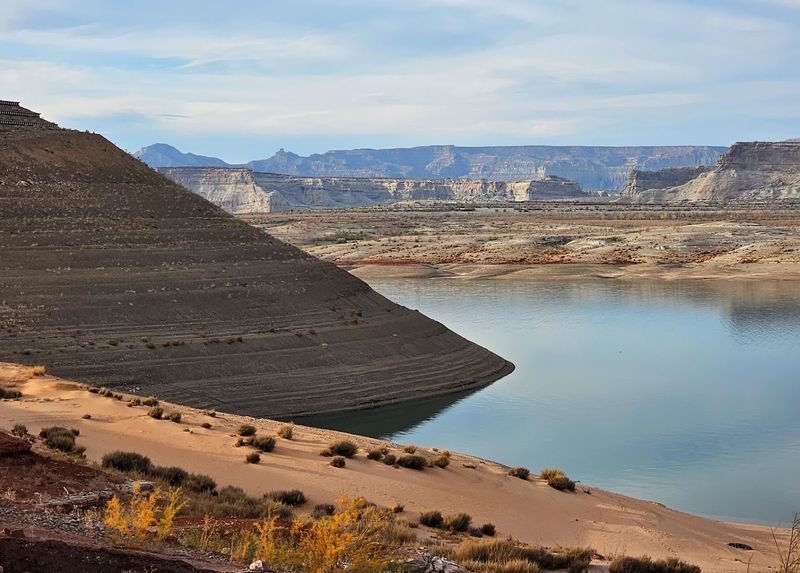
The first thing that hits you is the width of the beaches where coves used to feel tight and secret. You walk across ripples of sand and patches of cracked mud, and every step tracks time instead of distance.
The cliffs carry that white mineral band like an old tape mark, and your eyes keep measuring, even when you swear you will just enjoy the view.
At Wahweap, the docks ride lower, and metal sections of ramp angle out like improvised bridges, practical and a little weary. You hear snippets of parking lot talk about lake stages, releases, and whether the snowpack will bail things out.
It is normal conversation, just heavier now, because Arizona and the entire basin are threaded into these floating walkways.
I found pottery fragments of thought rather than artifacts, watching gulls hop along new shoreline where water used to lap. The silence is not empty, it is listening.
If you are the kind of person who notices small shifts, this shoreline shows you everything you did not want to miss.
Fresh Concern Keeps Lake Powell In Focus
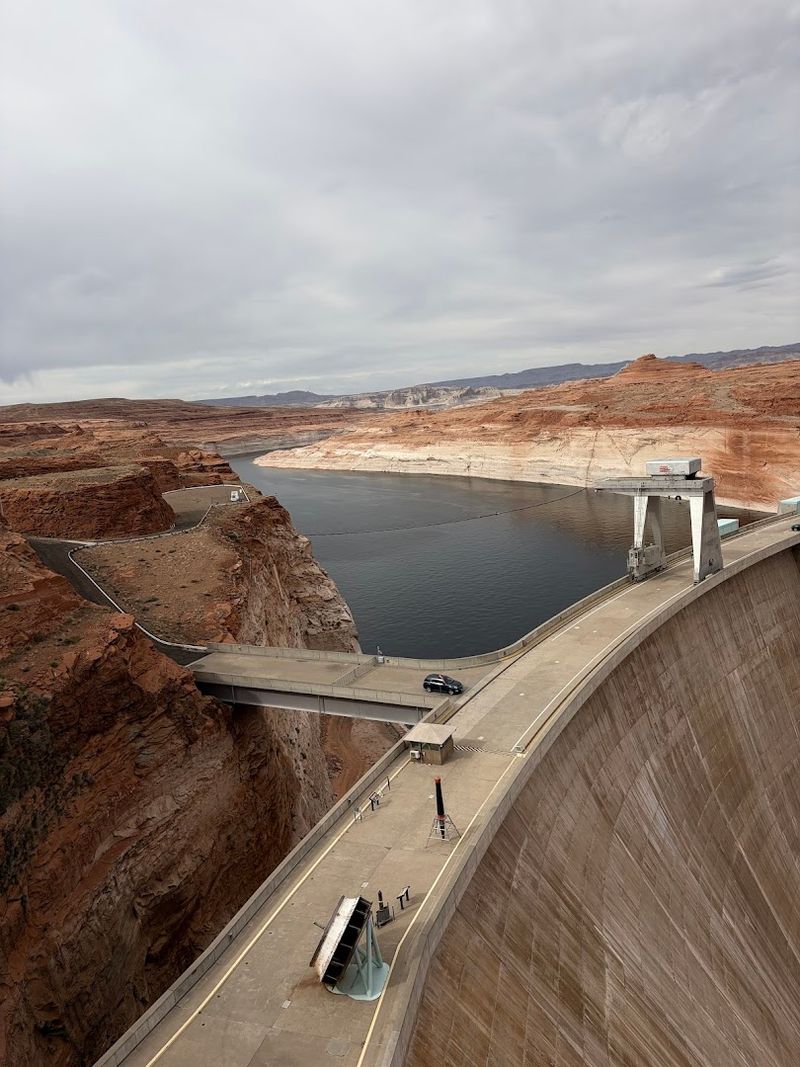
People ask if the worry is overblown, and I get it, because the lake still looks huge from most angles. Then you remember what the dam needs to keep turbines spinning, and how that links to lights across Arizona and beyond.
Concern is not a headline out here, it is logistics, calendars, and real households connected by wires you cannot see from the overlook.
The managers talk about conservation like a steady drumbeat, not a stunt, and it sinks in while you watch the surface ruffle under a dry wind. Every foot of water means choices downstream, and the choices come with tradeoffs that do not fit neatly on a signboard.
You hear phrases like releases, inflows, and operational flexibility, and it feels like learning a new language on a road trip.
So why keep coming back when it feels complicated? Because the place is teaching a live class on the West, and Arizona is sitting in the front row whether it wants to or not.
Standing there, you feel both loyalty to the view and responsibility for the math behind it.
The View Feels Beautiful And Unsettling
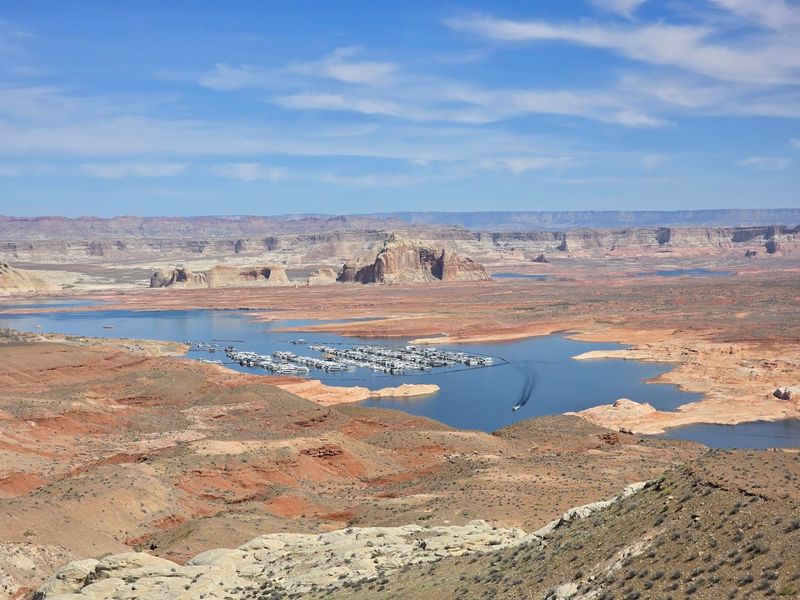
From the overlooks near Page, the lake spreads out like a painted map you could step into, and yet something tugs at the edges. Beauty does its job, but the context keeps whispering, and you cannot quite tuck it away.
The water lanes look sleeker, skinnier in places, like someone tugged the ribbon through a smaller eyelet.
I stood there longer than planned, noticing boats making delicate lines, almost respectful of the new margins. A couple nearby asked if the levels were coming back, and I gave the honest answer, which is that it depends on snow, policy, and a little luck.
That is not evasive, it is faithful to the complexity living inside these canyons.
Arizona sunsets still go heavy on copper and rose, and the cliffs drink that color the way old sandstone does. It is gorgeous, truly, and also layered with a mood that sits in your chest.
Maybe that blend is the real landscape now, beautiful and a little unsettled, and that is okay to admit.
Low Water Leaves A Different First Impression
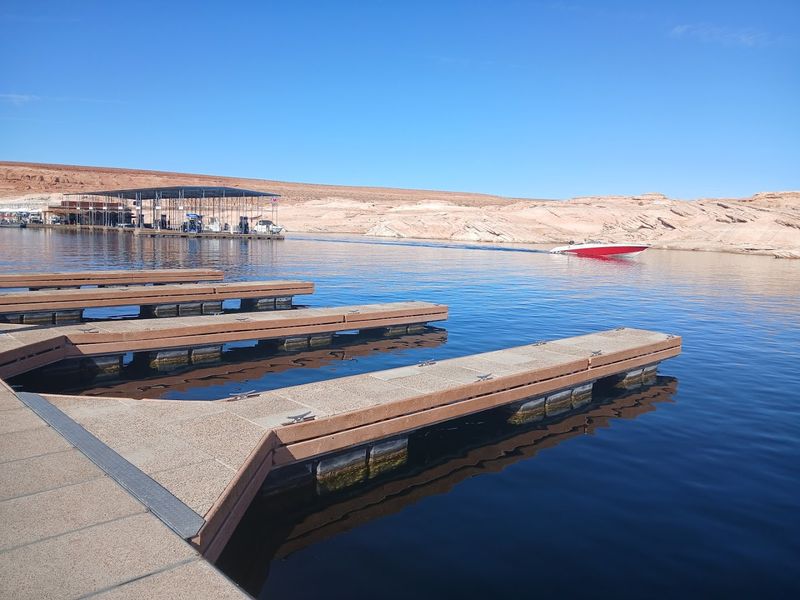
Your first five minutes at the ramp set the tone, and lately that tone starts with a longer walk to the water. The launch feels more like a project than a moment, and everyone adapts with patience that looks practiced.
You can tell the regulars by the way they scan the angle, adjust the trailer, and send a quick nod, like we are all in the same class.
Low water redraws the parking choreography, and it quietly reshapes expectations. You do not lose the fun, you just earn it differently, with more planning and less drifting.
Arizona heat does not negotiate, so you pace yourself and treat the wind like a teammate instead of a surprise.
I like that first push off the shore when the lake finally cradles the hull and you feel the day open. The impression lingers, not sour, just more alert than before.
It is the same lake you came for, but it greets you eye to eye now.
Red Rock Scenery Meets A Hard Reality
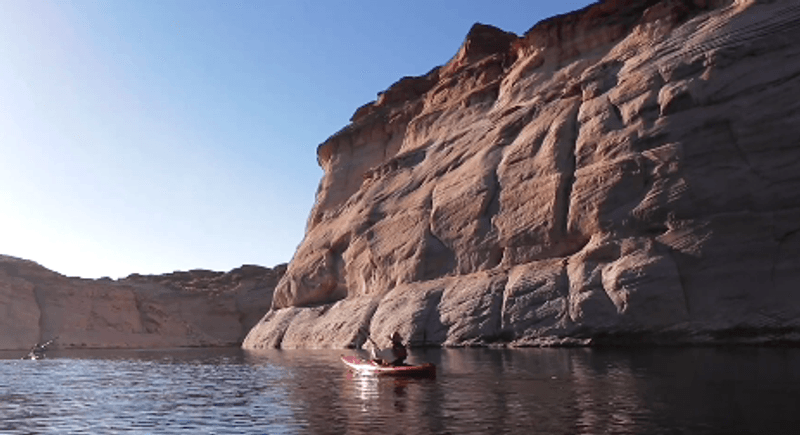
Those red walls are legendary for a reason, stacked like giant pages with cross-bedding and curves that make geologists grin. The bands of mineral white are not decoration though, they are receipts pinned to the stone.
You can love the look and still recognize what it records, which is the gap between then and now laid out in limestone handwriting.
On calmer days, reflections make exact copies of buttes that hover across the surface, almost convincing the mind that nothing has changed. Then a breeze draws lines in the water, and the mirage collapses back into present tense.
I do not think that is sad, just honest, the way Arizona landscapes keep their beauty and still tell the truth.
We paddled along a narrowing corridor near Antelope Canyon and felt the walls lean closer, friendly but firm. The quiet there is big enough to hold hard facts without scolding you.
If a place can be both postcard and progress report, this is the canyon that manages it gracefully.
Ecological Stress Raises The Stakes
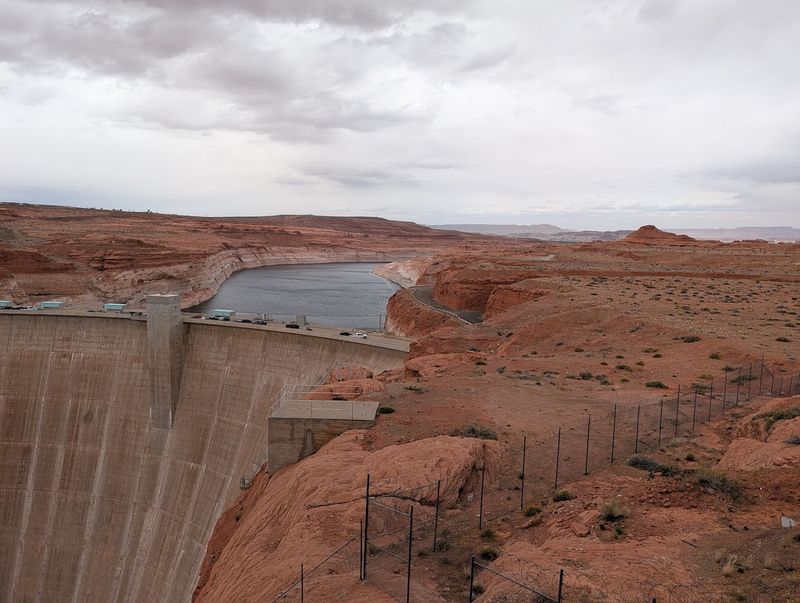
When water pulls back, everything that depends on it shifts position, and you can feel that shuffle along the coves. Fish follow cooler pockets, shore plants reach and crisp, and birds test new perches that were underwater not long ago.
It is a quiet bustle, and it raises the stakes beyond scenery, into the realm of habitats trying to keep their timing.
Talking with a guide, we ended up circling around flows, temperatures, and what it means for downstream stretches. The big river story does not stop at the dam, it keeps threading through Arizona communities and fields that count on each turn.
Stress shows up as smaller nursery zones, muddier inlets, and a calendar that does not match the one species learned.
Does that mean skip the trip? No, it means show up attentive, spend your day with care, and leave the place steadier than you found it.
The wildlife does not need a speech, just space, and that is something visitors can actually give.
Houseboats And Marinas Tell Part Of The Story
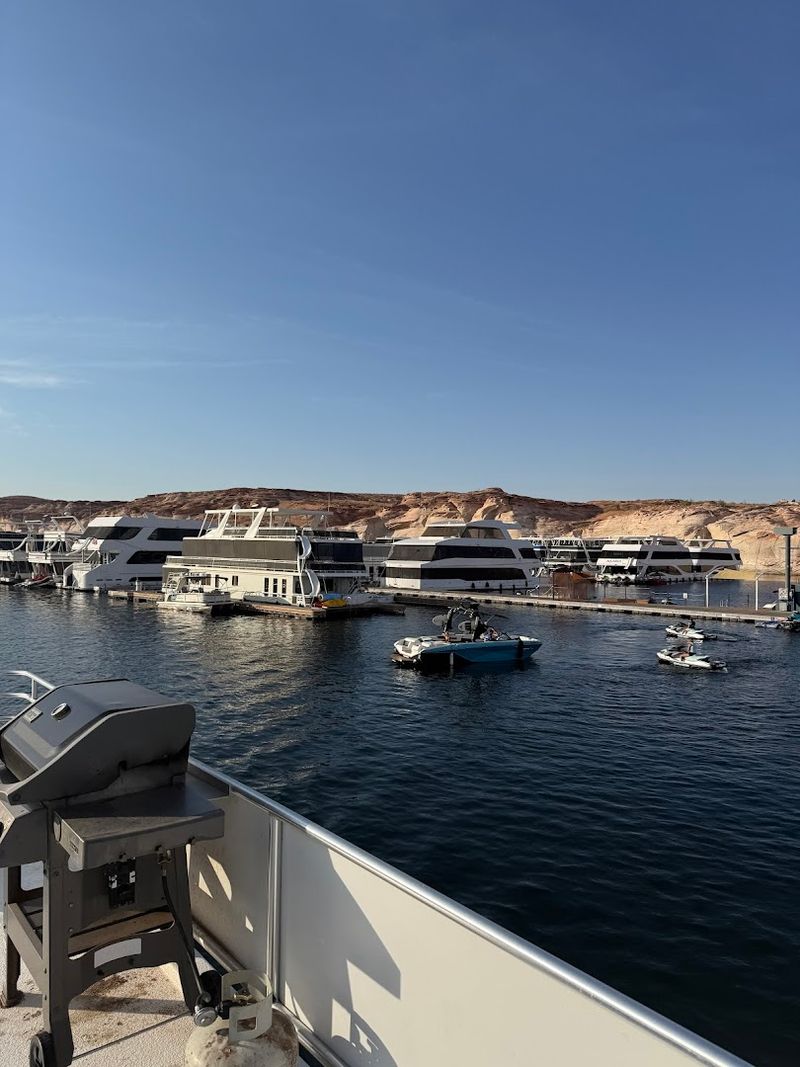
Walk a marina and you can read the lake like a ledger, because houseboats make honest landmarks. Their mooring lines stretch differently, dock fingers realign, and gangways bend toward the new normal.
It is not dramatic to the eye, just quietly persistent, the kind of change you notice when you care enough to compare visits.
Crews at Wahweap and Antelope Point have a choreography now, shifting sections, remeasuring clearances, and keeping access steady when the lake makes them solve puzzles. You hear friendly banter on the docks, but it is paired with focus, because safety sits right there with vacation energy.
Arizona hospitality shows up as competence, and it feels reassuring amid moving variables.
I like how houseboats become floating neighborhoods, with porch chairs and small flags telling stories that the cliffs echo back. The marinas are part postcard, part workshop, and you can feel both purposes getting equal respect.
If you want to understand Lake Powell today, watch how those docks breathe with the water and keep people connected.
Lake Powell Feels Fragile Right Now
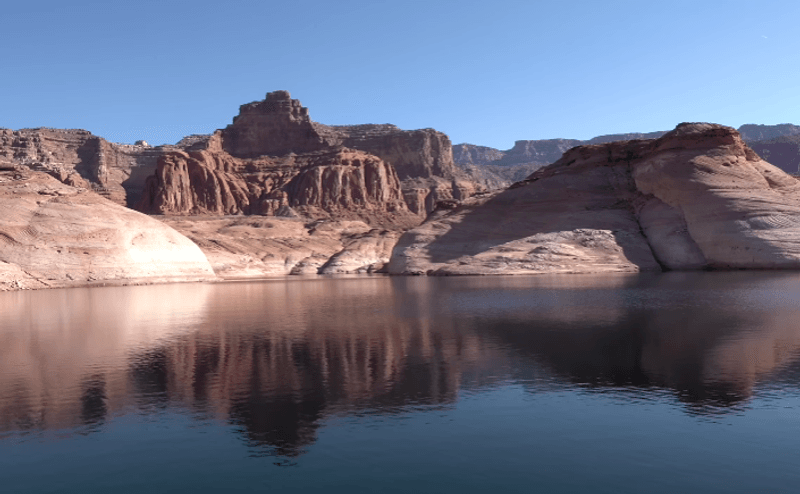
There is a tenderness to evenings here lately, the kind that makes you lower your voice without thinking. The water holds light like a careful promise, and the rocks lean in as if guarding sleep.
Fragile is not a criticism, it is an invitation to be gentle with a place that has carried a lot.
I keep wondering what the next season will hand over, and whether the basin can line up enough good breaks in time. Planning has to do the heavy lifting, but hope still walks the shoreline and checks the anchors.
Arizona knows the pattern by heart now, and that knowledge carries both steadiness and humility.
Would I tell you to go? Absolutely, with awareness, patience, and a willingness to listen to the lake the way you listen to a friend.
Stand where the bathtub ring glows in the last light, and let that line teach without scolding. Sometimes caring looks like paying attention and staying long enough to hear the message.
Dear Reader: This page may contain affiliate links which may earn a commission if you click through and make a purchase. Our independent journalism is not influenced by any advertiser or commercial initiative unless it is clearly marked as sponsored content. As travel products change, please be sure to reconfirm all details and stay up to date with current events to ensure a safe and successful trip.
