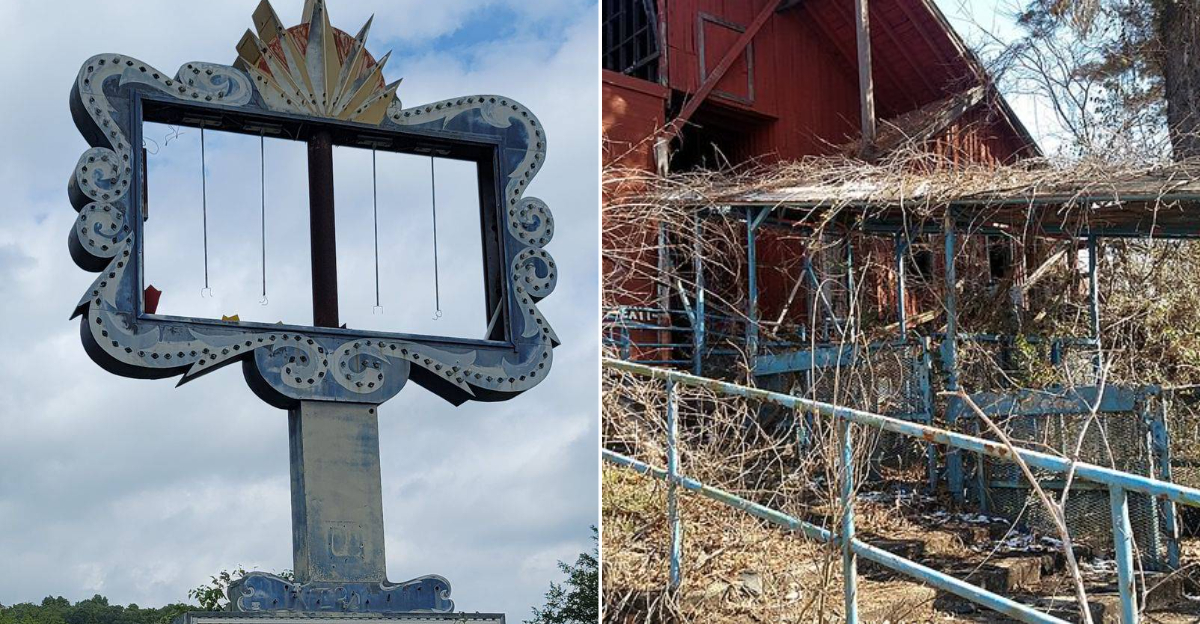
Ever wondered what happens to a theme park after the crowds vanish but the stories stay put?
Dogpatch USA sits tucked into the hills near Marble Falls, and the Ozarks start to close around you as soon as the highway curves.
You will not find neon or noise here, just weathered wood, old stone paths, and buildings that look like they are taking a long breath.
The quiet makes every small detail louder, from faded signs to railings worn smooth by hands that are not here anymore.
Walk slowly, look closely, and the place starts to talk in fragments you can still see and touch.
Ready to follow the trail and see what a long quiet has done to an old park in the middle of the mountains?
Ozark Valley Where Dogpatch Once Lived
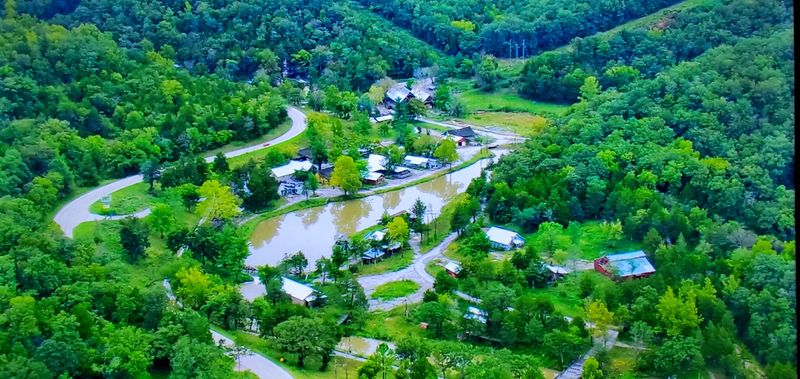
If you want to understand Dogpatch fast, start with the valley that holds it.
The old park sits just off AR 7 near Marble Falls, AR 72648, tucked into a bowl of Ozark hills that do most of the explaining.
Slopes press in on three sides, the creek draws a cool line through the bottom, and pale limestone cuts match the stone walls still standing.
You can read the terrain like a simple map and see why a theme park here could feel more like a village than a midway.
Notice how the sound changes when you step in? The hills catch the noise and hand your footsteps back a little louder.
It feels quiet but not empty, like the place is listening with you.
I like to stand near the old entrance and watch how the trees now frame the same sightlines that once guided crowds.
The valley still sets the stage even with the rides long gone.
Think of the Ozarks as the first designer, working with grade, shade, and water to build a natural theater.
Then imagine a cartoon town laid over that backdrop, inviting people to treat a comic strip like a real address.
Time moved on, but this Arkansas pocket still holds that echo if you give it a slow lap.
From Trout Farm To Cartoon Theme Park
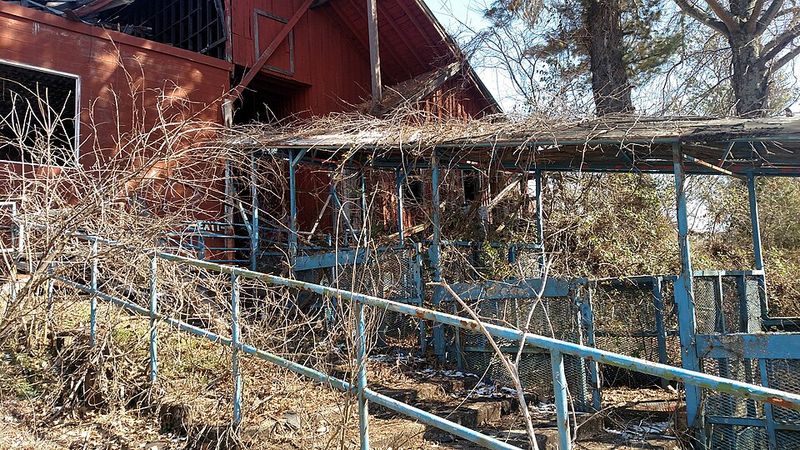
If you thought Dogpatch popped up from nowhere, the water says otherwise.
Stand near the ponds off AR-7, Marble Falls, AR 72648, and the backstory shows.
These pools and runs started as a trout operation that shaped how visitors moved later.
Rails still edge the banks where guests once leaned in to watch fish flash past.
The place reads like a clue trail tying food, leisure, and later rides into one loop.
If you enjoy layers, this is a stop where the work bones still show.
Walk the perimeter and you will spot small embankments that set up gentle viewpoints.
Look closer and faint paths hint at kiosks, ticket spots, and snack stands long gone.
Arkansas tourism often begins with water, and Dogpatch followed that familiar rhythm from the start.
The ponds slowed people down, cooled the air, and mirrored buildings themed to a comic strip town.
You can picture kids tossing feed, parents taking quick photos, and the valley humming without big rides.
The shift from trout stop to amusement park was more slide than sudden jump.
A local draw became a regional pull while the hills and creek stayed honest underneath.
You still feel that mix when the breeze ripples the surface and the banks answer softly.
Li Abner Village Built In The Woods
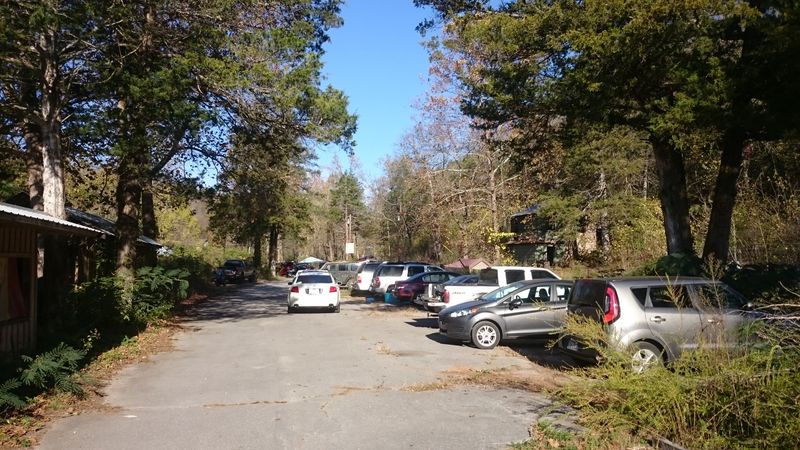
Ever wanted to walk straight into a comic strip and notice the nails holding it together?
At the clustered buildings off AR-7, Marble Falls, AR 72648, you can see how Dogpatch USA turned panels into porches, rails, and storefronts that actually work in the woods.
The facades were scaled like a real village, not a giant stage, so even now the doors, windows, and hand painted signs feel close to human height.
It reminds you that fun lands best at eye level, where you can touch a post and read a sign without craning your neck.
Trees do half the design work here, doubling as shade and scenery while the canopy frames rooftops and softens hard corners.
That is the mood, a cartoon town tucked into a natural bowl instead of fighting it.
I notice window trim that still clings to a hint of color and steps just high enough to mark a threshold.
You can almost hear doors swinging, screen hinges squeaking, and kids racing to the next gag.
Arkansas builders leaned on local stone, and it shows in walls that took weather slowly and gave the place a backbone long after the paint thinned.
The woods have crept closer now, dropping leaves where lines once stayed sharp, but the effect is more calm than sad.
It feels like a series of outdoor rooms under open sky, a quiet gallery of porches and paths.
Stand still for a minute and you will start mapping your own scenes, even if this is your very first visit.
Rides And Midway Left To Rust
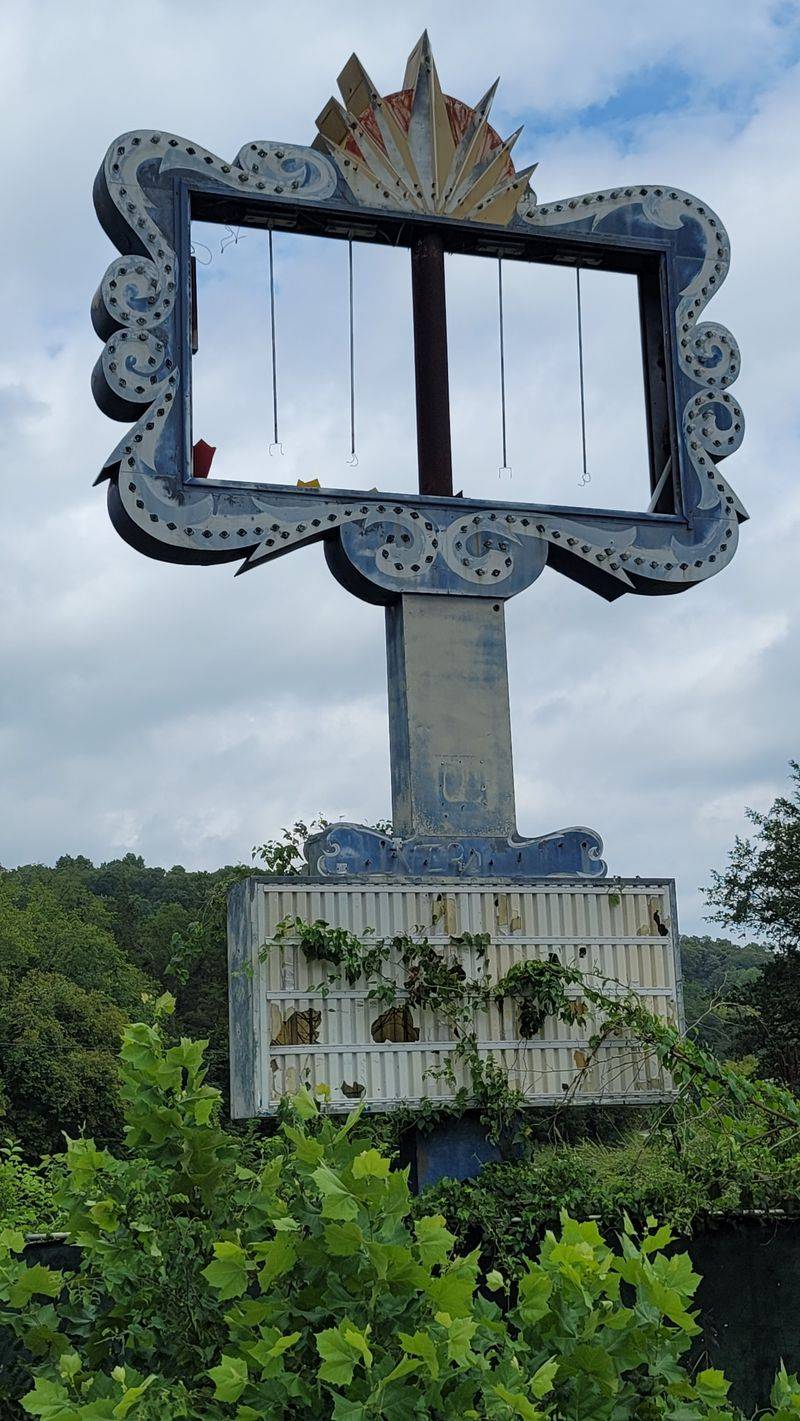
Do you ever stand in a quiet place and swear you still hear rides?
At the old platforms off AR-7, Marble Falls, AR 72648, that feeling kicks in fast.
Concrete pads, low ramps, and leftover rail anchors outline a midway that has technically disappeared.
Brush and saplings cut the straight lines, but you can still walk the route.
Flat stretches turn into gentle slope, and clusters of empty poles feel like a waiting chorus.
If you like the stillness of former motion, this is your kind of classroom.
Bolt circles, cut plates, and rusted brackets read like blueprints once you let your eyes adjust.
Your brain fills in spinning cars, swinging arms, and painted panels that chased screams down the line.
I run a finger along one bracket and feel how the metal roughens toward the base.
That texture says more about passing seasons than any polished plaque or brochure sentence ever could.
Arkansas humidity works slow and steady, and the Ozark shade wraps everything in an even quieter fade.
Bright carnival shapes soften into sculpture, turned down to earth tones without any dramatic goodbye moment.
Walk the line like a designer and you will spot every planned reveal still working.
Even empty, the curves frame scenes, with the hills holding their permanent role as the backdrop.
When The Forest Slowly Took The Park Back
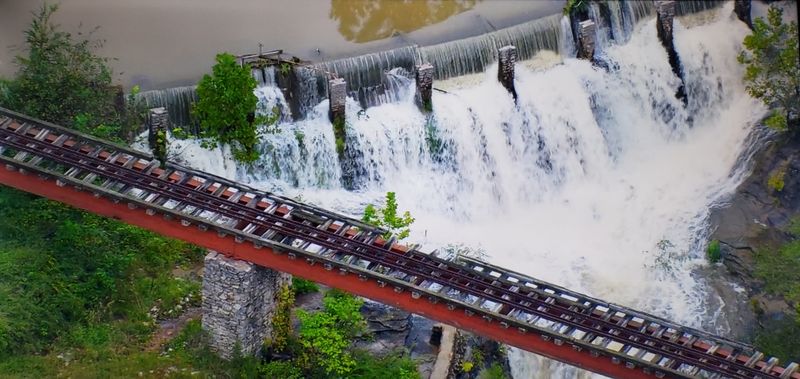
Nature loves an editing project, and this stretch along AR-7 near Marble Falls, AR 72648 proves it.
Vines thread through old railings, wrap posts, and tighten the frame one quiet season at a time.
The canopy filters sunlight into soft moving patches that slide across porches and cracked walkways.
That motion gives a still scene its own pulse, and you may find yourself matching the pace.
If the sound of wind in leaves beats any ride soundtrack, this place will land.
The speakers are gone, but the trees keep a steady low rhythm that fits the valley.
I count saplings rising from joints in concrete and moss sitting on ledges like flat green paint.
The takeover feels more like collaboration than conquest, because the buildings still set the angles and paths.
Growth turns Dogpatch into a living archive, marking time ring by ring instead of on a board.
Walk the quieter runs and you will see roots lifting boards just enough to catch your step.
Branches notch around rooflines, leaves lean into openings, and every gap becomes an easy access point.
This corner reads like a gentle study in return, drawn by shade, patience, and a forest taking its time.
Locals Who Still Remember Packed Summer Days
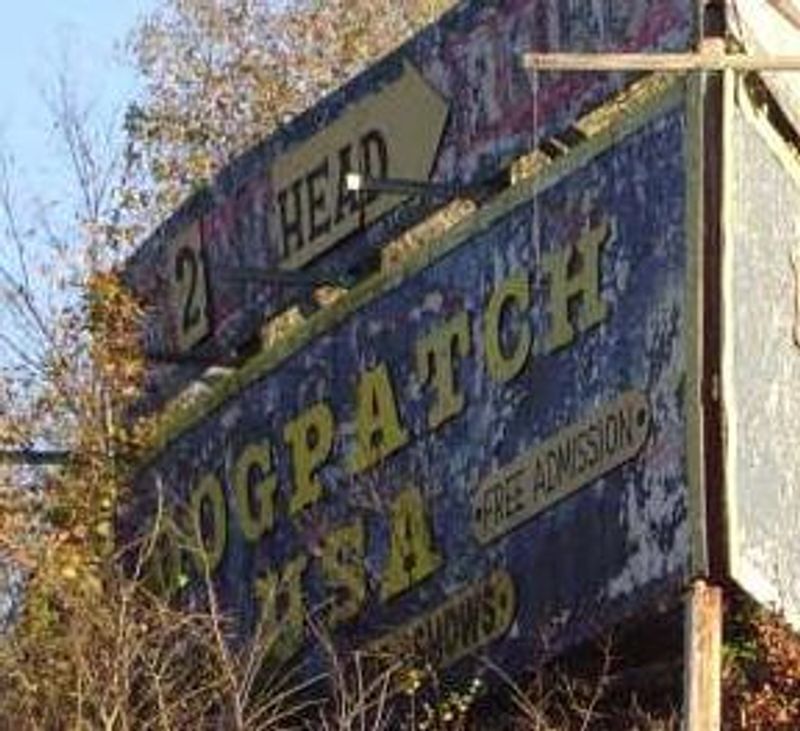
What is the easiest way to see Dogpatch clearly when most of the park is gone?
Start by talking to people in the little towns that ring AR-7 near Marble Falls, AR 72648.
Their stories add sound, color, and motion where the remaining buildings only hold rough outlines.
Folks remember traffic stacking near the curve and parades sliding slow through the valley.
You hear about heat and shade, cool porches, meeting spots, and lines that somehow felt shorter.
Have you noticed how tiny details, like a certain tree or railing, make a map feel real?
I like to ask short questions, listen for landmarks, then walk back to those same corners.
The alignment usually clicks, because the valley and highway pin every memory to something solid.
Arkansas travel has long relied on friendly directions, and Marble Falls neighbors deliver them with quiet precision.
They send you to pull offs, side paths, and bends that match exactly what they remember.
If you value the human layer, you will find it active, practical, and refreshingly unsentimental.
Conversations stay focused on routes, shade, footing, and timing rather than dreamy nostalgia.
That focus trains you to notice slopes, gaps, and sightlines on the old grounds.
By the time you return to Dogpatch itself, you will be guessing less and seeing more.
Exploring Faded Signs And Crumbling Facades
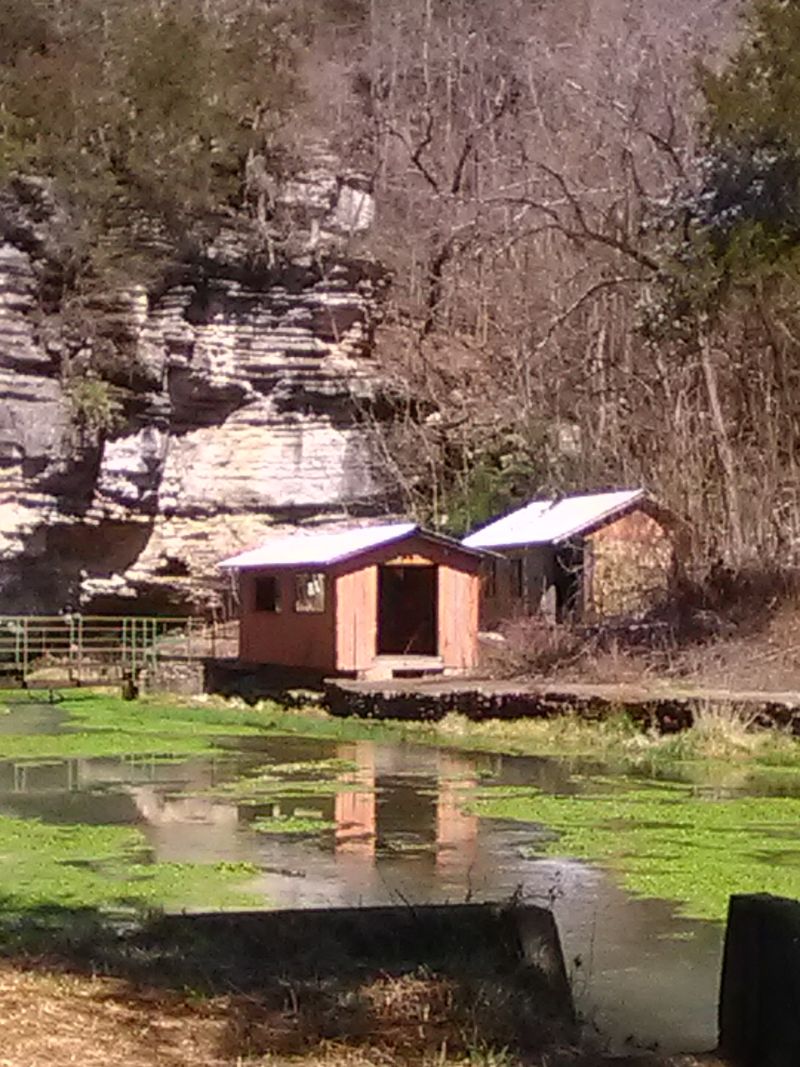
If you love old signs that still have something to say, Dogpatch is a slow walk built for you.
At the pull offs near AR-7, Marble Falls, AR 72648, faded lettering and worn boards still carry a clear voice if you give them time.
Edges have softened, paint has sunk toward earth tones, and some planks cup in a slight curve so the words seem to lean with the buildings.
A single serif or hand drawn arrow can lock you in place and fix a memory.
Your eyes start to learn the grain of the wood as clearly as the path under your feet.
I trace corners without touching, then step back and frame each sign with sky and tree line to bring the contrast back.
The Arkansas sun and damp air have rubbed the gloss off and left the form.
That wear highlights nail patterns, board joins, and brush strokes you would miss under a fresh coat.
Do you enjoy spotting details that most people stride past?
Here, every brace, window, and beam still supports both story and structure, even without crowds or music.
One lap down this row turns into a lesson in design, written in wood, paint, and time.
New Owners With Nature Park Plans
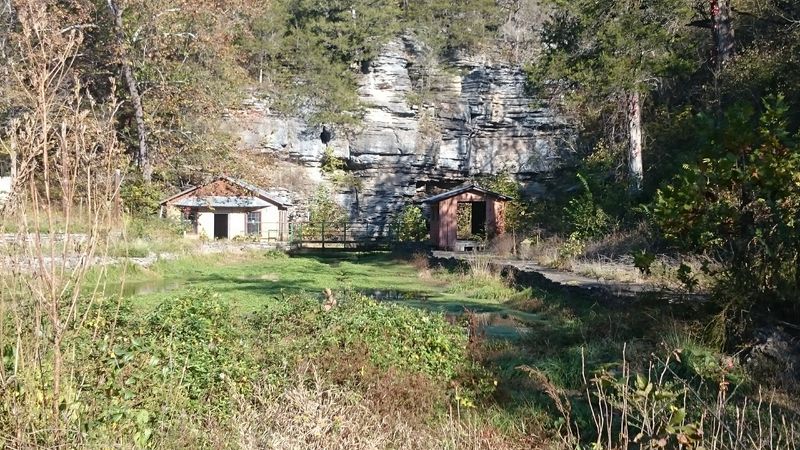
Think of Dogpatch’s future as a nature park with history baked in, not paved over.
At the AR-7, Marble Falls, AR 72648 site, new stewards are leaning into conservation and access.
The old footprint now supports trails, water access, and overlooks instead of midway noise.
You can walk the same valley, but the focus has shifted to sky, stone, and creek.
If you like light touch projects, this direction feels right the moment you step onto a path.
Buildings become context instead of centerpieces, background characters that frame views rather than demand attention.
I look for cleared routes, trimmed brush, and stabilized walls that signal quiet, ongoing care.
These small gestures keep the bones safe while letting the Ozark hills breathe around them.
Arkansas outdoor culture fits this move, because people come here to hike, paddle, camp, and stare at ridgelines.
A nature park model can plug the property into regional trails and drives without pressure for heavy attractions.
Come back over several seasons and you will likely notice thoughtful changes rather than big shocks.
Picnic spots, viewpoints, and safer routes can appear one by one while the valley stays recognizable.
The Ozark setting remains the headline here, with any new features playing support instead of stealing the show.
What Still Remains Behind The Highway Curve
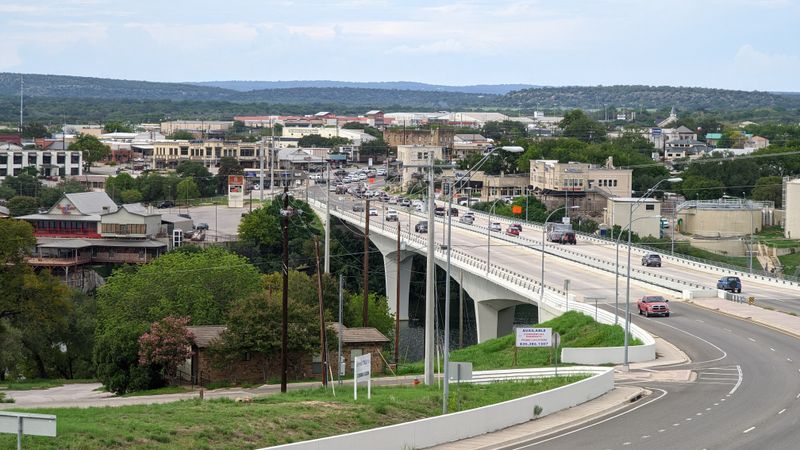
Ease off at the bend on AR-7 near Marble Falls, AR 72648 and it feels like you are stepping off the highway into someone else’s half-faded story.
Trees guard a discreet entry point and the line between public road and private memory gets thin.
Old fence lines, a faint splash of color on a signpost, and a simple gate frame the first glimpse and confirm you are close.
The sense of entering a lived space ramps up fast as the valley starts to open.
Here, a roofline edges into view, then stone, then a narrow path that naturally slows your pace.
I watch where midmorning light pools, because the valley creates bright patches that help you read texture, depth, and footing.
Arkansas highways offer plenty of pull offs, but this one carries a hush that asks for measured steps and low voices.
The site holds memories for a lot of people, and moving gently feels like part of the visit.
Stay a little longer and new details start to pop, from hinge marks on posts to anchor scars in old concrete pads.
Those clues show how the carnival once moved with purpose through this valley, and the present day quiet lets those lines finally step forward.
How One Lost Arkansas Carnival Became A Legend
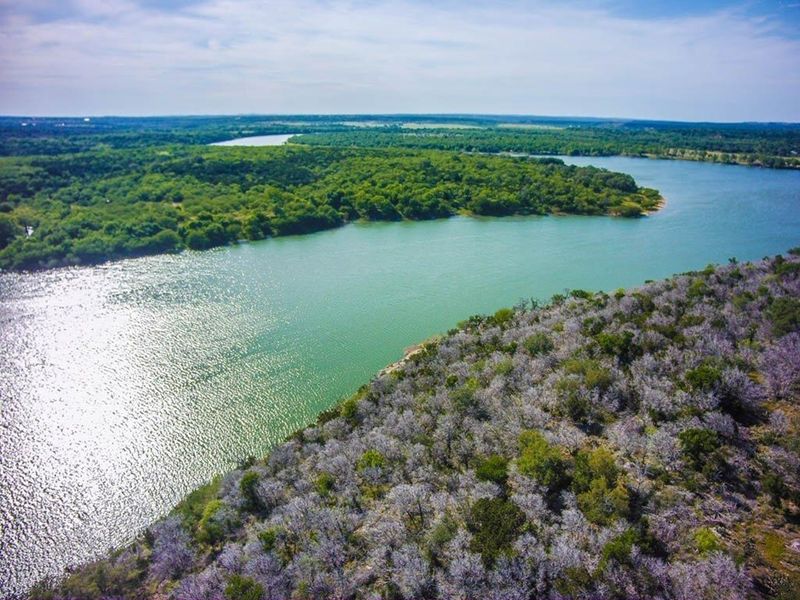
If you want to know why Dogpatch USA still shows up in conversations, start with the valley that holds it along AR-7 near Marble Falls.
It once turned a comic strip into a place you could walk and hear water under the boards.
Now the forest has taken back much of the stage, but the outlines remain easy to see.
Stones, timbers, ponds, and that curve in the road act like labels on a simple mental map you can share.
Dogpatch fits neatly into it, with a gate, a village, a midway bend, and a creek anchoring everything.
The quiet years after closure helped as much as the busy seasons, turning former visitors into careful storytellers.
They noticed textures they missed when rides still ran and sound filled every corner of the valley.
Arkansas history is full of projects that rise, shift purpose, and find a second form that suits the land.
Dogpatch now sits in that pattern, a lesson in scale, setting, and patience that you can still walk.
If you visit, come ready to observe more than consume and let the forest show you what it has chosen to highlight.
You will leave with a small, honest story that fits into a few lines and outlasts any ticket stub.
Dear Reader: This page may contain affiliate links which may earn a commission if you click through and make a purchase. Our independent journalism is not influenced by any advertiser or commercial initiative unless it is clearly marked as sponsored content. As travel products change, please be sure to reconfirm all details and stay up to date with current events to ensure a safe and successful trip.
